Many businesses have said they will have to pass higher wage costs onto customers.
|
|
Scooped by
Graham Watson
onto Microeconomics: IB Economics April 2, 6:40 AM
|
|
|
Scooped by
Graham Watson
onto Microeconomics: IB Economics April 2, 6:40 AM
|
Many businesses have said they will have to pass higher wage costs onto customers.
Your new post is loading...
From
www
The music giant behind acts such as Taylor Swift and Sabrina Carpenter gets an offer from Bill Ackman's Pershing Square.
Graham Watson's insight:
There's the possibility of a massive takeover in the music industry, with investment vehicle, Pershing Square, offering $64bn to takeover Universal Music Group. It doesn't seem as though there's much rhyme or reason to the offer, other than the fact that its Chief Executive thinks that UMG is currently undervalued.
From
www
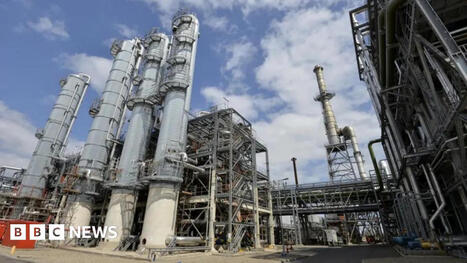
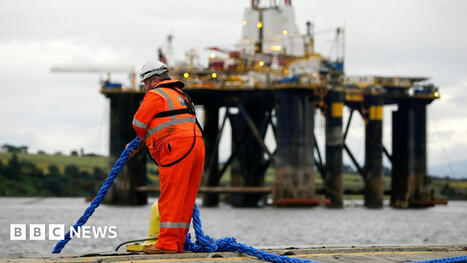
Brent crude rose above $110 before those gains eased after a report of US-Iran talks over a potential ceasefire.
Graham Watson's insight:
Yet more uncertainty in the oil market, with oil prices rising a game on the back of President's remarkable outburst yesterday.
Uncertainty is not good for any market, not least the oil market.
From
www
The online listing portal is now being pursued in a class action, launched on behalf of potentially hundreds of estate agents.
Graham Watson's insight:
Estate agents are on the point of taking Rightmove to court, arguing that the online property portal is abusing a dominant position, something that's likely to attract Competition and Market Authority attention.
Certainly, Rightmove have monopoly power: the company's own research highlights that it has an 80% share of the online property market in terms of time spent in its website. It also has a 70% profit margin which implies it has the ability to earn abnormal profits too, its charges have risen dramatically and its brand name also represents a sizeable barrier to entry,
In short, watch this space - is it simply in the position because it's efficient or is it exploiting its monopoly.
In Mexico and Spain, leaders who have capped public costs have been rewarded at the ballot box. As another cost of living surge arrives, it may be a policy our leaders are unable to resist, says Guardian columnist Andy Beckett
Graham Watson's insight:
Guardian columnist, Andy Beckett, presumably taking a break from selling Socialist Worker on Regent Street, makes the case for the government directly intervening in markets to set maximum prices.
He points to the examples of Mexico and Spain where successive governments have been more interventionist. In Mexico, apparently, the government has capped the price of 24 essential goods, although he hasn't said anything about the availability or quality of such goods. Similarly, Spain's centre-left government has already introduced a national rent freeze and established a body to be known as the Business Margins Observatory to oversee markets and deter profiteering.
I wonder if you could both make a case for such interventions, and, a similar case for opposing them? Think in terms of the effect on economic efficiency, and the opportunity cost of such interventions.
Number fell 23% year on year in 2025 but waste companies say recycling systems still under strain from sheer volume
Graham Watson's insight:
The question of whether or not the net effect of disposable vapes. Clearly they play a role in reducing the number of smokers, although the evidence of any negative externalities from vaping hasn't emerged to the same degree. Where there is a stronger body of evidence is about the negative externalities generated by the waste created, with 6m vapes and pods discarded weekly in the UK, and that represents a 23% fall on 2025.
Sewage released into England’s rivers and seas nearly 300,000 times last year | Water | The GuardianCampaigners criticise frequent use of storm overflows when parts of the country were in drought for months
Graham Watson's insight:
Evidence of the extent to which the UK's water companies are responsible for generating negative externalities, with news that there were nearly 300,000 sewage pollution incidents last year, albeit that's a reduction on the previous year. The companies will claim that they are investing record amounts into stopping this sort of thing; however, if I were caught emptying my rubbish bins into your garden I'd be liable for criminal prosecution.
Economics is all about incentives, and yes, I accept that the equilibrium level of sewage spills isn't zero; it occurs where the marginal cost of investment in the sewage network equals the marginal benefit. However, stiffer penalties for water company executives would focus the mind slightly more, I feel.
From
www
The government will invest £100m to restart the Teesside site producing carbon dioxide, a key part of food and drink manufacturing.
Graham Watson's insight:
Is this the first Iran-induced government intervention? The government is investing £100m in a Teesside site manufacturing carbon dioxide, a key part of fertiliser and food and drink manufacturing.
It's thought to be a response to the closure of the Strait of Hormuz and the possibility of ongoing shortages of fertiliser.
Typical household bills will fall by 7% when the new energy cap takes effect on 1 April 2026.
Graham Watson's insight:
You could look at this from a number of angles, derived demand, the impact of the price cap - or the Energy Price Guarantee if you prefer, or, you could just consider the implications of higher energy costs for the wider macroeconomy. The choice is yours!
The hot, dry summer and an increase in vineyard planting resulted in the third-largest UK grape harvest
Graham Watson's insight:
At last, a break from oil-related D&S stories: good news for domestic wine production. Last summer saw a bumper harvest for English and Welsh winemakers, and presumably this might even see prices fall.
From
www
Vets will have to publish price lists for services under measures from the UK's competition watchdog.
Graham Watson's insight:
The Competition and Markets Authority (CMA) have ruled that vets' prescription charges will be capped at £21, and that all vets must publish price lists for the treatments and make customers aware that cheaper treatments might be available online. It's all part of an attempt to increase transparency in the sector in the wake of allegations of overcharging.
Of course, the sector itself, increasingly owned by private equity companies, denies that it's overcharging but you only have to look at what's happened to veterinary bills relative to inflation in the past decade.
Co-founder Julian Hearn and actor likely to get big payday after takeover by French group
Graham Watson's insight:
French giant Danone have announced the 1 billion euro buyout of UK nutrition firm Huel. The French company is looking to expand into the growing functional nutrition market, and the acquisition of the brand will help it do so.
According to the article, Huel "made £13.8m in pre-tax profit on revenues of £214m in 2024, according to its latest annual accounts at Companies House. Revenues rose to more than £250m the following year, with profit margins of about 10%."
PM’s ‘cost of living champion’ calls for consideration of temporary measure to prevent profiteering from Iran war
Graham Watson's insight:
And one of the interventions that the government might take is to cap the profits of energy and petrol companies to stop them profiteering from the Iran war. It will be interesting to see if this is something that the government does and, if so, how it goes about this.
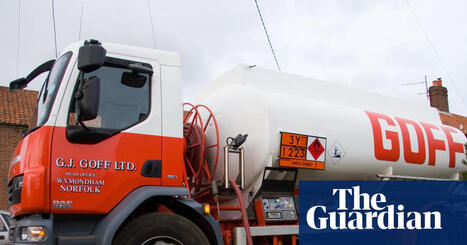
Police issue alerts and security tips to households reliant on heating oil to deter a crime that can leave victims with bills of thousands
Graham Watson's insight:
Unsurprisingly, this Sunday's 'scoops' appear to be all Iran-focused. This one highlights the unintended consequences of the conflict, and the role of incentives in determining economic activity.
Apparently, the Iran conflict has seen an increase in heating oil thefts in Northern Ireland. I suspect it's not a location-specific crime. |
Companies using heating oil have already begun rationing their fuel use, says Federation of Small Businesses
Graham Watson's insight:
The Federation of Small Businesses has reported that around 7% of its members getting their heating via heating oil and that their energy costs have doubled since the start of the Iran conflict. As a result, a number of them are already rationing consumption, and their costs have risen. And yet, unlike households, these companies are not eligible for government support.
Is that economically sensible? Well, much as I have sympathy for them, I would point out that risk is an essential part of running a business and that there are plenty of alternative fuel sources.
Offer reportedly put forward by creditors hoping to save struggling firm from being renationalised temporarily
Graham Watson's insight:
The Guardian is reporting that Thames Water believes itself to be close to agreeing a deal with its creditors that will keep it out of state ownership, and stop it being renationalised. The precise terms of the deal are unclear but the company are hoping to avoid being fined by the regulator, OFWAT.
From
www
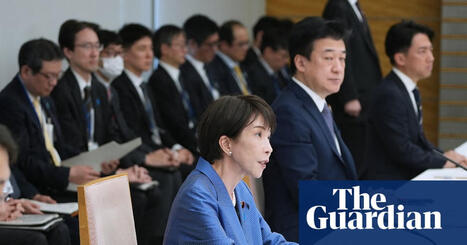
Many businesses have said they will have to pass higher wage costs onto customers.
Graham Watson's insight:
Back at it; this is a standard minimum price - although in this case it's a wage floor, not a price floor. However, yesterday saw the minimum wage rise by 50p per hour to £12.71 for workers aged 21 and over, for 18 to 20 year olds it's now £10.85 and under 18s and apprentices will get £8 per hour.
The introduction of a minimum wage was feared because intuitively it should cost jobs, but there's relatively little evidence of this. However, perhaps this is because of the level at which it was initially set and many now think that it's starting to bite with some businesses suggesting that it is now costing jobs.
From
www
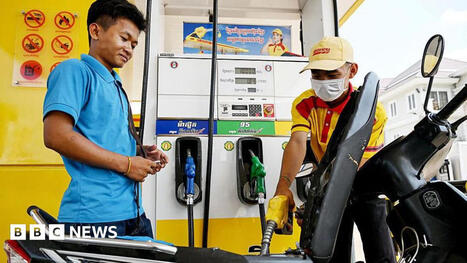
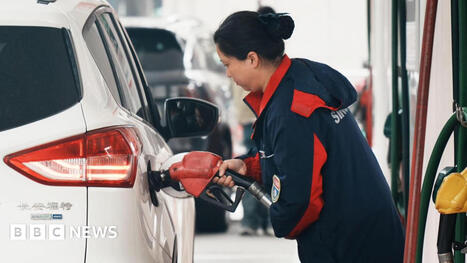
Motorists are facing higher fuel prices ahead of Easter break due to the conflict in the Middle East, the RAC says.
Graham Watson's insight:
I love this sort of article - the outrage of Asda boss, Allan Leighton, in response to government suggestions that petrol retailers might be price gouging, and profiteering at customers' expense. That's never happened, Allan.
There's no empirical evidence of that in any way shape or form, and there's no Competition and Markets Authority scrutiny of the petrol retailing sector in the wake of its response to the Ukraine war, nor would the market structure of the sector lend itself to this sort of behaviour.
CMA also looks into Pasta Evangelists, funeral operator Dignity and review company Feefo in latest crackdown
Graham Watson's insight:
This article highlights the importance of perfect information to the efficient functioning of markets and the Competition and Markets Authority's concerns about the extent to which five firms are failing to tackle fake reviews. The firms named include Autotrader, JustEast, funeral services operator Dignity, the review company Feefo and the restaurant chain Pasta Evangelists.
In all cases, there's a suggestion that reviews have been doctored - either excluding 1-star reviews or getting staff to write inflated reviews. It's clearly attempting to manipulate the market and act against consumers' interests.
From
www
The UK giant is optimistic but chief executive Greg Jackson tells the BBC he is making contingency plans.
Graham Watson's insight:
Another Iran-based story, with the conflict increasing the demand for solar panels according to the CEO of Octopus Energy, Greg Jackson. Apparently, sales are up 50% since the conflict began.
From
www
Iran has also said that "non-hostile" vessels can use the crucial Strait of Hormuz shipping route.
Graham Watson's insight:
Geopolitics and the oil price. Again. D&S.
Homes built from March 2028 will produce 75% less greenhouse gas emissions than those built according to existing 2013 standards
Graham Watson's insight:
Whilst the government is bringing in new regulations to limit the amount of carbon produce by new homes from 2028, there's a degree of discontent at the fact that they've relaxed rules on one or two aspects of new homes, not least the issue of whether or not they should all be fitted with heat pumps. As ever, trade-offs are involved with critics suggesting that developers pursuit of profit trumps environmental objectives.
PM Sanae Takaichi says about 80m barrels of stockpiled oil to be provided to refiners – equivalent to 45 days of domestic demand
Graham Watson's insight:
Japanese PM Sanae Takaichi has announced the release of 80m barrels of oil from national reserves to try and calm Japanese energy markets and keep fuel prices low. Total Japanese reserves were 470m barrels. so whilst there's no immediate need to panic, it's worth bearing in mind that Japan is resource-poor and reliant upon the Middle East for 90% of its energy needs.
From
www
The group says the country "urgently" needs to produce its own oil and gas to secure supplies.
Graham Watson's insight:
Economics is all about incentives - so one wonders why oil and natural gas producers are currently so keen to get more of the stuff out of the ground?
From
www
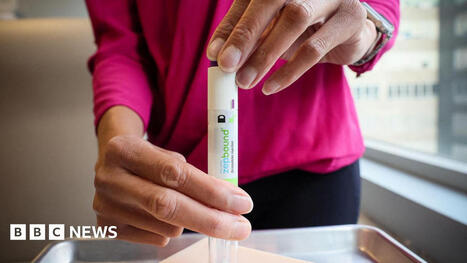
Weight-loss drug prices are falling in the US - but can the example be repeated?
Graham Watson's insight:
This article looks at the market for weight-loss drugs and notes the extent to which prices of the available products have fallen over time. According to the article, "A starting dose of Wegovy is now available to self-pay patients for just $149 a month, compared with a list price of more than $1,600 a month when it first launched".
The reason for the price cuts is self-evident - an increase in competition, which has made demand for the individual brands of weight-loss drug more elastic. However, there's also been a change in how the products are sold - whereas previously such drugs would be price as a result of negotiations between their manufacturers and health insurance companies, they're now increasingly sold direct to the final consumer, making pricing more transparent.
Iran war should be wake-up call about costs of not going full throttle towards EVs as Chinese have done, experts say
Graham Watson's insight:
This, for me, is the article of the weekend - looking at the implications of the Iran conflict for car manufacturers, noting that the inability of established Western manufacturers to adapt to the increased demand for electric cars jeopardises their future.
This article investigates how European manufacturers have seemingly taken their eye off the ball. |
Your new post is loading...

Back at it; this is a standard minimum price - although in this case it's a wage floor, not a price floor. However, yesterday saw the minimum wage rise by 50p per hour to £12.71 for workers aged 21 and over, for 18 to 20 year olds it's now £10.85 and under 18s and apprentices will get £8 per hour.
The introduction of a minimum wage was feared because intuitively it should cost jobs, but there's relatively little evidence of this. However, perhaps this is because of the level at which it was initially set and many now think that it's starting to bite with some businesses suggesting that it is now costing jobs.