

Watchdog considers crackdown amid record complaints from pet owners
Get Started for FREE
Sign up with Facebook Sign up with X
I don't have a Facebook or a X account


|
Scooped by
Graham Watson
onto Microeconomics: IB Economics May 1, 2025 10:27 AM
|
 Scoop.it!
Watchdog considers crackdown amid record complaints from pet owners
 Your new post is loading...
 Your new post is loading...
Your new post is loading...
Scoop.it!

Bakery chain also adds 10p to a latte, bringing it to £2.25, as CEO warns of ‘a tough, challenging market’
Graham Watson's insight:
Year 13 economists should be able to draw this, using a cost and revenue diagram and distinguishing between variable and fixed costs.
As a result of higher variable costs, the equilibrium price and quantity are likely to change
Scoop.it!

Exclusive: Getting rid of premium seats, ensuring flights are near full and using efficient aircraft could slash CO2, analysis suggests
Graham Watson's insight:
Aviation remains a major carbon emitter, so this article investigates how this can be tackled in some fairly rudimentary ways. In the first place, ensuring fuel- efficient aircraft are used, filling flights, in as much as this is possible and abolishing premium seats, could between them reduce emissions by up to 75%, according to research by Prof Stefan Gössling, at Linnaeus University in Sweden.
Of course, this then implies that solutions, both market-based, such as increasing landing fees for the most polluting planes, and regulation, in banning them entirely, could further improve the environmental performance of the sector. You might wish to think about how you would evaluate the success of any such measures, and the extent to which you would think that the market would promote these outcomes in any case.
As someone who once flew from Newcastle to Southampton on a FlyBe flight with 9 passengers, I'm as guilty as anyone of generating air pollution in this way.
Scoop.it!

President says a ‘tremendous amount of money’ will need to be spent repairing country’s infrastructure
Graham Watson's insight:
For a man who claims he's a leading businessman and the author of the infamous "The Art of the Deal", there's some pretty poor economic understanding here.
The President has said that oil firms are going to have to invest massive amounts in Venezuela to repair the country's infrastructure, and "and then they’ll get reimbursed by us or through revenue”. Pardon? Firms are going to invest on the basis that they are then going to be "reimbursed" by the taxpayer?
You might want to think about the concepts that you might apply here; it represents an odd view of the nature of entrepreneurship, and introduces the concept of moral hazard too.
Scoop.it!

Shoppers hit by rising bills switch to discount chains, supermarket own-label products and buying fewer items
Graham Watson's insight:
This shouldn't come as a surprise, given the macroeconomic environment, but once again the discounters have increased sales and gained market share at the expense of established grocery retailers like Asda and Co-op. It might also suggest something about brand perception too.
You should be able to apply the concepts of PED and YED to help explain this, and it might get you thinking about whether the discounters are going to displace some established supermarkets in the long-term.
Scoop.it!

From
www

The SMMT warned of a growing gap between consumer demand and the government's ambitions for EVs.
Graham Watson's insight:
The Society of Motor Manufacturers and Traders (SMMT) has warned that, although sales of electric cars are increasing, car manufacturers are both failing to hit existing targets, and, in doing so, having to offer unsustainable discounts.
He's effectively lobbying for a relaxation of the targets, although he suggests that the targets should be relaxed in the face of changed external circumstances. The Zero Emission Vehicles Mandate (ZEV Mandate) is currently under review and the lack of certainty as a consequence may well be having an adverse effect on the sector.
Scoop.it!

From
www
Soft drinks, chocolate, pizzas and ice creams will be targeted in the UK government's plan.
Graham Watson's insight:
Today sees the start of a TV and online advertising ban on the promotion of soft drinks, chocolate, pizzas and ice cream before 9.00pm, with the intention of reducing childhood obesity. Supporters of the ban will argue that such adverts distort consumer rationality, promote imperfect information and do so in a way that appeals to the most vulnerable, children, in this case.
Critics will argue that the costs of the ban will outweigh the benefits and that such a ban is restricting free choice. It's certainly far from a cut and dried case that the intervention is a good thing, and it will be interesting to see if it has much affect on children's consumption patterns.
Scoop.it!

The ‘border adjustment mechanism’ aims to create a level playing field while also encouraging decarbonisation
Graham Watson's insight:
This article looks at the introduction of the EU's Carbon Border Adjustment Mechanism (CBAM) that looks to offset different levels of environmental regulation and encourage decarbonisation. It means that, for example, imports of Chinese steel will be subject to an environmental levy in an attempt to create a level playing field, and make EU steel producers more competitive as a result.
Scoop.it!

Millions of households in England, Wales and Scotland are seeing a slight rise in energy bills in the new year.
Graham Watson's insight:
Today sees a marginal increase in energy prices, with the average household expecting to pay an extra £3 per year for their energy as a result of the Energy Price Guarantee.
Scoop.it!

The consumer watchdog says weak competition between retailers is keeping profit margins up.
Graham Watson's insight:
A Competition and Markets Authority report into the state of the petrol retail market has concluded that profit margins in the sector are still high by relative standards, despite the falling price of petrol.
Of course, the retailers themselves contest this - with the Petrol Retailers Association suggesting that falling prices are indicative of "healthy competition", and rising costs elsewhere.
However, have a think about the nature of the market - it doesn't resemble a perfectly competitive market, and the competition authorities are going to try to stimulate more competition via the creation of a fuel finder scheme that will indicate where the cheapest fuel can be bought.
Scoop.it!

Baidu's Apollo Go robotaxis have already accrued millions of driverless rides in cities worldwide.
Graham Watson's insight:
The prospect of autonomous taxis on London's streets appears to have become closer, with the news that Uber and Lyft are partnering with Baidu to trial the vehicles.
But is this a good thing? Will the technology work as planned and might it also increase pollution in the capital?
Scoop.it!

Ministers hint at further relaxation of zero emission mandate but say will not follow EU move to dilute 2035 petrol cars ban
Graham Watson's insight:
It seems as though the UK is about to follow the EU in relaxing EV sales targets, and is bringing forward its review of the sector to next year, in the hope of improving clarity and plotting a way forward.
The hope is that there might be further allowances made for selling hybrid vehicles as well as EVs, although the current pledge is that they won't be diluting the 2035 petrol car sales ban.
Scoop.it!

Pump prices ‘stuck’ despite cost of oil falling amid prospect of peace in Ukraine, say experts
Graham Watson's insight:
Aha! The return of accusations of rocket and feather pricing, with petrol retailers not reducing prices as the price of oil falls below $60 per barrel. The suggestion is that, as Keynes suggested, prices are sticky downwards, as firms look to eke out extra profit as their costs fall.
They, of course, will argue that price will stay higher because they've forward bought the fuel that's currently being sold at a higher price, but this rather implies that they want to have their cake and eat - and shift all of this risk onto the consumer.
Scoop.it!

Bus and train initiative comes as government struggles to survive corruption and sexual harassment allegations
Graham Watson's insight:
Spain's following the German lead in introducing a flat fee to use public transport, with a 60 euro a month flat charge for middle distance and suburban trains and national buses. The government claim that it's going to revolutionize public transport and reduce monthly travel costs by up to 60% for some. The one downside? The plan's not been publicly costed yet. |
Scoop.it!
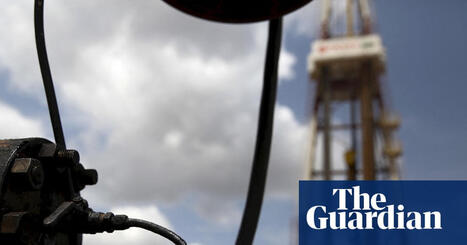
US to remove some sanctions to allow Venezuelan oil sales ‘indefinitely’, CNBC reports, citing White House sources
Graham Watson's insight:
D&S basics - if Venezuela starts supplying oil to the US, and is no longer under an embargo, the supply of oil will increase and thus price would be expected to fall.
Of course, given that President Trump seems to want to stabilize oil prices around $50-60 per barrel, increasing its supply might seem counter-intuitive, not least if other oil exporters also look to compensate for a lower price by producing more.
Scoop.it!

Eye-tests for older drivers, automatic emergency braking in new cars and crackdown on drink-driving among new proposals
Graham Watson's insight:
This article prompts me to pose a simple question - using your knowledge of Economics, what is the equilibrium number of road deaths each year?
I regularly ask this in mock Oxbridge interviews, and get a range of answers. One thing is certain, the answer isn't zero.
Can you think why? What would be the cost of reducing road deaths to zero? How much would we have to spend on safety measures? What would be the speed limit?
Heidi Alexander, Transport Secretary, is quoted as saying: “Every life lost on our roads is a tragedy that devastates families and communities. For too long, progress on road safety has stalled. This strategy marks a turning point." This is true from a personal perspective - and I say this as someone who has lost a close friend to a traffic accident - but it isn't very good economics.
Scoop.it!

Editorial: Weight-loss drugs cannot solve the problem of poor diet. Ministers are right to demand healthier food and promotions
Graham Watson's insight:
The Guardian takes a stand on the intervention to ban junk food advertising, arguing that it is the place of the government to shape consumer tastes and that they shouldn't be left to the free market in all cases.
This is both unsurprising, given the source, but runs contrary to economic theory which suggests that the market has created its own solution to the problem of obesity. If only life were that simple: you could argue that weight loss drugs tackle some but not all social costs and that if the state is having to prescribe weight-loss drugs then it is still bearing the majority of the social costs. I suspect that this won't appeal to libertarians who bridle at restricting freedom of choice.
Scoop.it!

High Pay Centre calculates bosses will pass milestone on third working day of 2026 with median pay of £1,353 an hour
Graham Watson's insight:
Your annual reminder from the High Pay Centre of the extent to which executive pay is utterly ridiculous, with FTSE 100 CEOs having earned more than the average worker by Tuesday lunchtime. Not bad work if you can get it, assuming that most CEOs have only been working since Monday morning; I don't think the assumption that they started on 2 January is a credible one.
I'd love to be able to tell you that this is explicable with the help of economic theory, unfortunately, MRPL theory falls a long way short of this. And yet we're still obliged to teach it.
Scoop.it!

From
www
Donald Trump has said that American oil firms will invest billions to produce oil in Venezuela.
Graham Watson's insight:
Aside from the macroeconomic implications of increased US investment in Venezuela, and the implications of this for its macroeconomic performance, this article is of interest to me because of what it implies about the price elasticity of supply of oil, and thus the immediate effects upon the global oil market.
Scoop.it!

London predicted to be the first UK city to go diesel-free, largely because of the ultra-low emission zone
Graham Watson's insight:
It seems as though the demise of diesel cars is going to be ensured by 2030, with electric cars likely to overtake diesel cars by 2030, with London likely to be leading the way. This has implications for levels of air pollution as well as the current account because we import almost all of our diesel.
Scoop.it!

After biggest loss for producers since 2020 the slide could continue, with global output expected to remain high
Graham Watson's insight:
If you read this article, you should be able to work out the demand and supply-side factors that contributed to the 20% fall in oil prices over 2025.
And yet, it seems as though petrol prices have failed to keep up, something that the regulator has already shown an interest in, and will continue to do so.
Scoop.it!

Metal ‘needed in many industrial processes’, says Tesla boss as supply fears grow over price surge and new rules
Graham Watson's insight:
A genius has spoken; we should all pay heed. That said, in this instance, Elon Musk is right that the increasing price of silver is problematic in that it increases costs for a number of tech firms - not least because the price of metal has leapt from $29 per ounce to $79 per ounce over the course of the year.
The demand for silver as an asset has surged, meaning that the derived demand for silver as a factor input now faces price increases. It is part of a commodity cycle that has seen platinum prices rise by 170% over the year.
Scoop.it!

Investors are flocking to precious metals amid geopolitical tensions and expectations of more US interest rate cuts.
Graham Watson's insight:
D&S, markets in action, and proof that assets provide a substitute for other forms of investment when the macroeconomic environment is uncertain.
Indeed, as the article, notes the gold price has gone up by 68% this year, as demand for the precious metal has significantly increased.
Scoop.it!

Editorial: The European Commission’s proposals to water down a 2035 ban on new petrol and diesel cars will store up major problems for the future
Graham Watson's insight:
The Guardian's take on the decision to slow the adoption of the Zero Emission Vehicle mandate and ban the sale of new petrol and diesel cars suggests that the European Commission is in hock to a car industry that's struggling to compete in the EV market with Chinese rivals. They suggest that relaxing the ban might be counter-productive in reducing the incentives for them to change and will only allow a legacy industry to linger on in a form that's not compatible with climate change objectives.
Scoop.it!

Warner Bros will reportedly advise its shareholders to vote against the offer as early as Wednesday.
Graham Watson's insight:
It seems as though the Warner Bros saga isn't going to be speedily resolved with the news that the company are advising shareholders to reject the Paramount bid, and some suggestions that the backers of the original bid, including the President's son-in-law, Jared Kushner, might have pulled out of the bid too.
Scoop.it!

Move lets 10% of cars escape zero-emissions ban beyond 2035 after heavy pressure from car industry and some EU states
Graham Watson's insight:
No surprise here, with the EU watering down its 2035 ban on the sale of petrol and diesel cars, so that it will permit 10% of new cars to be non-electric. One wonders whether this is driven by economics, or by lobbying, given the lack of competitiveness of established European manufacturers in this particular part of the market. |







It seems as thought the Competition and Markets Authority is going to intervene and potentially impose a price cap in the sector. Prices have risen by 60% in 8 years, compared to general service sector inflation of 35%.
It's argued that one of the causes of this has been a change in market structure and increased market concentration with large firms consolidating and the suggestion is their demands on their employees might be driving practitioners to limit the services that they offer to customers, and in doing so boost their employers profits.