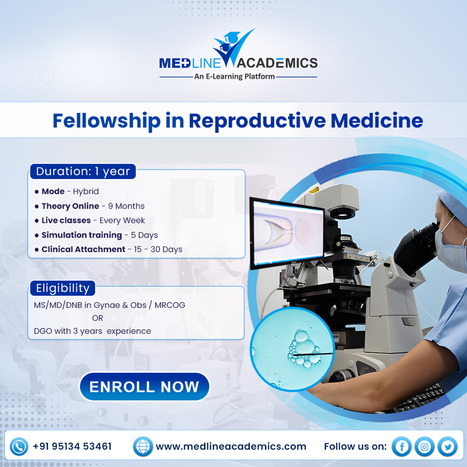
Among the pristine areas of today’s medicine one can name the highly promising and quite popular direction – Assisted Reproductive Technology (ART) which makes millions of childless couples happy. As the employment opportunities for people with professional competency in this field are rising worldwide, ART training courses have become increasingly popular. These specialized courses prepare medical practitioners with knowledge and competency needs in order to comprehend ART processes. Assisted Reproductive Technology: The Definition ART as a broad term of medical practice is a category of infertility treatments intended to help to get pregnant. Some of them are IVF, ICSI, OA, super oxide dismutase, testicular sperm extraction, FSH, egg donation, or embryo freezing to mention only but a few. Since these procedures entail precision and expertise of reproductive system, remunerative training emerges as significant. Why Such Training Courses to Use ART? ART training courses are necessary for both gynecologists and obstetricians, embryologists and other specialists who want to enrich the scope of knowledge in the sphere of fertility treatment. Training offered in these courses includes practical training, theoretical content, and working with new technology. Furthermore, infertility is becoming more rampant across the globe hence this has created a dire need for ART specialists this makes this field a very lucrative one for medical professionals. A Review on Reproductive Technology Training in India India today is turning into a center for the training courses in Assisted Reproductive Technology. The country is endowed with a number of institutes and centers focused on enhancing the stock of knowledge and educational achievements in the sphere of reproductive medicine. Why India for ART Training? India’s healthcare infrastructure has qualified and affordable education that has made it famous across the world. Medical professionals from across the globe choose India for ART training due to the following reasons: 1. World-Class Training Institutes: India also has centres of excellence like the International Institute for Training and Research in Reproductive Health (IIRRH) and Medline Academics for ART training program. 2. Experienced Faculty: The premier training ART centers in India are manned by some of the most experienced professionals in the field of reproductive medicine. 3. Hands-On Learning: Often there is a unique focus on practical sessions which provide the participants to work with the best infrastructures possible. 4. Cost-Effective Education: Training for ART in India is relatively simpler and cheaper than that of other countries due to its favourably priced ART training courses. 5. Essentials of management of the infertile patient 6.Clomiphene citrate stimulation cycles 7. Methods of concentration and preparation of sperms in semen. 8. Sophisticated techniques in culture techniques. Before looking at the Assisted Reproductive Technology training course it is necessary to know more about this subject. 1. Expert Curriculum Development: Top ART training programs in India are delivered by faculties who include current advancements in reproductive medicine into their program. The curriculum is usually the combined set of theoretical and practical classes and real-life case scenarios. 2. The application of modern and innovative equipment Training facilities are well fitted with exemplary equipment like high power microscopes, incubators and cryopreservation machines. The applied devices are well operated by trainees to make them ready for their operational use by mastering the devices well. 3. The Comprehensive Duration Options include ART courses in India can be taken in varying periods, from workshops lasting a few days to fellowships that last up to a year. This makes it easier for those with fulltime jobs to select a course of their desire. 4. Certification and Recognition ART training course: as stated earlier, on completion of any ART training course, participants will be issued with certificates that increases their marketability in the field of reproductive medicine. 5. Networking Professionals and industry specialists tend to participate in ART training programs and share the contacts and information related to their work. The students also get privileged perceptions from fellow learners and leaders, making the learning process quite fulfilling. Advantages of Undertaking ART training in India: High Demand for ART Specialists The current world has witnessed increased cases of infertility as a result of dynamism in lifestyle, stressing, and delayed parenthood. Therefore, the essence of competent ART specialists is becoming more and more imperative. Therefore, it would allow Indian professionals who practice ART training course to meet the above need effectively. Another explanation of the advantage for Holistic Development of ART training courses is the stress on patient care, counseling and ethics alongside technical content. Here, the care is provided comprehensively to ensure that trainees are prepared to deal with feelings and psychological state of individuals receiving infertility treatment interventions. • Creating their fertility clinics • Associating with other repute hospitals • Intensive course work in biomedical science and Reproductive Medicine High Demand for ART Specialists. The prevalence of infertility is on the rise due to factors such as lifestyle changes, stress, and delayed parenthood. As a result, the need for qualified ART specialists is growing rapidly. Completing an ART training course in India positions professionals to meet this demand effectively. Contribution to Society Passing adequate expertise in ART help the specialist to improve people’s lives by helping childless couples and individuals to become parents. This sense of fulfilment gives to their careers a perspective which is missing in most of the working lives of people. Don’t wait for ART Training put yourself ahead on the best ART training courses today. For any clinical officer, nurse or a doctor with an ambition of specializing in the expanded scope of practice in reproductive medicine, pursuing an ART training course is a milestone. The culture of excellent training centers and experienced faculty in India makes the learning environment unique. Undoubtedly, one of the most common questions is how to choose the right course? When selecting an ART training course, consider the following factors: 1. Courses offered by the Institute of Chemistry 2. Course content and organizational experiences in the field 3. Time-spent in the program and its cost 4. Feedback from alumni Institutes such as IIRRH and Medline Academics have made unique mark as ART training institutes that have designed courses that could be best suited to the budding reproductive medicine specialist. IIRRH as one of the leading centers in the province it has the primary goal of promoting the education, research and training in reproductive medicine. Established by the world-known fertility specialist Dr Kamini Rao, IIRRH is a best practise center for would-be medical professionals who want to climb the ladder in the field of infertility and reproductive health. • Master and post-master fellowship for training in Infertility and reproductive medicine in India and embryology separate academic and clinical knowledge. • ART laboratories containing the most advanced technology to provide practical training in procedures related to assisted reproduction. • A well-stocked and advanced research department that aims at initiating new techniques in the treatments of infertility and standard procedures. Professionals seeking excellence in the field of infertility and reproductive health. Key Offerings: • Advanced fellowship programs in reproductive medicine and embryology, designed to bridge the gap between academic learning and clinical expertise. • State-of-the-art facilities equipped with the latest technology for hands-on training in assisted reproductive techniques (ART). • A comprehensive research department fostering innovation in reproductive health treatments and protocols. Mission: To prepare healthcare professionals for providing state of the art reproductive care today, as well as to educate healthcare professionals and to carry out research to expand knowledge and skills in reproductive care on a worldwide basis. Medline Academics: It is a trusted name in providing comprehensive online education for medical professionals. With a strong focus on reproductive medicine and other specialized fields, Medline Academics ensures accessibility to high-quality learning resources for doctors and healthcare workers across the globe. Key Features: • Online fellowship courses in reproductive medicine, embryology, and gynecology tailored to meet the needs of busy practitioners. • A dynamic learning platform offering recorded lectures, live webinars, and interactive sessions led by experts in the field. • Flexible schedules that allow professionals to balance their education with clinical practice. • Certification programs that enhance professional credibility and open doors to advanced career opportunities. Vision: The goal is to bring change to the medical education and degree field as a pioneer in distanced, technology-driven educational initiatives to offer specialist improvement to learning anytime, anywhere, and at a low price point. Building upon IIRRH and Medline Academics’ team, the efforts to revolutionise reproductive health care education and practice persist as therapy for future generations of patients with fertility problems unfolds. Conclusion: Fellowship in Infertility and Reproductive medicine in India are the invitation to the successful jobs in the sphere of reproductive medicine. It is important to find a good program after analyzing current job market to increase the amount of knowledge, skills and confidence in order to make a great impact. Take the first step toward becoming an ART specialist today and contribute to creating countless stories of hope and happiness. Email Reddit January 13, 2025
Laboratory Medicine is the name of a medical specialty where specialists are involved in medical diagnosis using laboratory assays to characterize molecular and cellular parameters in blood, biological fluids and tissues;
LABORATÓRNA MEDICÍNA PRE ŠTUDENTOV ŠPECIALIZAČNÉHO ŠTÚDIA - 978-80-8140-518-1 - Zdravotníctvo - Cieľom pri písaní tejto učebnice bolo vytvoriť ucelený systém poznatkov o laboratórnej diagnostike z pohľadu lekára či laboratórneho diagn
Addis Ababa, Ethiopia From 1 – 9 December 2025, the African Society for Laboratory Medicine (ASLM), with funding from the Fleming Fund through the EQuAFRICA Project piloted the training and certification program for External Quality Assurance Providers (TrEQAP). This is the first of its kind on the African continent. The training program seeks to train […] The post Training and Certification Program for External Quality Assessment (EQA) Providers – TrEQAP appeared first on ASLM.
Les biomarqueurs tumoraux humains : Cette illustration présente un aperçu des principaux biomarqueurs tumoraux utilisés en médecine pour aider au diagnostic, au suivi et parfois au pronostic des cancers humains.
Un biomarqueur tumoral est une molécule produite par les cellules cancéreuses (ou par l’organisme en réponse à la tumeur) et détectable dans le sang, les tissus ou d’autres fluides biologiques.
Chaque organe ou type de tumeur possède des biomarqueurs caractéristiques.
Les biomarqueurs permettent : d’orienter le diagnostic de surveiller l’évolution de la maladie, d’évaluer la réponse au traitement, de guider certaines décisions thérapeutiques (médecine de précision).
Ils ne remplacent pas les examens d’imagerie ou l’analyse histologique, mais fournissent des informations complémentaires essentielles pour une prise en charge plus précise et personnalisée.
Très heureux et fier de voir notre point de vue (Viewpoint) « Unlocking the Potential of Point-of-Care Testing for infectious disease: Strategic Lessons from Hospital-Based Implementations » publié dans Clinical Infectious Diseases !
Ce travail reflète plusieurs années de collaboration entre microbiologistes, cliniciens, sages-femmes, infirmières et techniciens des hôpitaux Paris Saint Joseph et Marie Lannelongue. Grâce à cet engagement collectif, nos équipes ont pu être pionnières dans la mise en place du dépistage du streptocoque du groupe B en salle de naissance, ainsi que secondairement des tests rapides respiratoires aux urgences. Un des messages centraux de cet article est que les tests de biologie médicale délocalisée (EBMD) ou point-of-care testing (POCT) pour diagnostic infectieux ne sont jamais “juste un automate déposé dans un service”. Leur impact dépend d’un véritable projet clinique et microbiologique partagé, construit avec les équipes de terrain et intégré dans une démarche #DiagnosticStewardship et #AntimicrobialStewardship. Ce point de vue propose également deux ouvertures majeures : • les soins critiques, où des POCT de diagnostic infectieux ciblés peuvent réellement améliorer la prise en charge des patients par un délai diagnostic réduit seulement s’ils sont encadrés et bien intégrés • la médecine de ville, où les tests rapides pourraient renforcer le bon usage du diagnostic et contribuer à réduire l’antibiorésistance, un axe particulièrement important dans le contexte de notre récente labellisation en tant qu’équipe multidisciplinaire en antibiothérapie #EMA. Un grand merci à tous les co-auteurs Jean-Claude Nguyen Van, Benoit Pilmis, Najoua EL HELALI, Elie Azria, Cédric Bruel, Olivier GANANSIA, Alban Le Monnier et à toutes les équipes ainsi qu’à la direction Hôpitaux Saint-Joseph & Marie-Lannelongue qui ont rendu ces projets possibles.
En cette fin d’année, BIOV2 vous fait (re)découvrir ses différentes solutions à destination du prescripteur, du biologiste et du patient. Chaque semaine, un outil mis à l’honneur : découvrez comment BIOV2 simplifie la biologie médicale au quotidien.
Cette semaine, on commence par le site biorecos.fr 👉 Un espace unique qui permet : • d’interroger notre base de bilans types selon un contexte clinique. • d’accéder à nos différents outils (Biorecos NABM, Espaces professionnels sur nos plateformes partenaires etc.), • et de retrouver de nombreux calculateurs médicaux intégrés (KFRE, CKD-EPI, HOMA & QUICKI, FIB-4, SCORE2…). En un mot : tout Biorecos, à portée de clic. 🔗 Découvrez le site : https://biorecos.fr/
Which Historical Discoveries Define Medical Laboratory Science? Ever wondered how modern medical laboratories became essential to healthcare? In this video, we explore the key discoveries that have shaped the field of medical laboratory science. We start by discussing the invention of the microscope and its impact on understanding microorganisms. Then, we cover the development of germ theory and how it revolutionized infection control and treatment. We also explain the importance of identifying specific pathogens and how this led to more accurate diagnoses. Additionally, we highlight the breakthrough in blood grouping and its role in safe transfusions. Finally, we look at how automation and advanced technology continue to improve laboratory testing today. These milestones have collectively transformed healthcare, enabling precise diagnosis, effective treatment, and better patient outcomes worldwide. Whether you're considering a career in healthcare or simply interested in how laboratory science impacts medicine, this video provides valuable information about the history and evolution of this vital field. Join us to learn about the discoveries that have defined medical laboratory science and continue to drive innovation in healthcare. Don’t forget to subscribe for more insights on careers and advancements in healthcare!
⬇️ Subscribe to our channel for more valuable insights.
About Us: Welcome to Clinical Career Path! Our channel is dedicated to guiding you through the various healthcare career paths available. Whether you’re interested in medical assistant jobs, nursing careers, or becoming a doctor, we provide thorough discussions on the ins and outs of healthcare careers like physical therapy, pharmacy, radiology, and mental health.
Très heureux de rejoindre l’aventure Biorecos aux côtés de Bastien CARRARA, en tant que Co-Responsable Scientifique Un grand merci à lui pour sa confiance 🙏🏻
Hâte de contribuer au développement de cette entreprise tout en poursuivant ma fin d’internat en biologie médicale au CH de Périgueux Biorecos développe plusieurs solutions destinées à renforcer le lien entre prescripteurs, biologistes et patients, notamment :
✅Biorecos API – pour intégrer les recommandations biologiques dans les logiciels métiers ✅Mon Bilan Bio – Module permettant d'accéder facilement au bilan biologique sans ordonnance ✅Biorecos – Un espace centralisant les dernières recommandations en biologie médicale et leurs fiches de prescription associées ✅Biorecos NABM: Une version dynamisée de notre bon vieux site de la NABM
Et tout cela n'est que le début... To be continued !
N’hésitez pas à me contacter si vous souhaitez en savoir plus ou échanger sur ces projets passionnants
« La médecine de laboratoire est restée trop longtemps une profession sans visage » Une discipline technique, détachée des « véritables soins ». C’est ainsi que beaucoup perçoivent la médecine de laboratoire. Une vision totalement erronée, selon le professeur Mario Plebani.
How long does Alzheimer's take to progress from its first biological sign to severe dementia? 🧠
Understanding this decades long biological timeline is crucial for managing the disease and evaluating new treatments.
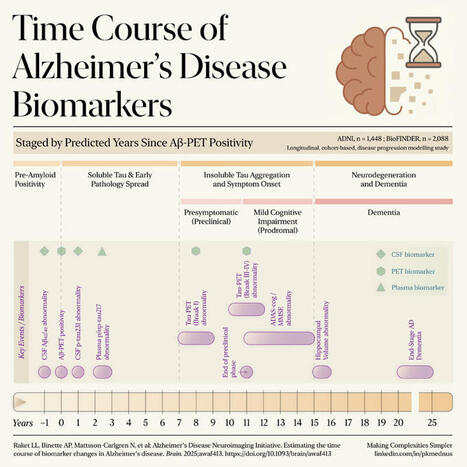
A new analysis (https://lnkd.in/gY7igTAC) used longitudinal data from 1,448 subjects in the Alzheimer’s Disease Neuroimaging Initiative (ADNI) and 2,088 subjects in the BioFINDER study. The researchers created a continuous disease timeline by using a modelling technique that aligns patient observations based on amyloid-PET scans and cognitive scales, specifically the MMSE and ADAS-cog.
The timeline is centered at t = 0, which represents the predicted time a subject reaches Aβ-PET positivity.
The predicted disease time showed a significantly stronger pattern of correlation with unseen validation biomarkers (Aβ, tau, and neurodegeneration markers) compared to other staging methods, like existing biomarker clocks (all pairwise p values were less than 0.05).
The model revealed a precise sequence of biomarker abnormality, aligning with the disease progression. The total progression from Aβ-PET positivity to end stage AD dementia (MMSE = 0) was estimated to span 20 to 25 years.
The initial biological sign detectable by biofluid occurred first: CSF Aβ42/40 became abnormal approximately 1 year prior to Aβ-PET positivity. The earliest markers of soluble phosphorylated tau followed closely, with CSF p-tau231 and plasma p/np-tau217 becoming abnormal 1 to 3 years after Aβ-PET positivity.
This change in soluble p-tau happened many years before insoluble tau was detected by imaging, suggesting these soluble markers could reflect early changes caused by Aβ accumulation, not established neurofibrillary tangles.
Insoluble tau pathology, measured by Tau-PET, became clearly abnormal much later, with Braak I regions crossing the abnormality threshold 7 to 9 years after Aβ-PET positivity. The presymptomatic phase ended and cognitive measures (ADAS-cog/MMSE) become abnormal during the Mild Cognitive Impairment (MCI) stage, 11 to 15 years after Aβ-PET positivity.
Neurodegeneration, such as loss of hippocampal volume, became clearly abnormal during the dementia stages, 15 to 16 years after Aβ-PET positivity.
A key limitation of this work is the assumption that AD evolves around a single continuous trajectory; in reality, patient age and co-pathologies can influence the rate of decline and manifestation of symptoms. Also, data reliance on subjects who remain in the study may lead the model to estimate a longer disease duration in the later stages than is seen in typical patient populations.
These models provide continuous time disease staging that could improve prognosis and help in the evaluation of disease modifying treatments, by accurately highlighting the relative timing of pathological events across the AD continuum.
Noté /5. Retrouvez Textbook of Laboratory Medicine Clinical Procedures | Volume 1 et des millions de livres en stock sur Amazon.fr. Achetez neuf ou d'occasion
In this video, we explain Laboratory Collection Vials / Blood Collection Tubes, including their color codes, additives, and uses in routine laboratory tests. This video is specially designed for MLT students, lab technicians, and medical students.
🔬 Topics Covered:
What are collection vials?
Color-coded blood collection tubes
Additives present in each vial
Tests performed using each tube
Common mistakes during blood collection
📌 This video will help you improve your practical knowledge for exams and clinical laboratory work.
👉 Subscribe to MLT Learning Studio for more lab techniques, pathology, microbiology, and hematology videos. MLT Learning Studio Collection vials of laboratory Blood collection tubes Vacutainer tubes Blood vials color code Laboratory practical MLT MLT lab techniques Blood sample collection Hematology tubes Biochemistry blood tubes Pathology lab vials MLT students Pakistan Medical laboratory technology Lab technician training Urdu medical lecturesBlood Collection Tubes Color Code (One by One) 2️⃣ EDTA, Citrate, Heparin – Difference 3️⃣ Common Errors in Blood Sample Collection 4️⃣ Order of Draw in Blood Collection 5️⃣ Serum vs Plasma (Practical Explanation)
🧬 Une étape clé pour une biologie plus médicale, plus entreprenante et plus attractive ! 💫 ✨
La semaine dernière s’est tenue une conférence majeure qui a fait salle comble à Paris : 🎤 « La Biologie médicale – Avenir, enjeux et perspectives », une matinée de réflexion collective réunissant biologistes, cliniciens, industriels, institutions et représentants de patients.
🌷 Organisée par Ortus - Communication et information en Santé, l’événement a permis de croiser les regards et d’imaginer ensemble l’avenir d’une discipline au cœur du diagnostic, du parcours de soins et de l’innovation.
❤️ J’ai eu l'honneur de présenter : « Les défis en Cancérologie par les tests biologiques : l’exemple de la #BiopsieLiquide🩸» Une discussion riche, passionnée, tournée vers un objectif commun : accélérer l’accès à une médecine vraiment personnalisée pour les patients atteints de cancer.
💬 Trois tables rondes, un même fil conducteur : - Comment rendre la biologie médicale plus visible et plus stratégique dans le parcours patient ? - Comment favoriser l’innovation, le financement, l’accès au diagnostic de pointe ? - Comment mieux former, attirer et accompagner les biologistes de demain ?
🙏 Bravo et merci à l’ensemble des participantes et participants, dont : Clémentine BODY, Katell Peoc'h, Catherine Alix-Panabières, Lionel Barrand, Raphaël Berenger, Thierry Bouchet, Jean-Paul Feugeas, Jean-Louis Beaudeux, edwige caroff, Jean-Louis Guéant, Marc Maynadié, Philippe Piet, Walid Sabeur, jean-françois Thebaut, Jean Claude AZOULAY, François BLANCHECOTTE, Jean-Philippe Brunet, Magali Marmiesse, Jean-Pierre Canarelli, Cédric CARBONNEIL, Aurélie Dossier, Bruno Lacarelle, Legrand Line, Hervé Puy, Gérard Raymond… et tous les autres ! 👥 👥 👥
🤝 Merci aux partenaires engagés pour l’avenir de notre discipline : Les Biologistes Médicaux – Syndicat des Biologistes - SDBIO – SFBC – SLBC – SNBH – SNMB – SNMBCHU – SIDIV – France Biotech FNSIP-BM • Fédération Nationale des Syndicats d'Internes en Pharmacie et en Biologie Médicale représentée par Walid Sabeur.
💛 Rendez-vous pris pour la suite : bâtir une #BiologieMédicale plus #innovante, mieux financée, plus accessible, au service de la prévention et des soins. 🔗 Pour une biologie qui innove. Pour une biologie qui soigne. Pour une biologie qui compte.
🧬 Comprehensive Overview of Viral Hepatitis (A–E) A structured understanding of hepatitis is essential for accurate diagnosis, laboratory interpretation, and optimal patient management. Each type exhibits distinct modes of transmission, serological markers, and clinical outcomes. This infographic effectively highlights:
• Transmission patterns – fecal-oral vs. blood-borne
Cette semaine, zoom sur Biorecos NABM, un outil 100% gratuit ! Une version modernisée et intuitive du site de la NABM, pensée pour simplifier la vie des biologistes, secrétaires et techniciens de laboratoire.
💡 En un clic, accédez aux: • Conditions de prescription et de cotation • Statut de remboursement (prise en charge à 100 % ou non) • Analyses pouvant être rajoutées à l’initiative du biologiste • Les codes incompatibles • Et, travail en cours : des paragraphes explicatifs pour chaque analyse 🔎
Bonus : certaines analyses sont déjà reliées aux recommandations existantes, accessibles directement depuis notre espace Biorecos – Base de recommandations.
🔗 Découvrez Biorecos NABM ici : https://biorecos.fr/nabm/ 🔐 L'API NABM BIOrecos : pour rester connecté avec les nouvelles versions de la NABM
#biologiemédicale #innovationsanté #recommandations #biorecos #laboratoire #NABM Bastien CARRARA Victoria Aoun Brahim Elo Augustin Abadie
A new test shows promising results for detecting latent tuberculosis infection in resource-limited settings. This is according to a study from Karolinska Institutet, published in the journal Clinical Infectious Diseases.
Le 11 juillet 2025 dans Décrets Prorogation des orientations prioritaires de DPC Les orientations nationales prioritaires de DPC pour 2023-2025 sont prorogées pour l’année 2026 par arrêté en date […] Lire la suite Le 20 juin 2025 dans Actualités Demandes d’évaluation d’actes La campagne des demandes...
16/09/2025 Alors que la campagne de vaccination contre la grippe et le Covid-19 va bientôt débuter, les biologistes médicaux, pourtant prêts à participer à cette mission de santé publique, attendent toujours la mise en place du cadre réglementaire nécessaire pour réaliser ces actes.
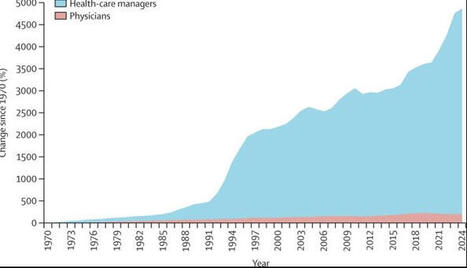
The Lancet Group just published a review "Health care in the USA: money has become the mission".
Some sobering stats: 1. Exponential growth of health care managers relative to stagnant growth of #physicians (see figure) 2. For profit entities dominate free standing labs and imaging, dialysis, health insurance, surgical centers and more 3. Health insurance is dominated by conglomerates. UnitedHealth, ranks third on the Fortune 500 list, had profits north of $30 billion in 2024 4. Private insurers now derive most of their revenues (and up to 90% of their profits) from subcontracts to provide coverage for enrollees in Medicare and Medicaid 5. Private equity purchases of health-care assets increased from $2 billion in 2001 to $151 billion in 2021
Vous souhaitez réaliser un bilan sanguin sans prescription médicale ? ➡️ C’est tout à fait possible dans les laboratoires.
✅ Les analyses sont à votre initiative et à votre charge (non remboursées par l’Assurance Maladie). ✅ Elles ne remplacent ni une consultation médicale, ni un examen clinique. ✅ Nos biologistes médicaux sont à votre écoute pour vous conseiller et, si besoin, interpréter vos résultats.
👉 Bon à savoir : les examens de dépistage des Infections Sexuellement Transmissibles (IST) sont pris en charge à 100% sans ordonnance et sans avance de frais :
🔹Moins de 26 ans ? 👉 Il vous suffit de présenter votre carte Vitale : sans avance de frais.
🔹26 ans et + ? 👉 Dépistage toujours possible sans ordonnance, avec carte Vitale + mutuelle pour bénéficier du dépistage sans avance de frais.
🦠 IST concernées :
▪️ Chlamydia ▪️ Gonorrhée ▪️ Syphilis ▪️ Hépatite B
🚨 Et n’oubliez pas : le dépistage du VIH/SIDA est également sans ordonnance et sans avance de frais pour tous, quel que soit l’âge.
To get content containing either thought or leadership enter:
To get content containing both thought and leadership enter:
To get content containing the expression thought leadership enter:
You can enter several keywords and you can refine them whenever you want. Our suggestion engine uses more signals but entering a few keywords here will rapidly give you great content to curate.




 Your new post is loading...