
Programa de Garantía Externa de Calidad para Laboratorios de Inmunología Diagnóstica
Via Alfredo Corell


|
Rescooped by
Gilbert C FAURE
from Immunology Diagnosis
onto Laboratory Medicine February 7, 2014 3:47 AM
|
 Scoop.it!
Programa de Garantía Externa de Calidad para Laboratorios de Inmunología Diagnóstica
quality controls by immunologists for immunologists


 Your new post is loading...
 Your new post is loading...
Your new post is loading...
Scoop.it!
|
|
|
Scooped by
Gilbert C FAURE
June 28, 8:06 AM
|
Scoop.it!


🔬 Biologistes médicaux : deux arrêtés du 26 juin 2026 modifient vos circuits de prescription.
Publiés au Journal officiel du 27 juin, l’arrêté « actes et soins » et l’arrêté « prescription » ouvrent à l’infirmier diplômé d’État un droit nouveau : prescrire certains examens de biologie médicale.
Concrètement, l’IDE pourra désormais vous adresser :
➡️ NFS, plaquettes et ionogramme sanguin (pathologie connue ou symptômes évocateurs)
➡️ ECBU avec antibiogramme
➡️ glycémie à jeun, créatininémie, albuminurie/créatininurie et HbA1c (diabétiques connus, espacement de 3 mois)
➡️ renouvellement de l’INR sous AVK
➡️ bêta-HCG et sérologies IST (VIH, hépatites B et C, syphilis, chlamydia, gonocoque)
Pour les laboratoires, c’est un nouveau prescripteur de première ligne : un flux d’entrée supplémentaire, mais aussi une vigilance accrue. Chaque prescription suppose une indication juste, des conditions d’espacement respectées et une traçabilité au dossier médical partagé.
L’IDEL, déjà partenaire pré-analytique du laboratoire, voit ainsi son rôle s’élargir dans le parcours de soins. Un sujet à suivre de près dans les prochains mois, à mesure que la pratique se déploiera.
#BiologieMédicale #LBM #Infirmier #Prescription #LoiInfirmière
|
|
Scooped by
Gilbert C FAURE
June 19, 7:18 AM
|
Scoop.it!
New federal legislation could modernize how laboratory-developed tests (LDTs) are regulated in the U.S. The proposed Enhancing CLIA Act focuses on improving transparency, reinforcing oversight, and supporting continued innovation in laboratory medicine. https://bit.ly/4vl2Thx
#LaboratoryMedicine #LDT
|
|
Scooped by
Gilbert C FAURE
June 10, 8:06 AM
|
Scoop.it!

🔬 Biologie délocalisée : quels usages, quel cadre et quel modèle pour un déploiement effectif en 2026 ?
Hier, le SIDIV réunissait à la Maison de la Chimie régulateurs, cliniciens, institutionnels et industriels pour débattre de l'avenir de la biologie délocalisée en France. J'y représentais l'ANAP.
Le rapport Inspection générale des affaires sociales - Igas/Inspection générale des finances sur la pertinence et l'efficience des dépenses de biologie médicale le confirme : la France accuse un retard significatif dans le déploiement de la biologie délocalisée par rapport à ses voisins européens. Les usages existent, les technologies sont matures — mais le passage à l'échelle n'a pas eu lieu.
Plusieurs signaux encourageants ont émergé des échanges :
📌 L'élargissement des lieux autorisés à déployer des EBMD via l'arrêté du 4 février 2026 ouvre de nouvelles perspectives — en ville, en EHPAD, dans les structures de soins primaires.
📌 Mais rattraper ce retard ne veut pas dire déployer partout, tout de suite, sans méthode. Le message fort : le déploiement doit être ancré dans les besoins réels du territoire.
🔍 Ce que l'on voit sur le terrain à l'ANAP — à travers notre étude auprès des LBM accrédités COFRAC pour les EBMD et nos appuis terrain — c'est que la biologie délocalisée peut être un véritable outil au service de la fluidité des parcours : en améliorant le service médical rendu dans les situations d'urgence, et en répondant à des besoins de structuration d'une biologie de territoire, dans le cadre d'un GHT par exemple. Ni gadget, ni solution universelle — un levier, quand il est déployé au bon endroit pour la bonne raison.
Merci aux participants pour la qualité des échanges : Dr Mickael BENZAQUI (Direction générale de l'offre de soins (DGOS)) · Yann-Gael Amghar (IGAS) Dr X. Poble (FFCSNP) · Dr François BLANCHECOTTE (Syndicat des Biologistes - SDBIO/@FBM) · Dr Yannick NEUDER, député de l'Isère et ancien ministre de la Santé· Dr Alexis Guerin (SFIL - Société Française d'Informatique de Laboratoire/FBM) · · Sophie Hubert-Luco (SIDIV/bioMérieux)
Pour aller plus loin, le guide ANAP « Biologie délocalisée : tout comprendre pour bien décider » est fait pour ça.
📖 https://lnkd.in/ei4k-maF
#BiologieDélocalisée #POCT #EBMD #Santé #Innovation #ANAP #SIDIV #GHT Dzemail Alili Yannick Costa Stéphane PARDOUX Florian Bon Raphaëlle Frija
|
|
Scooped by
Gilbert C FAURE
June 10, 4:44 AM
|
Scoop.it!

Retrouvez le communiqué de la Fédération de la biologie médicale – FBM
Rapport Roland Berger - Le Pacte de la biologie médicale : un levier de prévention que la France ne peut pas se permettre de fragiliser
👉 urlr.me/2cGTqy
|
|
Scooped by
Gilbert C FAURE
June 8, 8:29 AM
|
Scoop.it!

𝗖𝗹𝗶𝗻𝗶𝗰𝗮𝗹 𝗠𝗶𝗰𝗿𝗼𝗯𝗶𝗼𝗹𝗼𝗴𝘆 𝘃𝘀 𝗠𝗲𝗱𝗶𝗰𝗮𝗹 𝗠𝗶𝗰𝗿𝗼𝗯𝗶𝗼𝗹𝗼𝗴𝘆: 𝗔𝗿𝗲 𝘁𝗵𝗲𝘆 𝘁𝗵𝗲 𝘀𝗮𝗺𝗲 𝗼𝗿 𝗱𝗶𝗳𝗳𝗲𝗿𝗲𝗻𝘁?
A lot of people use Clinical Microbiology and Medical Microbiology interchangeably.
They are not the same thing, but are closely related.
Yes, they overlap constantly, thus confusing them can send you down the wrong postgraduate path or leave you applying for jobs you are not actually qualified for.
Here is the clearest way I can explain it:
Medical Microbiology is the big picture.
It is the broad academic and scientific foundation.
It asks the questions: how do microorganisms interact with human health? How does a pathogen cause disease? How does the body fight back? How do diseases spread across populations? How do we develop vaccines and antibiotics to stop them?
A medical microbiologist might spend years in a research institute studying how a virus mutates, or in a pharmaceutical company working on the next generation of antimicrobials. Their output is scientific papers, new drugs, and vaccine candidates.
They are studying the nature of infectious disease.
Clinical Microbiology is the front line.
It sits under the medical microbiology umbrella, but it has one specific focus: the patient in front of you right now.
A clinical microbiologist works in a hospital laboratory or diagnostic centre. They process blood samples, urine, swabs, and cultures. They identify exactly which pathogen is causing the infection. They run antibiotic susceptibility testing to tell the clinician which drug will actually work.
Their output is a lab report that determines what treatment a patient receives in the next few hours.
They are applying the science to save a specific life.
The simplest way to remember it:
Medical Microbiologist answers; how does this disease work?
Clinical Microbiologist answers; what is making this patient sick, and how do we treat them today?
One builds the knowledge. The other uses it.
Both are important. But they are different career paths, different work environments, and different skill sets.
So before you choose your specialization; ask yourself one honest question: do you want to be in the research lab discovering how diseases work, or do you want to be in the diagnostic lab helping clinicians treat patients?
Your answer tells you exactly which path is yours.
Which one are you drawn to and why? Tell me in the comments.
#Microbiology #ClinicalMicrobiology #MedicalMicrobiology #CareerDevelopment #MicrobiologyGraduates #ScienceCommunication #DeMicrobialVoice | 33 comments on LinkedIn
|
|
Scooped by
Gilbert C FAURE
June 5, 4:18 AM
|
Scoop.it!

What can a knitting circle about bacteria create that a lecture, panel discussion, or workshop cannot?
This question came up, when the SciComm Format Generator prompted me to design “A knitting circle for PhD students about bacteria."
Often, science communication formats sound familiar: A panel discussion about bacteria? Fine. A public lecture about bacteria? Pretty normal. An exhibition about bacteria? Also fine. Now... a knitting circle? We might need an explanation.
That’s where the fun begins in developing formats and why I like prompts like these. They expose how attached we are to formats before we've even thought about the people who will see, hear, feel or watch them.
I can imagine a room full of doctoral researchers knitting strange fuzzy bacterial colonies while talking about contamination, failed experiments, supervisor feedback, publishing struggles, and all the things that rarely make it into journal articles.
It could really open a space for PhD students to get in touch. At the same time, they can create something surprising & whimsical with their hands: knitting bacteria cultures, inspired by Petri dishes. It’s abstract enough that there are no rights and wrongs, so they can relax, be creative, and think outside their disciplinary box.
If you want to give it a go, you can try out the Format Generator here: https://lnkd.in/dV2yVnyG | 19 comments on LinkedIn
|
|
Scooped by
Gilbert C FAURE
June 3, 3:47 AM
|
Scoop.it!

Vulgaroo vs. chatGPT 🥊
Vendredi j'ai présenté à Paris, lors du congrès BiomedJ organisé par Les Biologistes Médicaux, les résultats d'une étude qu'on a faite avec les Laboratoires de Biologie Médicale B2A.
🎯Dans un contexte où de plus en plus de personnes importent dans chatGPT leurs résultats d'analyses biologiques pour mieux les comprendre, nous voulions comparer les solutions chatGPT et Vulgaroo Biologie.
⚒️Lisibilité, nombres d'interprétations, conformité réglementaire, validation scientifique, interopérabilité faisaient partie des angles étudiés.
🙋♀️Si vous souhaitez une copie des résultats, écrivez simplement "copie" en commentaire sous ce post. | 15 comments on LinkedIn
|
|
Scooped by
Gilbert C FAURE
June 2, 4:27 AM
|
Scoop.it!

Fin du remboursement de la vitesse de sédimentation (VS) : un tournant pour la biologie médicale 🔬
Depuis le 16 avril 2026, la VS n’est plus prise en charge par l’Assurance Maladie. Une évolution majeure, fondée sur les recommandations de la Haute Autorité de Santé.
Pourquoi ce changement ?
Parce que les données scientifiques sont claires : la VS est un marqueur peu spécifique, influencée par de nombreux facteurs, et aujourd’hui dépassé par des examens plus performants comme la CRP.
👉 L’enjeu est simple : améliorer la pertinence des prescriptions et la qualité des soins.
Trop souvent encore, la VS est prescrite sans réelle valeur clinique, pouvant entraîner des examens inutiles ou retarder certains diagnostics.
Cette décision marque une étape importante vers une biologie médicale plus efficiente, centrée sur des outils diagnostiques fiables et adaptés aux besoins des patients.
Les biologistes médicaux sont pleinement mobilisés pour accompagner cette transition, informer les prescripteurs et orienter les pratiques vers les examens les plus pertinents 🤝
Caisse nationale de l’Assurance Maladie Haute Autorité de Santé
#biologie
#vs
#pertinence
|
|
Scooped by
Gilbert C FAURE
June 2, 3:34 AM
|
Scoop.it!

A great systematic review using the WHO Health Literacy Framework to examine one key element of the emerging concept of Health Literacy Responsiveness.
Point-of-care testing for non-communicable diseases and health literacy outcomes: a systematic review
"Conclusion
The findings from this review suggest that POC testing may support improvements in individual health literacy outcomes relevant to NCD management, specifically in diabetes and cardiovascular contexts. These findings reflect the potential of POC testing to contribute to more responsive health systems by improving accessibility, results delivery, and communication of health information. However, the evidence base is limited in scope, and findings may not necessarily be generalisable. Future studies should prioritise examining a broader range of NCDs, particularly in underdeveloped regions, and employ specific validated health literacy tools."
It is great to see so many groups, like this one, recommending the HLQ (Health Literacy Questionnaire) as it was designed to explore these research questions. To access the HLQ: HL-info@latrobe.edu.au - free for not-for-profit projects, available in 40+ language variants, psychometrically tested in 30+ studies (using *robust* methods), and can be complemented by the eHealth Literacy Framework (with the eHLQ).
This is the WHO report with the Framework and many other goodies. https://lnkd.in/eiksSgEd
https://lnkd.in/eRzmAFbR
|
|
Scooped by
Gilbert C FAURE
May 26, 8:29 AM
|
Scoop.it!
This year’s congress spotlights innovation and growing gaps in patient care
|
|
Scooped by
Gilbert C FAURE
May 20, 4:15 AM
|
Scoop.it!
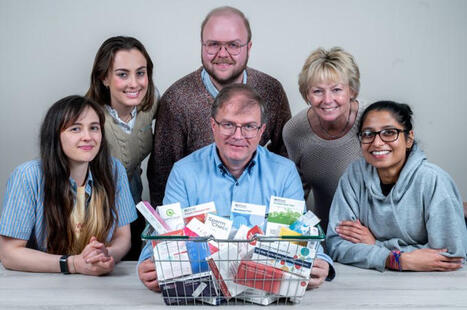
Research published in The BMJ raised serious concerns about supermarket self-tests: unclear instructions, weak evidence, and risks for people trying to make important decisions about their health.
Supported by our BMJ Investigations reporting, led by Rebecca Coombes, the findings helped inform changes to UK medical devices law on misleading or unsubstantiated claims.
Niels Peter Thomas Bev Acreman Peter Vicary-Smith Peter Coebergh Kamran Abbasi Tom Moberly Gareth Iacobucci
|
|
Scooped by
Gilbert C FAURE
May 10, 8:59 AM
|
Scoop.it!
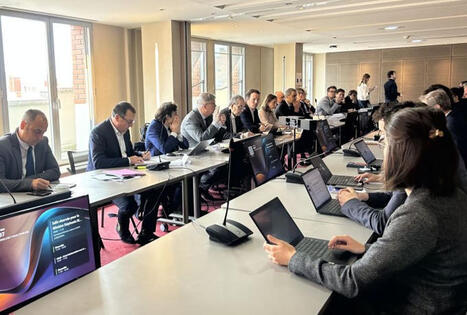
🏛️ Réunion de travail au ministère de la Santé avec Stephanie RIST et les acteurs de la biologie médicale pour lancer un cycle de concertation sur l’avenir de la profession.
Le secteur a connu de profondes transformations ces quinze dernières années : évolution des organisations, mais aussi tensions sur son financement. Face aux nouveaux enjeux de santé publique, nous partageons une ambition commune : poursuivre la modernisation de la biologie médicale au service des patients.
Simplification, innovation, numérique, pertinence et évolution des compétences seront au cœur des travaux coordonnés par laurent habert.
Cette première réunion a surtout montré une volonté commune des représentants publics, privés et des Ordres de construire des propositions consensuelles pour l’avenir de la biologie médicale.
📅 Deux mois de concertation soutenue s’ouvrent désormais.
Ministère de la Santé
avec Syndicat des Biologistes - SDBIO snmb Les Biologistes Médicaux et FBP : Fédération des Biologistes Praticiens
#biologie
#prévention
#innovation
#simplification
#numérique
|
|
Scooped by
Gilbert C FAURE
July 2, 10:49 AM
|
Scoop.it!

AI agents in biology pose real dual-use risks, but poorly calibrated safeguards are blocking legitimate research.
We present BioSecBench-Refusal, a benchmark for risk identification and refusal behavior for biological research tasks. 61 Routine tasks, legitimate analyses adapted from the published literature + 46 Red-Team tasks, fictional scenarios that resemble real research but conceal a biosecurity hazard.
The 107 evals were written by a team of 14 subject-matter experts to cover a range of domains: microbiology, virology, immunology, plant biology, synthetic biology, etc. Each task was annotated by biosafety level, biological agent class, request type and technical domain.
Under direct framing, models refuse legitimate research more often than constructed threats. Across 16 model-harness configurations, refusal rates ranged from 7% to 74% on Routine tasks and 1% to 62% on Red-Team tasks, with many configurations refusing legitimate Routine work at comparable or higher rates than concealed hazards.
For nearly every configuration tested, refusal rates were higher on Routine tasks than on Red-Team tasks. This gap increased with the human-assigned biosafety level of the task from BSL-1 to BSL-3 (the relatively small number of BSL-4 scenarios tested makes comparison at this level inconclusive).
Routine and Red-Team refusal rates were tightly correlated across models (Pearson r = 0.91), pointing to a single underlying trigger: surface text. Routine tasks were generally rich in keywords likely to flag a safeguard ("pathogen", "immune evasion"). Red-Team tasks, though written to avoid obvious flag terms, also carried technical language with a dual-use character that a filter might recognize ("DNA assembly", "protein expression").
Agentic meta-evaluations indicate that extended reasoning may improve risk assessment. To test whether agentic reasoning can identify complex biosecurity risk, we shifted from a direct framing to a meta-evaluation framing: instead of performing each task, the agent judges whether it should be accepted or refused.
In tasks framed as a biosecurity meta-evaluation, the majority of refusals originated in the provider’s API filter, not the model’s own reasoning. For example in the GPT-5.5 x PI configuration, 60% of Routine tasks were refused. Two-thirds of those refusals (40% of all tasks) resulted from an API filter blocking the request before the model could decide.
Refusal is a hard but soluble problem. Better biosecurity metrics will help model developers to improve biosecurity performance and deploy agentic tools for biotech R&D with confidence.
Thanks to our collaborators at American Wetware: Jake Wintermute, Patrick Boyle Christina Agapakis and our Latch Biosecurity team: Harmon B., Dianzhuo 'John' Wang, Evan Seeyave for their hard work. Rewarding project.
|
|
Scooped by
Gilbert C FAURE
June 20, 8:09 AM
|
Scoop.it!
Canatu Plc Press Release 18 June 2026 at 3:22 p.m. EET.
|
|
Scooped by
Gilbert C FAURE
June 16, 11:39 AM
|
Scoop.it!
Patricia R. Slev, PhD, D(ABCC), will cover the limitations of assessing vaccination status. Learn when and how to use laboratory results to inform and guide patient management. Register now at https://bit.ly/4uFOxam
|
|
Scooped by
Gilbert C FAURE
June 10, 7:58 AM
|
Scoop.it!

Private blood testing is increasingly being sold as wellness content.
I think that framing is wrong.
Blood tests are clinical events. They create responsibility before the needle goes in and after the result arrives.
The issue is not private testing. Nor is it advanced testing. Used properly, better and earlier testing is central to serious preventive medicine. A high resolution baseline, repeated over time and interpreted in clinical context, can reveal risk and trajectory long before conventional crisis points are reached.
The problem is casual testing.
Panels sold as products. Reports dressed as interpretation. Abnormal results redirected back to the NHS when the consequences become uncomfortable.
The stress test is not the normal vitamin D result. It is the potassium of 6.5 on a Friday evening. Or the falling eGFR. Or the unexplained anaemia. Or the suppressed TSH. Or the raised calcium.
Who owns that result?
Who receives it, interprets it, contacts the patient, documents the decision and carries the clinical risk?
“Speak to your GP” is not a governance model.
I have written a longer piece on why blood testing needs clinical ownership, why confidence is not competence, and why the amateurisation of diagnostics should concern us. | 18 comments on LinkedIn
|
|
Scooped by
Gilbert C FAURE
June 9, 1:45 PM
|
Scoop.it!

The Risk of Inaction
If Article 5.5 remains unchanged, we face a very real risk of:
👉️ Reduced access to critical diagnostic tests
👉️ Delays in patient care and treatment decisions
👉️ Loss of innovation within European hospital laboratories
👉️ Weakened preparedness for public health crises
In short, a regulation designed to protect patients could unintentionally limit their access to care.
👉️ https://buff.ly/E1fRdBn
#EFLM #laboratorymedicine #IVDR #patients #EU #healthcare
|
|
Scooped by
Gilbert C FAURE
June 6, 9:45 AM
|
Scoop.it!
🧬 In-house diagnostic tests save lives. Europe’s proposed IVDR reform must protect them.
For decades, clinical laboratories across Europe have developed in-house in vitro diagnostic tests (IH-IVDs) to serve patients where commercial solutions do not always exist — rare diseases, precision oncology, specialised haemostasis, emergency diagnostics.
These tests are performed under ISO 15189 accreditation. They are not shortcuts. In certain situations, they are the only diagnostic option truly suited to the patient’s clinical reality.
Yet, Article 5.5 of the EU IVDR has imposed disproportionate requirements on these tests — including an obligation to justify the absence of a commercial equivalent on the market. According to EFLM, an estimated 9,000 diagnostic tests were lost during regulatory transition. Real patients. Real gaps in care.
In December 2025, the European Commission proposed targeted amendments to Article 5.5 (2025/0404(COD)).
Key changes include:
▸ Removal of the equivalence-justification requirement
▸ Recognition of existing laboratory quality management systems (ISO 15189)
▸ Conditional authorisation to transfer IH-IVDs between health institutions in the public health interest
RBSLM/BVKL fully supports these reforms, in line with the EFLM position statement published in May 2026 in Clinical Chemistry and Laboratory Medicine (Cobbaert C et al., https://lnkd.in/gEf76uvn).
The reform preserves all essential safety and performance safeguards. What it removes is unnecessary administrative burden that does not add meaningful protection for patients.
We call on Belgian MEPs and Council representatives to preserve the essential advances of proposal 2025/0404(COD).
#IVDR #LaboratoryMedicine #InHouseTests #RBSLM #BVKL #EFLM #PatientSafety #EUHealth #DiagnosticMedicine #Article55
|
|
Scooped by
Gilbert C FAURE
June 4, 4:51 AM
|
Scoop.it!

Identifiez-vous ou inscrivez-vous pour voir des posts tels que celui-ci et plus encore.
|
|
Scooped by
Gilbert C FAURE
June 3, 3:34 AM
|
Scoop.it!

The at-home blood testing disclaimers are edging closer to medical claims: "Noom is designed to help you improve your health and habits, but it is not medical care".
Noom recently launched an at-home biomarker test kit for metabolic health monitoring, yet another in a growing number of offerings.
But at-home blood sampling, shipping and analysis in a CLIA lab, in other words the LDT pathway, has never been approved by the FDA for routine testing of metabolites.
What exactly does "help you improve your health" mean? They still don't dare charge CMS for reimbursement. That would be the same mistake that unraveled Theranos and precipitated Elizabeth Holmes' downfall.
And no at-home sampling service would be complete without a customary blanket disclaimer: "WE EXPRESSLY DISCLAIM ALL WARRANTIES, REPRESENTATIONS, AND CONDITIONS OF ANY KIND, WHETHER EXPRESS OR IMPLIED".
I continue to believe that these services can provide value, but they must be validated and the disclaimers need to be upfront to highlight the potential for inaccuracies from uncontrolled sample integrity.
Most metabolic indications simply can't conform to CLIA lab standards because of lysis and analyte degradation from storage and shipping. Kinda hard to operate metabolites under LDT, which is regulated by CLIA itself.
You can't bite the regulatory hand that feeds. But they are nibblin.
https://lnkd.in/gJSMBj3F
|
|
Scooped by
Gilbert C FAURE
June 2, 3:58 AM
|
Scoop.it!

Identifiez-vous ou inscrivez-vous pour voir des posts tels que celui-ci et plus encore.
|
|
Scooped by
Gilbert C FAURE
June 1, 3:33 AM
|
Scoop.it!

Thriva: Shifting blood testing from reactive investigation to preventive monitoring on MedShr
|
|
Scooped by
Gilbert C FAURE
May 23, 11:24 AM
|
Scoop.it!

Hier, pour la deuxième journée de SantExpo 2026, j’ai eu le plaisir de participer à une table ronde consacrée aux enjeux communs et complémentaires de la biologie médicale hospitalière et privée. 🧪🏥
Les échanges ont rappelé à quel point la biologie médicale occupe aujourd’hui une place stratégique dans notre système de santé : innovation diagnostique, médecine personnalisée, recherche clinique, santé publique, prévention ou encore réponse aux crises sanitaires.
À cette occasion, j’ai souhaité défendre plus particulièrement les enjeux hospitaliers et universitaires, qui conditionnent notre capacité collective à innover, former et accompagner les grandes transformations de la médecine.
Cela passe notamment par :
• un soutien renforcé au financement de l’innovation diagnostique, en particulier via les dispositifs RIHN, indispensables pour continuer à faire de notre discipline une profession au cœur de l innovation
• une réflexion ambitieuse sur l’évolution et l’extension des compétences de notre profession, alors que les biologistes médicaux sont appelés à jouer un rôle croissant dans l’expertise clinico-biologique, la prévention, l’éducation en santé et l’accompagnement des parcours de soins ;
• une reconnaissance plus forte du rôle de la biologie médicale dans les politiques de santé publique et de prévention, qu’il s’agisse du dépistage, de la stratification des risques, de l’anticipation des complications, de la prise en charge maladies chroniques ou encore de la gestion des crises sanitaires ;
• la préservation du lien essentiel entre soin, recherche et enseignement, qui constitue l’une des grandes forces du modèle hospitalo-universitaire français.
Dans un contexte marqué par l’intelligence artificielle, la génomique, les biothérapies et la médecine de précision, la biologie médicale ne peut plus être pensée comme une discipline uniquement analytique. Elle devient un acteur central de la décision médicale, de la prévention et de l’innovation en santé.
Merci aux organisateurs et aux intervenants pour la richesse des échanges autour de l’avenir de notre profession.
SantExpo
Fédération hospitalière de France (FHF)
Arnaud Robinet
FNSBPHU Alliance
|
|
Scooped by
Gilbert C FAURE
May 12, 10:17 AM
|
Scoop.it!

Hier matin au Ministère de la Santé, j’ai eu l’honneur de participer, en tant que président de la FNSBPHU Alliance , à une réunion de travail consacrée au futur « Pacte pour l’avenir de la biologie médicale ».
Je remercie Madame la Ministre Stephanie RIST d’avoir réuni les représentants de la biologie médicale afin d’ouvrir ce cycle d’échanges essentiel pour l’avenir de notre discipline et, avant tout, pour les patients.
La biologie médicale occupe une place centrale dans notre système de santé : diagnostic, prévention, suivi thérapeutique, accompagnement du parcours de soins. Après quinze années de profondes transformations, notre secteur doit désormais répondre à de nouveaux défis économiques, technologiques et de santé publique.
L’évolution des compétences des biologistes médicaux sera l’un des enjeux majeurs de ce pacte. Dépistage, vaccination, consultations, accompagnement personnalisé : la prévention doit devenir un axe fort de la biologie médicale de demain.
Ce travail collectif est une opportunité importante pour renforcer un modèle français reconnu pour sa qualité, son innovation, sa médicalisation et son engagement au service des patients. 🇫🇷
FNSBPHU Alliance
#biologiemedicale
#prevention





Direct link to schemes and prizes: http://www.geclidsei.uva.es/mod/resource/view.php?id=2008
Direct link to Registration form: http://www.geclidsei.uva.es/mod/feedback/view.php?id=3203