Your new post is loading...

|
Rescooped by
CIHEAM News
from CIHEAM Press Review
January 18, 2024 4:08 AM
|
Egypt’s wheat imports rose by more than a million metric tons in 2023, data seen by Reuters shows, with traders citing a dip in global prices from highs reached after Russia invaded Ukraine.
One of the world’s top wheat importers, Egypt uses the grain it buys for heavily subsidised bread available to more than two thirds of the North African nation’s 105 million population, Reuters reports.
|
|
Rescooped by
CIHEAM News
from CIHEAM Press Review
August 16, 2023 9:42 AM
|
After Russia said on Monday it would end the Black Sea Grain Initiative – a deal to provide safe export routes for about 20 per cent of the world’s grain – governments have been trying to assess the impact on world hunger.
Ukraine, sometimes called the breadbasket of Europe, is a major producer of sunflower oil, wheat and maize, but when Russia invaded in February 2022, turning much of the agriculturally rich east of the country into a warzone, wheat prices were hit hardest amid a general surge in global food prices.
|
|
Rescooped by
CIHEAM News
from CIHEAM Press Review
August 22, 2022 4:16 AM
|
Cairo halted tenders after the steep rise in prices that followed the outbreak of war in Europe, but since June it has locked in new large quantities that also show which countries are filling the gap left by Ukraine.
|
|
Rescooped by
CIHEAM News
from CIHEAM Press Review
June 21, 2022 11:41 AM
|
The state looked to local farmers for nearly double what they would in other years. When Russia launched its offensive on Ukraine in February, the Egyptian government perceived an immediate danger to about two-thirds of its population.
|
|
Rescooped by
CIHEAM News
from CIHEAM Press Review
May 19, 2022 10:56 AM
|
The European Commission has approved a €30 million Malta government scheme to support companies in the importation, wholesale and manufacture of grain products impacted by Russia’s invasion of Ukraine.
The scheme, ‘MDB Subsidised Loan Scheme’, was approved under the State aid Temporar
|
|
Rescooped by
CIHEAM News
from CIHEAM Press Review
January 18, 2022 4:14 AM
|
Egypt has breathed new life into an old agricultural project in its Western Desert, hoping it will increase food production and reduce imports. Egypt is reawakening a decades-old agricultural project in its Western Desert as it endeavors to feed its growing population and bridge a wide gap between food production and consumption in it.
|
|
Rescooped by
CIHEAM News
from CIHEAM Press Review
June 2, 2021 4:30 AM
|
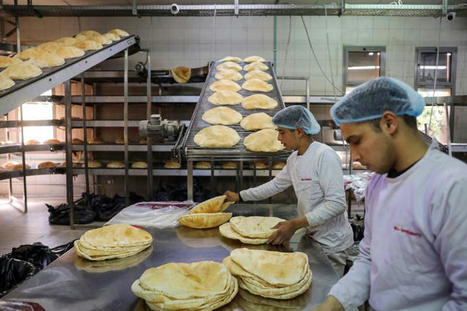
Lebanese bakers build projects to ensure food security as crisis-hit Lebanon increases food imports. As the deepening economic crisis continues, the soaring prices of basic necessities like bread have pushed many Lebanese below the poverty line. With Lebanon’s bakers relying on imported wheat to produce their goods, the cost of even the heavily subsidised traditional flatbread – eaten by rich and poor alike with most meals – has tripled since 2019.
|
|
Scooped by
CIHEAM News
February 18, 2019 9:45 AM
|
UkrAgroConsult, 12/02/2019 - Tunisia's state grains agency has issued an international tender to purchase 92,000 tonnes of durum wheat, 100,000 tonnes of soft wheat and 75,000 tonnes of feed barley, European traders said on Tuesday. The tender closes on Feb. 13, they said.The grains can be sourced from optional origins. The durum was sought in three 25,000 tonne consignments and one of 17,000 tonnes, the soft wheat in four 25,000 tonne consignments and the barley in three 25,000 tonne consignments. All were sought for shipment between March 15 and April 25 depending on origin supplied.
|
|
Scooped by
CIHEAM News
January 29, 2019 10:25 AM
|
Kapitalis, 28/01/2019 - Lors d’un récent séminaire sur la rationalisation des importations des céréales, l’Observatoire national de l’agriculture (ONA) a plaidé pour le stockage stratégique de cette denrée afin d’atténuer son coût en devises à l’import.
|
|
Scooped by
CIHEAM News
August 3, 2018 4:42 AM
|
Par Marine Jobert, Journal de l'environnement, 12/07/2018 L'alimentation au niveau mondial reposera d'ici 10 ans de plus en plus sur les importations, au profit de quelques pays. 2018 est marqué par une hausse attendue des importations vers les pays peu dotés en terres, les pays à forte croissance démographique, notamment le Moyen-Orient et l’Afrique du Nord, l’Afrique subsaharienne et l’Asie étant appelés à connaître une hausse de leurs importations nettes (quand le continent américain devrait augmenter substantiellement ses exportations). En Europe, l’importance croissante de la Fédération de Russie et de l’Ukraine sur le marché mondial des céréales, qui devrait se confirmer, est une évolution «notable». «Il sera essentiel que les exportateurs aussi bien que les importateurs puissent s’inscrire dans un cadre d’action ouvert et prévisible en matière d’échanges», a déclaré Angel Gurría, le Secrétaire général de l’OCDE. A l’échelle des Etats, les deux organisations recommandent de délaisser les mesures de soutien aux céréales fortement consommatrices d’eau (comme le maïs) pour augmenter le soutien en faveur du développement rural, de la lutte contre la pauvreté et de la production de produits horticoles à plus forte valeur ajoutée.
|
|
|
Rescooped by
CIHEAM News
from CIHEAM Press Review
October 26, 2023 6:00 AM
|
One aspect of our country as an island nation that seemingly continues to go unnoticed, but is of paramount critical importance, is its dependency on imported food and other essentials.
Currently, Malta imports approximately 80% of its food requirements, both fresh and frozen. With its limited shelf life, fresh produce demands swift delivery, which places a significant spotlight on the robustness of Malta’s supply chain. So, what is the current status of this supply chain, and what risks does it face?
|
|
Rescooped by
CIHEAM News
from CIHEAM Press Review
July 5, 2023 5:28 AM
|
Senegalese eaters consume an astounding 8 million baguettes per day. In 2022, Senegal imported more than 800,000 tons of wheat to meet demand. The country has imported most of its wheat from Russia in recent years, and the Russian war against Ukraine has made wheat and other commodity crop prices uncertain. But there is a growing movement to incorporate local, traditional crops into breadmaking to help reduce Senegal’s reliance on imports—and promote food sovereignty for West Africa.
|
|
Rescooped by
CIHEAM News
from CIHEAM Press Review
July 8, 2022 12:10 PM
|
Expecting Ukraine war-induced wheat supply problems, Egypt is experimenting with using sweet potatoes in bread, amid hopes that the new measure will significantly reduce wheat imports.
|
|
Rescooped by
CIHEAM News
from CIHEAM Press Review
May 30, 2022 4:59 AM
|
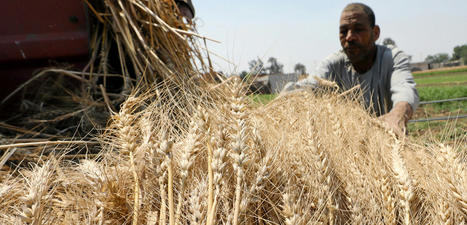
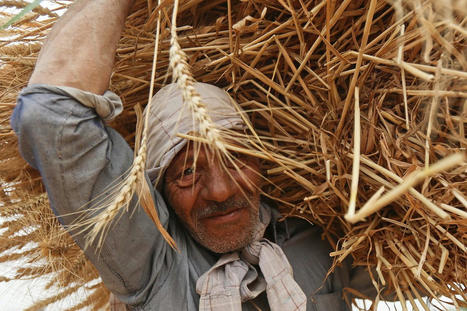
At an agricultural storage complex in the Egyptian city of Banha, Ahmed Nasser watches truck after truck offload freshly-threshed grain from the surrounding Nile Delta. Cut off from much of the Black Sea wheat it depended on by Russia's invasion of Ukraine, Egypt, often the world's biggest importer, is straining to extract whatever it can from a local harvest, now in full flow.
|
|
Rescooped by
CIHEAM News
from CIHEAM Press Review
March 15, 2022 6:49 AM
|
DUBAI: When Russian tanks trundled into Ukraine on Feb. 24, alarm bells started ringing in places even far away from the war zone. It transpired that many countries depended heavily on the two warring parties for their wheat supplies, with Arab states of the Middle East and North Africa region figuring prominently on the list. Which is partly why, for the governments of Lebanon, Egypt, Tunisia, Yemen, and Sudan, as well as international aid agencies, the conflict has felt much closer to home than the geographical distance suggests.
|
|
Rescooped by
CIHEAM News
from CIHEAM Press Review
September 2, 2021 11:11 AM
|
Tanya Nasr grew up with the taste of her grandmother's tangy pomegranate molasses but had never made it herself until Lebanon's economic crisis and COVID-19 took her back to her home village in the mountains.
|
|
Scooped by
CIHEAM News
February 18, 2019 9:48 AM
|
Infomédiaire, 12/02/2019 - Les opérateurs australiens sont très intéressés par le marché céréalier marocain à fort potentiel d’importation, a déclaré, à Sydney, le ministre de l’Agriculture, de la pêche maritime, du développement rural et des eaux et forêts, Aziz Akhannouch. « Les opérateurs australiens ont manifesté un grand intérêt pour le marché marocain », réputé pour être un grand importateur des céréales, a indiqué M. Akhannouch dans une déclaration en marge de la visite d’une délégation marocaine au siège de GrainCorp, leader Australien d’exportation de céréales. Le marché céréalier marocain à fort potentiel d’importation intéresse particulièrement les exportateurs australiens qui cherchent...
|
|
Scooped by
CIHEAM News
January 29, 2019 11:07 AM
|
L'import des céréales explose! En 2018, la facture a crevé le plafond à 12,8 milliards de dirhams. Et les deux tiers ont concerné les achats de blé. Le reste a été dédié à l’importation du maïs dont le pays est importateur net. Ceci, intervient après deux campagnes record. L’explication tient en partie à la structure des écrasements des minoteries qui font toujours une large place au blé d’importation. Au-delà, c’est la difficulté à transformer la filière céréalière. Repères - 200 kg de consommation de blé/habitant/an: 3 fois plus que la moyenne mondiale!
- Un coût moyen annuel à l’import de 8 milliards de DH (moyenne 2008-2018)
- 66 millions de quintaux importés dont 38 millions de blé
- 55% des besoins en céréales couverts par la production locale (moyenne 2007-2017)
- 83 millions de quintaux de production des céréales (moyenne 2008-2018)
- 96,8 millions de quintaux en 2017-2018, dont 50% de blé tendre
- 17 millions de quintaux de blé tendre collectés en 2017-2018.
|
|
Scooped by
CIHEAM News
November 11, 2018 10:19 AM
|
By Ahram online, 08/11/2018 A report by Egypt's Ministry of Agriculture says that Egypt has imported 10.1 million tonnes of wheat from nine countries in Eastern Europe and Asia since January. One of the world's largest wheat importers, Egypt imported nearly 7.1 million tonnes from Russia, the report said. In second place came Ukraine at 100,000 tonnes. Cairo spends around $1.5 billion annually on wheat imports
|