An alternate approach to the traditional classroom teaching model has been working its way into Australian schools, enhancing the way students learn and discover. Known as project-based learning, it positions students as creators and authoritarians rather than just content consumers, to enable authentic, tangible, self-directed learning experiences, said Dr Jason Zagami, lecturer at Griffith University’s School of Education and Professional Studies.
A number of schools have shifted from the traditional classroom model of bell schedules to a rearranged learning experience in which students move from one activity to another in an organic way, Zagami said.
“Project-based learning can be implemented as part of a school’s curriculum and is driven by students’ interest in subjects,” Zagami explained. “Essentially you have a series of projects driving the learning process, and subject matter is addressed through those projects.
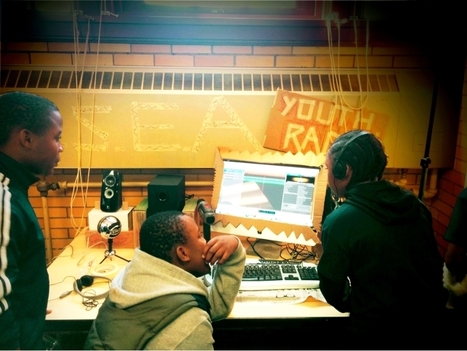
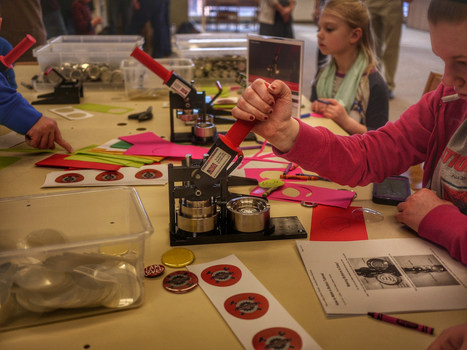
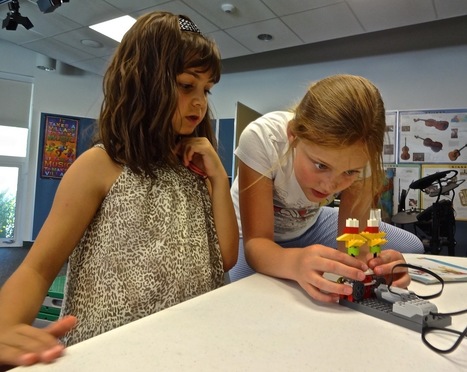
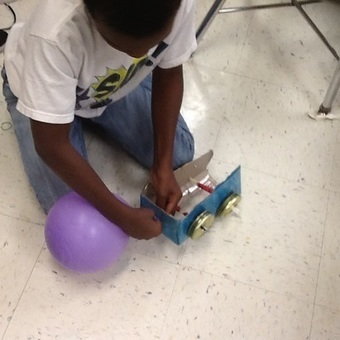
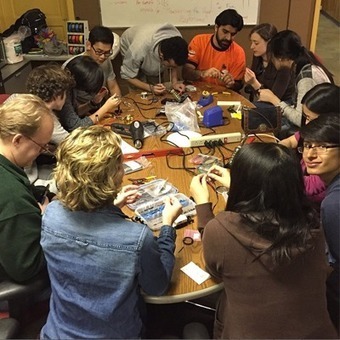
“Students come up with their own ideas about how problems can be solved and are given access to the resources required to solve those problems, whilst being guided by their teacher. This type of learning can do away with the need for collective instructions because students are engaged in their own independent studies. “We’re seeing this most evidently in the Makerspace movement, where students can work within spaces specifically set up for them to use, or learn to use, new types of tools. They can then use this knowledge to further develop their projects.”
Smart devices and other ICT tools are increasingly accepted by schools as learning agents, and can be used to leverage project-based learning, Zagami said.
“There is now such a wide range of digital tools available to aid project-based learning; this can lead to much more deeply engaging learning experiences, whereby students become technicians, investigators and subject specialists,” he continued.
“They can use ICT tools to develop high-order thinking skills – such as computational, design and systems – and further augment strategic thinking to become tomorrow’s inventors and entrepreneurs.”
The Smithsonian Institute in Washington DC is best known as ‘America’s attic’ -- a collection of 19 museums and galleries. But it’s also fast becoming a hotbed of maker innovation for the city’s teenagers. Introducing ARTLAB+.
Say ‘Smithsonian‘ and you’ll likely invoke references to such treasure troves as the National Museum of Natural History and the National Air and Space Museum. But nestled in the Hirshhorn Museum’s sunken sculpture garden is a very different space -- ARTLAB+: a tech-focused drop in center that’s increasingly popular with Washington DC teenagers.
ARTLAB+ was set up five years ago as part of a push to create community maker spaces. Today it’s a dedicated place for young people to socialize, learn about digital media, and participate in workshops.
While the Maker Movement continues to grow, it hasn't yet gained its greatest traction, which currently sits untapped in the minds of the students in front of us. Through forming partnerships with community makerspaces or building a school makerspace, educators and decision makers everywhere have the rare chance to help bring this truly all-inclusive learning experience into their schools, districts, and communities in order to help all students. Here are four ways that the "new industrial revolution" will help your students succeed and help breathe life back into your craft.
The maker movement has received a startling limelight in education in the recent years. To some, it has come across as yet “another” latest hype in education, but arguments for education to enable youth to make and develop basic necessities of life have been made as early as the 19th century by an influential author, no other than Henry David Thoreau. The recent sudden attention to this already established and fundamental principle is partly owing to the prevailing failures of the current school systems that have not been able to adequately prepare graduates with the relevant skills in order to keep up with the changing world of work. Today’s technological advancements have also acted as an essential benefactor to the maker movement, helping to “solve unsolvable problems”, while turning the process of learning into a more tangible and relevant foundation for the future reality (please see “The Maker Movement in Education: A New Global Transformation” by Dr. Paul Kim to learn principles for creating a maker space for education).
Indeed, the maker movement is what the new Education 2030 Agenda has been trying to facilitate and utilize to advance global education approaches. With the vision of ensuring quality and inclusive lifelong learning for all, the Agenda, also known as the Sustainable Development Goal 4 (SDG4), goes beyond targeting universal primary education, underpinning the notion of continuous lifelong and ‘lifewide’ learning. Eventually, the new Agenda aims to recognize education as the main driver in achieving and encompassing the other SDGs, such as eradicating poverty (SDG1) and hunger (SDG2), reaching gender equality (SDG5), promoting sustainable economic growth and productive employment (SDG8), reducing inequalities within and among countries (SDG10), and more.
Four years ago, Rutgers University in New Jersey opened the Rutgers Makerspace — a place where students, faculty, staff and other members of the community can learn to use equipment such as 3D scanners and printers, laser cutters, cutting and milling machines, electronics, and power and hand tools, for both university-related and personal projects. Here’s how the space has evolved into a bustling hub of creativity on campus.
Flashy spaces and shiny toys in makerspaces are enticing, but it takes time and explicit scaffolding to develop a true Innovator. Building and providing the space for Making to happen is one thing; nurturing a mindset that gives students the mental tools to engage with said spaces is a much larger, and timely, endeavor.
Best defined by the research and work of Carol Dweck, Jo Boaler and Eduardo Briceno, growth mindset is the recognition of the brain as a muscle that—with practice, effort, and nurturing—can continue to grow and develop. When you think of an inventor or innovator, past or present, what descriptors come to mind? Creative. Persistent. Curious. Fearless. Passionate. But educators know that most students don’t show up to your class on the first day of school exhibiting these qualities.
MIT already has a lot of great makerspace (something like 130,000 square feet!), including for 3D printing, CNC milling, laser cutting and other high-tech toys. They also have the classic machine-shop tools, and even a ceramics lab, glassblowing facilities, and an open foundry. But not all labs are open to all students. Many are restricted to certain majors, and many others are quite specialized or purpose-built. So MIT is leveling the playing field. Starting in fall 2016, every MIT freshman will get an open invitation to the new Project Manus makerspace: the MakerLodge. “These programs are designed to welcome and empower the next generation of inventors and innovators,” says Martin Culpepper, MIT’s “Maker Czar.”
This is possibly the question I hear most frequently – “Where do I start incorporating making in my classroom?” I wish there was a single, simple answer! But here are a couple of ideas of where to start.
You don’t need power tools and 3D printers to start a makerspace. Instead, get creative Where others see trash, I see treasure. Reusing, repurposing, and recycling items that can be found in the kitchen garbage can, on the curb, or collected by friends and families helps educators to save money while protecting the environment.
As a former coordinator of CATS UnRubbish (founded about 1968) this resonates with me. The ability to reuse materials that would otherwise end up in landfill provides benefits for everyone. Reduces waste disposal costs for businesses and improves goodwill, while end users get reliable and affordable source of materials.
Perfect Storm: an expression that describes an event where a rare combination of circumstances will aggravate a situation drastically. The term is also used to describe an actual phenomenon that happens to occur in such a confluence, resulting in an event of unusual magnitude.
Maker Movement:
The maker movement, as we know, is the umbrella term for independent inventors, designers and tinkerers, a convergence of computer hackers and traditional artisans. Makers tap into an American admiration for self-reliance and combine that with open-source learning, contemporary design and powerful personal technology like 3-D printers. The creations, born in cluttered local workshops and bedroom offices, stir the imaginations of consumers numbed by generic, mass-produced, made-in–China merchandise. (Why the Maker Movement Is Important to America’s Future)
A movement made up of hobbyists, tinkerers, crafters and innovators is getting ready to change what you thought you knew about the American economy. They’re teaching a new generation how to repair rather than replace, and if what they’re looking for is not available, to invent it. They call themselves “makers,” and they will figure out how to build whatever you can imagine. (The Maker Movement Is About the Economy, Stupid)
There currently exists the conditions for a perfect storm for maker education due to:
The Do It Yourself (DIY) Movement Focus on STEM and STEAM Education Information Access and Information Abundance Affordable Maker Technologies Crowdsourcing and Participatory Culture Open Source Resources
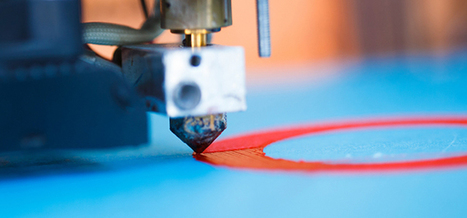
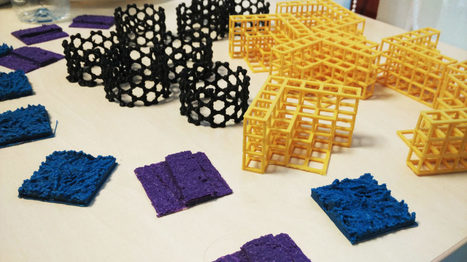
One of the great things (among many) about 3D printing is that not only is it an important skill in itself, it’s also a valuable tool for learning about other things. Just look at 3D printed organ models, for example – they’re becoming increasingly common in hospitals and clinics as a way for surgeons to plan operations before operating, but they also allow medical students and professionals alike to study the human body – and all of its quirks and malfunctions – more closely and thoroughly than ever before.
3D printing, and its ability to create perfect replicas of microscopic particles and blow them up to thousands of times their original size, has also enabled researchers and students to study things like pollen, for example, in a tactile way that wasn’t previously possible. At the other end of the spectrum, 3D printing can scale the universe down to a cube that can be held in the palm of a hand. There’s virtually no limit to the concepts that can be elucidated with a 3D printer, and a group of scientists at the Institute of Materials Science in Barcelona (ICMAB) have designed a course that uses the technology to teach high school students about the growing field of materials science.
This article originally appeared on Usable Knowledge from the Harvard Graduate School of Education.
What are the real benefits of a maker-centered approach to learning? It’s often described as a way to incubate STEM skills or drive technical innovation — and it is probably both of these. But as a new report from Project Zero’s Agency by Design concludes, the real value of maker education has more to do with building character than with building the next industrial revolution.
In a white paper [PDF] marking the end of its second year, Agency by Design (AbD) finds that among the benefits that may accrue along the maker ed path, the most striking is the sense of inspiration that students take away — a budding understanding of themselves as actors in their community, empowered “to engage with and shape the designed dimensions of their worlds.”
The report offers a glimpse of the emerging findings of AbD’s multiyear research initiative, exploring the promises, practices, and pedagogies of maker-centered learning. In tandem with a new website that offers important educational resources, including thinking routines to stimulate learning, the paper solidifies Agency by Design’s efforts to shape a set of research-based, educator-tested practices and to invite the broad community of maker educators into a conversation about the ideas driving and shaping the movement.
As the school year draws to a close, many reflections are running around in my brain. The biggest one though stemmed from a question I have asked myself about our school mascot, the penguin. Why a penguin? They are cute, and fun to observe; but where is the value in having this little formal wearing bird as a mascot? After much reading and many discussions all via twitter chats, I have come to discover that being a penguin is an amazing feat...maybe even more amazing than one may realize. I have observed and interacted with my students in new, scary, unchartered, and sometimes crazy fun waters this year (Genius Hour, Maker Space, STEAM, getting ipads, etc.) and through it all have come to realize what it means for my students to Live Like a Penguin. I am sure many of you educators out there have heard of the author, Dave Burgess, who wrote "How to Teach Like a Pirate", "How to Learn Like a Pirate", etc. In his books he assigns term to each letter of PIRATE that encourage innovation, risk taking, and determination. Taking inspiration from him, I have come up with an acronym for our mascot, the PENGUIN that seems to truly fit how my students and I lived this year of teaching and learning and how I hope we both continue to so in our futures.
Makerspace - Fab, Print, Code, Build, Craft, MAKE! The Rutgers Makerspace is a place for Rutgers affiliates of all experience levels to bring their ideas into reality.
We offer instructional events and workshops throughout the semester to promote learning and creativity. We are also a project-based group for companies to send in funded projects.
Maker education is currently a major trend in education. But just saying that one is doing Maker Education really doesn’t define the teaching practices that an educator is using to facilitate it. Maker education takes on many forms. This post provides an overview of how maker education is being implemented based on the teaching practices as defined by the Pedagogy, Andragogy, Heutagogy (PAH) continuum.
Join Chloe Czerwiec (Innovation Librarian, Centre for Education Futures) and investigate how to be an informed consumer of digital information and shar
It’s a new world: the digital and tangible are merging, and educators need to help students navigate the changing terrain. The solution? Let them be Makers.
Co-Laboratories Launch, with the Vic Park Collective and Enkel
Saturday, May 28, 2016, 6:00 PM
Vic Park MiniLab 874 Albany Highway East Vic Park , AU
4 Makers and Changemakers Attending
The Vic Park Mini Lab is entering a new phase of life, and to celebrate the main collaborators - Co-Laboratories, the Vic Park Collective, and the enkel collective are throwing a massive party!
Co-Laboratories, one of the freshest co-working spaces in Perth is launching in Victoria Park. With a focus on the productive benefits possible from commun...
Librarians and media specialists are bridging the gap between instruction and technology. One pioneer shares how she does it For library media specialists, finding high-quality digital resources that align with Common Core and state standards, and that support classroom instruction, is an ongoing challenge. No longer just the keepers of the physical books and card catalogues, these media specialists are being called upon to organize and share content that can then be used to create relevant and personalized learning experiences.
Everyone should have access to amazing science and educational institutions. Through Google Field Trip Days, students from underserved communities travel to their local science, engineering or math museums free of cost, for a day of exploring and learning. The programs are as different as the participating museums, but often include not only admission and educational programs, but also transportation and lunch. There are 30 participating museums this academic year, reaching over 115,000 students globally.
Making & Science Spaces
To inspire future makers and scientists, we need to carve out space and time for hands-on learning. Google's Making & Science Spaces program is a set of projects designed to identify and support best practices for creating the space to make in schools and in communities. Our first project is a collaboration with Stanford University’s FabLearn Program. We're supporting FabLearn by funding a series of pilot labs, building out educational makerspaces in five local public schools to provide an implementation blueprint for resource-challenged school districts, including not only equipment, but tools, curricula, and professional development to educators, as well as academic research that will inform policy and practice for making in education.
Check out Science Journal-- a digital science notebook to inspire kids and adults explore the world around them using sensors and data!
To get content containing either thought or leadership enter:
To get content containing both thought and leadership enter:
To get content containing the expression thought leadership enter:
You can enter several keywords and you can refine them whenever you want. Our suggestion engine uses more signals but entering a few keywords here will rapidly give you great content to curate.


 Your new post is loading...