Your new post is loading...

|
Suggested by
Gilbert C FAURE
July 24, 11:06 AM
|
"We can switch off light sources such as computers, phones, TVs and lamps ourselves. But other sources are beyond our control: streetlights, headlights on cars, illuminated monuments, flashing billboards, and spotlights on construction sites, storefronts, bus stops, parking lots, sports fields and stadiums, to name just a few."
[...]
"No other environmental condition has remained unchanged over the millennia like the natural light of the sun, moon and stars. All living things have adapted to this rhythm. More than half of all species are nocturnal — if the nights become brighter, it could have devastating consequences."
https://lnkd.in/ex7Zc-Jg
|
|
Suggested by
Gilbert C FAURE
July 24, 11:05 AM
|
US House Passes Permanent DST
https://lnkd.in/gRSP-qdt
4th time's the charm for the Sunshine Protection Act
unless of course the Senate sleeps on it till after midterms.
|
|
Suggested by
Gilbert C FAURE
July 24, 11:05 AM
|
🌌Since 80% of the world has never experienced truly dark skies…it must not be THAT important, right?
And if you've never experienced it you can’t miss it, right? WRONG.
Just because less of something exists in nature and we "seem" fine, it doesn’t mean we're not affected.
🍂Artificial light at night (ALAN) disrupts plants' growing seasons, causing stress that reduces summer shade and clean air.
🐢Sea turtles hatch at night on the beach. Hatchlings detect the horizon by following the light leading them to the ocean. Artificial lights, however, misdirect them. In Florida, millions of hatchlings die this way every year.
🤒Studies show that people living in areas of high light pollution have elevated rates of breast, prostate, colon, and thyroid cancers.
We envision a future where EVERY Texan participates in conservation. But how do we help our local communities understand why they should care about dark skies?
🌟YOU can share the signs of a healthy dark sky vs a polluted night sky!
Check out these #ConservationPartner tools and resources to help illustrate:
Hill Country Alliance “Friends of the Night Sky Resource Guide” is a compendium for cultivating dark sky advocacy in the Texas Hill Country!
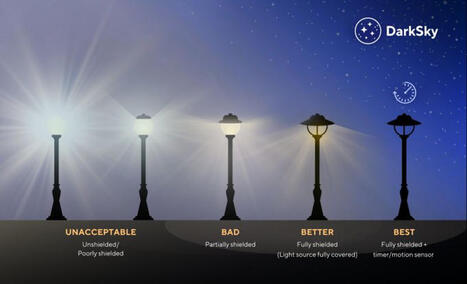
DarkSky Texas has a “What is Light Pollution” guide and an “Outdoor Light Fixture Replacement Options” guide! Find both and MORE under “solutions and resources” on their main website.
AUDUBON FOUNDATION OF TEXAS's #LightsOutTexas campaign encourages businesses and homeowners to turn lights out during bird migration season!
|
|
Suggested by
Gilbert C FAURE
July 24, 11:05 AM
|
Sign in or join now to see posts like this one and more.
|
|
Suggested by
Gilbert C FAURE
July 24, 11:04 AM
|
👏 Check out -> Let Bats Be Themselves! Available on all podcast outlets/players and also at https://lnkd.in/eK2NPX9M. Listen today!
Featuring author and naturalist, Charles Hood; Soft Lights Foundation's Mark Baker; and Night Light Consulting's Ken Walczak.
|
|
Suggested by
Gilbert C FAURE
July 24, 11:04 AM
|
À Rapey, 13 lampadaires solaires offrent pour la première fois un éclairage public à cette commune vosgienne de 24 habitants.
|
|
Suggested by
Gilbert C FAURE
July 24, 11:04 AM
|
The Artificial Light at Night: State of the Science 2026 brilliantly authoured by John Barentine demonstrates how rapidly the science around artificial light at night (ALAN) is evolving.
https://lnkd.in/g45Qbagb
The 2026 report (covering research published in 2025) shows that light pollution is no longer simply as an astronomy issue—it is increasingly recognised as a global environmental pollutant with wide-ranging ecological, health and climate implications.
Some of the key themes emerging include:
* ALAN is now recognised as a form of environmental pollution, while policy and legislation lag behind the science.
* Light pollution compounds other pollutants, such as noise and air pollution, with researchers suggesting the combined impacts may be greater than the sum of their individual effects.
* Urban ecosystems with artificial light are influencing growing seasons and disrupting seasonal dormancy and hibernation in insects, including disease-carrying species.
* Social science continues to show people living with high levels of artificial light often fail to recognise it as pollution, making policy change more difficult.
* Space-based light pollution is an emerging concern. Increasing numbers of satellites and orbital debris are contributing to a brighter night sky, even in otherwise pristine locations.
For me, the most significant finding from 2025 is the publication in Nature Climate Change demonstrating that ALAN is affecting ecosystems at a continental scale.
By analysing carbon exchange measurements from 86 monitoring sites across North America and Europe, researchers found that ALAN increases ecosystem respiration—the process by which plants, animals and microbes release carbon dioxide. This reduces the net amount of carbon ecosystems absorb each year, meaning brighter nights may subtly weaken the Earth's natural carbon sink. Concluding that light pollution should now be considered alongside other global environmental drivers in climate and carbon-cycle assessments.
These studies reinforce a simple but powerful message: protecting natural darkness is about far more than preserving views of the stars. It is increasingly recognised as an important part of conserving biodiversity, maintaining healthy ecosystems, supporting human wellbeing and even addressing climate change.
DarkSky Australasian Dark Sky Alliance Murray Watt Department of Climate Change, Energy, the Environment and Water NSW Environment Protection Authority (EPA)
https://lnkd.in/gUJYMEJ6
|
|
Suggested by
Gilbert C FAURE
July 24, 11:03 AM
|
Converting street lights to LED did not save lives. In fact the data shows quite the opposite. We swapped the technology and got energy savings, but it did not result in better lighting.
We must get the right light, in the right place, at the right time if we want to see positive results. Learn how at https://photometrics.ai/ .
|
|
Suggested by
Gilbert C FAURE
July 24, 11:02 AM
|
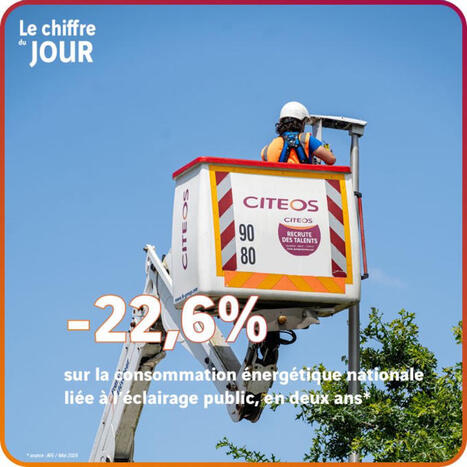
[Chiffre du jour]
En deux ans, la consommation énergétique de l’éclairage public en France a chuté de 22,6 %, une baisse significative qui ramène désormais sa part à seulement 0,58 % de la consommation électrique nationale. 📉
🔍L’Association française de l'éclairage (AFE) vient de publier les résultats de sa 3e enquête nationale, portant sur plus de 14 700 communes, et les chiffres démontrent une mutation profonde de nos territoires :
👉Une transition LED à vitesse grand V : Près de la moitié du parc national, soit 48,56 %, est désormais équipé en LED.
👉Une sobriété ancrée dans les usages : 54,95 % des luminaires s'éteignent désormais au cœur de la nuit pour concilier économies d'énergie et réduction des nuisances lumineuses.
👉Le défi de demain : L’interdiction des lampes "boules" et la fin programmée des lampes à décharge d’ici 2027 imposent d'agir vite
En tant qu'acteur majeur de l'efficacité énergétique, nos équipes Citeos accompagnent au quotidien les collectivités dans cette transformation indispensable, tout en garantissant la sécurité et le confort des citoyens.
🌐 Découvrez nos solutions et nos références sur notre site internet : https://lnkd.in/eAd-iWkp
#PerformenceEnergetique #LED #TransitionEnergetique
|
|
Suggested by
Gilbert C FAURE
July 24, 11:02 AM
|
𝗪𝗲 𝗱𝗼 𝗶𝘁 𝗶𝗻 𝘁𝗵𝗲 𝗱𝗮𝗿𝗸. 𝗔𝗻𝗱 𝘆𝗼𝘂?
World Sea Turtle Day coincides with a busy time for loggerheads in the Mediterranean Sea. Some females are deciding right now whether to come ashore.
That decision is theirs. What we can do is not get in the way.
At regular nesting sites, lighting after sunset deters nesting females from emerging.
Later, it will disorient hatchlings, pulling them inland.
Context-informed lighting design can reduce these risks. But these interventions only hold if the community around them does too.
What I learned working on the Life Turtlenest pilot project: the most important design decision wasn't about light levels or spectral composition. The question was if the community already valued sea turtles, starry skies, and local heritage, and could choose to protect them.
𝘈𝘤𝘤𝘦𝘯𝘥𝘪 𝘪𝘭 𝘣𝘶𝘪𝘰, 𝘪𝘭𝘭𝘶𝘮𝘪𝘯𝘢 𝘭𝘢 𝘷𝘪𝘵𝘢. 𝗧𝘂𝗿𝗻 𝗼𝗻 𝘁𝗵𝗲 𝗱𝗮𝗿𝗸, 𝗶𝗹𝗹𝘂𝗺𝗶𝗻𝗮𝘁𝗲 𝗹𝗶𝗳𝗲.
The awareness campaign didn't ask people to give something up. It asked them to name what they already had through a survey, later on validated with a mock-up.
This would later allow us to dim path lighting and convince beach-club owners to partner with us.
Not because the technical case was strong.
Because the cultural ground had been prepared first.
When we collaborate, communication transforms from a project output into the enabler for public awareness, possibly leading to societal change.
This principle doesn't live only on nesting beaches. Most interventions succeed or fail on public acceptance long before they succeed or fail on technical merit, especially after sunset.
When did your last intervention or conservation measure come back as a complaint by the public, and why?
#WorldSeaTurtleDay #LightPollution #ALAN
|
|
Suggested by
Gilbert C FAURE
July 24, 11:01 AM
|
[#Séminaire]💡Du patrimoine historique à la Smart City : l'éclairage sous toutes ses formes ! De la ville lumière à la ville rose !
Ce lundi 15 juin 2026, l'Université de Toulouse accueille le séminaire européen MELINA « Lumières sur la ville ». Une journée d'exception qui réunira professionnels, concepteurs et experts pour penser la ville de demain.
Pour vous donner envie, voici un aperçu de la journée :
🎤 11h30 - L'avenir de l'éclairage public et de la 5G : retrouvez notre PDG, Yves Le Henaff, pour une conférence exclusive sur l'apport des technologies connectées dans la ville de demain. 🤝Il partagera également sa vision lors de la table ronde d'experts à 16h15.
🗼14h00 - L'éclairage de Cathédrale Notre-Dame de Paris : plongez dans les coulisses de la mise en lumière de Notre-Dame, racontée en personne par son concepteur et sculpteur lumière, patrick rimoux.
🌌 15h00 - La Réserve Internationale de Ciel Étoilé (#RICE) : suivez l'intervention de Bruno Rouch, DGS du Syndicat Départemental d'Énergie des Hautes-Pyrénées, sur les enjeux cruciaux de la #protection de la nuit et de la réduction de la #pollution #lumineuse.
Que vous soyez passionné d'#architecture, d'#urbanisme ou d'#innovation technologique, cet événement serait un rendez-vous manqué si vous n'y êtes pas !
📍 Où ? Université de Toulouse, Amphithéâtre CONCORDE – Bâtiment U4.
⚠️ Uniquement sur #inscription (places gratuites mais limitées !). Lien en commentaire 👇
Venez échanger avec nous pour comprendre, innover et éclairer demain. 🚀
#SmartCity #NotreDameDeParis #Innovation #EclairagePublic #5G #Toulouse #SDE65 #MELINA #Architecture #ErasmusPlus
Association française de l'éclairage (AFE) AFE-Midi Pyrénées LAURENT CANALE Anne-Sophie PERRIN
|
|
Suggested by
Gilbert C FAURE
July 24, 11:00 AM
|
|
|
Suggested by
Gilbert C FAURE
July 24, 11:00 AM
|
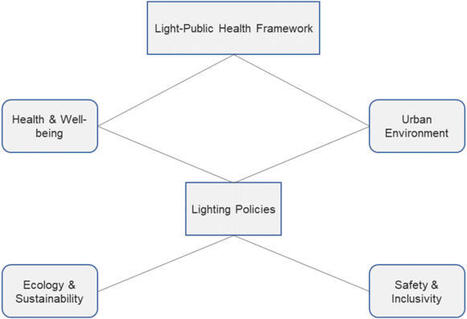
Excessive or improper lighting can affect human health and well-being. However, lighting is seldom considered within frameworks analyzing the interrelations between the urban environment and the health and well-being of communities. Lighting-related concerns are often conceptualized and discussed in environmental terms through the light pollution frame. Positively, this frame emphasizes human responsibility for the environmental detriment and animal harm caused by lighting and promotes the discussion of aesthetics and existential dimensions connected to nocturnal darkness. Negatively, it is flawed with epistemological shortcomings and normativity; it is prone to the risk of ideological and political polarisation and tends to underemphasize the health implications of excessive and improper lighting. This study addresses this gap by arguing for the advantages of a public health framing of lighting-related concerns. In particular, it highlights how this perspective can better capture the health implications of lighting and inform urban policies. Placing light concerns within a public health framework entails presenting a relatively known landscape that resonates with the value systems of virtually everyone. This approach supports the creation of a common, multi-stakeholder space in discussions on lighting policies, balancing considerations of urban security, safety, inclusivity, and accessibility as different dimensions of diverse populations’ health and well-being. By emphasizing the public health dimension, this study contributes to the discourse on lighting as a determinant of health and well-being. Such a holistic framework aligns with the United Nations Sustainable Development Goal 3 on good health and well-being by fostering conditions that advance health for all, addressing lighting not merely as an environmental issue but as a critical public health priority.
|
|
|
Suggested by
Gilbert C FAURE
July 24, 11:05 AM
|
"New approaches to sustainable lighting policy that go beyond energy efficiency are therefore needed. For example, lighting regulation in France now requires advertising lighting to be turned off at hours when pedestrians are unlikely to be present and interior lights to be turned off when buildings are not occupied. This approach has the potential to reduce light emissions without adversely affecting advertisers. Matching streetlight provision to resident needs with lighting curfews or motion sensors similarly reduces light without affecting objective or perceptive safety. Finally, because private windows are the most common outdoor light source, policy encouraging the use of curtains after sunset could have a larger impact than one might first assume."
https://lnkd.in/gsnHSpZz
|
|
Suggested by
Gilbert C FAURE
July 24, 11:05 AM
|
By Drs. Samantha Lawler and Aaron Boley.
|
|
Suggested by
Gilbert C FAURE
July 24, 11:05 AM
|
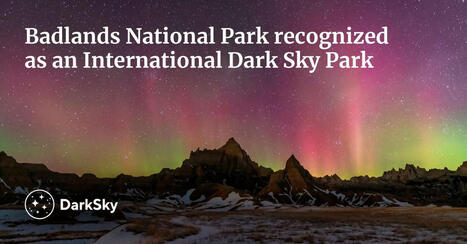
Congratulations to Badlands National Park on becoming an International Dark Sky Park! This recognition celebrates the park's extraordinary night skies and its ongoing commitment to protecting the nocturnal environment.
Years of collaboration to reduce light pollution, improve outdoor lighting, expand night sky programming, and engage local communities have made this achievement possible. The designation also strengthens South Dakota's growing reputation as a destination for stargazing, astronomy, and unforgettable night sky experiences.
Congratulations to Badlands National Park, the National Park Service, the Badlands National Park Conservancy, and all the partners who helped make this milestone a reality. Here's to protecting the night for generations to come! Visit https://bit.ly/4vTFlzP to learn more.
📷 Photo by Teresa Hofer
Travel South Dakota
Badlands National Park Conservancy
|
|
Suggested by
Gilbert C FAURE
July 24, 11:04 AM
|
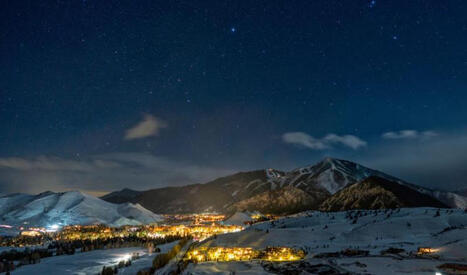
Sun Valley Resort (ironically) Named First Dark Sky Resort in US
https://lnkd.in/gx6BhMzS
The central #Idaho hotel and cabins have been recognized by DarkSky International for their lighting design and #astrotourism offerings.
#darksky #resorts
|
|
Suggested by
Gilbert C FAURE
July 24, 11:04 AM
|
Protecting dark skies is about much more than just star gazing and it’s a global movement. It’s impossible to remove the impacts of artificial light at night (ALAN) from nature conservation or recovery work but unlike other pollutants, this one is easy solve.
If you’re planting for pollinators, don’t neglect the night.
DarkSky Buglife
|
|
Suggested by
Gilbert C FAURE
July 24, 11:04 AM
|
Looking for an easy way to start conversations about better outdoor lighting?
The DarkSky Home Outdoor Lighting Assessment helps homeowners identify simple changes that can reduce light pollution and save energy.
Share it with your neighbors, friends, and community members—and help make every light protect the night.
Small changes. Brighter stars. https://bit.ly/4itASgt
|
|
Suggested by
Gilbert C FAURE
July 24, 11:03 AM
|
#RSE L'éclairage public ne se résume pas qu’à des luminaires.
Derrière chaque projet réalisé par Eclatec, il y a tout un écosystème industriel français qui travaille, innove et crée de la valeur.
L'étude menée par UTOPIES montre que notre activité contribue à soutenir 937 emplois en France et génère 89,5 M€ de richesse pour l'économie nationale.
Ces retombées concernent bien au-delà de nos sites de production : fournisseurs, bureaux d'études, logisticiens, services et acteurs locaux participent à cette dynamique collective.
Produire en France, innover localement et s'appuyer sur une chaîne de valeur majoritairement nationale, c'est aussi cela notre engagement RSE.
Parce qu'un éclairage performant éclaire les villes, mais peut aussi contribuer au dynamisme économique des territoires.
www.eclatec.com
#RSE #MadeInFrance #EclairagePublic #IndustrieFrançaise #Eclatec #ImpactPositif
Eclatec fait partie du groupe Agora Makers, engagé pour façonner des lieux urbains durables.
|
|
Suggested by
Gilbert C FAURE
July 24, 11:02 AM
|
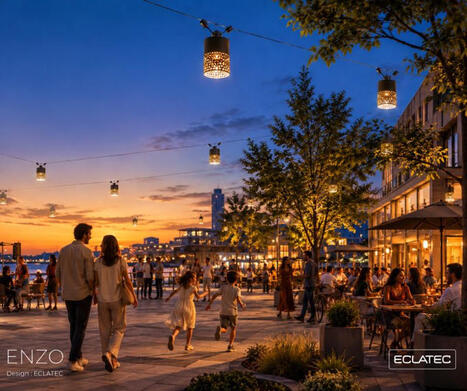
☀️ When natural light and public lighting meet.
On the summer solstice, daylight stays with us longer than on any other day of the year.
Then comes that special moment when the sun slowly fades, colours become warmer, people gather outdoors and cities begin to change their rhythm.
This is when public lighting takes over.
Not to replace daylight, but to extend its atmosphere, support urban life and enhance the experience of public spaces after sunset.
With its delicate design and warm ambiance, ENZO by Eclatec International was created for these transition moments, when the city moves from day to night while preserving its identity and character.
Because the best lighting may be the kind that remains discreet, while creating the conditions for comfort, safety and human connection.
🌿 Wishing everyone a wonderful summer.
to discover ENzo : https://lnkd.in/eXMz_mYa
#SummerSolstice #UrbanLighting #PublicLighting #LightingDesign #Placemaking #UrbanDesign #ENZO #Eclatec
Gary JACQUARD , Frederic MINCK , Florian Tardevet , Paula ALVAREZ , 🌎 Delphine METROPOLIT
|
|
Suggested by
Gilbert C FAURE
July 24, 11:02 AM
|
Present / Future
Urban lighting has brought us this far. Now it is time to ask what comes next.
At my lecture at the IALD Enlighten Conference, I will speak about how we arrived at today’s urban lighting methodology — and how new tools, new thinking, and site-specific design can lead us toward a more sustainable, adaptive, and intelligent future for cities.
Join me on 19.06 at 2:00 PM Grand Ballroom 1
Looking forward to seeing you there.
|
|
Suggested by
Gilbert C FAURE
July 24, 11:02 AM
|
☀️ Éclairage public solaire : 99 718 points lumineux sur le territoire national en 2024.
En 2024, le nombre de points lumineux d'éclairage public a progressé de 26,29 % pour atteindre 99 718 unités sur l'ensemble du territoire.
Cette hausse est principalement due au projet de 50 000 lampadaires solaires intelligents et autonomes, lancé en avril 2023 et dont les travaux se sont poursuivis en 2024.
L'éclairage public solaire représente une capacité installée de 8,99 MW, répartie sur toute l'étendue du territoire national.
Les points lumineux se répartissent entre :
⬛ Lomé (30 331),
⬛ la région Sud (34 298),
⬛ et la région Nord (35 089).
#EclairagePublic #Eclairagesolaire #EnergieSolaire #Togo
Gouvernement Togolais
|
|
Suggested by
Gilbert C FAURE
July 24, 11:00 AM
|
🌙 Un city stade vide n'a pas besoin d'être éclairé à pleine puissance toute la nuit.
Mais lorsqu'un habitant souhaite l'utiliser, l'éclairage doit être immédiatement disponible.
C'est tout le principe de Push N' Light by Nexiode
Par une simple pression sur un bouton poussoir, un ou plusieurs luminaires équipés de contrôleurs WIZARD passent d'un niveau d'éclairement réduit à un niveau adapté à l'usage, pendant une durée définie.
Cheminements piétons, aires de jeux, city stades, terrains de pétanque, parkings, équipements sportifs ou espaces publics : l'éclairage s'adapte aux besoins réels des usagers.
Une solution simple, intuitive et efficace qui permet de concilier :
🔹 sobriété énergétique,
🔹 qualité de service,
🔹 sécurité des usagers,
🔹 maîtrise des coûts d'exploitation.
Une nouvelle illustration de notre vision de l'éclairage public : plus intelligent, plus responsable et plus proche des usages réels.
#Nexiode #Eclatec #Ghm #Wizard #SmartLighting #VilleDurable #EclairagePublic
pour en savoir plus, contactez nous https://lnkd.in/e5P7aq_J
avec Michel REISS , Sébastien PENSIER , Emmanuel REMY
|
|
Suggested by
Gilbert C FAURE
July 24, 11:00 AM
|
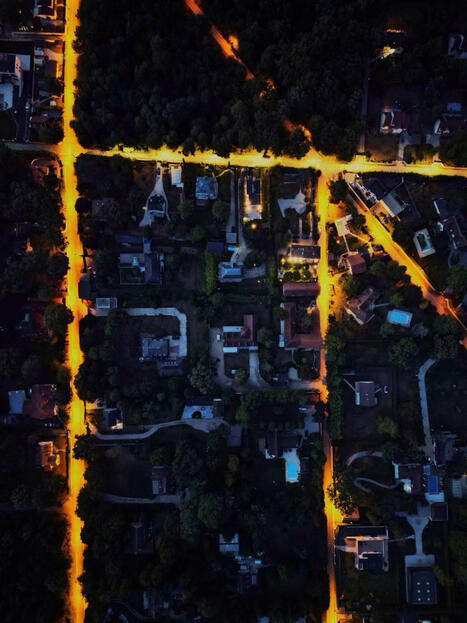
L’éclairage public est-il devenu un marqueur politique ? Entre rallumage et extinction, un débat pour penser la nuit autrement que par les slogans : https://lnkd.in/eY_jw5AZ
Un article de Lionel Simonot
📷️ Éclairage public en ville en France vue de drone.
© Miguel Picq, Unsplash
#eclairagepublic #collter #rallumage #extinction
|