When talking to economists I often get the feeling that everything has to serve economy, including us humans, not that economy is somethig to make our lifes better. For many hard core economists everything is about expoiting ressources, and many seem to think that this is a good thing. (Not all economists, fortunately!)
We should add the value of sleep for economy to your list. A study of the RAND institute estimates that we loose hundreds of billions of dollars each year due to bad sleep, because people are less productive. For good sleep we need darkness and we need to accept that nighttime is for sleeping, not for working, physical excercise, or partying. So let's embrace the night as a ressource for restoration, not as a time we need to fill with activity to make short-term money.
On today’s International Day of Light, latter and the role it plays in science, culture and art, education, and sustainable development is celebrated.
While artificial light is the basis of our modern life, allowing activities far after sunset, on this day I like to talk about the absence of light.
In human history and perception often interpreted as bad or unwanted, in mythology and religion representing fear and death, the absence of light is something to be avoided, instead to become enlightened, to turn to the good. In our language, this still is the case. To name a few: - Beacon of light — a guiding, hopeful presence. - Shed light on — to clarify or reveal information. - Light-bulb moment — sudden insight or idea.
And for darkness: - In the dark — uninformed or kept unaware. - Dark days — a period of trouble or sorrow.
Thus, it is quite natural to see light as the desirable. Such as the celebration of light each year on this day, as are the words of UNESCO: „…Communities worldwide participate in activities that demonstrate how light in all its applications can help achieve the goals of UNESCO – education, equality, and peace.“ Poor darkness.
While this might sound pathetic, some facts about darkness: 2 in 3 species is night-active, the other third needs night for sleep. 3 in 3 species need darkness for Living.
With all the light being celebrated today, I ask you to turn it down and switch it off again when the actual need is gone.
a proposed addition to the Illinois Stretch Energy Code would limit brightness, cut light trespass to .1 lux, cut uplight have 80 degrees to 5% of luminosity, and set a maximum CCT of 3000K.
The changes to the code would also add voluntary recommendation beyond these rules, but there's no provisions for timing in either.
The SKYGLOW Project is a collaborative initiative between filmmakers Gavin Heffernan and Harun Mehmedinović and the International Dark-Sky Association, dedicated to raising awareness about the growing threat of light pollution. Through stunning high-definition time-lapse photography and an extensive astrophotography book, the project captures the contrast between urban "skyglow" and the rare, pristine dark skies remaining in North America’s national parks and remote wilderness. By documenting the psychological and ecological impacts of losing our view of the stars, SKYGLOW advocates for responsible lighting practices to restore the natural night for future generations.
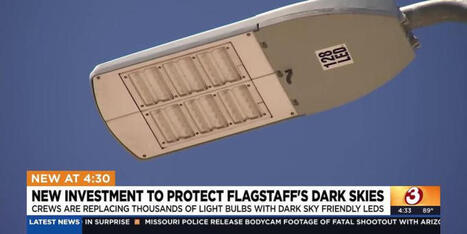
L.A. is about to spend $65 million replacing and repairing tens of thousands of streetlights. It's a real opportunity — if the city uses it wisely.
I talked with the LA Times about what's gone wrong with the LED transition so far (high color temperatures in the early days, light pouring into bedrooms, disrupted sleep) and what the solar overhaul could get right.
"This is the ideal time to address issues of light glare, intensity and color."
Getting streetlight design right isn't just about aesthetics, but an opportunity to reduce the unintended ecological and human health impacts of bad design.
TG Enterprises is a leading Decorative Lighting Pole Manufacturers in India, offer High-quality range of poles including galvanized steel & cast aluminium poles...
[4K] LISBON – City of Light on the Atlantic | Deep House Chill
Experience Lisbon in breathtaking 4K, where golden sunlight spills across tiled rooftops and the Atlantic horizon glows with timeless beauty. Known as the City of Light, Lisbon offers one of Europe’s most radiant atmospheres—where hills, trams, and waterfront views come alive at sunset.
This cinematic journey blends Deep House Chill with Lisbon’s warm rhythm—capturing golden streets, glowing river views along the Tagus, and the effortless charm of a city shaped by light and sea.
Perfect for studying, working, relaxing, or drifting into a peaceful sunset ambience, this video brings the warmth, elegance, and luminous soul of Lisbon straight to your screen. Let the light fade slowly and the chill beats carry you into the night.
Step into the world through cinematic rhythm.
Let the Deep House Chill soundtrack guide you through the city’s pulse — from golden sunsets to neon nights, from calm streets to reflections across the skyline.
🎧 Sit back, breathe, and drift into the cinematic vibe. 🎥 Filmed in stunning 4K | 60FPS 🎶 Music: Deep House Chill / Melodic Deep / Dream House 🌍 A visual journey by Roamer – World Cinematic
On the occasion of the Urban 7 international summit, held in Nancy as part of the French G7 Presidency, Agora Makers is proud to contribute to the collective reflection on the major challenges shaping the cities of tomorrow. 🌍
Climate transition, evolving urban uses, resilient public spaces, mobility, quality of life and territorial attractiveness: today’s urban challenges call for cross-disciplinary approaches combining design, innovation, sustainability and services.
Within this dynamic, Agora Makers, alongside its brands and partners, will present an urban demonstrator installed in the heart of Nancy. Conceived as a real-scale experimentation space, this project embodies our vision of public spaces that are more adaptable, greener, smarter and more human-centered.
Because cities are no longer just infrastructures — they are places for interaction, shared experiences and new urban lifestyles. Shaping places together for the future. ✨
Light pollution is often invisible to us — until we realize what we’ve lost.
From disrupted ecosystems to impacts on human health, artificial light at night is reshaping our environment in ways we don’t always notice. Yet, understanding the scale of the problem is the first step toward meaningful change.
👉 This report, prepared by a consultancy firm commissioned by the Department of Environment of the Flemish Region, dives deep into the current state of light pollution in Belgium, uncovering key insights, data, and implications for the future.
✨ Imagine a future where: • Night skies are visible again • Biodiversity thrives undisturbed • Cities balance safety with sustainability
This report shows how we can move closer to that reality.
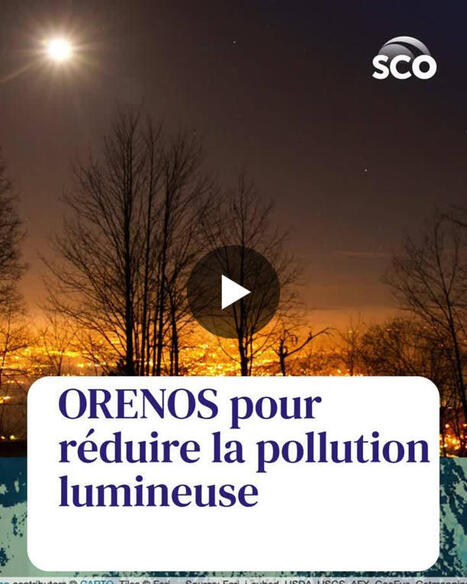
Des nouvelles de notre projet ORENOS qui a pour objectif de développer des indicateurs de qualité de l'éclairage extérieur et d'impacts sur la biodiversité, sur le département test de la Haute-Savoie, à partir d'images satellite nocturnes SDGSAT-1 (CBAS)
CNES - SCO | Space for Climate Observatory - Cerema - La TeleScop - Syane
Aurélien MURE Sébastien Castets Samuel Busson Jean-francois Bretaud Solène Nitsche Florian Greffier Laure Lebouc Romuald JOBERT Tom B. Sarah POTIN Camille Lhenry Julie Chaurand Gizard Anne Fannie Veuillot
Le 24 juin, au Salon des Lumières à Paris… on éteint tout. Pas de lumière. Pas de repères. Pas de confort. La Journée Blackout Paris vous plonge dans ce que chaque organisation et chaque famille redoutent : une panne totale. Un blackout. Le matin, trois conférences pour comprendre ce qui se passe vraiment quand tout s'effondre. Ce que révèle le noir sur vos décisions, votre leadership, votre organisation. On y aborde ce que peu d'experts osent nommer : l'antifragilité. Cette capacité rare à ne pas seulement résister aux chocs… mais à en sortir plus fort. L'après-midi, trois ateliers immersifs pour passer à l'action. Mises en situation, travail d'équipe, décisions sous pression. Et parce qu'un blackout ne frappe pas seulement les organisations, l'un des ateliers vous emmène là où la crise touche le plus profondément : la famille. Comment protéger ses proches ? Comment maintenir le lien quand tout s'effondre autour de vous ?
Une journée. Six expériences. Un seul objectif : savoir quoi faire quand la lumière s'éteint. Parce que la résilience ne se prouve pas quand tout va bien. Elle se construit.
#blackoutpreparedness #crisismanagement #businesscontinuity #organizationalresilience #criticalinfrastructure #systemicrisk #emergencyleadership #crisiscommunication #resiliencetraining #riskmitigation Raphaël De Vittoris Chaire Gestion et Communication de Crise Crisalyde; ChapsVision for Security & Resilience Institut des hautes études du ministère de l'Intérieur (IHEMI) Institut d'étude des crises de l'intelligence économique et stratégique IFACI - Institut Français de l'Audit et du Contrôle Internes EMILIE COUDEYRE Master 2 Gestion Globale des Risques et des Crises Karine Maréchal-Richard Alexandre Fournier
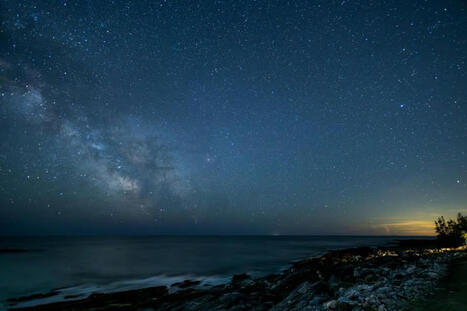
Seeing a truly dark sky changes how you feel. It makes everything quieter. Smaller. Clearer. It is one of those experiences that stays with you. But for many people, it is becoming rare. That is why protecting dark skies matters in a very real way.
TL;DR: Expanding Focus: The Dual Threat of Light and Noise Light and noise pollution are far more destructive together, slashing wildlife communication effectiveness by over 60%. Because these threats are so intertwined, I am expanding my focus from just light pollution to light + noise to better protect biodiversity.
Four years ago, when I realized how detrimental light is to all things alive, when exposed to at the wrong time, I started this account and shared the good, the bad and the ugly findings, reports and recommendations in the topic of #lightpollution.
Recently, after reading into the review of PLAN-B Project (link in the comments), it struck me, how close light pollution and #noisepollution are in its effects on #wildlife.
Light and noise each have an impact - however combined, things exaggerate: "Effectiveness in communication was maximum when there was a reference (0.88) and minimum when there were isolated noise (0.63) and isolated ALAN (0.59). The greatest decrease was when it was in noise and ALAN exposure, when the effectiveness was reduced to 0.31, which is more than 60 % of that in the reference conditions." (Selvakumar et al. (2025)) (ALAN: Artificial Light at Night)
With this knowledge I have to widen my focus and will open this account to share insights, information, science and recommendations on both topics.
Experience the stunning streets of Hong Kong with cinematic city vibes, neon lights, busy roads, and aesthetic urban views 🌆✨ Perfect for lovers of travel videos, city aesthetics, night drives, and relaxing visual edits. Watch till the end for the ultimate cyberpunk vibes 🔥 Like 👍 Comment 💬 Share 📲 Subscribe ❤️ #hongkong #cityvibes #shorts #travel #aesthetic
Hong Kong, Hong Kong streets, Hong Kong aesthetic, Hong Kong nightlife, city vibes, city aesthetic, neon lights, urban vibes, cyberpunk city, asia city, asia aesthetic, hong kong edit, cinematic video, travel shorts, viral shorts, aesthetic shorts, relaxing city video, night city, city lights, downtown vibes, hong kong travel, street photography, asia nightlife, taxi vibes, aesthetic travel, busy streets, 4k city, cinematic streets, reel viral, instagram reels, youtube shorts, travel edit, city edit, hong kong road, urban cinematic, asia travel, beautiful city, calming video, city walk, luxury city, dreamy city, night drive, aesthetic video, hong kong taxi, future city, travel vibes, viral reel, trending shorts, cinematic aesthetic, urban life
Welcome to an amazing USA city drive experience 🇺🇸 Enjoy beautiful downtown streets, night lights, traffic views, and relaxing urban vibes from America. This cinematic road view video captures the real beauty of USA city life in 4K. If you enjoy travel videos, city views, road trips, and relaxing driving scenes, make sure to like, comment, and subscribe for more USA travel content. #usa #usacity #streetview #roadview #travel #usatravel #downtown #citydrive #america #4kvideo#USA #USACity #RoadView #StreetView #America #Travel #USATravel #CityDrive #Downtown #NightDrive #4K #TravelReels #AmericanRoads #DrivingVideo #CityLife
Two people walk the same path at night. One scans the path ahead. The other scans the shadows, the edges. The same space - not the same 𝗲𝘅𝗽𝗲𝗿𝗶𝗲𝗻𝗰𝗲, especially after dark.
We plan for the path, design for forward motion. 𝘚𝘰 𝘸𝘦 𝘤𝘰𝘯𝘴𝘪𝘥𝘦𝘳 𝘰𝘯𝘭𝘺 𝘰𝘯𝘦 𝘰𝘧 𝘵𝘩𝘦𝘮. The person scanning the edges was never the stakeholder - yet, half of the people walking that path at night are 𝘄𝗼𝗺𝗲𝗻.
What she needs is just enough light to read the space: to see before being seen, to distinguish what surrounds her, to know where she can go. 𝘞𝘩𝘰𝘴𝘦 𝘨𝘢𝘻𝘦 𝘥𝘰𝘦𝘴 𝘺𝘰𝘶𝘳 𝘱𝘳𝘰𝘫𝘦𝘤𝘵 𝘢𝘤𝘤𝘰𝘶𝘯𝘵 𝘧𝘰𝘳? | 37 comments on LinkedIn
🌌 How does light pollution affect biodiversity in the Wadden Sea?
When we talk about pressures on marine ecosystems, we often think of climate change, habitat loss, or overfishing. Yet another growing pressure — especially in coastal regions — is artificial light at night (ALAN).
The Wadden Sea, a UNESCO World Heritage Site and one of the world’s most productive intertidal ecosystems, is naturally governed by strong tidal and lunar rhythms. Many species here have evolved to depend on these cycles — and artificial light is beginning to disrupt them.
🐟 Fish and migration pathways Juvenile fish moving through tidal channels use natural light cues for orientation. Artificial lighting from coastal infrastructure, ports, and settlements can disorient them, potentially altering migration routes and survival rates.
🦐 Food web disruption in a dynamic system The Wadden Sea’s food web is tightly linked to plankton dynamics. Artificial light can concentrate plankton near illuminated areas, reshaping feeding opportunities for fish, shrimp, and birds — and changing predator-prey interactions in ways we are only beginning to understand.
🐦 Impacts on coastal birds Waders and migratory birds relying on the Wadden Sea’s tidal flats can be disturbed by night-time lighting, affecting resting, foraging, and migration behaviour across flyways.
🦀 Behavioural shifts in benthic species nocturnal and light-sensitive species such as crustaceans may change their activity patterns or avoid illuminated areas altogether, leading to shifts in habitat use and ecosystem functioning.
💡 Why this matters for the Wadden Sea Even subtle changes in light regimes can cascade through this highly interconnected ecosystem — influencing biodiversity, ecosystem resilience, and the services this unique landscape provides.
🌍 Working towards darker skies: DARKER SKY - Interreg North Sea Project The Darker Sky Project addresses light pollution in coastal regions, ports, and municipalities, including the Wadden Sea, by improving scientific understanding and supporting practical solutions such as smarter lighting design, reduced light intensity, and better spatial planning.
We at the Common Wadden Sea Secretariat (CWSS) are proud to be project partners in this initiative, working together with regional and international stakeholders to better understand and reduce the ecological impacts of light pollution in the Wadden Sea region.
To get content containing either thought or leadership enter:
To get content containing both thought and leadership enter:
To get content containing the expression thought leadership enter:
You can enter several keywords and you can refine them whenever you want. Our suggestion engine uses more signals but entering a few keywords here will rapidly give you great content to curate.


 Your new post is loading...