Your new post is loading...

|
Scooped by
LIGHTING
December 21, 2013 11:31 AM
|
LIGHTING-INNOVATION-DESIGN

|
Suggested by
Gilbert C FAURE
March 1, 12:58 PM
|
LUCI Association Summt 2026 featured presentations and walks for the Art of Darkness, a research and pilot study about dark and light in cultural heritage. Here, an installation by an engineer honoring previous industrial archtecture.
#HenrikaPihlajaniemi, Art of Darkness Project Coordinator & Associate Professor – University of Oulu
Jasmine van der Pol, Senior Programme Manager – LUCI Association
|
|
Suggested by
Gilbert C FAURE
March 1, 12:58 PM
|
📢 The LightingEurope Annual Report 2025 is now online!
In 2025 we achieved a lot together: from the European Lighting Summit in Brussels, to 23 Brussels Direct webinars, and the completion of the 2025 Mystery Shopper project supporting our advocacy work.
Take a moment to explore the achievements and see what’s ahead for 2026.
👉Find it here: https://lnkd.in/ee59Ja8G
Thank you very much to Antonella Del Figliolo for your support!
|
|
Suggested by
Gilbert C FAURE
March 1, 12:57 PM
|
|
|
Suggested by
Gilbert C FAURE
March 1, 12:57 PM
|
Voici un débat essentiel, mais il lui manque encore trop souvent une chose : la parole de celles et ceux qui vivent la nuit.
À L'Observatoire de la nuit, nous recueillons depuis plusieurs années des témoignages d’habitantes et d'habitants sur leurs #expériences nocturnes.
Il s'agit de récits situés, sensibles, souvent contradictoires, qui donnent à voir la nuit à hauteur d’usages, en #complément des réponses #techniques et #technologiques.
On y lit par exemple :
« Je n’ose plus sortir quand la rue est éteinte »
« La pénombre me rassure, la lumière trop forte m’agresse »
« Ce n’est pas la lumière qui manque, ce sont des horaires adaptés »
Ces témoignages, glanés au fur et à mesure de nos missions de terrain (#SDAL, #formation, #ateliers participatifs) disent quelque chose de fondamental : notre relation à la nuit et à l’éclairage dépasse largement la seule question de la sécurité.
Elle touche à des expériences personnelles, intimes, rarement verbalisées, et encore trop peu intégrées aux politiques publiques.
En résulte alors trop souvent un status quo généralisé au sein des politiques publiques nocturnes, qui hésitent entre l'allumage ou l'extinction, et territorialisent parfois l'éclairage au prisme des gains énergétiques et environnementaux, oubliant qu'il n'a qu'une seule destination, l'être humain et ses usages.
À l’approche des municipales, répondre à cette pluralité par des promesses génériques de « rallumage » ou par le seul argument technologique serait une erreur, car le véritable enjeu est #démocratique :
Recueillir, écouter ces témoignages, les qualifier, puis les traduire en #politiques nocturnes #fines, situées, concertées, capables d’articuler usages, ambiances, biodiversité et #qualité de vie.
À tous ceux qui ont une nuit à exprimer, c'est par ici : https://lnkd.in/eeNZ92jK
|
|
Suggested by
Gilbert C FAURE
March 1, 12:56 PM
|
⏳ Less than one month to go until the 𝗟𝗨𝗖𝗜 𝗖𝗶𝘁𝗶𝗲𝘀 & 𝗟𝗶𝗴𝗵𝘁𝗶𝗻𝗴 𝗦𝘂𝗺𝗺𝗶𝘁 𝗢𝘂𝗹𝘂 𝟮𝟬𝟮𝟲!
Get ready for the annual international gathering of the #LUCInetwork and the global #UrbanLighting community:
📋 Explore the fully updated, detailed programme > https://lnkd.in/eXPupzVZ
🎤 Discover what’s new, including the Open Conference Sessions > https://lnkd.in/gAS9F5V4
👥 Meet the speakers — city representatives, researchers, designers, and urban lighting & planning experts > https://lnkd.in/eT6-KRVC
❄️ Dive into the Optional Programme and experience the full Nordic atmosphere > https://lnkd.in/gpK9GUh7
🛄 Heading to Oulu? Check the Practical Information to plan your stay > https://lnkd.in/e8dZwwRk
See you in Oulu!
📅 25–27 February 2026
#LUCIsummitOulu
|
|
Suggested by
Gilbert C FAURE
March 1, 12:56 PM
|
Julien Schnell a conçu la lanterne Facet pour Eclatec. Une création innovante et élégante, au design intemporel. Elle repense les espaces urbains : https://lnkd.in/eGp74fdz
📷 Facet, lanterne ovale pour les espaces urbains
Designer Julien SCHNELL
Fabricant © Eclatec France
#design #luminaire #eclairagepublic #collter
|
|
Suggested by
Gilbert C FAURE
March 1, 12:55 PM
|
Depuis le 1er janvier, la ville de Creil a décidé de réactiver l’éclairage public toute la nuit. Une décision qui fait réagir dans cette ville très courtisée électoralement.
|
|
Suggested by
Gilbert C FAURE
March 1, 12:55 PM
|
Today I presented my research at the United Nations Office for Outer Space Affairs (UNOOSA).
At the UN/SKAO Dark and Quiet Skies Workshop in Vienna, I spoke about a new form of light pollution that’s literally coming from space: the diffuse skyglow created by millions of tiny debris particles in low Earth orbit.
Unlike the satellite streaks that have sparked recent attention, this effect is subtle – small fragments scattering sunlight, collectively brightening the night sky in ways that cannot be shielded against from the ground. Our models predict this contribution will increase significantly in the coming decade.
What makes this particularly challenging for policy: the models we use to predict debris populations still carry substantial uncertainties for the smallest particles – exactly the ones driving this effect.
Dark skies need advocates at every level – from local communities to the United Nations. Honored to be part of this important conversation.
Thank you, Yana Yakushina for the pics! 😀
#DarkAndQuietSkies #SpaceDebris #UNOOSA #Astronomy #SpaceSustainability
|
|
Suggested by
Gilbert C FAURE
March 1, 12:55 PM
|
For as long as Earth has revolved around the sun, night has been part of life’s rhythm.
Now, a private company is proposing to turn darkness into a commodity—using satellites to reflect sunlight onto Earth at night.
DarkSky opposes Reflect Orbital’s proposal and is calling on our community to speak up. The night sky belongs to everyone.
Learn more, sign our open letter, and stay informed as this issue moves forward: https://bit.ly/4jqMN0J
|
|
Suggested by
Gilbert C FAURE
March 1, 12:54 PM
|
What scares me about such ideas - aside of the very real damage this will do - is that private companies as well as governments make wide ranging decisions without considering the effects. They feel powerful when they interfer with nature but they don't understand the most basic concepts. And many people celebrate them for these achievement.
We want progress. We want to be free of constraints. But if a small group of technically advanced people change the essential patterns on Earth because they lack understanding or because some entrepeneurs want to make even more money, we all loose something that can't be paid for with all the money in the world.
|
|
Suggested by
Gilbert C FAURE
December 24, 2025 10:01 AM
|
🌱 Luminaire durable : éclairer autrement, collectivement.
La durabilité des luminaires est devenue un enjeu central pour l’éclairage public : conception, réparabilité, cycle de vie, ancrage territorial…
Aux côtés d’autres acteurs de la filière, Ghm France et Eclatec France soutiennent avec passion la démarche portée par le collectif Luminaire Durable, animée par RIVALEN, qui vise à apporter une lecture pédagogique et factuelle des enjeux environnementaux et socio-économiques de notre secteur.
Un livre blanc est d'ailleurs aujourd’hui mis à disposition pour nourrir la réflexion et encourager des pratiques plus responsables, au service des territoires et de leurs usages.
👉 Découvrir le site et le livre blanc : https://lnkd.in/epKpG23m
#LuminaireDurable #EclairagePublic #Durabilité #RSE #IndustrieFrançaise #ÉconomieCirculaire
avec David LELIEVRE , président du groupe AGORA-MAKERS
https://lnkd.in/epKpG23m
|
|
Suggested by
Gilbert C FAURE
December 24, 2025 10:00 AM
|
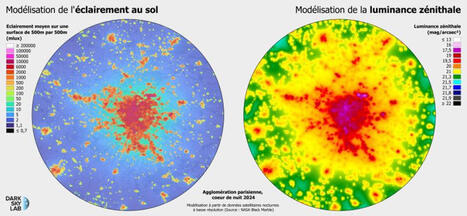
Fruit de nombreux mois (et années) de travail nous sommes particulièrement heureux et fiers de vous présenter notre nouveau logiciel de production de cartes de pollution lumineuse (#OTUS3) qui, en plus de la brillance du ciel, modélise désormais l'éclairement perçu au sol. Données plus pertinentes pour les projets d'aménagement territoriaux et de protection de la biodiversité. Mais on ne s'arrête pas là alors à très bientôt pour la suite... Et dès le premier trimestre 2026 retrouvez ces cartes (à l'échelle mondiale) sur la #lightpollutionplatform de DarkSkyLab
|
|
|
Suggested by
Gilbert C FAURE
March 1, 12:58 PM
|
|
|
Suggested by
Gilbert C FAURE
March 1, 12:58 PM
|
Check out the programme for the Cities & Lighting Summit 2026, taking place on the 25-27 February, in Oulu.
|
|
Suggested by
Gilbert C FAURE
March 1, 12:57 PM
|
🌞 L’éclairage public, au cœur d’arbitrages complexes
Dans cet article de LUX La revue francophone de l'éclairage, des équipements connectés et des services associés, Romuald JOBERT (Cerema) présente de nouvelles technologies et nouveaux outils qui ensemble répondent aujourd’hui aux enjeux de l’éclairage public.
👉 À lire ici : https://lnkd.in/ePTgqqHS
𝘛𝘰𝘶𝘳 𝘥’𝘩𝘰𝘳𝘪𝘻𝘰𝘯 𝘥𝘦𝘴 𝘦𝘯𝘫𝘦𝘶𝘹 𝘤𝘰𝘯𝘵𝘦𝘮𝘱𝘰𝘳𝘢𝘪𝘯𝘴 𝘥𝘦 𝘭’é𝘤𝘭𝘢𝘪𝘳𝘢𝘨𝘦 𝘶𝘳𝘣𝘢𝘪𝘯
#éclairagepublic #revueLux #Cerema #PrismesÉditions
|
|
Suggested by
Gilbert C FAURE
March 1, 12:57 PM
|
Qu'est ce que les chouettes voient la nuit ??
Voilà la vidéo en timelapse issue des images partagées dans mon post précédent. Elle est constituée de 200 photos, entre 22h20 et 23h00 environ, prises ce lundi 19 janvier.
Précision importante : j'ai retravaillé les images pour améliorer la visibilité du phénomène et réduire l'impact des lumières de la ville : j'ai fortement réduit l'intensité des sources lumineuses, et j'ai augmenté l'exposition, le contraste et la saturation des couleurs dans le ciel. Le résultat vidéo est donc très (très) différent ce qu'on pouvait voir dans le ciel ce soir là ! (au delà du fait que c'est accéléré, on s'en rend bien compte avec les phares des voitures..)
Mais je me plais à penser que parmi les nombreuses espèces nocturnes, certaines ont peut être une sensibilité visuelle telle qu'elle perçoivent ces couleurs, ces niveaux lumineux et ces nuances dans le ciel ; tout comme elles perçoivent peut être les couleurs des nébuleuses lointaines, qu'on ne voit apparaître que dans une photographie en pose longue... dans ce cas, du fait de cette hypersensibilité, liée à leur adaptation à une nuit sans éclairage artificiel, les lumières de la ville seront d'autant plus éblouissantes et impactantes pour elles. Il est donc important de garder ça en tête quand on s'intéresse à l'impact de l'éclairage artificiel sur les autres être vivants : l'immense majorité des grandeurs utilisées en éclairagisme se basent sur la sensibilité d'un oeil humain "moyen". Elles ne rendent donc pas du tout compte du rendu pour un oeil animal nocturne !
(Et non, je ne sais pas ce que voient les chouettes, il faudra que je regarde s'il y a des études sur le sujet ! Mais j'ai pu entendre une Hulotte pendant cette prise de vue, elle m'a semblé apprécier le spectacle également... 😉 )
|
|
Suggested by
Gilbert C FAURE
March 1, 12:57 PM
|
🔵 #ENTRETIEN
Faut-il rallumer l’éclairage public en milieu de nuit ? À l’approche des élections municipales 2026, cette question fait débat dans bon nombre de communes. 🌃
Après avoir éteint les lampadaires pour des raisons écologiques ou budgétaires, certains maires font aujourd’hui marche arrière, en réponse à la montée d’un sentiment d’insécurité chez leurs administrés. 👮
Faute d’étude sur le sujet en France, ces politiques d’éclairage semblent conduites au doigt mouillé et sous la pression d’un contexte électoral où la question sécuritaire revêt une sensibilité exacerbée. 😬
Publiée en janvier, une thèse apporte une contribution inédite, susceptible d’éclairer citoyens et décideurs. 💡
Post-doctorante en économie de l’environnement à l’INRAE, Chloé Beaudet évalue pour la première fois à l’échelle nationale l’impact de l’extinction de l’éclairage public sur la criminalité. 👩🎓
Elle livre ses conclusions à Enquêtes d’actu. 🗣️
#insecurite #criminalite #energie #ecologie #municipales2026
➡️ https://lnkd.in/eXmM9ATT
AgroParisTech Université Paris-Saclay Paris Saclay Applied Economics Cerema Association des maires de France et des présidents d'intercommunalité
|
|
Suggested by
Gilbert C FAURE
March 1, 12:56 PM
|
Strasbourg expérimente l’éclairage public à la demande.
Nous sommes très fiers de voir la Ville et Eurométropole de Strasbourg présenter, sur strasbourg.eu, l'expérimentation concrète d’éclairage public à la demande, déployée sur plusieurs quartiers du territoire.
Cette démarche s’inscrit dans une étape opérationnelle du marché d’éclairage public attribué à Eclatec et illustre tout le potentiel de la télégestion appliquée à l’éclairage urbain :
👉 ajuster les niveaux lumineux selon les usages et les moments de la nuit,
👉 réduire durablement les consommations d’énergie,
👉 maintenir un haut niveau de service et de confort pour les habitants.
Dans ce cadre, Nexiode accompagne la collectivité avec ses solutions de smart lighting, permettant un pilotage fin, évolutif et sécurisé des installations d’éclairage public.
Comme le souligne Michel REISS, directeur commercial en charge des solutions smart lighting Nexiode et Eclatec, « la télégestion permet aujourd’hui d’éclairer au plus juste, en conciliant sobriété énergétique, qualité de service et adaptation aux usages réels du territoire ».
🗞️ Cette initiative a également été relayée par les médias Dernières Nouvelles d'Alsace - DNA et France Bleu, témoignant de l’intérêt croissant pour ces nouvelles approches de l’éclairage public.
🔗 Publication Ville de Strasbourg : https://www.strasbourg.eu
🔗 Article DNA : https://lnkd.in/e_Bk4pUi
🔗 France Bleu : https://lnkd.in/ePVq3iw8
👉 Pour en savoir plus sur le smart lighting, ses bénéfices pour les collectivités et leurs usagers :
https://lnkd.in/eb8viJXv
#Nexiode #Eclatec #SmartLighting #Télégestion #ÉclairagePublic #SobriétéÉnergétique #Strasbourg
https://lnkd.in/dpK5M6qW
|
|
Suggested by
Gilbert C FAURE
March 1, 12:56 PM
|
A groundbreaking report recently released by the American Medical Association (AMA) Council on Science and Public Health affirms known and suspected impacts to human health and the environment caused by light emitting diodes (LEDs) that emit excessive amounts of blue light.
The AMA report, titled “Human and Environmental Effects of Light Emitting Diode Community Lighting,” unanimously approved by representatives of the Association’s entire membership, supports concerns raised by the International Dark-Sky Association for more than five years. The report presents significant implications for the ongoing, worldwide transition to LEDs as the outdoor lighting technology of choice.
“The AMA’s study not only provides additional rigorous scientific evidence to buttress IDA’s longstanding efforts to raise awareness of the potential hazards of blue-rich light, but also speaks to the bold leadership that the medical community has consistently demonstrated on this critical human health and environmental issue,” IDA Executive Director J. Scott Feierabend noted. (click link for the rest of the article)
https://lnkd.in/eJ44-RrK
|
|
Suggested by
Gilbert C FAURE
March 1, 12:55 PM
|
|
|
Suggested by
Gilbert C FAURE
March 1, 12:55 PM
|
Did you know darkness is part of a healthy habitat for migratory animals? 🌃 🦇
The CMS International Light Pollution Guidelines for Migratory Species highlight how artificial light can disrupt critical behaviour and may compromise the long-distance migrations that are integral to an animal's life cycle.
Keeping outdoor lights low, shielded, and pointed downwards helps keep light on the ground where it is needed, not spilling into surrounding habitats or the night sky. Thoughtful choices around nighttime lighting can make a big difference for wildlife on the move. 💡 🐦
Download the guidelines for more insights: https://lnkd.in/eUXcPgjB
|
|
Suggested by
Gilbert C FAURE
March 1, 12:54 PM
|
The most recent and accurate light pollution map online. Compare locations for imaging, simulate light pollution skyglows, and calculate imaging and integration speeds.
|
|
Suggested by
Gilbert C FAURE
March 1, 12:53 PM
|
Can we switch back to sodium lights?
.
Do you remember the warm, golden glow of old sodium streetlights that once lit up our neighborhoods at night? That soft amber light was a familiar sight across the UK and the US, creating a peaceful, comforting atmosphere that made streets feel safe and welcoming. These sodium lamps produced a gentle glow with minimal glare, helping people relax as they walked home and giving neighborhoods a strong sense of community and nostalgia.
Today, most cities have replaced those lights with bright white LED streetlights, praised for their energy efficiency, lower costs, and longer lifespan. While LEDs are better for sustainability and city budgets, they have also changed the nighttime experience. Many people feel the new lighting is harsher, more clinical, and less inviting, sometimes increasing glare and light pollution.
Because of this, some cities are now experimenting with warmer-colored LEDs, smart dimming systems, and adaptive lighting to balance efficiency with comfort. These efforts aim to recreate the cozy nighttime feel of the past while keeping modern benefits. Still, for many residents, the golden glow of sodium streetlights represents more than old technology—it symbolizes comfort, safety, memories, and the heart of neighborhood life. | 81 comments on LinkedIn
|
|
Suggested by
Gilbert C FAURE
December 24, 2025 10:00 AM
|
✨ 2026, une année lumineuse avec #Ghm ! ✨
Alors que nous tournons la page de 2025, Ghm France vous invite à découvrir avec poésie l’ensemble Métropole, symbole de notre passion pour le design, la qualité et l’innovation au service de l’espace public.
Pour #2026, nous souhaitons continuer à illuminer vos villes et vos projets, en conjuguant savoir-faire, élégance et modernité, et en mettant notre engagement durable au cœur de chacune de nos réalisations.
Merci à nos équipes, partenaires et clients pour leur confiance. Que cette nouvelle année soit riche en lumière, en inspiration et en réussite partagée !
#GHM #BonneAnnée2026 #DesignUrbain #ÉclairagePublic #Innovation #SavoirFaire
L'usine ouvre à nouveau ses portes lundi 5 janvier.
www.ghm.fr
|
|
Suggested by
Gilbert C FAURE
December 24, 2025 10:00 AM
|
Today, I finally signed the contract as Principal Investigator of the @CICS.Nova Research Chair in Tourism, Leisure and Urban Dynamics at NOVA FCSH. After nine years as a postdoctoral fellow and six years as Principal Investigator of the Scientific Employment Stimulus Programme in Portugal, this is the first time, at the age of 47, that I have signed a (supposedly) permanent contract. This is not luck (as many people tend to say): it is the result of many years of working much more than eight hours a day, including weekends and holidays, and trying by all means to secure scientific employment for the younger colleagues of my LXNights Research Group through research project proposals, etc. As this position as FCT-Tenure Principal Investigator is publicly funded, the Portuguese people deserve to know at least the essential points of my short-, medium- and long-term objectives:
1. To Keep on developing theoretical and empirical knowledge on nighttime tourism destinations, especially in relation to global change;
2. To strengthen my leadership at world level in the interdisciplinary field of ‘night studies’.
3. To continue to develop the 5 new research lines in the interdisciplinary intersection between tourism studies, leisure studies and regional & urban studies I’ve opened up over the last five years, namely:
3.1.. The spatial, social and heritage impacts derived from the touristification of nightlife (see first article in Urban Geography, 2021);
3.2. The biosecuritization of the Tourist city and its nightlife (see first article in ACME: An International Journal for Critical Geographies, 2023);
3.3. The future ‘greening’ of the nightlife industry (see first article in World Leisure Journal, 2023);
3.4. Nightlife as source of socioemotional wellbeing and common good (see first article in Annals of Leisure Research, 2023);
3.5. The design of the nocturnal 15-minute city, including nocturnal 15-min tourism destinations (see first article in Urban Geography, 2024);
4. To reinforce the attraction of research funding by designing, drafting and submitting as PI 1 research project every two years (national agencies: Portuguese Foundation for Science & Technology; international agencies: ERC AdG, Horizon, NEB, COST Action);
5. To Maintain a significant number of Q1 scientific publications per year, equally respecting Open Access Science mandates;
6. Mantain NOVA FCSH as Host Institution of my LXNIGHTS Research Group, as Co-Host Institution of the International Night Studies Network.
To all nightologists, you know you can count on me, my research centre (CICS.NOVA - Interdisciplinary Center of Social Sciences) and my faculty (NOVA FCSH) for research stays, collaborating on academic initiatives and even participating in the absolute madness of designing a research project proposal 🤩
The night will always be ours 🙂 | 17 comments on LinkedIn
|