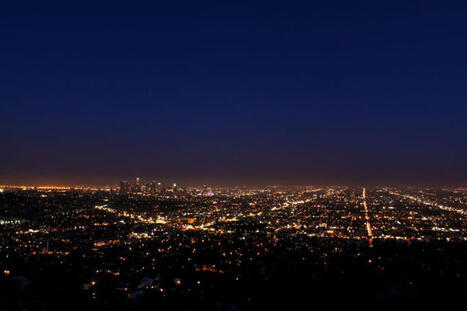
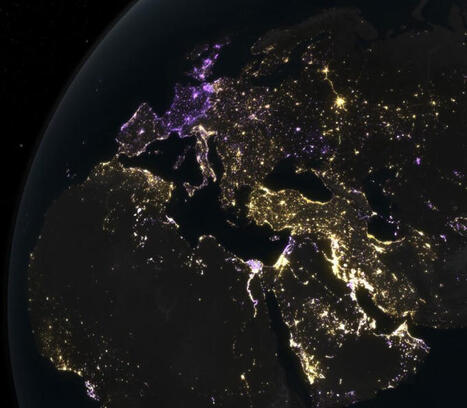
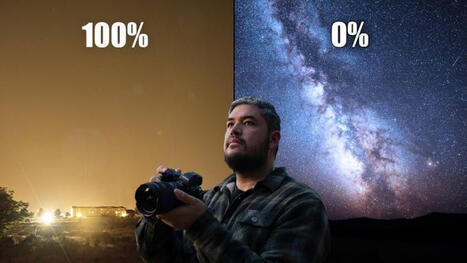
Illumination degradation, also known as photo pollution, is caused by excessive ambient light and is a byproduct of population and industry. It is just one of the numerous types of pollutants on the planet, together with microplastics, gas emissions, and wastewater.
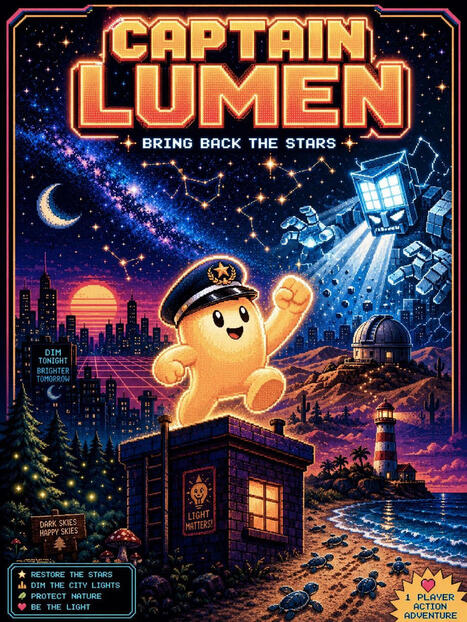
A bit different, this one. I grew up as an ardent 8-bit and 16-bit gaming kid in the 80s and early 90s, and still have a soft spot for retro games. The long Eid break gave me time to try something I’d been turning over for a while: Vibe-code a small game, but with a twist. I wanted to base it on something closely tied to what we follow in lighting design: the ROLAN manifesto.
I’d been hearing a lot about enhanced capabilities of Claude Opus 4.8, so sat down to direct, and let it build. And spawned "𝗖𝗮𝗽𝘁𝗮𝗶𝗻 𝗟𝘂𝗺𝗲𝗻", a small browser platformer about bringing back the night sky. You win with the responsible use of light.
Each of the five worlds is built on one of the five #ROLAN principles: Useful, Targeted, Low Level, Controlled, and Warm-Coloured. Dim a fixture to proper level, aim it downwards or at the façade instead of the sky, stomp the glare imps, collect stray photons, switch glare to curfew, and warm the coastal lamps so the turtle hatchlings find the sea.
What I’m quietly hoping is that it lands with the kids who get fascinated by light. ROLAN and dark skies can feel abstract at that age. A game doesn’t lecture; it lets them feel why restraint is the point, long before they ever read a lighting spec or even know what lighting design is.
In fairness, these are early trials. The gameplay is fairly easy, and right now it leans into a retro 80s vibe I love, backed with a retro soundtrack for each world. But plan is to grow it into a more modern game with richer graphics, deeper gameplay, and genuinely thoughtful lighting design baked into the visuals. When? That remains to be seen. But it’s a plan.
A gentle & playful nod to the folks at DarkSky International, the authors of the ROLAN principles, and friends across this beautiful lighting community. Do give it a shot!
Explore our 9-15 meter street light poles, engineered for highways, main roads, industrial zones, airports, ports, and large-scale outdoor lighting projects. Manufactured from high-quality steel and processed with advanced welding and hot-dip galvanizing technology, these poles are designed to provide excellent strength, corrosion resistance, and long service life in various environmental conditions. This video showcases the pole structure, manufacturing quality, surface finish, and project-ready design that meet the requirements of modern infrastructure projects. ✔ Pole Height: 9-15 Meters ✔ High-Strength Steel Construction ✔ Hot-Dip Galvanized Protection ✔ Durable Outdoor Performance ✔ Custom Designs Available ✔ Suitable for Municipal & Commercial Projects Factory Direct Supply | OEM & ODM Support | Global Export Experience #StreetLightPole #LightingPole #GalvanizedPole #RoadLighting #HighwayLighting #OutdoorLighting #InfrastructureProject #SteelPole #MunicipalLighting #FactoryDirect
Dans les villes de demain, l'éclairage ne sera plus seulement un service. Il deviendra une infrastructure stratégique. C'est le message que nous partageons dans notre entretien avec Light ZOOM Lumière et que nous avons le plaisir de mettre en démonstration dans le cadre d'Urban7 à #Nancy. Pilotage intelligent, adaptation aux usages, maîtrise énergétique, évolutivité des équipements : autant de leviers qui permettent aujourd'hui aux collectivités de construire des espaces publics plus performants et plus durables. Parce qu'un territoire intelligent commence souvent par une lumière plus intelligente. #Urban7 #SmartLighting #SmartCity #Nexiode #AgoraMakers #EclairagePublic
Faire revenir la nuit : un enjeu d’éclairage, de santé et de décision urbaine Dans son article « Faire revenir la nuit », publié dans #QueChoisir n°657 | mai 2026, le sujet de la pollution lumineuse est abordé comme un véritable enjeu de société.
L’éclairage artificiel nocturne, devenu omniprésent, ne concerne pas seulement la visibilité ou le confort. Il touche aussi la santé, les rythmes biologiques, la biodiversité, la consommation énergétique et la qualité de vie dans nos villes. Pour les collectivités, les urbanistes, les concepteurs lumière et les acteurs de l’aménagement, la question n’est donc plus simplement : faut-il éclairer ?
La vraie question devient : comment éclairer mieux ?
- où éclairer ? - quand éclairer ? - comment éclairer ? et surtout, comment ces choix sont-ils perçus par les usagers ?
C’est précisément dans ce type d’arbitrage que les outils d’aide à la décision visuelle peuvent apporter de la valeur. Avec Light and Innovation SAS, à travers la plateforme #VisualSense, l’objectif est d’accompagner les acteurs de l’aménagement, de l’urbanisme et de la conception lumière dans la comparaison de scénarios visuels, l’analyse des perceptions et la prise de décision.
- comparer différents scénarios lumineux, - objectiver les perceptions, - recueillir les retours des usagers et aider à choisir des solutions plus sobres, plus acceptables et mieux adaptées aux usages réels.
Réduire la pollution lumineuse ne signifie pas faire disparaître la lumière. Cela signifie concevoir une lumière plus juste, plus utile, plus sobre et mieux adaptée aux usages réels.
Un sujet qui peut intéresser les acteurs engagés sur ces questions : INGELUX, christophe MARTY Cluster Lumière Cerema, INSERM TENS Groupe ADP #ANPCEN.
You deserve a daily dose of good news. For the latest in science and the night sky, click here to subscribe to our free daily newsletter. Good news! In some areas light pollution is getting better On May 15, 2026, NASA shared new global maps that showed how light pollution has changed between 2014...
Councillors presented the Public Works department with a draft lighting ordinance based on DarkSKy's Model Ordinance. Multiple people present at the council meeting expressed frustrations at shopping for fixtures.
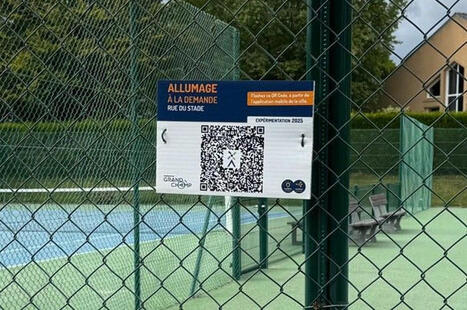
Quel bilan pour l’éclairage public à la demande dans le Morbihan ?
▶️ Depuis 2025, le syndicat Morbihan Énergies déploie de l’#éclairage à la demande auprès d'une demi-douzaine de territoires.
⚙️ Dès qu’une commune dispose d’horloges connectées et d’un éclairage #LED, l’#hyperviseur est capable de dialoguer avec ces équipements et d’envoyer des demandes d’allumage à distance.
📳 Morbihan Énergies a choisi d’exploiter une application citoyenne déjà largement utilisée en Bretagne : "#MonVillage ". Pour que la demande soit bien réalisée depuis le site à allumer, et ainsi éviter les abus d’allumage à distance, des QR Code ont été déployés dans certaines rues ainsi que dans des bâtiments publics.
Merci Didier Arz, directeur général des services de Morbihan Énergies, Anne EUSEBE, cheffe de projet smart city et Julian Éveno, premier adjoint au maire de Grand_Champ, pour vos explications.
Still feeling grateful after yesterday’s [en]LIGHTenment Journey Webinar ✨ What made this event special for me was seeing people from different countries and backgrounds come together to talk about light, design, creativity, and experience. These kinds of conversations remind me why building international educational communities around lighting is so meaningful.
I also want to sincerely thank our amazing speakers, Sharon Stammers, Martin Lupton, Roger NARBONI, Mahdis Aliasgari, and Ezzat Baroudi, for their generosity, insights, and inspiring talks.
And a special thank you to Women in Lighting for supporting this event.
To keep these conversations going, I’ve created a Light en Light Academy WhatsApp community where we’ll be sharing opportunities, resources, events, open calls, and the webinar recordings once they are uploaded. You can join through the link in the first comment 🌍
On 16 May, we marked the International Day of Light. 💡
Light surrounds us every day, yet we rarely stop to reflect on how deeply it shapes our lives. It does far more than simply help us see. Light can boost our mood, support our wellbeing, and help us feel and perform at our best. Whether at home, at work, in school, or outdoors, the light around us influences how we think, feel, and experience the world.
Smart, human-focused lighting can make a real difference. By combining natural daylight with electric lighting that adapts in colour and intensity throughout the day, we can create spaces that better support the way we live, learn, and work, therefore creating a lighting experience that flows with us, every hour of the day and in every environment.
Today we celebrate the UNESCO International Day of Light 💡
Light is so deeply integrated into our lives that we rarely stop to think about it. Beyond illumination, it quietly shapes almost every aspect of modern civilization: the way we communicate through optical fibers, diagnose diseases with medical imaging, grow food, explore the universe, manufacture technology, navigate cities, measure time, and even understand the origins of life itself.
For thousands of years, light has extended human activity beyond daylight, enabled knowledge to spread through writing and observation, inspired art and culture, and driven scientific revolutions that transformed society. Today, photons carry the information behind the internet, power precision manufacturing, and enable many of the technologies defining the future.
What is fascinating is that most of this remains invisible in our daily routines. We notice the screen, not the photonics behind it. We notice connectivity, not the light pulses traveling through glass. We notice the diagnosis, not the optics enabling it.
Light is not just something we see. It is one of the fundamental infrastructures of human progress.
Cities need smarter streetlights because darkness has become a budget decision. ENVIOTECH is betting that the winning infrastructure business won’t ask municipalities to rip everything out, but to make the lamps they already own cheaper, safer and easier to control.
The research supports that boring-sounding bet. A 2024 field study on context-adaptive street lighting found that municipalities are under pressure to manage lighting more efficiently as electricity costs rise, and that full adaptive installations using sensors, traffic data and remote control outperform conventional lighting strategies on energy consumption [1].
Another 2024 paper shows why retrofit matters: older lamps can be connected to LoRaWAN-based monitoring systems without replacing the whole streetlight, helping cities detect defects, configure devices remotely and bridge the gap between old public lighting and modern smart infrastructure [2].
That is exactly where ENVIOTECH’s model clicks. Instead of selling a giant infrastructure overhaul, it sells retrofit kits for existing streetlights, so cities can dim lamps when no pedestrian or cyclist is nearby, monitor them centrally and avoid full replacement costs.
In 2025, StartHub Hessen reported an Eschborn pilot and the company’s claim that its kits could save about 70% of energy use, even with LED lamps [3].
In 2026, ENVIOTECH raised more than €1 million in pre-seed funding to expand pilots, rollouts and its product portfolio, with newer coverage describing up to 80% energy savings [4].
The takeaway is simple: their success comes from making public safety cheaper, not optional.
[1] Pasolini, G., Toppan, P., Toppan, A., Bandiera, R., Mirabella, M., Zabini, F., Bonata, D., Andrisano, O. “Comprehensive Assessment of Context-Adaptive Street Lighting: Technical Aspects, Economic Insights, and Measurements from Large-Scale, Long-Term Implementations.” (2024). DOI: 10.3390/s24185942 [2] Schneider, S., Goetze, M., Krug, S., Hutschenreuther, T. “A Retrofit Streetlamp Monitoring Solution Using LoRaWAN Communications.” (2024). DOI: 10.3390/eng5010028 [3] “Wie das Eschborner Start-up Enviotech Straßenlaternen smart macht.” (2025). StartHub Hessen. [4] “ENVIOTECH raises €1M pre-seed for smart street lighting.” (2026).
Special thanks to LUCI Association for amazing pdf!
Experience the beauty of solar landscape lighting in different outdoor environments. This AI-generated showcase video presents modern solar landscape lights installed in parks, pathways, gardens, plazas, and public spaces. With elegant design, reliable solar power, and warm nighttime illumination, these lights help create safe and attractive outdoor environments. ✨ Clean Energy ✨ Modern Design ✨ Easy Installation ✨ Ideal for Parks, Gardens, Walkways & Communities Enjoy this visual showcase with relaxing background music and discover how solar landscape lighting can enhance outdoor spaces.
Géopolitique des études de stratégies lumière et de trames noires… De retour de 3 ateliers pédagogiques et professionnels sur des études de stratégies d’éclairages et de trames noires, en Thaïlande, en Uruguay et en Ukraine, j’ai pu mesurer la différence de connaissances et de pratiques qu’il existe encore aujourd’hui sur ces sujets à l’échelle de la planète.
Il y a 40 ans, j’ai commencé à imaginer mes premières stratégies d’éclairage pour des villes françaises et depuis 15 ans, j’ai aussi étudié mes premières trames noires en France. Et je peux donc constater aujourd'hui le chemin parcouru par rapport à d’autres pays qui en sont souvent à l’élaboration de leurs toutes premières études de ce type, avec un besoin impérieux et nécessaire de méthodologie, mais aussi avec une soif réconfortante d’apprentissage et d’acculturation à l’urbanisme nocturne.
La France compte à ce jour plusieurs centaines d’études liées aux stratégies d’éclairage et certaines villes en sont à leur 3e génération d’études de ce type. Ces stratégies d'éclairage concernent des agglomérations, des villes de toutes tailles, des quartiers ou des sites protégés. On peut donc réellement dire que la culture de l’urbanisme lumière qui s’est peu à peu transformé en un urbanisme nocturne respectueux de la biodiversité et du ciel nocturne, voir en un urbanisme de la nuit, réparateur et facteur de lien social, fait dorénavant partie intégrante de la majorité des stratégies urbaines françaises.
Dans beaucoup d’autres pays dans le monde, ce n’est pas toujours le cas. L’Europe (Grande Bretagne incluse) est certainement le continent le plus en avance sur ces sujets stratégiques liés à l’éclairage urbain. Du Nord au Sud de l’Europe, de la Suède à l’Espagne, de nombreuses études de stratégies d’éclairage et les premières études de trames noires ont été réalisées.
L’Asie (avec la Chine comme leader) et le Moyen Orient sont en train de rattraper leur retard dans ce domaine très particulier des études stratégiques d’éclairage avec un grand absent, l’Inde, qui balbutie encore dans ce type d’études.
Les Amériques et surtout quelques pays d’Amérique Centrale (Mexique) et du Sud (Brésil, Chili, Colombie, Uruguay) ont, depuis une quinzaine d’années, progressé dans ces études stratégiques et devraient servir de modèle à beaucoup de pays voisins désireux de mieux maitriser la nuit de leurs villes.
L’Océanie, avec l’Australie en locomotive, a encore pas mal de chemin à parcourir pour généraliser ce type d’études.
Enfin l’Afrique du Nord, grâce à des événements internationaux exceptionnels ciblés comme le prochain Moroccan Lighting Days for Africa à Tanger au Maroc, les 12 et 13 juin 2026, va aussi pouvoir développer des approches innovantes et essaimer progressivement dans le reste du continent avec des études stratégiques d’éclairage exemplaires.
Toutes les équipes ont pensé, créé, produit, installé et connecté un tout nouveau format d’exposition de nos solutions. Bravo et merci à tous !!
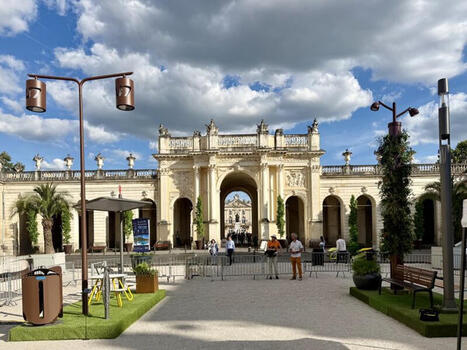
Pour le Sommet Internalional des maires en marge du G7 Agora Makers a vu grand : trois îlots thématiques de solutions urbaines innovantes, belles, connectées, et durables.
L’idée, c’est de mettre les solutions urbaines au cœur de la conversation avec les maires bien sûr mais aussi avec les passants, tous les Nancéiens et nombreux visiteurs de Nancy qui s’interrogent sur l’espace public.
Hâte de voir les échanges qui vont naître autour de cet espace dans les prochains jours.
Si tu es à Nancy pour l’U7, viens faire un tour. On sera là. 👋
Marques présentes : Eclatec Ghm Metalco Nexiode et nos partenaires privilégiés mube Citeos @nancymaville
Liverpool City Council has collaborated with Signify to install traffic adaptive lighting to drive energy efficiency and sustainability for its waterfront area
This week, I am the guest on an episode of NPR's Outside/In radio show, all about my story and my book NIGHTFARING, what light pollution is doing to us and the hope we can find that this is the easiest form of pollution to solve. 🌆 I'm so grateful to be the subject of such a beautifully produced piece of radio. 🎙️ 🌌 I hope you enjoy it! It is available to listen to on all major podcast platforms or from the show's page: https://lnkd.in/eY83ek4r
The city’s initiative to replace outdated high-pressure sodium streetlights with more energy-efficient, longer-lasting LED lights seems like a bright idea. Too bright for some.
Residents on New York Avenue, including Hunter Debutts, are seeing the glare.
“This one’s pretty bright, and definitely at night, it feels like daylight almost inside,” he said, pointing to a new LED light outside his home, which for some reason was on at 1:30 Tuesday afternoon.
Debutts says his next door neighbor is having similar problems.
“Her enclosed porch there — she used to sleep out there and said she can’t sleep out there because it is so bright,” Debutts said.
Today marks the 2026 International Day of Light, and it feels like an important moment to reflect on a question that sits quietly beneath so many of today’s economic and societal challenges: not how long we live, but how well we live, and for how long we can continue to contribute.
We are entering a period where two powerful trends are colliding. On one hand, populations are ageing and working lives are extending. On the other, healthy life expectancy is moving in the wrong direction. The real risk isn’t longevity itself, it’s the growing gap between lifespan and healthspan.
This is where the conversation needs to shift.
Productivity is often framed through the lens of technology, AI, or economic policy. But beneath all of this sits something far more fundamental: human biology. Our ability to think clearly, stay resilient, learn, collaborate and perform is not abstract, it is physiological. And physiology is shaped every single day by the environments we design and create.
Light is one of the most powerful and maybe the most overlooked of these environmental inputs.
It regulates our circadian rhythms, our sleep, our energy, our hormones, and even cellular function. Yet modern life has fundamentally altered our relationship with it. We spend most of our time indoors, under lighting conditions that bear little resemblance to the natural signals our biology evolved to depend on.
The consequences are subtle at first, but cumulative: disrupted sleep, reduced cognitive performance, metabolic strain, and over time, a quiet drift away from optimal health.
If we accept that people will need to work longer, then we also have to accept responsibility for the conditions that determine whether they can.
Because the future of productivity will not be decided solely by innovation or policy, but by whether we are designing environments that support long-term human capability, or erode it.
On this International Day of Light, it’s worth recognising that light is not just a design feature or a question of aesthetics. It is infrastructure for health. And increasingly, it is infrastructure for economic resilience.
If we want longer, healthier, more productive lives, we have to start with the environments we create and the signals we give to the human body every day.
The full article explores this in more depth, linking healthspan, ageing, productivity and the role of light in shaping the life curves of individuals and populations.
The Power of Light, Seen Through Different Perspectives
How does lighting influence the way we live, move and feel?
As part of the International Day of Light Day of Light, I’m sharing an image that reflects the positive impact of light in our everyday lives.
Lighting is a passion of mine, it impacts on virtual every thing we do and all environment's we may find ourselves in and this includes the absence of artificial light to enable us to enjoy the pleasure of natural light, the night sky. As promoted by Lighting Europe and ourselves within WSP light has a value. Well designed lighting enables us to go out at night in safety, promotes the local economy and facilitates leisure and sporting activities without adversely impacting on the environment.
Now I’m passing the light to Fiona Venn, Lilian Fu, IALD, CLD, LC, MIES and Adrianna Barr to share an image and their own perspective on how light makes a difference.
WSP Places WSP Transport & Infrastructure WSP in the UK & Ireland
To get content containing either thought or leadership enter:
To get content containing both thought and leadership enter:
To get content containing the expression thought leadership enter:
You can enter several keywords and you can refine them whenever you want. Our suggestion engine uses more signals but entering a few keywords here will rapidly give you great content to curate.


 Your new post is loading...