Your new post is loading...

|
Rescooped by
Bernadette Cassel
from InsectNews
April 22, 2013 4:30 AM
|
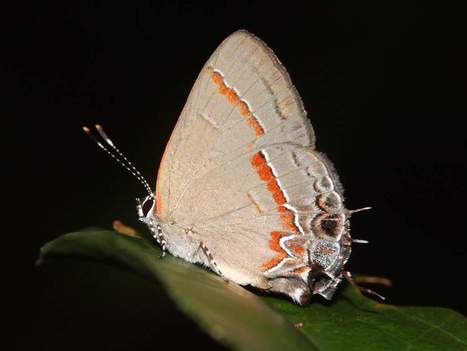
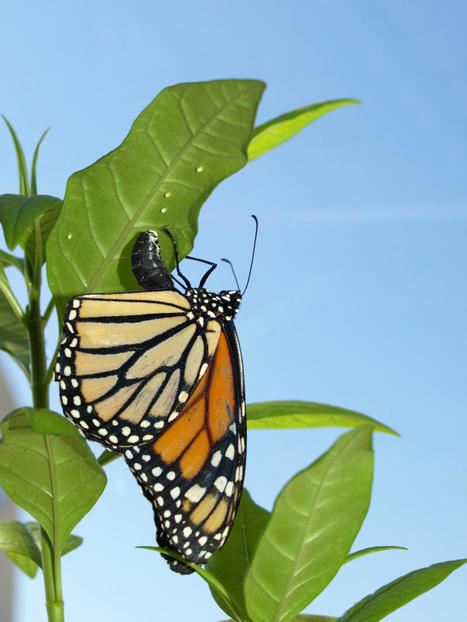
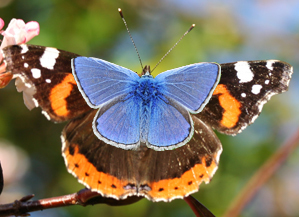
The butterfly flapped its colorful wings while the spider sat waiting to jump its prey and inject venom into the butterfly’s head.The spider aimed at the head, jumped and hit the butterfly’s wing — fooled again. For three months, Andrei Sourakov watched such interactions between jumping spiders and butterflies, recording them with a camera. His findings were published online March 8 in the Journal of Natural History. Sourakov, a collection coordinator at the Florida Museum of Natural History’s McGuire Center for Lepidoptera and Biodiversity, began the experiment because research has focused on how the colors and pattern of a butterfly’s wings are thought to deceive birds, but not on how they fool other predators, such as spiders. He wanted to see if a specific color pattern — the “false head” pattern found on many hairstreak butterflies that mimics a butterfly’s own head — could fool spiders too. He used 15 individual butterflies and moths belonging to 12 different species. The spider successfully captured 13 that did not have the “false head.” But the Red-banded Hairstreak butterfly, whose spots imitate a false butterfly head, escaped all 16 attacks from the jumping spider.
Via Matti Virtala
|
|
Scooped by
Bernadette Cassel
April 21, 2013 2:17 PM
|
Derniers articles publiés : • Joseph Blaise Pando, Fernand-Nestor Tchuenguem Fohouo, Joseph Lebel TamesseActivité de butinage et de pollinisation de Xylocopa olivacea Fabricius 1787 (Hymenoptera: Apidae) sur les fleurs de Vigna unguiculata (L.) Walp. 1843 (Fabaceae) à Yaoundé-Cameroun
article in Volume 66 (2013) page WWW : 42 (4 ULg) accès - fichier pdf : 61 (2 ULg) accès • Damien Polo Lozano, Emilie Bosquée, Thomas Lopes, Julian Chen, Cheng Deng Fa, Liu Yong, Zheng Fang-Qiang, Eric Haubruge, Claude Bragard, Frédéric FrancisEvaluation de la diversité de l’entomofaune en cultures maraîchères dans l’est de la Chine
article in Volume 66 (2013) page WWW : 37 (7 ULg) accès - fichier pdf : 40 (5 ULg) accès • Tsiresy Maminiaina Razafimanantsoa, François Malaisse, Noromalala Raminosoa, Olivia Lovanirina Rakotondrasoa, Gabrielle Lalanirina Rajoelison, Misha Ratsimba Rabearisoa, Bruno Salomon Ramamonjisoa, Marc Poncelet, Jan Bogaert, Eric Haubruge, François VerheggenInfluence de la plante hôte sur les stades de développement de Borocera cajani (Lepidoptera: Lasiocampidae)
article in Volume 66 (2013) page WWW : 33 (8 ULg) accès - fichier pdf : 50 (5 ULg) accès
|
|
Scooped by
Bernadette Cassel
April 20, 2013 7:51 PM
|
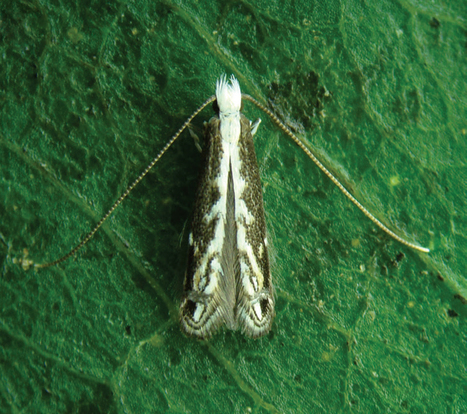
A new species of leaf miner from the important family Gracillariidae has been recently discovered in the depths of the Brazilian jungle and described in the open access journal Zookeys.
|
|
Scooped by
Bernadette Cassel
April 16, 2013 3:00 PM
|
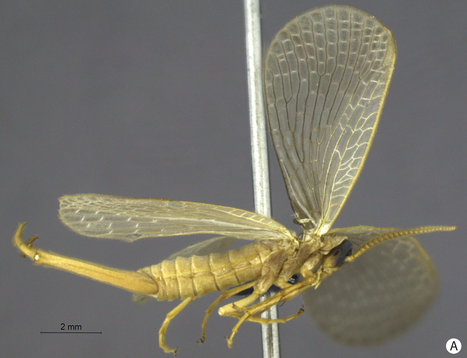
Abstract A new species of Meropeidae (Mecoptera) from Brazil, Austromerope brasiliensis sp. n., is described, representing only the 3rd extant species described in this family and the 1st record of the family from the Neotropical region. The distribution and biogeography of the family are discussed and we propose that Meropeidae originated before continental drift and then divided into two branches, northern and southern, with the breakup of Pangea. Identification keys for the Neotropical families of Mecoptera and for the species of Meropeidae are provided.
|
|
Scooped by
Bernadette Cassel
April 16, 2013 2:54 PM
|
"Our faculties are more fitted to recognize the wonderful structure of a beetle than a Universe." —Charles Darwin, Notebooks From Eurekalert we have the description of a new species in a group I di...
|
|
Rescooped by
Bernadette Cassel
from Ecologie Animale
April 12, 2013 5:16 AM
|
It's been known for decades that animals such as chimpanzees seek out medicinal herbs to treat their diseases.
Via François Verheggen
|
|
Scooped by
Bernadette Cassel
April 10, 2013 5:41 PM
|
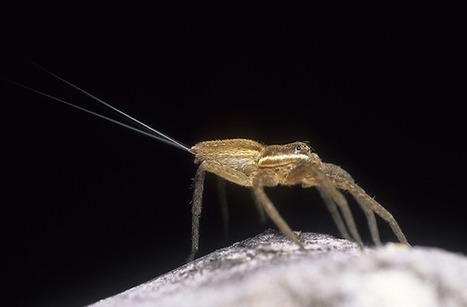
It is well known that spiders are effective at dispersal and colonization, in part because of their ability to 'balloon' - small spiders (i.e., immature specimens, or adults of species that are sma...
|
|
Rescooped by
Bernadette Cassel
from Ecologie Animale
April 9, 2013 9:53 AM
|
PLOS ONE: an inclusive, peer-reviewed, open-access resource from the PUBLIC LIBRARY OF SCIENCE. Reports of well-performed scientific studies from all disciplines freely available to the whole world.
Via François Verheggen
|
|
Scooped by
Bernadette Cassel
April 7, 2013 2:13 PM
|
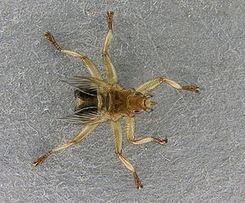
In Bug Grad School I learned about a crazy group of flies called Hippoboscidae, or louse flies. These flies have adopted an ectoparasitic lifestyle, which means they live on other animals much lik...
|
|
Scooped by
Bernadette Cassel
April 6, 2013 3:22 PM
|
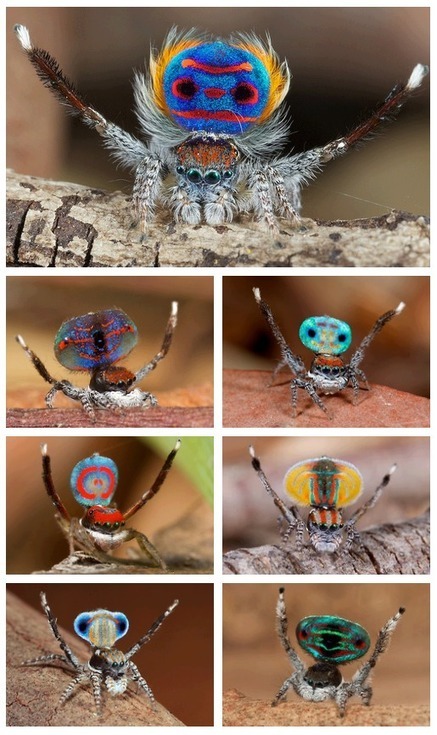
We might as well end my spider campaign on a high note - the most beautiful spiders I have ever seen, PEACOCK SPIDERS! They're just 5mm long and are confined to eastern parts of Australia.
Check out this awesome video of them here: http://bit.ly/14QNkzC
Images by Jurgen C Otto.
|
|
Scooped by
Bernadette Cassel
April 5, 2013 6:43 PM
|
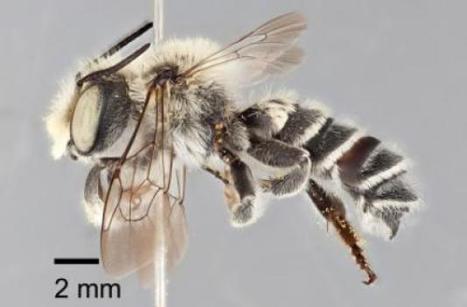
A new species of leafcutter bee, Megachile chomskyi, is described from Texas, United States.
|
|
Scooped by
Bernadette Cassel
April 4, 2013 10:10 AM
|
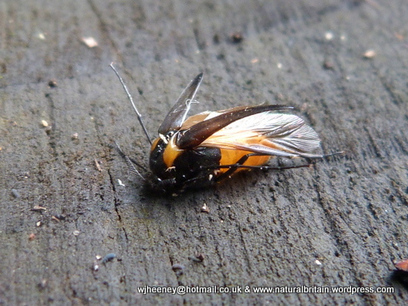
I think I will start with introducing one of my favorite insects, the wasp nest beetle or Metoecus paradoxus to give it the correct scientific name... This little beastie has been seen by my eyes o...
|
|
Scooped by
Bernadette Cassel
April 2, 2013 2:09 PM
|
Insect goop made from the DNA of creepy crawlies could be used to quickly reveal the biodiversity of an area regardless of whether the species involved are known to science. The technique involves DNA barcoding which identifies species using short genetic markers in the creature's DNA with something called next generation sequencing (NGS) technology which is part of metabarcoding. For the study, 73 insects were collected and preserved while the genomics research team performed a visual identification. Once complete (as far as possible) DNA from the legs of each creature was analysed using DNA barcoding and compared with data from the Barcode of Life Data Systems. Finally, after a round of differential centrifugation (a way of separating cells into their component parts) mixed DNA samples were analysed with an ultra-deep sequencing strategy. That last step allows research teams to assess biodiversity at the species level regardless of whether the species can be actually be identified. It also makes it possible to work out the total quantity of mitochondrial DNA present which related to the ratios and physical mass of each species present. Speaking about the developments, genomics researcher Xin Zhou said, "In some sense, the contribution of NGS technology to biodiversity research is equivalent to what microscopes did to microbiology." The study concludes that the metabarcoding approach shows "great potential in biodiversity-related surveillance, such as in biomonitoring programmes."
|
Abstract Understanding the processing of odour mixtures is a focus in olfaction research. Through a neuroethological approach, we demonstrate that different odour types, sex and habitat cues are coded together in an insect herbivore. Stronger flight attraction of codling moth males, Cydia pomonella, to blends of female sex pheromone and plant odour, compared with single compounds, was corroborated by functional imaging of the olfactory centres in the insect brain, the antennal lobes (ALs). The macroglomerular complex (MGC) in the AL, which is dedicated to pheromone perception, showed an enhanced response to blends of pheromone and plant signals, whereas the response in glomeruli surrounding the MGC was suppressed. Intracellular recordings from AL projection neurons that transmit odour information to higher brain centres, confirmed this synergistic interaction in the MGC. These findings underscore that, in nature, sex pheromone and plant odours are perceived as an ensemble. That mating and habitat cues are coded as blends in the MGC of the AL highlights the dual role of plant signals in habitat selection and in premating sexual communication. It suggests that the MGC is a common target for sexual and natural selection in moths, facilitating ecological speciation.
Via The aphid team@INRA Rennes
|
|
Scooped by
Bernadette Cassel
April 21, 2013 7:26 AM
|
Scientific research is spotting a surprising range of animals that engage in same-sex relationships. Here are ten: [...] It’s a fact: bugs can be gay. Dragonflies are among the most highly evolved predators in the insect world, and they’re also among the most demonstrative — engaging in spectacular in-flight ballets as well as serious sensual encounters with other dragonflies. But the presence of the opposite sex is not always a prerequisite to dragonfly dating; investigations have revealed a surprisingly high frequency of matings between same-sex dragonflies. Understanding the reasons for same gender pairings among such small invertebrates is challenging, and the interactions are poorly understood even today. Environmental chemistry and the unavailability of partners may be one factor influencing dragonfly mating behavior.
|
|
Scooped by
Bernadette Cassel
April 19, 2013 6:44 PM
|
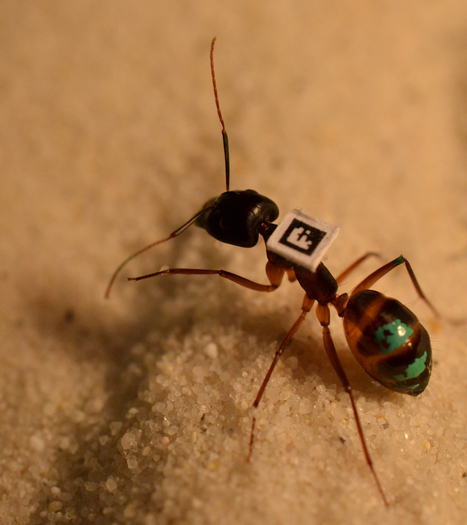
(Phys.org) —A team of researchers made up of two behavioral ecologists from the University of Lausanne and a robotics engineer from the Swiss Federal Institute of Technology has developed a novel way to study the behavior of individual ants in a...
[L'étude] Tracking Individuals Shows Spatial Fidelity Is a Key Regulator of Ant Social Organization - Science, 18.04.2013
http://www.sciencemag.org/content/340/6136/1090 [Camponotus fellah]
|
|
Scooped by
Bernadette Cassel
April 18, 2013 5:50 PM
|
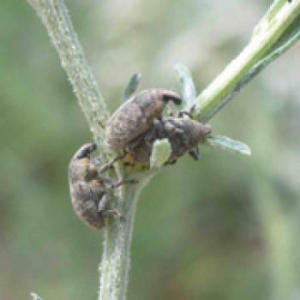
Biocontrol programs use an invasive plant's natural enemies (insects and pathogens) to reduce its population. Most biocontrol programs combine many different enemies. [...] One of the studies researchers analyzed focused on three agents (two species of weevils and a fly) that have been released in western North America to control two species of invasive plants, diffuse and spotted knapweed. The weevils consume the fly larvae, nullifying the effectiveness of the fly.
Host–parasite interactions are a key paradigm for understanding the process of coevolution. Central to coevolution is how genetic variation in interacting species allows parasites to evolve manipulative strategies. However, genetic variation in the parasite may also be associated with host phenotype changes, thereby changing the selection on both species. For instance, parasites often induce changes in the behaviour of their host to maximize their own fitness, yet the quantitative genetic basis for behavioural manipulation has not been fully demonstrated. Here, we show that the genotype of the parasitoid wasp Aphidius ervi has a significant effect on where its aphid host Acyrthosiphon pisum moves to die following parasitism, including the likelihood that the aphid abandons the plant. These results provide a clear example of an interspecific indirect genetic effect whereby the genetics of one species influences the expression of a specific behavioural trait in another.
Via The aphid team@INRA Rennes
|
|
Scooped by
Bernadette Cassel
April 11, 2013 5:34 PM
|
Females in the animal kingdom have many methods available to them to help bias male paternity. One such process is displayed by Euxesta bilimeki, a species of Ulidiid fly, whose females expel and then consume male ejaculate after copulation.
|
|
Scooped by
Bernadette Cassel
April 7, 2013 2:36 PM
|
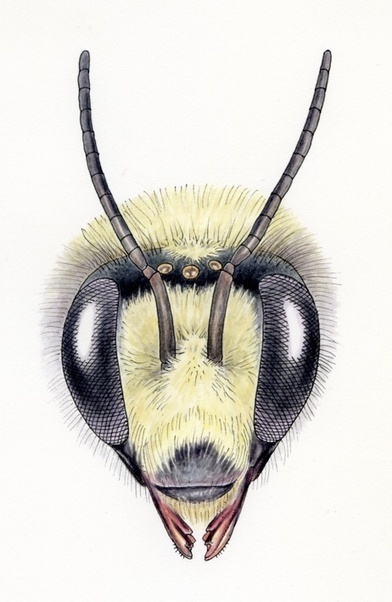
noelbadgespugh: “ Bombus Heads . . illustrations for a book, Bees of California, with Gretchen LeBuhn of the Great Sunflower Project (www.greatsunflower.org) . . being published by UC Press as part of...
|
|
Scooped by
Bernadette Cassel
April 7, 2013 2:25 PM
|
Tearroir interviews Bug Girl, PhD in Entomology, who shares her thoughts on the topic of the world's most expensive tea: insect feces tea. (I had a special guest interview over at the Tea Blog!
6 April 2013 When people tell me they've just seen a Common Blue, or a Small Copper, the one thing they always say in a surprised tone of voice is "it was really small" - which is true for these sp...
Via Laurent Deprost
|
|
Rescooped by
Bernadette Cassel
from Ecologie Animale
April 6, 2013 10:47 AM
|
Increases in ground-level ozone, especially in rural areas, may interfere not only with predator insects finding host plants, but also with pollinators finding flowers, according to new research.
Via François Verheggen
|
|
Scooped by
Bernadette Cassel
April 4, 2013 11:27 AM
|
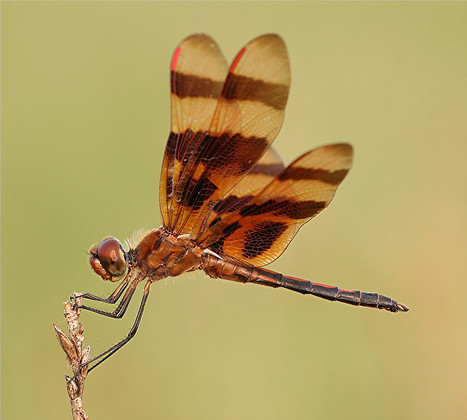
A new research found out that dragonflies may be one of the most effective hunters in the animal kingdom since it catches its prey more than 95 percent of the time, which has a significantly higher probability than the hunting skills of lions and great white sharks. Although dragonflies are naturally one of the most well-liked insects, they are apparently ferocious too when they lock their eyes on their prey. Compared to a lion’s 25-percent accuracy, dragonflies defy nature to catch and eat their prey right away. Aside from the fact that these are voracious aerial predators, dragonflies also have an insatiable appetite. This means their predation may happen several times a day because they happily grab as much food as they can. Stacey Combes, a Harvard student who studied the biomechanics of dragonfly flight, said she saw one laboratory dragonfly eat 30 flies in one flight.
|
|
Scooped by
Bernadette Cassel
April 3, 2013 6:40 PM
|
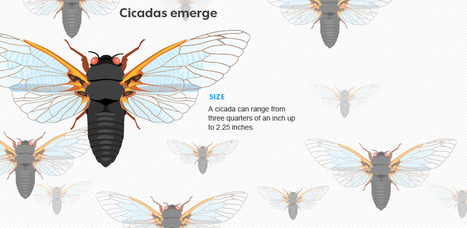
A big brood of cicadas is forecast to emerge from the ground this spring along the East Coast, all the way from the Carolinas to New York State.
|