




This review focuses specifically on the potential of neuroscience to inform the design and use of educational technology. It will be of interest not just to researchers but also to those concerned with the future role of technology in education.

 Your new post is loading...
 Your new post is loading...
Your new post is loading...
 Scoop.it!
This review focuses specifically on the potential of neuroscience to inform the design and use of educational technology. It will be of interest not just to researchers but also to those concerned with the future role of technology in education. 
No comment yet.
Sign up to comment
Scoop.it!

When I first read an iPad book to my son, back in April of 2010, I had a sick feeling in the pit of my stomach. What did these new picture books, with their instant appeal, mean for print books and more importantly, for reading as a pastime? Would my son ‘read’ or would he instead be distracted by books he could passively watch, or even worse, books that were more like toys and less like educational tools for literacy?
Scoop.it!
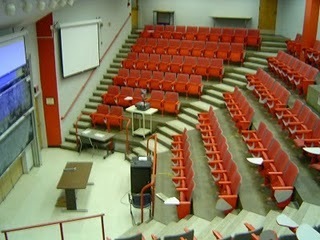
You don’t have to know much about the psychology of learning to realise that a series of once-only, delivered lectures is pedagogic nonsense. We learn next to nothing from once-only experiences like unrecorded lectures. Indeed, everything we know about learning shows that repeated access to content is necessary for learning.
Scoop.it!

The online characters – dubbed "chatbots" – employ high-speed speech recognition technology enabling them to conduct real time spoken conversations directly with students.
Scoop.it!

Pine Glen was very fortunate to receive 60 iPads this school year on two Bretford Power Sync Carts! The Carts will make management of the iPads easier, because they provide a central place to store, recharge, and sync the iPads to the iTunes library on my laptop. It was quite a bit of work to get the iPads ready to go for the students. I made a few mistakes a long the way, but here’s the most efficient method that I’ve found for getting all the iPads up and running in a uniform manner, particularly if you already have a bunch of free apps and apps purchased from the Volume Purchase Program:

Mary Henderson's comment,
September 23, 2011 4:41 AM
I can't imagine the use of this quite yet without there being a real possibility of enough ss owning ipads. Let's wait and see. Mary

Rolf tynan's comment,
September 23, 2011 4:55 AM
This is just to remind everyone that there are physical issues aswell as conceptual.

Jamie's comment,
October 18, 2011 5:05 AM
So jealous. At the NY center they have a netbook cart, which is really handy. Tablets for 2012; fingers crossed!
Scoop.it!

Alas, one year on the website (The TED Teachers’ Network) is unused and hasn’t been added to or accessed for a long time. To be honest, I had forgotten about it until I saw a post on Martin Warter’s blog about a similar problem he had had with his school’s wiki for teachers. That got me thinking about why my attempt had failed - I think reflection of this kind is just as valuable as reflecting on what worked well, if not more so - and here’s what I came up with:
Mary Henderson's comment,
September 23, 2011 5:11 AM
Really useful article. When an idea or concept fails, it is the idea itself that's faulted when it's more to do with the implementation and other factors mentioned above. I think we should get into the habit of blogging (i.e. keeping a diary) when setting up an initiative. The devil's in the detail.
Scoop.it!

In South-East Asia, VVOB has education programmes with an ICT component in Cambodia and Vietnam. In these programmes, Teacher Education Institutions (TEIs) are the main partners. VVOB believes that dedicated educators will always be essential for any successful ICT4E initiative, since they are the key to the appropriate and effective use of technology. In both countries the work aims at the use of ICT to enhance classroom teaching and student learning by teachers’
Scoop.it!

The Mobile Learning infoKit is a developing resource from JISC infoNet launched at ALT-C 2011 alongside the new JISC publication Emerging Practice in a Digital Age (September 2011). Augmenting the Emerging Practice guide, this infoKit is a practical guide for educational institutions planning to implement a mobile learning initiatiative.
Scoop.it!

ESSIE aims to benchmark progress in ICT availability and use in 31 countries (the 27 countries of the European Union, plus Croatia, Iceland, Norway and Turkey). Some 1 200 primary and secondary schools have been selected in each country and head teachers of these schools should expect emails about the survey in their in-box this month.
Scoop.it!

Topics were chosen for interest to children, by relevance to the National Curriculum and including much of the very best of Wikipedia. The selection is vast, and covers core subjects but does not try to be uniformly detailed: for example it has more depth on Llandudno, which is featured in the curriculum, than other similar places. Articles were chosen from a list ranked by importance and quality generated by project members. This list of articles was then manually sorted for relevance to children, and adult topics were removed.

's comment September 12, 2011 11:30 PM
my back hurts :P
Scoop.it!

People remember things better, longer, if they are given very challenging tests on the material, tests at which they are bound to fail. In a series of experiments, they showed that if students make an unsuccessful attempt to retrieve information before receiving an answer, they remember the information better than in a control condition in which they simply study the information. Trying and failing to retrieve the answer is actually helpful to learning. It’s an idea that has obvious applications for education, but could be useful for anyone who is trying to learn new material of any kind.
Scoop.it!

Duke University professor Cathy N. Davidson, author of the new book Now You See It: How the Brain Science of Attention Will Transform the Way We Live, Work, and Learn. She believes that how we learn is a relic of 19th century values, and if it has any chance at relevancy, must embrace aspects of our digital lives that are normally shunned by scholars – technology, collaboration, and yes, even distraction.
|
Scoop.it!

For the most part, language just works – by some mysterious process, people all over the world absorb the complex, underlying rules of their native grammars and store a vast lexicon of words and idioms in long-term memory. Effortlessly, we share stories, make demands, manipulate and delight one another with language.
Scoop.it!

The outcomes indicate the majority of students rate themselves (n = 617) as a novice (66.3%), compared to a happy amateur (17.3%), a power user (11.5%), or rather anxious (4.9%). Many observations can be drawn from this, including we tend to have a new intake who have a really good grounding in software (desktop and web based). It also indicates the need to devote resources to a well designed student support package, as 22% are not engaging with web based material would rate themselves as anxious and stressed with respect to technologies in learning.
Scoop.it!

Even though some large organizations have started using mobile technology to empower their workforce, for most others the question still remains – how do we actually use it in the workplace? Training departments are unsure how to design, develop and implement a successful mLearning strategy that works for their organizations.
Scoop.it!

It's all about Think Aloud, that age-old trick of simply narrating everything you are doing as the wiser, more experienced brain in the room. Narrate your decisions and your rationale and you will be teaching your students how to make good decisions online and off. Good behavior online is trickle down, after all. Model it, live it, talk about it. It's all "using" technology.
Scoop.it!

So the question becomes: What exactly are these things? What types of teaching do computers make uniquely possible? As it turns out, I’ve been asking lots of innovative teachers precisely this question over the last year as I’ve researched my book. They’ve tended to agree on the same list of concepts, some of which are really interesting and not the obvious ones.
Scoop.it!

A growing collection of research suggests that students require new comprehension skills and strategies to effectively read and learn from text on the Internet (Biancarosa & Snow, 2004; Coiro, 2003a, 2003b; Sutherland-Smith, 2002). Reading online is a complex process that requires knowledge about how search engines work and how information is organized within Web sites—knowledge that many students lack. Internet texts also demand higher levels of inferential reasoning and comprehension monitoring strategies that help readers stay on task.
Scoop.it!

If your students have access to a cell phone (or any digital device i.e. iPad, laptop) that can take and send/email pictures, they can make and publish their own books quickly and easily using Flickr. This is a great way to bring student books to life by publishing them digitally in a format that can be easily shared with the world or printed as a book for the classroom or school library.
Scoop.it!

Use this kit to stop cyberbullies in their tracks. It has the materials you need to show students how to stand up when they see digital harassment happening and to help you create a positive school culture where kids can thrive – both online and off.
Scoop.it!

I hope you have found something interesting here and this article makes you think a little more about how you deliver teacher training in general as the use of these tools isn't just restricted to tech training. They could be integrated into the delivery of any language or teacher training course and to some extent I feel that until tech tools are integrated into mainstream teacher training we aren't going to get the quality and quantity of digitally literate teachers that we need to really provide a 21st century learning environment for our students.
Scoop.it!

if devices are an extension of one’s self, and these devices are increasingly integrated with the physical world, it follows that technology is a gateway to expanding our own experiences with and confidence in the world at large. Technology is no longer an end in itself – instead, it becomes a path to more meaningful experiences with our surroundings. Kids are naturally intuiting this, and we as adults are following closely behind.
Scoop.it!

We’ve become so dependent on the test to tell us about our students that we know less and less about who they really are. And without really knowing them, how can we help them reach their individual potentials?
Scoop.it!

For 21st century success, students will need skill sets far beyond those that are mandated in the densely packed standards -- and that's evaluated on bubble tests. In the near future, success will depend on accelerated rates of information acquisition. And we need to help students develop the skill sets to analyze new information as it becomes available, to flexibly adapt when facts are revised, and to be technologically fluent (as new technology becomes available). Success will also depend upon one's ability to collaborate and communicate with others on a global playing field -- with a balance of open-mindedness, foundational knowledge, and critical analysis skills so they can make complex decisions using new and changing information.
|






