

Why Students Need Clarity, Not Chaos. - The future of teaching with AI doesn’t require omniscience. It requires courage to draw lines, explain why they matter, and revise them together when the world shifts again.


|
Scooped by
Nik Peachey
onto Learning & Technology News October 23, 2025 1:02 AM
|
 Scoop.it!
Why Students Need Clarity, Not Chaos. - The future of teaching with AI doesn’t require omniscience. It requires courage to draw lines, explain why they matter, and revise them together when the world shifts again.
Why Students Need Clarity, Not Chaos. - The future of teaching with AI doesn’t require omniscience. It requires courage to draw lines, explain why they matter, and revise them together when the world shifts again.

 Your new post is loading...
 Your new post is loading...
Your new post is loading...
Scoop.it!

The edtech world loves a disruption narrative, and it is easy to assume that artificial intelligence in the classroom was born alongside ChatGPT in late 2022. Far from being a sudden arrival, AI has a historically layered presence in educational research. It actually experienced a massive wave of growth between 1976 and 1989, driven by expert systems and intelligent tutoring. As we navigate the current flood of generative tools, this half-century archive offers a sobering, critical reminder for educators: the recent, staggering spike in AI publications represents a surge in research attention, not necessarily demonstrated educational effectiveness.
Nik Peachey's insight:
This usefully summarises research from: https://www.sciencedirect.com/science/article/pii/S0360131526001958?via%3Dihub Fifty Years of Topic Development, Thematic Combination, and AI’s Evolving Reach in Computers & Education
Scoop.it!
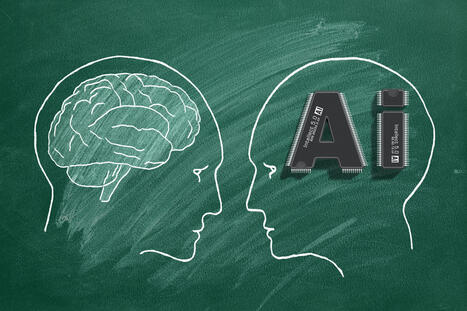
Learn how to integrate AI into teaching while preserving deep learning, authentic assessment, social connection, equity, and the pedagogical principles that support student learning. Via Ana Cristina Pratas
Nik Peachey's insight:
AI continues to prove itself a valuable assistant for practitioners in education because of its accessibility, ease of use, and the time and efforts it can save. However, a potential danger remains. If convenience becomes the main driver
Scoop.it!
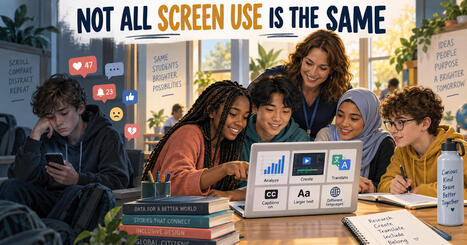
"Research about social media, cell phones, distraction, and excessive use is too often used to condemn every screen students encounter. That is not what the research says." Via EDTECH@UTRGV
Nik Peachey's insight:
People keep saying, “The research shows screens hurt students.” Which screens? Used by whom? To do what? For how long? Instead of what? Without those answers, “screen time” tells us almost nothing about learning.

EDTECH@UTRGV's curator insight,
September 18, 12:13 PM
"Much of the research used to warn about screens is correlational. Researchers compare estimated technology use with health or academic outcomes and identify an association. That can raise important questions, but it cannot prove that a screen caused the outcome."
Scoop.it!

As with other complex technologies such as smartphones, the internet or even writing itself, it will take more time for researchers to fully understand the true range of AI’s effects on cognition and learning. In the end, the picture will likely be a nuanced one that depends heavily on context and use case.
Nik Peachey's insight:
How does AI affect how we learn? A cognitive psychologist explains why you learn when the work is hard https://theconversation.com/how-does-ai-affect-how-we-learn-a-cognitive-psychologist-explains-why-you-learn-when-the-work-is-hard-262863
Scoop.it!
Through five intense months of meetings, research, and outreach across the MIT community, the Ad Hoc Committee on AI Use in Teaching, Learning, and Research Training sought to understand the role of generative AI in the life and educational mission of the Institute and recommend how to navigate its challenges and opportunities.
Nik Peachey's insight:
Through five intense months of meetings, research, and outreach across the MIT community, the Ad Hoc Committee on AI Use in Teaching, Learning, and Research Training sought to understand the role of generative AI in the life and educational mission of the Institute and recommend how to navigate its challenges and opportunities. https://aiandeducation.mit.edu/report/
Scoop.it!

The latest AI tutoring research points to a stubbornly human problem — getting students to engage. “Access was nearly universal but engagement was thin,” a new study found.
Nik Peachey's insight:
Interesting findings - The problem with an AI tutor: Students don’t want to use it - https://www.chalkbeat.org/2026/08/25/ai-tutoring-students-khanmigo-khan-academy-engagement-study/
Scoop.it!

A short exploration of how AI is changing the signals of value in work and culture.
Nik Peachey's insight:
Just reading this. Really nice thought experiment.
Scoop.it!
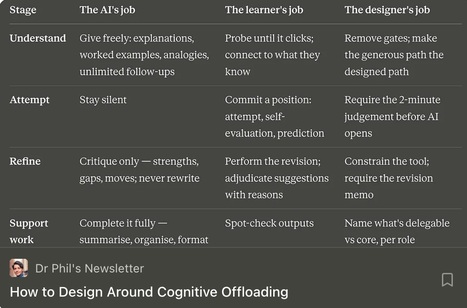
Three new studies shed light on when offloading to AI harms learning, when it helps — and how to design for the difference
Nik Peachey's insight:
How to Design Around Cognitive Offloading - Well worth reading if you want to understand how to use AI wisely https://drphilippahardman.substack.com/p/how-to-design-around-cognitive-offloading
Scoop.it!

As universities consider how best to integrate artificial intelligence into higher education, one message is becoming increasingly clear: the challenge extends far beyond adopting new technologies. The more important question is how institutions, teachers and students can make sense of AI and use it in ways that support meaningful learning, critical thinking and responsible knowledge production.
Nik Peachey's insight:
Beyond the technology: what AI integration really requires from Higher Education https://media-and-learning.eu/subject/artificial-intelligence/beyond-the-technology-what-ai-integration-really-requires-from-higher-education/ Taken together, the findings suggest that meaningful AI integration cannot be measured simply by how many tools universities adopt. Its success depends on whether institutions can use AI to strengthen learning, critical judgement and human agency while addressing the ethical, economic and infrastructural conditions surrounding these technologies.
Scoop.it!

Scott Latham has embraced the new technology and shifted his focus to measuring the AI readiness of colleges and universities. Two years ago, Scott Latham, a business professor at the University of Massachusetts at Lowell, was one of academia’s leading voices of the resistance to artificial intelligence. “AI is not your friend,” he wrote in a June 2024 editorial for Inside Higher Ed, imploring faculty to “pump the brakes on artificial intelligence in higher education,” lest robots take their jobs in the not-so-distant future. Via EDTECH@UTRGV
Nik Peachey's insight:
Why One Professor Abandoned the AI Resistance https://www.insidehighered.com/news/tech-innovation/artificial-intelligence/2026/07/28/why-one-professor-abandoned-ai-resistance An interesting interview, especially when many people are moving in the opposite direction.
EDTECH@UTRGV's curator insight,
August 3, 1:17 PM
“For everyone who works in higher education, there is a great deal of pain and disruption to come...We can minimize the damage, though, by helping people understand how AI will transform higher education.”
Scoop.it!

Are frontier AI models beginning to write papers better than humans? I ran a comparison, and it's left me more uncertain than ever.
Nik Peachey's insight:
This article looks at AI's ability write academic papers and whether AI is starting to influence what good writing is perceived to be - https://www.futureofbeinghuman.com/p/publish-or-perish-ai-vs-human-vs-human
Scoop.it!
We’ve all been experimenting with Google’s NotebookLM lately.
Nik Peachey's insight:
This is a useful summary of some interesting research into the use of tools like NotebookLM https://ammaramerhbi.substack.com/p/why-ai-learning-tools-fail-without
Scoop.it!

I Read 25 Studies on AI in Education. Here’s What Teachers Are Actually Doing.
Nik Peachey's insight:
This is interesting feedback on the research (or lack of it) in how AI is used in education I Read 25 Studies on AI in Education. Here’s What Teachers Are Actually Doing. https://mikekentz.substack.com/p/i-read-25-studies-on-ai-in-education

Robin Brown's curator insight,
September 7, 12:15 AM
I rescooped this resource because it grounds the AI-in-education conversation in research from 25 studies rather than assumptions about how teachers are using these tools. I was especially interested in the finding that most teacher AI use is focused on lesson planning, assessment creation, and other behind-the-scenes work rather than direct student use. The lack of evidence connecting teacher AI use to improved student learning outcomes is an important reminder that efficiency and effectiveness are not necessarily the same thing. As schools continue expanding AI use, stronger professional learning and research will be essential to ensure that these tools actually support meaningful teaching and learning.
|
Scoop.it!
Nik Peachey's insight:
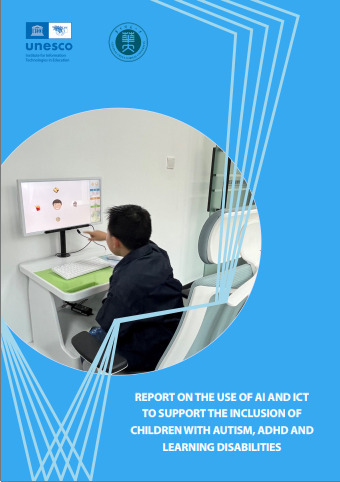
Drawing on international case studies and expert insights, the report

Lorena Castillo's curator insight,
September 30, 12:21 PM
Las tencologias digitales y la inteligencia artificial pueden apoyar la inclusión educativa cuando se utilizan de manera adecuada y teniendo en cuenta las necesidades de cada niño
Scoop.it!

Welcome to the July 2026 edition of the Edtech & ELT Newsletter.
Nik Peachey's insight:
Welcome to the September 26 Newsletter. I guess most teachers are now back to the classroom or will be soon, so I hope there’s something here that will help or stimulate you over the coming month.
Scoop.it!

From
aacte

As artificial intelligence continues to reshape teaching and learning, educator preparation programs have an important role to play in ensuring future educators are prepared to use AI thoughtfully, ethically, and effectively.
Nik Peachey's insight:
AI Framework for Educator Preparation - American Association of Colleges for Teacher Education https://aacte.org/report/ai-framework-for-educator-preparation/ Artificial intelligence presents both tremendous opportunity and significant responsibility for educator preparation. AACTE’s Framework reflects our commitment to ensuring that technology serves, not supplants, the expertise, ethics, and professional judgment of educators.
Scoop.it!

The findings reinforce a need we hear from educators globally: technology must be paired with strategy, responsible practices, and professional learning. Lenovo helps schools build that foundation by bringing together the right technology, implementation support, and partnerships that advance AI literacy for educators and learners.
Nik Peachey's insight:
https://uk.bettshow.com/reports-and-whitepapers/state-of-ai-in-education The findings reinforce a need we hear from educators globally: technology must be paired with strategy, responsible practices, and professional learning. Lenovo helps schools build that foundation by bringing together the right technology, implementation support, and partnerships that advance AI literacy for educators and learners.
Scoop.it!
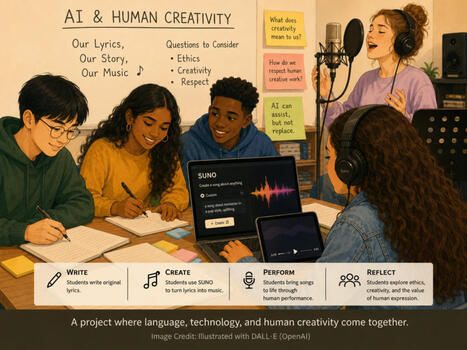
From
fltmag
AI as Collaborator: Human-Written Lyrics, AI-Sung Music, and Critical Reflection
Nik Peachey's insight:
AI as Collaborator: Human-Written Lyrics, AI-Sung Music, and Critical Reflection https://fltmag.com/ai-collaborator-lyrics-music/ Some nice ideas in this article.
Scoop.it!

Most teachers recognize the scene: a room full of students copying down slides word-for-word or neatly filing away handouts under the assumption that having the record means having the knowledge.
Nik Peachey's insight:
This is an interesting article about the use of notes and their impact on memory - Cognitive Offloading in the Classroom: How External Notes Compromise Internal Learning - https://ammaramerhbi.substack.com/p/cognitive-offloading-in-the-classroom
Scoop.it!

AITSL is reviewing the Australian Professional Standards for Teachers for the first time since they were adopted. Before deciding how to update the standards, we must first ask a more fundamental question: what is education for in a world shaped by artificial intelligence, and what does high-quality teaching now require? Via Ana Cristina Pratas
Nik Peachey's insight:
Good to see this is happening in a sound and informed way.
Scoop.it!

"A growing number of universities have prohibited AI detectors, arguing they are ‘unreliable’ indicators of cheating. But where does that leave faculty, who know all too well that cheating is rampant in the age of AI?" Via EDTECH@UTRGV
EDTECH@UTRGV's curator insight,
August 5, 11:24 AM
“Instead of trying to ‘catch’ AI use, focus on designing assignments that encourage process, reasoning, and authentic engagement.” 
Marcela Tagua's curator insight,
August 7, 7:45 AM
En la era de la IA se requieren nuevos roles y competencias, no basta con el control
Scoop.it!

Discover how storytelling in teaching can transform your course syllabus into a guide that engages students, builds context, and creates a more meaningful learning experience. Via EDTECH@UTRGV
EDTECH@UTRGV's curator insight,
August 3, 1:14 PM
“'Teachers do not simply list course content for learners. They sequence it in ways that imply a story about what fits together and where it is headed.' (2025, p.73). Automatically I asked myself, what is the story my syllabus is telling students? To be completely honest, is it even telling a story at all?"
Scoop.it!

Aka, the current state of AI's instructional design ability & what it means for L&D
Nik Peachey's insight:
Interesting article about AI's ability to design courses https://drphilippahardman.substack.com/p/ai-can-build-your-course-but-can AI Can Build Your Course, but Can it Design the Learning?
Scoop.it!

This volume explores the connections between multilingualism and the psychology of language learning and teaching. It provides new insights into the
Nik Peachey's insight:
Interdisciplinary Approaches to the Psychology of Multilingual Learners and Teachers - This is free to download or read online. https://www.taylorfrancis.com/books/oa-edit/10.4324/9781003503620/interdisciplinary-approaches-psychology-multilingual-learners-teachers-giulia-sulis-%C3%A5sta-hauk%C3%A5s-sarah-mercer
Scoop.it!

From
www
Immersive learning is gaining traction across classrooms, but
Nik Peachey's insight:
Nice to see something that isn't about AI.
|






Students need clarity and be trained, educated in using AI.
Why Students Need Clarity, Not Chaos. - The future of teaching with AI doesn’t require omniscience. It requires courage to draw lines, explain why they matter, and revise them together when the world shifts again.