Follow, research and publish the best content
Get Started for FREE
Sign up with Facebook Sign up with X
I don't have a Facebook or a X account
Already have an account: Login

Learning Futures
10.5K views |
+0 today


The Learning Futures team focuses on strategic innovations that advance the mission of the university. The team helps shape the future of learning and teaching at the university through human and technological capacity building and promotes continuous improvement using learning analytics.
Curated by
Kim Flintoff
 Your new post is loading...
 Your new post is loading...
Your new post is loading...
 Scoop.it!

DAVOS, SWITZERLAND — The world is going through a seismic shift in the make-up of its workforce and the boss of the world’s largest staffing firm told Business Insider that the only way to stay employed is to constantly learn.
Kim Flintoff's insight:
The World Economic Forum’s benchmark “Global Risks” report for 2017 says the biggest risk to doing business globally is unemployment or underemployment due to the greater adoption of robots, automation, and artificial intelligence.

Scoop.it!
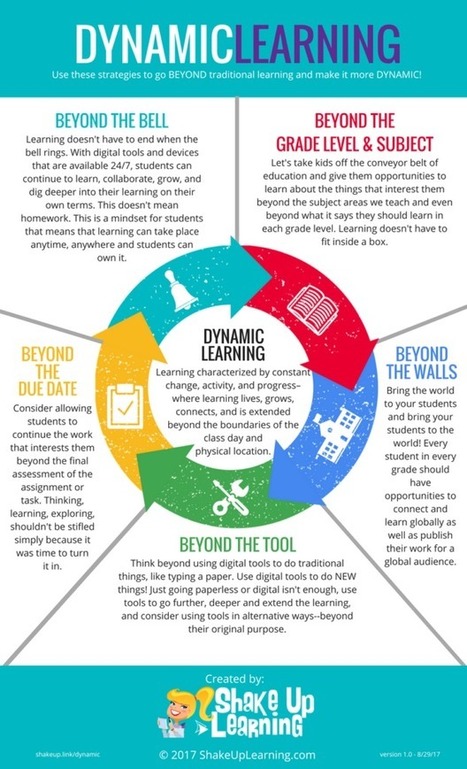
Take it One Step at a Time
Kim Flintoff's insight:
That’s all it takes, just one small step at a time. I’m not asking anyone to immerse their classrooms in these ideas overnight. I’m just asking that as educators, we consider the transformation that is possible and try new things. Even in small increments, we can make a big difference, and better prepare our students for the future.
Scoop.it!

Tomorrow is another today
Kim Flintoff's insight:
As William Gibson, a science-fiction writer, once memorably put it, “the future is already here — it’s just not very evenly distributed”.
Scoop.it!

From
etale

Online learning encompasses more than online degrees. The phrase “Online degrees” is one that refers specifically to degree programs that are typically offered by regionally and nationally accredited higher education institutions. Online learning can refer to that as well, but it also includes informal online learning, self-directed learning, non-credit and continuing education offerings, offerings by non-universities and the increasingly common experience of people who mix and match online resources and experiences to achieve personally and professionally meaningful learning goals.
Scoop.it!
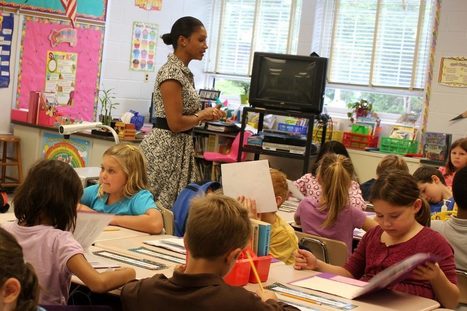
What is the role of the single teacher in a classroom in a world where millions of potential teachers are now a few keystrokes away on a laptop or phone?
Kim Flintoff's insight:
To ask that question seriously, you have to buy into the premise of “millions of teachers” (if not billions) being within reach online. You have to be open to the idea that physical space teachers are no longer the smartest people in the room when it comes to content and curriculum if that room has access to the Web. And you also have to see that development as a) pretty amazing, and b) great for learners (read: kids.)
Scoop.it!

As John F. Kennedy eloquently stated in a 1961 speech about space travel, “We choose to go to the moon in this decade and do the other things, not because they are easy, but because they are hard.” Moonshots in education involve goals that are difficult, perhaps seemly impossible, to achieve; however, we need these now and in the future to prepare our students for success.
Kim Flintoff's insight:
"Moonshots in education involve goals that are difficult, perhaps seemly impossible, to achieve; however, we need these now and in the future to prepare our students for success."
Scoop.it!

Everything is global–trade and economics, media and information. Young people are more likely than ever to interact with people from different cultures while at home and on the road. As we become more connected, more interdependent, how do we prepare young people for the world they will inherit? We see six reasons, seven competencies, eight strategies and nine innovations.
Kim Flintoff's insight:
Everything is global–trade and economics, media and information. Young people are more likely than ever to interact with people from different cultures while at home and on the road. As we become more connected, more interdependent, how do we prepare young people for the world they will inherit? We see six reasons, seven competencies, eight strategies and nine innovations.
Scoop.it!

For generations, new technologies – from the steam engine to the Internet and beyond – have fundamentally changed the nature of work and the economy. But it is happening faster now while we are living longer. Where our parents and grandparents might have experienced only one, or even no, significant change in their lifetimes, you have likely already experienced a dramatic technology-driven shift in your career, and your children will likely absorb a major shift every ten to fifteen years across theirs.
Kim Flintoff's insight:
For generations, new technologies – from the steam engine to the Internet and beyond – have fundamentally changed the nature of work and the economy. But it is happening faster now while we are living longer. Where our parents and grandparents might have experienced only one, or even no, significant change in their lifetimes, you have likely already experienced a dramatic technology-driven shift in your career, and your children will likely absorb a major shift every ten to fifteen years across theirs.
Scoop.it!

The master's program is in data, economics and development policy. Duflo says with the knowledge gained in the program, students should be able to run their own evaluation projects. They would know that most imaginative, well-thought-out programs fail, and therefore they have to be tested in the field — and they would have the tools to do that testing.
Kim Flintoff's insight:
The master's program is in data, economics and development policy. Duflo says with the knowledge gained in the program, students should be able to run their own evaluation projects. They would know that most imaginative, well-thought-out programs fail, and therefore they have to be tested in the field — and they would have the tools to do that testing.
Scoop.it!

Let's be blunt: government and corporate Australia is spectacularly unprepared for automation.
Kim Flintoff's insight:
Let's be blunt: government and corporate Australia is spectacularly unprepared for automation.
Scoop.it!

Anton Oberländer is a persuasive speaker. Last year, when he and a group of friends were short of cash for a camping trip to Cornwall, he managed to talk Germany’s national rail operator into handing them some free tickets. So impressed was the management with his chutzpah that they invited him back to give a motivational speech to 200 of their employees.
Kim Flintoff's insight:
And yet they persist with exams?? Assessments need to be integrated with learning, authentic and meaningful... exams seldom meet those criteria.
Scoop.it!

In May, the nonprofit released a rubric for integrating academics and internships, covering topics such as external partnerships and the public exhibition of student work.
|
Scoop.it!

Classroom educators know better than anyone else how much of learning is built on the strength of relationships in the room. When students like and trust their teacher, they learn better. That’s why large class sizes and a focus on standardized test scores — to the exclusion of other things — frustrate many veteran teachers. They know those factors often hinder teachers’ ability to form relationships. But a slow shift may be coming as some school leaders are starting to recognize that the health and happiness of teachers, students and staff depend on making space in school for relationship-building.
Kim Flintoff's insight:
But a slow shift may be coming as some school leaders are starting to recognize that the health and happiness of teachers, students and staff depend on making space in school for relationship-building.
Scoop.it!
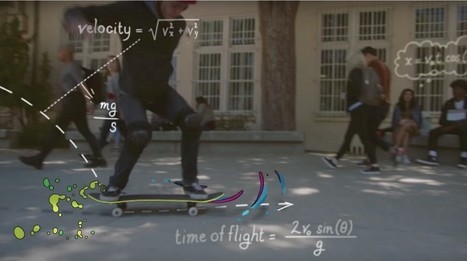
We cannot anticipate the challenges today’s children will confront as grownups, nor can we conceive of the solutions they will devise. Technology, the planet, and society are changing faster than ever before. But this doesn’t mean we should discard the old disciplines of reading, math, science and history for a shiny new curriculum of nanorobotics, holography, and multi-tasking.
Kim Flintoff's insight:
A great education is a long and rewarding journey which never ends. High school is a key stage in that journey when students can acquire the foundations for success in later life. Let’s ensure that every American student can make the most of this opportunity.
Scoop.it!

I had a conversation with a parent who relayed an experience visiting a potential new school for her child. She asked for a tour of the school and they just walked her around the building, showing different physical spaces. When she asked about what the school does especially well, the tour guide looked confused.
Kim Flintoff's insight:
The idea that the school does more than process students, send them from class to class, keep order, give them an “education”, and send them on to the next processing plant didn’t seem to click for this guide.
Scoop.it!

About
Kim Flintoff's insight:
About The EmployABILITY student starter kit is an online resource featuring a student-focussed, personalised employability profile tool and developmental resources. The first step in the student starter kit is to assess your employABILITY using the EmployABILITY self-assessment tool. This will generate your personalised EmployABILITY profile. Use and re-create your personalised profile as often as you like. Enhance your employability using your personalised profile and the EmployABILITY student resources.
Scoop.it!

Many economists say there is no need to worry. They point to how past major transformations in work tasks and labor markets – specifically the Industrial Revolution during the 18th and 19th centuries – did not lead to major social upheaval or widespread suffering. These economists say that when technology destroys jobs, people find other jobs. As one economist argued:
Kim Flintoff's insight:
“Since the dawn of the industrial age, a recurrent fear has been that technological change will spawn mass unemployment. Neoclassical economists predicted that this would not happen, because people would find other jobs, albeit possibly after a long period of painful adjustment. By and large, that prediction has proven to be correct.”
Scoop.it!

From
hbr
College students who major in the humanities always get asked a certain question. They’re asked it so often—and by so many people—that it should come printed on their diplomas. That question, posed by friends, career counselors, and family, is “What are you planning to do with your degree?” But it might as well be “What are the humanities good for?”
Kim Flintoff's insight:
From Silicon Valley to the Pentagon, people are beginning to realize that to effectively tackle today’s biggest social and technological challenges, we need to think critically about their human context—something humanities graduates happen to be well trained to do.
Scoop.it!

Thanks to the Shift Happens videos (2007), you will likely be familiar with this statistic about the future of work: “The top 10 in demand jobs in 2010 did not exist in 2004. We are currently preparing students for jobs that don’t exist yet, using technologies that haven’t been invented, in order to solve problems we don’t even know are problems yet.”
Kim Flintoff's insight:
“The top 10 in demand jobs in 2010 did not exist in 2004. We are currently preparing students for jobs that don’t exist yet, using technologies that haven’t been invented, in order to solve problems we don’t even know are problems yet.”
Scoop.it!

That means getting the major requirements “out of the way” in order to ensure graduation (a degree still gets one past past the screening algorithms for a first job), and then concentrate on the synthetic skills that can help one succeed in everything else. It means treating college like total immersion in a foreign country, exploring courses and extracurricular opportunities beyond one’s normal range of interests and experiences. If a school offers pass-fail options, a student can take classes where they have more interest than skill in order to connect with people unlike themselves, whether Python programmers or spoken-word poets. What makes them tick? There is no better way to hone the ability to work with others who complement rather than mirror one’s own skills. A student entering college this fall could be in the workforce until 2065 or 2070. No one can predict what the world look like then, except that it will bear little resemblance to today’s college major. Being able to synthesize knowledge is a life-changing lesson that one can fall back on whenever life changes. And — we can predict — change it will.
Kim Flintoff's insight:
"A student entering college this fall could be in the workforce until 2065 or 2070. No one can predict what the world look like then, except that it will bear little resemblance to today’s college major. Being able to synthesize knowledge is a life-changing lesson that one can fall back on whenever life changes. And — we can predict — change it will."
Scoop.it!
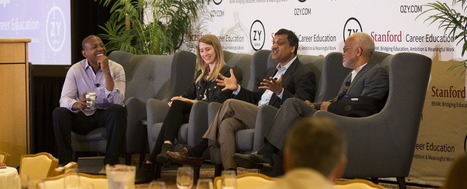
For many attending the Future of Work symposium on Wednesday, there wasn’t any question whether automation is going to take over jobs—but rather when, and how education should respond.
Scoop.it!
http://wemadeourselvesover.com
Kim Flintoff's insight:
2097: We Made Ourselves Over is the culmination of a year long project inviting residents and future experts from Aarhus, Hull and beyond to describe their hopes for the coming century. Find out more about the ideas behind the future world and the making of the project here: http://wemadeourselvesover.com
Scoop.it!

It’s safe to say social networking has taken a hold of the bulk of the Internet world and is not letting go so easily. How does social media meld with our imaginings of what future learning looks like? Let’s begin by looking at the present.
Scoop.it!

The question is whether new pathways need to be created to help young people straddle the gap between education and work.
Kim Flintoff's insight:
The question is whether new pathways need to be created to help young people straddle the gap between education and work.
Work is under way on this issue in Australia. The University of Tasmania, for example, is adding associate degrees, which are shorter, cheaper and more vocationally focused on local industries than full bachelor degrees.
|





