Your new post is loading...

|
Scooped by
Kim Flintoff
April 11, 2017 1:55 AM
|
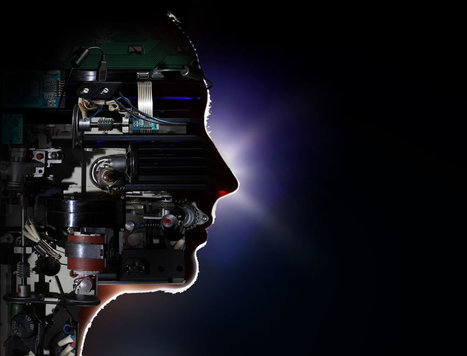
Automation has the potential to replace or alter 35 million jobs worldwide, which means universities must adapt to survive, argues Nancy Gleason
|
|
Scooped by
Kim Flintoff
April 6, 2017 7:23 AM
|
The challenges the education sector face are well known.
International studies and local stories articulate this almost daily. This conference, curated by a panel of education experts, has been designed to examine what places of learning should look like in the future. How do learning spaces, pedagogies, technologies and organisational structures need to adapt to equip students for our future world?
The Schools of the Future Conference will involve participants in two days of interactive learning to develop project ideas in response to a key problem. Keynote speakers will present ideas that are based on evidence, experience and innovation that is happening now, both locally and internationally. Interrogate, discuss and examine these ideas with the support of peers and industry experts.
The aim of the conference is for participants to take ideas back to schools and be inspired to innovate and implement change with school leaders, teachers, students and parents. Come as a group ready to explore and spark change!
Presented by Sydney Opera House and Adobe
|
|
Scooped by
Kim Flintoff
April 4, 2017 10:31 PM
|
Friday, 18 August 2017 Be inspired by future focused presenters, supported by a series of case studies and hands-on workshops across all education sectors K – 12. Hear from world leading inspirational thinker, Lee Watanabe Crockett who will engage, excite and challenge delegates as he explores how we prepare global digital citizens of the future. Designed to share pioneering and innovative practice, this conference will see delegates explore strategies to engage students in transitioning to student-centred 21st century learning.
|
|
Scooped by
Kim Flintoff
March 27, 2017 6:34 AM
|
The sooner we let imagination become, as the Walt Disney Company would put it, “imagineering,” the better off we will be. Immersive learning will surpass active learning, which in its day surpassed passive learning in effectiveness.
Campus leaders should support bold, visionary efforts at creating new learning models.
“Imagineered” innovation will not always work perfectly, and sometimes it will not work at all. But vastly improved student learning is at stake. Using our base elements of today, we can make gold and improve the lives of our children by 2025.
|
|
Scooped by
Kim Flintoff
January 23, 2017 7:59 PM
|
This is a future we can look forward to.
|
|
Scooped by
Kim Flintoff
December 29, 2016 6:53 PM
|
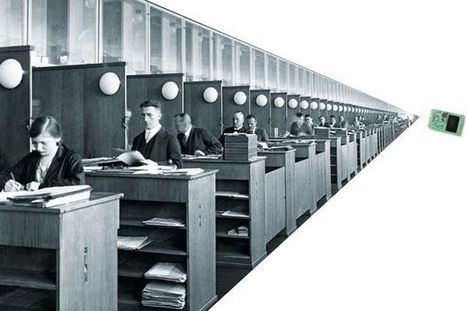
To be clear, mechanization has always cost us jobs. The mechanical loom for instance put weavers out of business. But it’s also created jobs. Mechanics had to keep the machines going, machinists had to make parts for them, and workers had to attend to them, and so on. A lot of times those in one profession could pivot to another. At the beginning of the 20th century for instance, automobiles were putting blacksmiths out of business. Who needed horse shoes anymore? But they soon became mechanics. And who was better suited?
Not so with this new trend. Unemployment today is significant in most developed nations and it’s only going to get worse. By 2034, just a few decades, midlevel jobs will be by and large obsolete. So far the benefits have only gone to the ultra-wealthy, the top 1%. This coming technological revolution is set to wipe out what looks to be the entire middle class. Not only will computers be able to perform tasks more cheaply than people, they’ll be more efficient too.
Accountants, doctors, lawyers, teachers, bureaucrats, and financial analysts beware: your jobs are not safe. According to The Economist, computers will be able to analyze and compare reams of data to make financial decisions or medical ones. There will be less of a chance of fraud or misdiagnosis, and the process will be more efficient. Not only are these folks in trouble, such a trend is likely to freeze salaries for those who remain employed, while income gaps only increase in size. You can imagine what this will do to politics and social stability.
|
|
Scooped by
Kim Flintoff
December 6, 2016 6:47 PM
|
How colleges and universities can create a responsive classroom by using data to help courses keep up with changing markets and personalize learning.
When it comes to continuing education and skills-based learning, one of the biggest challenges that universities face is ensuring quality and uniformity of results.
Students trust universities to deliver on the promise that every topic taught is relevant, marketable, and will lead to clear returns on their investments (ROIs). But how do universities respond to changing market demands and variable classroom profiles, while also administering to the needs of thousands of students each year? How can institutions create a responsive classroom?
This is where data analytics comes in. By building infrastructures for data analysis, universities can more readily glean insights from the classroom and more quickly respond to the needs of students and employers alike.
In our own university-partnered web development program, we make use of a range of data analysis tools to create the responsive classroom, such as those for tracking everything from student sentiment and GPA distribution, to curriculum pacing and difficulty level, to market demand and requirements for job opportunities.
|
|
Scooped by
Kim Flintoff
November 10, 2016 5:01 PM
|
Our List of Future Learning Scenarios
Much has been postulated in the media, on the Internet, and in fiction as to how learning will evolve. Teachers around the world wonder how they fit within the ever-changing sphere of education.
What can we expect in our future learning scenarios? Here are some ideas to get you thinking about what’s possible.
1. A Classroom Without Walls
2. Custom-Made Learning
3. Real-World Connection
4. Enhanced Assessment and Feedback
5. A Flatter Classroom
6. Teachers as Mentors
|
|
Scooped by
Kim Flintoff
October 16, 2016 11:31 PM
|
This is not a simple problem and we have to stop seeing it that way
Often, when I talk to rich people about the success of Crash Course, they get really excited really fast. They often see it as a path into something they want very badly, which is to address the extraordinarily broken system of education in America. A system that hasn’t seen significant innovation in a hundred and fifty years. A system that is leaving students behind because of nothing more than bureaucracy and stagnation. A system that treats students like products in a factory. A system that they, if only they had the power, could fix with their brilliant vision and ambition.
|
|
Scooped by
Kim Flintoff
October 5, 2016 2:37 AM
|
Erika Bachis, a student at the University of Nottingham, United Kingdom, and founder of children’s media startup Marabhale Pictures, recently asked me a number of interesting questions about developing multiplatform content for kids in the digital age. Since the talk offers a rare glimpse of how my company, Starlight Runner Entertainment, works with major studios like the Walt Disney Company, I thought I’d share the answers with you.
|
|
Scooped by
Kim Flintoff
September 5, 2016 9:50 PM
|
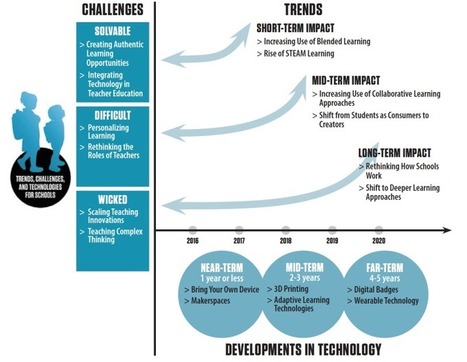
In a fast-moving field like education technology, it’s worth taking a moment to take stock of new developments, persistent trends and the challenges to effective tech implementation in real classrooms. The NMC Horizon 2015 K-12 report offers a snapshot of where ed tech stands now and where it is likely to go in the next five years, according to 56 education and technology experts from 22 countries.
|
|
Scooped by
Kim Flintoff
August 19, 2016 5:11 AM
|
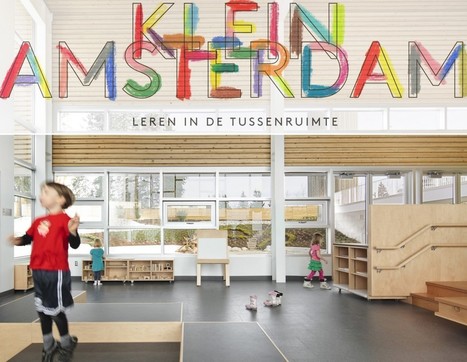
The tipping point of Klein Amsterdam
Unlearning the concept of ‘school’ for better education
Klein Amsterdam (‘Little Amsterdam’) is a school developed during the city’s recent competition for education innovation. Partnering co-founders Judith Fischer and Rick Amado have developed an ‘in-between space’ of learning designed to bring local riches in and get students out of the classroom, integrating modern, open source technologies and a network of community leaders — imagine, in grade four, learning from the Netherlands Philharmonic Orchestra, the modern arts centre Nieuw Dakota and Google for Education…
“We can recalibrate school from being a test-oriented factory to a source of 21st-century experience and inspiration,” says Fischer. In today’s Trailblazer — as THNK and its participants set the community to the task of reinventing education — we talk to Judith and Rick about the serendipity and iteration of making an audacious idea fly in the real world.
|
|
Scooped by
Kim Flintoff
August 15, 2016 7:48 AM
|
|
|
|
Scooped by
Kim Flintoff
April 11, 2017 1:51 AM
|
The resource 'The Future of Learning' unpacks an emerging scientific model for how the brain learns. This model enables us to understand how our brain applies its integrated 4+(1) learning systems to optimise learning. The resource then unpacks the 6 transformations that schools can engage with to optimise learning and prepare our young people for the increasingly sophisticated world they and we all live in.
'The Future of Learning' is a revolutionary guide to re-imagining the education experience that learners engage with in our schools. This resource is the result of 12 years of research and trialling those underlying concepts in schools across a number of different countries.
|
|
Scooped by
Kim Flintoff
April 4, 2017 11:43 PM
|
Australia's education system is not preparing students for twenty-first century success.
Young Australians are studying for longer than ever before but are disengaged and struggling to find permanent jobs. Young people entering technology-rich, global, competitive job markets need different skill sets to what our education system has traditionally valued.
Unless schools broaden learning objectives, many students will fail to become capable, successful adults – putting Australia’s social and economic wellbeing at risk.
Young people need to bring more than knowledge to the modern workforce. The most crucial capabilities for the future include critical thinking, creativity, curiosity and communication skills.
Our approach to education is not equipping young people with the broad capabilities that will enable them to thrive in complex education and employment settings. It is time Australia made changes to prioritise teaching, assessing and reporting capabilities.
|
|
Scooped by
Kim Flintoff
April 3, 2017 8:17 AM
|
Getting Out of the Current Comfort Zone
At present we remain constrained, even trapped, by the need to stay close to traditional approaches. Intellectually, we understand the need to bend the innovation curve that implements cognitive neuroscience and related research to a nearly vertical climb, but we are nervous about doing so, based on the pointed and determined resistance from accreditors, evaluation systems, and/or internal constituencies.
Collectively, our behavior is at times reminiscent of toddlers who want to head off on their own and explore, but who stop every so many feet and turn to check in with an adult to make sure that things are still okay. It takes us a while to get comfortable heading off into the greater unknown, even when we know we must.
The sooner we let imagination become, as the Walt Disney Company would put it, “imagineering,” the better off we will be. Immersive learning will surpass active learning, which in its day surpassed passive learning in effectiveness.
Campus leaders should support bold, visionary efforts at creating new learning models.
|
|
Scooped by
Kim Flintoff
February 17, 2017 4:09 PM
|
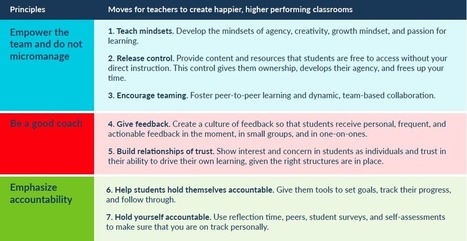
Teachers, this playbook is for you. Some of you might be wondering how best to serve an increasingly diverse group of students with complicated needs. Some might be facing more devices and other technology in your classrooms and wondering what your role is in a world where instruction can be delivered from so many different sources. Some might be concerned with students’ low performance in school and failure to launch after school. If you have any of these concerns, then this playbook is intended to ease your load. Your journey to improve your classroom and meet the needs of today’s students is not in the dark; successful managers outside of education, combined with the teachers in the pilot schools in this playbook, together illuminate a number of moves that can help you better meet the needs of students today.
|
|
Scooped by
Kim Flintoff
January 23, 2017 2:07 AM
|
Innovation: Multiple Dimensions in Teaching and Learning
The Teaching and Learning Forum (TLF) is an annual conference, held in Perth, Western Australia. The inaugural Teaching and Learning Forum was held in 1992 and included the five Western Australian universities. Each year since then, the Forum has continued the tradition of bringing together educators from across the higher education sector to share, challenge and develop their ideas about teaching and learning. This event provides an inclusive space for people to explore and disseminate their Scholarship of Teaching and Learning (SoTL). The TLF committee warmly welcomes everyone involved in higher education, from early career academics who may have recently started teaching to experienced researchers.
The theme for 2017 is Innovation: Multiple Dimensions in Teaching and Learning. This Forum aims to include presentations that highlight and explore innovations relevant to higher education. Some topics may include, but are not limited to: curriculum of the future; emerging learning technologies; global collaborations; STEM in higher education; graduate capabilities or students as partners. Where appropriate, presenters are encouraged to be as interactive and collaborative in their presentations as possible.
|
|
Scooped by
Kim Flintoff
December 13, 2016 7:14 PM
|
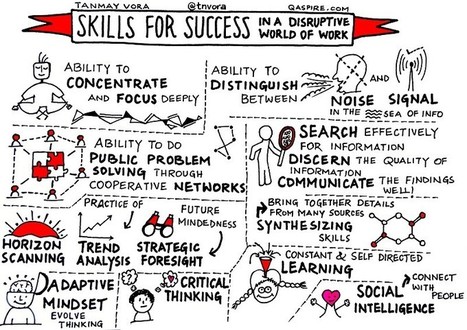
In past decade or two, we have seen so many large businesses being disrupted or transformed completely by digital forces. This continues and accelerates as we go into the future that is driven by rise in automation.
Experts predict that we are heading towards a “jobless future” and that it is both an opportunity and a threat. Even if we don’t think too much about what happens over a long frame of time, we can still agree that what bought us here (technical skills, expertise, mindsets etc) may not be sufficient to take us towards success in a volatile future. What skills do we need more of as we head into future?
|
|
Scooped by
Kim Flintoff
December 6, 2016 6:45 PM
|
|
|
Scooped by
Kim Flintoff
October 21, 2016 4:03 AM
|
The university graduates of 2025 will be need to be socially intelligent, subject matter experts
|
|
Scooped by
Kim Flintoff
October 13, 2016 7:59 PM
|
IN BRIEF
Google has unveiled a translation system that can lower translation errors by 55 to 85 percent.
GNMT translates between Chinese and English, languages with a combined 1.5 billion speakers worldwide.
|
|
Scooped by
Kim Flintoff
September 30, 2016 8:37 AM
|
It’s no secret that there is an engagement issue in edtech. Anecdotal evidence suggests that most online courses have 3–7% completion. There’s also a large mismatch between consumer expectations (“I will become an expert in Python in a few hours”) and what these platforms deliver. Hopefully, as awareness grows about the immense value of lifelong learning and the commitment it deserves, this latter problem will disappear. Meanwhile, how do we build a more engaging learning experience online?
Like many others, I have registered on several online platforms and downloaded many apps for courses, skills and languages I would like to learn more about— Coursera, Udacity, Udemy, CodeAcademy, Duolingo and Stanford Online just to name a few popular ones. I also read weekly newsletters on design, analytics and entrepreneurship that often add up to the knowledge base of a course or a book over time.
|
|
Scooped by
Kim Flintoff
August 24, 2016 12:14 AM
|
New ways to deploy artificial intelligence, virtual and augmented reality, gamification and robotic telepresence are making their way into classrooms across the globe every day. Two leaders in the field of online learning are building a website called Virtually Inspired to curate examples of what they consider the most promising efforts.
Susan Aldridge, senior vice president for online learning at Drexel University and president of Drexel University Online, and Marci Powell, chair emerita of the U.S. Distance Learning Association, looked at more than 250 projects deploying new technologies in online learning and initially narrowed that number down to approximately 50 they plan to highlight on their website, which is still a work in progress.
|
|
Scooped by
Kim Flintoff
August 17, 2016 8:27 AM
|
If you ask kids today why phrases like “hang up” the phone or “roll down” the window exist, chances are they’ll have no idea. Fast-forward to the near future and “search the web” may also cause a few head scratches.
“We’re evolving, but remain electronic ‘hunters and gatherers,’” explained Ralph Lucci, cofounder and user experience director at Behavior Design.
But that’s about to change thanks to today’s quickly emerging artificial intelligence (AI) technology for practically every industry, including education. “The day will soon come when we’ll sardonically ask ourselves: ‘Remember when we had to visit a website and look around for what we needed?’ Now the data comes to us.”
And while mainstream AI isn’t at that level just yet, innovative industries and some schools are already either beginning to implement AI basics or planning to structure entire departments or services on the potential power of AI.
|



 Scoop.it!