



Flipped learning has been around for awhile. It's a rethinking of the standard classroom model that puts students in the driver's seat. With the influx of technology into education, the flipped classroom model has really taken off.
Get Started for FREE
Sign up with Facebook Sign up with X
I don't have a Facebook or a X account


 Your new post is loading...
 Your new post is loading...
Your new post is loading...
 Scoop.it!
Flipped learning has been around for awhile. It's a rethinking of the standard classroom model that puts students in the driver's seat. With the influx of technology into education, the flipped classroom model has really taken off. 
No comment yet.
Sign up to comment
Scoop.it!
Andrew Gerkens's insight:
Personal knowledge management is a set of processes, individually constructed, to help each of us make sense of our world and work more effectively.
Scoop.it!
Andrew Gerkens's insight:
Jay Cross explores RoI and the importance of measuring intangible assets. His key quote at the end, 'If I were evaluating a company in foreclosure, I’d list intangibles off to the side because I wouldn’t expect to be able to liquidate them. When I’m working with a going concern, it’s the opposite. I pay more attention to leveraging the intangibles because that’s where the big upside resides'.
Scoop.it!

Giving a voice to entry-level employees is a powerful new way to improve your business. Here is how one company is doing it.
Andrew Gerkens's insight:
An interesting case study on the implementation of enterprise social media to connect employees, to build and share knowledge and to give employees a voice. Includes some guidelines for realising the value of social tools in the workplace.
Scoop.it!
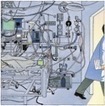
Online version of the weekly magazine, with current articles, cartoons, blogs, audio, video, slide shows, an archive of articles and abstracts back to 1925
Andrew Gerkens's insight:
An interesting article about how more training would not have assisted aircrew in adapting to new and more complex aircraft in the 1930s, but performance support (using checklists) enabled the transition. The article then links the approach to the modern and high pressure environment of hospitals.
Scoop.it!

Many people working in L&D do now recognize that workplace learning is more than courses delivered through a learning management system. They certainly are beginning to realise that most traini...
Andrew Gerkens's insight:
This series of posts by Jane Hart explores the important transition from being 'order takers for training' to performance consultants who provide flexible and responsive solutions that improve performance.
Three case studies are explored that demonstrate the opportunity L&D has to translate performance problems into performance solutions (i.e. Motivational and Environmental factors in addition to Knowledge and Skill requirements). Solutions are more efficient, more effective and have a greater impact on transforming how people work and how they learn.
Scoop.it!
Andrew Gerkens's insight:
Change is difficult for all of us, but here Charles Jennings explores the challenges of supporting behaviour change in the workplace. By definition, learning is bheaviour change. L&D's measurement focus should be on capturing behaviour change in the context of workplace performance. This can be done at an individual, team, process or organisational level. Unfortuantely a lot of waht L&D traditionally measure is activity or inputs (i.e. courses run, training hours per FTE, bums on seats) rather than performance outcomes and impact.
Scoop.it!

Stop Trying to Formalize Informal Learning http://t.co/j3vocM668E?
Andrew Gerkens's insight:
Informal learning is a loaded term. Stakeholders think it means unstructured, ad hoc and left to chance and if we're honest, for the most part it has been left to chance.
L&D have traditionally managed formal/structured learning, but most experiential and social (informal) learning happens in the workplace through challenging experiences and through others. L&D don't manage the workplace - people managers do! This has been one of the traditional barriers to making informal learning deliberate.
L&D's role is to build a simple scaffold that makes informal learning intentional and guides, enables and supports line leaders and employees to perform.
The 70:20:10 is a wonderful framework for realising the potential of experiential and social learning and supporting a transition by L&D to a strategic learning function that provides responsive and flexible workpalce learning solutions that deliver impact.
|
Scoop.it!

You have a conversation problem. And social networks have exacerbated it. People think they are conversing. Instead, they are commenting -- big difference. Here's why conversation and comments are not the same thing. By definition (Merriam Webster online) A comment is: a note explaining, illustrating, or criticizing the meaning of a writing; an observation or remark expressing an opinion or attitude; a judgment expressed indirectly. Conversation is: oral exchange of sentiments, observations, opinions, or ideas; an informal discussion of an issue by representatives of governments, institutions, or groups; or simply an exchange. Yet the two terms are used interchangeably. Here's why it matters. Media, networks, and marketing These are the three components businesses have used to traffic messages, find channel and partnership opportunities as well as extend their reach to their buyers' families and friends, and create commerce. To attract people to messages, organizations used information and content packaged as news on one side, and offers, discounts, promotions on the other. In the two-dimensional world of print, the only 3D add-on where the people in the room. What you shared was a physical thing -- a paper -- and then an audio-visual implementation of the same concept. Information and news coming to you through airwaves and images. People in front of the radio or the TV. Everyone listening to or watching a few channels, then processing the information by way of discussion. Sharing among people was a very different concept. Put "social" in front of those words Technology enabled and...
Andrew Gerkens's insight:
The impact of social networks on effective dialogue and rich conversations
Scoop.it!

Join The Responsive Organization movement and discover a community of people and organizations who are leading the shift in how companies adapt, learn, and respond to a constantly evolving world.
Andrew Gerkens's insight:
A fantastic summary on the rapid flow of information and the shift organisations need to undertake to harness these flows and to become more responsive. They need to make the shift from: 1. Controlling to Empowering 2. Extrinsic Rewards to Intrinsic Motivation 3. Office & Office Hours to Anywhere & Anytime 4. Customers & Partners to Community.
Scoop.it!
Andrew Gerkens's insight:
In this generous and insightful post, Mark Britz provides an overview of his approach to launching an enterprise social network in his organisation. He talks about the platform, the stakeholder engagement, governance and risks all considered as part of the launch. A great reference with links to other resources.
Scoop.it!
Let them. The real problem isn't accessing social media or using devices for personal reasons. Rather, it's about making sure they're still achieving the tasks and goals expected of them.
Andrew Gerkens's insight:
Most employees now carry a smart device and have access to a range of social media. Should organisations fear these tools and attempt to lock them down, or free employees up to use social media to support workplace performance? This article explores the issues and considerations and provides some useful links to explore further
Scoop.it!

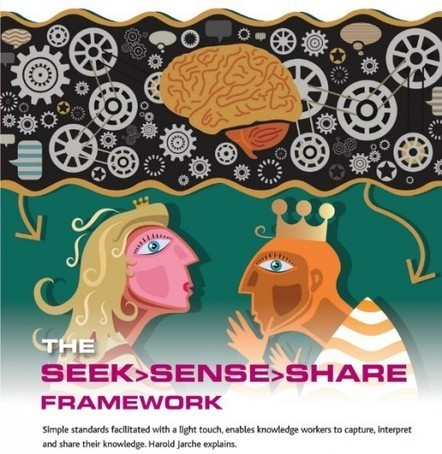
Social increases momentum to the ebb & flow of knowledge management practice
Andrew Gerkens's insight:
This exciting article explores the power of social tools in supporting people to build and share knowledge and to learn in rapid cycles by working out loud. It is about learning through others; the essence of the '20' in 70:20:10.
Scoop.it!

... it just doesn't (officially) operate as one.
Andrew Gerkens's insight:
Interesting piece exploring the impact of increasingly interconnected employees on the traditional hierarchy.
Scoop.it!
Dr Kevin Fong finds out how doctors can avoid making mistakes in the operating theatre.
Andrew Gerkens's insight:
I've just watched a really interesting BBC documentary called, 'How to avoid mistakes in surgery'. The 59 minute documentary explores the role of performance support in overcoming mistakes that occur in hospitals as a result of human factors. There are some great lessons for all of us involved in creating performance solutions, and a number of different industry examples are explored throughout the program (fire fighting, aviation, Formula One).
|








Useful infographic on the flipped classroom. Is pitched from a schooling perspective, but the information is useful for the organisational context.