

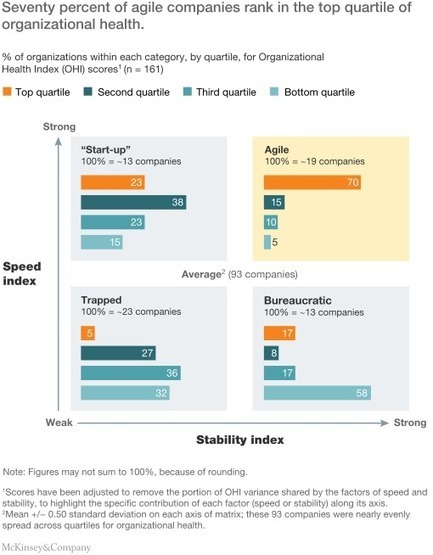
New research shows that the trick for companies is to combine speed with stability. A McKinsey Quarterly article.
Get Started for FREE
Sign up with Facebook Sign up with X
I don't have a Facebook or a X account


 Your new post is loading...
 Your new post is loading...
Your new post is loading...
 Scoop.it!
New research shows that the trick for companies is to combine speed with stability. A McKinsey Quarterly article. 
No comment yet.
Sign up to comment
Scoop.it!

From
hbr

Our traditional obsessions—success, taking action, fitting in, and relying on experts—undermine continuous improvement.
Scoop.it!

Experiential Learning: Just Because It's Hands-On Doesn't Mean It's Minds-On
Andrew Gerkens's insight:
What can you take from this schools example to make your workplace (informal) learning solutions more intentional and to ensure they drive improved performance?
Scoop.it!
Andrew Gerkens's insight:
An interesting case study, exploring how an internal business consulting capability can be used to support strategic challenges/projects (doing it cheaper than external consultants) and to develop and engage top talent. Think of the possibilities a 12-24 month secondment to a consulting team might provide in terms of development (cross functional experience, complexity, commercial acumen, strategic thinking), building relationships and support networks and beyond...
Scoop.it!

A lot of managers and company leaders want to “flatten” their hierarchies. The problem: Organizations shouldn’t be flat, they should be decentralized.
Andrew Gerkens's insight:
Niels' ideas really excite and challenge me. In this post he explores the risk of thinking a flat structure is the answer. 'The organization should be built for complexity, not flatness. If the market rules outside, within the organization, it is the periphery which earns money, which learns from the market and learns how to adapt swiftly and intelligently. The center loses its competence edge – it can hardly give practical instructions. Accordingly, coupling of periphery and center must be effected in such a way that it is possible to follow market dynamics and to respond to them'.
Scoop.it!

If you’re trying to tell other people about working out loud, this talk might help you. It’s called “Better for you. Better for the firm,” and it’s the same title as a recent interview I did with Forbes. You can download the material in 4 different formats at the end of this post: PDF (which is what…
Andrew Gerkens's insight:
Great resources from John Stepper to support the positioning of WOL
Scoop.it!
The Future of Work is a hot topic, and some companies stand above others in creating that future now. How can your business harness this opportunity?
Andrew Gerkens's insight:
A series of posts exploring the future of work, with extensive links to thought leaders and resources
Scoop.it!

Over the past few months I've been sharing a series of posts on the 7 Principles of the Future Employee and the Evolution of the Employee. This was followed by the 10 Principles of the Future Manager followed by the Evolution of the Manager. Today I want to introduce the 14 Principles of the Future Organization [...]
Scoop.it!
Andrew Gerkens's insight:
The power of workplace projects and stretch assignments to move from knowing to doing and to deliver real impact on individual and organisational performance. Supporting new and challenging experiences is a key part of the 70 (experiential learning element) in 70:20:10. The examples in the article reinforce the importance of building a support structure or scaffold to make workplace learning intentional and impactful.
Scoop.it!

Many people who have read Working Out Loud have asked if I could put all the exercises in one place for easy reference. So I created a free workbook. You can download it here: Working Out Loud: Exercise Workbook This 42-page workbook is based on the 70 exercises in Working Out Loud. The exercises are presented in the same order…

Jay Cross's curator insight,
July 27, 2015 1:51 PM
The URL for the free workbook is http://workingoutloud.com/wp-content/uploads/2015/07/WOL-Resources-List-of-Exercises-.pdf The exercises aren't rocket science but that's a good thing. Things you can do in less than a minute and in less than 5 minutes. From John Stepper.
Scoop.it!
From
dupress
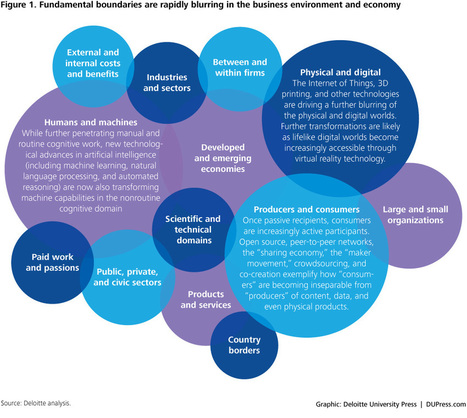
Every company will be affected by the rapid blurring, shifting, and even dissolving of established boundaries within the business ecosystem.
Andrew Gerkens's insight:
An exploration of the forces of disruption impacting the way we work and providing both threats and opportunities for organisations. Positions the importance of being able to learn (build and share knowledge) at the speed of business.
Scoop.it!
Andrew Gerkens's insight:
A good introduction to Performance Support
Scoop.it!

By figuring out how the brain works, learning leaders can change how they approach learning to promote behavioral change and increase business results.
Andrew Gerkens's insight:
Neuroscience is confirming what we have always known about good learning experiences. The four elements of the AGES model capture what makes learning stick: Attention = Focus (rich, but not overloaded) Generation = Meaning (personal and shared) Emotion = Strong emotions tied to learning experiences Spacing = Chunking and Spaced repetition
|
Scoop.it!
To organize for complexity also means to organize learning and development for complexity - on the individual, the team and the organizational level. Much has been said and written in recent years about learning in orgs and business schools. But much of the talk has been based on flawed assumptions. Applying one of the thinking tools from my new book Organize for Complexity may help to figure out how we can improve conditions and settings for learning, and maybe even create the high level of learning that Peter Senge and many of us have been dreaming of for decades.The "thinking tool&quo
Andrew Gerkens's insight:
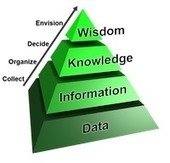
This article explores the implications of Data, Information, Knowledge and Mastery on learning. Whereas as knowledge supports sense-making, mastery is about creating knowledge and represents a key enabler for responding to change and complexity - it is a reflection of workers sharing, solving and creating together.
Scoop.it!
At ABN AMRO you learn every day, on the job. Learning is not something you do on your own, we learn from our colleagues, our clients and the ABN AMRO communi...
Andrew Gerkens's insight:
An introduction to ABN Amro's approach to employee development. ABN Amro use 70:20:10 and you can see it translated in this video. A good example of using the framework, but communicating it (without the numbers) in a way that best suits the organisation's context/culture. My only suggestion to improve this video, would be to add the element of performance support, reinforcing opportunities for support workers have to solve problems and respond to challenges they face as part of their daily work. We need to help people realise that anything they do to perform their role and get better at what they do every day is learning.
Scoop.it!
Andrew Gerkens's insight:
Interesting differences between information and knowledge workers and implications for learning/support.
Scoop.it!
![The Slippery Slope of Leadership Transitions [Infographic] | Learning and Working | Scoop.it](https://img.scoop.it/YfzZIg3r4IJAGg6TLcoghDl72eJkfbmt4t8yenImKBVvK0kTmF0xjctABnaLJIm9)
See a snapshot of the greatest challenges, who helped the most with the transition, and advice they’d give a friend before they took the promotion.
Andrew Gerkens's insight:
This infographic lists some of the key challenges faced by people undertaking career transitions. What mechanisms do you have in place to help people transition? How do you help them make sense of their new environment, to build the connections (network) and access the resources they need?
Scoop.it!
People are choosing to learn in different ways from a much more diverse range of sources. Meanwhile, most L&D infrastructure is still geared for the same old t…
Andrew Gerkens's insight:
A useful overview of the idea of a learning ecosystem. I must admit, my preference is to call it a performance ecosystem, given that learning is an input and what workers really care about is being able to connect to the people, tools and resources that can help them do their job, solve problems and get better at what they do every day.
Scoop.it!
Andrew Gerkens's insight:
Exploring agility from a capability perspective
Scoop.it!

This paper develops and tests a learning organization model derived from HRM and dynamic capability literatures in order to ascertain the model's applicability across divergent global contexts. We...
Scoop.it!
Andrew Gerkens's insight:
Activity Based Working gives employees a choice about how, when and where they work. In the office, that means a choice of work settings, each designed for different types of tasks. Outside the office it enables staff to work anywhere, any time and from any device. It focuses on outcomes (and agility/flexibility) rather than inputs and activity. This is a great resource document for exploring further and deeper: http://www.jll.com.au/australia/en-au/Documents/jll-au-activity-based-working-2012.pdf Drivers leading to ABW as a strategic response:
The business case for ABW (benefits and impact measures):
Scoop.it!

Much has been made recently about one of the stand out trends of the times we live in: Everything is becoming infused with technology. Software is eating the world it is said. Some have claimed tha...
Andrew Gerkens's insight:
A good overview of some of the drivers influencing the future of work. If you want to explore further, I highly recommend Jacob Morgan's 'The Future of Work' - http://au.wiley.com/WileyCDA/WileyTitle/productCd-1118877241.html
Scoop.it!

In this fast-moving world, we constantly need to learn new stuff. In the workplace, this is particularly important, as I showed in an earlier blog post, where Jacob Morgan talks of the future emplo...
Andrew Gerkens's insight:
I love the title of this piece. It speaks to the fact that we need to help workers, L&D and our organisation develop a new way of thinking and a new language for talking about performance and development. It reinforces the need for conversations to demystify 70:20:10 and workplace learning, to help people focus more broadly on how they solve problems, how they get better at what they do every day, how they can own their career and how the organisation supports them.
Scoop.it!
Andrew Gerkens's insight:
Today's workers solve complex problems in an environment of change and disruption, yet our approach to time management (training) has not adapted. A new approach should focus on:1. Clarity around role priorities rather than specific task priorities2. Attention management skills rather than “time management” skills3. Workflow management
|




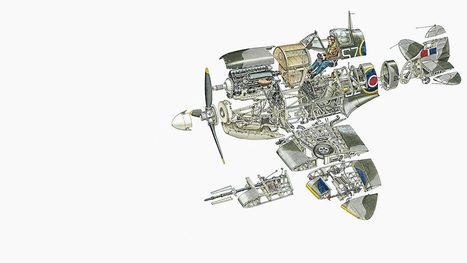
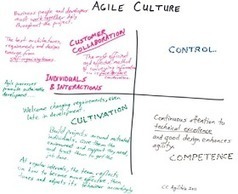




Comparing the practices of the most to the least agile organisations.
What makes agile companies special is their ability to balance fast action and rapid change, with organisational clarity, stability, and structure, on the other. Agile organisations harness learning, through top-down innovation, capturing external ideas, and knowledge sharing. Agile companies utilise meaningful values and inspirational leadership to create purpose and drive motivation.