Leading Schools
94.0K views | +0 today
 
Scooped by Mel Riddile
onto Leading Schools
October 27, 2011 3:12 PM
Scoop.it!

Reflection Drives Improvement

Reflection Drives Improvement | Leading Schools | Scoop.it

John Ryan is president and CEO of the Center for Creative Leadership, a top-ranked, global provider of leadership education and research.


"By deliberately carving out time to wrestle with initial sticky questions and the ones that further reflection prompts, we too can drive results."


As we take on more responsibility..."the more critical it becomes to set aside time for thinking about the key challenges and opportunities facing the organizations (schools) we are privileged to lead, as well as the ways in which we can personally improve as leaders."


Majoring in the Minors


And yet, swamped as we are with packed meeting schedules and constant communications on our Blackberries, iPads, laptops and other mobile devices, it is more difficult than ever to make that time. We are certainly the most informed generation in history. We mistakenly believe that we can multi-task effectively, but we eventually learn that information is worthless... if we are unable to pause long enough to make sense of it.


Reflection and Neuroscience


Multi-tasking is a Myth


Our brains are not wired to consciously attend to more than one thing at a time. What we refer to as multi-tasking, neuroscientists define as "task switching" or repeatedly changes focus or shifting our attention from one task to another. Continous "task switching" results in diminished performance in all involved tasks. http://bigthink.com/samwang


Neuroscience reminds us of a vital truth in a digital, multi-tasking age: our brains can only process so much information at once – and not nearly as much as we’d like to believe they can. If we try to think seriously about more than just a couple things at one time – responding to an e-mail and scanning a document while simultaneously conducting a conference call and pondering what’s for dinner tonight – we get muddled very quickly. Our judgment suffers and our effectiveness declines. At times, it seems the only solution is to go where we can’t be reached easily.


Old Dogs Can Learn New Tricks


Contrary to prior assumptions, our brains are actually highly plastic. It’s not true that old habits are impossible to break, especially as we get older. Instead, we have the power to create new neural pathways and change for the better, provided we are willing to invest the time it takes to build new habits.


Keys to Consistent Reflection


1. Get a Coach! - Coaches and Mentors Help Us Reflect

"At the Center for Creative Leadership, we have found that working with a coach is a good place to start. Effective coaches serve as sounding boards and expert listeners, sparking frequent reflection on how we have operated in the past and how we might improve on our learning, communication and judgment in the future. Not matter how far along we are in our careers and how skilled we are, it is always beneficial to get the objective take on our strengths and weaknesses that coaching provides."


2. Create or find a favorite space to reflect.


3. Build reflection time into your schedule.


4. Take reflection breaks. "Walking the few paces to the conference room and sitting down at the table there helps nurture a shift from a reactive mindset into a more reflective one. The change in scenery serves as a trigger for thinking in a different way as well."


5. Keep a log of critical questions. "These are not questions, in all likelihood, that will be answered during one 20-minute session at the conference table."


6. Chunking Down - Solving Complex Problems Requires Chunking! Long "forced reflection" sessions don't work. "Probing questions will not yield to simple answers or the accelerated schedule on which we like to get everything done. More likely, the first question will lead to another and several more from there."


Key: Breaking your reflection on critical issues into smaller chunks of time divides the learning into discrete and memorable chunks.


7. Visit other schools - We visited more schools than anyone I knew. I respect the professionalism of my colleagues and I always told our people that, no matter how the school was doing or how similar it was to our own, we could always learn a number of strategies that would make our school better. 


8. Encourage visitors to your school - We found that visitors kept us on our toes.


- Visitors forced us to close the "say-do" gap--the difference between what we say that we are doing and what we are actually doing.


- Visitors made us reflect on the "why" of what we were doing.


- We always learned as much from the visitors as the visitors learned from us.


Thoughts for School Leaders


We are what we think about...all day long! If you are thinking about a hundred minor irritations, you will never have time to reflect on the really critical issues.


We move toward and become like that which we think about (reflect on). If we are not reflecting we are probably not moving. In other words, we are in a "stuck state."


You cannot create a vision without reflection, and, if you don't have a vision of what you want, you will never get there.


No comment yet.
Leading Schools
Improving Schools Through Enhanced Leadership
Curated by Mel Riddile
Your new post is loading...
Scooped by Mel Riddile
January 10, 2016 5:50 PM
Scoop.it!

Formative Assessment Works

by Mel Riddile


Formative assessment or assessment for learning is a proven strategy to improve student achievement.

Mel Riddile's insight:

“Formative assessment is a planned process in which teachers or students use assessment-based evidence to adjust what they're currently doing.

• Formative assessment is a planned process in which assessment-elicited evidence of students' status is used by teachers to adjust their ongoing instructional procedures or by students to adjust their current learning tactics.

• Because formative assessment has been shown to improve students' in-class learning, many educators have adopted it in the hope that it will also raise their students' performances on accountability tests.

• The expanded use of formative assessment is supported not only by instructional logic but also by the conclusions of a well-conceived and skillfully implemented meta-analysis by Paul Black and Dylan Wiliam.” (Popham, 2008)After synthesizing over 250 publications, Black and Wiliam, concluded that formative assessment is perhaps the most effective educational practice when it comes to improving academic achievement. In addition, formative assessment has a disproportionately beneficial impact on low‐achieving students. http://www.hanoverresearch.com/media/The-Impact-of-Formative-Assessment-and-Learning-Intentions-on-Student-Achievement.pdfIn 


In 2009, John Hattie published a meta-meta-analysis of education research called Visible Learning: A synthesis of over 800 meta-analyses relating to achievement. In that study, Hattie found that formative assessment, when done correctly, had the highest effect size on student learning compared with other classroom strategies.


In recent years, neuroscientists have reported that retrieval practice—recalling and applying previously learning—had a huge impact (as much as 50%) on student retention of learned content. Combining retrieval practice and formative assessment can significantly reduce forgetting and increase retention of lesson content.


Each school’s instructional framework provides teachers with numerous opportunities to use formative assessments in the beginning and ending of a lesson as well as when engaging students and during student practice in the body of the lesson. Teachers use formative assessment to see if the students have mastered the content of the lesson—did they get it?


Note that mastery means that the students can demonstrate both that they ‘know’ the content and that they can apply what they learned to future or past learning.


Formative Assessment in the Beginning and Ending of the Lesson


• Purposeful Learning – The expectation that all activities be purposeful means that teachers always have something to check on or assess for understanding.

• Focusing (Beginning) – Ask students to demonstrate mastery of the previous lesson through bell ringer, do now, or warm up.

• Knowing the Lesson’s Purpose (Beginning) – Ask students to repeat the learning target or essential question in their own words

• Ask students to predict (“prediction effect”) the “why” of the learning target/essential question (Beginning).

• Use a closure activity or ‘exit ticket’ that asks more than comprehension level, regurgitation questions. Ask students to both recall (retrieval practice) and apply what they learned to future or past learning (Ending).

• Purposeful reading, writing, and discussion - Reflection of some kind that addresses learning using evidence from the lesson that connects the learning to something else (Ending).


Formative Assessment in the Body of the Lesson (Practicing and Engagement)


• Connection activities that ask students to link new learning to older learning• Visualization activities where students draw some concept that has been learned

• Question design - ask kids to write their own questions with different levels of Bloom's involved

• Game play where appropriate can be a great tool as well• Blog writing as a reflective or questioning tool

• Mentor activities that ask the student to create something original using the learning as a model

• Problem solving activities where students apply skills to arrive at a solutionIf students can complete any or all of the above, then we know they have demonstrated proficiency on some level. As we seek to move kids to mastery, we need to be acutely aware of their progress.


LET Team's curator insight, March 19, 2016 6:44 PM

“Formative assessment is a planned process in which teachers or students use assessment-based evidence to adjust what they're currently doing.


• Formative assessment is a planned process in which assessment-elicited evidence of students' status is used by teachers to adjust their ongoing instructional procedures or by students to adjust their current learning tactics.


• Because formative assessment has been shown to improve students' in-class learning, many educators have adopted it in the hope that it will also raise their students' performances on accountability tests.


• The expanded use of formative assessment is supported not only by instructional logic but also by the conclusions of a well-conceived and skillfully implemented meta-analysis by Paul Black and Dylan Wiliam.” (Popham, 2008)After synthesizing over 250 publications, Black and Wiliam, concluded that formative assessment is perhaps the most effective educational practice when it comes to improving academic achievement. In addition, formative assessment has a disproportionately beneficial impact on low‐achieving students. http://www.hanoverresearch.com/media/The-Impact-of-Formative-Assessment-and-Learning-Intentions-on-Student-Achievement.pdfIn 


In 2009, John Hattie published a meta-meta-analysis of education research called Visible Learning: A synthesis of over 800 meta-analyses relating to achievement. In that study, Hattie found that formative assessment, when done correctly, had the highest effect size on student learning compared with other classroom strategies.


In recent years, neuroscientists have reported that retrieval practice—recalling and applying previously learning—had a huge impact (as much as 50%) on student retention of learned content. Combining retrieval practice and formative assessment can significantly reduce forgetting and increase retention of lesson content.


Each school’s instructional framework provides teachers with numerous opportunities to use formative assessments in the beginning and ending of a lesson as well as when engaging students and during student practice in the body of the lesson. Teachers use formative assessment to see if the students have mastered the content of the lesson—did they get it?


Note that mastery means that the students can demonstrate both that they ‘know’ the content and that they can apply what they learned to future or past learning.


Formative Assessment in the Beginning and Ending of the Lesson


• Purposeful Learning – The expectation that all activities be purposeful means that teachers always have something to check on or assess for understanding.


• Focusing (Beginning) – Ask students to demonstrate mastery of the previous lesson through bell ringer, do now, or warm up.


• Knowing the Lesson’s Purpose (Beginning) – Ask students to repeat the learning target or essential question in their own words


• Ask students to predict (“prediction effect”) the “why” of the learning target/essential question (Beginning).


• Use a closure activity or ‘exit ticket’ that asks more than comprehension level, regurgitation questions. Ask students to both recall (retrieval practice) and apply what they learned to future or past learning (Ending).


• Purposeful reading, writing, and discussion - Reflection of some kind that addresses learning using evidence from the lesson that connects the learning to something else (Ending).


Formative Assessment in the Body of the Lesson (Practicing and Engagement)


• Connection activities that ask students to link new learning to older learning• Visualization activities where students draw some concept that has been learned


• Question design - ask kids to write their own questions with different levels of Bloom's involved


• Game play where appropriate can be a great tool as well• Blog writing as a reflective or questioning tool


• Mentor activities that ask the student to create something original using the learning as a model


• Problem solving activities where students apply skills to arrive at a solutionIf students can complete any or all of the above, then we know they have demonstrated proficiency on some level. As we seek to move kids to mastery, we need to be acutely aware of their progress.


Andy Fetchik's curator insight, March 21, 2016 11:34 AM

“Formative assessment is a planned process in which teachers or students use assessment-based evidence to adjust what they're currently doing.

• Formative assessment is a planned process in which assessment-elicited evidence of students' status is used by teachers to adjust their ongoing instructional procedures or by students to adjust their current learning tactics.

• Because formative assessment has been shown to improve students' in-class learning, many educators have adopted it in the hope that it will also raise their students' performances on accountability tests.

• The expanded use of formative assessment is supported not only by instructional logic but also by the conclusions of a well-conceived and skillfully implemented meta-analysis by Paul Black and Dylan Wiliam.” (Popham, 2008)After synthesizing over 250 publications, Black and Wiliam, concluded that formative assessment is perhaps the most effective educational practice when it comes to improving academic achievement. In addition, formative assessment has a disproportionately beneficial impact on low‐achieving students. http://www.hanoverresearch.com/media/The-Impact-of-Formative-Assessment-and-Learning-Intentions-on-Student-Achievement.pdfIn ;


In 2009, John Hattie published a meta-meta-analysis of education research called Visible Learning: A synthesis of over 800 meta-analyses relating to achievement. In that study, Hattie found that formative assessment, when done correctly, had the highest effect size on student learning compared with other classroom strategies.


In recent years, neuroscientists have reported that retrieval practice—recalling and applying previously learning—had a huge impact (as much as 50%) on student retention of learned content. Combining retrieval practice and formative assessment can significantly reduce forgetting and increase retention of lesson content.


Each school’s instructional framework provides teachers with numerous opportunities to use formative assessments in the beginning and ending of a lesson as well as when engaging students and during student practice in the body of the lesson. Teachers use formative assessment to see if the students have mastered the content of the lesson—did they get it?


Note that mastery means that the students can demonstrate both that they ‘know’ the content and that they can apply what they learned to future or past learning.


Formative Assessment in the Beginning and Ending of the Lesson


• Purposeful Learning – The expectation that all activities be purposeful means that teachers always have something to check on or assess for understanding.

• Focusing (Beginning) – Ask students to demonstrate mastery of the previous lesson through bell ringer, do now, or warm up.

• Knowing the Lesson’s Purpose (Beginning) – Ask students to repeat the learning target or essential question in their own words

• Ask students to predict (“prediction effect”) the “why” of the learning target/essential question (Beginning).

• Use a closure activity or ‘exit ticket’ that asks more than comprehension level, regurgitation questions. Ask students to both recall (retrieval practice) and apply what they learned to future or past learning (Ending).

• Purposeful reading, writing, and discussion - Reflection of some kind that addresses learning using evidence from the lesson that connects the learning to something else (Ending).


Formative Assessment in the Body of the Lesson (Practicing and Engagement)


• Connection activities that ask students to link new learning to older learning• Visualization activities where students draw some concept that has been learned

• Question design - ask kids to write their own questions with different levels of Bloom's involved

• Game play where appropriate can be a great tool as well• Blog writing as a reflective or questioning tool

• Mentor activities that ask the student to create something original using the learning as a model

• Problem solving activities where students apply skills to arrive at a solutionIf students can complete any or all of the above, then we know they have demonstrated proficiency on some level. As we seek to move kids to mastery, we need to be acutely aware of their progress.


K.I.R.M. God is Business " From Day One"'s curator insight, April 24, 2017 6:20 AM

Lord God bless these words and their messengers allow it to be understood by man in the manner that is benefitual and for the good purpose of those that read it and bless them even the more that has is or will share it. Lord God have mercy reveal all those things that need be in Jesus name. Amen


Scooped by Mel Riddile
May 19, 2019 5:59 PM
Scoop.it!

What Principals Are Most Worried About Right Now

What Principals Are Most Worried About Right Now | Leading Schools | Scoop.it
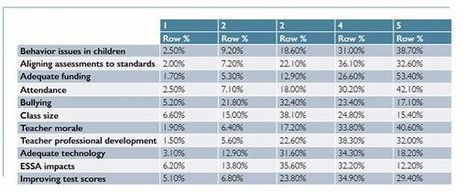
More than half of the principals surveyed also said they were responsible for making safety decisions in their schools, including things like campus check-in procedures and security for after-school events.
No comment yet.
Scooped by Mel Riddile
May 18, 2019 8:23 AM
Scoop.it!

Teachers Shape Students' Motivation. Where Do They Learn How to Do It?

Teachers Shape Students' Motivation. Where Do They Learn How to Do It? | Leading Schools | Scoop.it
Study after study finds students' motivation to learn is often driven by their relationships with their teachers, but a new report suggests many new educators enter the classroom with inconsistent training on what works to spark that drive.
No comment yet.
Scooped by Mel Riddile
May 9, 2019 5:15 PM
Scoop.it!

Why Are We Vilifying 'Teacher Talk'?

Why Are We Vilifying 'Teacher Talk'? | Leading Schools | Scoop.it

Claiming that ‘teacher talk’ is bad also flies in the face of science–carefully designed direct instruction, ie a teacher talking, is pretty clearly one of the best ways to ensure that novices get the background knowledge they need to engage in critical thinking. A good discussion later happens because of the knowledge disseminated first.

It’s also anti-intellectual. If you really don’t think you have any knowledge to impart that students can’t infer on their own in a 45 minute lesson, perhaps you’re in the wrong job. And no wonder teaching is too often perceived as low-status work. Teachers themselves constantly demean the value of their own voices.

No comment yet.
Scooped by Mel Riddile
May 6, 2019 6:36 PM
Scoop.it!

7 Smart, Fast Ways to Do Formative Assessment

7 Smart, Fast Ways to Do Formative Assessment | Leading Schools | Scoop.it
Within these methods you’ll find close to 40 tools and tricks for finding out what your students know while they’re still learning.
No comment yet.
Scooped by Mel Riddile
April 18, 2019 2:06 PM
Scoop.it!

Room Arrangement : Heavily Decorated Classrooms Disrupt Attention and Learning

Researchers hope some new findings may eventually generate guidelines to help teachers optimally design classrooms.


Psychology researchers Anna V. Fisher, Karrie E. Godwin and Howard Seltman of Carnegie Mellon University looked at whether classroom displays affected children’s ability to maintain focus during instruction and to learn the lesson content. They found that children in highly decorated classrooms were more distracted, spent more time off-task and demonstrated smaller learning gains than when the decorations were removed.

No comment yet.
Scooped by Mel Riddile
April 18, 2019 1:43 PM
Scoop.it!

Fewer Fights and Increased Security: What New Data Say About School Safety

Fewer Fights and Increased Security: What New Data Say About School Safety | Leading Schools | Scoop.it
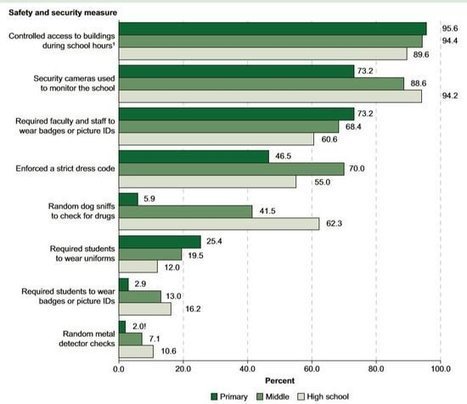
Amid public concerns about school safety fueled by high-profile school shootings, new federal data show reports of student fights, bullying, and other forms of victimization have continued a decades-long trend of decline. At the same time, schools have ramped up security measures, like the use of cameras and restricted entrances.
No comment yet.
Scooped by Mel Riddile
April 12, 2019 10:08 AM
Scoop.it!

To Boost Reading Comprehension, Show Students Thinking Strategies Good Readers Use

To Boost Reading Comprehension, Show Students Thinking Strategies Good Readers Use | Leading Schools | Scoop.it
Teach students the strategies good readers use like questioning the text, visualizing and forming interpretations. Research shows "cognitive strategies" like these improve reading comprehension and writing.
No comment yet.
Scooped by Mel Riddile
April 11, 2019 5:52 PM
Scoop.it!

What is explicit instruction and how does it help children learn?

What is explicit instruction and how does it help children learn? | Leading Schools | Scoop.it
Explicit instruction is a type of teaching model where students are shown what to do and how to do it.
No comment yet.
Scooped by Mel Riddile
April 6, 2019 2:54 PM
Scoop.it!

How To Deal With A Talkative Class: 3 Tips

How To Deal With A Talkative Class: 3 Tips | Leading Schools | Scoop.it
How do you handle a class that is apt to talk to each other rather than listen to the instructor or other students? Here are 3 tips that you can incorporate to help reduce the chattiness of your class.
No comment yet.
Scooped by Mel Riddile
April 5, 2019 4:36 PM
Scoop.it!

The prevalence and effects of math anxiety

The prevalence and effects of math anxiety | Leading Schools | Scoop.it
In the U.S. we call it “math phobia”; in the U.K. they call it “maths anxiety.” Either way you dub it, a negative emotional reaction to mathematics, which can manifest as a fear of or aversion to doing math-related work, is a real threat to mathematical competency. A new summary of research from the University of Cambridge adds a huge amount of detail to the picture of what causes math phobia in young people and what if anything can be done to mitigate its effects.
No comment yet.
Scooped by Mel Riddile
March 31, 2019 11:14 AM
Scoop.it!

Reading in the Age of Screens

Reading in the Age of Screens | Leading Schools | Scoop.it


The rise of digital media has made it harder than ever to engage in deep, contemplative reading. As Maryanne Wolf writes in her new book, Reader, Come Home: The Reading Brain in a Digital World, skimming is the new normal. Marty West speaks with Doug Lemov, who reviewed Wolf's book for Education Next.
No comment yet.
Scooped by Mel Riddile
March 29, 2019 2:30 PM
Scoop.it!

Changing Teaching Practices: What Really Sparks Professional Development?

Changing Teaching Practices: What Really Sparks Professional Development? | Leading Schools | Scoop.it


Educators share key moments that catalyzed change.


”We found no evidence that any particular kind or amount of professional development consistently helps teachers improve.”


Each culture has big moments—birthdays, weddings, graduations—and “every last one of them was invented,” according to Chip and Dan Heath. In their book The Power of Moments, they argue that moments provide the spark for change. “In organizations, we are consumed with goals. Time is meaningful only insofar as it clarifies or measures our goals,” they write. “But for individual human beings, moments are the thing.”


The Heaths write that we “can create defining moments” if we’re conscious of them as a tool for change. Although many of the moments described in the Twitter comments above seem random, certain practices can increase the likelihood of transformative experiences. By gathering student feedback, reflecting on our experiences, challenging our assumptions, and seeking to see students through new lenses, we lay the groundwork for important moments to occur. Systems and goals remain important for professional development, but don’t forget the power that moments have to transform.


https://www.edutopia.org/article/sparking-change-teaching-practices?utm_source=twitter&utm_medium=socialflow

No comment yet.
Scooped by Mel Riddile
May 20, 2019 6:30 PM
Scoop.it!

Creative Annotation Can Improve Students’ Reading Comprehension

Creative Annotation Can Improve Students’ Reading Comprehension | Leading Schools | Scoop.it
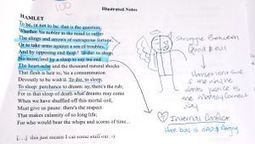
Active strategies for annotation like collaborative work and illustration increase students’ comprehension and retention.
No comment yet.
Scooped by Mel Riddile
May 18, 2019 8:27 AM
Scoop.it!

Forgetting How to Read

Forgetting How to Read | Leading Schools | Scoop.it
A review of "Reader, Come Home" by Maryanne Wolf


“On the digital screen we read fleetingly, flittingly. Our brains have what scientists call “novelty bias.” We are predisposed to attend to new information; from an evolutionary perspective, what’s new, bright, and flashing could contain survival information. It gets priority. Reading on screens sets up a cycle of expectation and gratification. We are repeatedly distracted by whatever pops up, rewarded for each distraction with a tiny surge of dopamine. This attraction to “the new” crowds out reflection, creative association, critical analysis, empathy—the keys to what Wolf calls the “deep reading process.” We read in a constant state of partial attention. And, Wolf points out, this is as much cause as effect. Human beings developed the capacity to read relatively recently, over the past 5,000 years or so. The brain has no reading center. Rather, when we learn to read, we call upon multiple areas of the brain, exhibiting a cognitive quality known as neuroplasticity.“

No comment yet.
Scooped by Mel Riddile
May 9, 2019 5:31 PM
Scoop.it!

Three 'Cold Call' Lessons

One of our most useful clips of the Cold Call technique is this short-but-super clip of Alex Timoll at Excellence Boys Charter School in Bed Stuy Brooklyn.  There are a ton of things you could take away from it, and from Alex’s teaching generally, but there are three especially useful lessons i think that ever
No comment yet.
Scooped by Mel Riddile
May 7, 2019 9:58 AM
Scoop.it!

9 Strategies for Encouraging More Students to Talk in Class

9 Strategies for Encouraging More Students to Talk in Class | Leading Schools | Scoop.it
A state Teacher of the Year shares her techniques for increasing the number of students who talk and share their ideas in class.
Adela Ruiz's comment, January 24, 2024 12:36 PM
Estos tips nos pueden ayudar para hacer que nuestro alumnos sean más participativos en clase y con ellos mantenemos la atención en lo que queramos enseñar. el aprender a expresarse en público es muy importante ya que es una habilidad integral que no solo beneficia el rendimiento académico, sino que también prepara a los alumnos para enfrentar los desafíos y las oportunidades de la vida con confianza y eficacia.
Scooped by Mel Riddile
May 1, 2019 1:32 PM
Scoop.it!

Why the High-Achievers Have Moved to 'Shop' Class

Why the High-Achievers Have Moved to 'Shop' Class | Leading Schools | Scoop.it
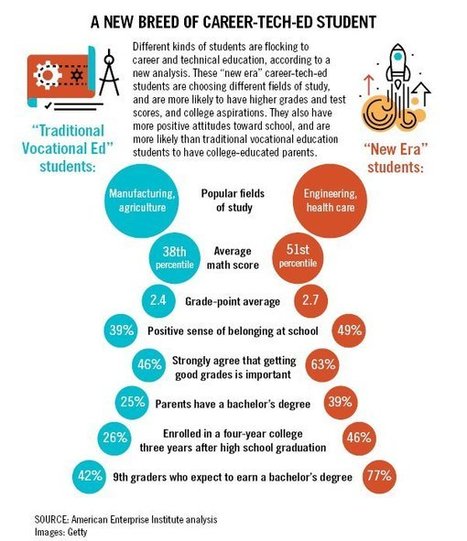
Higher-achieving students are flocking to career-technical-education classes, a new study says, and their participation could help erase the stigma that has long dogged old-school “voc ed” classes.
No comment yet.
Scooped by Mel Riddile
April 18, 2019 1:56 PM
Scoop.it!

Why Teachers Leave

Why Teachers Leave | Leading Schools | Scoop.it
How can we equip new teachers to succeed? Guide aspiring teachers to the best training programs. Even better, give teachers crucial information about the learning process that even the best programs don’t provide.
No comment yet.
Scooped by Mel Riddile
April 14, 2019 1:17 PM
Scoop.it!

5 SEL Activities for Middle School

5 SEL Activities for Middle School | Leading Schools | Scoop.it
Social and emotional learning is more than a side curriculum—it should be woven into everyday activities throughout the school day.
No comment yet.
Scooped by Mel Riddile
April 12, 2019 10:05 AM
Scoop.it!

Social-Emotional Learning Is Vital — but Needs to Be Measured Correctly and Can’t Usurp Academics

Social-Emotional Learning Is Vital — but Needs to Be Measured Correctly and Can’t Usurp Academics | Leading Schools | Scoop.it
Washington, D.C. Social-emotional learning is important for schools to promote, but it shouldn’t come at the expense of academics, and new measures are needed to evaluate how it’s being taught, experts said at a panel Thursday. Research is increasingly showing that learning is easier in a positive environment than a negative one, and that negative […]
No comment yet.
Scooped by Mel Riddile
April 10, 2019 4:29 PM
Scoop.it!

Screen Reading Worse for Comprehension, Leads to Overconfidence, New Meta-analysis Concludes

Screen Reading Worse for Comprehension, Leads to Overconfidence, New Meta-analysis Concludes | Leading Schools | Scoop.it
Readers using screens perform worse and tend to think they're processing and understanding texts better than they actually are, according to a new review of nearly three-dozen studies over the past decade.
No comment yet.
Scooped by Mel Riddile
April 5, 2019 7:25 PM
Scoop.it!

Study: Children Whose Parents Don’t Read To Them Enter Kindergarten With A ‘Million-Word’ Vocabulary Gap

Study: Children Whose Parents Don’t Read To Them Enter Kindergarten With A ‘Million-Word’ Vocabulary Gap | Leading Schools | Scoop.it
The cognitive benefits of reading are well-established, and countless scientific studies conducted over the years have demonstrated how beneficial this complex cognitive process is to one’
No comment yet.
Scooped by Mel Riddile
March 31, 2019 5:17 PM
Scoop.it!

Should Targeted Coaching Support Focus On Instructional Leadership? 

Should Targeted Coaching Support Focus On Instructional Leadership?  | Leading Schools | Scoop.it
Instructional leadership is not just about building leaders. Teacher leaders and instructional coaches have to worry about it too because it adds to their credibility in the role. Here's the thing though, instructional leadership is easy to talk about but hard to put it into practice, which is where coaching comes in. Here's how.
No comment yet.
Scooped by Mel Riddile
March 30, 2019 2:41 PM
Scoop.it!

Lack Of Postsecondary Education And Training Will Doom Millions Of Young People

Lack Of Postsecondary Education And Training Will Doom Millions Of Young People | Leading Schools | Scoop.it
To start fixing income and wealth inequality, we've got to begin repairing the path to the future for millions of lower-income families.


”General job and life advice for many young people is to get a college degree—bachelor's at a minimum and post-graduate if possible. Even if you don't believe that college should be nothing but an expensive form of work training, it's hard to argue against the reality of the association. Here's a graphic from the Bureau of Labor Statistics showing some correlations between educational level attainment, median weekly income, and unemployment rate.


No comment yet.
Rescooped by Mel Riddile from iPads, MakerEd and More in Education
March 29, 2019 1:50 PM
Scoop.it!

How to Teach Students Historical Inquiry Through Media Literacy And Critical Thinking | MindShift | KQED News

How to Teach Students Historical Inquiry Through Media Literacy And Critical Thinking | MindShift | KQED News | Leading Schools | Scoop.it
Many students are not good at evaluating the credibility of what they see and read online according to a now-famous Stanford study that was released just after the 2016 election. And while it’s true that 82 percent of middle schoolers couldn’t tell the difference between a native advertisement and a news article, neither could 59 percent of adults in a study conducted by the advertising industry.

Sam Wineburg, the Stanford professor who led the middle school study, is worried that everyone is “profoundly confused” right now and that schools aren’t doing enough to teach students the skills they need to be effective citizens and digital consumers.

Via John Evans
No comment yet.