Your new post is loading...

|
Scooped by
Romain
March 10, 2021 12:50 PM
|
MBDA has launched Sky Warden, the company’s new flagship counter-drone system. Sky Warden provides a full counter-UAS (unmanned aerial systems) kill chain from detection through to neutralisation, and is designed to operate both as an integrated component of a layered air defence architecture, or as a stand-alone system.
Modern drone threats are varied and constantly evolving, with no single sensor that can met the protection requirements. Sky Warden addresses this by using a networked eco-system of constantly evolving sensors and effectors, drawn from MBDA’s wide experience in air defence and effects management, to match the threat.
The modular and scaleable system can effectively and appropriately neutralise all classes of drone threat, from small Class 1 micro-UAVs to large tactical UAVs, as well as other traditional air threats. At its core is a command and control (C2) system that co-ordinates the eco-system of sensors, soft-kill effectors, and hard-kill effectors to defend armed forces units or sensitive sites across a large protection perimeter.
Sky Warden utilises operationally-proven building blocks within a modular open architecture that can be adapted to end-user requirements or to plug and play emerging and future novel sensing and effector technologies. MBDA C-UAS solutions have already been successfully demonstrated to customers.
Eric Béranger, CEO of MBDA, commented: “As Europe’s leading air defence provider, MBDA is uniquely able to offer customers a proven, flexible and integrated C-UAS system. One that is available today, and can evolve into the future. Sky Warden embodies MBDA’s deep knowledge of the engagement process, systems integration, of all categories of effectors and their next evolutions, and of effects management in the air defence domain.”
Find manufacturers of Counter-UAS Technology >>
|
|
Scooped by
Romain
March 5, 2021 12:51 AM
|
A l'occasion du salon IDEX, qui se tenait à Abou Dabi du 21 au 25 février, MBDA a dévoilé son approche de la lutte anti-drones, notamment à travers le système Sky Warden.
|
|
Scooped by
Romain
March 4, 2021 1:06 AM
|
Numerica has announced that it developed a new 3D radar for Counter Unmanned Aircraft Systems (C-UAS) and other short-range defense missions.
The company introducing Spyglass Short Range Surveillance Radar as a new solution to fill the need for exceptional C-UAS detection and tracking performance.
As noted by the company, the new 3D radar system will be available soon for a broad set of applications including facility security, border surveillance, convoy and vehicle protection, air space monitoring and more.
“Spyglass was born out of our first-hand experience with gaps in the short-range radar market,” Nate Knight, vice president of air and missile defense at Numerica, said. “The rapidly-growing autonomous drone threat presented an opportunity to turn our attention to building a new radar from the ground up that would leverage our decades of experience solving critical air and missile defense problems and applying our proven radar processing and tracking technologies in new ways.”
Spyglass is designed to detect and track small, autonomous, UAS beyond three and a half kilometers with precise measurements to support a range of mitigation techniques. With a high degree of configurability and out-of-the-box support for distributed operations, Spyglass’ software-driven control capabilities will enable seamless integration into layered defense systems.
“We carefully selected partners for this effort who could support the delivery and integration of Spyglass to key military customers and also leverage the best in U.S. manufacturing talent,” Jeff Poore, president of Numerica, said. “We have collaborated with respected partners including Liteye Systems and NEOTech to bring to life this 3D radar solution urgently needed by the U.S. Armed Forces.”
Liteye Systems, a world leader and technology solutions provider and integrator of military and commercial solutions based in Centennial, Colo., will be the exclusive distributor of Spyglass for Numerica. As an industry expert, Liteye will provide seamless sales support, qualified field service and expert maintenance to ensure the best performance and experience for Spyglass end-users. In collaboration to bring Spyglass to market, both Numerica and Liteye have built a solid foundation for delivering the next generation of C-UAS solutions.
“Numerica has developed an extremely advanced radar solution that comes from deep-rooted experience working with the U.S. military since 1996,” stated Kenneth Geyer, CEO of Liteye Systems. “This 3D radar is uniquely designed from the warfighter’s standpoint and Liteye is excited to be part of this program.”
|
|
Scooped by
Romain
March 1, 2021 1:36 AM
|
L'armée américaine vient d'investir massivement dans le prototype d'une nouvelle arme combinant lasers et micro-ondes pour abattre des drones ou des essaims de drones.
L'armée américaine vient d'investir dans un prototype d'arme à faisceau d'énergie conçu pour zapper les drones dans le ciel. Cette semaine, l'armée de l'air américaine a déclaré que son prototype, baptisé THOR (Tactical High Power Operational Responder), est une arme à « énergie dirigée » qui pourrait utiliser à la fois des lasers et des micro-ondes pour détruire des drones et des essaims de drones.
THOR, dont le nom pourrait être inspiré par le dieu nordique du tonnerre, est développé pour tirer sur plusieurs cibles en même temps avec ce que les militaires appellent des « résultats rapides ».
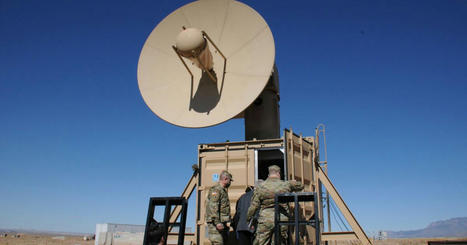
L'arme doit être logée dans un conteneur d'expédition de 20 pieds de long, mais cela signifie qu'elle peut également être transportée, déplacée par avion-cargo, et pourrait être installée dans différentes bases militaires. THOR a été développée par la direction de l'énergie dirigée du laboratoire de recherche de l'Armée de l'air, situé sur la base aérienne de Kirtland au Nouveau-Mexique. Selon l'Associated Press, 15 millions de dollars ont été dépensés pour concevoir l'arme en collaboration avec Verus Research, BAE Systems et Leidos.
Déploiement prévu d'ici à 2026
Le 11 février dernier, le lieutenant général de l'Armée de terre L. Neil Thurgood a assisté à une démonstration des capacités de THOR sur la base aérienne. Le responsable de l'armée indique qu'une combinaison de lasers à haute énergie et de technologies à micro-ondes est en cours de développement par le laboratoire de recherche et d'armement, dans l'espoir de pouvoir s'attaquer efficacement à des cibles individuelles et à des essaims.
Les drones et les essaims de drones peuvent constituer un risque pour les bases militaires et les infrastructures opérationnelles, de même que pour les infrastructures civiles. Alors que THOR est soumis à des tests de risque et à des perfectionnements, les chercheurs de l'armée envisagent également les applications de salves radio de grande puissance qui pourraient engager « plusieurs cibles à la fois » à longue distance.
« THOR, et d'autres systèmes de défense antimissile, permettent de vaincre plusieurs cibles à la fois de manière non cinétique », s'est réjoui le haut-gradé américain à l'issue de la démonstration de force de l'armée américaine. « Assurer la sécurité de nos soldats est notre priorité numéro un, et nous devons utiliser des systèmes d'armes défensives efficaces pour rester en avance sur les menaces changeantes présentées par nos adversaires. » L'armée américaine a l'intention de procéder à des essais sur le terrain d'ici 2024 et à un déploiement potentiel d'ici 2026.
|
|
Scooped by
Romain
February 26, 2021 5:23 AM
|
Le système de défense, baptisé THOR, tient dans un container de 6 mètres de long et peut être utilisé pendant trois heures consécutives. © U.S. Air Force/John Cochran
Face à la menace croissante représentée par les drones, les armées du monde entier rivalisent d'imagination pour créer des systèmes de défense efficaces. Légers, discrets et très accessibles, les drones constituent un défi tactique majeur pour les États-majors. Utilisés pour des missions kamikazes ou des opérations de reconnaissance, ils ont rebattu les cartes sur de nombreux terrains d'opération ces dernières années.
C'est dans l'optique de protéger ses bases aériennes d'éventuelles attaques ou d'intrusions de drones que le laboratoire de recherche de l'US Air Force a développé une arme électromagnétique baptisée THOR (Tactical High Power Operational Responder). Cette arme à micro-ondes a été développée sur la base Kirkland de l'aviation américaine, dans le Nouveau-Mexique, où elle a débuté une série de tests en conditions opérationnelles début février, d'après le Albuquerque Journal.
La principale promesse de ce nouveau système de défense est qu'il serait en mesure de fournir une protection contre des cibles multiples, attaquant de manière simultanées. Jusqu'ici les armes anti-drones existantes — filets, lasers ou simples fusils — ne peuvent se focaliser que sur l'élimination d'une seule cible.
"Le système utilise des micro-ondes à haute puissance pour provoquer un effet de contre-électrolyse. Une cible est identifiée, l'arme silencieuse se décharge en une nanoseconde et l'impact est instantané", écrit le laboratoire de recherche de l'US Air Force. "Les lasers à haute énergie tuent une cible à la fois, et les micro-ondes à haute puissance peuvent tuer des groupes ou des essaims, c'est pourquoi nous poursuivons une combinaison de ces deux technologies", a expliqué Neil Thurgood, le directeur pour l'hypersonique, l'énergie dirigée, l'espace et l'acquisition rapide de l'armée américaine, dans un communiqué.
Cette arme a énergie dirigée tient dans un container de 6 mètres de long — qui peut être facilement transporté par avion-cargo — et ne nécessite que deux hommes pour être assemblée. À l'heure actuelle, le système peut être actif durant trois heures consécutives. Le laboratoire de recherche de l'US Air Force a investi 15 millions de dollars (12,2 millions d'euros) dans le développement de THOR, et espère déployer l'arme à grande échelle d'ici 2026.
|
|
Scooped by
Romain
February 25, 2021 4:41 AM
|
Numerica, a leader in designing and deploying best-in-class defense technology, has announced the development of a new U.S.-made, 3D radar solution for Counter Unmanned Aircraft Systems (C-UAS) and other short-range defense missions, the Spyglass™ Short Range Surveillance Radar.
Numerica - Spyglass Radar
Designed to fill the need for exceptional C-UAS detection and tracking performance, Spyglass will soon be available for a broad set of applications including facility security, border surveillance, convoy and vehicle protection, air space monitoring and more.
“Spyglass was born out of our first-hand experience with gaps in the short-range radar market,” Nate Knight, vice president of air and missile defense at Numerica, explains. “The rapidly-growing autonomous drone threat presented an opportunity to turn our attention to building a new radar from the ground up that would leverage our decades of experience solving critical air and missile defense problems and applying our proven radar processing and tracking technologies in new ways.”
Spyglass Short Range Surveillance Radar will offer:
Superior precision: Spyglass utilizes Ku-Band Phased Array technology to provide high-precision measurements, improving targeting and classification performance at longer ranges and providing critical time for decision making and threat mitigation.
See farther + react faster: Advanced signal processing algorithms and autonomy extend the detection range of the 3D radar allowing users to see farther and faster.
Close the gap: Traditional pulse-doppler radar designs leave users blind up close, Spyglass’ simultaneous transmit-and-receive design ensures threats are not missed at close ranges.
Deploy anywhere: With a rugged, solid-state design, low power consumption and low transmit power, Spyglass is built to be deployed anywhere needed.
Any mission covered: With embedded C2 and AI software, Spyglass is designed to enable broad-area autonomous sensor networks. Software-defined operating modes enable rapid customization to specific mission requirements.
Trusted U.S. partner: Designed and manufactured in the U.S. by trusted defense partners.
Spyglass is designed to detect and track small UAS beyond three and a half kilometers with precise measurements to support a range of mitigation techniques. With a high degree of configurability and out-of-the-box support for distributed operations, Spyglass’ software-driven control capabilities will enable seamless integration into layered defense systems.
“We carefully selected partners for this effort who could support the delivery and integration of Spyglass to key military customers and also leverage the best in U.S. manufacturing talent,” Jeff Poore, president of Numerica, said. “We have collaborated with respected partners including Liteye Systems and NEOTech to bring to life this 3D radar solution urgently needed by the U.S. Armed Forces.”
|
|
Scooped by
Romain
February 24, 2021 1:25 AM
|
Since 2015, CERBAIR (BOOTH 07-A05) has based all its detection solutions on the analysis of the radiofrequency spectrum. Called HYDRA, it is a direction finding system with sensors that scan the electromagnetic spectrum for frequencies used by the communication protocols of commercial drones.
As soon as a signal is intercepted, HYDRA characterises it through comparison with a signature database and gives operators an azimuth of origin symbolised on the interface of a Command and Control (C2) centre. The device is coupled with MEDUSA, a specially designed jammer, actionable when the threat is clearly confirmed. This radio jamming cuts the communication link between the drone and its operator, thereby forcing the machine to land.
Finally, CHIMERA is the combination of these two systems for special forces (police, gendarmerie, army). Composed with three connected hardware items:
an antenna, located in the dedicated backpack
a digital C2 tablet attached to the front of the tactical vest
an effector
CHIMERA allows a single operator on a mission to detect and neutralise nefarious drones.
Reliability of Detection
“Our customers, such as French SWAT Unit (RAID) or the soccer team l’Olympique Lyonnais, reported an increasing number of false alarms in environments saturated with electromagnetic radiations” underlines Céline Craye, PhD – Lead Developer, recalling the origin of this unique feature on the market.
“The core of our detection is based on a mapping of the frequency / time space,” explains Pierre Dufour, RF Engineer, who carried out extensive research on deep packet inspection.
Craye added, “by performing a first detection, we identify the overall characteristics of the packets sent between the drone and the remote control (packet duration, bandwidth), then we apply a first filter on the entire spectrum to precisely isolate the potential packets emitted by a given model of drone. After this crucial step, ULTRA (Ultimate Recognition Algorithm) analyses the content of the packet to detect patterns of each communication protocol. If these indicators are present in the package, we can confirm with absolute certainty the nature of the drone.”
In short, ULTRA scrutinises both the interpulse data (the relative positions between the different transmitted packets) and the intrapulse data (data relating to a packet).
Unique Feature
“While developing this unique feature, we found out that the biggest challenge was to get the clearest signal possible. For several months, we analysed multiple recordings and carried out thousands of tests, both in our lab of Montrouge, and on the field in the outskirts of Paris” concluded Craye and Dufour.
Symbolised by a green pulse on the detection software, ULTRA is available on HYDRA 100/200 and the future HYDRA 300 (fixed or mobile).
ULTRA is already included in the latest release of the CHIMERA software. Unlike its competitors seeking ever more detection range, CERBAIR innovates by investing in more reliable detection, eliminating as much as possible false alarms which can generate costly and unnecessary actions for the user.
Jack Richardson
|
|
Scooped by
Romain
February 24, 2021 1:09 AM
|
A l'occasion du salon IDEX, qui se tient à Abou Dabi du 21 au 25 février, MBDA a dévoilé son approche de la lutte anti-drones, à travers le système Sky Warden.
Lutte anti-drones.
MBDA a profité du salon IDEX pour dévoiler son système Sky Warden, permettant de répondre aux besoins de lutte anti-drones des forces et pouvant plus globalement répondre aux menaces aériennes. Articulée autour d'un C2, cette solution permet d'intégrer différents systèmes de détection, identification et neutralisation, proposés directement par MBDA ou par des partenaires.
Approche modulaire.
Au regard de l'évolution du marché des drones, et donc de la menace représentée par ces systèmes, MBDA a décidé d'adopter une démarche modulaire. Imaginé selon le concept « plug and play », le système Sky Warden permet ainsi d'intégrer au sein d'un C2 différentes capacités, en fonction du besoin de l'opérateur, afin de se prémunir contre la menace drones, allant des mini-drones aux drones tactiques. Différentes capacités de neutralisation sont d'ores et déjà proposées par MBDA, pouvant être intégrées au sein du système. Un système de brouillage des radio-fréquences, développé par Keas, peut ainsi être intégré, de même que le laser à énergie dirigée de Cilas ou encore un système à énergie dirigée permettant d'interrompre les communications entre le drone et sa télécommande, mis au point par Teledyne e2v. Des systèmes de neutralisation sol-air à courte portée peuvent également être plugés au sein du C2, tels que des missiles ou mitrailleuses. Différentes capacités de détection sont également proposées par MBDA, dont le radar de Saab (radar Giraffe), ou encore le détecteur passif de radio-fréquences de Cerbair. Un drone HK peut également être intégré au sein du C2 pour de la détection optique, de même qu'un capteur électro-optique. Enfin l'ensemble du C2 peut être intégré au sein d'un véhicule afin de garantir la mobilité du système.
Savoir-faire.
« Sky Warden capitalise sur le savoir-faire de MBDA sur le segment du processus d'engagement, de l'intégration de systèmes et des différentes catégories d'effecteurs, ainsi que leurs évolutions à venir », a ainsi déclaré Eric Béranger, PDG de MBDA. Le C2 Sky Warden peut représenter une solution complète de lutte anti-drones ou être intégré dans une architecture plus large de défense aérienne.
|
|
Scooped by
Romain
February 23, 2021 8:06 AM
|
IDEX 2021: CERBAIR has based all its detection solutions on the analysis of the radiofrequency spectrum. Called HYDRA, it is a direction finding system with sensors that scan the electromagnetic spectrum for frequencies used by the communication protocols of commercial drones.
|
|
Scooped by
Romain
February 23, 2021 1:03 AM
|
A côté des systèmes de brouillage, les forces américaines s'engagent sur des solutions anti-drones fondées sur la destruction au moyen de lasers à haute énergie.
Le HELWS 2 de Raytheon
Dans le cadre d’un programme de démonstration d’une valeur de 23,8 millions de dollars, Raytheon développe un système d’armes laser à haute énergie. Conçus spécifiquement pour la lutte anti-drones de proximité. Le High-Energy Laser Weapon System 2 (HELWS 2) est couplé à un radar de terrain. Ce système peu volumineux peut être installé sur un véhicule léger de type Polaris. En plus de sa capacité de neutralisation, il dispose de possibilité ISR. Il fait suite au système H1 conçu pour la prévention et l’observation de drones.
Un concept innovant
Basé sur une prise standard de 220 volts, il peut également être jumelé avec un générateur pour lui fournir un nombre presque infini de tirs. Le laser utilise un système de ciblage multispectral ainsi qu’un capteur électro-optique/infrarouge pour détecter et suivre les drones avant l’engagement et la neutralisation. Expérimenté par le 704th Test Group, les résultats définitifs seront rendus avant la fin de l’année. Le HELWS 2 fait partie d’une campagne d’expérimentation plus large comprenant l’évaluation du Phaser HPWS (Hight Power Microwave System). Le Phaser serait conçu pour la neutralisation d’essaims de drones par la génération d’un faisceau d’énergie électromagnétique large en arc-en-ciel.
L’US Army attend ses DE-MSHORAD
Prévu pour une entrée en service en 2021, les Directed Energy-Maneuver Short-Range Air Defense (DE-MSHORAD) disposeront d’une arme laser d’une puissance de 50 kw. Intégré sur le véhicule 8X8 Striker, cet équipement assurera une défense C-RAM (Counter-Rocket/Artillery/Missiles) et contre les systèmes aériens sans pilote (SAMU).
|
|
Scooped by
Romain
February 22, 2021 1:44 AM
|
KBR won a $92.6 million contract to perform engineering, integration and sustainment services on counter unmanned air systems (C-UAS) for the Combat Integration & Identification Systems unit within the U.S. Naval Air Warfare Center Aircraft Division (NAWCAD).
This cost-plus-fixed-fee, indefinite-delivery/indefinite-quantity (IDIQ) contract is a new opportunity for KBR to help the U.S. military with ground-based air defense.
KBR will provide its expertise to various Navy identification and data link systems, which include the Negation of Improvised Non-State Joint Aerial-Threats (NINJA) system; Counter-Remote Control Model Aircraft Integrated Air Defense Network (CORIAN) system; SkyTracker® UAS detection and tracking suite; Light Marine Air Defense Integrated System (LMADIS); Marine Air Defense Integrated System (MADIS); and ANDURIL artificial intelligence platforms.
The Department of Defense (DoD) uses these C-UAS to strengthen homeland security and address potential threats in the U.S. and abroad. The systems can scan the skies for enemy aircraft and take appropriate action to deny airspace access.
KBR’s specific tasks will include the integration and installation of systems; the characterization of system and sub-system components; development of training curriculum and materials, as well as delivery of formal training programs; supply system management and material control; testing and repair of C-UAS; and laboratory maintenance and quality assurance. The company will perform the five-year contract primarily at Webster Outlying Field in St. Inigoes, Maryland.
KBR’s services supporting NAWCAD will also benefit programs sponsored by the Naval Air Systems Command; Naval Sea Systems Command; Naval Inventory Control Point – Mechanicsburg; U.S. Coast Guard; commercial and Foreign Military Sales customers; and other DoD and government entities.
“Our work through this new win will have wide-reaching impacts within the DoD and international allied community,” said Byron Bright, KBR Government Solutions President. “We are excited to join NAWCAD as it advances C-UAS technology and, ultimately, strengthens national security and protects our armed forces around the globe.”
KBR is a leading systems engineering and integration provider for U.S. military aviation. Whether on land, at sea, in the air, space or cyberspace, KBR is trusted to overcome the nation’s most pressing challenges. The company drives innovation by combining engineering, technical and scientific expertise with its full life cycle capabilities, mission knowledge and future-focused technologies. KBR is delivering solutions for the needs of today and tomorrow.
|
|
Scooped by
Romain
February 19, 2021 9:35 AM
|
Pour lutter contre les vols illégaux, la start-up Drone XTR a mis au point un dispositif innovant. Elle se propose désormais de protéger des espaces aériens entiers.Par Frédéric Durand
Le 17 février 2021 à 12h12
À ce jour, 700 000 drones sont déclarés en France. Ce qui a fait entrer l'Hexagone dans le top 3 des pays les mieux équipés dans le monde. Mais, contrairement à ce que le grand public peut imaginer, à part dans son jardin, il faut à chaque décollage obtenir une autorisation préfectorale. Et encore, à condition, de ne pas être dans une « no flight zone ». Mais l'actualité se charge régulièrement de montrer que les pilotes ne sont pas rares à enfreindre la loi pour diverses motivations.
En 2014, Jean-François Adam s'est penché sur le sujet. Il a déposé un brevet en 2016 avec la centrale nucléaire de Paluel (Seine-Maritime) pour un dispositif de « gestion et de contrôle des espaces aériens de sites sensibles », validé ensuite par la Direction générale de l'armement (DGA). Depuis, sa start-up havraise Drone XTR est en mesure de déployer en quelques minutes son détecteur passif et indétectable.
Le principal risque, c'est la chute !
On peut toujours redouter l'espionnage, les repérages et même le terrorisme, mais rectifie Jean-François Adam, « 95% des menaces sont liées à une perte de contrôle et donc à une chute et une percussion. Imaginez, si vous vous trouvez sur un site Seveso ou Seveso+, un aéroport ou au-dessus d'une foule compacte, un drone qui tombe peut faire des blessés graves. Pire, à l'impact, la batterie peut exploser et créer des incendies. Notre invention peut aussi servir à protéger les prisons de livraisons illégales, à surveiller les frontières lors de passages de drogues ou d'armes ».
Co
mme parade, il existe aujourd'hui les bonnes vieilles jumelles, des radars ou des sonars. Mais, avec une vitesse moyenne pour un drone de un kilomètre par 50 secondes, il est quasiment impossible de remonter à la source : « Comme il est interdit de neutraliser le drone, sauf pour les forces de l'ordre ou l'Armée, j'ai imaginé un système simple, rapide et utilisable par tous. Avec le client, nous définissons une zone de surveillance. Dix kilomètres alentours, Drone XTR est capable d'identifier la position, les paramètres du transpondeur et les coordonnées de 98% des drones sur le marché, sans perturber les réseaux existants (wifi, hertzien, etc).
Protéger des espaces aériens complets
« Aussitôt, détaille David Marin le responsable commercial, une alarme est déclenchée au poste de sécurité, tout est enregistré pour récolter les preuves en cas de poursuites et on peut suivre l'engin du décollage à l'atterrissage. Le dispositif est une sentinelle, il écoute le ciel .» Qui plus est, quelques options sous secret défense agrémentent le mouchard. Avec l'arrivée de l'ingénieur du développement Antoine Lafarge, la start-up souhaite désormais imposer sa technologie pour la surveillance d'espaces aériens complets.
« Un drone peut gêner les hélicoptères de la sécurité civile ou les avions militaires. Mais demain, il y aura les livraisons par des géants de l'Internet ou encore les compétitions des JO 2024 et il faudra surveiller des espaces publics. Avec uniquement les antennes, un ordinateur et un écran, les forces de l'ordre pourront même procéder à des contrôles intempestifs. « Ici, en Normandie, explique-t-on chez Drone XTR, on peut par exemple imaginer une couverture du Pont de Tancarville à Honfleur et jusqu'à Étretat. »
|
|
Scooped by
Romain
February 18, 2021 1:40 AM
|
|
|
|
Scooped by
Romain
March 5, 2021 1:11 AM
|
|
|
Scooped by
Romain
March 4, 2021 1:11 AM
|
Many companies around the world are developing anti-drone weapons to fight the threat that drones can offer.
|
|
Scooped by
Romain
March 3, 2021 1:56 AM
|
D-Fend Solutions has confirmed that its EnforceAir counter-small unmanned aerial systems (C-sUAS) technology supports the legislation rule recently passed by the Federal Aviation Administration (FAA) that requires remote identification for large categories of drones in the U.S. The technology is Remote ID-ready in the U.S., Europe and Asia.
EnforceAir offers a variety of identification capabilities including unique ID per serial number, accurate location information for the drone and ground station, and additional identification parameters. The system will provide customers with updated identification information following the adoption of the law by various drone manufacturers. System operators can see the remote IDs of detected drones via EnforceAir’s intuitive graphical user interface, offering law enforcement agencies and other organizations greater visibility and data.
Zohar Halachmi, Chairman and CEO of D-Fend Solutions, commented: “The entire drone ecosystem should benefit from the FAA’s rule, including drone manufacturers, who have a vested interest in ensuring that their products are not used for illegal purposes; law-abiding drone operators, who will be able to fly their drones over certain crowds and at night; and law enforcement personnel, who will obtain important information from leading counter-drone technologies about drones and operators involved in dangerous or hostile incidents.”
“D-Fend is honored that our technology has been tested, selected and trusted by top tier U.S. government agencies and we will continue to work with them to reduce the drone threat, while ensuring our continued system evolution includes the functionality required by new rulings.”
Michael Huerta, former Head of the FAA and current D-Fend Solutions’ Advisory Board Member, stated: “This new rule by my former colleagues at the FAA is an important step in better regulating drones in the United States. I strongly believe in D-Fend’s mission to support today’s drone-powered society by making it safer and more secure, which this rule and D-Fend’s technology will help facilitate.”
|
|
Scooped by
Romain
March 1, 2021 1:20 AM
|
MoU paves way for cooperation on laser technology as the United Arab Emirates develops an advanced counter-drone strategy.
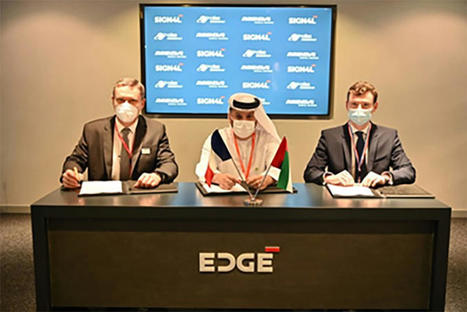
SIGN4L (the EW subsidiary of the Edge defence conglomerate in the United Arab Emirates) is working with MBDA and laser specialist CILAS to cooperate on the development of high-energy weapon systems, as part of an advanced counter-UAV strategy.
The three parties signed an MoU during the IDEX defence exhibition in ...
|
|
Scooped by
Romain
February 25, 2021 4:53 AM
|
Liteye Systems, Inc., a US leader in Counter Unmanned Aerial Systems, announces Liteye SHIELD, the next level in Multi-Mission, Multi-Domain systems and a true advancement in Counter UAS Defense.
Liteye SHIELD incorporates Artificial Intelligence (AI) and Machine Learning techniques with a newly designed SPYGLASS 3D radar, EO and IR tracking to increase the speed and confidence of the system. The SHIELD Command and Control further ensures the full Detect, Track, ID Kill Chain is automated and conducted at machine speed. SHIELD is the next generation, cutting-edge technology required to defend against the rapid technology maturation and proliferation of small UAS threats worldwide.
“Liteye and our partners are able to present leading edge capability in advanced 3D radars, HD Cameras, and the only US company to provide both narrow band and directional wideband electronic attack for this threat” said Kenneth Allen Geyer, CEO Liteye Systems. “SHIELD operates as a self-contained system or links multiple SHIELD payloads, but more importantly, it seamlessly integrates into higher-level networks, can cue kinetic and non-kinetic effectors, and can be physically integrated into practically any platform. I’m proud of what Liteye and our teammates have achieved and confident we can continue to protect US interests around the world.”
Manufacturing and integration of SHIELD critical components are based at Liteye and partner locations in the United States. Success over the last five years with Liteye’s deployed combat proven Anti-UAS Defense System (AUDS), has earned Liteye unmatched technical experience in this market. It is this experience that has led to the development of Liteye SHIELD primarily for the C-UAS mission, but significant for additional surveillance and electronic attack missions. From first combat deployment in Iraq 2016 to today with systems deployed worldwide Liteye’s continually adding to our repertoire of experience with the rapidly evolving threat.
“Liteye has been protecting US Forces, our Allies and Critical Infrastructure for years, and we’ve listened closely to what the US DoD deems important,” said Ryan Hurt, Vice President of Business Development. “Constructing an autonomous kill chain with artificial intelligence and machine learning for detect, track and identification, so decisions can be made at machine speed, was the starting point for design of this new system. Seamless integration with existing Networks ensures Operators have access to the sensors and effectors they need, when they need them, and lessens the manpower footprint. This is next generation multi-mission, multi-domain performance.”
Key performance characteristics of SHIELD are:
Fully Autonomous Kill Chain: The Autonomous Kill Chain affords machine speed detect, track, identification and classification allowing an Operator to monitor the environment, manage multiple systems and only step in for final Positive ID and trigger pull to fulfill the mission. Key components: Spyglass 3D Radar for Detect & Track, AI based RF Detect, AI Target Prioritization, and Automated Video Track.
Dispersed, Networked Command and Control: SHIELD utilizes a Man-ON-the-Loop local C2, and is networked, requiring low manpower to operate any system from any console with a distributed common operation picture. The local C2 provides multi-sensor resource management & Sensor Fusion to an intuitive operating system with Machine Learning principles and 3D targeting for cueing networked effectors.
Multi Domain/Multi Mission with OEM Service and Support:
Multi-Domain – Operation across Air, Ground, Surface, and Radio Frequency (RF) Spectrum, SHIELD effectively provides multi-domain critical infrastructure protection.
Multi-Mission – SHIELD provides platform agnostic (mobile, transportable, fixed/semi-fixed) mission essential service for: Integrated air and ground base defense, convoy protection, offensive electronic attack, wildland fires, space launch protection, event security and more.
OEM Service and Support – Liteye’s mature Service and Support program is operational today. Qualified and Certified by Liteye, our OEM Service and Support ensures the systems and Operators stay proficient and fully mission capable.
Liteye Systems, Inc, is a world leader in Counter Unmanned Aerial Systems (C-UAS), radar and surveillance sensor packages, ruggedized thermal cameras, and helmet mounted displays with over $100M in services and products provided to the US Government.
|
|
Scooped by
Romain
February 24, 2021 9:35 AM
|
Raytheon Intelligence & Space's laser solutions are a set of technologies that use photons, or particles of light, to carry out military missions. The
|
|
Scooped by
Romain
February 24, 2021 1:10 AM
|
On February 22, 2021, at the IDEX 2021 International Defense Exhibition in Abu Dhabi, Rosoboronexport (part of Rostec State Corporation) held a public presentation “New Approaches to Building an Integrated Counter UAV System” at its stand in Hall 12.
The events of 2019 and 2020, when administrative and industrial facilities of a number of Middle Eastern countries were attacked, revealed new threats and security challenges. The lack of efforts made to provide air defense in the face of the growing use of unmanned aerial vehicles in fighting and a high level of terrorist threat has become obvious.
The great availability of drones and the possibility of acquiring them by various terrorist groups, as well as the experience of recent local wars and military conflicts, poses new challenges to the countries of the region and forces them to revise the existing air defense system, designed to protect against classical attack weapons.
As part of the presentation, Rosoboronexport will present its new package solution – a system capable of effectively countering attacks by unmanned aerial vehicles, combining electronic warfare and air defense systems of various classes.
UAV jamming systems are most effective against light- and partly medium-class drones. These assets are capable of countering a massive air raid by unmanned aerial vehicles by suppressing their command/telemetry and navigation channels.
The Repellent-Patrol EW system developed and manufactured by JSC Defense Systems provides zone coverage of the territories. The Repellant-Patrol is a long-range system capable of jamming drones at a range of up to 20 km.
The Kupol and Rubezh-Avtomatika systems developed by Avtomatika Concern, part of Rostec State Corporation, carry out continuous radio surveillance and create a protective dome over the installation. This is an impenetrable barrier capable of repelling attacks not only by single drones, but also their massive use from different directions and altitudes within a radius of at least 3 km.
The Pishchal electromagnetic gun is one of the lightest handheld jammers on the market, weighing a mere about 3.5 kg. It can jam UAV control/navigation channels at a range of 2 km.
Pishchal electro-magnetic gun
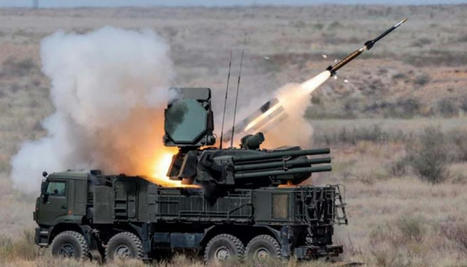
As a hard-kill component of its counter UAV system, Rosoboronexport offers short-range air defense systems, in particular, KBP’s Pantsir-S1M self-propelled anti-aircraft gun/missile (SPAAGM) system or Almaz-Antey’s Tor-type SAM system.
These systems are capable of effectively engaging a variety of air attack weapons, including UAVs. The Pantsir-S1M SPAAGM has missile and gun armament and destroys air targets at up to 30 km in range and up to 18 km in altitude. The Tor-M2E’s engagement envelope against air targets is 15 km in range and 10 km in altitude.
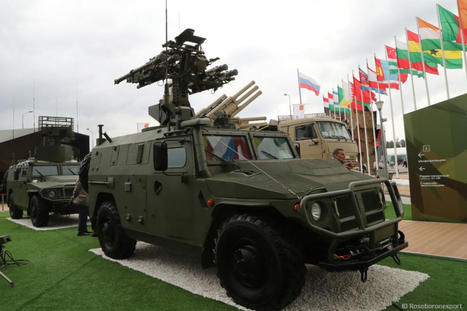
The ‘last-ditch’ air defense will be best provided by the Verba or Igla-S MANPADS, as well as the Gibka-S MANPADS squad combat vehicles, capable of firing Verba or Igla-S MANPADS. These MANPADS can destroy targets at a maximum range of 6 km and at a maximum altitude of 3.5 km.
The integrated use of the proposed electronic warfare and air defense assets will enable effective countermeasures against UAVs of any class provided air enemy reconnaissance and automated control systems are in place.
At IDEX 2021, all these systems will be showcased at Rosoboronexport and Almaz-Antey stands as part of a single Russian exhibit.
Traditionally, Rosoboronexport is ready to treat each foreign customer individually. During technical consultations, the company’s specialists can offer the optimal configuration of the system components for countering UAV threats depending on the customer’s needs and its vision of security threats to its infrastructure, transport, energy and military installations.
|
|
Scooped by
Romain
February 23, 2021 8:07 AM
|
The Sky Warden system manages the full C-UAS kill chain from detection to neutralisation and is designed to operate both as an integrated component in a layered air defence architecture, or in a stand-alone configuration. Sky Warden can be vehicle mounted or dismounted.
The modern C-UAS threat is varied, rapidly evolving, and poses a multiplying number of complex scenarios that require defending against. This means there is no single sensor or effector that can meet the modern or future C-UAS requirement. Instead Sky Warden utilises a networked eco-system of constantly evolving sensors and effectors, drawn from MBDA’s wide experience in air defence and effects management, to match the UAS threat.
Being modular, scaleable, and evolvable, Sky Warden is able to effectively and appropriately neutralise all classes of UAV, from small Class 1 micro-UAVs to large tactical UAVs, as well as other traditional air threats.
At its core is a command and control (C2) system that performs effects management – co-ordinating this eco-system of sensors, soft-kill effectors, and hard-kill effectors to defend armed forces units or sensitive sites across a large protection perimeter.
Sky Warden utilises operationally-proven building blocks within a modular open architecture that can be adapted to end-user requirements or to plug and play emerging and future novel sensing and effector technologies. MBDA C-UAS solutions have already been successfully demonstrated to customers.
Eric Béranger, CEO of MBDA, said: “As Europe’s leading air defence provider, MBDA is uniquely able to offer customers a proven, flexible and integrated C-UAS system. One that is available today, and can evolve into the future. Sky Warden embodies MBDA’s deep knowledge of the engagement process, systems integration, of all categories of effectors and their next evolutions, and of effects management in the air defence domain.”
|
|
Scooped by
Romain
February 23, 2021 1:19 AM
|
|
|
Scooped by
Romain
February 22, 2021 2:30 AM
|
L’armée de Terre se cherche de nouveaux fusils à pompe « à âme lisse de calibre 12 », révèle un appel d’offres publié hier. Pilotée par la SIMMT, la procédure envisage l’achat de plusieurs versions dont l’une orientée vers la lutte anti-drones.
Comme à l’accoutumée, ni cible, ni calendrier mais un besoin qui porterait sur trois versions de l’arme : canon court, canon long et canon anti-drone. Toutes trois subiront une batterie d’évaluations menée par la Section technique de l’armée de Terre (STAT), étape nécessaire au contrôle des exigences techniques.
L’enveloppe prévue s’étend de 440 000€ à 4,5 M€ pour les sept années de l’accord-cadre éventuellement conclu avec un opérateur unique. Avec un prix de départ de quelques centaines d’euros par unité, le volume envisagé est potentiellement élevé.
Ce projet d’acquisition insiste tout particulièrement sur le caractère européen de l’offre. Le candidat devra notamment détailler l’implantation et la mise en œuvre des moyens de production, « indispensable à la fabrication des canons et des culasses des fusils à pompe sur le territoire de l’Union européenne ou de l’Espace économique européen ».
En dotation dans tant les unités spéciales que conventionnelles, le fusil à pompe reste peu répandu car réservé à des usages et environnements de mission spécifiques. Il est notamment en dotation aux 9e RIMa et 3e REI des Forces armées en Guyane, qui s’en servent, par exemple, pour l’opération Harpie de lutte contre l’orpaillage illégal.
Leur utilisation s’est par ailleurs naturellement étendue à la lutte anti-drones. Dès 2018, il avait été déployé à cette fin dans le cadre de l’opération Chammal pour renforcer la protection de la base aérienne projetée en Jordanie face aux drones malveillants. Les opérateurs de défense sol-air qui y sont déployés disposent de fusils Benelli Nova calibre 12 ainsi que de deux types de cartouches aux portées différentes, 0 à 80 mètres et 80 à 100 mètres. Un dispositif récemment élargi à l’escadron de protection de la base 125 d’Istres, qui mettra en œuvre le modèle Remington 870.
|
|
Scooped by
Romain
February 22, 2021 1:44 AM
|
In response to gaps in the short-range air defense radar market, Numerica, a leader in designing and deploying best-in-class defense technology, announces the development of a new US-made, 3D radar solution for Counter Unmanned Aircraft Systems (C-UAS) and other short-range defense missions – introducing Spyglass Short Range Surveillance Radar.
Designed to fill the need for exceptional C-UAS detection and tracking performance, Spyglass from Numerica will be available soon for a broad set of applications including facility security, border surveillance, convoy and vehicle protection, air space monitoring and more.
“Spyglass was born out of our first-hand experience with gaps in the short-range radar market,” Nate Knight, vice president of air and missile defense at Numerica, said. “The rapidly-growing autonomous drone threat presented an opportunity to turn our attention to building a new radar from the ground up that would leverage our decades of experience solving critical air and missile defense problems and applying our proven radar processing and tracking technologies in new ways.”
Spyglass will offer advantages including:
Superior precision: Spyglass utilizes Ku-Band Phased Array technology to provide high-precision measurements, improving targeting and classification performance at longer ranges and providing critical time for decision making and threat mitigation.
See farther + react faster: Advanced signal processing algorithms and autonomy extend the detection range of the 3D radar allowing users to see farther and faster.
Close the gap: Traditional pulse-doppler radar designs leave users blind up close, Spyglass’ simultaneous transmit-and-receive design ensures threats are not missed at close ranges.
Deploy anywhere: With a rugged, solid-state design, low power consumption and low transmit power, Spyglass is built to be deployed anywhere needed.
Any mission covered: With embedded C2 and AI software, Spyglass is designed to enable broad- area autonomous sensor networks. Software-defined operating modes enable rapid customization to specific mission requirements.
Trusted U.S. partner: Designed and manufactured in the U.S. by trusted defense partners.Spyglass is designed to detect and track small, autonomous, UAS beyond three and a half kilometers with precise measurements to support a range of mitigation techniques. With a high degree of configurability and out-of-the-box support for distributed operations, Spyglass’ software-driven control capabilities will enable seamless integration into layered defense systems.
“We carefully selected partners for this effort who could support the delivery and integration of Spyglass to key military customers and also leverage the best in U.S. manufacturing talent,” Jeff Poore, president of Numerica, said. “We have collaborated with respected partners including Liteye Systems and NEOTech to bring to life this 3D radar solution urgently needed by the U.S. Armed Forces.”
Liteye Systems, a world leader and technology solutions provider and integrator of military and commercial solutions based in Centennial, Colo., will be the exclusive distributor of Spyglass for Numerica. As an industry expert, Liteye will provide seamless sales support, qualified field service and expert maintenance to ensure the best performance and experience for Spyglass end-users. In collaboration to bring Spyglass to market, both Numerica and Liteye have built a solid foundation for delivering the next generation of C-UAS solutions.
“Numerica has developed an extremely advanced radar solution that comes from deep-rooted experience working with the U.S. military since 1996,” stated Kenneth Geyer, CEO of Liteye Systems. “This 3D radar is uniquely designed from the warfighter’s standpoint and Liteye is excited to be part of this program.”
Source: Press Release
|
|
Scooped by
Romain
February 19, 2021 4:05 AM
|
All targets were successfully engaged in a two-day trial in Austria.
The Royal Netherlands Army recently completed another live-fire trial of the SMASH fire control system, this time in Austria as part of a Dutch MoD evaluation of different methods to defeat small UAVs.
The Robotic Automated Systems platoon of the 13th Light Brigade tested SMASH over two days at up ...
|