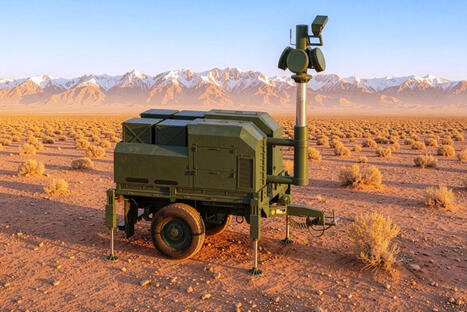
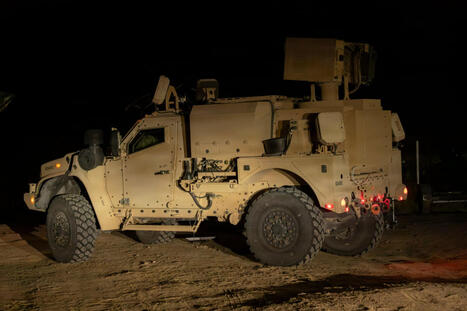
Liteye Systems, Inc., a US leader in Counter Unmanned Aerial Systems, announces Liteye SHIELD, the next level in Multi-Mission, Multi-Domain systems and a true advancement in Counter UAS Defense.
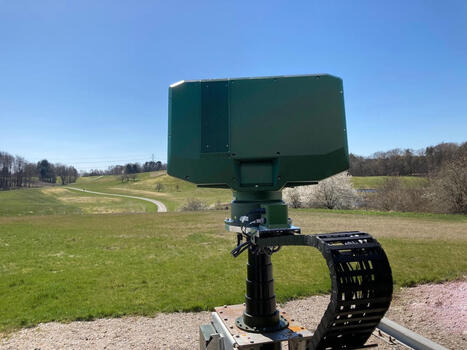
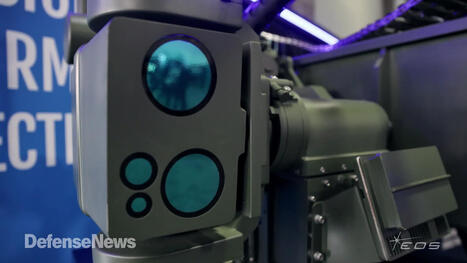
Liteye SHIELD incorporates Artificial Intelligence (AI) and Machine Learning techniques with a newly designed SPYGLASS 3D radar, EO and IR tracking to increase the speed and confidence of the system. The SHIELD Command and Control further ensures the full Detect, Track, ID Kill Chain is automated and conducted at machine speed. SHIELD is the next generation, cutting-edge technology required to defend against the rapid technology maturation and proliferation of small UAS threats worldwide.
“Liteye and our partners are able to present leading edge capability in advanced 3D radars, HD Cameras, and the only US company to provide both narrow band and directional wideband electronic attack for this threat” said Kenneth Allen Geyer, CEO Liteye Systems. “SHIELD operates as a self-contained system or links multiple SHIELD payloads, but more importantly, it seamlessly integrates into higher-level networks, can cue kinetic and non-kinetic effectors, and can be physically integrated into practically any platform. I’m proud of what Liteye and our teammates have achieved and confident we can continue to protect US interests around the world.”
Manufacturing and integration of SHIELD critical components are based at Liteye and partner locations in the United States. Success over the last five years with Liteye’s deployed combat proven Anti-UAS Defense System (AUDS), has earned Liteye unmatched technical experience in this market. It is this experience that has led to the development of Liteye SHIELD primarily for the C-UAS mission, but significant for additional surveillance and electronic attack missions. From first combat deployment in Iraq 2016 to today with systems deployed worldwide Liteye’s continually adding to our repertoire of experience with the rapidly evolving threat.
“Liteye has been protecting US Forces, our Allies and Critical Infrastructure for years, and we’ve listened closely to what the US DoD deems important,” said Ryan Hurt, Vice President of Business Development. “Constructing an autonomous kill chain with artificial intelligence and machine learning for detect, track and identification, so decisions can be made at machine speed, was the starting point for design of this new system. Seamless integration with existing Networks ensures Operators have access to the sensors and effectors they need, when they need them, and lessens the manpower footprint. This is next generation multi-mission, multi-domain performance.”
Key performance characteristics of SHIELD are:
Fully Autonomous Kill Chain: The Autonomous Kill Chain affords machine speed detect, track, identification and classification allowing an Operator to monitor the environment, manage multiple systems and only step in for final Positive ID and trigger pull to fulfill the mission. Key components: Spyglass 3D Radar for Detect & Track, AI based RF Detect, AI Target Prioritization, and Automated Video Track.
Dispersed, Networked Command and Control: SHIELD utilizes a Man-ON-the-Loop local C2, and is networked, requiring low manpower to operate any system from any console with a distributed common operation picture. The local C2 provides multi-sensor resource management & Sensor Fusion to an intuitive operating system with Machine Learning principles and 3D targeting for cueing networked effectors.
Multi Domain/Multi Mission with OEM Service and Support:
Multi-Domain – Operation across Air, Ground, Surface, and Radio Frequency (RF) Spectrum, SHIELD effectively provides multi-domain critical infrastructure protection.
Multi-Mission – SHIELD provides platform agnostic (mobile, transportable, fixed/semi-fixed) mission essential service for: Integrated air and ground base defense, convoy protection, offensive electronic attack, wildland fires, space launch protection, event security and more.
OEM Service and Support – Liteye’s mature Service and Support program is operational today. Qualified and Certified by Liteye, our OEM Service and Support ensures the systems and Operators stay proficient and fully mission capable.
Liteye Systems, Inc, is a world leader in Counter Unmanned Aerial Systems (C-UAS), radar and surveillance sensor packages, ruggedized thermal cameras, and helmet mounted displays with over $100M in services and products provided to the US Government.
Embarquez à bord du porte-hélicoptères amphibie (PHA) Tonnerre de la Marine nationale lors de l'exercice de lutte contre les drones Wildfire 2026, organisé au large des îles d'Hyères. Cet entraînement prépare les équipages à faire face aux nouvelles menaces asymétriques telles que les UAV et USV, en intégrant directement le retour d'expérience des récents combats en mer Rouge.
=====================
00:53 Interview du Capitaine de Vaisseau Bolelli, Commandant du PHA Tonnerre : Présentation de cet exercice interorganique mobilisant des frégates, un bâtiment ravitailleur de force, l'aéronautique navale et la DGA pour faire évoluer les tactiques face aux attaques multidomaines.
3:53 L'analyse du Commandant Adjoint Opérations (COMOPS) : Explication du scénario d'appareillage sous alerte depuis Toulon et mise en œuvre du "Smoker", une nouvelle munition navale téléopérée de la DGA servant à l'entraînement et à l'autodéfense.
08:40 L'expérimentation du système Rempart : Arnaud, responsable Rampart chez Naval Group, détaille les tests en conditions réelles de ce nouveau système de lutte antidrone. Opérant de manière autonome vis-à-vis du système de combat du navire, le Rampart a été testé avec des roquettes de 68 mm (guidées laser et non guidées) et une maquette de missile Piorun de PGZ Mesko, avec l'appui des moyens d'illumination de Safran.
NAVAL NEWS is fully focused on naval topics. We cover the latest naval defense shows & events. We also report on naval technology from all over the world. Navalnews.com is updated daily with in-depth features, industry, and naval forces news round-ups, event coverage, video reports and more. Our top of the line site is responsive across all mobile and desktop devices.
Counter-drone missile maker Perseus Defense has released video of one of its small, low-cost interceptors climbing into the sky and hitting a hovering multirotor drone, which the company's chief executive described as the first time an "attritable" missile has shot
Germany’s defence procurement agency has awarded MBDA Deutschland a contract to build an airborne laser demonstrator, laying the technical groundwork for potential laser weapons aboard aircraft.
The U.S. military has deployed high-energy laser weapons around President Donald Trump's Mar-a-Lago estate in Palm Beach, Florida, as part of a counter-drone shield set up at the request of the Secret Service, a military spokesperson told the directed-energy news
France has fielded its own answer to the American APKWS, a low-cost guided rocket intended to spare expensive air-to-air missiles in the fight against one-way attack drones.
Israeli company Smart Shooter has delivered the first batch of its SMASH Hopper MG remote weapon stations to an unnamed integrator in Asia, which is building them into a defense system for an Asian military to shoot down drones and
The Singapore Armed Forces (SAF) is conducting trials of a 5G-enabled aerial communications node (ACN) and mobile counter-unmanned aerial system (C-UAS) technolog
Weibel Scientific will supply its XENTA-M5 radar for Poland’s SAN counter-drone programme under an €84 million contract with PIT-RADWAR, the largest order in the Danish company’s history.
Auterion, the drone software company best known for the autonomy systems inside thousands of Ukrainian strike drones, has shown its Talon interceptor on a test range with Germany's armed forces, the Bundeswehr, saying the system is built to take on
BAE Systems has launched a new family of naval guns, which provide capability to conduct counter-uncrewed aerial system (c-UAS) self-defence activities including onboard smaller naval vessels.
Leonardo DRS will supply the power, cooling and vehicle integration hardware for the U.S. Army's first production laser weapon, after AeroVironment picked the company as a subcontractor on the Enduring-High Energy Laser program, DRS announced on Nov. 2. The work
En mer depuis 15 ans, au-dessus de l’Île Longue en 2025, et ces derniers jours au-dessus de la base navale de Toulon - qui plus est durant un exercice de protection multi-menaces : les drones mènent la vie dure à la Marine nationale, qui arrive à trouver des parades pour les menaces les plus complexes, pas forcément pour les plus frustes.
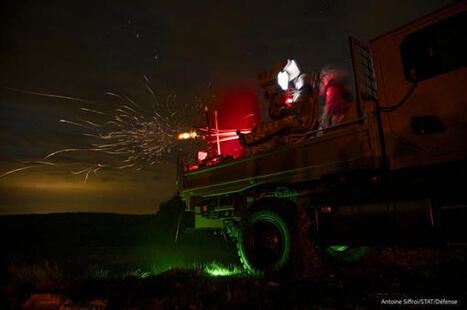
En janvier 2025, la Section technique de l’armée de Terre [STAT] présenta le Proteus, un système de lutte antidrone [LAD], mis au point par son groupement «Artillerie», dans le cadre d’un projet lancé quelques mois plus tôt. «L’objectif de ce développement est double : fournir une réponse opérationnelle rapide tout en anticipant les évolutions du champ de bataille moderne», avait-elle alors expliqué, alors que l’usage de drones FPV [à pilotage immersif] était en train de se généraliser en Ukraine.
Pour rappel, le Proteus associe un vieux canon antiaérien de 20 mm monté sur un affût tracté 53T2 à une caméra thermique SANDRA [Système d’arme Alternant les visions Nocturne et Diurne pour la Recherche d’Aéronefs] ainsi qu’à un ordinateur. Le tout est monté sur un camion TRM 2000. Du moins était-ce le cas pour le standard 1 de ce système.
Développé par l’ex-GIAT dans les années 1970, le canon antiaérien affiche une portée de 1 500 mètres et une cadence de tir de 700 coups par minute.
Sans tarder, la STAT se mit à l’ouvrage pour développer le standard 2 du Proteus, avec le concours de l’Agence ministérielle de l’intelligence artificielle de défense [AMIAD]. Il s’agissait alors de lui intégrer une nouvelle caméra pour améliorer sa capacité de détection ainsi que des algorithmes d’IA censés permettre d’anticiper la trajectoire d’une cible potentielle et, ainsi, de déterminer le moment le plus opportun pour déclencher un tir. Le tout en tenant compte de la vitesse de l’appareil à abattre et des conditions météorologiques.
Dans ce nouveau standard, le Proteus mis en œuvre depuis le PALADIN [pour Porteur Adapté à la Lutte Anti-Drone Intérimaire], un véhicule aérotransportable conçu par Scania à partir du V3P «Vampire».
La Loi de programmation militaire [LPM] 2024-30 actualisée a confirmé que l’armée de Terre serait dotée de cinquante systèmes Proteus à l’horizon 2030.
Mais un troisième standard est d’ores et déjà en cours de développement. C’est en effet ce qu’a fait savoir la STAT, via le réseau social LinkedIn, cette semaine.
«Face à l’évolution de la menace des drones, le projet PROTEUS mise sur une approche pragmatique : moderniser un système d’arme existant et éprouvé pour renforcer progressivement ses capacités face aux nouveaux enjeux opérationnels», a-t-elle d’abord souligné.
Et d’ajouter : «Lancé en avril 2024, le projet s’inscrit dans une démarche d’évolution incrémentale, articulée autour de plusieurs standards successifs. De l’amélioration des équipements à l’intégration de nouvelles technologies, chaque étape vient compléter les capacités existantes et préparer les évolutions suivantes».
Ainsi, les améliorations envisagées pour ce standard 3 du Proteus porteront sur l’électrification de l’affût et sur l’asservissement de ses mouvements à la solution de tir. En outre, il est question d’optimiser les algorithmes d’IA et d’intégrer de nouveaux capteurs de détection, dont la nature n’a pas été précisée par la STAT.
Probablement que, parmi ces nouveaux capteurs, figurera le radar tridimensionnel qui, conçu par FLIR Systems, équipe déjà le Véhicule de l’avant blindé ARLAD [pour adaptation réactive pour la lutte antidrone], également développé par la STAT.
Le mode opératoire actuellement suivi par le 35e Régiment d’Artillerie Parachutiste [LPM], unité référente en matière de LAD, implique un VAB ARLAD pour la détection des cibles, un fusil brouilleur NEROD pour les «fragiliser» et le système Proteus pour leur donner le coup de grâce.
Photo : Antoine Siffroi – Section technique de l’armée de Terre
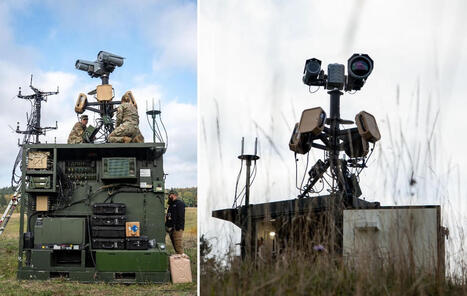
U.S. Army soldiers and U.S. Air Force airmen at Grafenwoehr Training Area in Germany are training on the Rapidly Deployable Small-Unmanned Air Defense System, or RD-SUADS, a palletized counter-drone system built by Trust Automation of San Luis Obispo, California, as
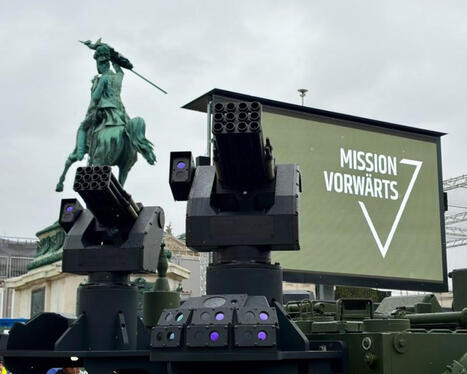
Austrian startup GuardAero showed its APS1 drone-defense system for military vehicles to Arnold Kammel, secretary general of Austria's Ministry of Defence, during the Austrian Armed Forces' National Day display at Vienna's Heldenplatz on Oct. 26. The Graz-based company shared images
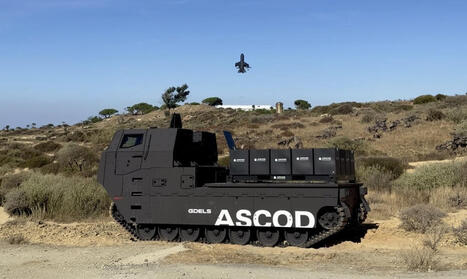
Spanish drone maker ARMMO Defense Technologies and General Dynamics European Land Systems' Spanish unit, Santa Bárbara Sistemas, launched and flew ARMMO's Bandit-X interceptor drone from an ASCOD Heavy Mission Carrier tracked armored vehicle during the ATLAS 26 counter-drone exercise in
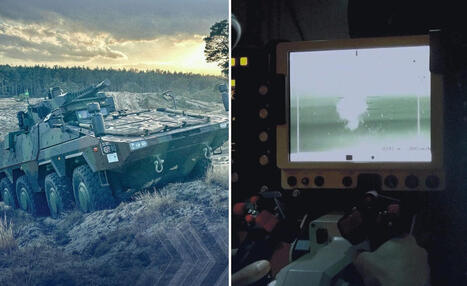
KNDS Deutschland is promoting its Boxer RCT30 wheeled infantry fighting vehicle as a weapon against drones, saying the 8x8 combat vehicle, which Germany and the Netherlands are buying in large numbers under the name Schakal, combines mobility, protection and firepower
France tested a counter-drone laser aboard the aircraft carrier Charles de Gaulle during its La Fayette 26 deployment, according to the French Navy’s official magazine, Cols Bleus.
To get content containing either thought or leadership enter:
To get content containing both thought and leadership enter:
To get content containing the expression thought leadership enter:
You can enter several keywords and you can refine them whenever you want. Our suggestion engine uses more signals but entering a few keywords here will rapidly give you great content to curate.


 Your new post is loading...