Your new post is loading...

|
Scooped by
Romain
April 8, 2020 6:19 AM
|
|
|
Scooped by
Romain
April 1, 2020 3:13 AM
|
Small drones are increasing concern for militaries and security forces across the world, as their low altitude and small size makes them hard to track or see.
Small drones are increasing concern for militaries and security forces across the world, as their low altitude and small size makes them hard to track or see. After the Gatwick Airport incident in the UK in 2019, it became clear that these systems, although cheap, can wreak havoc on infrastructure. Much counter-drone technology has been developed in response to the incident, including Qinetiq’s Obsidian system.
As this video from the company demonstrates, the system uses low-cost 3D radar to track and discern between threats so they can be either engaged if they present a risk, or ignored if they do not. The technology for the system derives from the ALARM system used by the British Army to provide warning of impending aerial attacks.
A chief function of the system is the ability to maintain tracking while a target is stationery or hovering by detecting the rotation of a small UAV’s rotor blades, reducing the chances of classifying another object as a drone.
The system has already been deployed in a commercial capacity, and last October, Qinetiq began trials with the system in Canada.
QinetiQ Canada managing director Robert Aubé said: “Obsidian counter UAS is specifically designed to meet the current and forecast threat of drone incursion upon critical national infrastructure, including daily operations in complex environments such as the Ottawa Macdonald-Cartier International Airport.”
|
|
Scooped by
Romain
March 20, 2020 5:02 AM
|
Raytheon Co., one of the world's largest defense contractors, said the new Coyote Block 2 counter-drone weapon approved for international
|
|
Scooped by
Romain
March 20, 2020 4:13 AM
|
Hensoldt, a defence and security sensor specialist, and Air Traffic Management (ATM) solutions provider Frequentis have announced that the two companies are working together to develop new integrated counter-UAS (unmanned aerial system) solutions for airports.
Frequentis will contribute expertise and technologies from the fields of UTM/ATM/drone detection, data fusion and exchange (MosaiX SWIM), shared situational awareness and ATM-grade surveillance data automation (SDDS-NG, MSDF, PRISMA), cross-agency incident management (ICM), and operational requirement analysis. Hensoldt will provide detection, identification and mitigation modules from their existing Xpeller counter-UAS system.
Both companies have already been collaborating on the FALKE project, which aims to develop the ability to intercept small drones that enter restricted airspaces at airports. Hamburg Airport will be the model for the new solution, with the partners demonstrating a technical and organisational concept to defend against illegally operating drones.
The FALKE project consortium also includes the German Federal Police, German Air Traffic Control (DFS), Lufthansa, Hamburg Airport, and the chair of electrical measurement of the Helmut Schmidt University (HSU) in Hamburg.
Günter Graf, Frequentis Head of Business Development, commented: “The formation of this MoU further reinforces our intention to create effective solutions to differentiate cooperative and non-cooperative flying objects, ensure shared situational awareness across all organisations and interoperability with existing airport surveillance infrastructures and available UAV traffic management (UTM) systems. We are pleased to be working on this common goal with Hensoldt, combining our strengths.”
Markus Wolf, Head of Sales and Business Development at Hensoldt Ventures, said: “Together with Frequentis, we will create a modular counter-UAV system optimised for the specific needs of airports. Xpeller demonstrates Hensoldt’s innovative capabilities, answering our customer’s needs to detect and act against unmanned threats. Due to its versatility, Xpeller is able to offer maximum protection under a variety of conditions and ranges. While available as a fully functional stand-alone system, its modular approach enables us to easily join forces with partners like Frequentis.”
|
|
Scooped by
Romain
March 19, 2020 3:16 AM
|
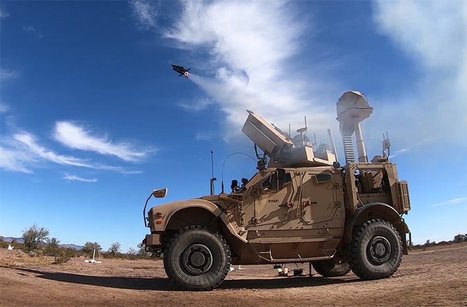
Raytheon is preparing to begin deliveries of a new surface-launched counter-unmanned aircraft system (CUAS) capability to the US Army in mid-second quarter 2020, following the completion of developmental, operational, and customer acceptance testing at the Yuma Proving Ground in December 2019. The system will comprise the new Coyote Block 2 interceptor and the Ku-band Radio Frequency System (KuRFS) 360° detection and intercept radar.
In a parallel development, the US government earlier this year cleared Coyote Block 2 for Foreign Military Sales, paving the way for possible exports of the Block 2 weapon and KuRFS radars to approved allied nations. Raytheon, in conjunction with the US Army, will conduct a briefing on, and demonstration of, the Block 2/KuRFS CUAS capability to "interested foreign governments" later this year.
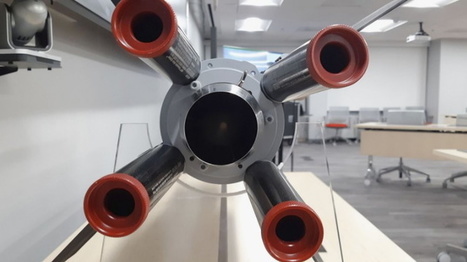
Under the provisions of an extended Joint Urgent Operational Need (JUON) requirement, originally issued by the army's Program Executive Office (PEO) Missiles & Space/Counter Rocket, Artillery, and Mortar Program in July 2018, Raytheon will deliver an undisclosed number of Coyote Block 2 interceptors and new, four-cell launcher units, along with new Ku-band Radio Frequency System (KuRFS) 360° detection and intercept radars. These will be coupled with the army-standard Forward Area Air Defense/Counter-Rocket Artillery Mortar Command and Control (FAAD/C-RAM C2) systems supplied by Northrop Grumman, and all elements will be integrated on the army's primary objective platform - the 4×4 Joint Light Tactical Vehicle (JLTV) - to deliver a new, ready-to-deploy tactical Howler CUAS capability for the service.
Raytheon characterises the Block 2 development as "high-end missile-like technology in a low-cost airframe". Developed in under 18 months and optimised in the CUAS role to take on Class 1-Class 3 UAS threats, the Coyote Block 2 is furnished with a blast fragmentation warhead - significantly larger than its Block 1B predecessor - specifically designed to address manoeuvring UAS threats.
|
|
Scooped by
Romain
March 18, 2020 2:52 AM
|
Rubezh-Avtomatika is a new design with an intelligent control to detect and neutralize drones without human interference. It can be used in field and city conditions, installed in open sites and on roofs. The complex is easily transportable. The deployment time does not exceed five minutes. The complex comprises radio reconnaissance and adaptive electronic jamming. It can operate automatically and manually.
"Presentations are held at the range. Various drones fly at distances of 30 km and their detection and counteraction are demonstrated. The anti-drone designs cause major interest of foreign customers. The concern has earlier presented key solutions in the sphere at DefExpo arms show in India. It demonstrated anti-drone systems to African representatives at Russia-Africa forum and to foreign customers at Dubai Airshow," Avtomatika CEO Vladimir Kabanov said.
“This new system by the Avomatika Concern will become a part of Rostec’s products intended for countering both civilian and military UAVs. Sapsan-Bekas is capable of countering UAVs both in manual and automatic modes in a wide frequency range — from 400 MHz to 6 GHz. The system is highly maneuverable since it is installed on an automobile chassis — this is a key requirement for various security agencies. Mobility is also important for civilian customers since it allows you to quickly move the system from one facility to another”, said the Executive Director of Rostec, Oleg Evtushenko.
|
|
Scooped by
Romain
March 15, 2020 3:01 PM
|
La société américaine Dynamite Global Strategies a dévoilé un nouveau radar, pouvant être mis en œuvre dans le cadre de la lutte anti-drones.
Développer les moyens de détection.
La lutte anti-drones comporte aujourd'hui un défi de taille au niveau de la détection. De nombreux radars ne sont pas adaptés à l'observation de petites cibles et ne parviennent pas toujours à détecter des drones de petite taille. Pour faire face à ces lacunes Dynamite Global Strategies a dévoilé un nouveau radar, le DSR-3X, adapté à la détection de drones de classes 1 et 2 (masse maximale au décollage de 5 kilos).
Renforcer la lutte anti-drones.
Le DSR-3X, qui appartient à la famille de produits DroneMaster, permet ainsi de détecter, suivre et classifier les cibles aériennes évoluant dans le périmètre surveillé. Ce radar 3D permet à la fois d'observer l'espace aérien à basse altitude et les mouvements au sol, afin de fournir une surveillance complète aux acteurs de la sécurité. Disposant d'une capacité de détection générale de 15 km, passant à 5 km pour les drones, ce radar scanne les zones surveillées à 360 degrés.
Des systèmes complets.
Afin de mettre au point le DSR-3X, DGS a capitalisé sur son expérience dans le domaine des radars et particulièrement de la famille DroneMaster. Dans le but de fournir une couverture complète et des capacités de lutte anti-drones sur l'ensemble de la chaîne, l'industriel préconise de coupler les radars à d'autres capteurs, tels que des caméras électro-optiques, ainsi qu'à des contre-mesures, permettant de neutraliser les drones. « En allant plus loin que la plupart des radars de surveillance au sol, notre nouveau radar DSR-3X peut à la fois surveiller l'espace aérien à basse altitude pour les drones, tout en surveillant simultanément le sol pour d'autres menaces. Cela signifie que le DSR-3X peut également suivre les opérateurs de drone », a déclaré Daniel Chou, PDG de DGS.
|
|
Scooped by
Romain
March 15, 2020 2:35 PM
|
En collaboration avec le CEPN (centre d'expertise des programmes navals), la Marine nationale a mené des essais de lutte anti-drones à la mer.
La Marine Nationale expérimente des solutions de lutte anti-drones.
Après l'Armée de l'air et l'Armée de terre, c'est désormais au tour de la marine nationale de se saisir du sujet de la lutte anti-drones. Et si la chose n'est déjà pas aisée sur terre, elle se complexifie encore davantage en mer. C'est dans ce contexte qu'ont eu lieu des expérimentations pendant le mois de février, à bord du chaland multi-missions (CMM) Grillon, sur la base navale de Toulon. « Pendant plusieurs heures, dans la grande rade de Toulon, le bâtiment a subi des raids répétés de microdrones. Les équipes ont pu s'entraîner à détecter, identifier et neutraliser ces micro aéronefs », précise le Ministère des Armées.
Evaluer le matériel.
Un entraînement qui a permis aux forces de se familiariser sur l'ensemble de la chaîne de lutte anti-drones, allant de la détection, souvent radars ou électro-optiques, à la neutralisation. Ces essais ont ainsi permis « d'identifier les capacités du matériel de détection, d'identification et de neutralisation mis à disposition du CEPN et d'évaluer les distances de détection électromagnétiques, acoustiques et optiques des microdrones aériens en zone côtière », détaille la Marine nationale. Des expérimentations qui sont avérées concluantes puisque l'ensemble des drones mis en œuvre autour du bâtiment ont pu être détectés. La moitié d'entre eux ont par ailleurs été neutralisés.
Se préparer face à l'évolution des menaces.
La conduite de cet entraînement dans un contexte maritime s'avère indispensable au regard du paysage des nouvelles menaces auxquelles les armées vont être confrontées. Les drones, souvent peu couteux, faciles à modifier et à mettre en œuvre, représentent une menace de plus en plus importante, comme l'a notamment démontrée l'opération Chammal. Même si pour le moment les bateaux ne sont pas les premières cibles des drones malveillants, pouvoir se prémunir contre des attaques ou actes d'espionnage fait partie des défis de la Marine nationale et plus généralement des armées.
|
|
Scooped by
Romain
March 5, 2020 2:47 AM
|
Malicious use of small drones continues to impact military, government, and commercial operations. After extensive testing, evaluation, and operational assessments from over two dozen customer groups, Citadel Defense has received $9.2 million in orders for its industry-proven C-UAS capabilities since the beginning of the year.
Citadel’s Titan C-UAS technology detects and defeats small unmanned aircraft system targets before they become a threat. Citadel Photo
Advertisement
Citadel’s Titan C-UAS technology will be used to protect high-value assets in urban, rural, and maritime environments. In austere and uncertain environments, operator’s trust Citadel’s autonomous, full-spectrum protection to accurately detect and defeat small unmanned aircraft system (sUAS) targets before they become a threat.
“Drones are an asymmetric threat that require unprecedented speed for innovation. Citadel’s AI-capabilities and responsiveness give customers a cost-effective option that addresses a very large portion of the sUAS threat,” said Christopher Williams, CEO of Citadel Defense. “Strong Warfighter references and combat-proven results over the last two years helped secure this order.”
As new drones are released to the market, Titan systems receive new software to address the new threats. If Titan’s AI algorithms do not detect the threat right away, the company explained that it can deliver an end-to-end capability in 72 hours for most drones and less than four weeks for the most complex drone signals. The use of AI, deepnets, and adaptive countermeasures provide Titan with scalable force protection that can address the needs of the small unit, a large base, or mobile vehicle.
Advertisement
“We prioritize safety, security, and a clear airspace above all else,” Williams said. “Our AI approach allows us to quickly address new threats without the risks or uncertainty that comes with hacking the drone link. Citadel is able to reliably keep customers ahead of the ever-evolving threat faster than other solutions in the market.”
The company’s Titan system is now being effectively integrated into layered solutions that combine radar, optics, and kinetic countermeasures to help customers detect, identify, track, defeat, and report on threat sUAS.
|
|
Scooped by
Romain
March 2, 2020 1:26 AM
|
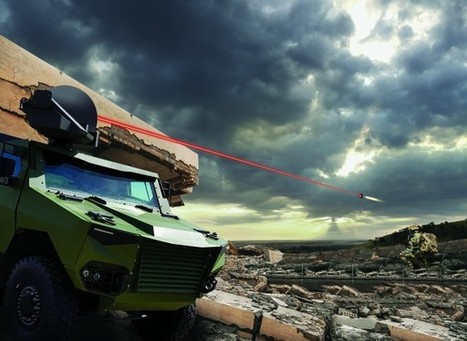
Fusils à pompe, dispositifs de brouillage, radars et autres rapaces : l’armée française multiplie depuis longtemps les initiatives visant à lutter contre les drones. Et si la solution résidait finalement dans les armes laser ? Champion français des systèmes laser, CILAS se positionne désormais sur ce segment émergent avec un dispositif baptisé HELMA-P prochainement évalué par le ministère des Armées.
« Le caractère éminemment stratégique de CILAS montera encore en puissance avec l’émergence des armes laser. A court terme, ces armes laser ont déjà un rôle à jouer dans le domaine de la lutte anti-drone, » déclarait Florence Parly lors d’une visite récente sur le site de CILAS. Consacrée à 60% au marché de la défense, cette filiale d’ArianeGroup basée à Orléans emploie 260 salariés pour un chiffre d’affaires annuel de 47M€.
D’après CILAS, HELMA-P a pour objectif d’offrir une rupture technologique aux armées en proposant une arme anti-matériel discrète, précise, peu onéreuse, dépourvue de munitions et à effets gradués. Ce système est capable de suivre et de détruire un micro-drone dans un rayon d’un kilomètre pour un coût par tir de quelques centimes d’euro. Différents scénarios opérationnels sont envisagés, dont celui de la lutte anti-drone qui réunirait au sein d’un même système les fonctions de détection, de suivi, d’identification et de neutralisation de cibles. HELMA-P ne doit donc pas être confondu avec TALOS, programme préparatoire de l’agence européenne de défense (AED) coordonné depuis 2019 par CILAS et finançant le développement d’une arme laser anti-missile principalement axée vers la neutralisation de munitions ou de missiles sur trajectoire.
À ce jour, HELMA-P s’appuie autant sur des briques en cours de validation que sur des développements homologués par CILAS, plusieurs d’entre-eux étant commercialisés depuis plusieurs années. Entièrement conçu par la PME orléanaise et ArianeGroup, ce système comprend des fonctions comme le suivi vidéo des cibles, la sécurisation des tirs laser, la source laser proprement dite, un LIDAR, ainsi que les éléments de commande et de contrôle.
Les investissement consentis dans le développement des lasers de puissance auront notamment soutenu une montée en maturité des composants critiques, tels que les batteries et la fibre laser. « La technologie présentée aujourd’hui permet donc de répondre efficacement aux questions du refroidissement, de l’énergie et de la sécurité, » nous explique-t-on.
Une démonstration à l’automne 2020
Florence Parly l’avait annoncé en début de mois, un démonstrateur technologique du système HELMA-P sera évalué d’ici à l’automne prochain à Biscarosse (Landes) avec le soutien de l’Agence de l’innovation de défense (AID). Ces premiers essais de neutralisation seront réalisés sur base d’une version trépied du système. Celui-ci effectuera une série de tirs sur cibles fixes et mobiles avec plusieurs fonds de scène « afin de valider différents scénarios opérationnels ».
La suite ? Hormis le démonstrateur sur trépied, HELMA-P est conçu pour être intégré sur un véhicule terrestre mais aussi pour être couplé avec un système hôte, tels qu’un noyau C2 et un système de gestion du champ de bataille (BMS), afin de se rattacher aux principes du combat collaboratif élaborés par le programme Scorpion. Le volume interne nécessaire à l’alimentation du système est totalement compatible avec celui d’un VBMR Griffon, voire avec le futur Véhicule blindé d’aide à l’engagement (VBAE) attendu lors de la prochaine loi de programmation militaire. Une solution navalisée sera également proposée par CILAS pour contribuer à la protection des bâtiments militaires.
Selon CILAS, HELMA-P sera disponible sur le marché d’ici à la fin de l’année 2020. La France se place d’emblée pole position des clients potentiels avec un ministère des Armées qui s’est dit « prêt à se doter très vite de prototypes » par l’entremise de Florence Parly.
|
|
Scooped by
Romain
February 26, 2020 12:08 AM
|
The US Army has approved Raytheon's Coyote Block 2 counter-unmanned aerial system (C-UAS) for Foreign Military Sales (FMS).
Lisa Hunter, US Army spokesperson, said on 19 February that interested customers should submit a letter of request through their local security co-operation office, starting with the Office of Defense Cooperation at their local US embassy. The Coyote Block 2 C-UAS capability is a rail-launched surface-to-air missile (SAM) being developed for the US Army through the Defense Microelectronics Activity (DMEA).
Juan Santiago, C-UAS product director at the Program Executive Office (PEO) Missiles and Space, part of the US Army Rapid Capabilities Office, told Jane's on 12 February that this Coyote C-UAS contract is a cost-plus-fixed-fee effort that provides analysis, design, development, prototyping, integration, testing, and production of expendable tube-launched UAS to protect against hostile attacks, intelligence gathering, and other malicious activities directed against critical infrastructure.
Raytheon Missile Systems was awarded three tasks orders, all awarded competitively, as part of the Coyote Interceptor Program. Santiago said that the first contract was awarded through the Office of Naval Research (ONR) while the second contract was through the Defense Innovation Unit (DIU). The third competitive contract, he said, was awarded by the DMEA.
Pete Mangelsdorf, Raytheon Missile Systems programme director for Coyote and rapid development programmes, told Jane's on 23 January at a Raytheon facility outside Washington DC that the Coyote Block 2 C-UAS was powered by a commercial off-the-shelf (COTS) turbine engine that takes over from an initial rocket assist boost that gets the Coyote Block 2 C-UAS off the rail. Mangelsdorf said that the company reduced the cost-per-kill on each missile by 10% by using a COTS turbine engine instead of a proprietary engine.
|
|
Scooped by
Romain
February 24, 2020 2:25 AM
|
En pleine guerre des drones, une photo est apparue hier montrant un militiant du Wifak (GNA) dans le quartier Salah Eddine avec un fusil à ondes anti-drone chinois, Jiangsu Digital Eagle QR-07S3 et son trophée, un DJI Mavic Pro. Merci à Abraxas SPA pour la photo! Si la Libye vous intéresse, écoutez cette interview d
|
|
Scooped by
Romain
February 19, 2020 1:29 AM
|
Rafael has completed a demonstration of its Drone Dome C-UAS in which it intercepted several manoeuvring UAVs using its hard-kill laser beam director.
The C-UAS achieved a 100% success rate in all test scenarios.
The Drone Dome is fully operational and is already deployed around the world offering modular infrastructure with electronic jammers and sensors which can provide detection, full identification and neutralisation of UAV threats. It is in use for the protection of both military and high-risk civilian sites such as airports and border zones.
According to Rafael, the Drone Dome is unique in its capability to integrate laser technology with C4I functions to allow locking and hard-kill. This laser can be fitted to the ground station control vehicle.
|
|
|
Scooped by
Romain
April 1, 2020 3:38 AM
|
The Australian company DroneShield has revealed that it has delivered its DroneGun unmanned aerial vehicle (UAV) countermeasures system to a Middle Eastern military.
"Following a request by its governmental customer, it has shipped the remainder of the DroneGun Middle Eastern Ministry of Defence order," the company said in a statement released on 30 March.
It did not identify the military that received the system, but quoted its CEO as saying, "Middle Eastern customer order flow processes are often less structured than those involving their Western counterparts. However, DroneShield has a close relationship with this governmental customer and has received multiple payments from this governmental customer before, and therefore has a high degree of confidence in the process."
|
|
Scooped by
Romain
March 23, 2020 3:31 AM
|
FLIR Systems, a company that specializes in the production of thermal imaging cameras, has announced that it launched a new high-definition midrange surveillance system, called the Ranger HDC MR.
The Ranger HDC MR sets a new standard for surveillance with its ability to detect illegal activities even in degraded weather conditions, utilizing embedded analytics and image processing to reduce the cognitive workload, enabling operators to distinguish quickly between true threats and false alarms.
The FLIR Ranger HDC MR is a high-performance HD thermal imaging system for about the same price as standard resolution systems. Compared to standard systems, Ranger HDC MR can capture a wider array of views with the same target resolution, thanks to its HD imagery. Mission capability is extended two-fold with a built-in fog filter to see through fog and haze, as well as an optional Merlin ASX turbulence filter to see through heat/air turbulence for more accurate target classification. Ranger HDC MR also is ready to host on-board AI image processing for faster decision-making. Its advanced technology improves reliability while lowering downtime and maintenance with a lifelong core that more than doubles the mean-time between failures of previous models.
“Whether securing borders, ports, facilities or troops, the FLIR Ranger HDC MR delivers a new level of surveillance so operators can act fast against threats,” said David Ray, president of the Government & Defense Technologies business at FLIR. “This new system can eliminate days of inefficient surveillance by using on-the-edge technology to see through poor weather conditions, increasing up-time. Our powerful Ranger HDC MR offers customers a cost-effective solution that boosts mission success.”
Equipped with a high-definition thermal imager with a 1280 x 720 detector and a 1920 x 1080 HD color TV camera, the Ranger HDC MR is designed for integration with other sensors, making it ideal for counter-unmanned aerial system (C-UAS) applications. The AI-ready HDC MR also includes an industry leading cybersecurity tool that lowers risk by scanning each software release to help ensure the system is protected from cyber-attacks.
* If you wish to report grammatical or factual errors within our news articles, you can let us know by using the online feedback form.
|
|
Scooped by
Romain
March 20, 2020 4:53 AM
|
Recent Israeli media reports indicate that the Light Blade (Lahav-Or) counter-UAS (C-UAS) system, developed by startup company OptiDefense, showed impressive results in field trials against balloons launched from the Gaza Strip.
The laser-based Light Blade was developed by three civilian engineers working with researchers from Ben-Gurion University, the technology branch ...
|
|
Scooped by
Romain
March 19, 2020 3:22 AM
|
Unmanned aerial vehicles (UAV), commonly known as drones, are widely used in mapping, aerial photography, rescue operations, shipping, law enforcement, agriculture, among other things. Despite great potential for improving public safety, use of drones can also lead to very undesirable situations, such as privacy and safety violations, or property damage. There is also the highly concerning matter of drones being harnessed to carry out terrorist attacks, which means a threat to public safety and national security.
Radar technology is one of the solutions to monitor the presence of drones and prevent possible threats. Due to their varying sizes, shapes and composite materials, drones can be challenging to detect.
Researchers from Aalto University (Finland), UCLouvain (Belgium), and New York University (USA) have gathered extensive radar measurement data, aiming to improve the detection and identification of drones. Researchers measured various commercially available and custom-built drone models' Radar Cross Section (RCS), which indicates how the target reflects radio signals. The RCS signature can help to identify the size, shape and the material of the drone.
'We measured drones' RCS at multiple 26-40 GHz millimetre-wave frequencies to better understand how drones can be detected, and to investigate the difference between drone models and materials in terms of scattering radio signals. We believe that our results will be a starting point for a future uniform drone database. Therefore, all results are publicly available along with our research paper,' says the author, researcher D. Sc. Vasilii Semkin.
The publicly accessible measurement data can be utilised in the development of radar systems, as well as machine learning algorithms for more complex identification. This would increase the probability of detecting drones and reducing fault detections.
'There is an urgent need to find better ways to monitor drone use. We aim to continue this work and extend the measurement campaign to other frequency bands, as well as for a larger variety of drones and different real-life environments,' Vasilii Semkin says.
Researchers suggest that 5G base stations could made in the future for surveillance.
'We are developing millimetre-wave wireless communication technology, which could also be used in sensing the environment like a radar. With this technology, 5G-base stations could detect drones, among other things,' says professor Ville Viikari from Aalto University.
|
|
Scooped by
Romain
March 18, 2020 4:17 AM
|
Raytheon expects to begin full-rate production of Coyote Block 2 (pictured), a counter-UAS (C-UAS) UAV which is used with the Howler C-UAS system, in 2020.
The company also expects to achieve IOC of the UAV with the US Army this year.
Howler currently uses the Ku-Band Radio Frequency System (KuRFS ...
|
|
Scooped by
Romain
March 16, 2020 2:50 AM
|
The USN has installed a first-of-a-kind laser on a destroyer, in order to blind the sensors of hostile unmanned aircraft.
This marks a major development in plans arm the US surface fleet with with defensive speed-of-light weapons.
In late February, the navy announced that the Arleigh Burke-class destroyer ...
|
|
Scooped by
Romain
March 15, 2020 2:57 PM
|
Frequentis and Hensoldt have signed a memorandum of understanding (MoU) to intensify collaboration on integrated counter drone solutions for airports.
Frequentis, the leading air traffic management (ATM) solution provider, and defence and security sensor specialist Hensoldt are combing strengths to support the creation of next generation integrated counter unmanned aerial vehicle (UAV) solutions. Both companies are already combining their respective strengths and competences on the FALKE research project, which aims to develop the blueprint solution for the airport environment.
Advertisement
“The formation of this MoU further reinforces our intention to create effective solutions to differentiate cooperative and non-cooperative flying objects, ensure shared situational awareness across all organizations and interoperability with existing airport surveillance infrastructures and available UAV traffic management (UTM) systems. We are pleased to be working on this common goal with Hensoldt, combining our strengths.” says Günter Graf, Frequentis head of business development.
The Frequentis Group is providing mature components in the areas of UTM/ATM/drone detection, data fusion and exchange (MosaiX SWIM), shared situational awareness and ATM-grade surveillance data automation (SDDS-NG, MSDF, PRISMA), cross-agency incident management (ICM), as well as operational requirement analysis (Control Room Consulting). Hensoldt will provide detection, identification and mitigation modules from their own Xpeller CUAV system.
“Together with Frequentis, we will create a modular counter-UAV system optimised for the specific needs of airports”, added Markus Wolf, head of sales and business development at Hensoldt Ventures. “Xpeller demonstrates Hensoldt’s innovative capabilities, answering our customer’s needs to detect and act against unmanned threats. Due to its versatility, Xpeller is able to offer maximum protection under a variety of conditions and ranges. While available as a fully functional stand-alone system, its modular approach enables us to easily join forces with partners like Frequentis.”
Both companies already work together on the FALKE project, developing the ability to intercept small UAV that enter restricted airspaces at airports. The integrated solution will enable airports to deal with incidents, like those that took place at British airport Gatwick and German airport Frankfurt, swiftly and effectively. Hamburg Airport will be the model for the resulting blue-print solution, with the partners demonstrating a technical and organisational concept to defend against illegally operating drones.
Advertisement
In addition to Frequentis and Hensoldt, the FALKE project consortium includes the German Federal Police, German Air Traffic Control (DFS), Lufthansa, Hamburg Airport, and the chair of electrical measurement of the Helmut Schmidt University (HSU) in Hamburg. The project has begun with the creation of a demonstrator system, constructed with the integration of both, Frequentis and Hensoldt systems. In addition, both companies jointly support the EUROCAE Working Group 115 for Counter UAS. WG-115 was established to develop standards to support the safe and harmonized implementation of Counter-UAS Systems into airport and ANSP systems.
|
|
Scooped by
Romain
March 15, 2020 2:34 PM
|
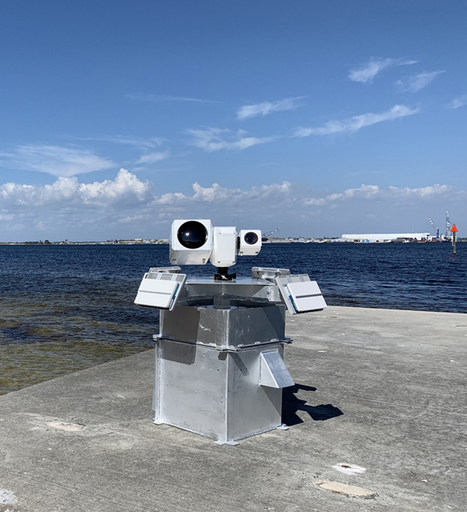
Les scientifiques du Naval Surface Warfare Center ont mis au point une technologie permettant la détection de drones en mer.
Parvenir à détecter des petites cibles.
La division de Panama City du Naval Surface Warfare Center est parvenue à développer un système de lutte anti-drones, permettant de détecter, suivre et classifier des drones. Une technologie qui a été mise au point afin de pouvoir être employée en environnement maritime mais qui pourrait également être déployée sur terre. Le Naval Surface Warfare Center a principalement joué un rôle d'intégrateur et de connexion des différentes briques technologies.
Multiplier les moyens de détection.
Pour cela, le système Threat Tracker s'articule autour d'un radar 3D acheté sur étagère et des capteurs optiques. Mais afin de pouvoir identifier le drone et ne pas seulement détecter la présence d'un objet dans l'espace aérien, des algorithmes d'intelligence artificielle ont été intégrés dans le système. Grâce à l'analyse des images et des données collectées par les capteurs, et en les comparant avec les informations enregistrées dans la base de données, le système peut ainsi déterminer si la cible détectée s'agit bel et bien d'un drone. Un système permettant donc de faire de la discrimination entre drone et oiseau et ainsi de réduire le taux de fausses alertes.
Commander et contrôler
L'information complète est ensuite renvoyée vers un C2, qui sera chargé de décider des mesures à prendre en fonction du type de menaces. Afin de valider les propriétés du système, le Threat Tracker a été déployé au sein d'un exercice de la Navy. De nouvelles expérimentations devraient être conduites au cours des prochains mois, période pendant laquelle le système sera amélioré à partir des RETEX des opérateurs.
|
|
Scooped by
Romain
March 2, 2020 7:39 AM
|
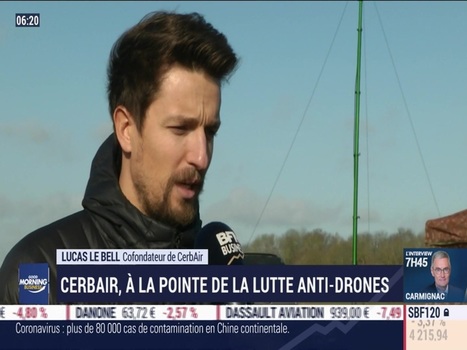
Ce lundi 2 mars, dans sa chronique La France qui bouge, Justine Vassogne parle de l'entreprise CerbAir, qui a développé un système de lutte anti-drones en brouillant la communication entre l'appareil et son pilote dans l'Essonne. Cette chronique est à voir ou écouter du lundi au jeudi dans Good Morning Business présentée par Christophe Jakubyszyn sur BFM Business.
Dans "Good morning business", Christophe Jakubyszyn, Faïza Garel-Younsi et les journalistes de BFM Business (Nicolas Doze, Hedwige Chevrillon, Jean-Marc Daniel, Anthony Morel...) décryptent et analysent l'actualité économique, financière et internationale. Entrepreneurs, grands patrons, économistes et autres acteurs du monde du business... Ne ratez pas les interviews de la seule matinale économique de France, en télé et en radio.
BFM Business est la 1ère chaîne française d'information économique et financière en continu, avec des interviews exclusives de patrons, d'entrepreneurs, de politiques, d'experts et d'économistes afin de couvrir l'ensemble de l'actualité française et internationale. BFM Business vous propose aussi des conseils pour vos finances par des personnalités de référence dans les domaines du patrimoine, de l'immobilier ou des marchés financiers. Retrouvez tous les jours : Christophe Jakubyszyn, Faïza Garel-Younsi, Nicolas Doze, Hedwige Chevrillon, Jean-Marc Daniel, Anthony Morel, Guillaume Sommerer, Cédric Decoeur, Karine Vergniol, Grégoire Favet, Sébastien Couasnon, Emmanuel Lechypre, Benaouda Abdeddaïm, Stéphanie Coleau... BFM Business est disponible sur votre box (SFR : canal 46 / Orange : canal 228 / Bouygues : canal 242 / Canal : canal 108) ainsi qu'en direct et replay sur l'application BFM Business et le site : www.bfmbusiness.fr.
|
|
Scooped by
Romain
February 26, 2020 8:09 AM
|
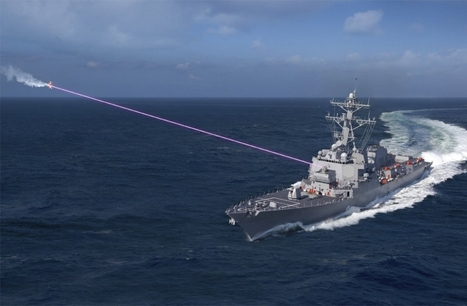
The U.S. Navy recently installed the first Optical Dazzling Interdictor, Navy (ODIN), a laser weapon system that allows a ship to counter unmanned aerial systems. The first system was installed on the Arleigh Burke-class guided missile destroyer USS Dewey (DDG 105), during her recently completed Dry-Docking Selected Restricted Availability.
ODIN’s development, testing and production was done by Navy subject matter experts at Naval Surface Warfare Center (NSWC) Dahlgren Division in support of Program Executive Office Integrated Warfare Systems. Their work on the laser weapon system known as LaWS, positioned them to be designated as the design and production agent for ODIN.
During his recent visit on USS Dewey, Mr. James F. Geurts, assistant secretary of the Navy for research development and acquisition (ASN (RDA)) was impressed with the rapid progress made by the team. Geurts stated,
“This is a great example of our organic talent at the warfare centers all working together with ship’s company to deliver a system which will provide game-changing capability. Bravo Zulu to the entire ODIN team on being mission-focused and delivering lethal capability to the warfighter.”
Going from an approved idea to installation in two and a half years, ODIN’s install on Dewey will be the first operational employment of the stand-alone system that functions as a dazzler. The system allows the Navy to rapidly deploy an important, new capability to the Navy’s surface force in combating Unmanned Aircraft Systems (UAS) threats.
UAS production and employment has increased significantly, and ODIN was developed to counter these threats.
“The Pacific Fleet Commander identified this urgent Counter-Intelligence, Surveillance, and Reconnaissance need and the Chief of Naval Operations directed us to fill it as quickly as possible,” said Cmdr. David Wolfe, Program Executive Office Integrated Warfare Systems Directed Energy office. “The NSWC Dahlgren Division team did an amazing job addressing challenges and keeping our accelerated schedule on track and moving forward to deliver this capability.”
Within the next couple of years, the ODIN program will have all units operational within the fleet providing a safer and more technically advanced capability to the US Navy. Lessons learned from ODIN’s installation on Dewey will inform installation on future vessels and further development and implementation of Surface Navy Laser Weapon Systems.
Source: Press Release
|
|
Scooped by
Romain
February 25, 2020 12:09 AM
|
Le département à la défense américain a notifié à Fortem Technologies un contrat visant à fournir aux armées des solutions de lutte anti-drones.
Fortem Technologies a annoncé avoir remporté un contrat avec le département à la défense (DoD) américain, passé à travers la Defense Innovation Unit. Avec cet accord, Fortem Technologies fournira des solutions de lutte anti-drones à la défense américaine. Plusieurs systèmes ont été commandés, bien que leur nombre et montant n'aient pas été révélés. Le DoD a ainsi décidé de se doter des solutions SkyDome, DroneHunter, DroneHangar et du radar TrueView. L'emploi qui sera fait de ces systèmes n'a pas été spécifié, de même que les unités qui seront équipées.
Modularité.
Fortem Technologies ajoute par ailleurs que l'ensemble des solutions commandées par le DoD sont conçues en architecture ouverte, leur permettant d'être intégrées dans un système plus large et de communiquer avec d'autres technologies de lutte anti-drones. C'est ainsi également qu'il est possible de combiner les solutions Fortem Technologies afin d'adapter le niveau de protection aux infrastructures. D'une part, TrueView est un radar capable de détecter de petites cibles. Les données collectées à partir de différents capteurs peuvent être fusionnées et interprétées à l'aide du système d'intelligence artificielle SkyDome. Il est ainsi possible de détecter les menaces pesant sur l'espace protégé et d'émettre des alarmes lorsque cela est nécessaire. Dès lors, en guise de contre-mesures, il est possible d'avoir recours au DroneHunter, un drone intercepteur permettant de neutraliser les drones malveillants. Celui-ci communique avec le radar TrueView afin de pouvoir se diriger vers le drone identifié. Il lancera alors un filet afin de stopper sa progression.
|
|
Scooped by
Romain
February 21, 2020 2:27 AM
|
The U.S. Navy announced Thursday that it has installed a laser weapon system that allows ships to counter aerial drones.
According to the Navy, the first Optical Dazzling Interdictor, Navy (ODIN) was installed on the Arleigh Burke-class guided missile destroyer USS Dewey during the vessel's recently completed dry-docking restricted availbility.
The system's development, testing and production was carried out by Navy experts at Naval Surface Warfare Center Dahlgren Division.
"This is a great example of our organic talent at the warfare centers all working together with ship's company to deliver a system which will provide game-changing capability. Bravo Zulu to the entire ODIN team on being mission-focused and delivering lethal capability to the warfighter," said assistant secretary for the Navy for research development and acquisition after a recent visit on the Dewey.
According to the Navy, the install marks the first operational deployment of the system, which functions as a dazzler -- a non-lethal weapon that uses intense directed radiation to temporarily disable its target -- and allows the Navy to rapidly combat unmanned aerial threats.
"The Pacific Fleet Commander identified this urgent Counter-Intelligence, Surveillance, and Reconnaissance need and the Chief of Naval Operations directed us to fill it as quickly as possible," said Cmdr. David Wolfe, Program Executive Office Integrated Warfare Systems Directed Energy office. "The NSWC Dahlgren Division team did an amazing job addressing challenges and keeping our accelerated schedule on track and moving forward to deliver this capability.
|


 Scoop.it!