Your Ultimate Companion in Nurturing the Next Generation of Learners! Save precious time and enhance your teaching experience. Teacher Tools GPT offers advanced AI-powered teaching tools.
Via Nik Peachey


 Your new post is loading...
 Your new post is loading...
Your new post is loading...
 Scoop.it!
Your Ultimate Companion in Nurturing the Next Generation of Learners! Save precious time and enhance your teaching experience. Teacher Tools GPT offers advanced AI-powered teaching tools. Via Nik Peachey 
No comment yet.
Sign up to comment
Scoop.it!

The potential for using artificial intelligence in education to assist teachers and enhance learning is profound. Here’s an overview, plus examples of how AI is being used in education today.
Scoop.it!
From
medium

When we think of Harvard we sometimes think of Elle woods’ experience as a Harvard Law Student in Legally Blonde or we even remember Rory Gilmore’s high ambition to attend Harvard University. We…
Scoop.it!

It’s easy to forget how little students and educators understand generative AI’s flaws. Once they actually try it out, they’ll see that it can’t replace them.
Scoop.it!

Mandatory face-recognition tools have repeatedly failed to identify people with darker skin tones. One Dutch student is fighting to end their use.
Scoop.it!

A study shows that a majority of teachers are using ChatGPT to complete everyday tasks. Take notes from these teachers to make your life easier, too. Via Bruno Renkin
Scoop.it!

Exploring the unknown with an open mind and curious spirit. GUEST COLUMN | by Jim Chilton When Open AI launched ChatGPT in November, it broke the internet. Tech enthusiasts across the globe marveled at the AI’s ability to hold complex conversations, write fiction, analyze data, compose music and so much more. As the internet’s perennial […]
Scoop.it!

Augmented reality apps can be useful as well as fun. Here are the top educational AR apps for Android and iOS.
Scoop.it!

Sure, my telepresence robot had some issues—but for students like me who can’t make it to campus because of disability or illness, these tools open new doors.
Scoop.it!

Motherboard identified multiple schools that have adopted e-HallPass to track students' movements.
Scoop.it!

The 2022-23 school year is shaping up to be a big year of challenges and transitions for educational technology. Schools are facing increasing threats of cyberattacks, they are struggling to figure out how to use all the new technology they acquired during the pandemic in meaningful ways, and they are trying to figure out how to help students become more thoughtful and responsible digital citizens. Via Nik Peachey
Scoop.it!
From
payhip
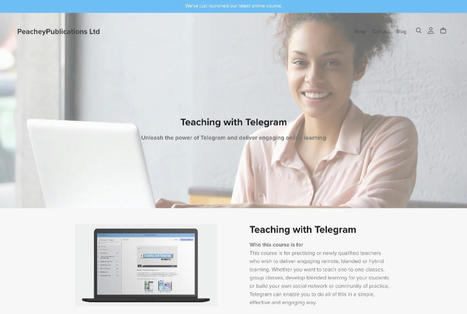
This course is for practising or newly qualified teachers who wish to deliver engaging remote, blended or hybrid learning. Whether you want to teach one-to-one classes, group classes, develop blended learning for your students or build your own social network or community

howhigh's curator insight,
August 4, 2022 7:22 PM
The tripComing downAfterglowMicrodosingVisit Howhighcenter.com for some Psychedelic Products.. https://howhighcenter.com/shop/chocolate-bars/magic-chocolate-caps/ https://howhighcenter.com/shop/chocolate-bars/wavy-bar-chocolate-mushroom/ https://howhighcenter.com/shop/chocolate-bars/magic-chocolate-caps/ https://howhighcenter.com/shop/chocolate-bars/trippy-flip-milk-chocolate-bar/ https://howhighcenter.com/shop/chocolate-bars/one-up-mushroom-bar-3-5g-shrooms-chocolate-bar/ https://howhighcenter.com/shop/chocolate-bars/rick-and-morty-trippy-flip/ https://howhighcenter.com/shop/shrooms/columbia-cap/ https://howhighcenter.com/shop/chocolate-bars/trippy-flip-milk-chocolate-bar/ https://howhighcenter.com/shop/chocolate-bars/charming-bars/ https://howhighcenter.com/shop/chocolate-bars/one-up-mushroom/ https://howhighcenter.com/shop/chocolate-bars/polkadot-magic-muchroom-belgian-bar/ https://howhighcenter.com/shop/shrooms/blue-meanies-mushrooms/ https://howhighcenter.com/shop/chocolate-bars/rick-and-morty-trippy-flip/ https://howhighcenter.com/shop/chocolate-bars/blue-meanies-mushroom/ https://howhighcenter.com/shop/chocolate-bars/charming-bars/ https://howhighcenter.com/shop/chocolate-bars/dark-chocolate-bars/ https://howhighcenter.com/shop/chocolate-bars/magic-chocolate-caps/ https://howhighcenter.com/shop/chocolate-bars/one-up-mushroom/ https://howhighcenter.com/shop/chocolate-bars/one-up-mushroom-bar-3-5g-shrooms-chocolate-bar/ https://howhighcenter.com/shop/chocolate-bars/open-minded-chocolate-bars/ https://howhighcenter.com/shop/chocolate-bars/polkadot-magic-muchroom-belgian-bar/ https://howhighcenter.com/shop/chocolate-bars/rick-and-morty-trippy-flip/ https://howhighcenter.com/shop/chocolate-bars/space-bars-dark-chocolate/ https://howhighcenter.com/shop/chocolate-bars/trippy-flip-milk-chocolate-bar/ https://howhighcenter.com/shop/chocolate-bars/trippy-treats-magic-shrooms-chocolate-bars/ https://howhighcenter.com/shop/chocolate-bars/wavy-bar-chocolate-mushroom/ https://howhighcenter.com/shop/shrooms/albino-penis-envy-mushrooms/ https://howhighcenter.com/shop/shrooms/amanita-muscaria/ https://howhighcenter.com/shop/shrooms/amazon-cubensis/ https://howhighcenter.com/shop/shrooms/blue-meanies-mushrooms/ https://howhighcenter.com/shop/shrooms/brazilian-cubensis/ https://howhighcenter.com/shop/shrooms/columbia-cap/ https://howhighcenter.com/shop/shrooms/dancing-tiger/ https://howhighcenter.com/shop/shrooms/golden-caps/ https://howhighcenter.com/shop/shrooms/golden-teachers/ https://howhighcenter.com/shop/shrooms/hawaiian-caps/ https://howhighcenter.com/shop/shrooms/p-e-shrooms/ https://howhighcenter.com/shop/shrooms/psilocybe-azurescens-flying-saucer-mushrooms/ https://howhighcenter.com/shop/lsd/25i-nbome-blotter/ https://howhighcenter.com/shop/lsd/liquid-lsd/ https://howhighcenter.com/shop/lsd/liquid-lsd-acid-100/ https://howhighcenter.com/shop/lsd/liquid-lsd-acid-200/ https://howhighcenter.com/shop/lsd/lsd-blotter-200-%c2%b5g/ https://howhighcenter.com/shop/lsd/lsd-blotter-250-%c2%b5g/ https://howhighcenter.com/shop/lsd/lsd-sheets/ https://howhighcenter.com/shop/dmt/5-meo-dmt/ https://howhighcenter.com/shop/dmt/crimson-palms-hotel/ https://howhighcenter.com/shop/dmt/dmt-vape/ https://howhighcenter.com/shop/dmt/dmt-vape-top-diy-refill-syringe/ https://howhighcenter.com/shop/dmt/mdma-powder/ https://howhighcenter.com/shop/dmt/raw-dmt-powder-1g/
Scoop.it!

Experts say Covid-19 lockdowns have taken away precious years of learning from children.
|
Scoop.it!

Large language models are being used to teach, support and assess students, enhancing education rather than impairing it.
Scoop.it!
What one educator wants students, teachers, and everyone else to know about the ethics of using of AI in education.
Scoop.it!

From
phys
We believe teachers can use ChatGPT to increase their students' motivation for learning and actually prevent cheating. Here are three strategies for doing that. Via John Evans
Scoop.it!

The recent revelations that ChatGPT can be used by students to write convincing essays and explanations is a frightening prospect for any teacher. With many exams and assignments now carried out online, there is ample opportunity for using AI writers. Via Edumorfosis

Edumorfosis's curator insight,
March 9, 2023 6:37 AM
Algunos autores no entienden que ChatGPT es una herramienta de Aprendizaje Personalizado, no de enseñanza de contenidos. 
Gust MEES's curator insight,
March 12, 2023 4:41 AM
The recent revelations that ChatGPT can be used by students to write convincing essays and explanations is a frightening prospect for any teacher. With many exams and assignments now carried out online, there is ample opportunity for using AI writers. Learn more / En savoir plus / Mehr erfahren:
https://www.scoop.it/topic/21st-century-innovative-technologies-and-developments/?&tag=ChatGPT
https://www.scoop.it/t/21st-century-innovative-technologies-and-developments/?&tag=AI
https://www.scoop.it/topic/21st-century-innovative-technologies-and-developments/?&tag=Ethics
Scoop.it!

WIRED’s Gadget Lab podcast breaks down which gadgets, apps, and services you need to know about, and which ones you can move to the virtual trash bin. Learn how today’s tech shapes our lives—plus get your hosts’ personal recommendations at the end of each episode.
Scoop.it!

AI can be a tool to create meaningful connections and learning experiences for children—and may help foster more equitable outcomes.
Scoop.it!

Tech promises to help defeat bullying, but larger and glaringly obvious problems remain.
Scoop.it!

An 8-year-old’s YouTube snafu—and one unlikely parent activist—sparked a nationwide debate on the tech giant’s ubiquity and handling of children’s data.
Scoop.it!

Tech dependence is following many students back to school—but waging a war against devices helps no one.
Scoop.it!

As the post-Roe era underscores the risks of digital surveillance, a new survey shows that teens face increased monitoring from teachers—and police.
Scoop.it!

Childcare centres have embraced apps to monitor kids but not all parents are convinced of the benefits.
|