"The October 2013 Southern Education Foundation study indicates clearly that poverty, which has long been the biggest obstacle to educational achievement, is more important than ever. It is our true 21st century problem. Fifty years ago, we educated mostly working-class kids and up, and we did not expect those at the bottom of the socioeconomic ladder to graduate. Now we educate all students, including the very poorest and otherwise disadvantaged. And we expect them all to graduate. Compounding this shift, a large and growing proportion of U.S. students students live in poverty and even concentrated poverty, have a disability, and/or are learning English as a second language. THAT is the paradigm shift, and we need a totally new set of policies to address that 21st century reality.
"In 2000, students who were eligible for free or reduced-price meals made up at least half of the student body in four states. Just eleven years later, over half of public school students are poor in 17 states, including every Southern state but Virginia and Maryland, and most Western states. Student poverty is the dominant reality in schools in three of the biggest states – California, Texas, and Florida—and nearly the majority in New York, Michigan, and Illinois. The 21st century has sharply increased the proportion of parents who are unemployed, whose jobs do not pay enough to provide basic food, shelter, clothing, and health care for their children, and/or whose immigrant status limit their capacity to navigate the education system and restrict them to a shadow economy."
After reading this article,I understand that poverty is a big obstacle to educational achievement.I was taken by surprise when I heard that student poverty is dominant in three of the major states which is California,Texas and Florida.I also feel that the number of students that are poor is surprising.I feel that more aid should go to poor students in the areas of healthcare and financial aid.Right here in Singapore,my homeland,I am glad that my country's government is providing this scheme called the "financial assistance scheme" which aims to help those students who have a low household income.The government actually funds the school fees of those in the scheme and the money saved by the student and his family can be used to fill their stomachs.In terms of healthcare,the governments, no matter which country,even Singapore should provide more funded health checks for poor students in poverty.The reason is that the health checks will keep them healthy and bad health will not affect their studies.Thus,they would have a higher chance to shine.
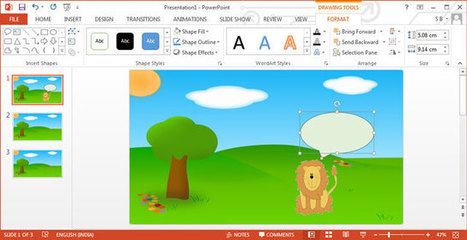
Death by PowerPoint is a popular term. It’s unfair that PowerPoint gets the stick as there are more than a few presentation tools around. As anyone who has taken the pains to make a memorable PowerPoint presentation will tell you – the secret of the steak is in the sizzle. The sizzle also comes and stops at creativity. If you have creativity by your side, you can use PowerPoint as your canvas.
I think "death by PowerPoint" is used so often because so many users have not "taken the pains to make a memorable..." presentation and the concept of creativity might not have even been considered. Not totally sure what the answer is, but I do believe that if more individuals could have their eyes opened to the potential that PowerPoint has, we might be able to get passed the "death" issue. That means we have to get the great ideas to the teachers and their students... not just telling them, but perhaps showing them...
"This long post describes some new realizations I've reached lately about the transition from oral to written. If you're a storyteller, I think it's worth your while reading. Here's the story..."
"Keeping Pace 2013 is now available! The 10th edition includes updated enrollment numbers, graphics, and policy information. Download the full report, scroll down for individualgraphics, or browse individual state profiles."
-----------------
From the Preview by Mickey Ravenaugh and John Watson
The complexity of change is accelerating
"Ten years ago, the world we surveyed in Keeping Pace was contained within a few well-defined dimensions: there were state-led supplemental programs and virtual charter schools, and hardly ever the twain did meet. When we wrote nearly a decade ago that “Pennsylvania has experienced significant public conflict between cyber charter schools and school districts” while “Illinois has a centralized approach in which most online education activity is by the statewide virtual high school,” we covered most of the landscape as a whole. We envisioned more of the same expanding across the nation over time, and advocated for policy frameworks to ensure quality through growth along both dimensions.
"Nothing is quite so simple now, from the standpoint of either policy or practice. While there are some constants—for example, the strains in Pennsylvania continue, resulting in both annual legislative battles and a proliferation of district cyber programs—nearly every aspect of the online and blended landscape has become more complex, more interconnected, and more volatile. Providers have multiplied and diversified: yesterday’s virtual charter school operator is also today’s course vendor and blended learning consultant, while a few of the leading state virtual schools now eagerly serve full-time students in grades K-12. The image of the massively open and free holds a powerful lure (see our recent post about MOOCs). As customers, schools and districts want it all: a desire for a few AP or credit recovery courses quickly blossoms into an all-out smorgasbord of virtual, blended, part-time, full-time, and mobile offerings. Multiply this by tens of thousands of districts and all 50 states, and the difference that a decade makes is clear.
"It almost goes without saying that policy is still not keeping pace with practice in our field – how could it? At least in part because of the speed and complexity of online/blended learning development, state legislatures have moved in uneven bursts to create course choice programs, or build virtual options into their charter laws, and incent districts to create opportunities for students. Tackling the really big issues, such as equitable funding and true measures of quality, would mean looking at these same issues for all forms of education, and only a few states have been brave or unified enough to try."
You can use infographics and cartoons in the classroom with kids. Cool Cat Teacher's daily news teaches us learn how to teach about them and the tools to create them with kids in your classroom.
via Cool Cat Teacher Blog
Jim Lerman's insight
Lots of great resources for working with students on infographics, cartoons, and a little bit on global projects. Davis is one of the great edu bloggers!
The image was selected by the renowned Edward Tufte as one of the best infographics of all time: "this map by Charles Joseph Minard portrays the losses suffered by Napoleon's army in the Russian campaign of 1812. Beginning at the Polish-Russian border, the thick band shows the size of the army at each position. The path of Napoleon's retreat from Moscow in the bitterly cold winter is depicted by the dark lower band, which is tied to temperature and time scales."
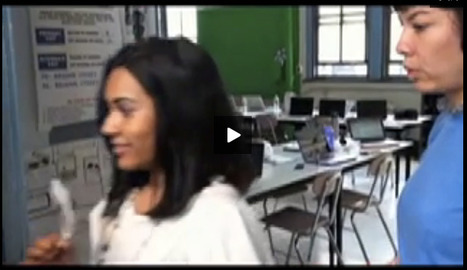
Video (5 min) featuring Christina Jenkins of the NYC iSchool and a group of HS students engaging in a week-long disaster camp -- a design-based experience to develop social-media based disaster response solutions.
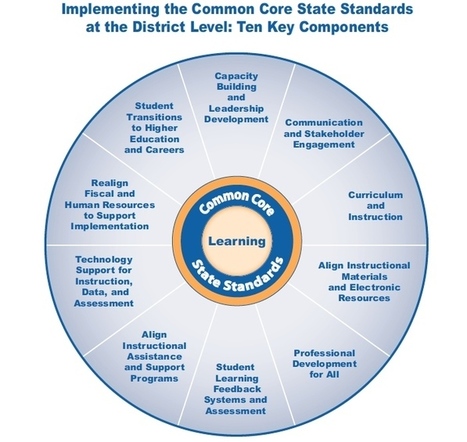
"California school districts having trouble getting their arms around the elephant known as Common Core now have a 60-page guide to help them focus.
"The first edition of the Leadership Planning Guide to implement the Common Core standards and assessments was published last week by the California County Superintendents Educational Services Association with help from other organizations representing the teachers, school boards, school administrators, charter schools and parents.
“The Planning Guide emphasizes a team approach to Common Core implementation and features quick links to a wealth of resources from California and across the nation,” said David Gordon, superintendent of schools for the Sacramento County Office of Education, which took a leading role in the publication. “It’s a quick read and should be helpful to districts well along the road to implementation as well as those just starting out.”
"Based at Harvard’s Shorenstein Center, the Journalist’s Resource project examines news topics through a research lens; we focus on surfacing scholarly materials that may be relevant to other media practitioners, bloggers, educators, students and general readers.
"We invite all those interested in policy and public affairs to use the site’s materials. No registration is required; the materials are free and are under a Creative Commons license. Our open-access project is designed to provide state-of-knowledge information on topics of public interest. In an era of information overload, we hope you’ll see us as a useful tool that condenses quality information from authoritative sources and presents it succinctly."
- See more at: http://journalistsresource.org/about#sthash.dkj0ovIc.dpuf
----------------
"Our open-access site is designed as an efficient tool for quick searches of studies and reports on important topics. We’re in the business of condensing state-of-knowledge research; we hope you’ll find the site “deadline-friendly” — a portal to type in key words and rapidly determine if there are facts, insights or context that can help improve your story. The American Library Association named it a “Best Free Reference Web Site 2013.”
"On each page, you’ll see recent related posts in the same general category; and you can also click through tag words at the top of each study and find related research strings on topics such as inequality, Twitter dynamics, human rights and higher education.
"In our high-speed, information-saturated world, having the time to wade through academic studies might seem an unaffordable luxury. But with Journalist’s Resource, we’re trying to make the vast world of deeper knowledge – facts and context that can supercharge stories – easy to navigate. To understand the site’s goals and philosophy, we recommend that you read our primer: “Introduction to Studies and Academic Research: How It Works and Why Journalists Should Care.”
"The site’s mission is to bridge the gap between the worlds of journalism and scholarly research by providing timely, authoritative studies as well as skills-based material. Establishing and promoting the concept of “knowledge-based reporting” animates the project."
- See more at: http://journalistsresource.org/journalists#sthash.pC5jNfKv.dpuf
"I was excited to see my Google Docs Glog featured in a post by Jeff Dunn on Edudemic last month. This morning it has been getting some attention on Facebook and Twitter, so I thought it would be a good idea to direct the readers of this blog to the post, 12 Effective Ways to Use Google Drive in Education.
"I've received some requests for the link to the live glog through my PLN, so I've embedded it here. If you're looking for more Google Docs resources, be sure to check out my Google Docs page on this blog or attend one of my upcoming webinars.
I think this supports a conclusion that many of us, using video clips in learning contexts may have been aware of, or suspected. I first recognised this when I was working on theTeaching and Learning with Digital Video Assets project (2004) with the University of Hull, and later on the EU Edutube Plus project (20011). I think where more analysis is needed is whether subjec content or the aesthetic/ filmic style affects the optimum length. The avaialability of tools
to create more interactive video content may also add a new variable to the mix. If you are using video clips in school I would welcome your comments below.
Ideally, teaching kids how to think critically becomes an integral part of your approach, no matter what subject you teach. But if you're just getting started, here are some concrete ways you can be
"There is a new digital divide on the horizon. It is not based around who has devices and who does not, but instead the new digital divide will be based around students who know how to effectively find and curate information and those who do not."
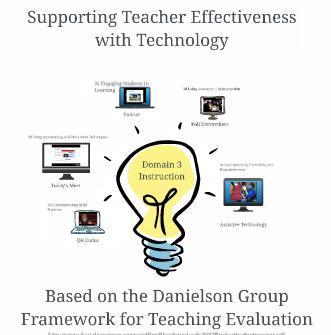
"Technology provides teachers with a great way to provide evidence with artifacts of their effective practice. Across the country this has been a priority for schools that are incorporating a teacher evaluation based on the Danielson Framework. The model contains various components organized into the following four domains.
This is part of a four-part series where I'll share some simple ideas for integrating technology into each component followed by a presentation you can share with colleagues. Below are ideas for technology integration within Domain 3.
"I developed this quiz with members of my personal learning network (found at end of post) to get students thinking about their digital footprint. The quiz was created at the request of high school students I spoke with who thought the creation of a such a quiz could lead to a smart conversation about ways students can update their digital footprint so that it is one that leads to college and career success.
Check it out with your students and let me know how it goes in the comments below"
"The program comes after concerns were raised by the government and experts over schools’ ability to offer critical computing skills. Many companies and experts have come out to support the initiative, as there are fewer people working in the technology sector in an economy that is increasingly becoming digital.
"This initiative to promote computing skills comes 30 years after a BBC push to make computing mainstream by putting BBC Micro computers in the majority of schools. Tony Hall, BBC’s general director, in a speech to his staff, said that the initiative would be launched in 2015."
- See more at: http://www.educationnews.org/technology/bbc-announces-plan-to-get-uk-schools-coding/#sthash.CpRWqh2R.dpuf
This series guides you step by step through the process of class and student blogging.
Each step provides class blog examples so you can check out how they are used by educators. Many of the examples are from primary grades but the same principles apply regardless of student age (including adult learners).
THIS SERIES CONSISTS OF:Step 1: Set up Class BlogStep 2: Setting up pagesStep 3: Writing your first postsStep 4: Teach quality commenting skillsStep 5: Adding WidgetsStep 6: Helping parents and students connectStep 7: Images, copyright, and creative commonsStep 8: Cool tools to embedStep 9: All about video (coming soon)Step 10: Connecting with other classesStep:11 Using RSS (coming soon)Step 12: Using plugins (coming soon)Step 13: Setting up your student blogs
Syntheses of important research studies in the general field of education. Intended primarily for journalists, these digests (with links to the original reports) offer busy educators and researchers (grad school anyone?) access to cutting-edge ideas on critical topics of the day. The ever-growing list currently contains 123 entries. Quite a useful resource.
Article with links to key academic and research databases and a discussion of free/paid access issues.
-------------------
"Members of the media do “research” by performing all sorts of tasks — pulling financial records, tracking down contact information for sources, scraping data from government websites. But another key skill is the ability to locate and review academic studies to strengthen and deepen stories. The Journalist’s Resource studies database distills top research, but there’s a much bigger universe of research out there.
"One common search strategy for finding academic research is trying a series of keywords in popular search engines such as Google, Yahoo and Bing. That general method may fail if you’re trying to find cutting-edge research findings on policy or news-related issues. A search engine’s algorithm may not immediately bring up new or seldom-searched studies, or the full, searchable text may remain locked away.
"While no particular strategy is perfect, establishing a checklist of key databases is essential. Your selection of databases may ultimately need to be tailored and subject-specific, but it helps to have familiarity with a basic, multidisciplinary set of research tools — a “go-to” set of databases. Using your keywords systematically through a series of databases can diversify your search and allow you to locate most of the best available research."
- See more at: http://journalistsresource.org/skills/research/database-checklist-key-academic-research-resources-free-restricted#sthash.rmV4fFad.dpuf
To get content containing either thought or leadership enter:
To get content containing both thought and leadership enter:
To get content containing the expression thought leadership enter:
You can enter several keywords and you can refine them whenever you want. Our suggestion engine uses more signals but entering a few keywords here will rapidly give you great content to curate.


 Your new post is loading...
















Worth reading and so very true in so many regions of the planet!
After reading this article,I understand that poverty is a big obstacle to educational achievement.I was taken by surprise when I heard that student poverty is dominant in three of the major states which is California,Texas and Florida.I also feel that the number of students that are poor is surprising.I feel that more aid should go to poor students in the areas of healthcare and financial aid.Right here in Singapore,my homeland,I am glad that my country's government is providing this scheme called the "financial assistance scheme" which aims to help those students who have a low household income.The government actually funds the school fees of those in the scheme and the money saved by the student and his family can be used to fill their stomachs.In terms of healthcare,the governments, no matter which country,even Singapore should provide more funded health checks for poor students in poverty.The reason is that the health checks will keep them healthy and bad health will not affect their studies.Thus,they would have a higher chance to shine.