


I was recently in a third grade classroom and was struck by the presence of rules that were posted for how to have a conversation. The poster said, "Each person must contribute to the discussion but

 Your new post is loading...
 Scoop.it! I was recently in a third grade classroom and was struck by the presence of rules that were posted for how to have a conversation. The poster said, "Each person must contribute to the discussion but 
No comment yet.
Sign up to comment
Scoop.it!

by Richard Byrne "My friend Joe Cummings recently sent me a nice Facebook message thanking me for the suggestions about classroom blogging that I sent him last summer. This semester Joe and his middle school social studies students are having a great time using their blog as a forum for discussion. Joe’s message to me prompted me to write this post which hopefully helps some of you have as good a classroom blogging experience as Joe and his students are having this year."
Scoop.it!

by Richard Byrne "This afternoon on a webinar sponsored by Pearson I spoke about using backchannels in the classroom.Padlet was one of the tools that I featured in the webinar. Padlet is a great little tool for quickly gathering comments from students in response to prompts that you give to them. As I thought about (American) Thanksgiving this evening I developed a few ideas for incorporating Padlet into a Thanksgiving activity for elementary school students."
Scoop.it!

"Julie Greller's blog A Media Specialist's Guide to the Internet features some great content for teachers. Posts are sorted by subject and grade level, and there's also a link to some free ebooks. ... Via Ana Cristina Pratas

Melissa Marshall's curator insight,
November 28, 2013 12:47 AM
Here is a great little resource of tools students can use to tell stories or to explain ideas. [original link is on the main Prendi eLearning page] 
Asmaa Lahlou's curator insight,
April 24, 2014 10:15 PM
Prezi, Animoto, Slideshare and many more tools for Digital Marketing and Storytellling
Scoop.it!

Scoop.it!

This young man's name is Ethan Young and he is a senior. He presented his case at the Knox County School Board regular meeting on November 6, 2013." Jim Lerman's insight: The growing outcry against the CCSS comes from both the left and the right. This impressive young man's remarks are posted on a site called "Young Conservatives". If you close your eyes and just listen to what he's saying (ignoring his age, what he's wearing, and the name of the website this video is posted on), it is rather difficult (though not impossible) to identify which side of the aisle he might be speaking from. What does it mean that the CCSS can evoke such passionate opposition from those both to the right and to the left of the main stream? Another young (17 at the time) speaker, Nikhil Goyal, sounds some similar notes at a pro-public education rally here. Google him to find more of his videos on YouTube. He also authored a well-received book about American Public Education at 16.
Scoop.it!

"The Reading Like a Historian curriculum engages students in historical inquiry. Each lesson revolves around a central historical question and features sets of primary documents designed for groups of students with diverse reading skills and abilities. "This curriculum teaches students how to investigate historical questions by employing reading strategies such as sourcing, contextualizing, corroborating, and close reading. Instead of memorizing historical facts, students evaluate the trustworthiness of multiple perspectives on historical issues. They learn to make historical claims backed by documentary evidence." via EdSurge
Scoop.it!

"The Common Core Learning Standards describe the importance of teaching students how to comprehend informational text. They are asked to read closely, make inferences, cite evidence, analyze arguments and interpret words and phrases as they are used in a text. Primary source documents are artifacts created by individuals during a particular period in history. This could be a letter, speech, photograph or journal entry. If you're looking to integrate social studies into your literacy block, try out one of these resources for primary source documents."
Scoop.it!

"December 9-15, Computer Science Education will host the Hour Of Code–a one hour introduction to students on coding, programming, and why they should love it. It’s a one-hour introduction to computer science, designed to demystify “code” and show that anyone can learn the basics to be a maker, a creator, an innovator. They’ll include a variety of self-guided tutorials that anybody can do, on a browser, tablet, or smartphone. No experience needed.Watch this “how to” video for more information. "In honor of the upcoming Hour of Code, here are a list of websites to practice everything from basics to advanced:"
Scoop.it!

description by Scout Project "The tagline for this helpful extension is that it is "teaching computers how to read and understand language." As users browse the Internet, this extension learns more about what they like to read and recommends more articles that fit the profile. This is based on an Interest Graph, or "a list of topics and concepts derived from what you've been looking at on the internet." When Gravity Highlighter finds a story you might like, it adds it to your newsfeed, which can be further refined by giving suggestions a thumbs-up or thumbs-down. This version is compatible with all operating systems running Chrome."
Scoop.it!

by Tara Fickle "That’s why I don’t think of Inside as just an educational game – what Tom Cole aptly dubbed “a game with an educational skin” – but more like an interactive museum. It’s based almost exclusively in historical fact; I’ve changed most of the names, but the vast majority of the situations that players encounter – from cosmetic surgery to the Rescue of the Lost Battalion to the Tule Lake Uprising - are documented in historical accounts and court cases. Much of the game’s content is also adapted from novels written by internees like John Okadaand Hiroshi Nakamura; in those cases, it’s not about whether the events really happened or not, but about understanding what and why those authors would choose to fictionalize – and about exposing their novel literary styles to the larger audience that they so greatly deserve. "But ultimately, I have a more wide-ranging goal: that Quest (the software which I used to design Inside, generously made available by the folks at textadventures.co.uk) will be integrated into all sorts of classrooms, especially in Literature and History courses. Because interactive text games have an incredible amount of potential as educational resources, a potential which has gone largely untapped. As an instructor of English at UCLA, one of the biggest difficulties I and my fellow teachers face is getting undergraduates to think about literature as something to be engaged with, not just passively read. When you are trying to get a group of 18 year olds to read Shakespeare or Chaucer, and especially when you’re asking them to write an essay about these canonical authors, you often immediately sense the trepidation and anxiety: “What do I, a lowly undergrad, have to say about a famous text that’s been written about five million times before? Everything’s already been said!”
Scoop.it!

"How do we define a Makerspace? Who participates? What is the value? Why is this important for teaching and learning? How do we assess Makerspace activities?" This is a video recording of the webinar that took place on Oct. 16, 2013. "In the 21st century learning landscape, creativity, design, and engineering are making their way to the forefront of educational considerations as tools such as 3D printers, robotics, and 3D modeling web-based applications become accessible to more people. The question of how to renovate or repurpose classrooms to address the needs of the future is being answered through the concept of Makerspaces, which offer the tools and learning experiences needed to help people carry out their ideas." Jim Lerman's insight: I viewed this webinar when it took place and found it very informative.
Scoop.it!

by Brian Sweeting "ExitTicket approaches personalized learning in a large classroom environment with a well-designed platform that moves easily between the individual and the group. It enables educators to re-think how they approach assessments, as this could be used for restricted practice activities or as a replacement for traditional exams. Either way, it seems to be fulfilling a sector-wide desire to collect more student data that can inform teachers on the effectiveness of their lessons and students' abilities in real time. While the software does not automatically adapt to a student's level as other personalized learning platforms do (see: AdaptCourseware), it does allow the teacher to adapt and respond to students' needs."
|
Scoop.it!

by Richard Byrne "TechSmith Snagit is a new screen capture tool from the producers of the popular screencasting tools Jing and Camtasia. TechSmith Snagit is a Chrome app and extensions that allows you to capture all or part of screen then draw and write on your screen capture. The Snagit Chrome extension is what allows you to capture your screen. The Snagit Chrome app allows you to save your screen captures in your Google Drive account. You do have to install both the extension and the app for Snagit to work correctly."
Scoop.it!

by Richard Byrne "Google Earth is a great tool for students to use to explore the world. Building tours in Google Earth and Google Maps is one of my favorite activities for students to do to tell a story. It can take a while to understand all of the nuances of creating tours in Google Earth. Fortunately, Google recently introduced Tour Builder which makes it easier than ever to create tours in Google Earth."
Scoop.it!

by Richard Byrne "Canva is a new service that makes it easy to create beautiful slides, flyers, posters, infographics, and photo collages. Creating these graphics on Canva is a drag-and-drop process. Start by selecting a template then dragging and dropping into place background designs, pictures, clip art, and text boxes. Canva offers a huge library of clip art and photographs to use in your designs. You can also upload your own images to use in your graphics. Your completed Canva projects can be downloaded as PDF and PNG files. You can also simply link to your online graphic."
Scoop.it!

"Interactive Reading Notebooks seem to be all of the rage. Its no wonder because Common Core State Standards require students to read, examine, and discuss a variety of texts. The reading notebook is a tool to aide comprehension, write about thinking, and provide evidence from text. So, we as teachers, should provide students with many opportunities to examine and discuss them. However, I worry sometimes there is too much emphasis on always having students WRITE about their thinking. We never seem to give students a chance to really "think and talk" about our reading. When students have to write they spend a lot of cognitive energy on composing the message. Because of this, many students tend to choose to write what is easy rather than going deeper. Therefore, why not allow students to record their thinking using video, audio recording, and finding evidence by highlighting text.
Scoop.it!

Edutopia's Made With Play series takes a look at game-like learning principles in action and commercial games in real classrooms -- and offers tips and tools for bringing them into your own practice.
Scoop.it!

by Frederic Lardinois "If you’re studying math or science, you are probably pretty familiar with Wolfram Alpha as a tool for figuring out complicated equations. That makes it a pretty good tool for cheating, but not necessarily for learning. Today, the Wolfram Alpha team is launching a new service for learners, the Wolfram Problem Generator, that turns the “computational knowledge engine” on its head. "The Problem Generator – which is available to all Wolfram Alpha Pro subscribers now – creates random practice questions for students, and Wolfram Alpha then helps them find the answers step-by-step. "Right now, the Generator covers six subjects: arithmetic, number theory, algebra, calculus, linear algebra and statistics. The difficulty of the questions can be tuned down for students in elementary school and tuned up for those in college calculus classes. As the company notes in today’s announcements, the material for students in elementary and secondary schools closely follows the Common Core Standards initiative."
Scoop.it!

"What if instruction could actually engage students and get them excited about learning? What if school could foster student creativity and support their expanding imaginations? What if educators around the world had the tools to provide students with the 21st century skills to imagine and create their own futures in our ever-changing global society? "Education innovation is in full creative flower at Quest to Learn, a New York City public middle and high school. As the Guidance Counselor and Wellness Coordinator, I support the groundbreaking and effective teaching and learning that takes place here, nurturing social and emotional learning (SEL) as well as 21st century skills like inventiveness, risk taking and collaboration. "Developed in partnership with non-profit design studio Institute of Play, Quest to Learn has used research in game-based learning to create a rigorous and engaging collaborative learning space where students feel safe taking risks and using their successes and failures to create and apply new knowledge. Q2L students succeed academically not just because they are learning from teachers, but because they are learning from each other and, more importantly, taking charge of their own learning. "Standards and skills give students the tools to be active participants in their own learning. The application of acquired knowledge in a creative space keeps them engaged and empowers them to take ownership of their learning. At Q2L, one of our best creative learning spaces is known as Boss Level."
Scoop.it!

by Lisa Johnson "Thus, my “Designing Thinking with Thinglink” mini workshop session is truly designed to do just that…influence others to knead differentiated instruction, visible thinking, whimsy, engagement, formative assessment, enrichment, and app synergy into their instructional resources and classrooms. And what better way to do that…then model it. The Thinglink resource below was created with a Canva image and then thinglinked with additional resources. (The numbered nubbins are an ability available with Thinglink Premium edition)."
Scoop.it!

description from Scout Project "Ohm Studio is a great way to bring musicians together to work on any number of creative endeavors of the musical variety. The program has a state of the art user interface that allows musicians to work online with fine sound effects, a powerful audio engine, and a range of digital instruments. The site contains a helpful How To area that includes answers to questions such as How to add a track and How to add an effect. This version is compatible with all operating systems."
Scoop.it!
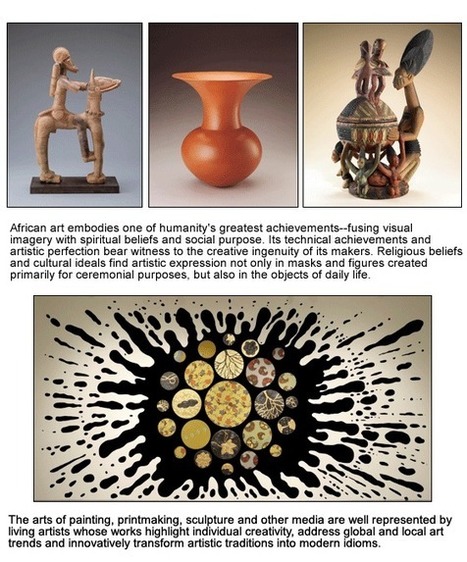
description by Scout Report "The National Museum of African Art is known for its fabulously diverse collections, which cover all aspects of artistic life across the African continent. Visitors to the site can look through areas including Highlights, Artists, and Cultural Groups. This last area is a wonderful place to start, as visitors can look through dozens of cultural groupings to find items that range from cutlery to sculpture. Each item has a detailed thumbnail image, along with information about the time period in which it was created. The Highlights area contains over a dozen themed areas, including African Mosaic, African Textiles, and Contemporary African Art. Finally, the Artists area is perfect for people who already have knowledge of a celebrated African artist and wish to learn more about his or her work, medium, and contributions to these artistic traditions."
Scoop.it!

by Anya Kamenetz "I am trying to cut pollution while maintaining my city's energy supply. I've bulldozed the coal plant too soon, without realizing that the brand-new solar plant has a variable output. Industry, and therefore revenue, is being squeezed by the power cuts--meaning I don't have the money to upgrade or add an additional wind plant. As mayor of this 3-D cityscape, I'm feeling about as effective as Toronto's Rob Ford. "SimCityEDU: Pollution Challenge!, the game I'm playing, debuted last week. For those who played SimCity in the 1990s or 2000s, this PC-based game feels familiar; it's built on the same bits but radically simplified into chunks that take no more than 10 minutes to play, with specific tasks for the player to complete. But what makes SimCityEDU different from other video games, even other video games that have been modded for educational use, is that while middle school players are figuring out how to play this game, the game will be figuring them out right back. As they are zoning neighborhoods or planning school bus routes, the software is gathering detailed evidence about their thinking processes and skills, and whether they're engaged or bored." Jim Lerman's insight: This sounds great! Anyone tried it yet?
Scoop.it!

description by VentureBeat "In contrast to other game tools, GameSalad does not require a developer to know any programming. It has a drag-and-drop user interface that a developer can use to string together the elements of a game, from art work to sound. The tools are part of a larger trend of the democratization of technology, which allows everyone from YouTube film makers to artists to become self-made creators."
|





