Your new post is loading...

|
Scooped by
Institut de Chimie Physique
May 21, 7:37 AM
|
ICP science - Communiqué CNRS : Coup de projecteur sur ces ions invisibles qui empoisonnent la vie des électrocatalyseurs
Un communiqué de presse des actualités scientifiques de l’INC Chimie du CNRS met en avant les travaux de Ba Lich Pham, Alireza Ranjbari, Abderrahmane Tadjeddine, Christophe Humbert, et leurs collaborateurs de l’IUT d’Orsay et du LOMA (Université de Bordeaux), publiés dans le Journal of the American Chemical Society. Ces derniers ont levé le voile sur les mécanismes d’empoisonnement des électrodes de platine, constitutives des piles à combustible et électrolyseurs en milieu aqueux, par les espèces anioniques de l’acide phosphorique en fonction du pH de la solution et du potentiel électrique appliqué. Cette première expérimentale a été réalisée en couplant in situ la spectroscopie optique non linéaire par génération de seconde harmonique (SHG) à l’électrochimie interfaciale. Lien vers le communiqué CNRS Lien vers la publication dans Journal of American Chemical Society ""Adsorption Mechanism of Phosphate Anions at Pt–H2O Electrochemical Interfaces via In Situ SHG Spectroscopy"
|
|
Scooped by
Institut de Chimie Physique
May 21, 8:58 AM
|
ICP science - Thermal and (photo-)catalytic properties of poly(N-isopropylacrylamide)-stabilised gold nanoparticles induced by radiolysis
Tawakalit D. Abdulyekeen, Cécile Sicard-Roselli, Hynd Remita, Isabelle Lampre et leur collègue Vincent Huc (ICMMO) ont recemment publié un article dans New Journal of Chemistry "Thermal and (photo-)catalytic properties of poly(N-isopropylacrylamide)-stabilised gold nanoparticles induced by radiolysis" Lien vers la publication. Gold nanoparticles (AuNPs) are widely studied due to their unique physicochemical properties, which are highly dependent on their size, shape, and composition. Efficient and environmentally friendly synthesis methods and effective stabilisation agents are essential for fabricating AuNPs with controlled sizes and shapes. This study explores the radiolytic synthesis method, a green synthesis approach using ionising radiation (gamma irradiation), and investigates the use of a thermosensitive polymer, poly(N-isopropylacrylamide) (PNIPAM), and its monomer, N-isopropylacrylamide (NIPAM), for stabilising gold nanoparticles in aqueous solutions. The resulting PNIPAM-AuNPs and NIPAM-AuNPs were spherical, homogenously dispersed, with average sizes of 5.4 nm and 3.5 nm, respectively, and exhibited high stability at room temperature over a long time. Thermal analysis revealed enhanced thermal responsiveness for PNIPAM-AuNPs, an effect not observed with the NIPAM-AuNPs. The AuNPs demonstrated excellent catalytic activity in the reduction of 4-nitrophenol (4-NP) in the presence of sodium borohydride and showed efficient plasmonic photocatalytic activity in the visible-light-driven reduction of 4-nitrothiophenol (4-NTP). These findings support the potential of radiolytically synthesised polymer-stabilised AuNPs for catalysis and environmental remediation applications.
|
|
Scooped by
Institut de Chimie Physique
May 21, 8:49 AM
|
ICP science - C5H6 formation in Dense Molecular Clouds
Roland Thissen, Nandana Pattathadathil et Christian Alcaraz et leurs collaborateurs ont récemment publié un article dans Astronomy & Astrophysics "C5H6 formation in Dense Molecular Clouds". Lien vers la publication. Les mesures ont été réalisées avec le dispositif CERISES au Synchrotron SOLEIL, ces résultats ont fait l'objet d'une communication sur le site du Synchrotron. Lien vers le communiqué. "How a reactive ion turns small gas molecules into complex organics" Context. Cyclopentadiene (C5H6) has been recognized as a crucial precursor in the formation of nonplanar polycyclic aromatic hydrocarbons (PAHs) and carbon-rich nanostructures in space. Despite its significance and detection in the Taurus Molecular Cloud (TMC-1), the elementary gas-phase reaction pathways leading to cyclopentadiene from acyclic hydrocarbon precursors remain poorly constrained. This gap is emphasized by persistent discrepancies between astrochemical model predictions and the abundances inferred from its radioastronomical detection. Aims. The aim of this work is to reconcile the chemical network that predicts the formation of C5H6 – a key intermediate in the growth of aromatic species – from gas-phase chemistry with its observed abundance in TMC-1.
|
|
Scooped by
Institut de Chimie Physique
May 21, 8:43 AM
|
ICP science - Supramolecular Silver Nanoparticle Hydrogels With Controlled Nanoparticle Size and Order: Synthesis Conditions and Possible Mechanism
Hynd Remita, Isabelle Lampre et leur collaborateurs ont publié récemment un article dans CHEMNANOMAT "Supramolecular Silver Nanoparticle Hydrogels With Controlled Nanoparticle Size and Order: Synthesis Conditions and Possible Mechanism". Lien vers la publication Nanoparticle (NP)-gel hybrid systems are multifunctional materials combining the properties of metal NPs with the structural versatility of hydrogels. They find application in advanced technologies, including controlled drug delivery, sensing, flexible electronics, and tissue engineering. Incorporation of metal NPs into a gel matrix offers structural confinement and spatial distribution of the NPs, but the control of the size, size distribution, and spatial organization remains a major challenge. In a recent work, we have shown that silver NPs of controlled size (diameter of 28.0 ± 3.6 Å) can form two-dimensional arrays of long-range order coaligned with self-assembled fibers composed of a biobased bolaamphiphile glycolipid containing a single glucose headgroup opposite to a free carboxylic acid end-group. The straightforward self-assembly of the glycolipid with silver ions in water, followed by reduction, generates a silver NP hydrogel with an impressive order of NPs. The synthesis conditions of this process, which offers simplicity and enhanced sustainability are explored here by using and comparing various reduction methods (chemical, photochemical, and radiolytic) as well as by tuning the nature of the silver precursor. This article eventually proposes a mechanism of formation based on the excluded volume of the side-by-side assembly of four glycolipid molecules.
|
|
Scooped by
Institut de Chimie Physique
May 21, 8:39 AM
|
ICP science - The O•–/electron tandem path for complete mineralization of trifluoroacetate and perfluorocarboxylic acids
Zhiwen JIANG, Pierre Archirel, Mehran Mostafavi et leurs collaborateurs ont récemment publié un article dans Nature Water "The O•–/electron tandem path for complete mineralization of trifluoroacetate and perfluorocarboxylic acids". Cette étude a déjà été relayée par l’Université Paris-Saclay, CNRS Chimie, L’Humanité et Les Échos. Contact : Mehran Mostafavi mehran.mostafavi@universite-paris-saclay.fr Lien vers la publication Les PFAS (pour substances per- et polyfluoroalkylées), également appelées « polluants éternels », font régulièrement la une de l’actualité. Dans la course à la destruction des PFAS, le “maillon faible” reste souvent le même : l’acide trifluoroacétique (TFA), le PFAS le plus court, réputé quasi-indestructible. Il cristallise aujourd’hui l’enjeu des « polluants éternels ». Une étude vient toutefois bousculer les idées reçues : elle met en lumière une stratégie tandem oxydative/réductrice (Ox/Red), pilotée par l’anion radicalaire oxygène O•– et l’électron hydraté, qui reconfigure en profondeur le paradigme actuel d’activation des PFAS. Dans un milieu aqueux soumis à l’ionisation, le TFA peut ainsi atteindre une minéralisation quasi complète (≈100 %) à température ambiante et sans ajout de catalyseur. Ce mécanisme est explicité par des mesures de radiolyse pulsée, qui suivent les intermédiaires réactionnels dans le temps. Les radicaux nucléophiles O•– initient l’oxydation du TFA via une voie inaccessible aux radicaux •OH, avec une constante de vitesse nettement plus élevée (5,1 × 10⁷ M−1 s−1), conduisant à la formation d’un intermédiaire critique, le radical CF3CO32−•. Les réactions ultérieures avec eaq− permettent ensuite une conversion complète en F− et en CO32−. Au-delà du TFA, l’approche permet également la minéralisation d’acides perfluorés et perhalogénés et pourrait être étendue à des processus tandem radicalaires photo- ou photocatalytiques. Lors de la validation pré-pilote sous un faisceau d’électrons industriel, elle a atteint une vitesse record de défluoration de 0,27 M h−1, démontrant sa compatibilité directe avec les technologies existantes de traitement de l’eau à haut débit. Ces résultats, obtenus grâce à la compréhension du mécanisme réactionnel, constituent une avancée décisive pour remédier aux problèmes des PFAS, en remettant en cause l’idée admise de longue date selon laquelle l’activation des PFAS à chaîne courte serait inefficace.
|
|
Scooped by
Institut de Chimie Physique
May 21, 8:34 AM
|
ICP science - Unravelling the mysteries behind orcein dye: from orcinol-based synthesis to molecular degradation
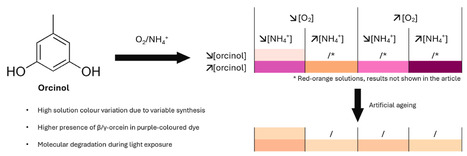
Sylvie Héron, Alain Tchapla et leurs collaborateurs du Muséum d'Histoire Naturelle et du Laboratoire de Recherche des Monuments Historiques ont récemment publié un article dans Dyes and Pigments "Unravelling the mysteries behind orcein dye: from orcinol-based synthesis to molecular degradation" Lien vers la publication This study aims to identify the various reasons behind the wide range of colours of orchil dye. The first step was to study the impact of synthesis parameters on colour and chemical composition variation, while the second step aimed to study chemical degradation with the artificial ageing protocol. Variation in reactant concentration, ammonia level and O2 availability led to red-orange or purple-coloured solutions. HPLC-DAD-MS, UV-Vis absorption and reflectance analysis enabled both molecular identification and objective colour characterisation of each solution. Thanks to PLS regression, the contribution of the relative content of each molecule to observed colour of the dye could be determined. Finally, accelerated light-ageing experiments assessed the stability of the synthesised dyes. Molecules responsible for the purple hue (β- and γ-orceins) were found to be significantly more sensitive to photodegradation than those associated with red-orange shades (α-orceins).
|
|
Scooped by
Institut de Chimie Physique
May 21, 7:50 AM
|
ICP science - Experimentally recreated workplace environments contain submicron crystalline silica particles, including ultrafine particles, which have been identified in the mediastinal lymph node...
Dominique Bazin et ses collaborateurs ont recemment publié un article dans BMJ "Experimentally recreated workplace environments contain submicron crystalline silica particles, including ultrafine particles, which have been identified in the mediastinal lymph nodes of construction workers" Lien vers la publication Although ultrafine particles are suspected to contribute significantly to occupational exposure to crystalline silica, they have not yet been definitively identified in workplaces or human tissues. Particles were generated in three 60-minute tests in a glove box: cutting kerb or granite pavement, drilling solid cinder block. The particle concentrations per cm3 of air in the box and their mean size were analysed online and using transmission electron microscopy and energy dispersive X-ray analysis (EDX). 17 mediastinal lymph node (MLN) samples from construction workers who underwent lung cancer surgery were examined by Fourier transform infrared spectroscopy (FTIR) and 8/17 by scanning electron microscopy (SEM) with EDX analysis. The particle concentration was high when cutting kerb or granite pavement (10 000–20 000 cm−3 and 50 000–160 000 cm−3, respectively), while below 1000 cm−3 for drilling cinder block. The aerosol consisted mainly of submicron emissions with a nanometric fraction (ie, <100 nm), showing two main modes: 351 nm to 16 nm for kerb, 407 nm to <16 nm for granite pavement and 310 nm to 17 nm for cinder block processing. Ultrafine silica particles were only identified in kerb and granite cutting samples. Analysis using FTIR revealed an Si signal in 15/17 of the MLN samples and SEM and EDX analysis detected geometric particle deposition with Si spectra, particularly nano-sized particles, in the eight analysed samples. Ultrafine silica particles are produced in conditions that mimic typical construction work processes, but the quantity produced varies according to the task. Similar characteristics were observed in ultrafine silica particles in both MLN samples and experimental aerosols.
|
|
Scooped by
Institut de Chimie Physique
May 21, 7:20 AM
|
ICP science - The absolute cross-section of the reactive collision of P + ( 3 P) with D 2 : a combined theoretical and experimental study
Christian Alcaraz, Roland Thissen et leurs collaborateurs ont récemment publié un article dans Physical Chemistry Chemical Physics "The absolute cross-section of the reactive collision of P + ( 3 P) with D 2 : a combined theoretical and experimental study". Les mesures ont été réalisées au Synchrotron SOLEIL grâce à l'utilisation du dispositif CERISES. Lien vers la publication In this work, we combine theoretical and experimental methods to study the P+(3P) + D2 → PD+ + D reaction. As a result, the absolute cross-section as a function of collision energy is obtained. Experimentally, the cross-section is measured using the guided ion beam technique (GIB), where P+ is produced by VUV photons at the SOLEIL synchrotron using PCl3 as a precursor. Theoretically, the cross-section is calculated from first principles. The potential energy surfaces of the three electronic states correlating with the P+(3P) are constructed by fitting MRCI points, and reaction dynamics are performed on each of them independently, hence neglecting couplings. The total cross-section is then obtained from the weighted contribution of each considered electronic state. Our findings show good agreement between the measured and calculated cross-sections, with a small discrepancy indicating that spin–orbit and non-adiabatic coupling, not considered in this work, may play a role in this reaction. The results hereafter presented demonstrate that the chemistry of the third-row atomic cations with molecular hydrogen is generally unfavoured, unlike their second-row homologues, thus manifesting the existence of boundaries to the applicability of the so-called chemical analogy (i.e., assuming the same chemical behaviour for elements belonging to the same group).
|
|
Scooped by
Institut de Chimie Physique
May 21, 9:37 AM
|
ICP actualité - Soutenance HDR Marine de Person
Marine de Person du groupe CAPRI a soutenu avec succès son Habilitation à Diriger des Recherches le mardi 5 mai 2026. "Analyse de lipides et substances analogues par chromatographie en phase liquide couplée à la spectrométrie de masse (HPLC-MS/MS)". Félicitations Marine!
|
|
Scooped by
Institut de Chimie Physique
May 21, 9:33 AM
|
ICP actualité - A Chemist’s Guide to Valence Bond Theory, 2nd Edition (Wiley)
Philippe Hiberty (groupe Theosim) has just published a book entitled “A Chemist’s Guide to Valence Bond Theory, 2nd Edition“. Lien vers la publication This books is primarily aimed at chemists, be they experimentalists, theoreticians and teachers. It explains how to use valence bond (VB) theory to think concisely and rigorously in chemical and photochemical applications and how to use VB computations. It first teaches the basic principles of VB theory such as hybridization, resonance energy and the nature of various types of chemical bonds, and sets bridges to Molecular Orbital theory. In passing, it addresses the alleged failures often associated to VB theory (ground state of dioxygen, hybridization vs. photoelectron spectroscopy, aromaticity, and so on) and shows them to be all mythical. A VB-based reactivity model is presented, allowing one to predict reactions barriers from easily accessible properties of reactants. All these applications include sets of exercises and corresponding answers. On the computational side, the book familiarizes the reader with the various VB-based computational tools and methods available today. The last chapter describes the Breathing-Orbital VB method, originating from the ICP, aimed at providing very compact VB wave functions approaching chemical accuracy by treating dynamic electron correlation in a direct and cost-efficient way.
|
|
Scooped by
Institut de Chimie Physique
May 21, 9:27 AM
|
ICP agenda - PhD Days de l'ICP
Le PhD Day à l'ICP aura lieu le 5 juin 2026. Au programme (à venir) : communications orales et session poster. Venez nombreux !
|
|
Scooped by
Institut de Chimie Physique
May 21, 10:25 AM
|
UPSaclay - la 11ème Journée de l'Ecole Doctorale 2MIB aura lieu le 16 juin
La onzième Journée de l'Ecole Doctorale 2MIB aura lieu à partir de 12:45 le mardi 16 juin 2026 à l’ENS Paris-Saclay (Gif-sur-Yvette). Après une brève introduction proposée par la Graduate School de Chimie et le directeur de l’Ecole doctorale, Géraldine Masson, de l’ICSN (Institut de Chimie des Substances Naturelles, CNRS), membre du bureau de l’ED 2MIB et médaille d’argent du CNRS assurera la conférence plénière. Vous serez ensuite invités à assister aux présentations orales proposées par des étudiants des trois pôles de l'école doctorale (qui se dérouleront en trois sessions parallèles) : - CIM (Chimie Inorganique et Matériaux) - COB (Chimie Organique et Biomoléculaire) - CPBA (Chimie Physique, BioPhysique et Analytique) . Dans l’après-midi, d’autres doctorants des trois pôles de l’ED 2MIB présenteront leurs travaux à l’occasion d’une session posters. Date limite d’inscription pour toute participation simple : 1er juin Inscription à l’événement
|
|
Scooped by
Institut de Chimie Physique
May 21, 10:11 AM
|
UPSaclay - Conférences et Workshops : IA et pédagogie pour la formation des formateurs
La Graduate School Éducation, Formation, Enseignement (GS EFE) et l'Institut DataIA de l’Université Paris-Saclay, en collaboration avec la Délégation Régionale et Académique du Numérique Éducatif (DRANE) Île de France, organisent le 17 juin 2026, de 9h à 17h au LUMEN une journée consacrée à l’IA au service de la formation des formateurs. Destiné aux enseignants, futurs enseignants et acteurs de la formation (sans prérequis en intelligence artificielle et hors public expert de l’IA) cet événement proposera des échanges et des ateliers autour des usages pédagogiques de l'IA, de ses enjeux éthiques et de ses impacts sur les pratiques éducatives. Le programme complet Des ateliers sont prévus, merci de prévoir de vous munir d’un ordinateur portable. Inscription gratuite et obligatoire Date & horaires : Rendez-vous le 17 juin 2026 de 9h à 17h Lieux : 📍 LUMEN – Université Paris-Saclay - 8 avenue des Sciences, 91190 Gif-sur-Yvette
|
|
Scooped by
Institut de Chimie Physique
May 21, 10:00 AM
|
UPSaclay - Programme post-doctoral UPSaclay-STAR-φ
La Graduate School de physique de l’Université Paris-Saclay lance un deuxième appel à candidatures dans le cadre de son programme de bourses postdoctorales : UPSaclay-STAR-φ, soutenu par le programme européen Marie Skłodowska-Curie COFUND (appel 2024). Date limite de candidature : 15 juillet 2026. Début prévu des bourses : début 2027 (flexible jusqu'en octobre 2027). Lien vers le site Cet appel permettra de recruter jusqu’à 22 chercheurs postdoctoraux internationaux pour des projets de recherche de 24 mois au sein de l’un des 40 laboratoires de la Graduate School, au synchrotron SOLEIL ou au Laboratoire national de métrologie (LNE). Les candidats devront proposer un projet de recherche original, en lien avec les vastes domaines d'expertise de la Graduate School et de ses partenaires, allant de la physique fondamentale à la physique appliquée.
|
|
Scooped by
Institut de Chimie Physique
May 21, 10:06 AM
|
UPSaclay - Appel à projets prématuration des Graduate Schools et Institut dans le cadre de A2-LINE.
L’AAP PREMATURATION GS/I a pour objectif de soutenir financièrement et d’accompagner les projets à très bas niveau de maturité technologique et à fort potentiel innovant, portés par des chercheurs, chercheuses, enseignants-chercheurs, enseignantes chercheuses, ingénieurs ou ingénieures, relevant des 235 laboratoires des 18 Graduate Schools et Institut. Co-financés par la Région Ile-de-France dans le cadre du Fonds européen de développement régional (FEDER) au travers du projet A2-LINE, les projets lauréats devront s'inscrire dans les Domaines d’Innovation Stratégiques de la Région Île-de-France et bénéficieront du financement d'un an de salaire d’ingénieur ou post-doctorant. En amont de leur candidature, les porteuses et porteurs de projets sont invité·es à contacter leur Graduate School ou Institut (pour assurer la validation du financement) ainsi que la structure de valorisation de leur établissement tutelle gestionnaire. Le dossier de candidature est à déposer sur la plateforme dédiée avant le 9 Juin 2026 à 12h. Lien vers le site
|
|
Scooped by
Institut de Chimie Physique
May 21, 10:38 AM
|
Evénement - 5ème édition de l'école d'été "Physico-chimie et problématiques sociétales contemporaines" de la fédération de Chimie-Physique de Paris-Saclay (CPPS)
La 5ème édition de l'école d'été "Physico-chimie et problématiques sociétales contemporaines" de la fédération de Chimie-Physique de Paris-Saclay (CPPS) se tiendra du 29 juin (14h) au 3 juillet (16h) sur le campus de l’Université Paris-Saclay. Cette école s'adresse plus particulièrement aux étudiants de L2 au M2 (magistère ou non), souhaitant nourrir leur réflexion sur leur futur parcours ou découvrir les thématiques développées à Paris-Saclay à l'interface de la Chimie et de la Physique. L’objectif est de présenter les grands enjeux sociétaux où la Chimie-Physique joue un rôle clé. Le programme s'articule autour de cinq thématiques majeures (une par jour), explorées à travers de petits cours/présentations, des visites d'installations expérimentales et des travaux pratiques : Biomolécules : Comprendre la relation structure-activité de molécules biologiques pour le design de nouveaux médicaments ou la photostabilité des molécules du vivant. Astrophysique & Astrochimie : Étudier la matière interstellaire. Patrimoine & Archéologie : Utiliser les techniques analytiques pour documenter l'histoire et créer les matériaux durables, paléo-inspirés, de demain. Méthodes biophysiques et biochimiques pour la santé & l’environnement : Allier approches expérimentales et théoriques complémentaires pour optimiser les outils moléculaires nécessaires à la compréhension de la machinerie cellulaire ou la détection de polluants. Technologies quantiques : Maîtriser les processus moléculaires par lasers ultrarapides pour une chimie plus efficace. Cette école vous permettra de découvrir des approches de pointe telles que les spectroscopies laser (femtoseconde/attoseconde), la spectrométrie de masse, la RMN, la microscopie AFM couplée à l’IR et la modélisation numérique. Informations pratiques : Frais : L'inscription est totalement gratuite. Repas : Les déjeuners (du mardi au vendredi) sont offerts par la Fédération CPPS. Inscriptions Stage : Si vous êtes en stage durant cette période, n'oubliez pas d'en informer votre responsable afin d'effectuer, si nécessaire, un avenant à votre convention.
|
|
Scooped by
Institut de Chimie Physique
May 21, 10:54 AM
|
Evènement - Une 1/2 journée scientifique ChemoSensium le 1er juillet au Lumen
Pour mettre en place le réseau ChemoSensium au sein des équipes de Paris-Saclay, les Graduate Schools Chimie et HeaDS organisent une demi journée scientifique sur les thématiques de ChemoSensium le mercredi 1er juillet 2026, au Lumen (8 avenue des sciences). L'évènement débutera à midi par un cocktail sensoriel déjeunatoire, il sera suivi par quatre interventions et des animations autour du goût et de l’odorat. L’inscription est gratuite avec réservation obligatoire avant le 24 juin
|
|
Scooped by
Institut de Chimie Physique
May 22, 3:57 AM
|
Evènement - Colloque CNRS « Santé-environnement : comprendre, prévenir, agir » les 9 et 10 juillet 2026
Le comité scientifique santé du CNRS a le plaisir de vous convier au Colloque « Santé-environnement : comprendre, prévenir, agir 2026 - MITI" qui se tiendra les 9 et 10 juillet 2026 au siège du CNRS. N’hésitez pas à vous inscrire, ce colloque est ouvert à tout le monde ! Ce colloque comporte également un volet prospectif, préparé en amont et poursuivi pendant le colloque sous forme d’ateliers. Ce volet a pour but d’identifier collectivement les priorités scientifiques et les dispositifs structurants nécessaires au développement de la recherche à l’interface santé–environnement pour les années à venir. Les contributions alimenteront des fiches prospectives CNRS en santé environnement, en appui aux stratégies et aux travaux du comité scientifique santé du CNRS et de ses instituts. Dans ce cadre, un questionnaire court est diffusé afin de recueillir vos avis. Nous vous remercions par avance pour votre participation à cette réflexion collective d’ici le 31 mai 2026 (5-10 min, 6 questions) : Questionnaire Programme et inscription
|
|
Scooped by
Institut de Chimie Physique
May 21, 11:15 AM
|
Prix - Call for Nomination 2027 L’Oréal-UNESCO For Women in Science International Awards
The Call for Nomination 2027 L’Oréal-UNESCO For Women in Science International Awards is now open. The 2027 Awards will designate five outstanding researchers in Physics, Mathematics, Computer and Information Sciences, Chemistry, Earth & Related Environmental Sciences. Link to the website Call for application/nomination from April 6 to June 30 2026.
|
|
Scooped by
Institut de Chimie Physique
May 21, 7:13 AM
|
|
|
Scooped by
Institut de Chimie Physique
March 12, 3:22 AM
|
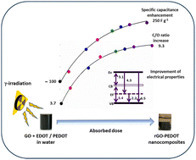
Souad Abou Zeid, Liran Hu, Samy Remita et leurs collaborateurs ont récemment publié un article dans Materials Chemistry Frontiers "Radiolytic synthesis of rGO–PEDOT nanohybrids with enhanced functional properties" Lien vers la publication Hybrid reduced graphene oxide–poly(3,4-ethylenedioxythiophene) (rGO–PEDOT) nanocomposites were synthesized via green gamma-radiolysis under ambient conditions, without dopants or catalysts. Three distinct synthesis routes—including one-step simultaneous radiation induced reduction of aqueous graphene oxide (GO) and EDOT monomers and two-step approaches involving the reduction of GO in the presence of pre-formed PEDOT oligomers or polymers—were explored to assess the impact of absorbed dose and polymerization stage on the physicochemical and functional properties of the resulting materials. Extensive characterization techniques revealed that gamma-irradiation promotes effective GO reduction and controlled PEDOT polymerization, leading to significant band gap narrowing, enhanced structural ordering, and substantial increase in the carbon-to-oxygen atomic ratio (from 3.7 to 9.3) indicative of effective reduction and improved conjugation within the nanocomposites. Visual evolution confirmed kinetic-controlled composite formation, yielding hydrogel-like aggregates. Morphological analyses showed well-dispersed PEDOT on rGO sheets, contributing to improved thermal stability, enhanced optoelectronic properties and superior electrochemical performance. The composites exhibited enhanced specific capacitances up to ∼248 F g−1, surpassing many reported PEDOT-based materials, attributed to the synergistic combination of rGO's conductive network and PEDOT's pseudocapacitance. This green, catalyst-free, and scalable methodology offers a promising platform for fabricating multifunctional hybrid materials with potential applications in flexible electronics, energy storage devices, and sensing technologies.
|
|
Scooped by
Institut de Chimie Physique
March 12, 3:15 AM
|
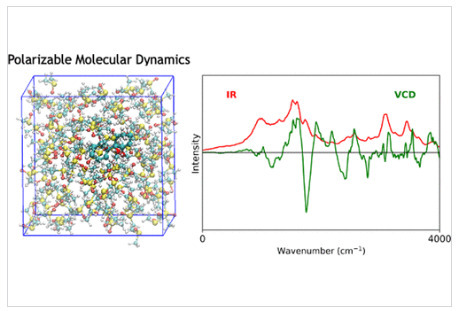
Emeline Boyer, Carine Clavaguéra et leurs collaborateurs viennent de publier un article dans The Journal of Physical Chemistry B "Modeling the Vibrational Circular Dichroism Spectroscopy of Phenylcyclohexanediol Solvated in Dimethyl Sulfoxide Using Polarizable Molecular Dynamics". Ce travail se place dans le cadre du projet ANR Dichrosol (ISMO, ICP, LIPhy, CPCV). Lien vers la publication Modeling vibrational circular dichroism (VCD) spectra in solution remains a complex task due to the intricate interactions involved. Recent advances in computational chemistry, particularly the implementation of polarizable force fields, have greatly improved the description of environmental effects in classical molecular dynamics simulations. In this study, we use the AMOEBA polarizable model to calculate VCD spectra through the expression of the electric and magnetic dipole moments developed recently [Bowles, J. . ChemPhysChem 2024, 25, e202300982.] in combination with the use of induced dipole models. This methodology enables the reliable treatment of flexible molecules and has been applied to the 1-Phenyl-1,2-Cyclohexanediol (PC) molecule solvated in dimethyl sulfoxide (DMSO). The computed infrared and VCD spectra provide detailed insights into molecular conformations and solute–solvent interactions. An in-depth investigation was conducted into the possible effects of system size, concentration, and spectral convergence. Comparison with experimental vibrational frequencies in deuterated solvent further supports the interpretation of spectral features, although residual differences in the spectral shifts and broadenings prove to be challenging for theory, especially in the case of VCD.
|
|
Scooped by
Institut de Chimie Physique
March 12, 3:41 AM
|
Roland Thissen et ses collaborateurs ont récemment publié un article dans Icarus "Ion induced formation of complex organic nitrogen molecules in solid-phase adenine" Lien vers la publication Complex organic molecules have been found in many space environments like meteorites and comets. There, they are subjected to various forms of radiation (photons, electrons, ions), opening the question of their behavior and chemical evolution, which may have played a crucial role in chemical processes of astrobiological interest. In this study, we investigate the irradiation of adenine (CHN) with oxygen and neon ions. The free parameters of the experiments include varying energies (30-70 keV), temperatures (150, 300 K), sample thicknesses (138-554 nm), and ion fluences (0.69-5 10 ions cm). In situ IR spectroscopy reveals the appearance of CN and N=C=N bands indicating the formation of new species. Ex situ ultra-high-resolution mass spectrometry shows the formation of new complex organic molecules that far exceed the molecular mass of adenine. These macromolecules show great chemical diversity and can be expressed as (HCN)R families, where z can reach 14 and R can be C, H, N, NH, CH or CN. In total, nearly 100 individual families have been identified, 28 of which can be found in every irradiated sample. Their aromaticity equivalent is higher than that in other N-rich samples such as Titan tholins and HCN-polymers, corresponding to polycyclic aromatic nitrogen-bearing hydrocarbons. The high amount of nitrogen in these molecules indicates a very efficient incorporation of nitrogen in the solid phase during the irradiation of adenine. The ease with which complex organic matter forms through irradiation highlights the relevance of these species in space environments.
|
|
Scooped by
Institut de Chimie Physique
March 12, 3:29 AM
|
Souad Abou Zeid, Liran Hu, Samy Remita et leurs collaborateurs ont publié un article dans Materials Chemistry Frontiers "Gamma-induced one-step synthesis of reduced graphene oxide–silver nanoparticles with enhanced properties". Lien vers la publication This study presents a novel gamma-induced one-pot synthesis of reduced graphene oxide–silver nanoparticle (rGO–Ag NPs) nanocomposites. Syntheses were conducted in a deoxygenated aqueous medium containing 0.2 g L−1 graphene oxide (GO), silver ions (10−3 or 10−2 mol L−1), and 0.2 mol L−1 isopropanol at ambient temperature and pressure. Multi-technique characterization confirmed the reduction of GO and silver ions, forming nanocomposites with significantly improved physicochemical and electrochemical properties compared to pristine GO, rGO alone, and rGO–Ag NPs prepared by other methods. UV-Vis absorption spectroscopy revealed tunable optical properties, while UPS measurements provided insights into the energy band structure, highlighting interactions between rGO and Ag NPs that enhance electronic properties. XPS and ATR-FTIR confirmed the successful reduction processes. SEM–EDX analyses demonstrated uniform silver nanoparticle distribution on rGO sheets. The C/O ratio significantly increased after irradiation, with values of 10.8 and 9.6 for composites synthesized with 10−3 and 10−2 mol L−1 in silver ions, respectively, compared to 11.2 for rGO alone. Raman spectroscopy showed a lower intensity ratio (ID/IG) between D and G bands (1.18 for nanocomposites vs. 1.40 for rGO), indicating fewer structural defects. Improved thermal stability was evidenced by reduced weight loss (10%) at 300–800 °C. Electrochemical studies revealed exceptional specific capacitance values of 218 F g−1 (10−3 mol L−1 Ag+ at 50 kGy) and 298 F g−1 (10−2 mol L−1 Ag+ at 70 kGy), surpassing the 125.4 F g−1 for rGO alone. These findings highlight the potential of gamma-induced synthesis for producing rGO–Ag NPs nanocomposites for high-performance supercapacitor applications.
|
|
Scooped by
Institut de Chimie Physique
March 12, 3:36 AM
|
Meriem Baziz, Liran Hu, Samy Remita et leurs collaborateurs ont publié un article dans Polmer Bulletin : "Elaboration of Novel Biocomposite Hydrogel Polymers made of Alginate and Sepiolite and endowed with Enhanced Properties" Lien vers la publication Nowadays growing attention is given to the design and development of novel interpenetrating polymer networks (IPN) from the combination of hydrogel polymers loaded with natural clay. In this work, we used the eco-friendly IPN strategy to develop novel hydrogel biocomposite beads, made of alginate (ALG), with improved clay dispersion, higher pH sensitivity, better stretchability and swellability, together with enhanced regenerability properties and delayed biodegradability. Fibrous clay, namely, sodium sepiolite (NaS), was loaded into alginate simple biocomposite network (SBN) beads, via manual co-grinding mixture/encapsulation method, at different sepiolite loads. Alginate double biocomposite network (DBN) beads were also prepared at different sepiolite loads, via the diffusion of acrylamide monomers (AAM) inside alginate single biocomposite network (SBN) beads, followed by external and in situ free radical polymerization of AAM into polyacrylamide (pAAM), using ammonium persulfate (APS) as polymerization initiator and N,N-methylenebisacrylamide (Bis) as covalent crosslinker agent. The as-elaborated SBN and DBN beads were then characterized by digital camera recording, XRD analysis, ATR-FTIR characterization and SEM observation. FTIR results showed that NaS and pAAM were successfully incorporated into DBN beads, while partially exfoliated morphology was obtained with XRD analysis, which revealed the enhancement of fibrous clay dispersion, even at relatively high sepiolite loads. Besides, SEM microscopy confirmed the porous spongious nature of DBN beads. The properties of the as-elaborated SBN and DBN beads were also evaluated by test touching, swelling rate measurements, adsorption/desorption experiments and biodegradability evaluation. DBN beads properties were always found enhanced in comparison with those of SBN beads. This suggests that the synergetic effect between IPN and biocomposite structure improves the stretchability of the DBN beads, their stability in water whatever the pH and their swelling behavior (up to 2000 g/g adsorbed water after 110 min, which was nevertheless found dependent on the pH and on sepiolite load). Moreover, DBN beads displayed enhanced adsorption/desorption properties toward methylene blue (MB) dye (no reduction in MB adsorption capacity after 5 cycles), very good regenerability (ethanol being used as effective eluting agent) and delayed biodegradability (complete degradation only after 8 days in the presence of sepiolite). In summary, this work showed an interesting and safe IPN/biocomposite approach to develop high-performance alginate biocomposite polymers as a promising system toward their use in eco-friendly processes.
|