information analyst
50.5K views | +1 today
information analyst
km, ged / edms, workflow, collaboratif
Your new post is loading...

Rescooped by michel verstrepen from Freewares
June 4, 2022 11:02 AM
Scoop.it!

Quick Text Paste : un logiciel portable pour insérer rapidement du texte prédéfini dans les documents via des raccourcis clavier

Quick Text Paste : un logiciel portable pour insérer rapidement du texte prédéfini dans les documents via des raccourcis clavier | information analyst | Scoop.it
Quick Text Paste est un petit logiciel gratuit et portable qui permet d'insérer (coller) rapidement du texte prédéfini dans n'importe quelle application Windows via un raccourci clavier. Il permet de préparer plusieurs textes ou phrases prédéfinies et d'attribuer à chacun d'eux une abréviation différente. Vous pouvez également coller l'adresse e-mail que vous utilisez régulièrement, la signature pour des commentaires sur les forums ou les blogs, ou une commande pour Windows, ce qui fait gagner du temps !.

Via Freewares&Tutos
No comment yet.
Rescooped by michel verstrepen from Renseignements Stratégiques, Investigations & Intelligence Economique
June 3, 2022 8:50 AM
Scoop.it!

En soutien à l'Ukraine, les États-Unis révèlent avoir mené des actions cyber offensives ...

En soutien à l'Ukraine, les États-Unis révèlent avoir mené des actions cyber offensives ... | information analyst | Scoop.it

Dans une interview accordée au média britannique Sky News le 1er juin, le général Paul Nakasone, commandant de l’US Cyber Command et de la National Security Agency (NSA), a confirmé des actions offensives dans le cyberespace en soutien à l’Ukraine.


Via Intelligence Economique, Investigations Numériques et Veille Informationnelle
No comment yet.
Rescooped by michel verstrepen from Media, Business & Tech
June 2, 2022 7:15 AM
Scoop.it!

Une chercheuse déclare avoir été violée dans le métavers

Une chercheuse déclare avoir été violée dans le métavers | information analyst | Scoop.it
Une étude réalisée par l'ONG SumOfUs met en avant les dangers du métavers de Meta qui peuvent avoir des conséquences bien réelles.

Via Bruno Renkin
No comment yet.
Rescooped by michel verstrepen from Renseignements Stratégiques, Investigations & Intelligence Economique
June 2, 2022 7:11 AM
Scoop.it!

Une panne informatique d’ampleur a bloqué les frontières françaises ...

Une panne informatique d’ampleur a bloqué les frontières françaises ... | information analyst | Scoop.it

Les aéroports internationaux français sont concernés, mais aussi la Gare du Nord.


Via Intelligence Economique, Investigations Numériques et Veille Informationnelle
No comment yet.
Rescooped by michel verstrepen from Renseignements Stratégiques, Investigations & Intelligence Economique
June 1, 2022 1:24 PM
Scoop.it!

Données personnelles : Twitter condamné à payer une amende de 150 millions de dollars ...

Données personnelles : Twitter condamné à payer une amende de 150 millions de dollars ... | information analyst | Scoop.it

Twitter a été condamné par le ministère de la Justice des Etats-Unis à payer une amende de 150 millions de dollars (M$). Les autorités accusent l'entreprise d'avoir trompé des utilisateurs.


Via Intelligence Economique, Investigations Numériques et Veille Informationnelle
No comment yet.
Rescooped by michel verstrepen from iPads, MakerEd and More in Education
May 31, 2022 11:02 AM
Scoop.it!

ChangeFaces.com - Change the face on a photo with another face and do a face swap

ChangeFaces.com - Change the face on a photo with another face and do a face swap | information analyst | Scoop.it
Select one of our funny pictures and swap the faces with your photo or the face of someone else. Free online face swap and change faces tool. Use a selfie or upload a photo and save and share the face swap online.

Via Nik Peachey, John Evans
Nik Peachey's curator insight, May 31, 2022 5:43 AM

This is a useful free tool for creating personalised flashcards for imaginative speaking activities.

John Evans's curator insight, May 31, 2022 7:26 AM

Might be a fun end of school assignment!

Rescooped by michel verstrepen from Renseignements Stratégiques, Investigations & Intelligence Economique
May 30, 2022 5:59 AM
Scoop.it!

Désinformation, cyber-attaques: la nouvelle guerre mondiale ...

Désinformation, cyber-attaques: la nouvelle guerre mondiale ... | information analyst | Scoop.it

À Helsinki, un discret centre d’expertise, appuyé par l’Otan et l’Union européenne, tente de trouver des parades aux menaces hybrides qui visent à déstabiliser le camp occidental.


Via Intelligence Economique, Investigations Numériques et Veille Informationnelle
No comment yet.
Rescooped by michel verstrepen from :: The 4th Era ::
May 28, 2022 1:30 PM
Scoop.it!

10 Digital Libraries Where You Can Download Ebooks for Free

10 Digital Libraries Where You Can Download Ebooks for Free | information analyst | Scoop.it
If you're looking for free ebooks to download and dive into, these digital libraries are worth checking out.

Via Jim Lerman
No comment yet.
Rescooped by michel verstrepen from Renseignements Stratégiques, Investigations & Intelligence Economique
May 26, 2022 1:41 PM
Scoop.it!

Les pirates améliorent leur technique de piratage des cartes bancaires, avertit Microsoft ...

Les pirates améliorent leur technique de piratage des cartes bancaires, avertit Microsoft ... | information analyst | Scoop.it

Microsoft a publié un rapport avertissant de nouvelles techniques utilisées par les pirates pour cacher leurs scripts sur les sites compromis. Ils utilisent notamment l'encodage en base 64 pour masquer le chargement de fichiers externes et donner à leur code un air inoffensif.


Via Intelligence Economique, Investigations Numériques et Veille Informationnelle
No comment yet.
Rescooped by michel verstrepen from Veille Usages numériques
May 25, 2022 6:30 PM
Scoop.it!

Data Detox : exposition à télécharger

Data Detox : exposition à télécharger | information analyst | Scoop.it
L'exposition DataDetox réalisée par la BU de l'université de Saint-Etienne en 2019 est accessible et téléchargeable , sous licence creativecommons

Via Tice Doc Reims
No comment yet.
Rescooped by michel verstrepen from Renseignements Stratégiques, Investigations & Intelligence Economique
May 25, 2022 6:30 PM
Scoop.it!

Cytrox Predator : Google révèle plusieurs failles zero-day utilisées pour des activités d'espionnage ...

Cytrox Predator : Google révèle plusieurs failles zero-day utilisées pour des activités d'espionnage ... | information analyst | Scoop.it

Armé de cinq zero-day, Cytrox a ciblé des dizaines d’utilisateurs Android pour le compte d’agences gouvernementales.


Via Intelligence Economique, Investigations Numériques et Veille Informationnelle
No comment yet.
Rescooped by michel verstrepen from Renseignements Stratégiques, Investigations & Intelligence Economique
May 25, 2022 6:29 PM
Scoop.it!

Cyberattaques ciblant l’Union européenne : « C’est essentiellement de l’espionnage » ...

Cyberattaques ciblant l’Union européenne : « C’est essentiellement de l’espionnage » ... | information analyst | Scoop.it

Les agences et les entités de l’UE subissent une croissance des cyberattaques. Le CERT-UE, le groupe de réponse aux incidents de sécurité informatique, indique que la principale motivation est le cyberespionnage.


Via Intelligence Economique, Investigations Numériques et Veille Informationnelle
No comment yet.
Rescooped by michel verstrepen from Freewares
May 25, 2022 6:27 PM
Scoop.it!

Crow Translate : un logiciel de traduction open source

Crow Translate : un logiciel de traduction open source | information analyst | Scoop.it
Crow Translate est un logiciel simple et léger qui permet de traduire et de lire à haute voix du texte (dans différentes langues) à l'aide de services tels que Google, Yandex et Bing. Il prend en charge plus de 120 langues et a été programmé en C++/Qt. Il utilise la bibliothèque QOnlineTranslator, du même auteur que le programme.

Via Freewares&Tutos
No comment yet.
Rescooped by michel verstrepen from Renseignements Stratégiques, Investigations & Intelligence Economique
June 3, 2022 8:50 AM
Scoop.it!

L'Italie a besoin d'au moins 100.000 spécialistes pour renforcer sa cybersécurité ...

L'Italie a besoin d'au moins 100.000 spécialistes pour renforcer sa cybersécurité ... | information analyst | Scoop.it

L'Italie est le troisième pays au monde le plus visé par des cyberattaques. Elles concernent aussi bien ses administrations et ses PME-PMI que ses champions économiques. Mario Draghi veut protéger la « souveraineté numérique » de la péninsule et renforcer sa cybersécurité avec des investissements massifs.


Via Intelligence Economique, Investigations Numériques et Veille Informationnelle
No comment yet.
Rescooped by michel verstrepen from Renseignements Stratégiques, Investigations & Intelligence Economique
June 3, 2022 12:10 AM
Scoop.it!

À court d'argent, les développeurs de Pegasus auraient voulu vendre leur logiciel espion ...

À court d'argent, les développeurs de Pegasus auraient voulu vendre leur logiciel espion ... | information analyst | Scoop.it

Ce programme, développé par la société israélienne NSO Group, est utilisé par quarante États dans le monde. L'entreprise indique que Pegasus ne sert qu'à la surveillance d'individus suspectés d'activité terroriste mais de nombreux scandales ont éclaté ces derniers mois et ont montré que le logiciel avait servi à espionner des femmes et hommes politiques mais aussi des journalistes. Près de 50 000 numéros de téléphone et autant d'individus seraient concernés.


Via Intelligence Economique, Investigations Numériques et Veille Informationnelle
No comment yet.
Rescooped by michel verstrepen from Les outils du Web 2.0
June 2, 2022 7:13 AM
Scoop.it!

Sortd. Transformez vos mails en listes façon Trello

Sortd. Transformez vos mails en listes façon Trello | information analyst | Scoop.it
Sortd est un outil de productivité qui va transformer votre Gmail en une sorte de Trello intégré à votre messagerie.

Via Fidel NAVAMUEL
No comment yet.
Rescooped by michel verstrepen from Renseignements Stratégiques, Investigations & Intelligence Economique
June 2, 2022 7:11 AM
Scoop.it!

« L’Ukraine est le pays le mieux protégé au monde dans le domaine cyber » ...

« L’Ukraine est le pays le mieux protégé au monde dans le domaine cyber » ... | information analyst | Scoop.it

Le niveau de protection du pays impressionne Mikko Hyppönen, spécialiste de renommée internationale. Malgré quelques incidents majeurs, l’Ukraine a acquis suffisamment d’expérience et de formation pour résister à des assauts quotidiens.


Via Intelligence Economique, Investigations Numériques et Veille Informationnelle
No comment yet.
Rescooped by michel verstrepen from Les outils du Web 2.0
June 1, 2022 1:26 AM
Scoop.it!

3 sites pour faire de la cartographie collaborative

3 sites pour faire de la cartographie collaborative | information analyst | Scoop.it
Comment créer une carte collaborative et interactive facilement ? La création d’une carte en ligne n’est plus une affaire de spécialistes. Google maps est passée par là. On peut même dé…

Via Fidel NAVAMUEL
No comment yet.
Rescooped by michel verstrepen from Tools for Teachers & Learners
May 31, 2022 11:00 AM
Scoop.it!

Faster. Better. More focused. Reading.

Faster. Better. More focused. Reading. | information analyst | Scoop.it
Did you know that your brain reads faster than your eye? We humans store learned words and so just a few letters are enough to recognize whole words.

Via Nik Peachey
Nik Peachey's curator insight, May 31, 2022 10:54 AM

This is an interesting app and Chrome plugin which claims to make reading faster. I was quite impressed.

Rescooped by michel verstrepen from Renseignements Stratégiques, Investigations & Intelligence Economique
May 30, 2022 5:35 AM
Scoop.it!

Comment Doctolib justifie le choix du géant américain Amazon pour héberger les données des Français ...

Comment Doctolib justifie le choix du géant américain Amazon pour héberger les données des Français ... | information analyst | Scoop.it

Doctolib, la plateforme de prise de rendez-vous médicaux utilisée par plus de 50 millions de Français, fait face à une critique récurrente : on lui reproche d'héberger ses données chez un Américain, Amazon Web Service (AWS). En cause : deux lois, le Cloud Act et le Foreign Intelligence Surveillance Act, qui permettent en théorie aux autorités américaines d'accéder, sous conditions, aux données d'AWS. Mais la startup française estime avoir mis en place les protections suffisantes pour contrer cette menace.


Via Intelligence Economique, Investigations Numériques et Veille Informationnelle
No comment yet.
Rescooped by michel verstrepen from Veille professionnelle des Bibliothèques-Médiathèques de Metz
May 27, 2022 2:09 AM
Scoop.it!

Chapril : des services libres et éthiques

Chapril : des services libres et éthiques | information analyst | Scoop.it

"Le site chapril.org est la contribution de l’April au Collectif des Hébergeurs Alternatifs, Transparents, Ouverts, Neutres et Solidaires (CHATONS).

Le projet vise à rassembler des acteurs proposant des services en ligne libres, éthiques, décentralisés et solidaires afin de permettre aux utilisateurs de trouver - rapidement - des alternatives aux produits des GAFAM (Google, Apple, Facebook, Amazon, Microsoft), entre autres, mais respectueux de leurs données et de leur vie privée."


Via Réseau Canopé, Bibliothèques-Médiathèques de Metz
No comment yet.
Rescooped by michel verstrepen from Raspberry Pi
May 26, 2022 1:20 AM
Scoop.it!

Arduino Cheat Sheet by Knoddy - Download free from Cheatography - Cheatography.com: Cheat Sheets For Every Occasion

Arduino Cheat Sheet by Knoddy - Download free from Cheatography - Cheatography.com: Cheat Sheets For Every Occasion | information analyst | Scoop.it
Basic Arduino functions and their use cases.

Via F. Thunus
No comment yet.
Rescooped by michel verstrepen from Les outils du Web 2.0
May 25, 2022 6:30 PM
Scoop.it!

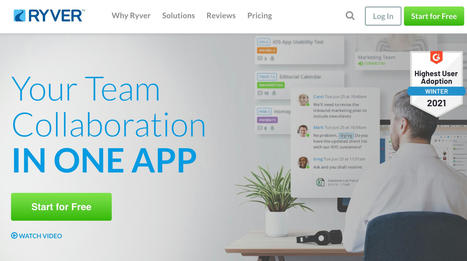
Ryver. Une bonne alternative à Slack

Ryver. Une bonne alternative à Slack | information analyst | Scoop.it
Ryver est une messagerie interne qui se pose en alternative à Slack et autres plateformes de communication du même type. Ryver offre sensiblement les mêmes fonctions que la plupart des outils de la…

Via Fidel NAVAMUEL
Aeonflux d'Avranches's curator insight, June 13, 2022 4:38 AM
Partager votre point de vue (insight)
Rescooped by michel verstrepen from Renseignements Stratégiques, Investigations & Intelligence Economique
May 25, 2022 6:29 PM
Scoop.it!

Reconnaissance faciale : le géant Clearview AI dans la tourmente ...

Reconnaissance faciale : le géant Clearview AI dans la tourmente ... | information analyst | Scoop.it

Accusée de collecter illégalement des millions d'informations personnelles, l'entreprise américaine de reconnaissance faciale a été sommée par la justice britannique de supprimer une partie de ses données. Une sanction loin d'être une première.


Via Intelligence Economique, Investigations Numériques et Veille Informationnelle
No comment yet.
Rescooped by michel verstrepen from Educational Psychology, AI, & Emerging Technologies: Critical Thinking on Current Trends
May 25, 2022 6:28 PM
Scoop.it!

Remote learning apps shared children’s data at a ‘dizzying scale’ // The Washington Post

Remote learning apps shared children’s data at a ‘dizzying scale’ // The Washington Post | information analyst | Scoop.it

By Drew Harwell

"Millions of children had their online behaviors and personal information tracked by the apps and websites they used for school during the pandemic, according to an international investigation that raises concerns about the impact remote learning had on children’s privacy online.


The educational tools were recommended by school districts and offered interactive math and reading lessons to children as young as prekindergarten. But many of them also collected students’ information and shared it with marketers and data brokers, who could then build data profiles used to target the children with ads that follow them around the Web.

Those findings come from the most comprehensive study to date on the technology that children and parents relied on for nearly two years as basic education shifted from schools to homes.


Researchers with the advocacy group Human Rights Watch analyzed 164 educational apps and websites used in 49 countries, and they shared their findings with The Washington Post and 12 other news organizations around the world. The consortium, EdTech Exposed, was coordinated by the investigative nonprofit the Signals Network and conducted further reporting and technical review.

What the researchers found was alarming: nearly 90 percent of the educational tools were designed to send the information they collected to ad-technology companies, which could use it to estimate students’ interests and predict what they might want to buy.

Researchers found that the tools sent information to nearly 200 ad-tech companies, but that few of the programs disclosed to parents how the companies would use it. Some apps hinted at the monitoring in technical terms in their privacy policies, the researchers said, while many others made no mention at all.


The websites, the researchers said, shared users’ data with online ad giants including Facebook and Google. They also requested access to students’ cameras, contacts or locations, even when it seemed unnecessary to their schoolwork. Some recorded students’ keystrokes, even before they hit “submit.”

The “dizzying scale” of the tracking, the researchers said, showed how the financial incentives of the data economy had exposed even the youngest Internet users to “inescapable” privacy risks — even as the companies benefited from a major revenue stream.

“Children,” lead researcher Hye Jung Han wrote, were “just as likely to be surveilled in their virtual classrooms as adults shopping in the world’s largest virtual malls.”

School districts and the sites’ creators defended their use, with some companies saying researchers had erred by including in their study homepages for the programs, which included tracking codes, instead of limiting their analysis to the internal student pages, which they said contained fewer or no trackers. The researchers defended the work by noting that students often had to sign in on the homepages before their lessons could begin.


The coronavirus pandemic abruptly upended the lives of children around the world, shuttering schools for more than 1.5 billion students within the span of just a few weeks. Though some classrooms have reopened, tens of millions of students remain remote, and many now depend on education apps for the bulk of their school days.

Yet there has been little public discussion of how the companies that provided the programs remote schooling depends on may have profited from the pandemic windfall of student data.

The learning app Schoology, for example, says it has more than 20 million users and is used by 60,000 schools across some of the United States’ largest school districts. The study identified code in the app that would have allowed it to extract a unique identifier from the student’s phone, known as an advertising ID, that marketers often use to track people across different apps and devices and to build a profile on what products they might want to buy.


A representative for PowerSchool, which developed the app, referred all questions to the company’s privacy policy, which said it does not collect advertising IDs or provide student data to companies for marketing purposes. But the policy also says the company’s website uses third-party tools to show targeted ads to users based on their “browsing history on other websites or on other devices.” The policy did not say which third-party companies had received users’ data.

The policy also said that it “does not knowingly collect any information from children under the age of 13,” in keeping with the Children’s Online Privacy Protection Act, or COPPA, the U.S. law that requires special restrictions on data collected from young children. The company’s software, however, is marketed for classrooms as early as kindergarten, which for many children starts around age 4.

The investigation acknowledged that it could not determine exactly what student data would have been collected during real-world use. But the study did reveal how the software was designed to work, what data it had been programmed to seek access to, and where that data would have been sent.


School districts and public authorities that had recommended the tools, Han wrote, had “offloaded the true costs of providing education online onto children, who were forced to pay for their learning with their fundamental rights to privacy.”

The researchers said they found a number of trackers on websites common among U.S. schools. The website of ST Math, a “visual instructional program” for prekindergarten, elementary and middle school students, was shown to have shared user data with 19 third-party trackers, including Facebook, Google, Twitter and the e-commerce site Shopify.

Kelsey Skaggs, a spokeswoman for the California-based MIND Research Institute, which runs ST Math, said in a statement that the company does not “share any personally identifiable information in student records for the purposes of targeted advertising or other commercial purposes” and does not use the same trackers on its student platform as it does on its homepage.


But the researchers said they found trackers not just on ST Math’s main site but on pages offering math games for prekindergarten and the first grade.

Google spokesperson Christa Muldoon said the company is investigating the researchers’ claims and will take action if they find any violations of their data privacy rules, which include bans on personalized ads aimed at minors’ accounts. A spokesperson for Facebook’s parent company Meta said it restricts how businesses share children’s data and how advertisers can target children and teens.

The study comes as concern grows over the privacy risks of the educational-technology industry. The Federal Trade Commission voted last week on a policy statement urging stronger enforcement of COPPA, with Chair Lina Khan arguing that the law should help “ensure that children can do their schoolwork without having to surrender to commercial surveillance practices.” 


COPPA requires apps and websites to get parents’ consent before collecting children’s data, but schools can consent on their behalf if the information is designated for educational use.

In an announcement, the FTC said it would work to “vigilantly enforce” provisions of the law, including bans against requiring children to provide more information than is needed and restrictions against using personal data for marketing purposes. Companies that break the law, it said, could face fines and civil penalties.

Clearly, the tools have wide impact. In Los Angeles, for example, more than 447,000 students are using Schoology and 79,000 are using ST Math. Roughly 70,000 students in Miami-Dade County Public Schools use Schoology.


Both districts said they’ve taken steps to limit privacy risks, with Los Angeles requiring software companies to submit a plan showing how student information will be protected while Miami-Dade said it had conducted a “thorough and extensive” evaluation process before bringing on Schoology last year.


The researchers said most school districts they examined had conducted no technical privacy evaluations before endorsing the educational tools. Because the companies’ privacy policies often obscured the extent of their monitoring, the researchers said, district officials and parents often were left in the dark on how students’ data would be collected or used.

Some popular apps reviewed by the researchers didn’t track children at all, showing that it is possible to build an educational tool without sacrificing privacy. Apps such as Math Kids and African Storybook didn’t serve ads to children, collect their identifying details, access their cameras, request more software permissions than necessary or send their data to ad-tech companies, the analysis found. They just offered simple learning lessons, the kind that students have relied on for decades.

Vivek Dave, a father of three in Texas whose company RV AppStudios makes Math Kids, said the company charges for in-app purchases on some word-search and puzzle games designed for adults and then uses that money to help build ad-free educational apps. Since launching an alphabet game seven years ago, the company has built 14 educational apps that have been installed 150 million times this year and are now available in more than 35 languages.

“If you have the passion and just try to understand them, you don’t need to do all this level of tracking to be able to connect with kids,” he said. “My first beta testers were my kids. And I didn’t want that for my kids, period.”

The researchers argued that governments should conduct data-privacy audits of children’s apps, remove the most invasive, and help guide teachers, parents and children on how best to prevent data over-collection or misuse.

Companies, they said, should work to ensure that children’s information is treated differently than everyone else’s, including by being siloed away from ads and trackers. And lawmakers should encode these kinds of protections into regulation, so the companies aren’t allowed to police themselves.

Bill Fitzgerald, a privacy researcher and former high school teacher who was not involved in the study, sees apps’ tracking of students not only as a loss of privacy but as a lost opportunity to use the best of technology for their benefit. Instead of rehashing old ways to vacuum up user data, schools and software developers could have been pursuing fresher, more creative ideas to get children excited to learn.

“We have outsourced our collective imagination and our vision as to what innovation with technology could be to third-party product offerings that aren’t remotely close to the classroom and don’t have our best interests at heart,” Fitzgerald said.

“The conversation the industry wants us to have is: What’s the harm?” he added. “The right conversation, the ethical conversation is: What’s the need? Why does a fourth-grader need to be tracked by a third-party vendor to learn math?”


Abby Rufer, a high school algebra teacher in Dallas, said she’s worked with a few of the tested apps and many others during a frustratingly complicated two years of remote education.

School districts felt pressured during the pandemic to quickly replace the classroom with online alternatives, she said, but most teachers didn’t have the time or technical ability to uncover how much data they gobbled up.

“If the school is telling you to use this app and you don’t have the knowledge that it might be recording your students’ information, that to me is a huge concern,” Rufer said.

Many of her students are immigrants from Latin America or refugees from Afghanistan, she said, and some are already fearful of how information on their locations and families could be used against them.

“They’re being expected to jump into a world that is all technological,” she said, “and for many of them it’s just another obstacle they’re expected to overcome.” 


For original post, please visit: 
https://www.washingtonpost.com/technology/2022/05/24/remote-school-app-tracking-privacy/ 


Via Roxana Marachi, PhD
Rocio Liliana Rosas De Silva's curator insight, May 28, 2024 7:29 PM
Some educational tools that they recommend for school districts, there it mentions that the covid opened doors to this new era, on this website you can check what the benefits of studying remotely are.