Immunology
199.2K views | +23 today
Immunology
Teaching and Learning Immunology. Information you never would have searched for!
Your new post is loading...
Rescooped by Gilbert C FAURE from Top Selling Monoclonal Antibodies
September 1, 2015 2:19 AM
Scoop.it!

A Distinct Function of Regulatory T Cells in Tissue Protection: Cell

A Distinct Function of Regulatory T Cells in Tissue Protection: Cell | Immunology | Scoop.it

Highlights


•Treg cells serve as a major early source of amphiregulin during influenza infection•Amphiregulin expression in Treg cells is dispensable for their suppressor function•Amphiregulin deficiency in Treg cells results in severe damage of infected lungs•Treg cell production of amphiregulin is IL-18/IL-33 dependent but TCR independent


Summary

Regulatory T (Treg) cells suppress immune responses to a broad range of non-microbial and microbial antigens and indirectly limit immune inflammation-inflicted tissue damage by employing multiple mechanisms of suppression. Here, we demonstrate that selective Treg cell deficiency in amphiregulin leads to severe acute lung damage and decreased blood oxygen concentration during influenza virus infection without any measureable alterations in Treg cell suppressor function, antiviral immune responses, or viral load. This tissue repair modality is mobilized in Treg cells in response to inflammatory mediator IL-18 or alarmin IL-33, but not by TCR signaling that is required for suppressor function. These results suggest that, during infectious lung injury, Treg cells have a major direct and non-redundant role in tissue repair and maintenance—distinct from their role in suppression of immune responses and inflammation—and that these two essential Treg cell functions are invoked by separable cues.


Via Krishan Maggon
Gilbert C FAURE's insight:

AREG

Shoyab M, Plowman GD, McDonald VL, Bradley JG, Todaro GJ (February 1989). "Structure and function of human amphiregulin: a member of the epidermal growth factor family". Science 243 (4894 Pt 1): 1074–6. doi:10.1126/science.2466334. PMID 2466334.


 Immunity. 2013 Feb 21;38(2):275-84. doi: 10.1016/j.immuni.2012.09.023. Epub 2013 Jan 17.

Amphiregulin enhances regulatory T cell-suppressive function via the epidermal growth factor receptor.Zaiss DM1, van Loosdregt J, Gorlani A, Bekker CP, Gröne A, Sibilia M, van Bergen en Henegouwen PM, Roovers RC, Coffer PJ, Sijts AJ.Author information1Department of Infectious Diseases & Immunology, Faculty of Veterinary Medicine, University of Utrecht, 3584 CL Utrecht, The Netherlands. d.zaiss@uu.nlAbstract

Epidermal growth factor receptor (EGFR) is known to be critically involved in tissue development and homeostasis as well as in the pathogenesis of cancer. Here we showed that Foxp3(+) regulatory T (Treg) cells express EGFR under inflammatory conditions. Stimulation with the EGF-like growth factor Amphiregulin (AREG) markedly enhanced Treg cell function in vitro, and in a colitis and tumor vaccination model we showed that AREG was critical for efficient Treg cell function in vivo. In addition, mast cell-derived AREG fully restored optimal Treg cell function. These findings reveal EGFR as a component in the regulation of local immune responses and establish a link between mast cells and Treg cells. Targeting of this immune regulatory mechanism may contribute to the therapeutic successes of EGFR-targeting treatments in cancer patients.

Krishan Maggon 's curator insight, August 31, 2015 7:52 PM

Cell  

Volume 162, Issue 5, p1078–1089, 27 August 2015 A Distinct Function of Regulatory T Cells in Tissue ProtectionNicholas Arpaia, Jesse A. Green, Bruno Moltedo, Aaron Arvey, Saskia Hemmers, Shaopeng Yuan, Piper M. Treuting,Alexander Y. Rudensky DOI: http://dx.doi.org/10.1016/j.cell.2015.08.021
Gilbert C FAURE's curator insight, September 1, 2015 3:20 AM

mucosal immunity, lung, breast ductal epithelia

Scooped by Gilbert C FAURE
August 25, 2015 3:45 AM
Scoop.it!

Tumour immunology T Reg cells, more than a suppression problem - Nature.com

Tumour immunology T Reg cells, more than a suppression problem
Nature.com
Chronic intestinal inflammation is associated with the development of colorectal cancer.
Gilbert C FAURE's insight:

Chronic intestinal inflammation is associated with the development of colorectal cancer...... Regulatory T (TReg) cells suppress inflammatory responses and maintain intestinal homeostasis, and therefore they might mitigate the formation of inflammation-associated tumours. Surprisingly, Geiset al. have found that in mice colonized with enterotoxigenic Bacteroides fragilis (ETBF) — a human colonic…

No comment yet.
Scooped by Gilbert C FAURE
August 16, 2015 3:10 PM
Scoop.it!

IFNγ+ Treg in-vivo and in-vitro represent both activated nTreg and peripherally induced aTreg and remain phenotypically stable in-vitro after removal of the stimulus

Background:
IFNγ-producing CD4+CD25+Foxp3+CD127- Treg represent the first line of Treg during an immune response.
Gilbert C FAURE's insight:
Background

..... In the present study we determined whether IFNγ+ Treg in-vivo and in-vitro are Helios-positive representing activated natural (nTreg) or Helios-negative representing adaptive Treg (aTreg) and whether they originate from CD4+CD25+ and/or CD4+CD25- PBL. Furtheron, we investigated whether they are inducible by recombinant IFNγ (rIFNγ) as a single stimulus, decrease in-vitro after elimination of the stimulus, and have a demethylated Foxp3 Treg-specific demethylated region (TSDR) which is associated with stable Foxp3 expression.

No comment yet.
Scooped by Gilbert C FAURE
May 12, 2015 2:33 PM
Scoop.it!

Frontiers | Regulatory T-Cells at the Interface between Human Host and Pathogens in Infectious Diseases and Vaccination | Microbial Immunology

Regulatory T-cells (Tregs) act at the interface of host and pathogen interactions in human infectious diseases. Tregs are induced by a wide range of pathogens, but distinct effects of Tregs have be...
Gilbert C FAURE's insight:

Regulatory T-cells (Tregs) act at the interface of host and pathogen interactions in human infectious diseases. Tregs are induced by a wide range of pathogens, but distinct effects of Tregs have been demonstrated for different pathogens and in different stages of infection. Moreover, Tregs that are induced by a specific pathogen may non-specifically suppress immunity against other microbes and parasites. Thus, Treg effects need to be assessed not only in homologous but also in heterologous infections and vaccinations. Though Tregs protect the human host against excessive inflammation, they probably also increase the risk of pathogen persistence and chronic disease, and the possibility of disease reactivation later in life. Mycobacterium leprae and Mycobacterium tuberculosis, causing leprosy and tuberculosis, respectively, are among the most ancient microbes known to mankind, and are master manipulators of the immune system toward tolerance and pathogen persistence. The majority of mycobacterial infections occur in settings co-endemic for viral, parasitic, and (other) bacterial coinfections. In this paper, we discuss recent insights in the activation and activity of Tregs in human infectious diseases, with emphasis on early, late, and non-specific effects in disease, coinfections, and vaccination. We highlight mycobacterial infections as important models of modulation of host responses and vaccine-induced immunity by Tregs.

No comment yet.
Scooped by Gilbert C FAURE
March 31, 2015 12:35 PM
Scoop.it!

The immunosuppressive enzyme IL4I1 promotes FoxP3+ regulatory T lymphocyte differentiation - Cousin - European Journal of Immunology - Wiley Online Library

The immunosuppressive enzyme IL4I1 promotes FoxP3+ regulatory T lymphocyte differentiation - Cousin - European Journal of Immunology - Wiley Online Library | Immunology | Scoop.it
RT @humanimmunenews: The Immunosuppressive Enzyme IL4I1 Promotes FoxP3+ Regulatory T Lymphocyte Differentiation http://t.co/YsWuDxo4aW
Gilbert C FAURE's insight:

IL4I1 is a phenylalanine oxidase produced mainly by antigen presenting cells of myeloid origin, and converts phenylalanine (Phe) to phenylpyruvate, hydrogen peroxide and ammonia. We have previously shown that IL4I1 is highly expressed by tumor-associated macrophages from various human cancers and facilitates immune evasion from the cytotoxic response in a murine tumor model. Indeed, IL4I1 inhibits T-cell proliferation via hydrogen peroxide toxicity on effector/memory T cells. Here, we explored the effect of IL4I1 on naïve CD4+ T-cell differentiation. We show that IL4I1 stimulates the generation of Foxp3+ regulatory T cells in vitro from human and mouse T cells. This effect was observed with IL4I1 from different sources, including the naturally produced enzyme. Conversely, IL4I1 limits Th1 and Th2 polarization while modifying the Th17 phenotype, in particular, by inducing its own production. Analysis of Treg-cell induction under conditions of Phe deprivation and hydrogen peroxide addition suggests that Phe consumption by the enzyme participates in Treg-cell enrichment. In line with this hypothesis, IL4I1 inhibits mTORC1 signaling shortly after T-cell activation. Thus, the IL4I1 enzyme may act on T cells both by direct inhibition of effector cell proliferation and by indirect immunoregulation mediated by regulatory T-cell induction.

Krishan Maggon 's curator insight, April 1, 2015 1:14 AM
The immunosuppressive enzyme IL4I1 promotes FoxP3+ regulatory T lymphocyte differentiationCéline Cousin1,2,†, Aude Aubatin1,2,†,Sabine Le Gouvello1,2,3, Lionel Apetoh4,5,6,Flavia Castellano1,2,3,‡,* andValérie Molinier-Frenkel1,2,3,§,‡

DOI: 10.1002/eji.201445000

This article is protected by copyright. All rights reserved

Issue

European Journal of Immunology

Accepted Article (Accepted, unedited articles published online and citable. The final edited and typeset version of record will appear in future.)

Scooped by Gilbert C FAURE
March 29, 2015 5:29 AM
Scoop.it!

Macrophages play an essential role in antigen-specific immune suppression mediated by t cd8+ cell-derived exosomes. - PubMed - NCBI

Macrophages play an essential role in antigen-specific immune suppression mediated by t cd8+ cell-derived exosomes. - PubMed - NCBI | Immunology | Scoop.it
Immunology. 2015 Mar 23. doi: 10.1111/imm.12466. [Epub ahead of print]
Gilbert C FAURE's insight:

Treg cell involvement in effector phase of the studied suppression mechanism was proved by unsuccessful tolerization of DEREG mice depleted of Treg lymphocytes. Furthermore, the inhibition of proliferation of CS effector cells cultured with exosome-treated Mφ in transmembrane manner was observed. Our results demonstrated the essential role of Mφ in antigen-specific immune suppression mediated by Ts cell-derived exosomes and realized by induction of Treg lymphocytes and inhibition of T effector cell proliferation. 

No comment yet.
Rescooped by Gilbert C FAURE from Cancer Immunotherapy Review and Collection
March 1, 2015 2:28 PM
Scoop.it!

Fatty acid metabolism in the regulation of T cell function: Trends in Immunology

Highlights


•T effector cell differentiation depends on de novo fatty acid (FA) synthesis.•CD8+ T memory cell development and function depend on both FA synthesis and oxidation.•FA synthesis and oxidation are determinants for CD4+ T effector versus Treg cell development.•These pathways may present therapeutic targets for modulating T cell responses in vivo.


The specific regulation of cellular metabolic processes is of major importance for directing immune cell differentiation and function. We review recent evidence indicating that changes in basic cellular lipid metabolism have critical effects on T cell proliferation and cell fate decisions. While induction of de novo fatty acid (FA) synthesis is essential for activation-induced proliferation and differentiation of effector T cells, FA catabolism via β-oxidation is important for the development of CD8+ T cell memory as well as for the differentiation of CD4+ regulatory T cells. We consider the influence of lipid metabolism and metabolic intermediates on the regulation of signaling and transcriptional pathways via post-translational modifications, and discuss how an improved understanding of FA metabolism may reveal strategies for manipulating immune responses towards therapeutic outcomes.


Via Krishan Maggon
Krishan Maggon 's curator insight, February 22, 2015 4:24 AM

Trends in Immunology  Volume 36, Issue 2, p81–91, February 2015


Fatty acid metabolism in the regulation of T cell functionMatthias Lochner*, Luciana Berod*, Tim SparwasserInstitute of Infection Immunology, TWINCORE, Centre for Experimental and Clinical Infection Research, a Joint Venture between the Medical School Hannover (MHH) and the Helmholtz Centre for Infection Research (HZI), Hannover, Germany*These authors contributed equally to this work. DOI: http://dx.doi.org/10.1016/j.it.2014.12.005
Scooped by Gilbert C FAURE
January 18, 2015 5:21 AM
Scoop.it!

Frontiers | The Environment of Regulatory T Cell Biology: Cytokines, Metabolites and the Microbiome | T Cell Biology

Regulatory T cells (Tregs) are suppressive T cells that have an essential role in maintaining the balance between immune activation and tolerance. Their development, either in the thymus, periphery...
Gilbert C FAURE's insight:

... or experimentally in vitro, and stability and function all depend on the right mix of environmental stimuli. This review focuses on the effects of cytokines, metabolites and the microbiome on Treg biology. The role of cytokines secreted by innate and adaptive immune cells in directing Treg development and shaping their function is well established. New and emerging data suggest that metabolites, such as retinoic acid, and microbial products, such as short chain fatty acids, also have a critical role in guiding the functional specialization of Tregs. Overall, the complex interaction between distinct environmental stimuli results in unique, and in some cases tissue-specific, tolerogenic environments. Understanding the conditions that favour Treg induction, accumulation and function is critical to defining the pathophysiology of many immune mediated diseases and to developing new therapeutic interventions.

No comment yet.
Scooped by Gilbert C FAURE
December 20, 2014 2:41 AM
Scoop.it!

Regulatory T Cells Control Antigen-Specific Expansion of Tfh Cell Number and Humoral Immune Responses via the Coreceptor CTLA-4: Immunity

Regulatory T Cells Control Antigen-Specific Expansion of Tfh Cell Number and Humoral Immune Responses via the Coreceptor CTLA-4: Immunity | Immunology | Scoop.it
Tregs Control Antigen-Specific Expansion of Tfh Cell Number and Humoral Immune Responses via CTLA-4 #OA @ImmunityCP http://t.co/m8NfHU4dT3
Gilbert C FAURE's insight:
Highlights•Short-term Treg cell depletion enhances primary and secondary antibody production•Depletion of Treg cells can either enhance or inhibit antigen-specific Tfh cell formation•Deletion or blockade of Treg cell CTLA-4 enhances Tfh cell formation, IL-4 production, and IgE•Tfr cells possess similar in vitro suppressive CTLA-4 function to Treg cells
No comment yet.
Scooped by Gilbert C FAURE
November 5, 2014 7:23 PM
Scoop.it!

Lymphocyte Activation Gene 3 (LAG-3) Modulates the Ability of CD4 T-cells to Be Suppressed In Vivo

Lymphocyte Activation Gene 3 (LAG-3) Modulates the Ability of CD4 T-cells to Be Suppressed In Vivo | Immunology | Scoop.it
by Nicholas M. Durham, Christopher J. Nirschl, Christopher M. Jackson, Jimmy Elias, Christina M. Kochel, Robert A. Anders, Charles G.
Gilbert C FAURE's insight:

Lymphocyte Activation Gene – 3 (LAG-3) is an immune checkpoint molecule that regulates both T-cell activation and homeostasis. However, the molecular mechanisms underlying LAG-3’s function are generally unknown. Using a model in which LAG-3 blockade or absence reliably augmented homeostatic proliferation in vivo, we found that IL-2 and STAT5 are critical for LAG-3 function. Similarly, LAG-3 blockade was ineffective in the absence of regulatory T-cells (Treg), suggesting an important role for LAG-3 in either the responsiveness of conventional T-cells (Tconv) to regulation, or a relative defect in the ability of LAG-3 KO regulatory T-cells (Treg) to suppress the proliferation of Tconv. In this model, LAG-3 KO Treg suppressed proliferation in a manner fairly similar to wild-type (WT) Treg, but LAG-3 KO Tconv were relatively resistant to suppression. Further studies also identified a role for LAG-3 in the induction/expansion of Treg. Finally, we found that LAG-3 blockade (or knockout) led to a relative skewing of naïve CD4 T-cells toward a TH1 phenotype both in vitro and in in vivo. Together, these data suggest that LAG-3 expression on Tconv cells makes them more susceptible to Treg based suppression, and also regulates the development of a TH1 T-cell response.

No comment yet.
Scooped by Gilbert C FAURE
October 26, 2014 3:40 PM
Scoop.it!

TCR signaling fuels T reg cell suppressor function - Nature.com

TCR signaling fuels T reg cell suppressor function
Nature.com
Acute ablation of T cell antigen receptors (TCRs) in regulatory T cells (Treg cells) impairs the suppressive activity of these cells, even though they retain expression of Foxp3 and CD25.
No comment yet.
Scooped by Gilbert C FAURE
June 10, 2014 1:27 PM
Scoop.it!

AACI The changes and its significance of Th17 and Treg ...

... Cai-ling Yang, Dong-fang Yue, Li-hong Pei, Hua Zhong and Ju-xia Niu. Author Affiliations. For all author emails, please log on. Allergy, Asthma & Clinical Immunology 2014, 10:28 doi:10.1186/1710-1492-10-28.
Gilbert C FAURE's insight:

tuberculosis pleurisy

No comment yet.
Scooped by Gilbert C FAURE
April 11, 2014 10:08 AM
Scoop.it!

Genetic and epigenetic basis of Treg cell development and function: from a FoxP3-centered view to an epigenome-defined view of natural Treg cells - Morikawa - 2014 - Immunological Reviews - Wiley O...

Genetic and epigenetic basis of Treg cell development and function: from a FoxP3-centered view to an epigenome-defined view of natural Treg cells - Morikawa - 2014 - Immunological Reviews - Wiley O... | Immunology | Scoop.it
Gilbert C FAURE's insight:

http://onlinelibrary.wiley.com/doi/10.1111/imr.12174/full

author's conclusion

The essential role of Treg-specific epigenome in Treg cell function, hence immunological self-tolerance and homeostasis, suggests that genetic mutations or polymorphisms of the Treg-specific hypomethylation regions may contribute to the susceptibility to autoimmune and other immunological diseases through affecting Treg cell function and development. Further study of the molecular basis of the Treg-specific epigenome change will enable better understanding of immunological diseases and devising better therapeutic and preventive measures.

No comment yet.
Scooped by Marcelo de Carvalho Bittencourt
August 31, 2015 4:47 AM
Scoop.it!

Microbiota RORgulates intestinal suppressor T cells

Microbiota RORgulates intestinal suppressor T cells | Immunology | Scoop.it
Ohnmacht et al. (2) and Sefik et al. (3), respectively, report the development and function of a subpopulation of Treg cells found primarily in the large intestine, and characterized by expression of the nuclear hormone receptor retinoic acid receptor-related orphan receptor γt (RORγt). This is surprising because RORγt classically promotes the differentiation of T helper 17 (TH17) cells, a population associated with tissue inflammation in many inflammatory diseases (4). Both studies show that microbiota-derived signals induce the expression of RORγt in Treg cells that control intestinal inflammation (see the figure). These findings highlight the diversity of colonic Treg cells, their complex transcriptional programs, and their important role in the intestine.
No comment yet.
Scooped by Gilbert C FAURE
August 18, 2015 2:10 PM
Scoop.it!

Lysosomal-associated Transmembrane Protein 4B (LAPTM4B) Decreases Transforming Growth Factor β1 (TGF-β1) Production in Human Regulatory T Cells

LAPTM4B Decreases TGF-{beta}1 Production in Tregs [Immunology] http://t.co/kINO2YId8s #JBCTCB
Gilbert C FAURE's insight:
Abstract

Production of active TGF-β1 is one mechanism by which human regulatory T cells (Tregs) suppress immune responses. This production is regulated by glycoprotein A repetitions predominant (GARP), a transmembrane protein present on stimulated Tregs but not on other T lymphocytes (Th and CTLs). GARP forms disulfide bonds with proTGF-β1, favors its cleavage into latent inactive TGF-β1, induces the secretion and surface presentation of GARP·latent TGF-β1 complexes, and is required for activation of the cytokine in Tregs. We explored whether additional Treg-specific protein(s) associated with GARP·TGF-β1 complexes regulate TGF-β1 production in Tregs. We searched for such proteins by yeast two-hybrid assay, using GARP as a bait to screen a human Treg cDNA library. We identified lysosomal-associated transmembrane protein 4B (LAPTM4B), which interacts with GARP in mammalian cells and is expressed at higher levels in Tregs than in Th cells. LAPTM4B decreases cleavage of proTGF-β1, secretion of soluble latent TGF-β1, and surface presentation of GARP·TGF-β1 complexes by Tregs but does not contribute to TGF-β1 activation. Therefore, LAPTM4B binds to GARP and is a negative regulator of TGF-β1 production in human Tregs. It may play a role in the control of immune responses by decreasing Treg immunosuppression.

No comment yet.
Scooped by Gilbert C FAURE
June 5, 2015 3:59 AM
Scoop.it!

Extra-thymically induced T regulatory cell subsets: the optimal target for antigen-specific immunotherapy - Verhagen - 2015 - Immunology - Wiley Online Library

Extra-thymically induced T regulatory cell subsets: the optimal target for antigen-specific immunotherapy - Verhagen - 2015 - Immunology - Wiley Online Library | Immunology | Scoop.it
RT @britsocimm: Research suggests Treg subsets can aid antigen-specific immunotherapy. http://t.co/je74kbcHb0 #immunology #openaccess http:…
Gilbert C FAURE's insight:

Antigen-specific immunotherapy aims to selectively restore tolerance to innocuous antigens in cases of autoimmune or allergic disease, without the need for general immune suppression. Although the principle of antigen-specific immunotherapy was discovered more than a century ago, its clinical application to date is limited, particularly in the control of autoimmunity. This has resulted mainly from a lack of in-depth understanding of the underlying mechanism. More recently, the differentiation of extra-thymically induced T regulatory (Treg) cell subsets has been shown to be instrumental in peripheral tolerance induction. Two main types of inducible Treg cells, interleukin-10-secreting or Foxp3+, have now been described, each with distinct characteristics and methods of therapeutic induction. It is crucial, therefore, to identify the suitability of either subset in the control of specific immune disorders. This review explores their natural function, the known mechanisms of therapeutic differentiation of either subset as well as their in vivofunctionality and discusses new developments that may aid their use in antigen-specific immunotherapy, with a focus on autoimmune disease.

Krishan Maggon 's curator insight, June 5, 2015 2:44 PM
Next article in issue: New clinical advances in immunotherapy for the treatment of solid tumours


Volume 145, Issue 2
June 2015 
Pages 171–181

Review ArticleExtra-thymically induced T regulatory cell subsets: the optimal target for antigen-specific immunotherapyAuthorsJohan Verhagen, Anja Wegner, David C. Wraith First published: 7 May 2015Full publication historyDOI: 10.1111/imm.12458View/save citation
Rescooped by Gilbert C FAURE from Cancer Immunotherapy Review and Collection
May 10, 2015 10:39 AM
Scoop.it!

Peripheral regulatory T lymphocytes recirculating to the thymus suppress the development of their precursors

Peripheral regulatory T lymphocytes recirculating to the thymus suppress the development of their precursors | Immunology | Scoop.it

Most T lymphocytes, including regulatory T cells (Treg cells), differentiate in the thymus. The age-dependent involution of this organ leads to decreasing production of T cells. Here we found that the output of new Treg cells from the thymus decreased substantially more than that of conventional T cells. Peripheral mouse and human Treg cells recirculated back to the thymus, where they constituted a large proportion of the pool of Treg cells and displayed an activated and differentiated phenotype. In the thymus, the recirculating cells exerted their regulatory function by inhibiting interleukin 2 (IL-2)-dependent de novo differentiation of Treg cells. Thus, Treg cell development is controlled by a negative feedback loop in which mature progeny cells return to the thymus and restrain development of precursors of Treg cells.


Via Krishan Maggon
Krishan Maggon 's curator insight, May 10, 2015 10:10 AM

NATURE IMMUNOLOGY | ARTICLE

Peripheral regulatory T lymphocytes recirculating to the thymus suppress the development of their precursorsNicolas Thiault,Julie Darrigues,Véronique Adoue,Marine Gros,Bénédicte Binet,Corine Perals,Bertrand Leobon,Nicolas Fazilleau,Olivier P Joffre,Ellen A Robey,Joost P M van Meerwijk& Paola RomagnoliAffiliationsContributionsCorresponding authorsNature Immunology (2015) doi:10.1038/ni.3150Received 18 December 2014 Accepted 17 March 2015 Published online 04 May 2015
Scooped by Gilbert C FAURE
March 29, 2015 10:16 AM
Scoop.it!

The ontogeny of naïve and regulatory CD4 + T-cell subsets during the first ... - Nature.com

The ontogeny of naïve and regulatory CD4 + T-cell subsets during the first ... - Nature.com | Immunology | Scoop.it
Clinical & Translational Immunology focuses on the general functioning of the immune system in its broadest sense, with a particular emphasis on its cell biology.
Gilbert C FAURE's insight:

As there is limited knowledge regarding the longitudinal development and early ontogeny of naïve and regulatory CD4+ T-cell subsets during the first postnatal year, we sought to evaluate the changes in proportion of naïve (thymic and central) and regulatory (resting and activated) CD4+ T-cell populations during the first postnatal year. Blood samples were collected and analyzed at birth, 6 and 12 months of age from a population-derived sample of 130 infants. The proportion of naïve and regulatory CD4+ T-cell populations was determined by flow cytometry, and the thymic and central naïve populations were sorted and their phenotype confirmed by relative expression of T cell-receptor excision circle DNA (TREC). At birth, the majority (94%) of CD4+ T cells were naïve (CD45RA+), and of these, ~80% had a thymic naïve phenotype (CD31+ and high TREC), with the remainder already central naïve cells (CD31− and low TREC). During the first year of life, the naïve CD4+ T cells retained an overall thymic phenotype but decreased steadily. From birth to 6 months of age, the proportion of both resting naïve T regulatory cells (rTreg; CD4+CD45RA+FoxP3+) and activated Treg (aTreg, CD4+CD45RA−FoxP3high) increased markedly. The ratio of thymic to central naïve CD4+ T cells was lower in males throughout the first postnatal year indicating early sexual dimorphism in immune development. This longitudinal study defines proportions of CD4+ T-cell populations during the first year of postnatal life that provide a better understanding of normal immune development.

No comment yet.
Rescooped by Gilbert C FAURE from Immunology and Biotherapies
March 22, 2015 5:29 AM
Scoop.it!

Access : FOXP3|[plus]| regulatory T cells and their functional regulation : Cellular & Molecular Immunology

Cellular and Molecular Immunology aims to report the dynamic progress being made in China and abroad in immunological research, and welcomes high-quality Research Articles, Reviews and Brief Reports across a broad range of topics including, but not limited to, clinical immunology, comparative immunology, immunobiology, immunogenetics, immunological techniques, immunopathology, immunopharmacology, infection immunology, neuroimmunology, transplantation immunology, tumor immunology, and veterinary immunology.

Via Piet Van de Steen, Gilbert C FAURE
Gilbert C FAURE's insight:
FOXP3+ regulatory T (Treg) cells are critical in maintaining immune tolerance and homeostasis of the immune system. The molecular mechanisms underlying the stability, plasticity and functional activity of Treg cells have been much studied in recent years. Here, we summarize these intriguing findings, and provide insight into their potential use or manipulation during Treg cell therapy for the treatment of autoimmune diseases, graft-versus-host disease (GVHD) and cancer.
No comment yet.
Rescooped by Gilbert C FAURE from Cancer Immunotherapy Review and Collection
February 18, 2015 2:36 AM
Scoop.it!

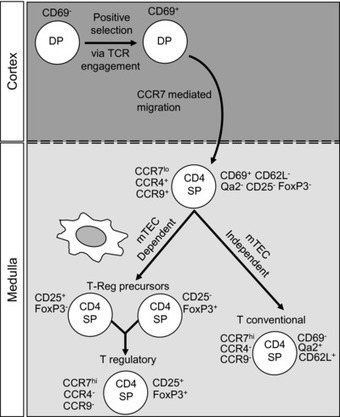
Thymus medulla fosters generation of natural Treg cells, invariant γδ T cells, and invariant NKT cells: What we learn from intrathymic migration - Cowan - 2015 - European Journal of Immunology - Wi...

Thymus medulla fosters generation of natural Treg cells, invariant γδ T cells, and invariant NKT cells: What we learn from intrathymic migration - Cowan - 2015 - European Journal of Immunology - Wi... | Immunology | Scoop.it
Abstract

The organization of the thymus into distinct cortical and medullary regions enables it to control the step-wise migration and development of immature T-cell precursors. Such a process provides access to specialized cortical and medullary thymic epithelial cells at defined stages of maturation, ensuring the generation of self-tolerant and MHC-restricted conventional CD4+ and CD8+ αβ T cells. The migratory cues and stromal cell requirements that regulate the development of conventional αβ T cells have been well studied. However, the thymus also fosters the generation of several immunoregulatory T-cell populations that form key components of both innate and adaptive immune responses. These include Foxp3+ natural regulatory T cells, invariant γδ T cells, and CD1d-restricted invariant natural killer T cells (iNKT cells). While less is known about the intrathymic requirements of these nonconventional T cells, recent studies have highlighted the importance of the thymus medulla in their development. Here, we review recent findings on the mechanisms controlling the intrathymic migration of distinct T-cell subsets, and relate this to knowledge of the microenvironmental requirements of these cells.


Via Krishan Maggon
Krishan Maggon 's curator insight, February 18, 2015 2:14 AM

Mini-Review

Thymus medulla fosters generation of natural Treg cells, invariant γδ T cells, and invariant NKT cells: What we learn from intrathymic migrationAuthorsJennifer E. Cowan, William E. Jenkinson, Graham Anderson First published: 13 February 2015Full publication historyDOI: 10.1002/eji.201445108
Scooped by Gilbert C FAURE
January 17, 2015 7:14 AM
Scoop.it!

Confusing signals: Recent progress in CTLA-4 biology: Trends in Immunology

RT @Cancer_Cell: Want to learn more about CTLA-4, the target of ipilimumab? Read http://t.co/MLhfLuW369 in Trends in Immunology by Walker &…
Gilbert C FAURE's insight:

The mechanism of action of cytotoxic T-lymphocyte-associated protein 4 (CTLA-4) remains surprisingly unclear. Regulatory T (Treg) cells can use CTLA-4 to elicit suppression; however, CTLA-4 also operates in conventional T cells, reputedly by triggering inhibitory signals. Recently, interactions mediated via the CTLA-4 cytoplasmic domain have been shown to preferentially affect Treg cells, yet other evidence suggests that the extracellular domain of CTLA-4 is sufficient to elicit suppression. Here, we discuss these paradoxical findings in the context of CTLA-4-mediated ligand regulation. We propose that the function of CTLA-4 cytoplasmic domain is not to transmit inhibitory signals but to precisely control the turnover, cellular location, and membrane delivery of CTLA-4 to facilitate its central function: regulating the access of CD28 to their shared ligands.

 open access funded by authors!
No comment yet.
Scooped by Gilbert C FAURE
November 26, 2014 1:51 PM
Scoop.it!

Immune tolerance Regulatory T cells require constant reassurance - Nature.com

Immune tolerance Regulatory T cells require constant reassurance Nature.com Regulatory T (TReg) cells require T cell receptor (TCR) signalling for their development, but it has been unclear how TCR signals contribute to their functions in the...
No comment yet.
Scooped by Gilbert C FAURE
October 30, 2014 4:27 PM
Scoop.it!

Hypoxia inducible factors in regulation of immune responses in tumor microenvironment - Kumar - Immunology - Wiley Online Library

Hypoxia inducible factors in regulation of immune responses in tumor microenvironment - Kumar - Immunology - Wiley Online Library | Immunology | Scoop.it
'Ample evidence shows that HIFs play prominent role in tumour immune responses' #immunology http://t.co/I2iptGtiVO http://t.co/zW1FJ7fBwC
Gilbert C FAURE's insight:
Summary

Hypoxia is one of the hallmarks of the tumour microenvironment. It is the result of insufficient blood supply to support proliferating tumour cells. In response to hypoxia, the cellular machinery uses mechanisms whereby the low level of oxygen is sensed and counterbalanced by changing the transcription of numerous genes. Hypoxia-inducible factors (HIF) play a critical role in the regulation of cellular responses to hypoxia. In recent years ample evidence has indicated that HIF play a prominent role in tumour immune responses. Up-regulation of HIF1α promotes immune suppressive activity of myeloid-derived suppressive cells (MDSC) and tumour-associated macrophages (TAM) and rapid differentiation of MDSC to TAM. HIF1α does not affect MDSC differentiation to dendritic cells (DC) but instead causes DC activation. HIF inhibit effector functions of tumour-infiltrating lymphocytes. HIF1α inhibits regulatory T (Treg) cell development by switching the balance towards T helper type 17 cells. However, as a major part of Treg cell differentiation does not take place in the tumour site, a functionally more important role of HIF1α is in the promotion of Treg cell recruitment to the tumour site in response to chemokines. As a result, the presence of Treg cells inside tumours is increased. Hence, HIF play a largely negative role in the regulation of immune responses inside tumours. It appears that therapeutic strategies targeting HIF in the immune system could be beneficial for anti-tumour immune responses.

No comment yet.
Scooped by Gilbert C FAURE
July 15, 2014 2:08 PM
Scoop.it!

High frequency of Treg cells associated with HCC - Healio

High frequency of Treg cells associated with HCC - Healio | Immunology | Scoop.it
High frequency of Treg cells associated with HCC Healio “Nevertheless, more well-designed clinical studies still need to be done to elucidate the exact relationship between Tregs and tumor development, and not only the frequency of Tregs either in...
No comment yet.
Scooped by Gilbert C FAURE
May 23, 2014 6:31 AM
Scoop.it!

Immunology Protocols and Video Articles

Immunology Protocols and Video Articles | Immunology | Scoop.it
Video articles in JoVE about immunology include "Combined Immunofluorescence and DNA FISH on 3D-preserved Interphase Nuclei to Study Changes in 3D Nuclear Organization", "A Microplate Assay to Assess Chemical Effects on RBL-2H3 Mast Cell Degranulation: Effects of Triclosan without Use of an Organic Solvent", "Isolation of Myeloid Dendritic Cells and Epithelial Cells from Human Thymus", "Adenoviral Transduction of Naive CD4 T Cells to Study Treg Differentiation", "Peptide:MHC Tetramer-based Enrichment of Epitope-specific T cells", "Intra-lymph Node Injection of Biodegradable Polymer Particles", "Directed Differentiation of Induced Pluripotent Stem Cells towards T Lymphocytes", "Generation of Induced Regulatory T Cells from Primary Human Naïve and Memory T Cells", "Accelerated Type 1 Diabetes Induction in Mice by Adoptive Transfer of Diabetogenic CD4+ T Cells", "Artificial Antigen Presenting Cell (aAPC) Mediated Activation and Expansion of Natural Killer T Cells".
Gilbert C FAURE's insight:

567 results on may 2014 covering

Allergy and Immunology: A medical specialty concerned with the hypersensitivity of the individual to foreign substances and protection from the resultant infection or disorder.

No comment yet.