Your new post is loading...

|
Scooped by
Gilbert C FAURE
May 24, 2023 6:58 AM
|
Interesting study by Belgian researchers reveals risk factors associated with fatal COVID-19 cases among outbreaks elderly patients in nursing homes. Among…
|
|
Scooped by
Gilbert C FAURE
February 11, 2023 4:12 AM
|
bioRxiv - the preprint server for biology, operated by Cold Spring Harbor Laboratory, a research and educational institution
|
|
Scooped by
Gilbert C FAURE
January 12, 2023 4:32 AM
|
SARS-CoV-2, the virus responsible for the COVID-19 pandemic, has been associated with substantial global morbidity and mortality. Despite a tropism that is largely confined to the airways, COVID-19 is associated with multiorgan dysfunction and long-term cognitive pathologies. A major driver of this biology stems from the combined effects of virus-mediated interference with the host antiviral defences in infected cells and the sensing of pathogen-associated material by bystander cells. Such a dynamic results in delayed induction of type I and III interferons (IFN-I and IFN-III) at the site of infection, but systemic IFN-I and IFN-III priming in distal organs and barrier epithelial surfaces, respectively. In this Review, we examine the relationship between SARS-CoV-2 biology and the cellular response to infection, detailing how antagonism and dysregulation of host innate immune defences contribute to disease severity of COVID-19. In this Review, Minkoff and tenOever examine the relationship between SARS-CoV-2 biology and innate immunity, and they explore how antagonism and dysregulation of host innate immune defences contribute to COVID-19 disease severity.
|
|
Scooped by
Gilbert C FAURE
December 8, 2022 11:24 AM
|
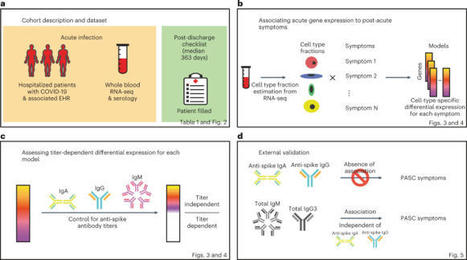
Post-acute sequelae of severe acute respiratory syndrome coronavirus 2 (SARS-CoV-2) infection are debilitating, clinically heterogeneous and of unknown molecular etiology. A transcriptome-wide investigation was performed in 165 acutely infected hospitalized individuals who were followed clinically into the post-acute period. Distinct gene expression signatures of post-acute sequelae were already present in whole blood during acute infection, with innate and adaptive immune cells implicated in different symptoms. Two clusters of sequelae exhibited divergent plasma-cell-associated gene expression patterns. In one cluster, sequelae associated with higher expression of immunoglobulin-related genes in an anti-spike antibody titer-dependent manner. In the other, sequelae associated independently of these titers with lower expression of immunoglobulin-related genes, indicating lower non-specific antibody production in individuals with these sequelae. This relationship between lower total immunoglobulins and sequelae was validated in an external cohort. Altogether, multiple etiologies of post-acute sequelae were already detectable during SARS-CoV-2 infection, directly linking these sequelae with the acute host response to the virus and providing early insights into their development. Transcriptomic analyses of acute phase whole blood from a large cohort of patients with COVID-19 identify molecular determinants of post-infection long-term sequelae.
|
|
Scooped by
Gilbert C FAURE
October 5, 2022 2:42 AM
|
T cells specific for SARS-CoV-2 are thought to protect against infection and development of COVID-19, but direct evidence for this is lacking. Here, we associated whole-blood-based measurement of SARS-CoV-2-specific interferon-γ-positive T cell responses with positive COVID-19 diagnostic (PCR and/or lateral flow) test results up to 6 months post-blood sampling. Amongst 148 participants donating venous blood samples, SARS-CoV-2-specific T cell response magnitude is significantly greater in those who remain protected versus those who become infected (P < 0.0001); relatively low magnitude T cell response results in a 43.2% risk of infection, whereas high magnitude reduces this risk to 5.4%. These findings are recapitulated in a further 299 participants testing a scalable capillary blood-based assay that could facilitate the acquisition of population-scale T cell immunity data (14.9% and 4.4%, respectively). Hence, measurement of SARS-CoV-2-specific T cells can prognosticate infection risk and should be assessed when monitoring individual and population immunity status. The presence of SARS-CoV-2-specific antibodies alone is not an accurate determinant of immunity. In this work, the authors investigate if whole-blood based measurement of SARS-CoV-2 specific T cell responses could prognosticate the risk of possible SARS-CoV-2 infection, and recapitulate their findings in a capillary blood-based assay.
|
|
Scooped by
Gilbert C FAURE
September 26, 2022 11:02 AM
|
Demographics of longitudinal study participants. Peripheral blood samples (HLA-A: 02*01+) were obtained from 24 convalescent donors and 9 healthy donors prior to the FDA emergency use authorization of the Johnson & Johnson, Moderna, and Pfizer COVID-19 vaccines.
|
|
Scooped by
Gilbert C FAURE
August 21, 2022 4:12 AM
|
The emergence of SARS-CoV-2 variants capable of evading neutralizing antibodies have
increased the interest in defining the immunological correlates of disease protection.
Bertoletti, Le Bert, and Tan summarize how SARS-CoV-2-specific T cell magnitude, function
and anatomical localization can affect the their ability to protect against severe
COVID-19.
|
|
Scooped by
Gilbert C FAURE
August 11, 2022 3:23 AM
|
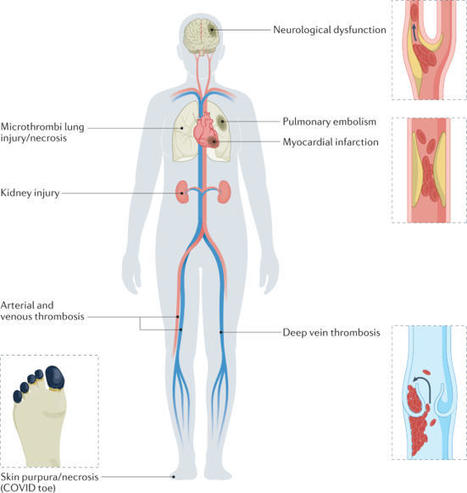
COVID-19-associated coagulopathy (CAC) is a life-threatening complication of SARS-CoV-2 infection. However, the underlying cellular and molecular mechanisms driving this condition are unclear. Evidence supports the concept that CAC involves complex interactions between the innate immune response, the coagulation and fibrinolytic pathways, and the vascular endothelium, resulting in a procoagulant condition. Understanding of the pathogenesis of this condition at the genomic, molecular and cellular levels is needed in order to mitigate thrombosis formation in at-risk patients. In this Perspective, we categorize our current understanding of CAC into three main pathological mechanisms: first, vascular endothelial cell dysfunction; second, a hyper-inflammatory immune response; and last, hypercoagulability. Furthermore, we pose key questions and identify research gaps that need to be addressed to better understand CAC, facilitate improved diagnostics and aid in therapeutic development. Finally, we consider the suitability of different animal models to study CAC. Here, the authors consider our emerging understanding of COVID-19-associated coagulopathy. They focus on the complex interactions between innate immune, coagulation and fibrinolytic pathways that can lead to potentially life-threatening thrombosis following SARS-CoV-2 infection.
|
|
Scooped by
Gilbert C FAURE
July 4, 2022 6:34 AM
|
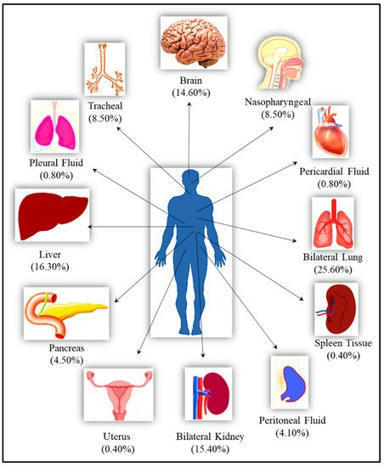
Precise reasons for severe manifestation of SARS-CoV-2 remain unanswered, and efforts have been focused on respiratory system management. Demonstration of unequivocal presence of SARS-CoV-2 in vital body organs by cadaver autopsy was the only way to prove multi-organ involvement.
|
|
Scooped by
Gilbert C FAURE
June 17, 2022 8:14 AM
|
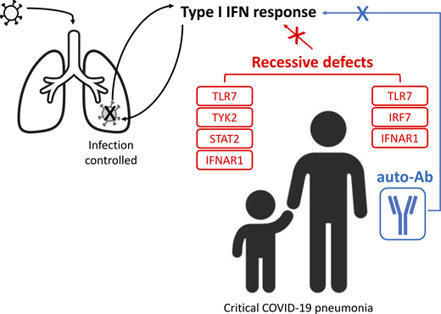
In an international cohort of 112 children hospitalized for moderate to critical COVID-19 pneumonia, we identified 12 children with one of four known recessive
|
|
Scooped by
Gilbert C FAURE
May 19, 2022 3:38 AM
|
No AccessNewsRequest AccessFull TextA Role for the Vascular Endothelium in Post–Acute COVID-19? Laura P.M.H. de Rooij , Lisa M. Becker and Peter Carmeliet Originally published16 May 2022https://doi.org/10.1161/CIRCULATIONAHA.122.059231Circulation. 2022;145:1503–1505FootnotesThe opinions expressed...
|
|
Scooped by
Gilbert C FAURE
April 25, 2022 5:21 AM
|
COVID-19 deteriorates type II pneumocytes and damages the alveolar immunologic balancing process through the inadvertent activation of a sequence of localized and general inflammatory responses.Due to an aggregation of uncleaved angiotensin II, the stimulated inflammatory cells cause cytokines synt...
|
|
Scooped by
Gilbert C FAURE
March 19, 2022 5:25 AM
|
There is a lack of understanding as to why some people suffer from long-lasting symptoms after COVID-19 infection. A new study from Karolinska Institutet in Sweden, the Helmholtz Center Munich (HMGU) and the Technical University of Munich (TUM), both in Germany, now demonstrates that a certain type of immune cell called macrophages show altered inflammatory and metabolic expression several months after mild COVID-19. The findings are published in the journal Mucosal Immunology.
|
|
|
Rescooped by
Gilbert C FAURE
from Virus World
March 21, 2023 9:53 AM
|
NIH-funded study suggests need to boost CD8+ T cell response after infection. The magnitude and quality of a key immune cell’s response to vaccination with two doses of the Pfizer-BioNTech COVID-19 vaccine were considerably lower in people with prior SARS-CoV-2 infection compared to people without prior infection, a study has found. In addition, the level of this key immune cell that targets the SARS-CoV-2 spike protein was substantially lower in unvaccinated people with COVID-19 than in vaccinated people who had never been infected. Importantly, people who recover from SARS-CoV-2 infection and then get vaccinated are more protected than people who are unvaccinated. These findings, which suggest that the virus damages an important immune-cell response, were published today in the journal Immunity. The study was co-funded by the National Institute of Allergy and Infectious Diseases (NIAID), part of the National Institutes of Health, and led by Mark M. Davis, Ph.D. Dr. Davis is the director of the Stanford Institute for Immunity, Transplantation and Infection and a professor of microbiology and immunology at Stanford University School of Medicine in Palo Alto, California. He is also a Howard Hughes Medical Institute Investigator. Dr. Davis and colleagues designed a very sensitive tool to analyze how immune cells called CD4+ T cells and CD8+ T cells respond to SARS-CoV-2 infection and vaccination. These cells coordinate the immune system’s response to the virus and kill other cells that have been infected, helping prevent COVID-19. The tool was designed to identify T cells that target any of dozens of specific regions on the virus’s spike protein as well as some other viral regions. The Pfizer-BioNTech vaccine uses parts of the SARS-CoV-2 spike protein to elicit an immune response without causing infection. The investigators studied CD4+ and CD8+ T-cell responses in blood samples from three groups of volunteers. One group had never been infected with SARS-CoV-2 and received two doses of the Pfizer-BioNTech COVID-19 vaccine. The second group had previously been infected with SARS-CoV-2 and received two doses of the vaccine. The third group had COVID-19 and was unvaccinated. The researchers found that vaccination of people who had never been infected with SARS-CoV-2 induced robust CD4+ and CD8+ T-cell responses to the virus’ spike protein. In addition, these T cells produced multiple types of cell-signaling molecules called cytokines, which recruit other immune cells—including antibody-producing B cells—to fight pathogens. However, people who had been infected with SARS-CoV-2 prior to vaccination produced spike-specific CD8+ T cells at considerably lower levels—and with less functionality—than vaccinated people who had never been infected. Moreover, the researchers observed substantially lower levels of spike-specific CD8+ T cells in unvaccinated people with COVID-19 than in vaccinated people who had never been infected. Taken together, the investigators write, these findings suggest that SARS-CoV-2 infection damages the CD8+ T cell response, an effect akin to that observed in earlier studies showing long-term damage to the immune system after infection with viruses such as hepatitis C or HIV. The new findings highlight the need to develop vaccination strategies to specifically boost antiviral CD8+ T cell responses in people previously infected with SARS-CoV-2, the researchers conclude. Research published (March 15, 2023) in Immunity: https://doi.org/10.1016/j.immuni.2023.03.005
Via Juan Lama
|
|
Scooped by
Gilbert C FAURE
February 10, 2023 6:18 AM
|
COVID-19 patients have reduced thymic T- cell output, and disease severity negatively
correlates with thymic function. SARS-CoV-2 targeting of thymic epithelial cells induces
the downregulation of critical pathways associated with epithelial cell adhesion and
survival.
|
|
Scooped by
Gilbert C FAURE
January 7, 2023 12:55 PM
|
In the past 10 years, we have witnessed major advances in clinical immunology. Newborn
screening for severe combined immunodeficiency has become universal in the United
States and screening programs are being extended to severe combined immunodeficiency
and other inborn errors of immunity globally. Early genetic testing is becoming the
norm for many of our patients and allows for informed selection of targeted therapies
including biologics repurposed from other specialties. During the COVID-19 pandemic,
our understanding of essential immune responses expanded and the discovery of immune
gene defects continued.
|
|
Scooped by
Gilbert C FAURE
December 2, 2022 10:02 AM
|
Host immunity to infection with SARS-CoV-2 is highly variable, dictating diverse clinical outcomes ranging from asymptomatic to severe disease and death. We previously reported reduced type I interferon in severe COVID-19 patients preceded clinical worsening. Further studies identified genetic mutations in loci of the TLR3- or TLR7-dependent interferon-I pathways, or neutralizing interferon-I autoantibodies as risk factors for development of COVID-19 pneumonia. Here we show in patient cohorts with different severities of COVID-19, that baseline plasma interferon α measures differ according to the immunoassay used, timing of sampling, the interferon α subtype measured, and the presence of autoantibodies. We also show a consistently reduced induction of interferon-I proteins in hospitalized COVID-19 patients upon immune stimulation, that is not associated with detectable neutralizing autoantibodies against interferon α or interferon ω. Intracellular proteomic analysis shows increased monocyte numbers in hospitalized COVID-19 patients but impaired interferon-I response after stimulation. We confirm this by ex vivo whole blood stimulation with interferon-I which induces transcriptomic responses associated with inflammation in hospitalized COVID-19 patients, that is not seen in controls or non-hospitalized moderate cases. These results may explain the dichotomy of the poor clinical response to interferon-I based treatments in late stage COVID-19, despite the importance of interferon-I in early acute infection and may guide alternative therapeutic strategies. The interferon response has been shown to be linked to severity of SARS-CoV-2 infection and is an essential component of the immune response to COVID-19. Here the authors stratify patients according to COVID-19 severity and asses the interferon response showing defective responses in severe infection and highlight the importance of assay variables and confounding factors that impact the detection of interferon.
|
|
Scooped by
Gilbert C FAURE
October 4, 2022 3:06 AM
|
There are several reasons to consider the role of endothelial cells in COVID-19 and other emerging viral infections. First, severe cases of COVID-19 show a common breakdown of central vascular functions. Second, SARS-CoV-2 replicates in endothelial cells. Third, prior deterioration of vascular function exacerbates disease, as the most common comorbidities of COVID-19 (obesity, hypertension, and diabetes) are all associated with endothelial dysfunction. Importantly, SARS-CoV-2's ability to infect endothelium is shared by many emerging viruses, including henipaviruses, hantavirus, and highly pathogenic avian influenza virus, all specifically targeting endothelial cells. The ability to infect endothelium appears to support generalised dissemination of infection and facilitate the access to certain tissues. The disturbed vascular function observed in severe COVID-19 is also a prominent feature of many other life-threatening viral diseases, underscoring the need to understand how viruses modulate endothelial function. We here review the role of vascular endothelial cells in emerging viral infections, starting with a summary of endothelial cells as key mediators and regulators of vascular and immune responses in health and infection. Next, we discuss endotheliotropism as a possible virulence factor and detail features that regulate viruses' ability to attach to and enter endothelial cells. We move on to review how endothelial cells detect invading viruses and respond t
|
|
Scooped by
Gilbert C FAURE
September 5, 2022 2:37 PM
|
The clinical manifestation of COVID-19 mainly targets the lung as a primary affected organ, which is also a critical site of immune cells activation by SARS-CoV-2. However, recent reports also suggest the involvement of extrapulmonary tissues in COVID-19 pathology.
|
|
Scooped by
Gilbert C FAURE
August 19, 2022 3:28 AM
|
We have created this teaching resource hub to provide immunology educators with links, videos, worksheets, webinars and other resources that can help explain, describe, supplement and assess immunology content for students from A-level studies up to Master's level. The BSI recognises the particular needs and support that immunology educators require due to the COVID-19
|
|
Scooped by
Gilbert C FAURE
August 11, 2022 3:15 AM
|
medRxiv - The Preprint Server for Health Sciences
|
|
Scooped by
Gilbert C FAURE
July 1, 2022 2:41 AM
|
Two and a half years into the COVID-19 pandemic, we have gained many insights into the human antibody response to the causative SARS-CoV-2 virus. In this Review, we summarize key observations of humoral immune responses in people with COVID-19, discuss key features of infection- and vaccine-induced neutralizing antibodies, and consider vaccine designs for inducing antibodies that are broadly protective against different variants of the SARS-CoV-2 virus. Qi et al. provide an in-depth analysis of antibody responses generated in response to SARS-CoV-2.
|
|
Scooped by
Gilbert C FAURE
May 21, 2022 9:52 AM
|
interferon, friend or foe
|
|
Scooped by
Gilbert C FAURE
May 18, 2022 11:34 AM
|
Author summary Dysregulated immune responses and their associated pathologies are the culprit of severe disease symptoms in response to viral infections. The ability to properly regulate effective and controlled immune responses is a critical feature of preventing severe disease outcomes. Type I interferons are antiviral signaling molecules known to induce potent antiviral immune responses; however, their ability to suppress pathogenic immune responses is poorly understood. Employing a vaginal HSV-2 infection model in mice, we show that type I IFN signaling is critical to preventing the development of severe tissue pathology by suppressing the pathogenic functions of macrophages. In the absence of type I IFNs, these unleashed macrophages produce MMPs that can degrade tissue structure. We show that inhibiting MMPs reduces the severity of immunopathology. We further provide evidence that influenza infection in mice, as well as severe COVID-19 infection in humans, is linked to macrophage and MMP-mediated tissue destruction. Together, our study describes a distinct mechanism through which type I IFNs regulate pathogenic immune responses, and defines MMPs as a potential therapeutic target during severe viral infections. https://medicalxpress.com/news/2022-05-type-i-interferon-immune-rogue-viral.html
|
|
Scooped by
Gilbert C FAURE
March 27, 2022 4:55 AM
|
The coronavirus disease 2019 (COVID-19) pandemic, causing considerable mortality and morbidity worldwide, has fully engaged the biomedical community in attempts to elucidate the pathophysiology of COVID-19 and develop robust therapeutic strategies.
|


 Scoop.it!