Your new post is loading...

|
Scooped by
I2BC Paris-Saclay
April 23, 5:11 AM
|
How bacterial pathogens hijack host carbon: Insights from TnSeq metabolic network analysis
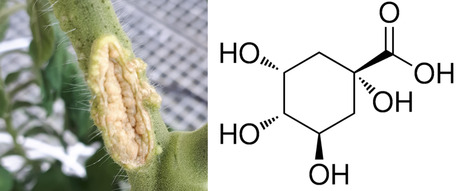
We uncovered how Agrobacterium tumefaciens exploits host carbon resources to colonize tomato, revealing quinic acid catabolism as the critical driver of its gall-specific fitness. Agrobacterium tumefaciens is a facultative plant pathogen that forms galls on a wide range of hosts and persists in soil, roots and galls through extensive metabolic versatility. Here, we combined genome-wide transposon sequencing (TnSeq), metabolomics and reverse genetics to identify carbon utilisation pathways supporting A. tumefaciens fitness in tomato roots and galls. TnSeq screening across 21 carbon sources, representative of rhizosphere exudates, root metabolites and gall-derived compounds, identified conserved and substrate-specific fitness determinants, including central metabolic enzymes, transporters and previously uncharacterized catabolic genes. Comparison with in planta TnSeq data revealed environment-dependent metabolic requirements, highlighting fluxes through the Entner–Doudoroff pathway, the TCA cycle and gluconeogenesis. Quinic acid catabolism emerged as a major determinant of fitness specifically in galls, where this compound accumulated. Deletion of pcaC (ATU_RS21295/atu4541) impaired growth on quinic and protocatechuic acids and reduced competitiveness during gall colonisation, with no effect in roots. Together, this work provides a system-level framework for understanding how A. tumefaciens exploits plant-derived nutrients in host-associated environments. More information: https://doi-org.insb.bib.cnrs.fr/10.1111/1462-2920.70311 https://www.i2bc.paris-saclay.fr/equipe-interactions-of-bacteria-with-plants-and-insects/ https://www.i2bc.paris-saclay.fr/sequencing/ Contact: Denis Faure denis.faure@i2bc.paris-saclay.fr
|
|
Scooped by
I2BC Paris-Saclay
April 17, 5:00 AM
|
A wolf in sheep’s clothing
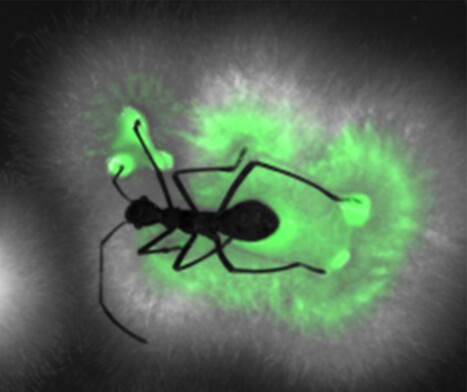
Distinguishing beneficial from harmful among closely related bacteria, a crucial question for organisms in nature and for biotechnology Many organisms crucially depend on the services of specific microorganisms and need to maintain these symbionts in large numbers in their body. Hosts dispose of highly specific symbiont selection mechanisms and have symbiotic organs to host safely these symbionts. It is believed that these sophisticated adaptations evolved to counter the thread of exploitation of the symbiotic association by opportunistic pathogens, although such cases are rarely reported. The association of the bean bug Riptortus pedestris with caballeronia bacteria is a model of a highly evolved symbiotic system. In a study published in PNAS, Ishigami et al report on an opportunistic pathogen of the bean bug that is phylogenetically related to symbionts. Initially, this Burholderia pathogen behaves as a true symbiont, efficiently passing all symbiont filtering mechanisms of the host, inducing the development of the symbiotic organ, and infecting and colonizing it. However, once settled, the pathogen throws off its disguise and shows its true nature: it breaks out from its confinement in the symbiotic organ, causes deadly sepsis and then escapes from the dead animal to recolonize the environment (figure). This case of a pathogen exploiting an intricate mutualistic association highlights the evolutionary pressures predicted by theory that have shaped the stringent partner-choice mechanisms usually observed in symbioses and at the same time reveals the fragility of these mutualisms despite their sophistication. Caballeronia and Burkholderia species belong both to the Burkholderia sensu latu clade of betaproteobacteria and were before phylogenetic revisions included in the single genus Burkholderia. In the 1990s, several Burkholderia strains were registered as biocontrol agents for agricultural applications but later withdrawn and a moratorium was placed on the registration of Burkholderia-containing products, after opportunistic human infections were reported with closely related strains. Thus, the Burkholderia has become a showcase of the potential health risks associated with the use of microorganisms in commercial applications. Because of the many known Burkholderia strains with potential applications in agriculture, it is important to dispose of criteria that distinguish friend from foe. A separate study by Agnoli et al, published in the ISME Journal, was conducted on a panel of 76 Burkholderia, Paraburkholderia and Caballeronia strains of the Burkholderia sensu lato. The work identified phenotypic traits and genetic markers that enable improved, strain-level evaluation of pathogenic potential and biocontrol capacity, supporting the rational selection of Burkholderia sensu latu strains for safe agricultural applications. More information :https://academic.oup.com/ismej/advance-article/doi/10.1093/ismejo/wrag081/8650978 Contact : Peter Mergaert peter.mergaert@i2bc.paris-saclay.fr
|
|
Scooped by
I2BC Paris-Saclay
April 15, 4:06 AM
|
The I2BC was well represented on Tuesday, April 14, at the Science Outreach Day co-organized by the French Society for Developmental Biology, the French Society for Cell Biology and the city of Ivry-sur-Seine. Seven members of the I2BC led workshops throughout the day. Nearly 1,200 elementary school students participated in workshops on cell, plant, and animal biology, as well as on the scientific method. Let’s hope we’ve inspired a few future scientists… one thing is certain: the children were thrilled! https://sbcf.fr/newsletter/mediation-scientifique-sbcf/ https://sfbd.fr/ressources/mediation/#1558951904425-8b59e54f-fdb5
|
|
Scooped by
I2BC Paris-Saclay
January 13, 5:33 AM
|
Flexizyme-Based Strategy for the Synthesis of Stable, Non-Isomerizable Amide-Linked 2’-Aminoacyl-tRNAs and their Shortened Analogs
We developed a flexizyme-based semi-synthetic strategy that provides access to stable 2′- and 3′-amide AA-tRNA analogs, offering robust tools for structural biology and for probing regiospecificity in AA-tRNA-dependent enzymes. The study of the regiospecificity of aminoacyl-tRNA (AA-tRNA)-dependent enzymes and their structural characterization with AA-tRNAs are limited by rapid hydrolysis of the ester bond linking amino acid to tRNA. To overcome this limitation, stable AA-tRNA analogs bearing hydrolysis-resistant linkages, such as amide bonds or ester bioisosteres, have been developed. These analogs are valuable tools for investigating interactions between AA-tRNAs and various enzymes or ribonucleoproteins, including elongation factors, ribosomes, Fem-family transferases, and cyclodipeptide synthases. However, their synthesis remains technically challenging. Recently, flexizymes—engineered ribozymes capable of aminoacylating tRNAs with diverse amino acids or analogs—have enabled the synthesis of 3′-amide-linked AA-NH-tRNAs. Due to their inherent specificity for 3′-OH acylation, flexizymes have not been used to generate 2′-amide-linked analogs, and such regioisomers have remained unexplored. In this study, we demonstrate that while flexizymes cannot directly aminoacylate the 2′ position, they can nevertheless mediate the synthesis of 2′-aminoacyl-NH-tRNAs via a two-step regioisomerization mechanism with excellent yields. This finding provides new insights into the binding mode of AA-tRNAs to flexizymes and expands the chemical space of stable AA-tRNA analogs. Access to both 3′- and 2′-amide regioisomers will enable more precise studies of AA-tRNA recognition and catalysis by various AA-tRNA-dependent systems. More information : https://doi.org/10.1002/chem.202503506 Contact person: Matthieu Fonvielle matthieu.fonvielle@i2bc.paris-saclay.fr https://www.i2bc.paris-saclay.fr/enzymology-and-non-ribosomal-peptide-biosynthesis/
|
|
Scooped by
I2BC Paris-Saclay
December 5, 2025 9:28 AM
|
Structural determinants of SlpA-mediated phage recognition in Clostridioides difficile
Study published in PLoS Pathogens of molecular features of phage receptor SlpA protein demonstrated the complexity of the interactions between human enteropathogen C. difficile and its phages The emergence of Clostridioides difficile as a leading cause of healthcare-associated nosocomial intestinal infections calls for novel therapeutic strategies, particularly in the context of antibiotic resistance and recurrent disease. Phage therapy is a promising approach, but its clinical application against C. difficile remains hindered by our lack of understanding of the factors driving host specificity. Indeed, it is crucial to understand how phages specifically interact with their host to be able to select the best candidates for cocktail preparation. The main surface layer protein SlpA is a key phage receptor, but the molecular details governing phage-receptor interactions remain unclear. By dissecting the structural features of SlpA required for phage infection through engineered SlpA isoforms and domain modifications, in collaboration with our Canadian collegues from Sherbrooke University, we reveal how specific regions of SlpA mediate phage adsorption and infection. These new insights into phage–receptor interactions will be instrumental in guiding the future engineering of broad-host-range therapeutic phages. More information : https://doi. org/10.1371/journal.ppat.1013724 Contact : Olga Soutourina olga.soutourina@i2bc.paris-saclay.fr https://www.i2bc.paris-saclay.fr/regulatory-rnas-in-clostridia/
|
|
Scooped by
I2BC Paris-Saclay
April 15, 2025 8:44 AM
|
Sinorhizobium meliloti FcrX coordinates cell cycle and division during free-living growth and symbiosis by a ClpXP-dependent mechanism
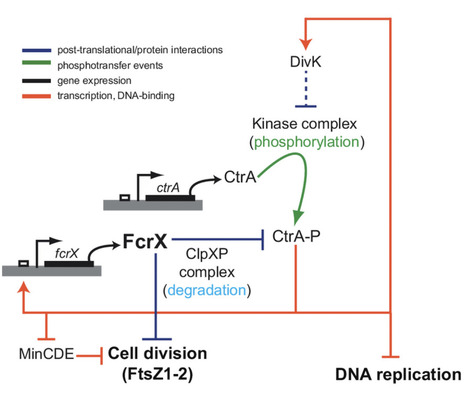
In this study, a new essential player of cell cycle regulation has been characterized in the nitrogen fixing symbiont Sinorhizobium meliloti. During the nitrogen-fixing symbiosis between the alphaproteobacterium Sinorhizobium meliloti and the plant Medicago sativa (alfalfa), the interplay of molecular mechanisms governing cell cycle and bacteroid differentiation is a remarkable system that has still many details to be discovered. Here, we describe a bacterial cell cycle regulator, named FcrX, that controls two of the main essential players of cell cycle and bacteroid differentiation: the master regulator CtrA and the tubulin-like Z-ring component FtsZ. This essential factor is potentially participating with the degradosome complex driving the proteolysis of those two important regulators. Constitutive expression of FcrX during nodule development shows an increase of plant biomass, opening interesting paths in the amelioration of biological nitrogen fixation for a sustainable agriculture. More information : https://doi.org/10.1073/pnas.2412367122 Contact : Emanuele Biondi - emanuele.biondi@i2bc.paris-saclay.fr
|
|
Scooped by
I2BC Paris-Saclay
February 17, 2025 5:00 AM
|
ChemPhysBio2025 : Registrations Now Open!
We’re excited to announce that registrations are now open for the Second Interdisciplinary Summer School: ChemPhysBio2025 – Imaging Biology: Interdisciplinary Tools and Techniques to Unravel Cellular Dynamics – taking place June 16–20, 2025, at Université Paris-Saclay! This unique event bridges chemistry, physics, and biology, offering participants the opportunity to explore advanced photonic imaging techniques for unraveling cellular dynamics. We’re also thrilled to welcome two distinguished guest lecturers: - Julie Karpenko (Laboratory for Therapeutic Innovation, University of Strasbourg)
- Balázs Enyedi (Department of Physiology, Semmelweis University, Hungary)
What to expect? - Inspiring lectures and research seminars
- Interactive interdisciplinary workshops
- Hands-on experience in cutting-edge research labs
Who should apply?
Master’s students, PhD candidates, postdocs, and junior researchers who are newcomers to the interdisciplinary field and eager to deepen their knowledge, expand their skill sets, and build meaningful collaborations. With only 20 spots available, don’t miss your chance to join us!
Apply now: https://chemphysbio2025.sciencesconf.org/
Portrait Jeune Chercheur – Christopher Dane Fage, Chercheur en biochimie structurale
Christopher Dane Fage is a structural biochemist who, in January of 2024, joined the Institute for Integrative Biology of the Cell - I2BC (CNRS/CEA/UPSaclay, Gif-sur-Yvette) as a CNRS CRCN to lead the team Structures and functions of hybrid natural product assembly lines. His research seeks to understand and exploit the biosynthesis of medically relevant bacterial metabolites by multi-family enzyme systems. In 2014, Chris earned his PhD from the University of Texas at Austin (USA) in the team of Adrian Keatinge-Clay, where his interest in the structural biochemistry of polyketide synthases (PKSs) crystallized (these multi-domain, multi-module enzymatic assembly lines build complex molecules from simple building blocks through the catalytic chemistry of fatty acid synthases (FASs)). For example, from the spinosyn insecticide pathway, he investigated a Diels-Alderase-like enzyme (catalyzes a reaction widely used in chemical synthesis) and a “dimerization element” (organizes the modular architecture of many PKSs). Subsequently, as a postdoc at Philipps-Universität Marburg (Germany) with Mohamed Marahiel, Chris focused on other types of natural product-forming enzymes, such as non-ribosomal peptide synthetases (NRPSs; these assembly line systems incorporate different building blocks than PKSs using different catalytic domains). For example, he initiated an integrative structure-function study on the inter-subunit “COM” interfaces needed for efficient peptide formation in many NRPSs. He also studied the properties, detection, biosynthesis, and tailoring of the ribosomally synthesized and post-translationally modified lasso peptides, which adopt a remarkably stable lariat knot-like fold. From 2017, Chris joined the teams of Greg Challis and Józef Lewandowski at the University of Warwick (UK). There, he investigated trans-AT PKSs, which employ a wide variety of standalone enzymes in place of their subunit-embedded counterparts, as well as hybrid PKS-NRPS systems, which merge the catalytic chemistry of PKSs and NRPSs – thanks to their peculiarities, these machineries build exceptionally diverse compounds. He also clarified the mode of action of the kalimantacin antibiotics against the human pathogen Staphylococcus aureus. In a brief departure from natural products, Chris worked at the Centre for Medicines Discovery at the University of Oxford (UK) during 2022-2023, where he characterized the structures of three enzymes associated with type 2 diabetes mellitus. He also developed a high-throughput assay for screens against libraries of tens of thousands of inhibitors. Since arriving at the I2BC, Chris has been pursuing structure-guided studies towards the rational reprogramming of hybrid FAS-NRPS-PKS systems, with particular interest in those of the kalimantacin (antibacterial) and bleomycin (anticancer) drugs. “The true delight is in the finding out rather than in the knowing.” - Isaac Asimov -> Contact : christopher.fage@i2bc.paris-saclay.fr
Via Life Sciences UPSaclay
Le prochain café se tiendra le vendredi 22 novembre 2024 en visioconférence de 13h30 à 14h avec la participation de Denis Faure (I2BC) qui nous parlera sur « The versatile lifestyle of the plant pathogen Agrobacterium tumefaciens » Pour assister en visioconférence : ICI
Via Life Sciences UPSaclay
|
|
Scooped by
I2BC Paris-Saclay
October 17, 2024 6:00 AM
|
Symposium Archaea October 17-18 2024
|
|
Scooped by
I2BC Paris-Saclay
October 1, 2024 6:11 AM
|
Symposium Archaea 2024, 17-18 october at I2BC
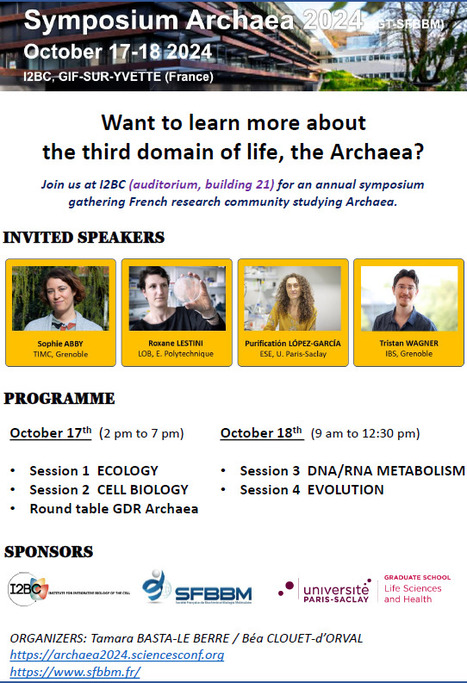
Want to learn more about the third domain of life, the Archaea? Join us at I2BC for an annual symposium gathering French research community studying archaea. The Archaea 2024 symposium, organised by the SFBBM's GT-Archées, is intended to bring together the entire French scientific community to discuss and exchange ideas on unifying themes relating to the importance and place of Archaea, the third domain of living organisms, in ecosystems, evolution and the fundamental processes of life. The scientific community is seeking to elucidate the fundamental molecular mechanisms at work in these microorganisms, the diversity of their viruses, and the adaptive limits of living organisms in relation to the environment. Archaea have been the subject of study from a variety of disciplinary perspectives, including those of biochemists, microbiologists, evolutionists, molecular biologists and also from the perspective of industry. Archaea are now being regarded as essential models for understanding the processes that underpin the functioning of living organisms. more information: https://archaea2024.sciencesconf.org/ Contact: tamara.basta@i2bc.paris-saclay.fr
|
|
Scooped by
I2BC Paris-Saclay
September 23, 2024 10:24 AM
|
Impact of the Deletion of Genes of the Nitrogen Metabolism on Triacylglycerol, Cardiolipin and Actinorhodin Biosynthesis in Streptomyces coelicolor.
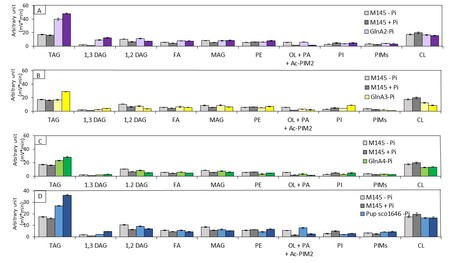
Analysis of the consequences of the deletion of genes involved in nitrogen metabolism on the content of phospholipids or of storage lipids of Streptomyces coelicolor illustrates the complex links exiting between carbon, nitrogen and phosphate metabolisms. Since nitrogen (N) limitation is known to be an important trigger of storage lipid / triacylglycerol (TAG) accumulation, in most microorganisms, we assessed the global lipid content of 21 strains derived from Streptomyces coelicolor deleted for genes involved in N metabolism. These strains were grown in the classical R2YE medium that is N and phosphate (P) limited. Seven of these strains had a higher TAG content than the original strain. These strains were either deleted for genes encoding proteins involved 1) in polyamine degradation (GlnA2/SCO2241, GlnA3/SCO6962, GlnA4/SCO1613); 2) in protein degradation (Pup/SCO1646); 3) in the regulation of nitrogen metabolism (GlnE/SCO2234 and GlnK/SCO5584) or 4) encoding the global regulator DasR/SCO5231 that controls negatively the degradation of N-acetylglucosamine, a constituent of peptidoglycan. Five of these strains, with the exception of the glnA2 and pup mutants, had a lower cardiolipin (CL) content than the original strain. This suggested that in these strains the biosynthesis of TAG, molecule devoided of (P) groups is prevalent over that of CL that bears 2 (P) groups, thus allowing higher (P) availability. The deletion of pup, glnA2, glnA3, and glnA4 was correlated, in Pi limitation, with an increase in the total production of the blue polyketide actinorhodin (ACT), whereas ACT production was strongly reduced in the glnA3 mutant in (P) proficiency and was totally abolished in the dasR mutant in both (P) conditions. Altogether, our data suggest that N limitation linked to the deletion of genes mentioned above results into high oxidative stress that triggers storage of acetylCoA as TAG to reduce the activity of the oxidative metabolism, generator of oxidative stress, as well as the biosynthesis of ACT that has anti-oxidant properties. At last, the reduced ACT biosynthesis of the glnA3 mutant, is thought to be due to its high spermine and spermidine content, molecules known to protect the cell against oxidative stress. More information: doi.org/10.3390/microorganisms12081560 Contact: Marie-Joëlle VIROLLE marie-joelle.virolle@i2bc.paris-saclay.fr
|
|
Scooped by
I2BC Paris-Saclay
July 26, 2024 8:09 AM
|
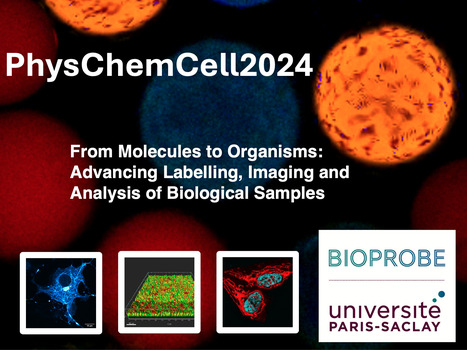
From Molecules to Organisms: Advancing Labelling, Imaging and Analysis of Biological Samples
|
|
|
Scooped by
I2BC Paris-Saclay
April 17, 5:04 AM
|
Iron Sulfides Produced by Thermococcales: An Iron Detoxification Mechanism
Thermococcales, hyperthermophilic archaea from hydrothermal vents, promote iron sulfide precipitation, enabling survival in iron-rich environments. Some cells become encrusted in pyrite and do not survive mineralization, while surviving cells activate metal detoxification genes. Thermococcales, sulfur-reducing archaea inhabiting the hottest parts of hydrothermal vents, have evolved to thrive in environments rich in iron and sulfide species. In this study, using experimental analogues of sulfur-rich hydrothermal chimneys, we confirm previous suggestions that the precipitation of iron sulfide minerals promoted by Thermococcales contributes to a population-wide adaptation to reactive species induced by the presence of high levels of iron. In parallel with mineral phases identification, cellular metabolic activity was monitored during mineralization, revealing a mechanism in which a subpopulation of cells does not survive mineralization and becomes encrusted in pyrite, while the remaining living cells exhibit a gene expression profile focused on DNA repair and metal excess associated detoxification. Compared to abiotic conditions, Thermococcales induce a faster precipitation of dissolved iron, immobilising excess metal. Our results clarify the role of mineralizing cells in this survival mechanism, suggesting that this biomineralization process allows resilience to extreme chemical stress. Upon drastic levels of toxic dissolved iron, thanks to a population of mineralizing cells, the surviving Thermococcales are thus more likely to endure those still harsh environments. This complex mechanism is likely a key factor in the adaptation of microorganisms to the hottest environments of hydrothermal vents. More information : https://enviromicro-journals.onlinelibrary.wiley.com/doi/10.1111/1462-2920.70242 Contact : Aurore Gorlas aurore.gorlas@i2bc.paris-saclay.fr
|
|
Scooped by
I2BC Paris-Saclay
April 17, 4:52 AM
|
The tRNA moieties of both aminoacyl-tRNA substrates of a cyclodipeptide synthase share a common binding site, as revealed by RNA microhelices mimicking tRNA acceptor arms
Cyclodipeptide synthases (CDPSs) utilize two aminoacyl-tRNAs as substrates to produce diverse natural products. Here, we demonstrate that CDPSs efficiently recognize aminoacylated microhelices (miHxs) that mimic the tRNA acceptor arm. Structural and enzymological analyses using unacylated, misacylated, and engineered miHxs reveal a shared RNA-binding mode for both substrates. These findings establish miHxs as versatile tools to investigate CDPS function and, more broadly, other aminoacyl-tRNA–dependent enzymes. Two teams from the I2BC, in collaboration with the ICSN, combined enzymological and structural approaches to investigate cyclodipeptide synthases (CDPSs), enzymes involved in natural product biosynthesis. CDPSs sequentially use two aminoacyl-tRNAs (AA-tRNAs) to catalyse cyclodipeptide formation. We previously showed that microhelices (miHxs), mimicking the tRNA acceptor arm, are as efficient as full-length AA-tRNAs when aminoacylated by flexizymes.
Here, we generated a diverse set of miHxs (acylated, unacylated, misacylated, mutated, or shortened) and analysed their interactions with CDPSs. We focused on the Nocardia brasiliensis CDPS (Nbra-CDPS), which synthesizes cyclo(L-Ala–L-Glu) from Ala-tRNAAla and Glu-tRNAGlu. Crystal structures of Nbra-CDPS bound to analogues of its first substrate, including unacylated and acylated miHxAla, were determined. Cryo-EM analysis confirmed that miHxs mimic the acceptor stem of full-length tRNAs.
We also solved the structure of Nbra-CDPS bound to unacylated miHxGlu, an analogue of the second substrate, and found that it superimposes well with miHxAla despite sequence differences. Together with results obtained using misacylated substrates, these data reveal a shared RNA-binding mode for both substrates. Our findings establish miHxs as powerful tools to dissect CDPS function and to study other AA-tRNA–dependent enzymes. More information: https://academic.oup.com/nar/article-abstract/doi/10.1093/nar/gkag307/8625897?utm_source=authortollfreelink&utm_campaign=nar&utm_medium=email Contacts: Muriel Gondry muriel.gondry@i2bc.paris-saclay.fr https://www.i2bc.paris-saclay.fr/enzymology-and-non-ribosomal-peptide-biosynthesis/ Jean-Baptiste Charbonnier jb.charbonnier@i2bc.paris-saclay.fr https://www.i2bc.paris-saclay.fr/nuclear-enveloppe-telomeres-and-dna-repair/
|
|
Scooped by
I2BC Paris-Saclay
April 1, 5:18 AM
|
As part of the “Des Plantes et des Hommes” project led by the EUR Saclay Plant Science, a senior high school class visited the I2BC on March 25, 2026. Catherine Grandclément presented the Institute and a lecture on the symbiosis between legume plants and Rhizobium bacteria. The students visited the I2BC greenhouse to search for nodules on the roots of legumes plants before observing them with a macroscope. Finally, the microscopy platform and Amanda Edling de Barros introduced them to a confocal microscope and its use in studying symbiosis. With their interest in the subject and their fascination with the equipment, we hope we’ve inspired a passion for research! More information : Legume-rhizobia Symbiosis : https://www.i2bc.paris-saclay.fr/equipe-interactions-of-bacteria-with-plants-and-insects/ "Des Plantes et des Hommes” project : Des Plantes et des Hommes” project
|
|
Scooped by
I2BC Paris-Saclay
December 10, 2025 4:16 AM
|
Mechanistic insights into Enterocin C bacteriocin targeting Enterococcus faecalis
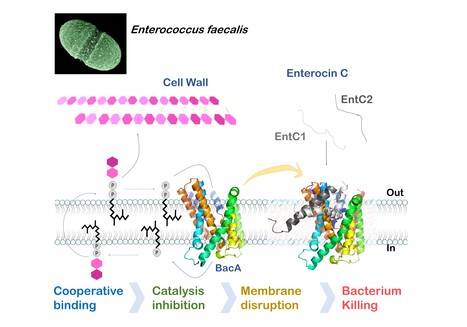
Hijacking mechanism of membrane undecaprenyl phosphate recycling protein BacA in Enterococcus faecalis by a two-peptide bacteriocin revealed Antibiotic-resistance is a critical global health concern stressing the urgent need for new therapeutic strategies beyond conventional drugs. In this context, peptide-based bacteriocins constitute potential medical use antibacterial alternatives. In the present study, we have highlighted the molecular mechanism of a two-peptide bacteriocin, enterocin C, with potent activity against Enterococcus faecalis, a major opportunistic pathogen notorious for multidrug resistance. In collaboration with a group from INRAE MICALIS, the team has uncovered how enterocin C specifically exploits the membrane-embedded protein BacA as a cell surface receptor. BacA, widely conserved across bacteria, plays a central role in bacterial cell-wall biogenesis through its dual phosphatase and flippase activities, which are essential for recycling the lipid carrier undecaprenyl phosphate.
Using a combination of biochemical, biophysical, and microbiological approaches supported by AlphaFold structural modelling, we dissected the cooperative action of the two enterocin C peptides. Acting at nanomolar concentrations, peptide EntC1 inserts deeply into BacA’s outward-open catalytic pocket, blocking its enzymatic function and facilitating the subsequent binding of peptide EntC2. This dual docking event anchors the bacteriocin deep within the membrane’s hydrophobic core, ultimately triggering membrane disruption and bacterial cell death.
The findings reveal the molecular determinants of this precision targeting and represent the first detailed mechanistic description of a two-peptide bacteriocin’s mode of action. This work identifies BacA as a valuable target for bacteriocin-mediated killing and open avenues for the rational design of peptide-based antimicrobials for tailor-made antimicrobials to help combat antibiotic-resistant infections. More information : Thierry Touzé :thierry.touze@i2bc.paris-saclay.fr https://pubmed.ncbi.nlm.nih.gov/41232670/
|
|
Scooped by
I2BC Paris-Saclay
November 20, 2025 6:14 AM
|
Strict gut symbiont specificity in Coreoidea insects governed by interspecies competition
Insects choose their bacterial gut symbionts by creating a multifactorial selective environment that promotes competition among symbiont candidates and colonization by the single, best-adapted strain
|
|
Scooped by
I2BC Paris-Saclay
April 15, 2025 8:38 AM
|
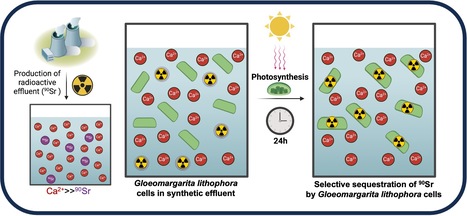
The cyanobacterium G. lithophora is a promising organism for effective bioremediation of waters contaminated with 90Sr
The unicellular cyanobacterium Gloeomargarita lithophora is able to stably sequester and withstand 90Sr and efficiently remove this hazardous anthropogenic radionuclide from aqueous solutions, including a synthetic nuclear effluent. Strontium (Sr) is an alkaline earth metal commonly occurring in nature. In aqueous environments, it prevails as Sr2+ ions form chemically similar to Ca2+. In most organisms, the non-selective Sr intake primarily comes from water and food. In human, it is mainly localized in bones and dental enamel and is involved in the control of bone formation. Radioactive isotopes such as 90Sr are artificially produced by nuclear fission. 90Sr, a b-emitter with a half-life of 28.8 years, is one of the most hazardous anthropogenic radionuclides. It has been massively released into the environment during nuclear weapons testing and nuclear reactor accidents, such as those at Chernobyl and Fukushima. It is also found in radioactive water effluents produced by nuclear power plants, requiring specific treatment before being discharged. In humans, its accumulation in bone tissues increases the risk of cancers. Current physico-chemical techniques for remediating 90Sr traces from effluents are costly and can exhibit a low selectivity for Sr over Ca. Therefore, there is an incentive to develop an alternative method of remediation. In this study, we demonstrate that the cyanobacterium Gloeomargarita lithophora can remove more than 90% of the 90Sr activity that could be found in a nuclear plant effluent within 24 hours. This process occurs through two steps: a first rapid and passive phase of 90Sr sorbtion to the cell surface, followed by an active phase of 90Sr accumulation within the cells, partially driven by photosynthesis. We also showed that this cyanobacterium is able to stably sequester and withstand 90Sr and to efficiently remove this hazardous radionuclide from aqueous solutions, including a synthetic nuclear effluent. These results highlight Gloeomargarita lithophora as a promising solution for effective bioremediation of water contaminated with 90Sr thereby safeguarding the well-being of our ecosystems.
More information : https://doi.org/10.1016/j.jhazmat.2025.138155 Contact : Corinne CASSIER-CHAUVAT Corinne.CASSIER-CHAUVAT@cea.fr
|
|
Scooped by
I2BC Paris-Saclay
February 11, 2025 8:55 AM
|
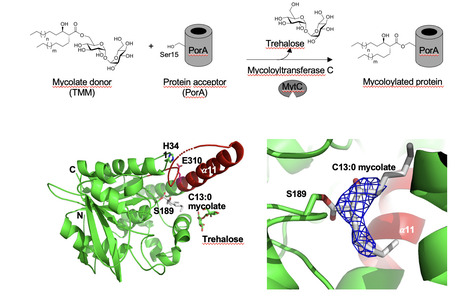
Synthetic mycolates derivatives to decipher protein mycoloylation, a unique post-translational modification in bacteria
In vitro reconstitution of bacterial protein mycoloylation. Protein mycoloylation is a newly characterized post-translational modification (PTM) specifically found in Corynebacteriales, an order of bacteria that includes numerous human pathogens. Their envelope is composed of a unique outer membrane, the so-called mycomembrane made of very-long chain fatty acids, named mycolic acids. Recently, some mycomembrane proteins including PorA have been unambiguously shown to be covalently modified with mycolic acids in the model organism Corynebacterium glutamicum by a mechanism that relies on the mycoloyltransferase MytC. This PTM represents the first example of protein O-acylation in prokaryotes and the first example of protein modification by mycolic acid. Through the design and synthesis of trehalose monomycolate (TMM) analogs, we prove that i) MytC is the mycoloyltransferase directly involved in this PTM, ii) TMM, but not trehalose dimycolate (TDM), is a suitable mycolate donor for PorA mycoloylation, iii) MytC is able to discriminate between an acyl and a mycoloyl chain in vitro unlike other trehalose mycoloyltransferases. We also solved the structure of MytC acyl-enzyme obtained with a soluble short TMM analogs which constitutes the first mycoloyltransferase structure with a covalently linked to an authentic mycolic acid moiety. These data highlight the great conformational flexibility of the active site of MytC during the reaction cycle and pave the way for a better understanding of the catalytic mechanism of all members of the mycoloyltransferase family including the essential Antigen85 enzymes in Mycobacteria. more information: https://doi.org/10.1016/j.jbc.2025.108243 Contact: Florence CONSTANTINESCO-BECKER <florence.constantinesco@i2bc.paris-saclay.fr>
|
|
Scooped by
I2BC Paris-Saclay
November 26, 2024 3:25 AM
|
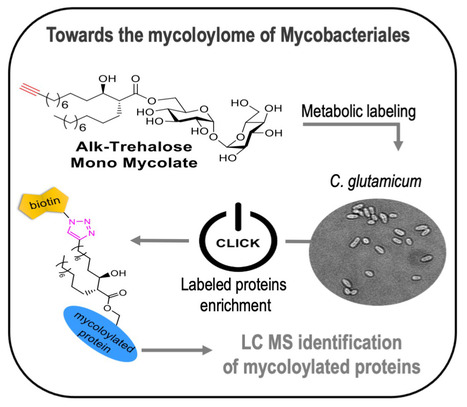
Bioorthogonal monomycolate of trehalose disclosed the O-mycoloylation of mycoloyltransferases and other cell envelope proteins in C. glutamicum
Discovering the mycoloylome of Corynebacterium glutamicum : a new type of lipidated-modified proteins. Protein mycoloylation is a lipidation pathway exclusively observed in Mycobacteriales, an order of bacteria that includes several human pathogens. These bacteria possess a distinctive outer membrane, known as the mycomembrane, composed of very long-chain fatty acids called mycolic acids. It has been demonstrated that a few mycomembrane proteins undergo covalent modification with mycolic acids in the model organism Corynebacterium glutamicum, through the action of mycoloyltransferase MytC. This PTM represents the first example of protein O-acylation in prokaryotes and also the first example of protein modification by mycolic acid. Here, we have developed a unique bioorthogonal mycolate donor featuring the natural mycolic acid pattern, enabling direct unambiguous transfer of the lipid moiety to its acceptors and efficient metabolic labeling and enrichment of MytC protein substrates. Mass spectrometry analysis of the labeled proteins and comparative proteomic analysis of the cell envelope proteome between wild-type and ∆mytC strains identified an unbiased list of 21 proteins likely mycoloylated in the cell. The robustness of our approach is demonstrated by the successful biological validation of mycoloylation in 6 random candidate proteins within wild-type cells, revealing the characteristic profile of proteins modified with natural mycolates. These findings provide interesting insights into the significance of this new lipidation pathway and pave the way for understanding their function, especially concerning the mycoloyltransferase family that includes the essential Antigen85 enzymes in Mycobacteria. More information: https://doi.org/10.1021/acschembio.4c00502. Contact: Cécile LABARRE <cecile.labarre@i2bc.paris-saclay.fr>
|
|
Scooped by
I2BC Paris-Saclay
October 17, 2024 6:06 AM
|
Plant Science Day October 17th
|
|
Scooped by
I2BC Paris-Saclay
October 1, 2024 6:15 AM
|
The I2BC will be present at the Fête de la Science on 5 and 6 October 2024 at ENS Paris-Saclay (4 avenue des sciences- Gif sur Yvette) on the theme ‘Ocean of knowledge’. The Microbiology Department and the Crystallography Platform will each have a stand entitled ‘Can bacteria swim?’ and ‘Making and observing protein crystals’, where the public can carry out experiments, look under a microscope and take part in games. more information: https://www.fetedelascience.fr/ Contact: catherine.grandclement@i2bc.paris-saclay.fr
|
|
Scooped by
I2BC Paris-Saclay
October 1, 2024 6:05 AM
|
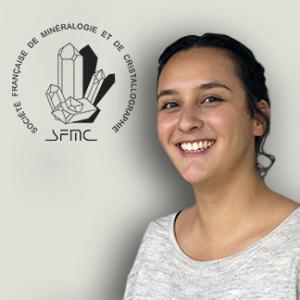
Awarding of the 2024 Haüy-Lacroix Thesis Prize to Chloé Truong
The SFMC (Société Française de Minéralogie et de Cristallographie) jury has decided to award the Haüy-Lacroix 2024 prize to Chloé TRUONG for her thesis work, "In search of biosignatures of hyperthermophilic archaea". Chloé TRUONG’s thesis, entitled “In search of biosignatures of hyperthermophilic archaea”, was carried out at the Institut de Minéralogie, de Physique des Matériaux et de Cosmochimie (Museum National d’Histoire Naturelle de Paris) under the supervision of François Guyot, Aurore Gorlas and Sylvain Bernard. The aim of her thesis was to determine whether the black smoker vents at ocean ridges, which expel warm, metal-rich water, can host hyperthermophilic life, i.e. organisms that develop in water at over 100°C. To do this, Chloé TRUONG adopted a multidisciplinary approach combining experimental mineralogical and microbiological studies in the laboratory and the characterisation of natural samples. This thesis provides major results on the formation and evolution of mineral phases such as pyrite, demonstrating that its presence can result from the activity of microorganisms. The identification of such mineral biosignatures will enable a systematic search for traces of life in modern and fossil black smokers. more information: https://sfmc-fr.org/?p=3516&lang=fr Contact: aurore.gorlas@i2bc.paris-saclay.fr
|
|
Scooped by
I2BC Paris-Saclay
July 26, 2024 8:21 AM
|
SYNTERUPTOR : mining genomic islands for non-classical specialized metabolite gene clusters
In search of the hidden gene cluster: Synteruptor, a new tool for identifying bacterial genomic islands and exploring their content in the quest for new specialized metabolism gene clusters. Microbial specialized metabolite biosynthetic gene clusters (SMBGCs) are a formidable source of natural products of pharmaceutical interest. With the multiplication of genomic data available, very efficient bioinformatic tools for automatic SMBGC detection have been developed. Nevertheless, most of these tools identify SMBGCs based on sequence similarity with enzymes typically involved in specialised metabolism and thus may miss SMBGCs coding for undercharacterised enzymes. In this article, we present Synteruptor (https://bioi2.i2bc.paris-saclay.fr/synteruptor), a program that identifies genomic islands, known to be enriched in SMBGCs, in the genomes of closely related species. With this tool, we identified a SMBGC in the genome of Streptomyces ambofaciens ATCC23877, undetected by antiSMASH, the well-known and most used tool for SMBGC identification, prior to antiSMASH 5. We experimentally demonstrated that this SMBGC directs the biosynthesis of two metabolites, one of which was identified as sphydrofuran. Synteruptor is also a valuable resource for the delineation of individual SMBGCs within antiSMASH regions that may encompass multiple clusters, and for refining the boundaries of these SMBGCs. More information: https://doi.org/10.1093/nargab/lqae069 Contact: Sylvie LAUTRU <sylvie.lautru@i2bc.paris-saclay.fr> & Olivier LESPINET <olivier.lespinet@i2bc.paris-saclay.fr>
|