


HSIE K-6
32.9K views |
+0 today
Filter by date
Tags

|
HSIE K-6
Engaging resources and ideas for teaching HSIE K-6. Topics such as history, cultures, environments, social systems and structures are taught through hands on, inquiry based approaches. Curated by Catherine Smyth |
 Your new post is loading...


|
Scooped by
Catherine Smyth
February 3, 2014 6:21 PM
|
 Scoop.it!

Catherine Smyth's insight:
This is an Australian government website with online teaching resources for developing an understanding of citizenship in Australia.
|
|
Rescooped by
Catherine Smyth
from Primary history- First Contacts
February 2, 2014 11:38 PM
|
Scoop.it!

Catherine Smyth's curator insight,
February 2, 2014 11:36 PM
Evaluate and select curriculum resources for teaching Aboriginal and Torres Strait Islander perspective using 5 key criteria.
Teachers should consider:
1. Authenticity
2. Balanced nature of the presentation
3. Aboriginal and/or Torres Strait Islander participation
4. Accuracy and support
5. Exclusion of content of a secret or sacred nature.
|
|
Scooped by
Catherine Smyth
February 2, 2014 5:28 PM
|
Scoop.it!
Catherine Smyth's insight:
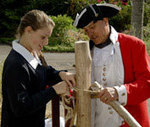
The Royal Botanic Gardens in Sydney provides a range of school excursions around HSIE/Australian Curriculum topics such as Contact-First Encounters and Aboriginal People and Plants.
|
|
Rescooped by
Catherine Smyth
from Fantastic Maps
January 23, 2014 8:42 PM
|
Scoop.it!

Catherine Smyth's insight:
This topic would appeal to many primary children!

|
|
Scooped by
Catherine Smyth
January 23, 2014 8:41 PM
|
Scoop.it!

Catherine Smyth's insight:
This entire Scoop.It site explores a range of different maps and places.
|
|
Scooped by
Catherine Smyth
January 23, 2014 8:39 PM
|
Scoop.it!
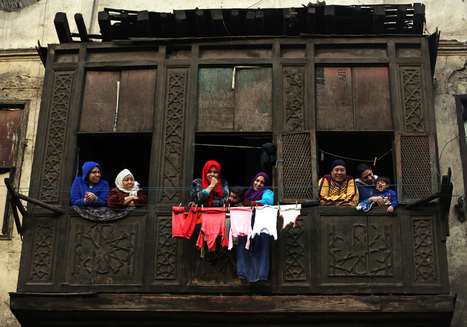
"Muslims around the world celebrate the birth of the Islamic Prophet Muhammed, who was born in Mecca, Saudi Arabia in 570 AD. His birthday is marked in way ways is different Muslim countries."

Lauren Stahowiak's curator insight,
March 26, 2014 2:50 PM
Muslims rejoice, celebrate and honor Mohammed around the world on his birthday. These photos not only represent the celebrations of Mohammed but mark his lasting legacy and influence as an Islamic Prophet.

Tracy Galvin's curator insight,
May 5, 2014 2:53 PM
It is nice to see a depiction of the celebrations and happiness of Muslims instead of just violence by radicals. Muslims are frequently misrepresented by the heavy news coverage of the tiny amount of evildoers. It would be like depicting all of the US as Klan members.

Jacob Crowell's curator insight,
November 4, 2014 1:52 PM
Women and Men in some Islamic countries live entirely different lives in regards to their geographic spheres. The women dominate the private sphere, they are sheltered from the public sphere. Their architecture reflects that fact. Windows and balconies are constructed so people can see out but not see in from the street. Homes are built so the houses across from one another are not lined up with the front doors directly across from one another. Streets are winding and made so the homes are extremely private. This reflects society in regards to how people view gender. Females are kept out of the public sphere and when they do venture out into the streets, they are encouraged to have a male escorting them. This image above shows the balcony as a barrier keeping females "protected" from the public sphere.
|
|
Scooped by
Catherine Smyth
July 21, 2014 11:21 PM
|
Scoop.it!
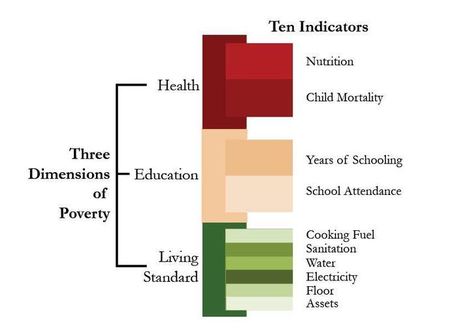
"The global Multidimensional Poverty Index (MPI) is an international measure of acute poverty covering over 100 developing countries. It complements traditional income-based poverty measures by capturing the severe deprivations that each person faces at the same time with respect to education, health and living standards."
Catherine Smyth's insight:
Making sense of poverty.


AHS Model UN's curator insight,
November 19, 2015 2:13 PM
The MPI was developed out of a desire to fill some of the gaps in the HDI's applicability and utility. Allow me to quote the editor of one the NCGE's journals, the Geography Teacher, on the usefulness of the MPI website for classroom use: "With the infographics, maps, graphs, country briefings, and case studies, you have a ready-made lesson activities to demonstrate patterns of fertility, mortality, and health for a population unit, and access to health care, education, utilities, and sanitation for an Industrialization and Economic Development Unit. Connections can also be made to malnutrition and water, as well as to key concepts such as pattern and scale, to key geographical skills such as how to use and think about maps and geospatial data, and to the use of online maps and online data." Also, this article from the World Bank also give a run-down on the key findings of the MPI in 2014.
Tags: statistics, population, development, unit 2 population, unit 6 industry.
|
|
Rescooped by
Catherine Smyth
from Primary history
January 23, 2014 8:16 PM
|
Scoop.it!

Most Australians celebrate Australia Day as the day Australia was founded.
In contrast, Aboriginal people mourn their history and call it ‘Invasion Day’.

Thanh Thuong Nguyen's curator insight,
April 12, 2014 11:26 PM
Through the meaning implied in Aboriginal celebration of Survival Day, the page introduces Aboriginal perspective about the contemporary issue existing in Australia. When Australian people are celebrating Australian Day, many Aboriginal people found there is little to celebrate with the same meaning; rather, they celebrate Survival Day that implies their commemoration of a deep loss_ the loss of their rights to their land, loss of family, loss of the right to practice their culture. The source also includes Aboriginal participation by representing difference voices of Aboriginal people about the issue. The site also emphasises the account of Aboriginal and non-Aboriginal history by introducing the emerging thinking in some Australians about the concept of “Arrival Day” celebration in which both Indigenous and Australian history are praised and promoted.
The source provides teachers with a different perspective from which they can design teaching activities that promote students developing different viewpoints. This is a useful resource for teachers not only in term of obtaining information to teach the concept and the origin of Australia Day, but also in term of teaching the story implied in the event viewed from an Aboriginal point of view. By applying the idea of this resource into teaching, teachers would be able to raise students’ awareness of the diversity that has been existed since the foundation of the country in which they are living, and advise them the existing discrimination that they should avoid. When carry on any teaching activities that requires students to collect data about the event from different perspective, it is crucial for teachers to provide enough guidance to students in order to avoid encountering sensitivity and offensiveness.

Bianca Levins's curator insight,
March 29, 2015 7:40 AM
Through poetry, song and stories, this page offers Aboriginal perspectives on Australia day. After several lessons spent discussing what Australia Day means to different people, this resource asks students to think deeper about the day and its significance for Aboriginal people.
Many Aboriginal people call January 26 Invasion Day or Survival Day. Why is that? To clarify their thoughts, students could complete a fishbone diagram (Global Education, 2014). Global Education suggest labeling the scales with “how, why, when, where and what” (2014). For example, ‘HOW does this person feel? WHY do they feel this way? WHAT does this make me feel?’
Students could expand their individual ideas in an independent assessment task, looking at the Creative Spirits site. Students could choose to present their findings in a variety of ways, for example as a poem about how a particular story made them feel to be read at assembly (inspired by a project at Coffs Harbour Public School), a report for the class blog, or an educational poster to display in the school to raise awareness.
REFERENCES:
Global Education. (2014). Retrieved 31 March, 2015 from http://globaleducation.edu.au/verve/_resources/fishbone.pdf
Coffs Harbour Public School (2015). Retrieved 31 March, 2015 from http://coffsharbourpublicschool.edublogs.org/2014/03/20/august-6th-1945-nagasaki-and-hiroshima-bombings-by-6h/#more-5160

Claire Reinthal's curator insight,
April 20, 2015 6:00 AM
Description of what is on this site:
This resource explains the HSIE outcome at CCS2.2 in relation to what has become known as Australia Day but is mourned as Invasion Day by many Aboriginal people.
This is done by looking at Australia Day over time and from the perspective of different Aboriginal people and the impacts the arrival of the British had on their family members/ancestors and on them personally.
This is a good follow-on resource from First Australians, Episode 1, since it gives the perspectives of people of today on the events which happened in 1788 and their impacts now.
A teaching idea and link to relevant pedagogical research:
Working in groups, students could be asked to look at the changes in the community and family life and impacts of these due to the arrival of the British, January 26, 1788 and to create a timeline of events which caused these changes or resulted from them, including quotes from different Aboriginal people.
The students could be told that this task would be assessed and students asked to help devise a rubric for assessing this outcome since "...learning is best achieved when students are actively involved in the teaching and learning process." (Bobis, Mulligan, & Lowrie, 2013, p. 291). This lessons learning would be assessed formatively.
A literacy strategy/link to English KLA:
Again, this task would also be fulfilling outcomes in the NSW English Syllabus for the Australian Curriculum such as:
EN2-6B 'distinguishes between different forms of English' and 'identifies organisational patterns and features' and 'listen to and contribute to conversations and discussions to share information and ideas'.
References:
Bobis, J.,Mulligan, J., & Lowrie, T. (2013). Mathematics for Children: Challenging children to think mathematically. Frenchs Forest: Pearson Australia.
Creative Spirits, Jens Korff (2014). Australia Day – Invasion Day. Retrieved April 20, 2015, from http://www.creativespirits.info/aboriginalculture/history/australia-day-invasion-day#toc0
|
|
Scooped by
Catherine Smyth
November 26, 2013 11:44 PM
|
Scoop.it!
so why do we in Bangladesh? Visit unicef.org.au/childlabour
Catherine Smyth's insight:
Stimulate discussion about human rights with this very short Unicef ad that highlights the issue of child labour. Compare the rights of a child in Australia with another country and explore the social systems that exist in two different countries.

|
|
Scooped by
Catherine Smyth
November 26, 2013 10:18 PM
|
Scoop.it!
Catherine Smyth's insight:
This short film could be used to stimulate a class discussion about child labour and the broader issue of human rights and social justice.
|
|
Scooped by
Catherine Smyth
November 21, 2013 10:39 PM
|
Scoop.it!

It is time to get over the notion that not being lost in hatred is a sign of weakness or giving in. We are ready for another way of viewing strength and a fresh approach to improving life on this planet.
Catherine Smyth's insight:
"If you hit a Talib with your shoe, then there would be no difference between you and the Talib."(Malala Yousafzai)
Investigate Human Rights, values, social systems, roles, rights and responsibilities etc; in HSIE K-6 with a focus on Malala Yousafzai, the 16 year old Pakistani student who was shot in the head by a Taliban gunman.
|
|
Scooped by
Catherine Smyth
October 22, 2013 1:38 AM
|
Scoop.it!
Catherine Smyth's insight:
A brand new teaching resource for teaching about Asia.
|
|
Scooped by
Catherine Smyth
October 8, 2013 1:04 AM
|
Scoop.it!
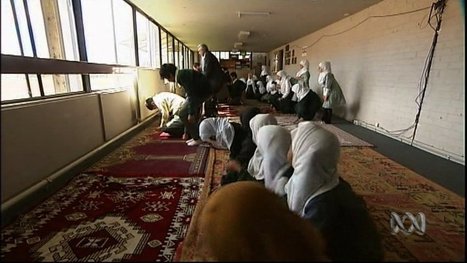
What's your big event for the year? For over one billion people worldwide it is Ramadan, a month of prayer and fasting...
Catherine Smyth's insight:
Students learn about beliefs in the community in Stage 2 HSIE.
|
|
Scooped by
Catherine Smyth
October 8, 2013 1:02 AM
|
Scoop.it!
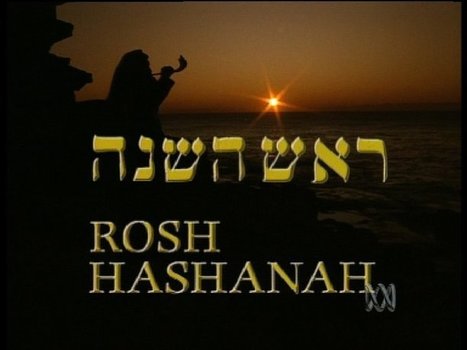
Is New Year's Day, 1 January, special to you, or do you celebrate the new year at a different time? For Jewish people...
Catherine Smyth's insight:
Students learn about beliefs in the community in Stage 2 (Year 3 and 4) in HSIE K-6.
|
|
Scooped by
Catherine Smyth
October 2, 2013 8:59 PM
|
Scoop.it!

Catherine Smyth's insight:
Embed a global perspective in your classroom with a focus on Australia's important neighbour, Indonesia. This Scoop.it site is curated by Asia Education Foundation and contains excellent background information for teachers as well weblinks and resources.
|
|
Scooped by
Catherine Smyth
October 2, 2013 8:42 PM
|
Scoop.it!
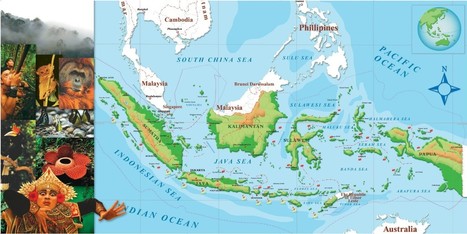
Catherine Smyth's insight:
Resources for teaching about Indonesia-Australia's important neighbour.

steven fernando's curator insight,
October 2, 2013 2:11 AM
Great resources for students of Indonesia.
|
|
Scooped by
Catherine Smyth
October 2, 2013 8:37 PM
|
Scoop.it!

Catherine Smyth's insight:
Simulation games provide an effective way to address real life issues, especially in HSIE or social studies. This blog has practical advice on how to develop an online learning simulation. I am yet to try it but would love to hear from others who have developed simulation games to teach primary students about current events or issues.
|
|
Scooped by
Catherine Smyth
September 27, 2013 2:35 AM
|
Scoop.it!
Catherine Smyth's insight:
This is a truly inspiring and creative story about recycling.

Thomas Engesser's curator insight,
April 13, 2014 3:32 AM
Have a look at what can be create-ed when we give people access to a precious resource. What, access to the precious resource of garbage, I hear you say? No, the precious resource that is creativity.
|
|
Scooped by
Catherine Smyth
September 20, 2013 2:29 AM
|
Scoop.it!

'Learn skills' shows you how to make school work easier and will also help you improve your marks.In this section you'll find practical guides to researching assignments, writing essays and studying for exams.
Catherine Smyth's insight:
What is research? Here are some useful activities for teaching research skills in HSIE K-6.
|
|
Scooped by
Catherine Smyth
September 18, 2013 2:28 AM
|
Scoop.it!
An Urban World: UNICEF's new data visualization of urban population growth over the next 40 years.
|
|
Scooped by
Catherine Smyth
August 27, 2013 11:39 PM
|
Scoop.it!

Facilitating a project rather than merely dispensing knowledge help students approach new ideas, information, and problems.
Catherine Smyth's insight:
The 8 practical steps presented in this blog complement the Inquiry Process in the key learning area of HSIE K-6.
|
|
Scooped by
Catherine Smyth
August 27, 2013 11:28 PM
|
Scoop.it!
Catherine Smyth's comment,
August 27, 2013 11:31 PM
A carefully planned authentic task can help primary teachers incorporate collaboration, real-world problems, community connections, and self-directed learning into a project.

Kate ferguson-patrick's curator insight,
November 21, 2013 11:54 PM
Great links to QT model and real world problem designing of tasks

Molly Rose's curator insight,
November 24, 2014 5:39 PM
A fantastic resource to assist in linking learning tasks to real life. This allows for the learning to be authentic and meaningful.
|
|
Scooped by
Catherine Smyth
August 22, 2013 11:00 PM
|
Scoop.it!
Catherine Smyth's insight:
Resources and ideas for embedding an Aboriginal and Torres Strait Islander perspective in the classroom.
Loading





This website, featuring a range of resources for teaching about social justice and tolerance is organised around three themes: 1) Understanding people's perspectives; 2) Exposing injustice and 3) Confronting injustice.