It is critical for students in our classrooms to develop a sense of global connectedness and an appreciation for diversity by fostering knowledge and skills promoting intercultural understanding (Hassim, 2013). Berk (2009, as cited in Jones & Cuthrell, 2011) promotes the implementation of a video as an engaging multimodal text in lessons for increased student attention and inspiration, resulting in greater participation and enjoyment from their learning. Students broaden their concepts of celebrations around the world by examining the Chinese New Year celebration in China and New Years in Australia by watching a video on the traditions and legends behind the significant event of Chinese New Year. By using this video stimulus, as intercultural understanding develops, students come to appreciate the diversity within Asian countries and how this diversity influences the way people perceive and interact with places and environments” (BOSTES, 2015).
Teaching strategy:
- In pairs, students brainstorm and record their experience of New Years in Australia. As a class view the listed experiences and decide on appropriate category headings e.g. traditions, family, religious, symbols, local community. Students categorise experiences and discuss the importance of this event to them. Explain to the students that although this is acknowledged as the main New Year event celebrated generally throughout Australia, other New Year celebrations do occur such as the Jewish celebration Rosh Hashanah; celebrations linked with various beliefs and groups. Students share their knowledge and experience of Chinese New Year record this on the board. Watch the video and discuss what students have learnt with another mind map on the board.
- In groups, given the topic of either “who, where, when, how, why” in regards to the celebration of Chinese New Year, students will research and report their accumulated information through a news report or interview style.
- Introduce the Chinese lunar calendar. Students collect images of lunar calendars and descriptions of the characteristics of people born under the calendar animal signs; easily found on the Internet by searching up “Chinese Zodiac” or “animals of the Chinese Zodiac”. Present and discuss the relationship between animals and years, and the Chinese belief behind the animal characteristics. Students can create an artwork of their animal zodiac.
References:
Hassim, E. (2013). Building intercultural understanding through the teaching of Asia perspectives - What Works. Primary & Middle Years Educator,11(2), 16-22.
Jones, T., & Cuthrell, K. (2011). YouTube: Educational potentials and pitfalls. Computers in the Schools: Interdisciplinary Journal of Practice, Theory, and Applied Research, 28(1), 75-85.
Via
Sunny Jung




 Your new post is loading...













"Access"--North America Unit
APHG-U2 & U6
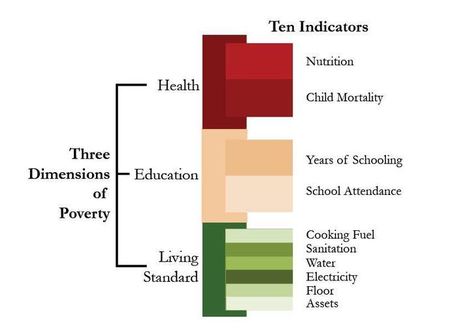
The MPI was developed out of a desire to fill some of the gaps in the HDI's applicability and utility. Allow me to quote the editor of one the NCGE's journals, the Geography Teacher, on the usefulness of the MPI website for classroom use: "With the infographics, maps, graphs, country briefings, and case studies, you have a ready-made lesson activities to demonstrate patterns of fertility, mortality, and health for a population unit, and access to health care, education, utilities, and sanitation for an Industrialization and Economic Development Unit. Connections can also be made to malnutrition and water, as well as to key concepts such as pattern and scale, to key geographical skills such as how to use and think about maps and geospatial data, and to the use of online maps and online data." Also, this article from the World Bank also give a run-down on the key findings of the MPI in 2014.
Tags: statistics, population, development, unit 2 population, unit 6 industry.