

International guide to the culture, customs, social and business etiquette from countries around the world


|
HSIE K-6
Engaging resources and ideas for teaching HSIE K-6. Topics such as history, cultures, environments, social systems and structures are taught through hands on, inquiry based approaches. Curated by Catherine Smyth |
 Your new post is loading...

|
Scooped by
Catherine Smyth
October 20, 2014 3:40 AM
|
 Scoop.it!
International guide to the culture, customs, social and business etiquette from countries around the world
|
|
Scooped by
Catherine Smyth
October 19, 2014 10:06 PM
|
Scoop.it!
Can kids solve real life problems that affect our world? Sure! Why not? Many of you know the 7 sterile steps to PBL. How about adding a little more to the 7 steps? Here are a few ideas about how to...
This pictorgraphic captures the main steps involved in a problem-based approach to learning in the classroom.
|
|
Scooped by
Catherine Smyth
October 12, 2014 6:28 PM
|
Scoop.it!
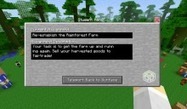
Through the exciting world of Minecraft, students explore issues relating to Rainforests, fair-trade, deforestation and economics. Although developed in the UK, the lesson aligns to the Stage 3 Environments strand of HSIE K-6

Students enter the exciting world of Minecraft to explore issues relating to Rainforests, deforestation, fair-trade and economics.
|
|
Scooped by
Catherine Smyth
October 7, 2014 11:11 PM
|
Scoop.it!
This film explains what values are, how people learn them, and what actions tell about values. An example is given of method, outlined on the screen, for mak...
Values are at the heart of HSIE K-6. This old video clip gives a brief overview of what values are.
|
|
Scooped by
Catherine Smyth
September 15, 2014 8:50 PM
|
Scoop.it!
Australians throw away 20% of the food they buy each year! Discover why this happens & how all of this waste can effect our environment.
|
|
Rescooped by
Catherine Smyth
from Personal and Social Capability
August 20, 2014 10:00 PM
|
Scoop.it!


A wonderful collection of picture books and novels that teach children about resilience, strength and empathy through stories that highlight the adversity of other children,.
|
|
Scooped by
Catherine Smyth
April 22, 2015 8:28 PM
|

With Antarctica being the coldest, driest, and most isolated continent on earth, it is surprising that 51 different countries own pieces of land on it. As of now, the lands there can only be used strictly for scientific research, but I presume that treaty will not be in effect forever. Hidden resources yet to be discovered and future technology and is bound to give us some reason to permanently settle in this barren land someday. Discovering oil or minerals would be a good bet, as it was a leading factor in causing Dubai to form in the Arabian Desert, or the city of Perth in Western Australia. A healthy fishing industry could even help support future economies there. While weather has always been an important factor in human colonization, it does not make a place totally inhospitable. If economies can form in places like Barrow, Alaska and Longyearbyen, Norway, I don't see future settlements in Antarctica as an impossibility.

In reality, no one own Antarctica for now. However, it is governed under the Antarctica treaty of 1959. There are a few reasons why no one has been claimed Antarctica, one being that is has extremely cold temperatures that drop to -122 °F. The continent also has a vast amount of thick ice that is 3 miles deep and covers its surface. In addition, it would be very costly to explore these regions and difficult to build infrastructure and transport food due to the cold temperatures and frozen seas. The Antarctica treaty of 1959 is an international agreement which states that no one cannot own the Antarctica. However, some countries have claimed some part of Antarctica. These designated areas are only to be used for scientific research purposes. Also, since an international agreement has been putted in place, Antarctica cannot be used for military purposes. The agreement also stresses freedom of scientific investigation but prohibits nuclear testing and waste disposal in Antarctica. This research has helped scientists discover new truths about global problems, climate change, and geology.

It will be interesting to see what happens to Antartica as the climate shifts and continues to get warmer. What is under the frozen tundra? Will it be something of a natural resource or mineral? I think this is when the fight will get real about the slice of pie and how much each has.
|
|
Rescooped by
Catherine Smyth
from Causes and Effects of Change in the Local Community
April 26, 2015 5:25 AM
|
Scoop.it!

Making the News is the first pilot program in an exciting new series called Splash Live, brought to you by ABC Splash. Making the News takes upper primary school children into the ABC newsroom with ABC journalists and producers from Behind the News, triple j Hack and ABC Open.

Description of Site:
Making the News is a live event program running for six weeks online, where schools across Australia can participate in creating news stories about local environmental sustainability issues, and access a number of resources. Students take on the role of ‘reporter’ and conduct their own research and preparation to film a news report to upload to the site. The first program has concluded, however, it will be an ongoing event with more opportunities for students to participate.
Teaching Ideas/Literacy Strategies/ Differentiation Activities:
Teachers could use the site’s resources to run this program in their classrooms, without incorporating the live upload component. For students, resources are divided into six weeks, so that they are able to work through activities at their own pace. There are also ‘bonus’ extra resources which would easily translate to a differentiation activity in the classroom.
The website provides teachers with all worksheets needed to complete this task, as well as checklists for each component of the six week unit.
This activity has numerous links to literacy for students, dealing with different text types, as well as allowing students to work to their different strengths by taking on different roles within the ‘news room’- planning, researching, scripting, recording, speaking, editing etc.
|
|
Scooped by
Catherine Smyth
August 10, 2014 11:12 PM
|
Scoop.it!
The Kinship Module project is a pilot online education program that promotes Aboriginal cultural education at a university level.
By undertaking the module you will gain a greater understanding of and insight into:
experience of Aboriginal Kinship systems and how they operateAboriginal social structures and how these differ from Western societieshow cultural assessment assists in understanding these impactspotential conflict in working with people from differing cultural backgroundshow cultural difference impacts upon Aboriginal people in the social systems which operate in Australia, such as: through education, criminal justice systems and the legal system more broadly.
A useful tool to support the online module is the suite of narratives from Aboriginal people. These narratives explore cultural and service issues that are relevant to student, teachers and others who work to support Aboriginal communities.
The narratives also provide additional and more in-depth information on cultural identity, the impacts of cross-cultural differences, and issues of importance for Aboriginal people when working in a number of service areas, such as education, social welfare, law and health.
|
|
Rescooped by
Catherine Smyth
from HSIE SSS3.8: Community, school and class decision-making and democratic processes
April 18, 2015 11:09 PM
|
Scoop.it!

This teacher resource focuses on how students as individuals can make a difference in local, national and global communities using a democracy framework. The information in this document can be used to highlight the factors, which influence decision-making processes at each level and provides various interactive and hands on activities which teachers can adapt to suit their own content.
Teaching Activity: Using a pre-made cardboard tree, see image on page one of the resource document. Teacher divides students into small groups and poses question to students to brainstorm “How can people make a difference in either the community, schools or a classroom”. Students then individually select a key point they have discussed, write it on a leaf and attach it to the tree forming a collaborative visual representation of class thoughts as a community themselves. Teachers can then add any additional points and may explain key words and legislative processes, videos such as this one may be viewed after this introduction https://www.youtube.com/watch?v=NhYpkVclXbA
Assessment task: Students in pairs will find an example of how democracy is implemented in the local area, and find situations (either in the past or present) where public action has led to an improvement for either a community, a school or in the classroom. They will describe how individuals and non-government organizations can contribute to the decision making process within a society and influence representative bodies. This will then be presented to the class, students can utilize PowerPoint, posters, pamphlets or smart boards to present their ideas to their peers.
Pedagogical Research: This student centred approach to learning and the use of multimedia can promote active learning and it has been suggest that it is more effective in aiding students learn and transfer knowledge (So & Kong, 2007). It is also emphasized that students are more engaged when involved in exploring real situations in an inquired based approach as used above (So & Kong, 2007)
References:
Museum of Australian Democracy. (2009). I CAN MAKE A DIFFERENCE YEARS 4–6. Retrieved from:
http://static.moadoph.gov.au/ophgovau/media/docs/learning/HoD-I-can-make-a-difference-4-6.pdf
So, W.-M. W., & Kong, S.-C. (2007). Approaches of Inquiry Learning With Multimedia Resources in Primary Classrooms. The Journal of Computers in Mathematics and Science Teaching, 26(4), 329.
State Library of New South Wales [findlegalanswers]. (2013). How laws are made-Parliament. [videofile]. Retrieved from: https://www.youtube.com/watch?v=NhYpkVclXbA&spfreload=10
|
|
Rescooped by
Catherine Smyth
from The contribution of people and associated places and events to community heritage
April 28, 2014 1:34 AM
|
Scoop.it!
How to make a national icon!

The Sydney Opera House is one of the most iconic buildings in Sydney. It is an important asset to the community as it provides a venue for some of the best examples of the Arts that Australia has to offer and is in international icon, as well as being on the world heritage list. The video in this scoop shows how to make an Opera House collage.
Students will discuss famous buildings or parts of Sydney before watching the video. They will then use the video to compile a procedure as a class. Students will be provided with a range of additional art and crafts materials to decorate their opera house. After making their collages, students will individually research the Opera House. They are to find out who designed it, when it was built and how it is important to the Sydney community. They should also find out where it has played a significant role in national or international events (such as the 2000 Olympics or the 2013/2014 New Year firework display). They will then create a short paragraph reflecting information they feel is important and attach it to their collage.

I like this idea but I'd throw in some maths - using a protractor to draw the circles on scrap paper/cardboard/newspaper, then cutting the sails out from that. : )

This is a very simple yet fun craft task that students can complete in a short time span and is a great way to introduce the topic of significant built features of Australia to students. The Opera House is one of the most renowned features not only by Australian but recognised by the world. By beginning a unit about built environments with a practical task can stimulate great discussion and allow students to be more interested in the topic itself. In Stage 2, it is the first time that they are requried to name and describe significant buildings of Australia as before this, there is only a focus towards their immediate environment. Therefore discussion and becoming familiar with such buildings in imperative for students, especially those beginning Stage 2.
Graves (1990) states that the best way to teach about the built environment in the curriculum is by integrating it with 'existing curriculum patterns' (p.3). Rather than spoon feeding information about the built environment to students straight away, by linking Visual Arts, students will be encouraged to naturally learn and become inquisitive about such features in a fun and practical way. This Opera House making task will be perfect as students will have something personal to relate to; their very own Opera House! Teachers can further investigate the Opera House with the students to go in more depth as well.
References:
Graves, G. (1990). Teaching about the built environment. ERIC digest Publications Manager, ERIC
Clearinghouse for Social Studies/Social Science Education, 2805 East Tenth Street, Suite 120, Indiana
University, Bloomington, IN 47408.
|
|
Rescooped by
Catherine Smyth
from Primary geography
April 16, 2014 7:26 PM
|
Scoop.it!

With Earth Day 2014 coming up on April 22, many schools are making plans for one-day celebrations that promote a green message. For deeper learning --and longer-term benefits for people and planet ali
Planning resources and ideas for designing Project-Based Learning projects.
|
|
Scooped by
Catherine Smyth
June 17, 2013 9:25 PM
|
Scoop.it!
The "Symbols of Australia" collection shows how Australian is represented by different symbols. Students can explore concepts such as national identity, culture, values and history through the online images in this collection.
|
|
Scooped by
Catherine Smyth
July 21, 2014 12:12 AM
|
Scoop.it!
This learning sequence examines the waste management strategies of reducing, reusing, recycling and composting.
These excellent teaching resources focus on a current issue and help students learn Indonesian at the same time.
Teaching language and culture through a global issue.
|
|
Scooped by
Catherine Smyth
November 21, 2013 7:16 PM
|
Scoop.it!

I am teaching a class where I allow the students a set amount of time to draw out what they know about a subject. Today, the students did their pre-class work, then came to class, and we began to d...
Use this scaffold to plan social investigations about current issues in HSIE K-6.
|
|
Scooped by
Catherine Smyth
June 2, 2014 10:32 PM
|
Scoop.it!

Engaging resources for the primary classroom to enrich learning and teaching with a global perspective.
This Scoop.It site, curated by Global Education Project Victoria, is a collection of suitable resources with a global perspective for the primary classroom.
|
|
Rescooped by
Catherine Smyth
from Professional Learning for Busy Educators
June 2, 2014 7:43 PM
|
Scoop.it!

"Project based learning is a teaching learning methodology that has been widely praised for its efficacy in enhancing learning achievements.The premise underlying PBL revolves around getting students engaged in authentic learning events through the integration of mini-projects in class. These projects can be as short as one day and as long as a year. However, there is a difference between mere projects and project based learning. This table from Teachbytes provides a great illustration of the nuances between the two concepts."
A handy rubric that can be adapted for HSIE K-6 problem-based learning projects.

Excellent table reminding about the difference between projects and project based learning. Projects are too easily assigned as exercises to students, without paying attention to the issues on the right hand side of this table.
Pin it for later: http://www.pinterest.com/pin/318981586080452762/
|
|
Scooped by
Catherine Smyth
May 11, 2014 4:10 AM
|
Scoop.it!
The concept of global interconnectedness is represented in a graphic organiser and map from a teaching resource from World Vision. Concepts such as trade, international organisations, transport and communication show how we are connected socially, politically, economically and environmentally.
|
|
Scooped by
Catherine Smyth
October 9, 2014 7:52 PM
|
Scoop.it!
A Scoop.it site with a range of resources for teaching about human rights and social justice.
|
|
Rescooped by
Catherine Smyth
from HSIE Stage 3: Change & Continuity
May 5, 2014 1:22 AM
|
Scoop.it!
An interactive game that explores the experiences of young refugees.

‘Long Journey, Young Lives’
‘Long Journey, Young Lives’ is an interactive resource that appeals to primary students and allows them to view individual’s there own age discussing their experiences as a refugee. The site compares the opinions of Australian school children to young refugees. Students are able to see the progression of the refugee journey, from homeland conflict, the journey, detention centres and reflection on their journey. The stages allow students to understand the policies in place for refugees, and relates to current issues in Australia regarding ‘boat people’.
Following this activity, students can discuss as a class reasons why people have to seek refuge in a different country, and discuss where they think most refugees that come to Australia are from, and reasons why. Introduce a new vocabulary to students and define words such as refugee, migration, migrant, immigrant and asylum.
Students can construct a diary entry text that allows them to speak from the point of view of a refugee. Students can write a draft first, receive peer feedback and edit where needed. Students will be instructed to speak in first person, and use emotive and descriptive language to engage the audience, and create empathy between reader and the writer. Students will then post their diary entry onto a class blog, allowing other students to read the journey’s of their fellow peers and also gain an understanding of how people may experience events such as this in different ways. Individuals seeking refuge is a long standing global event, and in Australia it is a current issue that is putting pressure on political figures.
This resource is great to use with stage 3 as it appeals to the technology driven students of today. Students can work at their own pace and listen to the refugee’s journey to their new country. Students are able to take on a role and put themselves into the shoes of a child refugee. This activity also links to the English, text and context outcome (ACELY1698). Use of effective and contemporary resources in the classroom that link to current events such as refugees allows for the study of important social issues and “also the development of the skills of participation so that students can do something about the issues…” which is essential “to prepare students to enter a democratic society” (Gilbert & Hoepper, 2011, p. 15).
References:
Gilbert, R. & Hoepper, B. (2011). Teaching Society and Environment. 4th Edition. South Melbourne: Cengage Learning Australia.

Long Journey, Young Lives’ is an interactive resource that appeals to primary students and allows them to view individual’s there own age discussing their experiences as a refugee. The site compares the opinions of Australian school children to young refugees. Students are able to see the progression of the refugee journey, from homeland conflict, the journey, detention centres and reflection on their journey. The stages allow students to understand the policies in place for refugees, and relates to current issues in Australia regarding ‘boat people’.
Following this activity, students can discuss as a class reasons why people have to seek refuge in a different country, and discuss where they think most refugees that come to Australia are from, and reasons why. Introduce a new vocabulary to students and define words such as refugee, migration, migrant, immigrant and asylum.
Students can construct a diary entry text that allows them to speak from the point of view of a refugee. Students can write a draft first, receive peer feedback and edit where needed. Students will be instructed to speak in first person, and use emotive and descriptive language to engage the audience, and create empathy between reader and the writer. Students will then post their diary entry onto a class blog, allowing other students to read the journey’s of their fellow peers and also gain an understanding of how people may experience events such as this in different ways. Individuals seeking refuge is a long standing global event, and in Australia it is a current issue that is putting pressure on political figures.
This resource is great to use with stage 3 as it appeals to the technology driven students of today. Students can work at their own pace and listen to the refugee’s journey to their new country. Students are able to take on a role and put themselves into the shoes of a child refugee. This activity also links to the English, text and context outcome (ACELY1698). Use of effective and contemporary resources in the classroom that link to current events such as refugees allows for the study of important social issues and “also the development of the skills of participation so that students can do something about the issues…” which is essential “to prepare students to enter a democratic society” (Gilbert & Hoepper, 2011, p. 15).
References:
Gilbert, R. & Hoepper, B. (2011). Teaching Society and Environment. 4th Edition. South Melbourne: Cengage Learning Australia.).
|
|
Rescooped by
Catherine Smyth
from Interconnections between technologies, workers, users and the environment
April 22, 2014 11:09 PM
|
Scoop.it!

Here you will find a comprehensive unit of work that clearly demonstrates all of the stages involved in the creation of Australian dairy products - from milk production on the farm to arrival at supermarkets.

This interactive website provides students with information about; dairy farming in Australia, how cows are milked, the day to day duties of dairy farmers on the farm and in the office, and how dairy farmers reduce energy use through energy-efficient water cooling systems and plant equipment. The website allows students to develop a better understanding of the nutritional benefits of milk and how it can be categorised as a 'need.' The “Milk from Farm to Plate-What’s it all About?” interactive animation is engaging for students and takes them through the process of how milk ends up in supermarkets. Students develop an awareness of how technologies, workers, users and the environment are interconnected in a process to produce milk.
Students develop a better understanding of the growing use of technology in dairy farming by introducing to students the term ‘robotic milking.’ Students have the opportunity to watch Winnindoo Dairy Farm in Victoria through online ‘In Dairy’ cameras to get an up close look at how this new technology is used to collect milk. When students use these multimedia simulations, animations and live camera footage of diary cows it 'affords students the opportunity to transcend the passive learner role and to take control of their learning’ (Mishra and Koehler, 2006, p.1035).
As a learning strategy, students can identify ways in which previous generations in local farming communities would produce bottled milk without the prevalance of todays technology. This can be through an excursion to Glenmore Gavana Holsteins Dairy Farm (NSW) which includes fun tours and information appropriate for stage one students about past and modern dairy farming.
Hence, this website is a fantastic way to explore the interconnections between technology, workers, users and the environment in an interactive and fun way. According to Marsh (2008) ‘computer technology benefits the classroom because it provides the flexibility to meet the individual needs and abilities of each student, provides students with immediate access to rich source materials beyond the school and beyond the nation, motivates and stimulates learning and enables the teachers to move from information-giver or instructor, to facilitator of learning’ (p.202-203).
Reference list
Marsh, C. J. (2008). Becoming a Teacher: Knowledge, Skills and Issues. Australia: Frenchs Forest, Pearson Australia.
Mishra, P. & Koehler, M.J.(2006). Technological Pedagogical Content Knowledge: A Framework for Teacher Knowledge. Teachers College Record, 18 (6), pp.1017-1054.
|
|
Rescooped by
Catherine Smyth
from Critical and Creative Thinking for active learning
March 25, 2014 9:49 PM
|
Scoop.it!
De Bono's Six Thinking Hats help students think critically about issues in HSIE K-6.

Great approach!! Must to adapt for decision making in corporate life as well as day-to-day life!! I recommend this to all!!
|
|
Scooped by
Catherine Smyth
March 10, 2014 9:03 PM
|
Scoop.it!
The Enquiring Minds 'enquiry cycle' is an approach to planning and carrying out any sort of enquiry-based activity. This enquiry model can be used by teachers and students to help visualise progress on any extended activity.
Inquiry learning is at the heart of HSIE K-6. Research suggests students produce knowledge when they investigate a situation. The challenge for primary teachers is to know how to plan effective learning activities that provide the opportunity for their students to build knowledge, develop skills and learn in an engaging way. The resources on this UK based website provide a useful planning framework that can be adapted for HSIE K-6 and the new Australian Curriculum.
|
|
Scooped by
Catherine Smyth
March 4, 2014 5:39 PM
|
Scoop.it!
In HSIE, This term, 5M have been looking at similarities and differences between my life and the typical life of a person from a different culture.
Great idea for an assessment task in Stage 3 HSIE K-6. Think about what Cameron needed to know to be able to produce this movie.









Intercultural understanding involves getting to know other people's culture, language, etiquettes and taboos. You can download free country guides and other resources on this website.