It is critical for students in our classrooms to develop a sense of global connectedness and an appreciation for diversity by fostering knowledge and skills promoting intercultural understanding (Hassim, 2013). Berk (2009, as cited in Jones & Cuthrell, 2011) promotes the implementation of a video as an engaging multimodal text in lessons for increased student attention and inspiration, resulting in greater participation and enjoyment from their learning. Students broaden their concepts of celebrations around the world by examining the Chinese New Year celebration in China and New Years in Australia by watching a video on the traditions and legends behind the significant event of Chinese New Year. By using this video stimulus, as intercultural understanding develops, students come to appreciate the diversity within Asian countries and how this diversity influences the way people perceive and interact with places and environments” (BOSTES, 2015).
Teaching strategy:
- In pairs, students brainstorm and record their experience of New Years in Australia. As a class view the listed experiences and decide on appropriate category headings e.g. traditions, family, religious, symbols, local community. Students categorise experiences and discuss the importance of this event to them. Explain to the students that although this is acknowledged as the main New Year event celebrated generally throughout Australia, other New Year celebrations do occur such as the Jewish celebration Rosh Hashanah; celebrations linked with various beliefs and groups. Students share their knowledge and experience of Chinese New Year record this on the board. Watch the video and discuss what students have learnt with another mind map on the board.
- In groups, given the topic of either “who, where, when, how, why” in regards to the celebration of Chinese New Year, students will research and report their accumulated information through a news report or interview style.
- Introduce the Chinese lunar calendar. Students collect images of lunar calendars and descriptions of the characteristics of people born under the calendar animal signs; easily found on the Internet by searching up “Chinese Zodiac” or “animals of the Chinese Zodiac”. Present and discuss the relationship between animals and years, and the Chinese belief behind the animal characteristics. Students can create an artwork of their animal zodiac.
References:
Hassim, E. (2013). Building intercultural understanding through the teaching of Asia perspectives - What Works. Primary & Middle Years Educator,11(2), 16-22.
Jones, T., & Cuthrell, K. (2011). YouTube: Educational potentials and pitfalls. Computers in the Schools: Interdisciplinary Journal of Practice, Theory, and Applied Research, 28(1), 75-85.
Via
Sunny Jung


 Scoop.it!


 Your new post is loading...












‘Long Journey, Young Lives’
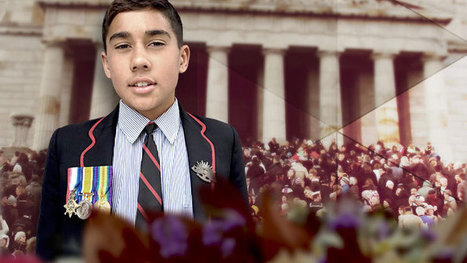
‘Long Journey, Young Lives’ is an interactive resource that appeals to primary students and allows them to view individual’s there own age discussing their experiences as a refugee. The site compares the opinions of Australian school children to young refugees. Students are able to see the progression of the refugee journey, from homeland conflict, the journey, detention centres and reflection on their journey. The stages allow students to understand the policies in place for refugees, and relates to current issues in Australia regarding ‘boat people’.
Following this activity, students can discuss as a class reasons why people have to seek refuge in a different country, and discuss where they think most refugees that come to Australia are from, and reasons why. Introduce a new vocabulary to students and define words such as refugee, migration, migrant, immigrant and asylum.
Students can construct a diary entry text that allows them to speak from the point of view of a refugee. Students can write a draft first, receive peer feedback and edit where needed. Students will be instructed to speak in first person, and use emotive and descriptive language to engage the audience, and create empathy between reader and the writer. Students will then post their diary entry onto a class blog, allowing other students to read the journey’s of their fellow peers and also gain an understanding of how people may experience events such as this in different ways. Individuals seeking refuge is a long standing global event, and in Australia it is a current issue that is putting pressure on political figures.
This resource is great to use with stage 3 as it appeals to the technology driven students of today. Students can work at their own pace and listen to the refugee’s journey to their new country. Students are able to take on a role and put themselves into the shoes of a child refugee. This activity also links to the English, text and context outcome (ACELY1698). Use of effective and contemporary resources in the classroom that link to current events such as refugees allows for the study of important social issues and “also the development of the skills of participation so that students can do something about the issues…” which is essential “to prepare students to enter a democratic society” (Gilbert & Hoepper, 2011, p. 15).
References:
Gilbert, R. & Hoepper, B. (2011). Teaching Society and Environment. 4th Edition. South Melbourne: Cengage Learning Australia.
Long Journey, Young Lives’ is an interactive resource that appeals to primary students and allows them to view individual’s there own age discussing their experiences as a refugee. The site compares the opinions of Australian school children to young refugees. Students are able to see the progression of the refugee journey, from homeland conflict, the journey, detention centres and reflection on their journey. The stages allow students to understand the policies in place for refugees, and relates to current issues in Australia regarding ‘boat people’.
Following this activity, students can discuss as a class reasons why people have to seek refuge in a different country, and discuss where they think most refugees that come to Australia are from, and reasons why. Introduce a new vocabulary to students and define words such as refugee, migration, migrant, immigrant and asylum.
Students can construct a diary entry text that allows them to speak from the point of view of a refugee. Students can write a draft first, receive peer feedback and edit where needed. Students will be instructed to speak in first person, and use emotive and descriptive language to engage the audience, and create empathy between reader and the writer. Students will then post their diary entry onto a class blog, allowing other students to read the journey’s of their fellow peers and also gain an understanding of how people may experience events such as this in different ways. Individuals seeking refuge is a long standing global event, and in Australia it is a current issue that is putting pressure on political figures.
This resource is great to use with stage 3 as it appeals to the technology driven students of today. Students can work at their own pace and listen to the refugee’s journey to their new country. Students are able to take on a role and put themselves into the shoes of a child refugee. This activity also links to the English, text and context outcome (ACELY1698). Use of effective and contemporary resources in the classroom that link to current events such as refugees allows for the study of important social issues and “also the development of the skills of participation so that students can do something about the issues…” which is essential “to prepare students to enter a democratic society” (Gilbert & Hoepper, 2011, p. 15).
References:
Gilbert, R. & Hoepper, B. (2011). Teaching Society and Environment. 4th Edition. South Melbourne: Cengage Learning Australia.).