It is critical for students in our classrooms to develop a sense of global connectedness and an appreciation for diversity by fostering knowledge and skills promoting intercultural understanding (Hassim, 2013). Berk (2009, as cited in Jones & Cuthrell, 2011) promotes the implementation of a video as an engaging multimodal text in lessons for increased student attention and inspiration, resulting in greater participation and enjoyment from their learning. Students broaden their concepts of celebrations around the world by examining the Chinese New Year celebration in China and New Years in Australia by watching a video on the traditions and legends behind the significant event of Chinese New Year. By using this video stimulus, as intercultural understanding develops, students come to appreciate the diversity within Asian countries and how this diversity influences the way people perceive and interact with places and environments” (BOSTES, 2015).
Teaching strategy:
- In pairs, students brainstorm and record their experience of New Years in Australia. As a class view the listed experiences and decide on appropriate category headings e.g. traditions, family, religious, symbols, local community. Students categorise experiences and discuss the importance of this event to them. Explain to the students that although this is acknowledged as the main New Year event celebrated generally throughout Australia, other New Year celebrations do occur such as the Jewish celebration Rosh Hashanah; celebrations linked with various beliefs and groups. Students share their knowledge and experience of Chinese New Year record this on the board. Watch the video and discuss what students have learnt with another mind map on the board.
- In groups, given the topic of either “who, where, when, how, why” in regards to the celebration of Chinese New Year, students will research and report their accumulated information through a news report or interview style.
- Introduce the Chinese lunar calendar. Students collect images of lunar calendars and descriptions of the characteristics of people born under the calendar animal signs; easily found on the Internet by searching up “Chinese Zodiac” or “animals of the Chinese Zodiac”. Present and discuss the relationship between animals and years, and the Chinese belief behind the animal characteristics. Students can create an artwork of their animal zodiac.
References:
Hassim, E. (2013). Building intercultural understanding through the teaching of Asia perspectives - What Works. Primary & Middle Years Educator,11(2), 16-22.
Jones, T., & Cuthrell, K. (2011). YouTube: Educational potentials and pitfalls. Computers in the Schools: Interdisciplinary Journal of Practice, Theory, and Applied Research, 28(1), 75-85.
Via
Sunny Jung


 Your new post is loading...


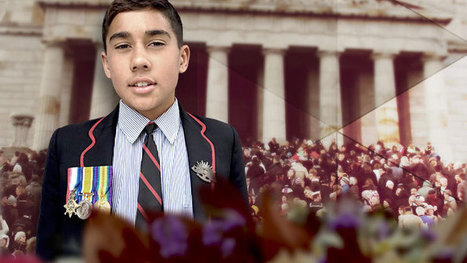










This teacher resource focuses on how students as individuals can make a difference in local, national and global communities using a democracy framework. The information in this document can be used to highlight the factors, which influence decision-making processes at each level and provides various interactive and hands on activities which teachers can adapt to suit their own content.
Teaching Activity: Using a pre-made cardboard tree, see image on page one of the resource document. Teacher divides students into small groups and poses question to students to brainstorm “How can people make a difference in either the community, schools or a classroom”. Students then individually select a key point they have discussed, write it on a leaf and attach it to the tree forming a collaborative visual representation of class thoughts as a community themselves. Teachers can then add any additional points and may explain key words and legislative processes, videos such as this one may be viewed after this introduction https://www.youtube.com/watch?v=NhYpkVclXbA
Assessment task: Students in pairs will find an example of how democracy is implemented in the local area, and find situations (either in the past or present) where public action has led to an improvement for either a community, a school or in the classroom. They will describe how individuals and non-government organizations can contribute to the decision making process within a society and influence representative bodies. This will then be presented to the class, students can utilize PowerPoint, posters, pamphlets or smart boards to present their ideas to their peers.
Pedagogical Research: This student centred approach to learning and the use of multimedia can promote active learning and it has been suggest that it is more effective in aiding students learn and transfer knowledge (So & Kong, 2007). It is also emphasized that students are more engaged when involved in exploring real situations in an inquired based approach as used above (So & Kong, 2007)
References:
Museum of Australian Democracy. (2009). I CAN MAKE A DIFFERENCE YEARS 4–6. Retrieved from:
http://static.moadoph.gov.au/ophgovau/media/docs/learning/HoD-I-can-make-a-difference-4-6.pdf
So, W.-M. W., & Kong, S.-C. (2007). Approaches of Inquiry Learning With Multimedia Resources in Primary Classrooms. The Journal of Computers in Mathematics and Science Teaching, 26(4), 329.
State Library of New South Wales [findlegalanswers]. (2013). How laws are made-Parliament. [videofile]. Retrieved from: https://www.youtube.com/watch?v=NhYpkVclXbA&spfreload=10