|
|
Rescooped by
Catherine Smyth
from The contribution of people and associated places and events to community heritage
onto HSIE K-6 April 28, 2014 1:34 AM
|
|
|
Rescooped by
Catherine Smyth
from The contribution of people and associated places and events to community heritage
onto HSIE K-6 April 28, 2014 1:34 AM
|
How to make a national icon!
|
|
HSIE K-6
Engaging resources and ideas for teaching HSIE K-6. Topics such as history, cultures, environments, social systems and structures are taught through hands on, inquiry based approaches. Curated by Catherine Smyth |
Your new post is loading...
|
|
Scooped by
Catherine Smyth
August 15, 2012 2:48 AM
|
Locate the K-6 HSIE Syllabus and other resources on the NSW Board of Studies website. Locate information and advice on the implementation of the Australian curriculum in NSW on this website as well.
|
|
Rescooped by
Catherine Smyth
from NSW Stage 3 Geography - A Diverse and Connected World: Intercultural Understanding
April 24, 2016 12:37 AM
|
|
|
Scooped by
Catherine Smyth
June 21, 2012 3:42 AM
|
Teaching materials, financial literacy - Teach finance for kids, teacher resources in financial education, finances, financial lessons for kids.
Engaging teaching resources to help primary children become financially literate.
|
|
Scooped by
Catherine Smyth
August 2, 2015 9:47 PM
|
Learn about Sydney Aboriginal culture while touring in Sydney. There are many great tours in Sydney including the tribal warrior cruise.
|
|
Scooped by
Catherine Smyth
July 20, 2015 11:49 PM
|
Ready-made thinking guide templates
|
|
Scooped by
Catherine Smyth
April 22, 2013 8:43 PM
|
Learning outside the classroom. This blog highlights a range of new technologies to develop student research skills including mobile devices, digital cameras and Global Positioning Systems.
|
|
Scooped by
Catherine Smyth
April 22, 2013 8:59 PM
|
How technology can further STEM learning through the environment, both inside and outside the classroom. An educator toolkit is available free at - http://go...
Watch how students and their teachers engage with the broader community and learn about the world outside the four walls of the classroom. This video highlights a range of technologies for data collection and participation in authentic learning tasks.
|
|
Rescooped by
Catherine Smyth
from Stories from around the world
April 17, 2015 10:37 PM
|
This interactive website features short narratives about each of the world's big religions- Hinduism, Christianity, Islam, Judaism and Buddhism.
The British Library website offers a great opportunity for HSIE students, particularly in their second stage of schooling, to explore numerous stories from four of the major world religions. This is because, with a choice between animated narratives from either the Christian, Buddhist, Hindu or Islamic faith (which are accessed by clicking on images of corresponding religious scriptures), this resource provides students with a meaningful and interactive ICT experience. This is due to its age-appropriate animations, which not only engage students, but also enhance students’ learning about the different stories’ contents and messages (Ritchhart & Perkins, 2008). This is also because the graphics used to portray each story additionally mirror traditional Christian, Buddhist, Hindu and Islamic art.
Stage two HSIE lessons investigating religious stories (or lessons focusing on specific content indicators for outcome CUS2.4) could incorporate a class viewing of the different narratives from this website on a smart-board, whereby the teacher could pose questions over the course of a few lessons regarding the varying stories’ contents and purposes. The class could additionally discuss the similarities, as well as differences, between the different religious stories (with a particular focus on character archetypes, art styles and real world implications of the stories’ teachings).
References
Ritchhart, R. & Perkins, D. (2008). Making thinking visible. Educational Leadership, 65 (5), 57-61. Retrived from
|
|
Rescooped by
Catherine Smyth
from Primary history
March 31, 2015 10:59 PM
|
Use drama to activate learning about cultural diversity in the classroom. Practical lesson plans.
Use drama to activate student learning about the past. Here are a collection of drama activities for Years 2-6 that focus on themes of immigration and cultural diversity.
|
|
Scooped by
Catherine Smyth
March 29, 2015 11:53 PM
|
The Schools Reconciliation Challenge is an annual art competition for young people. It is designed to engage students in Reconciliation and Aboriginal and Torres Strait Islander issues through art.
|
|
Scooped by
Catherine Smyth
March 25, 2015 1:42 AM
|
Guides. Children's and Young Adult Literature (Education). Aboriginal and Torres Strait Islander Perspectives.
This is a comprehensive online collection of teaching resources, reference material and websites that address Aboriginal and Torres Strait Islander perspectives.
Evaluate curriculum resources using selection criteria (see link in menu on the left of the page).
|
|
Rescooped by
Catherine Smyth
from WW1 teaching resources
March 23, 2015 6:58 PM
|
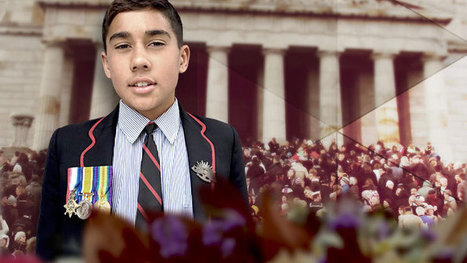
As you saw earlier, Anzac day commemorations were held on Friday. And on that day we were lucky enough to meet a young Aussie with a very special connection to it. His name is Anzac. Here's his story. But first, a warning to Aboriginal and Torres Strait Islander viewers, this story contains images of people who've died.
Personal stories help young children learn about the past. Use historical narratives in the classroom to humanise historic events like war.
In the book "What is History Teaching?, Chris Husbands describes how 'Storied thinking' is a central tool in the teaching and learning of history. Husbands suggests the teacher's role is to:
Personal stories help young children learn about the past. Use historical narratives in the classroom to humanise significant events like war.
In the book "What is History Teaching?, Chris Husbands describes how 'Storied thinking' is a central tool in the teaching and learning of history. Husbands suggests the teacher's role is to:
|
|
Scooped by
Catherine Smyth
March 18, 2015 1:52 AM
|
By now we all know the kind of stuff that can be recycled like glass, cans, cardboard and cartons. But what about all of the other stuff that we throw out? Isn't there something that can be done with all that stuff? Well there is. Here's Carl to show you.
Upcycling is the process of converting waste materials or useless products into new materials or products of better quality or for better environmental value.
In HSIE K-6, students learn about their relationships with places and environmental sustainabilty through an Inquiry Process. Pose an inquiry question and scaffold learning so that students have the opportunity to acquire information, develop inquiry skills (e.g. identifying, gathering, communicating) and participate in social and civic life.
Although this topic strongly aligns with the Environments strand (ENS.6) in the NSW HSIE K-6 syllabus there is scope for integration with other curriculum areas. Adopt an integrated approach and align with Creative Arts or Mathematics (e.g. data collection, graphing, statistics) or Science and Technology (e.g. design and make)
For further inspiration and nifty ideas, check out http://www.upcyclethat.com/
|
|
Scooped by
Catherine Smyth
March 11, 2015 10:25 PM
|
Food feeds the soul. To the extent that we all eat food, and we all have souls, food is the single great unifier across cultures. But what feeds your soul?
This TEDx talk lays out some useful concepts to organise learning about other food cultures. Some of the ideas can be adapted to develop intercultural understanding in primary HSIE/SOSE.
Unit 3: Cultural Practices and Processes
This article is about food and its use in identity and culture. Food often represents where we came from and our experiences. Each culture has specific foods that have a great significance to us and no matter hwere we go, we tend to gravitate toward those foods. The article also talks about how food represents out status due to higher priced foods are usually bought by higher stature people. Food is also used for pleasure and celebration as well as to nourish our bodies.
This relates to unit 3 because food is a big cultural trait. Different cultures eat different foods depending on their area and beliefs. Food has no many uses and can say a lot about the person. Food is used in celebrations as a way to express our cultures and show what it is important to us. Food brings us together as similar cultures share similar interests and beliefs.
|
|
Scooped by
Catherine Smyth
March 4, 2015 7:22 PM
|
As luck would have it, in the past month 4 elementary schools used our student survey, and so we have responses from 5th graders. The results are intriguing when compared against typical high schoo...
WHAT and HOW do 5th Graders like learning in school? Findings from this small (n=200) survey conducted in the USA provide interesting insights into primary aged students' reflections on their own learning.
|
|
Scooped by
Catherine Smyth
March 4, 2015 7:02 PM
|
Admit it: you only read the list of the six levels of the Taxonomy, not the whole book that explains each level and the rationale behind the Taxonomy. Not to worry, you are not alone: this is true ...
In identifying 5 misconceptions that teachers often hold about Bloom's Taxonomy, Grant Wiggins points out the repercussions for assessment.
|
|
Scooped by
Catherine Smyth
February 22, 2015 11:40 PM
|
Some nice ideas and resources for HSIE K-6 on a blog developed by a preservice teacher.
|
|
Scooped by
Catherine Smyth
November 13, 2014 8:02 PM
|
Creating a classroom newspaper around a social or environmental issue or a history topic is an authentic way to address both literacy and curriculum outcomes in HSIE K-6. This website has a range of free downloadable templates of newspapers. Classroom newspapers can be paper-based or published online.
For further research and teaching ideas go to to:
http://www.readingonline.org/articles/art_index.asp?HREF=lund/index.html
Abstract: This article describes a project in which the reality of newspaper production was integrated into the language arts curriculum in a second-grade classroom. The class newspaper was produced in both hard copy and multimedia versions, using The Student Writing Center software and HyperStudio on a single classroom computer. The difficulties and successes of the project are described.
http://www.readwritethink.org/classroom-resources/lesson-plans/creating-classroom-newspaper-249.html
Creating a classroom newspaper around a history topic is an authentic way to address both literacy and history outcomes.
Students can explore what life was like in a particular time and place, bringing together different aspects of life in newspaper stories and pictures. Pose questions about events, people, places, beliefs and attitudes during a particular period. Students gather evidence (primary or secondary sources) that answer their questions of inquiry. Using evidence students construct a historical narrative, report or explanation. Publish a classroom newspaper using student contributions.
This website has a range of free downloadable templates of newspapers. Classroom newspapers can be paper-based or published online.
For further research and teaching ideas go to to:
http://www.readingonline.org/articles/art_index.asp?HREF=lund/index.html
Abstract: This article describes a project in which the reality of newspaper production was integrated into the language arts curriculum in a second-grade classroom. The class newspaper was produced in both hard copy and multimedia versions, using The Student Writing Center software and HyperStudio on a single classroom computer. The difficulties and successes of the project are described.
http://www.readwritethink.org/classroom-resources/lesson-plans/creating-classroom-newspaper-249.html
A great way to combine literacy and history.
They're realistic and the best part, they are FREE! A great resource to use when writing news articles in the primary classroom.
|
|
Scooped by
Catherine Smyth
November 3, 2014 5:59 PM
|
Although this video and the accompanying materials demonstrate how a teacher facilitates a social investigation for Science, the planning and implementation principles provide a useful planning framework for HSIE K-6.
|
|
Scooped by
Catherine Smyth
November 3, 2014 5:37 PM
|
Community Culture: It's All Around You - Explore Your Community Poster Panel One: American Folklife Center of the Library of Congress
In HSIE K-6, children learn about cultural identity and cultural diversity. These resources produced by the American Library of Congress can be adapted and used in an Australian context to teach about culture.
|
|
Scooped by
Catherine Smyth
October 27, 2014 8:50 PM
|
Recently, the things Islamic women wear on their heads became the centre of a big debate. There are many different types of them all with different names but the one most people were talking about was the Burka. Some politicians were asking for them to be banned. And at Parliament House in Canberra rules were announced to restrict women who wear them from sitting in the open public gallery. A lot of people have criticised both moves so we sent Emma to find out more.
In HSIE K-6, Stage 2 students learn about differing viewpoints and community beliefs in the Cultures strand. This BTN report provides a Muslim woman's perspective on why she chooses to wear the hijab.
Not only do ‘Indigenous Languages’ provide this creative and interactive website aimed at educating students about Aboriginal languages, they also offer a free “Marimrang: Elders and Language” presentation (under the ‘Recent Updates’ tab), in conjunction with the State Library of NSW. This could be attended as a class excursion, adhering to Gilbert and Hoepper’s (2014) recommendation that students learn through genuine contact with Indigenous people (p.352).
This talk addresses the importance of keeping the original languages of Aboriginal communities alive, and how this can be achieved, through the perspective of an Indigenous speaker. Teachers should use the ‘Working with Aboriginal Communities’ (2008) guide (Section 3.3 p.22) to educate children on respectful ways to communicate with Indigenous people, prior to the excursion.
As a teaching idea using this website, children could be asked to locate NSW on the map, pinpoint Sydney, and discover the Aboriginal communities first here. They could then visit the ‘Explore Eora’ tab and view ‘Collection Items,’ particularly ‘Lamer’s Vocabulary of Native Names. 1853.’ This provides photographs of an original book of language translations. Teachers could provide students with certain English words from the book and ask them to locate and record/learn the Eora translations of these words.
Specific BOS syllabus outcomes (pp.27,29) suggested use of this source may help achieve:
CUS2.3:
-“Identifies some of the community groups that people can belong to.”
-“Identifies some significant, customs, practices and traditions of their local community, beginning with Aboriginal people.”
-“Locates and identifies evidence of the languages used in their local community, beginning with the original Aboriginal languages, eg signage, place names, sign language.”
CUS2.4:
-"Describes the cultural, linguistic and religious diversity of communities in Australia."
References:
Board of Studies. (2008). Working with Aboriginal Communities: A guide to community consultation and protocols. Retrieved from http://abed.boardofstudies.nsw.edu.au/ files/working-with-aboriginalcommunities.pdf
Board of Studies Syllabus, NSW (2006). Human Society and Its Environment K-6 Syllabus. Sydney: B.O.S. Retrieved from http:// k6.boardofstudies.nsw.edu.au/ wps/portal/go/hsie
Gilbert, R. & Hoepper. B. (2014).
Teaching Humanities and Social Sciences. History, Geography, Economics and Citizenship in the Australian Curriculum.Fifth Edition. Melbourne: Cengage

The Sydney Opera House is one of the most iconic buildings in Sydney. It is an important asset to the community as it provides a venue for some of the best examples of the Arts that Australia has to offer and is in international icon, as well as being on the world heritage list. The video in this scoop shows how to make an Opera House collage.
Students will discuss famous buildings or parts of Sydney before watching the video. They will then use the video to compile a procedure as a class. Students will be provided with a range of additional art and crafts materials to decorate their opera house. After making their collages, students will individually research the Opera House. They are to find out who designed it, when it was built and how it is important to the Sydney community. They should also find out where it has played a significant role in national or international events (such as the 2000 Olympics or the 2013/2014 New Year firework display). They will then create a short paragraph reflecting information they feel is important and attach it to their collage.
I like this idea but I'd throw in some maths - using a protractor to draw the circles on scrap paper/cardboard/newspaper, then cutting the sails out from that. : )
This is a very simple yet fun craft task that students can complete in a short time span and is a great way to introduce the topic of significant built features of Australia to students. The Opera House is one of the most renowned features not only by Australian but recognised by the world. By beginning a unit about built environments with a practical task can stimulate great discussion and allow students to be more interested in the topic itself. In Stage 2, it is the first time that they are requried to name and describe significant buildings of Australia as before this, there is only a focus towards their immediate environment. Therefore discussion and becoming familiar with such buildings in imperative for students, especially those beginning Stage 2.
Graves (1990) states that the best way to teach about the built environment in the curriculum is by integrating it with 'existing curriculum patterns' (p.3). Rather than spoon feeding information about the built environment to students straight away, by linking Visual Arts, students will be encouraged to naturally learn and become inquisitive about such features in a fun and practical way. This Opera House making task will be perfect as students will have something personal to relate to; their very own Opera House! Teachers can further investigate the Opera House with the students to go in more depth as well.
References:
Graves, G. (1990). Teaching about the built environment. ERIC digest Publications Manager, ERIC
Clearinghouse for Social Studies/Social Science Education, 2805 East Tenth Street, Suite 120, Indiana
University, Bloomington, IN 47408.