Your new post is loading...

|
Scooped by
Roland Schegg
October 8, 11:55 PM
|
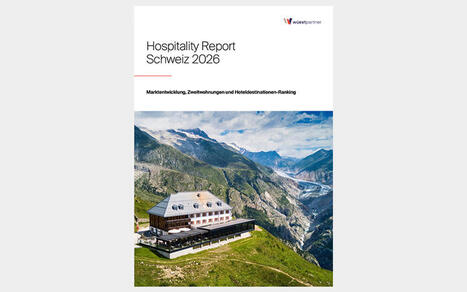
Auch 2025 wuchs der Schweizer Hotelmarkt weiter und verzeichnete mehr Logiernächte und höhere Zimmerpreise. Mit den gestiegenen Investitionen in die Substanz und dank nochmals leicht tieferer Renditeerwartung im Schweizer Immobilienmarkt stieg auch der Marktwert der Schweizer Hotels. In kleineren Tourismusregionen können dabei einzelne Veränderungen einen grossen Impact haben. Fokusregion ist dieses Jahr die Aletsch Arena. Diesbezüglich wird ein besonderes Augenmerk auf die Zweitwohnungsthematik in der Schweiz und im Wallis gelegt. Zudem bietet der Hospitality Report 2026 Einblicke in das erste Update des Hoteldestinationen-Rankings und zeigt einige spannende neue Entwicklungen im Markt.
|
|
Scooped by
Roland Schegg
October 1, 10:45 AM
|
Die Initiative «Wohnraum schützen – Airbnb regulieren» der SP-Ortsgruppe Interlaken ist laut Verwaltungsgericht gültig. Sie will die Vermietung von Wohnungen an Feriengäste auf höchstens 90 Nächte pro Jahr beschränken.
|
|
Scooped by
Roland Schegg
September 24, 2:08 AM
|
Mitte September 2026 zeigt sich der neue Widerspruch der Branche besonders deutlich: Der Iran- und Nahostkonflikt belastet Flugverkehr, Kosten und Fernmärkte – gleichzeitig melden Europa und die DACH-Länder Rekord- oder Höchstwerte. Teil 2 des Hotel Inside-Reports analysiert, wie Gäste auf Krisen und Klima reagieren, was permanente Unsicherheit für Hotels bedeutet und weshalb die grossen Prognosen trotz aller Risiken weiterhin von Wachstum ausgehen.
|
|
Scooped by
Roland Schegg
September 24, 2:03 AM
|
Die grossen Hotelkonzerne wachsen längst nicht mehr nur mit Neubauten. Ein immer wichtigerer Expansionsmotor sind bestehende Hotels, die in Collections, Soft Brands oder conversion-freundliche Franchise-Systeme wechseln. Marriott meldete für das erste Halbjahr 2026, dass Conversions 40 Prozent der Neueröffnungen ausmachten; Hilton erwartet für 2026 einen ähnlichen Anteil, und Accor bezeichnet inzwischen die Hälfte seiner Entwicklungsprojekte als Conversions. Für private Hoteliers klingt das Angebot verführerisch: Name, Charakter und Individualität bleiben – während Distribution, Technologie und Loyalty von der Kette kommen. Doch genau dort beginnt die eigentliche Abhängigkeit. Wer unterschreibt, kauft nicht primär eine Marke, sondern Zugang zu einem globalen Nachfrage- und Datensystem. Und dieser Zugang hat einen Preis, der weit über die Franchisegebühr hinausgeht.
|
|
Scooped by
Roland Schegg
September 23, 4:00 AM
|
"On Booking.com, a roll-in shower is a yes or a no, and Booking.com tells guests who need one to ask the hotel. The rest of the family's rooms follow the answer.
The phone rings at reservations. A woman is planning a week at the coast for six, and her mother uses a wheelchair. Your Booking.com listing says "roll-in shower." She wants to know whether there's a lip at the entrance and whether the seat folds down.
Whoever answers that well gets the booking. Every room of it: the parents, the kids, the grandmother. In a report out this week, Fora, the travel advisor network, says 56 percent of the US consumers it surveyed plan a multigenerational trip in the next three years with someone who has an accessibility need."
|
|
Scooped by
Roland Schegg
September 23, 1:17 AM
|
Die Europäische Hotelvertriebsstudie 2026, durchgeführt von der HES-SO Valais-Wallis für HOTREC in Zusammenarbeit mit den nationalen Hotelverbänden, liefert ein umfassendes Bild des Hotelvertriebs in Europa für das Referenzjahr 2025. Die Analyse basiert auf Daten von 2’713 Hotels, darunter 1’882 individuelle Hotelantworten aus 28 Ländern sowie aggregierte Daten von 831 Hotels aus Hotelketten. Es handelt sich um die siebte Ausgabe einer Längsschnittstudie, die seit 2013 durchgeführt wird.
Die Ergebnisse zeigen eine Vertriebslandschaft, die in ihrer Grundstruktur relativ stabil, zugleich aber zunehmend konzentriert ist. Direktbuchungen bleiben robust: Nach Gewichtung auf Basis der Eurostat-Übernachtungen werden 51,3 % der Hotelbuchungen direkt beim Hotel vorgenommen, während 29,9 % über Online Travel Agencies (OTAs) generiert werden. Langfristig ist die Verschiebung dennoch deutlich: Der OTA-Anteil stieg von rund 19,7 % im Jahr 2013 auf fast 30 % im Jahr 2025, während der Anteil der Direktbuchungen im gleichen Zeitraum um rund sechs Prozentpunkte zurückging. Die Ergebnisse deuten somit nicht auf einen neuen OTA-Boom zwischen 2023 und 2025 hin, sondern vielmehr auf eine strukturell hohe OTA-Abhängigkeit nach mehr als einem Jahrzehnt Wachstum.
|
|
Scooped by
Roland Schegg
September 22, 12:45 AM
|
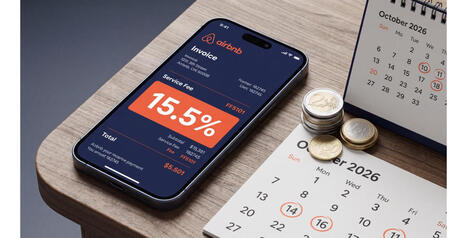
La commission airbnb 2026 change profondément à partir du 13 octobre. Tout d'abord, Airbnb bascule tous les hôtes vers la tarification simplifiée : une commission unique de 15,5 % HT payée intégralement par le propriétaire, contre l'ancien modèle partagé de 3 % côté hôte plus 14-16 % côté voyageur. Précisément, Airbnb annonce ce basculement depuis 2020, mais il devient enfin effectif pour tout le monde.
Concrètement, la commission airbnb 2026 ne s'arrête pas à 15,5 %. En effet, la TVA irlandaise de 20 % s'applique sur cette commission, ce qui porte le vrai coût à 18,6 % pour les hôtes non assujettis à la TVA. De plus, cette bascule enterre définitivement l'intérêt du micro-BIC pour beaucoup de propriétaires, qui vont désormais payer de l'impôt sur des sommes qu'Airbnb encaisse.
|
|
Scooped by
Roland Schegg
September 21, 10:39 AM
|
Lors de la dernière conférence, la question des locations de courte durée a illustré la manière dont ces échanges nourrissent le travail de l’association. Des représentants de Genève, du Valais et de l’Oberland bernois ont fait état de défis liés au logement, à la sécurité et aux différentes exigences légales.
Cette discussion a également souligné les différences d’une région à l’autre. Alors que dans certaines destinations, la pénurie de logements est au premier plan, d’autres sont surtout préoccupées par des questions de réglementation ou d’application de la loi.
C’est à partir de ces retours d’expérience qu’HotellerieSuisse poursuit son travail politique. En ce qui concerne les locations de courte durée, cinq revendications se trouvent au cœur des préoccupations: une plus grande transparence des données, des conditions de concurrence équitables pour les prestations hôtelières professionnelles, une plus grande responsabilité des plateformes, une marge de manœuvre pour les cantons et les communes, ainsi que la protection du logement là où des conflits d’utilisation existent dans les faits.
|
|
Scooped by
Roland Schegg
September 16, 7:43 AM
|
HotellerieSuisse fordert in einem neuen Positionspapier klare Rahmenbedingungen, mehr Transparenz und mehr Verantwortung bei gewerblichen Anbietern von touristischen Kurzzeitvermietungen.
Touristische Kurzzeitvermietungen über Plattformen wie Airbnb haben sich in wenigen Jahren von einem Sharing-Economy-Modell zu einem professionellen Wirtschaftszweig entwickelt. Mit einem neuen Positionspapier fordert HotellerieSuisse eine vertiefte Auseinandersetzung mit diesem Markt. Ziel sind gleiche Wettbewerbsbedingungen für alle gewerblichen Beherbergungsangebote in der Schweiz.
|
|
Scooped by
Roland Schegg
September 15, 10:47 PM
|
"Hotrec Hospitality Europe führt in Zusammenarbeit mit dem Institut für Tourismus der Fachhochschule Westschweiz Wallis seit dem Jahr 2013 im Zweijahresturnus europaweite Online-Umfragen unter europäischen Hotels durch, um Entwicklungstendenzen der Distributionskanäle aufzuzeigen, Marktanteile zu ermitteln und in einem Gesamtkontext zu analysieren"
|
|
Scooped by
Roland Schegg
September 11, 7:05 AM
|
On September 27 a new set of EU rules on environmental claims starts to apply, in every EU country, with no phase-in. The law is the Empowering Consumers for the Green Transition Directive, formally Directive (EU) 2024/825. It was agreed in early 2024, countries had to put it into their own law by March, and several were late. That changes nothing for your hotel: the date holds either way. A line on your room page that is fine on the twenty-sixth can be against the law on the twenty-seventh.
What it bans. The broad words. Eco-friendly. Green. Sustainable. Environmentally friendly. You can only keep using them if you can show the performance behind them. Same for any green badge or leaf symbol that is not backed by a real certification or issued by a public body. And you can no longer call a stay carbon neutral because you bought offsets against it.
|
|
Scooped by
Roland Schegg
September 3, 8:44 AM
|
Die Hospitality hat ein neues Lieblingswort: Experience. Erlebnisse, so lautet die derzeit dominante Erzählung, seien die neue Währung des Reisens; Hotels müssten vom Bettenanbieter zum «Experience Hub» werden. An der Diagnose ist viel richtig. Aber die Vorstellung, das Erlebnis sei eine Erfindung der Post-Covid-Ära, ist historisch kurzsichtig. Menschen reisten schon auf der Grand Tour, in den Kurorten der Belle Époque oder bei der Eroberung der Alpen wegen Bildung, Abenteuer, Gesundheit, Gesellschaft und Status – nicht wegen eines Hotelzimmers. Neu ist weniger das Bedürfnis nach Erlebnis als dessen strategische, digitale und wirtschaftliche Aufwertung. Darin liegt die Chance der Hotellerie. Und ihr nächster Hype.
|
|
Scooped by
Roland Schegg
September 2, 11:50 AM
|
Die vom Bundesgericht bestätigte Regelung für kommerzielle Kurzzeitunterkünfte wie Airbnb und Business-Apartments in der Stadt Zürich gilt ab sofort. Für die Umsetzung schafft die Stadt fünf zusätzliche Stellen. Wohnungen, die regelmässig gewerblich für weniger als ein Jahr vermietet werden, dürfen damit nicht mehr auf den vorgeschriebenen Mindestwohnanteil angerechnet werden. Eigentümerinnen und Eigentümer müssen solche Nutzungen melden.
Ausgenommen sind gelegentliche Vermietungen der eigenen Wohnung während Abwesenheiten, wie der Stadtrat schreibt. «Im Fokus stehen dauerhaft kommerziell genutzte Wohnobjekte», betont er.
|
|
|
Scooped by
Roland Schegg
October 8, 11:53 PM
|
"Die Schweizer Hotellerie eilt von Rekord zu Rekord. 2025 wurden mit 43,9 Millionen Logiernächten bereits zum dritten Mal in Folge Höchstwerte erzielt. Zimmerpreise, Auslastung und die Werte der Hotelimmobilien steigen. Doch der neue «Hospitality Report Schweiz 2026» von Wüest Partner zeigt: Hinter den glänzenden Zahlen verändert sich der Markt grundlegend, insbesondere dort, wo künftig investiert wird.
Die Robustheit der Branche überrascht. Trotz geopolitischer Spannungen bleibt die Nachfrage hoch. Die breite Gästestruktur mit europäischen, nordamerikanischen und inländischen Gästen macht den Schweizer Tourismus vergleichsweise krisenresistent. Gleichzeitig profitiert die Schweiz nach wie vor vom internationalen Ruf als sichere und stabile Destination."
|
|
Scooped by
Roland Schegg
September 30, 12:00 AM
|
What does it cost to acquire a guest—and what is that relationship worth over time? Simon Lehmann’s analysis, developed with hostAI using anonymised data from three short-term rental operators, challenges the conventional comparison between OTA commissions and direct-booking costs. Direct distribution also requires investment in advertising, technology, staff and brand development. Crucially, guests acquired through paid advertising, organic or brand-driven demand, and repeat visits have very different economics. In one case, advertising alone to acquire a new direct guest exceeded the fully loaded OTA cost. These cases offer a framework operators can reproduce with their own data, rather than an industry benchmark. The strategic contribution is to connect acquisition costs with guest value over a consistent period, following subsequent stays across booking channels. For one operator, directly acquired guests generated around $305 more value after channel costs over 18 months, mainly through larger initial bookings and more repeat business; lower distribution costs explained only a small share. Lehmann also highlights an incentive problem: property managers may finance acquisition while homeowners capture most of the additional revenue. The practical lesson is to connect reservations at guest level, preserve the original acquisition source, distinguish acquisition from retention, and examine how the resulting value is shared. A useful contribution to a more informed discussion of distribution profitability.
|
|
Scooped by
Roland Schegg
September 24, 2:05 AM
|
Kriege, Pandemie, gesperrte Lufträume, Energiepreise und Extremwetter verändern den Tourismus – aber sie stoppen ihn bisher nicht dauerhaft. Die zentrale Erkenntnis: Nicht der Reiseboom geht zu Ende, sondern die alte Planungssicherheit. Für Hotels und Destinationen wird Resilienz zum strategischen Wettbewerbsfaktor.
Die Kernthese
Tourismus reagiert auf Krisen schnell und teilweise heftig, erweist sich langfristig aber als bemerkenswert widerstandsfähig. Reisende verzichten häufig nicht auf Ferien, sondern ändern Ziel, Zeitpunkt, Route oder Budget. Geopolitische Schocks führen deshalb oft eher zu einer Umverteilung von Reiseströmen als zu einem dauerhaften globalen Nachfrageeinbruch. Besonders verwundbar sind Betriebe und Destinationen mit hoher Abhängigkeit von einzelnen Quellmärkten, Flugkorridoren oder Saisonen.
|
|
Scooped by
Roland Schegg
September 23, 10:54 AM
|
Wer in Basel-Stadt Wohnungen über Airbnb oder als Business-Apartments vermietet, soll sich künftig registrieren müssen. Der Grosse Rat hat eine entsprechende Motion erstmals an die Regierung überwiesen.
|
|
Scooped by
Roland Schegg
September 23, 3:57 AM
|
The Front Desk as a Sensor for AI-Generated Expectations The article highlights a growing blind spot for hotels: AI assistants increasingly shape what guests expect before they book, drawing on hotel websites, OTAs, reviews, and sometimes outdated information. Hotels usually have little visibility into what tools such as ChatGPT have actually told potential guests. Incorrect information about facilities, opening hours, room features, or services can therefore create a gap between the digital promise and the actual stay. Traditional post-stay surveys and reviews often detect dissatisfaction only afterwards and do not necessarily reveal what information originally shaped the guest’s expectations. The author proposes a simple solution: ask guests at check-in what they had heard or read about the hotel before arriving and where that information came from. Systematically collecting these answers could help hotels identify both misinformation circulating online and the specific attributes that influenced the booking decision. The front desk thus becomes a kind of sensor for generative-AI visibility, helping hotels correct information across websites, Google, OTAs, and other channels while better understanding how AI-mediated information affects guest expectations and ultimately satisfaction.
|
|
Scooped by
Roland Schegg
September 23, 1:15 AM
|
L’étude sur la distribution hôtelière en Europe 20262026, réalisée par la HES-SO Valais-Wallis pour HOTREC, en collaboration avec les associations hôtelières nationales, dresse un panorama détaillé de la distribution hôtelière en Europe pour l’année de référence 2025. L’analyse repose sur des données provenant de 2 713 hôtels, dont 1 882 réponses individuelles issues de 28 pays ainsi que des données agrégées concernant 831 établissements appartenant à des chaînes hôtelières. Il s’agit de la septième édition d’une série longitudinale initiée en 2013.
Les résultats montrent un paysage de distribution à la fois relativement stable dans sa structure et de plus en plus concentré. Les réservations directes restent solides : après pondération sur la base des nuitées Eurostat, 51,3 % des réservations hôtelières sont effectuées directement auprès de l’hôtel, contre 29,9 % via les agences de voyages en ligne (OTA). L’évolution à long terme est néanmoins importante : la part de marché des OTA est passée d’environ 19,7 % en 2013 à près de 30 % en 2025, tandis que la part des réservations directes a reculé d’environ six points de pourcentage sur la même période. Les résultats ne traduisent donc pas une nouvelle poussée des OTA entre 2023 et 2025, mais plutôt un niveau de dépendance structurellement élevé après plus d’une décennie de croissance.
|
|
Scooped by
Roland Schegg
September 21, 10:41 AM
|
«Haustierfreundlich» war auf Booking.com zuletzt der drittbeliebteste Suchfilter, noch vor Spa und Wellness, Gratis-WLAN und hauseigenem Restaurant. Dahinter steckt mehr als der Wunsch nach einem Zimmer, in dem Hunde erlaubt sind.
|
|
Scooped by
Roland Schegg
September 16, 3:28 PM
|
"Both Booking and Expedia have the luxury to address consumer-facing AI from multiple angles, including chatbots, specialized agents, and startups. Their approaches overlap, but also have distinct differences.
Booking Holdings is coming at AI with five main initiatives, including two internal startups and a soon-to-be launched Agoda trip-planning tool, according to executive comments at investor conferences last week.
Priceline's Penny, which was recently revamped into an underlying agentic system, is the standout so far, with officials touting it during earnings calls and financial presentations.
"We're definitely getting good CSAT (Customer Satisfaction Score) numbers," said Booking CEO Glenn Fogel, who was speaking at the Citi 2026 Global TMT Conference. "We're in good engagement and higher conversion," he said, referring to Penny and adding that it's a "very small sample.""
|
|
Scooped by
Roland Schegg
September 16, 2:36 AM
|
"Your guest thinks she booked a Connected Trip on Booking.com, with one company standing behind it. She made two bookings, not one. When half of it fails, yours is the only company she can reach."
|
|
Scooped by
Roland Schegg
September 15, 5:34 AM
|
The European Hotel Distribution Study 2026, based on information from 2,713 hotels, shows that direct bookings remain resilient, but OTA dependence is structurally high. In 2025, 51.3% of bookings were made directly with the hotel, meaning that roughly one in two bookings still comes through direct channels. At the same time, OTAs accounted for 29.9% of bookings, or around three in ten hotel room bookings. Compared with 2013, when OTAs represented 19.7% of bookings, this marks an increase of more than 10 percentage points over twelve years, while the share of direct bookings declined by around 6 percentage points. The issue is therefore not a short-term surge in OTA use, but the fact that OTAs have become a deeply embedded and structurally important part of European hotel distribution. The strongest strategic finding is the high concentration within the OTA market. Booking Holdings accounts for 68.8% of European OTA bookings, meaning that almost seven in ten OTA bookings go through this group. Together with Expedia Group, the two largest global OTA groups represent 85.4% of the OTA market, or more than four in five OTA bookings. This concentration matters especially for Europe’s independent hotels and SMEs, as it increases dependency and may limit competition and innovation in the sector. The study also shows that platform-related challenges go beyond market share and commission costs: 51% of hotels report OTA undercutting frequently or occasionally, up from 43% in 2023, and among affected hotels, 80% say they had not agreed to the lower price. In addition, 44% of hotels report being affected by OTA multi-sourcing, which can lead to price inconsistencies, guest confusion, billing difficulties, incorrect information and reduced control over inventory.
|
|
Scooped by
Roland Schegg
September 4, 12:30 AM
|
"Digitale Bewertungen haben sich zu einem der wichtigsten Entscheidungsfaktoren im Tourismus entwickelt. Sie beeinflussen die Buchungsentscheidung potenzieller Gäste und können den wirtschaftlichen Erfolg eines Tourismus- oder Freizeitbetriebs maßgeblich prägen. Gleichzeitig stellen manipulierte oder gefälschte Bewertungen („Fake-Bewertungen“) für viele Betriebe eine zunehmende Herausforderung dar."
|
|
Scooped by
Roland Schegg
September 3, 8:08 AM
|
Zu den zentralen Programmpunkten gehört die Präsentation der ersten nationalen Schweizer Short-Term-Rental-Studie 2026. Die Untersuchung wird gemeinsam mit der HES-SO Valais-Wallis durchgeführt und soll Gastgebern erstmals fundierte Marktdaten liefern, die spezifisch auf die Schweiz zugeschnitten sind. Für Betreiber und Property Manager ist das besonders relevant: Verlässliche Daten können helfen, Marktposition, Investitionen und strategische Entscheidungen besser einzuordnen.
|