Your new post is loading...

|
Scooped by
Roland Schegg
June 10, 11:54 AM
|
Am HumanX Summit 2026 stellte die EHL Hospitality Business School ihren Psychological-Wellbeing-Bericht vor. Dieser zeigt, dass psychisches Wohlbefinden zunehmend über Gästezufriedenheit, Mitarbeitendenbindung und langfristigen Geschäftserfolg entscheidet.
|
|
Scooped by
Roland Schegg
June 2, 11:24 AM
|
"Das Hotel Glocke in Reckingen wird zum Solarkraftwerk. Gemeinsam mit Solarify realisiert das Traditionshaus das erste Walliser Solarprojekt mit direkter Bürgerbeteiligung. Interessierte können einzelne Solarmodule erwerben und von den Erträgen profitieren. Gastgeber Sebastian Schmid erklärt die Beweggründe hinter dem Projekt."
|
|
Scooped by
Roland Schegg
May 14, 3:08 AM
|
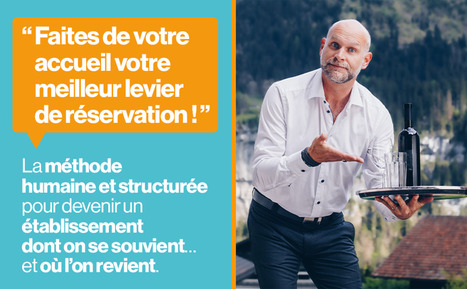
Le guide essentiel pour créer un lieu d’accueil mémorable, rentable… et profondément humain
Et si votre établissement devenait le lieu dont on se souvient, celui où l’on revient, celui qu’on recommande avec enthousiasme ? ⭐
Dans un métier où tout peut s’automatiser sauf l’accueil, voici enfin le livre qui révèle comment transformer votre hospitalité en véritable avantage compétitif.
Coach, hôtelier et expert du lien humain, Philippe Zurkirchen vous transmet une méthode complète, nourrie de psychologie, de stratégie et de mise en pratique concrète. Une approche profondément humaine, mais aussi redoutablement structurée.
|
|
Scooped by
Roland Schegg
April 30, 2:38 AM
|
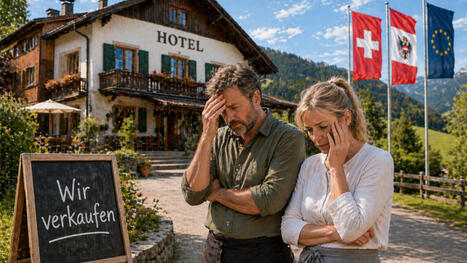
Der Rückgang klassischer Beherbergungsbetriebe im deutschsprachigen Raum (DACH) ist kein kurzfristiges Phänomen, sondern Ausdruck eines tiefgreifenden strukturellen Wandels. In Deutschland ist die Zahl der Gasthöfe in den vergangenen zehn Jahren um über 40% gesunken, Pensionen verzeichnen einen Rückgang von rund 20%. Vergleichbare Entwicklungen zeigen sich auch in Österreich und in der Schweiz.
|
|
Scooped by
Roland Schegg
April 25, 5:43 AM
|
Der Klimawandel trifft die Hotellerie immer spürbarer. Doch wer seine Klimagefährdung versteht, kann Risiken gezielt reduzieren und Chancen nutzen. Beim Hospitality Summit 2026 zeigt Climada, wie datenbasierte Resilienz wirklich gelingt.
|
|
Scooped by
Roland Schegg
April 17, 1:30 AM
|
Mews has introduced Mews Business Intelligence (Mews BI), a native analytics and reporting solution built directly into its hospitality operating system. The product aims to give hoteliers a single source of truth by combining live operational and commercial data with AI-powered insights. By embedding analytics into daily workflows, Mews positions BI as a core operational tool rather than a separate reporting layer. Early adopters report measurable revenue gains and improved decision speed, highlighting the growing importance of integrated data platforms in hotel management.
|
|
Scooped by
Roland Schegg
April 16, 2:43 AM
|
"HotelInside: Die Schweizer Hotellerie wirkt nach aussen robust: Rekordlogiernächte, gute Auslastung, internationale Nachfrage, neue Marken, neue Investoren, neue Projekte. Doch hinter dieser glänzenden Oberfläche läuft seit Jahren ein tiefgreifender Strukturwandel, der vor allem die kleineren, privat geführten und mittelständischen Betriebe trifft. Der Markt wächst nicht einfach, er sortiert sich neu. Und diese Neuordnung ist brutal: weniger Häuser, grössere Einheiten, höhere Kapitalkraft, stärkerer Vertrieb, mehr Markenmacht, weniger Eigentümerfamilien, weniger Nachfolger, weniger Luft für Fehler. Gerade deshalb ist die Blick-Schlagzeile von der fortgesetzten Schliessungswelle bei Familienhotels keine Übertreibung, sondern die Zuspitzung einer Entwicklung, die längst im Gang ist."
|
|
Scooped by
Roland Schegg
March 31, 5:10 AM
|
The final conference of the Resilient Tourism Flagship project will bring together leading voices from industry, academia, and public institutions to examine how data, digital innovation, and resilient systems are reshaping the tourism landscape.
Held over two days in Sierre (May 26–27, 2026), the event will showcase the outcomes of a four-year Innosuisse-supported initiative that brought together six Swiss universities of applied sciences and over 30 partners to accelerate the datafication of tourism and promote digitally enhanced services, operations, and business models across Switzerland.
The program will feature keynote talks from global tech leaders who are shaping the digital future of travel, including speakers from Booking.com, Amazon Web Services, and MSC Cruises. These thought leaders will share insights on topics such as AI-driven personalization, smart distribution, data ecosystems, and the role of large platforms in supporting sustainable and resilient tourism. Their perspectives — grounded in global-scale innovation — will provide valuable inspiration for Swiss tourism professionals navigating rapid digital transformation.
|
|
Scooped by
Roland Schegg
March 31, 4:26 AM
|
"A K-shaped recovery is one where different parts of the same economy move in opposite directions at the same time — one arm of the K rising, the other falling. Economists used the term to describe what happened to household incomes after 2020: affluent consumers, supported by asset growth and accumulated wealth, came out of the pandemic in better financial shape than they went in. Middle- and lower-income households absorbed higher living costs, stagnant wages in real terms, and reduced financial flexibility. The two groups did not experience the same economy. They still don't.
That divergence has now arrived fully in the hotel market, and the data from 2025 makes it difficult to argue otherwise. Ultra-luxury RevPAR grew 10.6% last year — more than three times the rate of the broader hotel sector, according to CoStar and the Financial Times. U.S. economy hotels, meanwhile, recorded 18 consecutive months of RevPAR declines through 2025. STR's Hannah Smith said at the Hotel Data Conference that the economy segment is not expected to recover until the end of 2027."
|
|
Scooped by
Roland Schegg
March 27, 1:10 AM
|
Independent hotels entered 2026 after a year of moderating performance and increasing operational complexity. According to The 2026 State of Independent Hotels from Cloudbeds, global demand softened slightly, pricing power weakened, and reliance on intermediaries continued to grow, putting pressure on margins and market share. At the same time, fragmented systems and slower adoption of AI are widening performance gaps between operators. The report highlights that future success will depend on integrating technology, aligning teams, and adapting to shifting traveler behavior.
|
|
Scooped by
Roland Schegg
March 4, 2:27 PM
|
New research from Booking.com highlights a growing disconnect in Europe’s accommodation sector between the skills hotels say they will need in the future and the training they provide today. The study surveyed around 5,000 accommodation professionals and included nearly 200 interviews with industry and labour market experts. While most hoteliers recognize that digital capabilities, sustainability knowledge, and commercial skills will be critical for future competitiveness, only a small share currently prioritize training in these areas. The findings suggest that without more structured upskilling, many hotels risk falling behind as technology and guest expectations evolve.
|
|
Scooped by
Roland Schegg
March 4, 3:18 AM
|
HOTREC et EFFAT, partenaires sociaux européens du secteur des hôtels, restaurants, bars et cafés, saluent l’initiative de la Commission européenne visant à compléter le règlement existant et à proposer un nouvel acte législatif sur les locations de courte durée (STR), dans le cadre du Plan européen pour le logement abordable.
Ils soulignent que les déséquilibres réglementaires entre les locations de courte durée et les hébergements traditionnels sont devenus un facteur majeur de distorsion des marchés du logement dans de nombreuses villes.
Depuis 2014, HOTREC et EFFAT coopèrent dans le cadre du dialogue social sectoriel pour analyser l’impact de l’économie dite « collaborative » sur l’hôtellerie-restauration européenne, publiant plusieurs déclarations communes.
|
|
Scooped by
Roland Schegg
February 26, 1:59 AM
|
In der Hotellerie wurde jahrzehntelang über Lage, Zimmer, Sterne und Service gesprochen. Heute entscheidet zunehmend eine andere Frage über Wettbewerbsfähigkeit: Welche Daten habe ich – und was mache ich damit? Gästedaten sind zur neuen Währung geworden, weil sie Personalisierung, Effizienz, Vertriebsmacht und letztlich Marge ermöglichen. Wer keine sauberen, nutzbaren Daten hat, kann weder gezielt kommunizieren noch clever steuern – und wird im Zeitalter von KI-Agenten, Plattformen und dynamischer Nachfrage unsichtbar.
|
|
|
Scooped by
Roland Schegg
June 9, 11:58 PM
|
Jeder kann ein Airbnb mieten, auch Kriminelle. Teilweise werden im Internet gemietet Wohnungen als Verstecke genutzt. Dagegen will ein SVP-Ständerat nun vorgehen – doch der Bundesrat sieht keinen Handlungsbedarf.
|
|
Scooped by
Roland Schegg
June 1, 8:53 AM
|
Die Schweizer Hotellerie hat im Jahr 2025 mit Übernachtungen 6.2 Milliarden Franken generiert.
Das entspricht einem Anstieg von 3.9 Prozent gegenüber dem Jahr davor, wie das Bundesamt für Statistik (BFS) mitteilt.
Das Wachstum wurde dabei in erster Linie durch eine höhere Nachfrage getragen. Die Einnahmen pro Übernachtung nahmen hingegen lediglich um 0.6 Prozent auf durchschnittlich 139.80 Franken zu.
Saisonbedingt zeigen sich deutliche Unterschiede: Die höchsten Einnahmen wurden in den Sommermonaten erzielt, mit Spitzenwerten von über 680 Millionen Franken im Juli (+5.8 Prozent zum Vorjahr) und rund 670 Millionen im August (+6.8 Prozent). Die Preise pro Nacht stiegen dabei jeweils aber nur um gut 1 Prozent; das Wachstum war also vor allem auf das Volumen zurückzuführen.
|
|
Scooped by
Roland Schegg
April 30, 11:36 PM
|
HotelInside: "Die Hotelexperten Roland Schwecke und Florian K. Walther legen mit ihrer Analyse (vgl. Report) eine der präzisesten Diagnosen der aktuellen Situation der mittelständischen Hotellerie im deutschsprachigen Raum vor. Ihre Thesen sind nicht nur richtig – sie sind überfällig. Denn sie entlarven eine Realität, die viele in der Branche noch immer verdrängen: Die Krise der kleinen und mittelständischen Hotels ist keine konjunkturelle Delle, sondern das Resultat eines strukturellen Versagens."
|
|
Scooped by
Roland Schegg
April 28, 9:24 AM
|
For many hosts and property managers in the short-term rental (STR) sector, platforms like Airbnb and Vrbo have become essential distribution channels. But they come at a price, thanks in part to shifting commission fees.
Limited ownership of customer details is also causing frustration, leading to a wider direct-booking push. The opportunity to adopt a different business model looks increasingly appealing.
“Distribution costs are high,” said Amirali Mohajer, CEO of direct booking platform HostAI. “There's definitely a lot of incentive to reduce the distribution cost and then also reduce your reliance on two or three big players in the market.”
|
|
Scooped by
Roland Schegg
April 17, 11:42 AM
|
"
Breaking the cycle
Hotels face a familiar squeeze. Labor shortages persist while costs rise faster than revenue. Many have reached a breaking point with too much manual work and too many disconnected tools.
Agentic AI offers a path forward. Properly deployed, agents can autonomously act and configure rooms before arrival, adjust rates, manage guest requests, surface additional sources of revenue and monitor anomalies or edge cases that often go unnoticed.
The rewards are fewer operational errors that quietly eat into profits and more productive teams focused on delivering exceptional guest experiences. However, leaders must remember that agentic AI is only the enabler. The true determinant of success will be how intentionally organizations upskill and bring their people into this new way of working.
|
|
Scooped by
Roland Schegg
April 17, 1:15 AM
|
"Hotels are increasingly moving beyond the traditional overnight stay model and repositioning themselves as social and lifestyle hubs. The article highlights how properties are introducing private clubs, wellness programs, and curated events to attract both travelers and local audiences. This evolution reflects a broader shift in guest expectations toward belonging, access, and experience rather than purely accommodation. For hoteliers, the model offers a way to stabilize revenue, maximize asset utilization, and build deeper, ongoing relationships with guests.
Key takeaways
Revenue diversification: Hotels are creating new income streams through memberships, events, and wellness offerings, reducing reliance on room revenue alone.
Membership-driven loyalty: Private club models generate recurring revenue while fostering stronger, long-term guest relationships beyond transactional stays.
Local market activation: Engaging local residents as regular users of hotel spaces increases footfall, brand relevance, and year-round demand."
|
|
Scooped by
Roland Schegg
April 12, 2:07 AM
|
European cities are moving decisively to restrict short-term rentals, creating a structural shift in the accommodation landscape that directly impacts hotel demand. Cities such as Barcelona, Amsterdam, Paris, and Madrid are limiting supply through caps, bans, and stricter enforcement, while the European Union is introducing mandatory host registration and data-sharing rules. This coordinated regulatory push is expected to reduce available inventory in the short-term rental segment and redirect displaced demand toward hotels. For hoteliers, this is less a short-term disruption and more a medium-term opportunity to regain share in key urban markets.
Key takeaways
Supply reduction creates demand spillover: As short-term rental inventory declines in major cities, displaced travelers will increasingly turn to hotels, particularly in central locations where restrictions are strongest.
Urban hotels stand to benefit most: Properties in city centers are best positioned to capture demand previously absorbed by Airbnb-style listings, especially for leisure and extended-stay segments.
|
|
Scooped by
Roland Schegg
March 31, 4:27 AM
|
The hospitality industry is entering a structural transition that redefines what a hotel fundamentally is. Instead of operating primarily as a real estate asset monetised through room nights, hotels are evolving into platforms that generate value through access, community, and recurring engagement. This shift is driven by the need to activate underutilised spaces, create more predictable revenue streams, and build deeper relationships with customers. When executed well, the hotel becomes part of a customer’s daily life rather than an occasional destination tied to travel.
Key takeaways
From asset to platform: Hotels are moving beyond a pure real estate model toward platform-based businesses that orchestrate experiences, services, and communities.
Monetising access over occupancy: Revenue is increasingly generated through access to spaces such as work areas, dining venues, and wellness facilities, not just overnight stays.
Community as a value driver: Hotels are positioning themselves as social and cultural hubs, creating a sense of belonging that encourages repeat engagement.
|
|
Scooped by
Roland Schegg
March 27, 1:12 AM
|
While the biggest brands rely on internal research teams and portfolio-wide analytics, independents rarely get the same visibility. That’s why we’ve invested in this report year after year to bring clarity to what shifted and what it means for the year ahead.
|
|
Scooped by
Roland Schegg
March 12, 6:58 AM
|
Adoptée le 19 novembre 2024, la loi LE MEUR — surnommée loi « Airbnb » ou « anti-Airbnb » selon les camps — est entrée en vigueur le 1ᵉʳ janvier 2025. L’objectif : renforcer les outils de régularisation des meublés de tourisme à l’échelle locale pour remédier aux déséquilibres du marché locatif. Un an plus tard, le nombre d’annonces semble stagner, voire légèrement reculer. Simple fluctuation ou premier effet de la loi ? Pour tenter d’y voir plus clair, j’ai mené l’enquête auprès de plusieurs territoires et hébergeurs touristiques. Une investigation qui s’est révélée presque aussi compliquée que de retrouver un appartement disponible à l’année dans certaines villes !
LOI LE MEUR : RETOUR SUR LES PREMIERS ÉLÉMENTS DU DOSSIER
Pourquoi La France a-t-elle légiféré sur les locations de courte durée ?
En février 2026, selon les données de PriceLabs, la France compte près d’un million d’annonces actives, soit environ deux fois plus qu’il y a cinq ans auparavant. Une croissance insolente des locations saisonnières portée par une rentabilité souvent supérieure à la location à l’année et par des plateformes qui ont considérablement simplifié la commercialisation.Dans de nombreux territoires touristiques, cette progression spectaculaire a alimenté des tensions : accès au logement plus difficile pour les habitants, loyers sous pression… Autant de signaux qui ont poussé certains élus à vouloir encadrer davantage le phénomène.
|
|
Scooped by
Roland Schegg
March 4, 2:03 PM
|
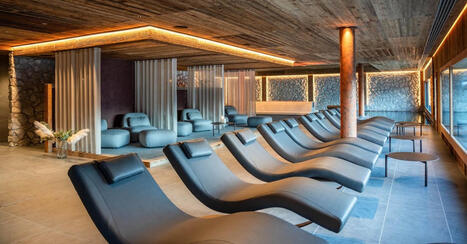
Ouvert depuis décembre, le Dent Blanche Resort à Hérémence apporte 144 chambres à la station située sur le domaine des 4 Vallées. Cette résidence hôtelière haut de gamme mise aussi sur les groupes professionnels et privés pour ouvrir à l’année.
|
|
Scooped by
Roland Schegg
February 27, 2:49 AM
|
"While technology and AI are advancing at remarkable speed, long-term value in travel will not be defined by automation alone. Instead, emotional intelligence, human connection and a sense of belonging are becoming central differentiators. For hoteliers, this signals a shift from competing purely on efficiency and distribution reach to designing experiences that foster community and meaning. In an increasingly automated landscape, the properties that feel human will stand out.
Key takeaways
Speed is no longer enough: Operational efficiency and digital convenience are expected hygiene factors, but they do not create loyalty or emotional attachment on their own.
Emotional intelligence as competitive edge: Hotels that train teams to deliver empathetic, intuitive service can offer what AI and automation cannot easily replicate.
Community drives differentiation: Guests increasingly seek shared experiences, curated gatherings and opportunities to connect with like-minded travelers, not just a room for the night."
|


 Scoop.it!