Your new post is loading...

|
Rescooped by
eMedToday
from #eHealthPromotion, #SaluteSocial
November 22, 2017 10:11 PM
|
According to Think with Google’sThe Digital Journey to Wellness: Hospital Selection: - 77% of patients use search engines prior to booking appointments.
- Search drives nearly three times as many visitors to hospital sites, compared to visitors from other referral sites.
- 44% of patients who research hospitals on a mobile device schedule an appointment.
- Before the moment of conversion, patients typically search on symptoms and condition terms.
Via Giuseppe Fattori
|
|
Scooped by
eMedToday
November 19, 2017 10:04 PM
|
Two telehealth providers — SnapMD and MDLive — are building up their offerings. While SnapMD's platform includes support for Spanish speakers, MDLive has a new dermatology service.
|
|
Rescooped by
eMedToday
from #eHealthPromotion, #SaluteSocial
November 19, 2017 9:55 PM
|
Trust is the foundation for business. Maintaining trust and corporate reputation is expensive, time-consuming, and often very inefficient. Blockchain technology has been hailed as a solution to protect trust, and could be a revolution in the way everyone —businesses, governments, organizations and individuals—work together.
Blockchain provides a simple, secure way to establish trust for virtually any kind of transaction, helping simplify the movement of money, products or virtually any other asset around the world. Blockchain also prevents any single company or centralized intermediary from having the power to manipulate transactions and the assets involved.
In the context of a trust economy, blockchain can be viewed as a ‘digital public ledger’ that could be used to record everything of importance using advanced cryptography and distributed programming to create a secure, transparent, immutable repository of truth. In this system, the individual—not a third party—determines what digital information is recorded in a blockchain, and how that information will be used.
As a repository of valuable data, blockchain can provide individual users with secure control over their digital identities. It can also potentially offer businesses an effective way to break down information silos and lower data management costs.
Imagine a place where individuals could safely store and manage all their assets including their driving licenses, passports, insurance policies, bank accounts, tax filings, property deeds, voting records and medical records (with full breakdown of medical, pharmaceutical and fitness regimens, and medical device or wearables usage data). Will there be day when we can have our own. . .
Via Giuseppe Fattori
|
|
Rescooped by
eMedToday
from #eHealthPromotion, #SaluteSocial
November 19, 2017 9:55 PM
|
Abhinav Shashank is the CEO & Co-founder at Innovaccer Inc., a datashop integrating complex data across multiple distributed sources to give healthcare organizations greater insights to provider better care. Technology can never replace humans because the ultimate decision-making authority always lies with the individual. He or she can, however, in the course of time, opt for technological solutions that simplify their work and bring about efficiency.
Via Florian Morandeau, Lionel Reichardt / le Pharmageek, Giuseppe Fattori
|
|
Rescooped by
eMedToday
from Digital marketing pharma
November 19, 2017 9:52 PM
|
|
|
Rescooped by
eMedToday
from #eHealthPromotion, #SaluteSocial
November 19, 2017 9:50 PM
|
Sharmeen Obaid Chinoy’s tweets that claimed a doctor sent her sister a Facebook friend request a day after treating her, and called his behaviour ‘harassment’, have been met with a bag of mixed reactions. Some commended her for taking up this issue, while others criticised her choice of words and for using her celebrity status for a personal cause. Since she has acknowledged that her choice of words was not appropriate, the focus should thus be shifted to the real problem, which is not about a lack of code of ethics. Chinoy’s story blaringly sounds the alarm of an issue which has been ignored for far too long, not only by the physician community but also by our society. At the core of this incident was a breach of patient privacy, but more importantly, the backlash it received revealed a lack of understanding and awareness about the sanctity of the doctor-patient relationship. Surprisingly, most people did not think that a patient feeling vulnerable by her own physician was a big deal, and that is the most concerning part for me.
Via Plus91, Giuseppe Fattori
|
|
Scooped by
eMedToday
October 25, 2017 2:01 AM
|
Hospitals will most likely see rising bad debt in 2018 after President Trump ended Obamacare's cost-sharing reductions.
|
|
Rescooped by
eMedToday
from #eHealthPromotion, #SaluteSocial
October 17, 2017 3:11 AM
|
Patients are increasingly accessing health information websites to assess their symptoms and health queries.Healthcare professionals must understand patient preferences for quality with regard to online health information websites, according to a group of Saint Louis University researchers. Understanding how patients find online health information will help providers direct patients to credible sources, the researchers said. “Today’s health care environment encourages health care consumers (patients and caregivers) to take an active role in participating in their health care-related decision making and managing their own health,” the research team explained. As the industry continues to take a consumer-centric turn, healthcare professionals are encouraging patients to take a more active role in their own health, stating that it is essential for patients to create a baseline understanding of well-being.
Via Giuseppe Fattori
|
|
Rescooped by
eMedToday
from #eHealthPromotion, #SaluteSocial
October 17, 2017 3:09 AM
|
Patients want their self-management mHealth apps to be engaging, educational, and personalized, researchers observed.Patients, providers, and caregivers all must weed through the most valuable self-management mHealth apps as chronic disease management continues to go digital. Not all mHealth apps are created equal, and patients have opinions about which will be most effective in supporting their own care. In one recent study, researchers from the University of Pittsburgh School of Health and Rehabilitation Sciences identified which features adolescents and young adults preferred in chronic care self-management apps. The team set out specifically to develop an app for adolescent patients managing brain and spinal cord anomalies (BSA) and targeting the tool to help patients transition into chronic care self-management independent of their parents, guardians, and other caregivers.
Via Giuseppe Fattori
|
|
Scooped by
eMedToday
October 13, 2017 12:13 AM
|
Once concentrated in a central hub, health care services are moving outward — into retail spaces, clinics, wellness centers, homes, schools and corporate spaces. People are more likely to seek health care services if it is convenient, whether they live in rural, suburban or urban locations. By identifying underserved market segments, health care organizations are able . . .
|
|
Scooped by
eMedToday
October 13, 2017 12:01 AM
|
With flu season upon us, it will be important to take the time off that you need if you get sick. Don't be a martyr. Keep your coworkers healthy.
|
|
Rescooped by
eMedToday
from #eHealthPromotion, #SaluteSocial
October 12, 2017 11:30 PM
|
Patients trust online medical information sources with high usability, clear content, and obvious author authority.Trustworthy patient-facing websites have the power to drive more patient education in the healthcare space. Usability, simplicity, and author authority all drive patient trust in online medical information sources, according to recent research. Online information sources have become a mainstay in the healthcare industry. Patients are consulting websites such as WebMD and other clinic-based websites to better educate themselves on their health conditions or to partially self-diagnose. Pew Research found that one in three patients seek health information online before going to their doctors, the research team said, noting these websites’ importance in the patient experience.
Via Giuseppe Fattori
|
|
Scooped by
eMedToday
October 10, 2017 11:42 PM
|
The VA is proposing to allow its doctors to treat veterans with telehealth no matter where they're located, bypassing state laws and licensing rules.
|
|
|
Rescooped by
eMedToday
from PATIENT EMPOWERMENT & E-PATIENT
November 22, 2017 10:11 PM
|
Those with health conditions turn to social media for emotional support. Social media’s influence on patient groups is growing as more individuals turn to online sources for health information and advice. According to the 2017 MARS Consumer Health study, 73% of all U.S. adults use the internet for health and wellness. Of those, more than one in three are looking up information about health conditions or symptoms. Consumers are Getting Social 84% of adults indicate they have visited a social media site such as Facebook, Instagram or Twitter in the last 6 months, and nearly 70% say they have caught up or posted on a social network in the last 30 days (an increase of 5% since 2015). This trend is also apparent among older adults: 51% of adults aged 50+ say they have participated in social media in the past month (an increase of 4% since 2015). Social Media's Value Nearly half of all adults indicate they value social media related sources for healthcare information. Social and online sources of information help consumer groups connect with others and share information: Do Patient Groups "Like" Healthcare Info on Social Media Sites? Patient groups that are more likely to value social media content as a source of healthcare information are: Many condition sufferers are turning to social media for additional emotional support in managing their condition. This is especially the case for those suffering from debilitating or chronic conditions. For example, multiple sclerosis sufferers are 138% more likely than all doctor diagnosed condition sufferers to agree their ailment makes it difficult to do day-to-day tasks. They are 67% more likely to indicate their health is worse compared to a year ago. While social sources of health information are a valuable resource for many, only 12% of all condition sufferers indicate they trust the medical information people share on social media. Advertisers and marketers should consider strategies to build trust and establish credibility when utilizing social media channels to reach patients.
Via Plus91, Rémy TESTON, Lionel Reichardt / le Pharmageek
|
|
Scooped by
eMedToday
November 19, 2017 10:01 PM
|
|
|
Scooped by
eMedToday
November 19, 2017 9:55 PM
|
Brigham Health, the Cleveland Clinic and MD Anderson are among several prestigious hospital systems struggling with today’s healthcare economics.
|
|
Rescooped by
eMedToday
from Digital marketing pharma
November 19, 2017 9:54 PM
|
|
|
Rescooped by
eMedToday
from #eHealthPromotion, #SaluteSocial
November 19, 2017 9:50 PM
|
A part of the #jabathon flu campaign running this week, a York doctor shows how social media has a vital role to play in delivering key messages from General Practice, not least of all about winter: We all have different personas don’t we: to my patients I’m Dr Brooks; to my friends or colleagues I’m Abbie or Abs, and to my mum I’m Abigail. Curating the @NHS account allowed me to show all sides of myself to the world out there. I think some of my close friends were surprised to see the professional Dr Brooks at work, seeing me in a ‘Britney Spears’ headset was a highlight for them. During my five days tweeting for @NHS I had clinicians, patients and service users asking useful and insightful questions using #askDrAbbie.
Via Plus91, Giuseppe Fattori
|
|
Scooped by
eMedToday
November 19, 2017 9:49 PM
|
Solving problems starts with understanding people’s needs.
|
|
Scooped by
eMedToday
October 19, 2017 10:28 PM
|
Clinicians need new skills as more patients carry their own health information into appointments.
|
|
Rescooped by
eMedToday
from #eHealthPromotion, #SaluteSocial
October 17, 2017 3:10 AM
|
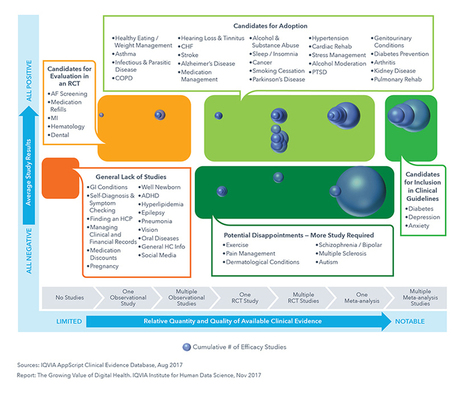
The explosive growth of health care apps introduces critical questions—including whether apps can improve care. How should apps be evaluated or even approved? How can their efficacy be measured?
Via Giuseppe Fattori
Patient portals are a regularly talked-about technology in a doctor's tool belt, but how can they use the portal to boost patient engagement?
Via Lionel Reichardt / le Pharmageek
|
|
Scooped by
eMedToday
October 13, 2017 12:12 AM
|
Longevity, the advance of new technologies and new findings are fundamentally changing how we prevent, diagnose and cure diseases. To understand what we should expect in the years ahead, we empaneled healthcare experts to predict which technologies and innovations we will see in the near term and in the long term.
|
|
Scooped by
eMedToday
October 13, 2017 12:00 AM
|
Unconstitutional, hypocritical, and a bad idea. Sounds like Trump.
|
|
Scooped by
eMedToday
October 10, 2017 11:49 PM
|
Telehealth projects look different depending on the healthcare organizations putting the technology to work and the goals they're hoping to achieve, said Sue Schade, former CHIME-HIMSS CIO of the Year and current principal at StarBridge Advisors on Tuesday.
|