Né à Paris et passé par Nancy pour la poursuite de ses études secondaires, c’est dans la capitale que démarre la carrière exceptionnelle de Claude Boucheix, où il étudie la médecine à la faculté de l’hôpital de la Pitié-Salpêtrière. Ancien interne des hôpitaux de Paris, il soutient sa thèse puis exerce en tant que chef de clinique dans divers services de cancérologie. Il mène en parallèle des travaux sur les leucémies aiguës lymphoblastiques, une forme de cancer du sang caractérisée par la prolifération excessive et rapide de lymphocytes immatures.
À la suite de son internat et de son clinicat, Claude Boucheix entre à l’Inserm. Son parcours de médecin-chercheur, dédié à la recherche contre le cancer, sera profondément lié au site de l’hôpital Paul-Brousse de Villejuif (Val-de-Marne). Il rejoint tout d’abord le laboratoire de Georges Mathé, cancérologue de renommée internationale ayant notamment ouvert la voie aux immunothérapies, puis réalisé la première greffe de moelle osseuse chez l’Homme, et qui avait significativement contribué à la création de l’Institut en 1964. Claude Boucheix poursuit ensuite ses travaux de façon prolifique dans plusieurs laboratoires puis devient, en 2004, directeur de l’unité « Microenvironnement et physiopathologie de la différenciation ».
Au cours de sa carrière, Claude Boucheix s’implique notamment dans la découverte d’une superfamille de molécules de surface, les tétraspanines, dont certaines ont des propriétés suppressives de métastases. Il approfondira par la suite ses recherches pour en identifier les fonctions et le rôle dans la progression tumorale. En parallèle, il maintient son activité clinique à l’hôpital de l’Hôtel-Dieu, où il crée un laboratoire de production d’anticorps monoclonaux dirigés contre les cellules cancéreuses des leucémies aiguës lymphoblastiques, et qui peuvent être utilisés par exemple lors de diagnostics.
Particulièrement investi dans la vie de la communauté de la recherche, Claude Boucheix siégeait dans divers conseils scientifiques d’universités, de CHU, de fondations et d’associations, de commissions scientifiques spécialisées (CSS) de l’Inserm, et a assuré la direction de l’Institut André-Lwoff sur le site de Villejuif, une structure fédérative créée en 2010. Outre des activités de recherche majeures pour la compréhension de certaines phénomènes biologiques, Claude Boucheix a activement participé à la structure du site de recherche sur Paul Brousse en développant une plateforme d’imagerie, de cytométrie et d’analyse omique.
Référent scientifique de l’Inserm pour la région Île-de-France Sud de 2006 à 2014, il continuait à mener ses activités de recherche en tant que chercheur émérite depuis 2015 dans le laboratoire d’Annelise Bennaceur-Griscelli, puis en 2023 dans l’unité 1193 Inserm « Physiopathologie et traitement des maladies du foie » dirigée par Jean-Charles Duclos-Vallée et Thierry Tordjmann, et participait à l’équipe ATIP-Avenir de Céline Greco où il continuait d’apporter sa vision et son expertise précieuses à la recherche biomédicale.
L’Inserm adresse ses plus sincères condoléances à son épouse Céline Greco, à sa fille Abigail, à ses proches, et à l’ensemble de ses collaborateurs.
Peintre et sculptrice, Olga Metchnikoff est considérée comme la première femme à avoir fréquenté quotidiennement un laboratoire pasteurien.
Née Olga Belokopytova en 1858 à Kiev, elle rencontre Élie Metchnikoff à Odessa, alors qu’il donne des cours de sciences à sa sœur et à elle. Elle l’épouse à 16 ans. Il recevra plus tard, en 1908, le prix Nobel de physiologie ou médecine.
En 1888, Louis Pasteur invite Élie Metchnikoff à rejoindre le tout nouvel Institut Pasteur. Olga l’aide alors à installer son service et travaille à ses côtés pendant les premiers mois, jusqu’à l’arrivée des premiers collaborateurs du laboratoire.
Elle devient ainsi la première femme connue à avoir fréquenté quotidiennement un laboratoire de l’Institut Pasteur.
Elle continue d’y travailler occasionnellement jusqu’en 1901, sur la vaccination charbonneuse et sur l’influence des microbes sur le développement des têtards.
Parallèlement, entre 1889 et 1910, elle suit en tant qu’auditrice le cours de microbiologie donné à l’Institut Pasteur.
À côté de cette passion pour les sciences, elle peint et elle sculpte. Le musée Pasteur conserve aujourd’hui certaines des œuvres créées par cette artiste et scientifique.
L’intérêt des femmes pour la science n’est pas nouveau. Mais il n’a longtemps pas été mis en lumière. Merci àInstitut Pasteur pour tout le travail de mise en avant des Pasteuriennes !
Plus on montre les femmes dans la science, plus on peut montrer à des petites filles qu’elles aussi y ont leur place. 👩🔬
"(...) Dr. Tonegawa was asked to define creativity. “I don’t feel I am a very creative scientist. I wish I could be more creative,” he replied, to laughter. “But if you force me to think about it,” he added, “I can come up with three simple concepts.One is you have to be very curious about something. No. 2, you have to have an unfailing urge to address the question you have. No. 3, I think it helps to try to combine knowledge in at least two different fields where people don’t necessarily interact.” https://lnkd.in/gn9Vuc8g
Elle a contribué à la création des premiers antihistaminiques. Mais l’histoire a oublié son nom.
Anne-Marie Staub est née en 1914. Et rien de surprenant à ce que cette femme se soit passionnée pour les sciences : - Pasteur avait été témoin au mariage de son grand-père, - son père a travaillé plus de 30 ans à l’Institut Pasteur.
Elle y rentre à son tour à l’âge de 22 ans pour préparer son doctorat en sciences sous la direction de Daniel Bovet, futur Prix Nobel.
En 1937, ils mettent en évidence un composé capable d’atténuer les symptômes d'une réaction allergique grave.
Mais les molécules seront jugées trop toxiques. C’est en 1942 qu’on verra apparaître les premiers antihistaminiques médicalement exploitables.
Entre-temps, Anne-Marie Staub travaille sur autre chose : l'immunochimie. Autrement dit, elle étudie les constituants et les réactions chimiques du système immunitaire.
Chez un mouton vacciné, elle parvient à isoler une protéine spécifique capable, à elle seule, de protéger contre la maladie du charbon. Elle collabore ensuite à la mise au point d'un vaccin anticharbonneux.
En 1953, elle devient cheffe de laboratoire à l’Institut Pasteur.
Dans les années 1960, elle poursuit des recherches en immunologie, et plus spécialement sur les antigènes des salmonelles.
Plus d’un siècle après sa naissance, je crois qu’il est toujours aussi important de montrer que les femmes aussi font avancer la science. Et qu’elles le font depuis bien longtemps !
—
J’ai trouvé la majorité des infos sur Wikipédia. Un grand merci à Institut Pasteur qui a enrichi la page d’Anne-Marie Staub lors de leur premier Éditathon en 2025, un atelier collaboratif organisé avec l’association les sans pagEs pour (re)mettre en lumière les femmes scientifiques 💙
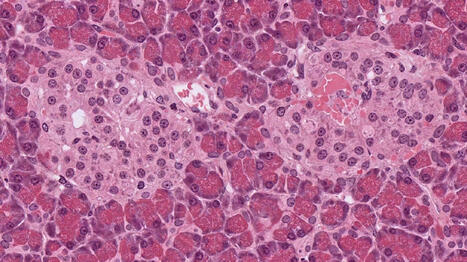
Dans l'histoire de la pathologie, rares sont les chercheurs qui, avant l'âge de 25 ans, ont réalisé des découvertes dont l'impact perdure plus de 150 ans plus tard. Paul Langerhans appartient à ce cercle très fermé. En seulement quelques années de recherche, il identifie deux structures anatomiques majeures : les cellules dendritiques de l'épiderme, aujourd'hui appelées cellules de Langerhans, et les îlots pancréatiques qui portent également son nom. Langerhans est présenté comme l'un des grands représentants de l'école allemande de l'anatomie pathologique issue de Rudolf Virchow. Son œuvre illustre parfaitement la puissance des nouvelles techniques histologiques du XIXᵉ siècle et démontre qu'une observation microscopique rigoureuse peut ouvrir des domaines entiers de la médecine.
🛡️ Here is one of the most extraordinary facts in the history of immunology: the "B" in B lymphocyte — one of the two fundamental cell types in your adaptive immune system — stands for Bursa of Fabricius, an organ found only in birds. The entire concept of B-cell immunity was discovered through avian research. And yet most people have never heard of the bursa.
In this animated video, we explore the complete avian immune system — from the primary lymphoid organs unique to birds, to the innate immune cells that work differently in avians than in any mammal, to the avian-specific pathogens that have shaped bird immunity through millions of years of co-evolution.
📌 WHAT YOU'LL LEARN: ✅ The Bursa of Fabricius: the organ exclusive to birds where B lymphocytes mature — and why its discovery revolutionized immunology ✅ The avian thymus and T-lymphocyte maturation: comparing to mammalian thymic development ✅ Why the "B" in B-cell stands for Bursa of Fabricius — and what this tells us about the history of immunology ✅ Heterophils: the avian equivalent of neutrophils and how they differ structurally and functionally ✅ Avian eosinophils, basophils, monocytes, and lymphocytes: the complete avian white blood cell picture ✅ The Harderian gland: an avian-specific orbital gland with important mucosal immune functions ✅ Cecal tonsils and Peyer's patches: gut-associated lymphoid tissue in the avian immune system ✅ Why birds lack lymph nodes — and how lymphoid tissue is distributed differently in avian anatomy ✅ Innate vs adaptive immunity in birds: how the two arms of avian immune defense work together ✅ Avian cytokines, interferons, and immune signaling: comparing to mammalian counterparts ✅ Avian-specific pathogens: Newcastle disease, avian influenza, Marek's disease — and how the immune system responds ✅ Vaccination in birds: how poultry immunity science developed from fundamental avian immunology research
🔬 The avian immune system is not only fascinating in its own right — it is the system that gave us some of the most important concepts in all of immunology. This video gives the full picture.
🐦 Part of our Avian Biology & Anatomy Animation Series.
───────────────────────────── 👍 LIKE this video and SUBSCRIBE — this is the kind of science that changes how you see biology! 🔔 Turn on notifications so you never miss a new episode! 💬 Did you know the "B" in B-cell comes from birds? Tell us in the comments! ─────────────────────────────
📚 MORE FROM THIS SERIES: ▶ Avian Blood: Nucleated Red Blood Cells & Heterophils ▶ Avian Respiratory System: Air Sacs & Parabronchial Lungs ▶ Avian Gastrointestinal System: From Crop to Cloaca ▶ Avian Skeletal System: Hollow Bones & Flight Adaptations ▶ Avian Muscular System: Flight Muscles & Perching Mechanisms ▶ Avian Carbohydrate Metabolism: High Blood Sugar & More ▶ Avian Osmoregulatory System: Bird Kidneys & Salt Glands
98 years ago, in a laboratory above this plaque, a forgotten Petri dish changed medicine forever. In 1928, Sir Alexander Fleming returned from holiday to his laboratory at St Mary's Hospital, London and noticed something unusual: #mold had contaminated a dish of Staphylococcus #bacteria but around the mold, the bacteria had stopped growing.
That accidental observation led him to identify a bacteria-killing substance he called #penicillin. I went to the exact place where Fleming made that discovery.
What I love about this story is that it was not a neat “eureka” moment that instantly became a medicine. Fleming’s finding was overlooked at first, and penicillin was even considered a #laboratory curiosity.
It took years of persistence by scientists including Howard Florey, Ernst Chain, and the University of Oxford team to turn that curious mold into a life-saving drug. By the 1940s, penicillin had transformed the treatment of bacterial infections - helping launch the #antibiotic era and changing the course of modern medicine. Before antibiotics, even a small cut, childbirth, or a routine #infection could become deadly.
Standing here was a reminder that science often begins with careful observation, curiosity, and the willingness to notice what others might throw away. From a moldy Petri dish to one of the greatest medical breakthroughs in history - this place is truly historic.
Alors que les historiens se sont surtout intéressés aux millions de morts causés par la peste noire, un document inédit raconte l’histoire des survivants.
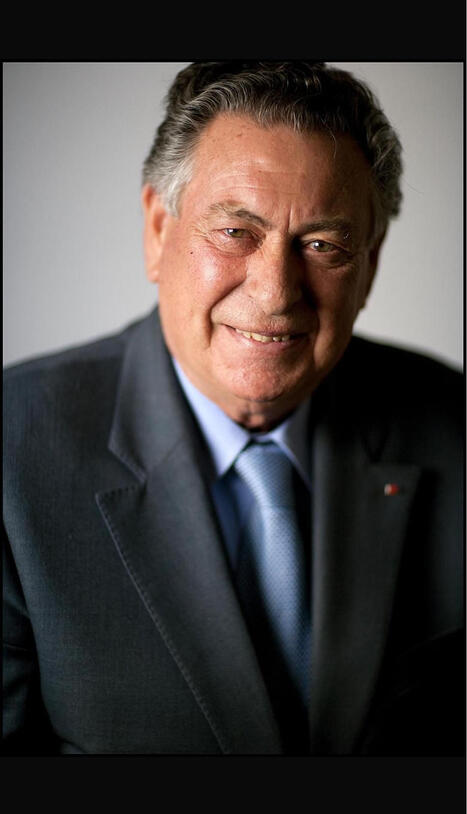
C’est avec une profonde tristesse que l’Institut Imagine annonce le décès du Professeur Claude Griscelli, son président fondateur, pédiatre, immunologiste et pionnier de la recherche sur les maladies génétiques.
Médecin visionnaire, scientifique d’exception et bâtisseur infatigable, Claude Griscelli a consacré sa vie à la santé des enfants et à la recherche biomédicale.
Face aux maladies rares, il n’a jamais accepté la fatalité.
Il a porté, avec détermination , une conviction qui demeure au cœur de notre mission : rapprocher la recherche du soin pour transformer la vie des patients et de leurs familles.
En fondant l’Institut Imagine, il a donné corps à une ambition profondément humaine et scientifique : réunir chercheurs, médecins et soignants autour d’un même objectif, comprendre et guérir les maladies génétiques.
Son héritage est immense. Il vit dans les équipes qu’il a inspirées, dans les avancées qu’il a rendues possibles, et dans l’engagement quotidien de toutes celles et ceux qui poursuivent son œuvre.
L’ensemble de la communauté de l’Institut Imagine adresse ses pensées les plus sincères à sa famille, à ses proches, ainsi qu’à toutes celles et ceux qui ont eu le privilège de travailler à ses côtés.
#InstitutImagine #ClaudeGriscelli #MaladiesGénétiques #RechercheMédicale #Pédiatrie | 39 comments on LinkedIn
Louis Pasteur n'a pas inventé la #vaccination, bien mieux, il l'a comprise En 1796, Jenner avait observé que les personnes exposées à la #vaccine des vaches ne contractaient pas la #variole. Génial, mais empirique, Jenner avait trouvé un fait, pas un mécanisme
Pasteur, lui, va inventer un principe #universel Et tout commence par un oubli 𝗟'𝗲́𝘁𝗲́ 𝟭𝟴𝟳𝟵, Pasteur étudie le #choléra des poules Avant les vacances, il demande à son assistant Chamberland d'inoculer des cultures fraîches aux poules. Chamberland oublie et les cultures restent un mois à l'air libre À la rentrée, on les injecte quand même. Les poules tombent à peine malades, puis guérissent. Pasteur, au lieu de jeter ces poules, leur injecte ensuite une culture fraîche, hautement #virulente. Elles survivent toutes !
#Pasteur vient de découvrir l'atténuation : on peut affaiblir le #microbe lui-même et l'utiliser pour protéger contre la #maladie. Plus besoin de trouver un cousin providentiel comme la vaccine de Jenner. Par respect pour son prédécesseur, Pasteur étend le mot #vaccin à toute #immunisation par atténuation
𝗣𝗼𝘂𝗶𝗹𝗹𝘆-𝗹𝗲-𝗙𝗼𝗿𝘁, 𝟮 𝗷𝘂𝗶𝗻 𝟭𝟴𝟴𝟭, les sceptiques exigent une preuve publique et le vétérinaire Rossignol organise un défi. 24 moutons vaccinés, 24 moutons témoins. Tous reçoivent une injection de #charbon virulent le 31 mai Le 2 juin, 200 personnes se pressent à la ferme pour le résultat Tous les moutons non vaccinés sont morts, tous les vaccinés sont en parfaite santé. La nouvelle a un impact considérable
𝟲 𝗷𝘂𝗶𝗹𝗹𝗲𝘁 𝟭𝟴𝟴𝟱, Joseph Meister, jeune alsacien de 9 ans, est mordu 14 fois par un chien #enragé La #rage, c'est 100 % de #mortalité Pasteur n'est pas #médecin et n'a jamais testé son vaccin rabique sur l'homme. Il se lance quand même et le Dr Grancher réalisera des inoculations progressives de moëlles de lapin de moins en moins atténuées, du 6 au 16 juillet. L'enfant survit, la nouvelle fait le tour du monde ! Une souscription internationale soutient la #recherche et l'Institut Pasteur naîtra de cet exploit 3 ans plus tard
𝗘𝘁 𝗹𝗮 𝗽𝗮𝘀𝘁𝗲𝘂𝗿𝗶𝘀𝗮𝘁𝗶𝗼𝗻 ? C'est la même logique appliquée à l'#alimentation Dans les années 1860, Pasteur sauve l'industrie viticole française en montrant que chauffer le #vin à 50-60 °C tue les #microbes qui le font tourner Le procédé, étendu au #lait, sauvera des millions d'enfants de la #tuberculose et des #gastroentérites
Vaccination, pasteurisation : 2 applications d'une seule idée, comprendre les #microbes pour les maîtriser dans le corps, par l'atténuation, dans l'aliment, par la #chaleur
Depuis, nous avons éradiqué la variole, quasi éliminé la #poliomyélite, maîtrisé la plupart des #maladies #infectieuses et #tropicales : #diphtérie, #tétanos, #coqueluche, #rougeole, #méningites, #pneumonies
#MédecinePreventive #HistoireDesSciences #SantéPublique #Innovation Zoī Ismaël EMELIEN Paul Dupuy Alice Conques Tyra Malzy Antoine Attali Emile B. Alexandre Hollard Alaedine Benani Angia Vaudron
How do you measure the life of a person? In minutes, hours, days? Or in the countless lives they have touched and saved?
Today marks 100 years since the birth of Jon van Rood, our founder, and the scientist whose discovery of HLA transformed the future of medicine.
Jon’s life unfolded during a century of extraordinary scientific progress: the discovery of Penicillin, the development of vaccines, and the identification of DNA. Yet among these milestones, his work stands out. By uncovering the human leukocyte antigen (HLA) system, Jon reshaped transplantation and revolutionised the treatment of blood cancers and disorders.
In the 1950s, whilst Jon was working at Leiden University Medical Center, children diagnosed with Leukaemia often survived only months. Today, in high-income countries, survival rates for children can reach 90%. That transformation is part of Jon’s legacy.
Though Jon was never one to consider the work finished. A pioneer with a global vision, he understood that scientific breakthroughs alone were not enough. At the time, unrelated donor transplantation was becoming a clinical reality though major challenges remained. Finding a suitable match was, and still is, one of the most critical. National registries emerged, yet each lacked the diversity needed to serve all patients. Jon’s solution was visionary: a global network. Therefore, he created Bone Marrow Donors Worldwide (BMDW), a bold step toward connecting patients and donors across borders.
Today, 57 countries use the evolved BMDW (now known as WMDA's Search & Match Service), an enduring testament to his idea that collaboration saves lives. And his legacy continues to guide the World Marrow Donor Association in expanding access, so that every patient, everywhere, has a chance at a cure.
It has been nearly nine years since Jon passed away. Yet his presence is felt every day. We often reflect on what he might think of the world he helped shape: more than 44 million voluntary stem cell donors worldwide, and over 28,000 patients each year given a second chance at life through global donor matching.
And that is only part of his legacy. Jon also founded Stichting Matchis, Eurotransplant, and EBMT. Institutions that continue to save and improve lives every day.
This morning, we shared memories of Jon, stories of his vision, his determination, and the profound impact he had on each of us. So many of us owe him more than we can ever fully express. We invite you to remember Jon today and share your memories of him or how he has touched your life.
A Sociedade Brasileira de Imunologia (SBI) disponibilizou em seu canal no YouTube a série de entrevistas "2ª Geração de Imunologistas Brasileiros", que integra o projeto "História da Imunologia no Brasil", desenvolvido em parceria com o Laboratório de Audiovisual Científico (LABACIÊNCIAS).
Tive a honra de participar desta iniciativa, compartilhando momentos marcantes da minha formação e da minha trajetória profissional, além de reflexões sobre a evolução da imunologia brasileira, seus desafios e as perspectivas para o futuro da área.
Agradeço à SBI e ao LABACIÊNCIAS pelo convite e pela importante iniciativa de preservar a memória da imunologia no Brasil, registrando a história de uma área que tem contribuído de forma decisiva para os avanços da ciência e da saúde.
In case you missed it, this was a great conversation at The City Club of Cleveland about childhood vaccines and the future of public health. Watch it here: https://lnkd.in/gejMafZm
One of the speakers, Dr. Arthur Lavin, is founder of Grandparents for Vaccines. Learn more about it here: https://lnkd.in/esKNSTXu
Histoire de la maladie de Horton : quand l’immunité s’attaque aux artères temporales
La maladie de Horton, ou artérite à cellules géantes, est la vascularite systémique la plus fréquente après 50 ans, avec une incidence d'environ 15 à 30 nouveaux cas pour 100 000 personnes et une prédominance féminine (2–3:1). Elle doit son nom au neurologue américain Bayard Taylor Horton (1895-1980), qui, avec ses collègues de la Mayo Clinic, décrivit en 1932 un syndrome associant céphalées temporales, sensibilité du cuir chevelu, fièvre et syndrome inflammatoire majeur.
Mais l’élément fondamental de sa découverte réside dans une observation clinique simple et décisive : la palpation des artères temporales. Chez ses patients, Horton met en évidence des artères indurées, épaissies, parfois nodulaires et douloureuses, accessibles à l’examen clinique. Cette constatation, aujourd’hui classique, était à l’époque une véritable innovation sémiologique, permettant d’individualiser une entité vasculaire spécifique parmi les céphalées du sujet âgé.
L’examen histologique confirma ensuite une inflammation granulomateuse avec cellules géantes multinucléées (macrophages fusionnés) donnant son autre nom à la maladie. On comprit progressivement que l’atteinte dépassait largement les artères temporales pour concerner les grosses et moyennes artères riches en fibres élastiques, notamment l’aorte et ses branches (carotides, sous-clavières, artères ophtalmiques), expliquant les complications ischémiques graves : cécité, AVC, claudication des membres supérieurs et anévrismes aortiques. La pseudo-polyarthrite rhizomélique, décrite en 1953 par Jacques Forestier (1890-1978), est étroitement liée à l'artérite de Horton (40 à 60 % des patients).
La physiopathologie moderne montre que la maladie débute dans l’adventice, où des cellules dendritiques vasculaires activées recrutent des lymphocytes T CD4+ et des macrophages. Ceux-ci produisent des cytokines inflammatoires, principalement IL-6, IL-17 et IFN-γ, entraînant la sécrétion des métalloprotéinases matricielles (MMP-2, MMP-9) et des enzymes protéolytiques (élastases, cathepsines)n produisant la destruction de la lame élastique interne et hyperplasie intimale, responsable de sténose progressive.
Cette compréhension a transformé la prise en charge, avec les corticoïdes puis les biothérapies ciblant l’axe de l’IL-6 comme le Tocilizumab. La maladie de Horton illustre ainsi une double révolution : d’abord clinique, née de la palpation des artères temporales par un clinicien observateur, puis immunologique, révélant une rupture de la tolérance vasculaire.
Références -Horton BT, Magath TB, Brown GE. Proc Staff Meet Mayo Clin 1932;7:700-701. -Valdes Socin H, Weekers L, Jouret F. Physiopathology. BIMS-2006 Uliege 2025 Link :https://lnkd.in/ersyxyDt
In 2003, the world’s first synthetic mRNA injections in humans were carried out in Tübingen, Germany. Many people ‘forget’ to mention this in their timelines on mRNA vaccines. So let me remind it (and please eventually correct your timelines in articles and talks): First mRNA injections in humans (in me): 2003, published in 2007 First clinical trial on mRNA vaccines: started in 2003 and published in 2008 Second clinical trial on mRNA vaccines: launched in 2004, published in 2009 Third clinical study on mRNA vaccines: launched in 2004, published in 2011. All these studies were conducted at Tübingen University Hospital by Dr Weide, Dr Brossart, myself and numerous colleagues from the University of Tübingen, Tübingen University Hospital and CureVac. All those pioneering mRNA vaccine studies showed safety and immune responses.
References are below.
Spontaneous cellular uptake of exogenous messenger RNA in vivo is nucleic acid-specific, saturable and ion dependent. Probst J, et al. Gene Ther. 2007. PMID: 17476302
Results of the first phase I/II clinical vaccination trial with direct injection of mRNA. Weide B, et al. J Immunother. 2008.PMID: 18481387 Clinical Trial.
Direct injection of protamine-protected mRNA: results of a phase 1/2 vaccination trial in metastatic melanoma patients. Weide B, et al. J Immunother. 2009.PMID: 19609242 Clinical Trial
Intradermal vaccinations with RNA coding for TAA generate CD8+ and CD4+ immune responses and induce clinical benefit in vaccinated patients. Rittig SM, et al. Mol Ther. 2011. PMID: 21189474Free PMC article
Long-term survival correlates with immunological responses in renal cell carcinoma patients treated with mRNA-based immunotherapy. Rittig SM, et al. Oncoimmunology. 2015.PMID: 27467913 Free PMC article
Subject: Biotechnology and Biochemical Engineering Course Name: Host-Pathogen Interaction (Immunology) Name of Presenter: Prof. Himanshu Kumar Affiliation / Institute: IISER Bhopal
📚 About Swayam Prabha Swayam Prabha is a flagship educational initiative of the Government of India, providing free, high-quality educational content through DTH television and online platforms.
📡 Programme & Delivery Swayam Prabha operates 40+ free-to-air DTH ed ucational channels, broadcasting academic content 24×7 via the GSAT-15 satellite. New content is telecast daily and repeated multiple times for learner convenience.
🎓 Content Providers IITs, UGC, CEC, IGNOU, NPTEL, NCERT, and other national educational institutions.
🖥️ INFLIBNET Centre The INFLIBNET Centre maintains the Swayam Prabha web portal and supports content discovery, scheduling, and access to educational resources.
📺 Broadcast Infrastructure All channels are uplinked from BISAG-N, Gandhinagar, ensuring reliable nationwide transmission.
🕰️ Doing research in the analog 20th century. Reviewing some of my archives, I discovered the bi-monthly “PhD newsletters” that I had sent to my supervisors and the letters and emails we had exchanged at the time, the mid 1990s. 🕰️
💾 Rereading this after more than thirty years, even I – who didn’t use a personal computer until I was 23 – was struck at how different doing research in those analog times was. 💾
💿 Yes, our LPs and music cassettes had been gradually replaced by CDs by the mid 1990s as both CD players and CDs became more affordable, but at work technology was still in its very early infancy. 💿
So, I decided to write up a white paper on this, documenting this era before most of us have completely forgotten it.
I discuss how these analog times affected: ➡️ communicating with colleagues, ➡️ sourcing of relevant literature, ➡️ tracking down respondents’ contact details, ➡️ designing a mail survey, and ➡️ coping with limited access to referencing and payment technologies.
I hope that for older researchers this white paper brings back (good) memories. For younger researchers it might serve to illustrate that even though research is hugely challenging these days, it was by no means a piece of cake in the “good old days” either.
❓❓❓What are your memories of doing research in analog times? I would love to hear your stories. ❓❓❓
📢 12 May is here! Happy International Nurses Day 👏 Florence Nightingale was no shrinking violet. She collected data on all her in her care. She reduced death rates by improving hygiene and care. She established the first secular nursing school at St Thomas’ Hospital in 1860. In 2015 I was most fortunate to visit the Nightingale Museum in the high security military barracks in Istanbul and stand in her office where she viewed the hospital ships entering the harbor. Nightingale advanced hospital sanitation, pioneered #statistical #data #visualization, and influenced healthcare worldwide. Happy #IND2026 to the 450,000 nurses in Aus. We know that good data makes a real difference. Imagine if Florence had a computer 💡💡#DigitalHealth #OurNursesOurFuture Australian Digital Health Agency #Nurses
From Immunological Dogma to Immune Plasticity: A Personal Journey Through the Basel Era and Beyond There are moments in science when you realize you are not just learning a field—you are watching it being built in real time. For me, that moment began in Basel Institute for Immunology, during what wa
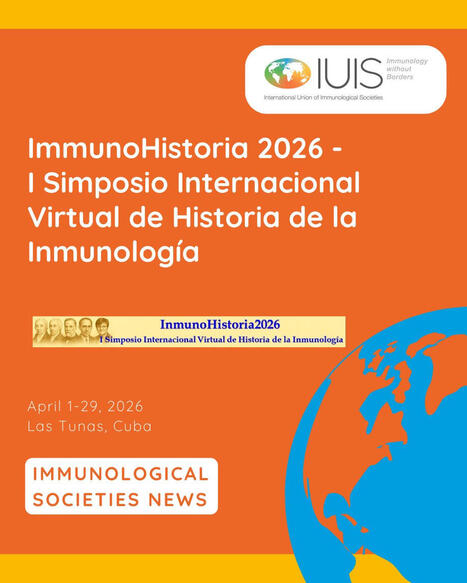
Our colleagues from the Cuban Society of Immunology and the University of Medical Sciences of Las Tunas are organizing the 1st Virtual International Symposium on the History of Immunology, taking place throughout April 2026.
The symposium will explore the scientific, social, and historical impact of immunology—from key discoveries and influential figures to its role in public health and global development.
On April 29, for the #DayofImmunology, the Museum of the History of Cuban Immunology will also open, highlighting milestones from early vaccination to recent advances in COVID-19 vaccines.
To get content containing either thought or leadership enter:
To get content containing both thought and leadership enter:
To get content containing the expression thought leadership enter:
You can enter several keywords and you can refine them whenever you want. Our suggestion engine uses more signals but entering a few keywords here will rapidly give you great content to curate.


 Scoop.it!


 Your new post is loading...