


Meet Nargis on your right here. She was the 7th billionth baby born on earth, and was born in India. What does it mean to be born a girl in India? The 50 Million Missing Campaign brings you the fo...

 Your new post is loading...
 Scoop.it! Meet Nargis on your right here. She was the 7th billionth baby born on earth, and was born in India. What does it mean to be born a girl in India? The 50 Million Missing Campaign brings you the fo... 
No comment yet.
Sign up to comment
Scoop.it!

Alme for Healthcare is a virtual health assistant that understands medical language and can have conversations with patients. Via Alex Butler
Scoop.it!

The government may be shut down for weeks. Here's what that means.
Scoop.it!

Stewart asked her how she reacted when she learned that the Taliban wanted her dead. Her answer was absolutely remarkable.
shelbylaneMD's insight:
Education is everything....and we must use common sense, as well
Scoop.it!

The debut of "The Kelly File," the new Fox News...
Scoop.it!
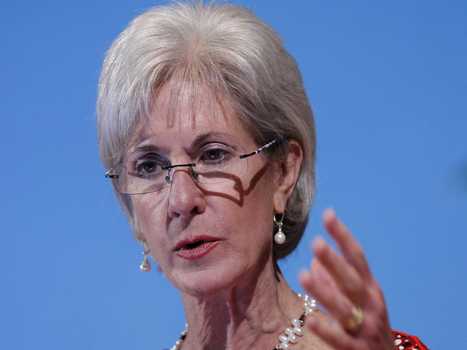
The question of whether the individual mandate is "fair" is beside the point.
Scoop.it!

When Paul Levy first heard about Twitter, he dismissed it as "silly." "I ignored it," recalls Mr. Levy, former CEO of Beth Israel Deaconess Medical Center in Boston. "Why would anyone want to do this, and who would read it?"
During and after his days as a hospital executive, he says Twitter has not only proved to be a fun and informative mode of communication but also a platform for improving Beth Israel's public image as an institution invested in transparency. Mr. Levy isn't the only one who's used Twitter to revolutionize community connection and the healthcare conversation as a hospital executive. Industry leaders from all corners of the country have joined the social network to share healthcare news, trends and tips. "It's an opportunity to educate and offer thought leadership in a typically overwhelming space," says Stephanie Hollingsworth, one of Twitter's senior digital strategists specializing in healthcare. "It's a wide range of audience that allows for that open channel of influence." Mr. Levy, Ms. Hollingsworth and other social media strategists seem to agree hospital leaders have a lot to gain by opening a Twitter account. Of course, it helps to have some guidance before diving into the network’s fast-paced exchange of bite-sized information. Strategists and executives already on the site have some advice to offer concerning best practices for healthcare leader tweeters. 1. Consult with your public relations department — but not too much. As high-profile people with access to plenty of sensitive information, it's important for hospital executives to watch what they say, especially on Twitter, says former hospital COO Christina Thielst, currently vice president at patient experience consulting group Tower and author of "Social Media in Healthcare: Connect, Communicate, and Collaborate." "Think about what you're saying before you tweet it," Ms. Thielst says. "Really give some thought to what you say and how you're saying it." Never use profanity or ad hominem attacks, and never break patient privacy rules, Mr. Levy says. On top of that, Twitter users must understand attempting humor is a risky business online. "It's like telling a joke in a foreign language," he says. "You really have to understand that it's a culturally different forum." Generally, hospital executives already have a good feel for what to say and what not to say in a public forum like Twitter, says Barbara O'Connell, president of Enovasis, an Internet marketing, social media marketing and PR company. "Rely on your own common sense and trust that you are already trained to speak intelligently and carefully," she says. However, if executives have concerns about privacy or sensitive information and want to double check their own common sense, Ms. O'Connell says they should run the potential tweet by the hospital's public relations or legal department. Ms. Hollingsworth says consulting internally with the hospital's PR team is important. Executives need to make sure they know what their institution is comfortable sharing. Still, Ms. Hollingsworth and Ms. O'Connell agree every tweet shouldn't get sent to the PR people. It will cause a lag in the process of sending tweets, a disadvantage when using a platform as instantaneous as Twitter. "You don't want to do that every day," Ms. O'Connell says. "Twitter is real time." Mr. Levy advises against letting the PR or legal department ghostwrite Tweets. "Never let your PR department write it for you," he says. "It has to be in your own voice." 2. Use Twitter as a learning and teaching tool. By selectively following thought leaders in his field, Mr. Levy found a wealth of relevant, up-to-date information through Twitter. A considerable number of healthcare researchers and industry experts maintain feeds, and hospital executives can seek them out and turn Twitter into a channel for keeping up on the latest developments in the field. "Twitter actually made my day more efficient by acting, in essence, as a professional filter," Mr. Levy says about using the network to monitor healthcare news. Executives can use the network to tune in to a variety of perspectives, Ms. O'Connell says. "They're learning from patients. They’re learning from peers," she says. "There are a lot of healthcare executives and policymakers on Twitter. To hear people's opinions as they're changing is a valuable learning tool." In turn, executives should take advantage of Twitter's wide reach to share their hospital's discoveries and research, Ms. Hollingsworth says. "Hospitals can share the info they're discovering internally and continue to spread awareness and spread cures and research," she says. "It's something that's really important for institutions and executives to take part in." Executives can also use Twitter to follow the discussion at conferences they aren't able to attend and to share tidbits of learning with others who aren't when they're attending. "Twitter has shortened the difference between those conferences by allowing that discovery in real time, anywhere across the country," Ms. Hollingsworth says. "Follow along to engage, to share your opinion, to share with your colleagues, to really influence and inform your community." Mr. Levy regularly live-tweets conferences and says it helps him better absorb what he's hearing as well as inform his followers. "All the people who are following me can in essence participate in what's going on," he says. "People have told me they really appreciate that if they can't get to a conference." 3. Be personable, but not too personal. When calibrating the tone of tweets, executives should remember not to come off as too stiff or formal. The mandatory brevity of communication on Twitter means people have to loosen up a little, Mr. Levy reasons, saying, "I think it's really impossible to write 140 characters in anything other than an informal way." Ms. O'Connell also advocates for lightening up a bit, with the audience in mind. "You're not talking to your board," she says. "You're talking to your neighbor. You're talking to your friends and your family." Ms. Hollingsworth recommends being professional but relatable. "If you're talking to patients and caregivers and people in your community, speak in language that's simplified and understandable," she says. While maintaining a casual tone, however, executives should avoid getting too casual with content, Ms. Thielst says. "I would definitely avoid mixing your personal and professional lives," she says. "You don't want to sort of gather this following of people from your community and then start tweeting out every time your son's basketball team wins a game. That's not why people are following you as the administrator of the hospital." 4. Set your own goals and strategy. Rather than venturing aimlessly out into the Twitterverse, healthcare leaders need to approach the communication channel with a concrete plan. "Create your own strategy," Ms. Thielst says. "What are you hoping to accomplish with Twitter? What are your expectations?" Executives looking to set goals can use their hospital's annual objectives, Ms. O'Connell says. Goals pertaining to transparency, community outreach and PR could easily apply to Twitter. Executives could aim to increase traffic to their hospital's websites or to inspire more people to inquire online about appointments. Achieving those objectives hinges on determining the target audience for tweets, Ms. Hollingsworth says. Depending on whether they target patients, peers or others, the language and content of their tweets could vary significantly. For example, an executive targeting patients might tweet tips for staying well during flu season, while someone talking to other industry leaders might send out links to whitepapers produced by hospital researchers. 5. Listen carefully and respond to the conversation surrounding your hospital. Consumers turn to Twitter more to share their experiences, Ms. Thielst says. "More and more people are turning to Twitter while they're sitting in your waiting room," she says. "They're sending out a tweet about what they like and don't like. Whether you like it or not, people are tweeting." Hospital administrators and executives can improve the patient experience and the public perception of their hospital by engaging with that conversation and responding to tweets about their organizations, she says. Executives who respond to concerns, complaints and praise on Twitter build up patients' trust and give the impression of transparency, openness and honesty, Ms. O'Connell says. "If you're not addressing questions or comments online, you're basically nonexistent to people," she says. Conclusion: Twitter helps executives and hospital image By following these tips, hospital executives and the organizations they represent can benefit from being active on Twitter. Mr. Levy feels his presence on Twitter — along with his blog — helped improve people's perception of Beth Israel when he was CEO. "Our hospital was known for being open, candid, transparent," he says. "The social media aspect was part of that." Ms. Hollingsworth agrees paying attention to feedback from patients and community members is crucial for healthcare leaders. She points to the Cleveland Clinic as an example, saying that the institution's sharing healthcare tips and insight through social media helped change consumers' views of hospitals as "potentially an intimidating space." "The most important part is just listening, being able to listen to the sentiment of what the conversation is surrounding your company," Ms. Hollingsworth says. "It's really important to care about what they say." Via Plus91
Scoop.it!

Ask the tough questions You’ll need to take a hard look at your company’s interactions with its customers and clients, says Philip, and determine if it’s inviting customers to share and engage in feedback. If not, you are merely playing at being a part of the social media conversation and not an active participant. Philip is on target when he says companies need to listen to the online community in order to understand what the customers are saying. Focus on content Listen to, follow, and integrate feedback Today, every business should be using social media to listen to its customers, get feedback and re-evaluate traditional marketing campaigns. Your challenge, especially in the mHealth industry, is to shift your focus from an old school philosophy to a proactive, engaged, online corporate mentality … so you can stay on top of the wave, not behind it. Via Plus91
Scoop.it!

The US government shutdown could affect its global standing if prolonged, Secretary of State John Kerry warns on a trip his president had to cancel.
Scoop.it!

COPENHAGEN -- Higher levels of 25-hydroxyvitamin D correlate with less multiple sclerosis disease activity and progression, researchers reported here.
Scoop.it!

More than 7 million Americans have gone online to browse the Obamacare health insurance exchanges prompting HealthCare.gov administrators to add servers and engineers to handle the Web traffic.
Scoop.it!

Pharmaceutical companies’ search for ways to trim costs on research and development is leading them to try out some alternative technologies to achieve that. Organ-on-a-chip, aka human-on-a-chip, fits that description. Sanofi US is collaborating with Hurel, a biotechnology startup with a platform that replicates the human liver using living cells. It will fund studies to assess the utility of Hurel’s organ-on-a-chip platform for pre-clinical drug development, according to a company statement. Hurel sees the liver as ideal for assessing a drug’s toxicity in pre-clinical trials. The results of the study will be published in at least one co-authored, peer-reviewed scientific publications. Marc Bonnefoi, Head of Sanofi’s North America R&D hub said:”Our partnership with Hurel is an opportunity to leverage an innovative new life sciences technology to accelerate drug development and impact the lives of patients.” The initial phase of this new R&D collaboration with Sanofi will aim to validate Hurel’s human liver on a chip in a series of experiments that take place in the pre-clinical phase. It will evaluate toxicology, drug metabolism and pharmacokinetics to assess how the body absorbs and distributes a drug through different organs. Via nrip
|
Scoop.it!

Access to health care is a fundamental right of people everywhere, and fulfilling this basic need is critical to creating stronger communities and helping everyone enjoy the same quality of life and reach their full potential. Mobile computing is opening the doors to vital information and services that have been tragically out of reach for many people, but our work is just beginning. Enabling mobility for billions of people around the world, and helping them make sense of their health, thus has the potential to improve lives at unprecedented scales. We know that we can achieve this goal by working cooperatively with industry, science and medicine, and entrepreneurial innovators like the teams competing in the $2.25 million Nokia Sensing XCHALLENGE. The Nanobiosym Health RADAR team won the Grand Prize award. Its device enables diagnostic testing in the palm of your hand, unlike today's technology that requires a full diagnostic laboratory. A drop of blood or saliva is placed on a nanochip and inserted into a mobile device. The user selects a particular disease strain from the software interface and then pushes the start button to begin. The device detects the presence (or absence) of that disease's pathogen in real-time, with gold standard accuracy. Five Distinguished Award winners also demonstrated game-changing technology. Alphabetically, they are:
More at : http://www.huffingtonpost.com/x-prize-foundation/enabling-sensing-devices_b_4073174.html Via nrip
Scoop.it!

As online courses grow in popularity, there are more great options than ever before. We've picked out some of the most fascinating and useful courses.
Scoop.it!

A summary of the day's market-moving news.
Scoop.it!

Warning: Enrolling in Obamacare allows government to link your IP address with your name, social security number, bank accounts and web surfing habits
Scoop.it!

The debt ceiling increase divides the GOP — for different reasons — on Obamacare.
Scoop.it!

Rep. Paul Ryan has a must-read op-ed in the...
Scoop.it!
shelbylaneMD's insight:
I can't get in either...and I'm a doctor....
Scoop.it!

He stares at you seductively, flaunts his hot body — and reminds you to keep breast health a priority. No, it’s not a cheesy pickup line. In fact, the object of your affection likely wants to keep things platonic. That’s because he inhabits your smartphone. Hot guys are a central feature of the Your Man Reminder App, available on iTunes and for Android devices. The folks behind the app promise “you’ll love the attention our hot guys give you as they remind you to show your breasts some TLC.” Still not sold on the tool? Don’t forget its potential to send “Man-O-Grams,” a personalized message in which a hot guy reminds one of your friends to stay on top of her breast health. The app marks the collision of breast cancer and social technology. An abundance of online breast cancer information isn’t new. But the popularity of smartphones, paired with the growing prominence of the social media world, has given breast cancer awareness efforts a digital presence that extends beyond medical terminology. Consider smartphone apps that promote breast health. Facebook statuses devoted to awareness efforts. Twitter hashtags promoting digital unity among patients and survivors. The digital world can potentially ease the uncertainty of a breast cancer diagnosis. Yet for activists, it has added new questions to a push for awareness. Sources for online support Your Man Reminder App comes from Rethink Breast Cancer, a group that aims “to continuously pioneer cutting-edge breast cancer education, support and research that speak fearlessly to the unique needs of young (or youngish) women,” according to its website. You’ll likely find many other breast cancer-related resources available for your smartphone. In addition to pre-diagnosis apps, other tools provide smartphone-accessible resources for patients. The National Breast Cancer Foundation Inc. offers Beyond The Shock — a smartphone app featuring “a comprehensive online guide to understanding breast cancer.” Also, there’s now a social media niche for those affected by breast cancer. Occupying that niche? The BCSM Community, which fills “the intersection of breast cancer and social media,” according to its website. At the center of its efforts: a Twitter chat anchored by the group’s signature hashtag, “#BCSM.” “Every Monday night we talk about breast cancer issues for an hour,” the community’s website explains. Another online forum, MyBCTeam, has a similar appeal. Billed as “the social network for women facing breast cancer,” it provides “a social network to make it easier for women to connect with each other and exchange insights about providers,” according to its website. There’s also P.INK, a portal on Pinterest that features photos of post-mastectomy tattoos, in addition to other images. “Please use these boards to investigate breast tattoos as a healing option,” the P.INK founders say. For patients, relying on the forums might literally be therapeutic. An August 2013 Reuters article cites study results suggesting “women with breast cancer who created a personal website about their health reported feeling less depressed, more positive and having a greater appreciation for life.” The study was small, and focused on blogs rather than social media sites. But it reinforces the digital world’s possible benefits for breast cancer patients. Arguably, social media has also paved the way for a heightened openness toward discussing certain aspects of breast cancer. Journalist Xeni Jardin live-tweeted her first mammogram and cancer diagnosis in 2011. Jardin, a founding partner and co-editor of Boing Boing, now tweets about breast cancer beside observations on topics ranging from a government shutdown to “Breaking Bad.” Social media’s challenges Discussions of medicine and social media inevitably raise questions about the credibility of information gained through personal technology. Even the aforementioned BCSM Community cautions, “#BCSM is not a forum for medical advice. We strive to present evidence-based information about breast cancer. The experience of those participating on the chat are not endorsements.” But on a deeper level, social media’s role in the breast cancer awareness movement has spurred some fears that activism might one day be confined to sitting in front of a computer. Consider the rise of “slacktivism,” which describes “virtual activism with no real results,” according to an NPR reporter. The term entered conversations a few years ago when women posted their bra colors on Facebook in a supposed attempt to raise awareness for breast cancer. “Despite apparent good intentions, the lighthearted tone of the message and the resulting ambiguity of the viral campaign rubbed some the wrong way,” according to an AOL News article. It touches on a major issue surrounding social technology’s approach to breast cancer. The virtual world might unite and comfort patients. But for the rest of us, it has potential to dangerously simplify complex health conversations. Are breast health lessons from a hot guy better than none at all? Is a pink ribbon profile photo on Facebook better than dismissing awareness efforts entirely? The answer likely requires analysis deeper than an Internet message board. Via Plus91
Scoop.it!

A recent study indicates another potential risk factor or at least another link in the autism mystery - this time it’s gluten sensitivity.
Scoop.it!

Election rhetoric shuns the big picture in favor of the bigger platitude. Now that The Show is ove... (@RFFunke @health_citizen ACA severly undermines HC ins n cost reform.
Scoop.it!

Sometimes, the most brilliant, innovative and caring of doctors find themselves ‘struck off’ or ‘erased’ from the medical register – sometimes repeatedly – simply for stepping outside mainstream practise. Today, we bring you some examples of physicians whose careers have been interrupted or ended in a seeming bid to send a message to the rest of the profession: maintain the paradigm – or else. Via Jonathan Middleton
Scoop.it!

Quick glance on Healthcare Systems- Affordable Care Act has initiated changing healthcare system of country nearly from moment this was signed in March 2010
|






