Sunscreen is advertised as something that can help you prevent cancer. But Dr. Elizabeth Plourde explains how sunscreen use actually increases cancer risk.
She also talks about how different kinds of sunscreens can cause other problems...
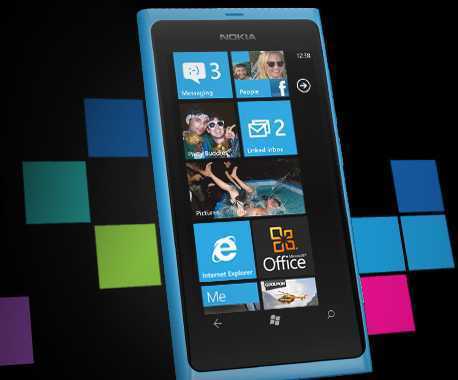
Mobile health offers us many transformational opportunities. We can use smart phones as a data upload/home hub device.
The hype over mobile health is deafening on most days and downright annoying on some. So it is with some reluctance that I admit that mobile has the potential to be a gamechanger in health. I’ve professed enthusiasm before, but that was largely around the use of wireless sensors to measure physiologic signals and SMS text as a way to deliver messages to patients and consumers. For several years, the industry has been awash with smart phone apps (by a recent count more than 40,000).
At the Center for Connected Health, we started looking at mobile health as far back as 2008 and could not justify the excitement around smart phones and apps at that time, mostly because our patient population did not demonstrate significant enough adoption of smart phones to justify development in this area.
The world of patient care appears to be catching up to the rest of mobile. Not that I would ever endorse the irrational exuberance shown for mobile health apps in general, but some recent data points that changed my thinking are worth noting.
All predicted in the pages of the Bible (Book of Revelation). Psychiatry is responsible for the torture and death of millions, psychiatry is on the rise in A...
Demonstrators renew call for labeling of genetically modified foods, sound warning about effects on environment. (RT @TheRaynMaker: Hundreds of demonstrators gather outside Monsanto hdqtrs.
Foster Farms, the large California-based chicken processor at the center of a major salmonella outbreak, faces the threat of a USDA closure of three of its facilities by the end of the day Thursday.
Health plan sign-ups on the rise in Michigan Sacramento Bee DETROIT -- Amid the problems and political finger-pointing since the launch of online health care exchanges, Adnan Hammad sees progress.
Forbes Healthcare Summit 2013: Empowering The Patient Revolution Forbes “The Forbes Healthcare Summit provides a unique opportunity to connect with leaders across the health ecosystem on the most pressing topics,” said Mikael Dolsten, President,...
This move from physicians and hospitals controlling and dictating health care to delivering the power to the individual patient is a huge shift. It’s a fundamental change is the role and responsibility of the patient and the health care provider.
Who and what will drive this sea change in the health care landscape? Will Mobile Health… and yes, Online Marketing… transform health care as we know it today? “Patient Engagement” buzz seems to indicate that this just might be the case.
“Patient engagement.” What is “Patient Engagement?” It sounds like a season of “The Bachelor” where a doctor dates hot patients. It wouldn’t surprise me if it was. After all, patient engagement is hot; it’s the new buzz phrase …
And if mobile technology matters in impacting patient engagement, perhaps the power of marketing has an even greater influence in changing individuals’ health-related behaviors?
Do doctors and hospitals realize and understand the marketing dynamic? Are they willing to influence patient behavior to create healthier outcomes? Will they create the social networks online that act as a source of information that patients seek to answer their concerns and ease their fears?
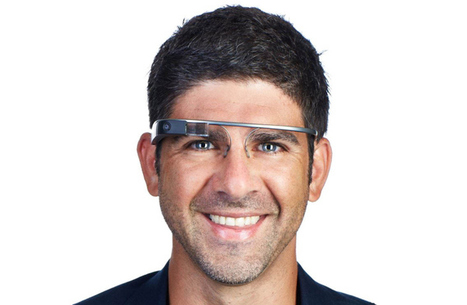
Five years into the future, doctors will be empowered with a wide array of exponential technologies and will become the most efficient they have ever been. Physicians or artificial intelligence systems will have the ability to know your health status, perhaps even before you do, thanks to the combination of three important factors: artificial intelligence, electronic medical records/digital medicine and sensor technology.
I am facinated by how technology will improve healthcare. More, and better information can always help in diagnosis and health care delivery. I am looking forward to Hacking Health Connect in Toronto...
IBM, Geisinger Health System and Sutter Health have partnered to build analytics tools for detecting heart failure.
The health systems hope to arrive at a deeper understanding of how to use the data contained within EHRs and advanced analytics to help detect heart failure earlier.
Another goal is to look for ways to help other hospitals and health systems integrate big data strategies into primary care, helping doctors and caregivers use evidence-based insights to better partner with patients and identify more tailored treatment options and holistic approaches to disease management that are personalized for each individual.
With EHR data offering an expansive view of a patient's health history – including demographics, medical history, medication and allergies, laboratory test results, and more – it's hoped that more sophisticated analysis of this data could help doctors identify patient's risk of heart failure and reveal signals and patterns that are indicative of such an outcome
Once patients are identified as high-risk for heart failure, physicians can better monitor their status, help motivate a patient to make potentially life-saving lifestyle changes and test clinical interventions to potentially slow or possibly reverse heart failure progression.
Sunscreen is advertised as something that can help you prevent cancer. But Dr. Elizabeth Plourde explains how sunscreen use actually increases cancer risk.
She also talks about how different kinds of sunscreens can cause other problems...
People use wireless technology to communicate, game and entertain. USC's Center for Body Computing asks why not use that same tech to get fit or manage a health condition? At the center's annual conference, innovators presented ways in which health technology merges with social media, entertainment, sports and fitness.
The Center for Body Computing works with startups and other partners to develop wireless health products. Body computing could mean using your computer to track calories burned, posting your heart rate on Instagram or browsing YouTube for diabetic-friendly recipes.
In sports, it could mean monitoring young athletes for head injuries or tracking the intensity of pro play. Whatever the project, body computing makes health-tech digital and accessible. "We can even make it fun," said Dr. Leslie Saxon, a cardiologist and the center's executive director.
It's all part of a "veritable shakeup" bringing health technology out of the clinic and into the home, Eric Topol, a cardiologist at Scripps Clinic in La Jolla and author of "The Creative Destruction of Medicine: How the Digital Revolution Will Create Better Healthcare," said in an interview.
Body computing can bring health technology out of the clinic and into the home. These devices can make staying healthy fun and motivating. By incorporating them into social media, you can compare your results with friends and participate in competitions to see who is the healthiest!
WASHINGTON -- WASHINGTON (AP) — Obama administration officials say about 476,000 health insurance applications have been filed through new "Obamacare" exchanges.
Dallas Morning News Insiders saw health insurance marketplace woes coming Dallas Morning News Ashley Hentze (left) of Lakeland, Fla., gets help signing up for health care from Kristen Nash, a volunteer with Enroll America, a private, nonprofit...
The next big GMO labeling election will take place in the Washington State, where citizens will cast their votes for the people's initiative 522 (I-522).
Consumers are increasingly turning to friends and family for recommendations of health care providers and facilities according to the Health System Change Research Brief 9 (published in 2008). With the widespread use of social media, now, many of those conversations are happening online and this presents challenges for healthcare providers in terms of reputation management and regulatory compliance.
“Among the 17 million adults who found a new primary care physician in the past year, half relied on recommendations from friends and relatives, and more than one in four used such recommendations as their only information source (see below chart). This reliance on word of mouth is consistent with previous research, some of which suggests that consumers trust recommendations from friends and family more than other sources, such as provider report cards.
It is not surprising that consumers rely more on word of mouth when choosing primary care physicians than when choosing specialists or facilities for procedures. Since most people have a regular primary care physician, it is relatively easy to find friends and family who can recommend such a doctor.”
- See more at: http://www.social-exposure.com/word-of-mouth-dominates-primary-care-physician-referrals/#sthash.ZBbBgDMr.dpuf
El boca a boca también es una potente herramienta para elegir médicos. Esto nos muestra el potencial del Inbound Marketing en especial en aquellas profesiones donde la confianza es un factor determinante.
To get content containing either thought or leadership enter:
To get content containing both thought and leadership enter:
To get content containing the expression thought leadership enter:
You can enter several keywords and you can refine them whenever you want. Our suggestion engine uses more signals but entering a few keywords here will rapidly give you great content to curate.


 Your new post is loading...














Skin cancers have actually increased since the massive introduction of sunscreens...