Your new post is loading...

|
Scooped by
Institut sur la gouvernance (IGOPP)
August 19, 2020 11:04 AM
|
Women, once a rarity on corporate boards, have made real gains in recent years following concerted campaigns by big investors to increase gender diversity and state legislation that set targets. [...] “The number of Black directors has declined and I put a spotlight on a Black director for that reason.” Little hard data is available about the racial composition of America’s corporate boards. Public companies don’t have to report the race of their directors and, until recently, having a woman often was enough to appease those pushing for more variety. But about a dozen of the largest companies by market value in the S&P 500 Index have no Black board members, according to data gathered by Bloomberg News. That stands in contrast to those that have women directors; last year, the final all-male board of a company in the S&P 500 Index went extinct. More critically, the number of Black corporate directors has stalled or even declined. Although about 10% of directors at the 200 biggest S&P 500 companies are Black, according to executive recruiting firm Spencer Stuart Inc., the firm says the percentage of Black executives joining boards in 2020 fell to 11% from 13% the year before. [...] If the progress for women in the boardroom is any indication, further gains may require stepped up outside pressure from activists, the large money managers that own shares in most of the country’s biggest corporations and government mandates or legislation. BlackRock Inc., Vanguard Group Inc. and State Street Corp., the three biggest asset managers, began pressuring companies and even voting against sitting male directors at companies with boards made up only of men. Women—most of them White—now hold 28% of all board seats at major corporations, according to Bloomberg data. [...] “Most board members get their seats because of the network,”
|
|
Scooped by
Institut sur la gouvernance (IGOPP)
August 19, 2020 10:28 AM
|
For more than a decade, the SEC has been wrestling with whether and how to regulate the activities of the proxy advisory firms—principally ISS and Glass Lewis—that have come to play such an important role in shareholder voting at U.S. public companies. On July 22, 2020, the SEC adopted rules and interpretive guidance that, together, are probably as far as it will go. Very generally, the main impact of last week’s actions is that, beginning in the 2022 proxy season:
(1) When a proxy advisory firm gives its clients voting advice about a typical shareholders’ meeting, it will have to provide the advice simultaneously to the company.
(2) In case the company decides to respond to the proxy voting advice, the proxy advisory firm will need to develop procedures to alert its clients to the company’s response before the vote is cast.
(3) If the client is a registered investment adviser, it will need to have procedures to consider any company response. [...]
Critics of the proxy advisory firms—already disappointed by the November 2019 proposal—will not be satisfied. On the other hand, the firms themselves and institutional investors, who generally opposed the proposal, were hoping it would be cut back further, or perhaps that it would expire unadopted in the peculiar circumstances of 2020. But now the current SEC has given the topic its best shot, and in the complicated eco-system that connects a public company with its shareholders—where asset managers play a decisive role and rely heavily on proxy advisory firms—this will provoke some adjustments but not fundamental change.
|
|
Scooped by
Institut sur la gouvernance (IGOPP)
August 17, 2020 11:18 AM
|
In recent years, economists have become increasingly worried that the US (and perhaps global) economy is becoming less competitive. One possible reason relates to the changing ownership structure of US publicly-traded firms over recent decades. For half a century there has been a steady increase in institutional ownership in the US and a decline in the share of the average public company owned by retail investors. This changing ownership structure is closely related to the rise of diversified mutual funds, an invention that has been praised for providing consumers an inexpensive way to hold a set of diversified stocks. The broad availability of mutual funds has brought lower costs to savers, but there is a flip side to this coin—mutual funds (including index funds) often hold stakes in many competitors within the same industry. This pattern is referred to as “common ownership” or “horizontal shareholding.” The economics literature has long shown the potential for common ownership to be anticompetitive. A merger, for example, is a familiar setting where the same owner holds 100% of the two competitors; this purchase typically triggers a regulatory review due to concerns about possible declines in competition. A large institutional investor typically holds less, perhaps 4-7% of each rival, though there could be several similar investors of that size, making their total stake fairly large. For example, as of 2017, Vanguard held at least a 6% share in the six largest domestic airlines (Schmalz 2018), and Berkshire Hathaway held at least 7% in four of these same firms. The open empirical question this raises is whether there is a negative impact on product market competition from such institutional investor common ownership.
|
|
Scooped by
Institut sur la gouvernance (IGOPP)
August 13, 2020 11:17 AM
|
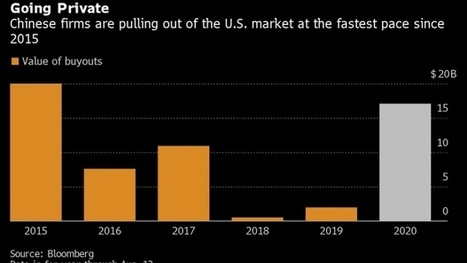
Aberdeen Standard Investments Ltd. has urged the U.S. to protect minority shareholders in Chinese companies listed on American bourses from the risk of unfairly low take-private offers amid growing tensions between the world’s two biggest economies. The $563 billion asset manager wrote a letter to the Securities and Exchange Commission last month urging the regulator to make controlling shareholders and potential acquirers in U.S.-listed foreign companies abstain from voting on delisting resolutions, David Smith, head of corporate governance for Asia at Aberdeen said in an interview on Wednesday. Aberdeen’s suggestion to the SEC comes after the U.S. Senate approved legislation in May that could force major Chinese companies such as Alibaba Group Holding Ltd. and Baidu Inc. to stop trading on U.S. bourses. The bill, if enacted, could lead to more than 200 Chinese firms delisting from U.S. exchanges on failure to comply with rules such as audit reviews, according to the asset manager. The SEC shouldn’t allow interested parties to vote on delistings, said Smith, whose firm holds shares in around a dozen U.S.-listed Chinese companies across various funds. There is clear risk that “on any market volatility you could get a low-ball offer that is in many ways a foregone conclusion.”
|
|
Scooped by
Institut sur la gouvernance (IGOPP)
August 12, 2020 11:17 AM
|
Claims trading has become a significant and controversial feature of American bankruptcy practice over the past thirty years. This Report chronicles the rise of claims trading in the second decade of the Bankruptcy Reform Act of 1978 and analyzes the various policy concerns it raises. Most importantly, claims trade has led to, and been accelerated by, the development of an industry of specialized distressed investors who raise billions of dollars of capital to buy and sell the claims of Chapter 11 debtors. Despite attracting periodic concerns from policy-makers, the legal institutions of Chapter 11 appear to have mostly proven capable of handling the concerns raised by claims trading. In sum, the best interpretation of the available empirical evidence is that claims trading and activist investing has, at the very least, not harmed Chapter 11 or distressed corporations and may have actually improved the capacity of the American bankruptcy system to reorganize distressed assets.
|
|
Scooped by
Institut sur la gouvernance (IGOPP)
August 12, 2020 11:09 AM
|
As COVID-19 related restrictions begin to ease, boards and management face unique decisions as to how to return to a new normal amid evolving legal requirements, health guidelines and divergent stakeholder concerns and expectations. A focus on business judgment will assist corporate leaders in making these tough decisions and finding a path to the other side of the pandemic. The COVID-19 pandemic has forced boards and management teams to face unprecedented challenges and make quick decisions in order to guide their companies through uncharted waters. Canadian corporate law provides a well-worn framework for decision making and directors and officers should continue to bear in mind their fundamental duties as outlined in the various Canadian corporate statutes.
|
|
Scooped by
Institut sur la gouvernance (IGOPP)
August 10, 2020 10:46 AM
|
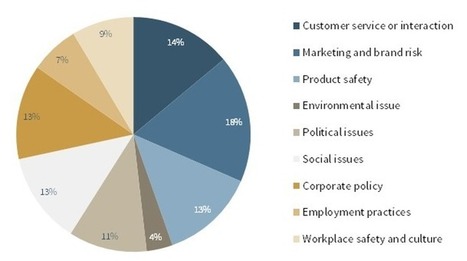
We recently published a paper on SSRN, Blindsided by Social Risk: How Do Companies Survive a Storm of Their Own Making?, that examines how companies respond to social risk using a proprietary dataset from Marketing Scenario Analytica. [...] In order for boards and CEOs to prepare for, manage, and mitigate social risk, MSA recommends the following:
(1) Use knowledge of the past to inform future plans. Companies can accomplish this by examining social risk events that have impacted peer groups and related industries. By developing a comprehensive history of social risk, managements and boards can understand the variety of potential risks it faces and evaluate patterns in how risk events have evolved over time.
(2) Conduct scenario planning to identify the highest likelihood risk events. This involves identifying events that are most likely to manifest themselves based on the company’s industry, profile, and vulnerabilities. Quantify the severity by looking at the potential impact on brand, product, suppliers, employees, and overall reputation.
(3) Prepare responses and identify the resources necessary to prevent or mitigate the highest likelihood risks. Consider both preventative and responsive measures, over both short-term and long-term time horizons, and develop resources, programs, and policies to protect the company on an ongoing bases.
|
|
Scooped by
Institut sur la gouvernance (IGOPP)
August 6, 2020 11:15 AM
|
Direct institutional investor engagement on aspects of corporate environmental, social and governance (ESG) performance has become increasingly prevalent in financial markets worldwide. Given the frequency of recent tail risk events such as the Deepwater Horizon Oil Spill, the Equifax Hack or the Covid-19 pandemic among others, it is not surprising that many institutional investors actively engage with their portfolio firms to reduce ESG risk exposures. Specifically, the goal is to achieve higher standards of ESG practices because these practices are believed to serve as an insurance mechanism against value-destroying tail risk events. Often the engaging shareholders are large institutional investors, also called “universal owners” due to their highly diversified, long-term portfolios. These portfolios, which reflect global financial markets, are exposed to ESG risk because of externalities from economy-wide factors, such as climate change, as well as externalities from individual portfolio firms (that also affect other firms in their portfolios).
|
|
Scooped by
Institut sur la gouvernance (IGOPP)
August 3, 2020 11:40 AM
|
Corporate Social Responsibility and Environmental, Social & Governance (ESG) issues have become increasingly important over the past few years, and evaluating a company’s ESG disclosures has become a key tool used by many investors in making investment and engagement decisions. Many companies are, with increasing frequency, publishing ESG reports on their websites and incorporating ESG disclosure into mandatory filings with the U.S. Securities and Exchange Commission. According to a National Association of Corporate Directors Report, in 2019, 66% of companies in the Russell 3000 Index discussed and incorporated some ESG risk disclosure into their financial filings. [1] The increase in disclosure has been accompanied by an increase in shareholder litigation on ESG issues.
In August 2019, the Business Roundtable (BRT) issued a statement on the purpose of the corporation in which it reversed a longstanding position. Since 1978, the BRT has periodically issued statements on Principles of Corporate Governance, which purport to summarize law and best practice in this area. Since 1997, all versions of those statements had embraced the view that corporations exist primarily to serve their shareholders. In contrast, the 2019 version contains a much broader conception of corporate purpose, which posits that corporations should “commit to deliver[ing] value to all of” the corporation’s stakeholders. Obviously, the BRT cannot unilaterally change the law. As this article explains, the law of corporate purpose remains that directors have an obligation to put shareholder interests ahead of those of other stakeholders and maximize profits for those shareholders. What people do matters more than what they say. To date, the evidence is most BRT members remain committed to shareholder value maximization, despite their recent rhetoric to the contrary. This should not be surprising. The incentive structure faced by directors and managers still skews in favor of shareholders. Why then did the BRT shift position? This article suggests two possibilities. First, the members may be engaged in puffery intended to attract certain stakeholders for the long-term benefit of the shareholders. Specifically, they may be looking to lower the company’s cost of labor by responding to perceived shifts in labor, lower the cost of capital by attracting certain investors, and increase sales by responding to perceived shifts in consumer market sentiment. They may also be trying to fend off regulation by progressive politicians. Second, some BRT members may crave a return to the days of imperial CEOS.
Corwin v. KKR is considered one of the most important corporate law decisions of this century. Corwin shields directors from the enhanced scrutiny of Revlon in favor of the business judgment rule whenever a transaction “is approved by a fully informed, uncoerced vote of the disinterested stockholders.” Commentators see Corwin as the poster child of an increasingly more restrained approach by Delaware courts—something labeled with expressions such as “Delaware’s retreat,” “the fall of Delaware standards,” and even “the death of corporate law.” Supporters of the decision applaud the shift from courts to markets in determining whether directors satisfactorily performed in the sale of the company. In an age of enhanced investor sophistication due to the growing size of institutional ownership, the argument goes, the judiciary has ceded the role of optimal decision maker to shareholders. However, the mainstream view among scholars is that Corwin is a setback in shareholder protection. To some, directors’ legal obligations are now limited to full disclosure. Others think that enhanced scrutiny is no longer available and the sole constraint directors face is the shareholder vote. In the views of critics of Corwin, the structure, nature, and quality of the substitute (vote vs. judicial review) are not compelling.
Scholars, practitioners and policymakers continue to debate what constitutes “good” corporate governance. Investors threaten to vote against directors of issuers with defective governance practices while, at the same time, call for regulators to ban particularly controversial practices such as fee-shifting bylaws and dual class voting structures. Although empirical studies have failed to develop conclusive evidence linking specific governance provisions to firm value, the debate has become increasingly heated and political. In Synthetic Governance, we provide a possible solution to the debate. As we explain, the rise of index investing offers a low-cost market-based tool by which asset managers can give investors the opportunity to vote with their feet by selecting a rules-based investment strategy that screens portfolio companies according to specified governance criteria. Investors with particular corporate governance preferences could, by selecting a bespoke governance index, and mechanism, invest according to those preferences. At the same time, governance-based indexes can provide valuable data on the relationship between corporate governance and firm value.
The coronavirus pandemic gave the global economy an unprecedented shock that has raised the stakes for one of the compensation committee’s most challenging tasks—determining when and how to apply discretion to adjust executives’ incentive pay for circumstances outside their control. The question of when to make discretionary adjustments is always a tricky one. Although the impacts of COVID-19 have been sudden, significant and unexpected, it is important to remember that 2020 was already shaping up as a particularly challenging year for incentive goal-setting. The U.S. economy was marching toward its 11th year of economic expansion and the potential for tariff wars, Brexit and an upcoming U.S. election all added to a heightened level of uncertainty.
|
|
|
Scooped by
Institut sur la gouvernance (IGOPP)
August 19, 2020 10:29 AM
|
Today is the first anniversary of the Business Roundtable (BRT) statement on corporate purpose. The statement, which was described by the BRT as “moving away from shareholder primacy,” was heralded by observers as “an important shift… in corporate America” and a “sea change in terms of how the core purpose of business is defined.” However, in a recent Wall Street Journal op-ed, and in our study The Illusory Promise of Stakeholder Governance on which the op-ed was based, we present evidence that the statement was likely a mere public-relations move rather than a signal of a significant shift in how business operates. This post focuses on the BRT’s disregard of legal constraints under state corporate law. The post is the third of a series, published around the BRT statement’s first anniversary, aimed at providing Forum readers with a brief account of each of the pieces of evidence on the expected consequences of the BRT statement that our study puts forward. (The first post, which focused on the lack of board approval, is available here. The second post, which focused on the corporate governance guidelines of signatory companies, is available here.)
|
|
Scooped by
Institut sur la gouvernance (IGOPP)
August 18, 2020 11:02 AM
|
Tomorrow marks the first anniversary of the Business Roundtable (BRT) statement on corporate purpose. The statement, which was described by the BRT as “moving away from shareholder primacy,” was heralded by observers as “an important shift… in corporate America” and a “sea change in terms of how the core purpose of business is defined.” However, in a recent Wall Street Journal op-ed, and in our study The Illusory Promise of Stakeholder Governance on which the op-ed was based, we present evidence that the statement was likely a mere public-relations move rather than a signal of a significant shift in how business operates. This post focuses on evidence obtained from a review of corporate governance guidelines. The post is the second of a series, published around the BRT statement’s first anniversary, aimed at providing Forum readers with a brief account of each of the pieces of evidence on the expected consequences of the BRT statement that our study puts forward. (The first post, which focused on the lack of board approval, is available here.)
|
|
Scooped by
Institut sur la gouvernance (IGOPP)
August 14, 2020 11:12 AM
|
One of the most striking developments in research on corporate finance and corporate governance over the last decade is the rise of behavioral finance. While earlier behavioral research had focused on psychological biases in the economic decision making of consumers or individual investors, the more recent research has provided evidence of their significant explanatory power even for top managers. Starting from virtually no published findings in finance until about 2000, Behavioral Corporate research now makes up a third to a half of the behavioral finance research in top finance and economics journals, with the majority focusing on the biases of top managers, as Malmendier (2018) documents (see Figure 3). Recent empirical work has established a significant role of managerial biases such as overconfidence, limited attention, or the sunk-cost fallacy in shaping investment, merger, and financing decisions (see, e.g., the overview in Günzel and Malmendier, 2020).
|
|
Scooped by
Institut sur la gouvernance (IGOPP)
August 13, 2020 10:59 AM
|
For investors wanting to hold common stocks, the best-known investment textbooks show that it is hard to do better than investing in a low cost indexed fund. However, little is known about whether firms benefit from being included in the S&P 500 index. Joining the S&P 500 index can have both positive and negative effects on a firm. Being added to the index is like joining a prestigious club. A firm gains prestige by joining the club, but at the cost of becoming compared to other firms in the club. On the positive side, the increased demand for the stock from passive investors may increase the value of the stock and the firm gains prestige. On the negative side, the increase in holdings by passive investors implies that more investors ignore firm fundamentals when they make decisions about their holdings of the firm’s stock, so that the stock price may become less informative and governance may become worse. Further, active investors, managers, and board members become more likely to assess the firm relative to other firms in the index even though the index addition itself does not directly change the firm’s fundamentals.
|
|
Scooped by
Institut sur la gouvernance (IGOPP)
August 12, 2020 11:10 AM
|
Wednesday of next week marks the first anniversary of the Business Roundtable (BRT) statement on corporate purpose. The statement, which was described by the BRT as “moving away from shareholder primacy,” was heralded by observers as “an important shift… in corporate America” and a “sea change in terms of how the core purpose of business is defined.” However, in a recent Wall Street Journal op-ed, we present evidence that the statement was, more likely, a mere public-relations move rather than a signal of a significant shift in how business operates. The op-ed, Stakeholder Capitalism Seems Mostly for Show, was based on evidence collected in our study The Illusory Promise of Stakeholder Governance. This evidence indicates that corporate leaders should not be expected to make substantial changes in the treatment of stakeholders. This conclusion will be greatly disappointing to some and quite welcome to others. But all should be clear-eyed about what corporate leaders are focused on and what they intend to deliver. This post is the first of a series, published around the BRT statement’s first anniversary and aimed at providing Forum readers with a brief account of each of the pieces of evidence that we have collected on the expected consequences of the BRT statement. This post will focus on the lack of board approval.
|
|
Scooped by
Institut sur la gouvernance (IGOPP)
August 11, 2020 10:36 AM
|
Earlier this month, three separate shareholder derivative lawsuits were filed in California federal court against the directors and officers of Oracle Corporation, Facebook, Inc., and Qualcomm, Inc., respectively. The three complaints, filed by the same lawyers, contain intentionally provocative allegations that, despite public statements emphasizing the importance of diversity within their respective organizations, the boards and executive management teams of Oracle, Facebook, and Qualcomm, remain largely white and male, and have failed to deliver on their commitments to diversity. While calls to strengthen commitments to diversity at public companies have steadily increased, these complaints go a step further and seek to reshape the boards and executive teams through litigation and hold directors and executive officers personally liable for perceived diversity shortcomings. [...] Takeaways:
(1) Boards, and those who advise them, should pay careful attention to the Oracle, Facebook, and Qualcomm cases. These cases will likely serve as “test cases” and may catalyze similar complaints against other companies in the near term. [...]
(2) Boards of companies committed to diversity and inclusion should continue to regularly discuss those matters, set appropriate diversity and inclusion goals for the organization and measure the company’s progress in achieving these goals. [...]
(3) Companies should continue to consider their public statements on diversity and inclusion matters, any dialogue they have had with stakeholders regarding their public statements and how future public statements will reflect the companies’ efforts on diversity and inclusion matters and progress towards achieving their goals. [...]
|
|
Scooped by
Institut sur la gouvernance (IGOPP)
August 10, 2020 10:42 AM
|
Even before the world was disrupted by COVID-19 and current events calling for a greater focus on social justice, corporate America was already at an inflection point with respect to its role in society, facing louder and more widespread calls for businesses to consider a broader range of stakeholders. From the groundswell of support for shareholder proposals on environmental and social matters starting in 2017, to the August 2019 statement of the Business Roundtable, to continuing pressure from prominent members of the investment community, the conversation on the purpose of the corporation has continued to gain momentum. While it remains to be seen whether we are witnessing a permanent transition from the primacy of shareholder capitalism to the inclusion of stakeholder capitalism, the above and other developments have had a profound impact on the corporate community’s approach to environmental, social, and governance (ESG) issues. In addition to increasing demands of primary stakeholders, defining and integrating corporate purpose and ESG objectives will require companies to evaluate a wide range of decisions through a multistakeholder lens, leading corporations to prioritize groups that once might have been viewed as nontraditional or secondary stakeholders: employees, customers, suppliers, communities, and other affiliations.
|
|
Scooped by
Institut sur la gouvernance (IGOPP)
August 3, 2020 11:41 AM
|
In the last few years, expectations on whether—and how—companies should engage on climate change have evolved. Companies and investors now largely understand that climate change poses clear financial and even material risks to companies and industries across the economy. Additionally, climate change is now widely recognized as posing a systemic threat to financial markets writ large, with significant potential for disruptive impacts on overall economic stability and the lives and livelihoods of tens of millions of people across the U.S. and globally. Recognizing the need to address the climate crisis, a growing number of companies are taking increasingly ambitious steps to address climate change across their performance and strategies. However, these efforts could be undermined if their lobbying on climate change, whether directly or through their trade associations, is not aligned with climate science. In fact, such misalignment could lead to inefficient corporate spending and reputational and financial risk. Companies that establish robust governance systems to address climate change as a systemic risk and align their lobbying efforts to support science-based climate policies will drive the creation of a regulatory environment that best positions them for resilient growth.
|
|
Scooped by
Institut sur la gouvernance (IGOPP)
August 3, 2020 11:40 AM
|
Business leaders have long recognized that corporate culture is vital to a company’s identity and success. In one of the more colorful descriptions of culture’s importance, the legendary management author Peter Drucker wrote: “culture eats strategy for breakfast, technology for lunch, and products for dinner, and soon thereafter everything else too.” Similarly, former IBM Chairman and CEO Louis V. Gerstner, Jr. wrote: “I came to see, in my time at IBM, that culture isn’t just one aspect of the game, it is the game.”
I can think of only one public company that is currently a Delaware Public Benefit Corporation. That’s Laureate Education, which initially filed with the SEC in 2015 and went effective in 2017. (See this PubCo post.) Now, finally, we have a second company that has filed for its IPO as a PBC—Lemonade, Inc., which declares on the cover page of its prospectus that it is incorporated in Delaware as a PBC as a demonstration of its “long-term commitment to make insurance a public good.” It’s been quite a long dry spell since the PBC legislation was signed into law in 2013. In the last few years, however, we have witnessed intensifying investor focus on sustainability as a strategy (see, for example, this PubCo post), as well as swelling numbers of companies declaring their commitments to all stakeholders, as reflected, for example, in the Business Roundtable’s adoption of a new Statement on the Purpose of a Corporation (see this PubCo post) and the World Economic Forum’s Stakeholder Principles in the COVID Era (see this PubCo post). What’s more, new legislation just passed by the House in Delaware will, if ultimately signed into law, make it easier to slip in and out of PBC status. [Update: This bill was signed into law on July 16.] Will these trends toward sustainability and stakeholder capitalism, together with the Delaware legislation, fuel a renewed interest in the PBC for public companies and expecting-to-become public companies? Will Lemonade open the floodgates?
Many companies have made public statements in the wake of George Floyd’s death, addressing complex social issues including racism and inequality. More than 200 S&P 500 companies issued public statements, and many others have sent company-wide internal messages. Our analysis of these statements shows that companies have become more comfortable making pronouncements with pointed statements that may be polarizing among stakeholders. While a number of these statements sound “corporate” and are unlikely to inspire or offend any readers, many go further. Just a few months ago many companies would have shied away from the phrase “Black lives matter.” A dam has broken. What a company says—and how it says it—can have dramatic affects on the how key stakeholders view the company. This can have significant reputational and financial consequences.
There is no simple standard of appropriate board involvement on these issues. We suggest boards and management teams discuss expectations about statements, pledges, and commitments on important social and political issues by the company or its leadership.
On June 23, 2020, the SEC Office of Compliance Inspections and Examinations (“OCIE”) issued a Risk Alert [1] that highlights commonly encountered deficiencies in examinations of hedge fund managers and private equity fund sponsors. At the outset, the Risk Alert connects its observations with respect to private investment funds with the current Commission’s repeated focus on retail investors, noting that private funds “frequently have significant investments from pensions, charities, endowments and families.” Indeed, the Risk Alert is described as not only useful information for advisers to private funds; it is offered “to provide investors with information concerning private fund adviser deficiencies.” While the Risk Alert does not establish new standards of conduct, it does provide a concise summary of three categories of deficiencies the examination staff stated that it finds in its reviews of advisers to private funds. These findings are consistent with what we have observed on examination of private fund advisers.
|