 Your new post is loading...

|
Rescooped by
Antonios Bouris
from Amazing Science
June 3, 2023 6:06 AM
|
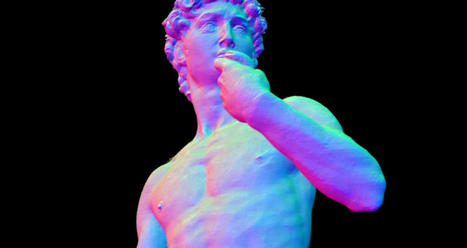
Neuralangelo, a new AI model by NVIDIA Research for 3D reconstruction using neural networks, turns 2D video clips into detailed 3D structures — generating lifelike virtual replicas of buildings, sculptures and other real-world objects. Like Michelangelo sculpting stunning, life-like visions from blocks of marble, Neuralangelo generates 3D structures with intricate details and textures. Creative professionals can then import these 3D objects into design applications, editing them further for use in art, video game development, robotics and industrial digital twins.
Read the full article at: blogs.nvidia.com
Via Dr. Stefan Gruenwald
|
|
Rescooped by
Antonios Bouris
from Amazing Science
May 25, 2023 7:14 PM
|
The Singularity, often referred to as the Technological Singularity, is a hypothetical point in the near future at which artificial intelligence (AI) becomes so incredibly advanced that it surpasses human intelligence, leading to rapid, unforeseeable changes in society and technology, life as we know it. The term was popularized by mathematician and computer scientist Vernor Vinge and futurist Ray Kurzweil. At the Singularity, AI systems would possess the ability to autonomously learn, self-improve, and create new AI systems with very advanced capabilities and more intelligent than themselves, resulting in an exponential increase in intelligence. This self-improvement cycle could lead to AI systems that are vastly more capable and sophisticated than human minds and anything humans can even imagine. The Singularity is often associated with the development of artificial general intelligence (AGI), which is an AI system that can perform any intellectual task that a human being can do. AGI is distinct from narrow AI, which is designed for specific tasks and lacks the broad cognitive abilities and adaptability of human intelligence. The implications of the Singularity are the subject of much speculation and debate today. Most people who have thought about it agree that the Singularity would be a decisive turning point in human history. Some view this with awe and trepidation, almost like a religious event that will lead to everlasting life and happiness. Many believe it will bring about tremendous breakthroughs in medicine, energy, and space exploration. Others are more cautious, expressing concerns about the ethical, societal, and existential risks associated with super-intelligent AI systems. Some predict doom and gloom. Others think it is all but impossible. Predicting the Singularity Start Date The general caveat to this question given by all experts is that predicting when the Singularity might occur is highly uncertain, as it depends on the pace of AI research, breakthroughs in understanding human cognition, and the development of advanced hardware and software systems. Still, ChatGPT-4 has predicted a 5%-10% chance that the singularity will happen within five years, 2028. Chat GPT-4 did so without knowledge of what has happened since September 2021, when it was last fed data. We know what has happened since September 2021, we know the pace of change, even though the ChatGPT model does not. We know that when ChatGPT-3.5 was released in November 2022, it scored in the bottom 10% of the multi-state Bar exam. But just five months later, when 4.0 was released in March 2023, it scored in the top 10%. Let that sink in and remember no new data was provided. There was only improvement in reasoning ability. As lawyers who have all taken this test, we know better than anyone the significance of a jump from the bottom to the top 10% of this challenging test. Yes, it is getting pretty smart, fast. How much longer until its intelligence exceeds our own? Opportunities and Challenges Presented by the Singularity The three opportunities listed here, all good, are generally thought to be possible in a time of technological Singularity, a time where AI intelligence and capacities accelerate at an exponential rate. - Accelerated Technological Progress: The Singularity could lead to rapid advancements in various fields, as super-intelligent AI systems develop new technologies and solve complex problems that were previously beyond human reach.
- Economic Growth: With Ai systems handling tasks more efficiently and effectively than humans, productivity and economic growth could increase dramatically, potentially leading to higher standards of living and reduced global inequality.
- Scientific Discoveries: The Singularity might enable breakthroughs in areas such as healthcare, environmental sustainability, and space exploration, as Ai systems analyze vast amounts of data, simulate complex phenomena, and generate innovative solutions to pressing challenges.
Conversely, as usual, their is a flip side to opportunities, the generally accepted challenges, some might say threats, presented by the Singularity: - Ethical Concerns: As Ai systems surpass human intelligence, ethical considerations become paramount. Ensuring that Ai systems behave ethically, adhere to human values, and respect individual rights will be crucial.
- Job Displacement: The widespread adoption of super-intelligent Ai systems could result in job displacement across various industries, as human workers are replaced by more efficient Ai. This raises concerns about unemployment, workforce retraining, and social safety nets.
- Existential Risks: The Singularity poses potential existential risks, as super-intelligent Ai might act in ways that are harmful to humanity, either intentionally or unintentionally. Ensuring Ai safety and robustness is essential to mitigate these risks.
Read the full article at: e-discoveryteam.com
Via Dr. Stefan Gruenwald
|
|
Rescooped by
Antonios Bouris
from Amazing Science
May 20, 2023 8:46 AM
|
Fake virtual identities are nothing new. The ability to so easily create them has been both a boon for social media platforms — more “users” — and a scourge, tied as they are to the spread of conspiracy theories, distorted discourse and other societal ills.
Still, Twitter bots are nothing compared with what the world is about to experience, as any time spent with ChatGPT illustrates. Flash forward a few years and it will be impossible to know if someone is communicating with another mortal or a neural network.
Sam Altman knows this. Altman is the co-founder and the CEO of ChatGPT parent OpenAI and has long had more visibility than most into what’s around the corner. It’s why more than three years ago, he conceived of a new company that could serve first and foremost as proof-of-personhood. Called Worldcoin, its three-part mission — to create a global ID, a global currency and an app that enables payment, purchases and transfers using its own token, along with other digital assets and traditional currencies — is as ambitious as it is technically complicated, but the opportunity is also vast.
In broad strokes, here’s how the outfit, still in beta and based in San Francisco and Berlin, works: To use the service, users must download its app, then have their iris scanned using a silver, melon-sized orb that houses a custom optical system. Once the scan is complete, the individual is added to a database of verified humans, and Worldcoin creates a unique cryptographic “hash” or equation that’s tied to that real person. The scan isn’t saved, but the hash can be used in the future to prove the person’s identity anonymously through the app, which includes a private key that links to a shareable public key. Because the system is designed to verify that a person is actually a unique individual, if the person wants to accept a payment or fund a specific project, the app generates a “zero-knowledge proof” — or mathematical equation — that allows the individual to provide only the necessary amount of information to a third party. Some day, the technology might even help people to vote on how AI should be governed. (A piece in the outlet IEEE Spectrum better spells out the specifics of Worldcoin’s tech.)
Investors eager to be in business with Altman jumped at the chance to fund the outfit almost as soon as it was imagined, with Andreessen Horowitz, Variant, Khosla Ventures, Coinbase and Tiger Global providing it with $125.5 million. But the public has been more wary. When in June 2021, Bloomberg reported that Altman was at work on Worldcoin, many questioned its promise to give one share of its new digital currency to everyone who agreed to an iris scan. Worldcoin said it needed to be decentralized from the outset so it could deliver future currency drops as part of universal basic income programs. (Altman has long predicted that AI will generate enough wealth to pay every adult some amount of money each year.) From Worldcoin’s perspective, the crypto piece was necessary. Yet some quickly deemed it another crypto scam, while others questioned whether a nascent startup collecting biometric data could truly secure its participants’ privacy.
Altman later said the press owed to a “leak” and that Worldcoin wasn’t ready to tell its story in 2021. Now, reorganized under a new parent organization called Tools for Humanity that calls itself both a research lab and product company, the outfit is sharing more details. Whether they’ll be enough to win over users is an open question, but certainly, more people now understand why proving personhood online is about to become essential. Read the full article at: techcrunch.com
Via Dr. Stefan Gruenwald
|
|
Rescooped by
Antonios Bouris
from Amazing Science
May 11, 2023 10:31 PM
|
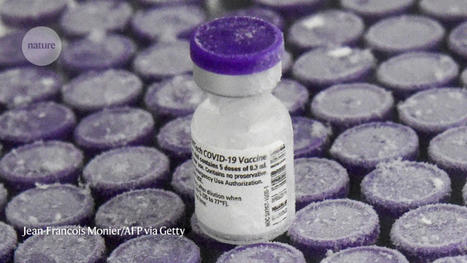
Software from Baidu Research yields jabs for COVID that have greater shelf stability and that trigger a larger antibody response in mice than conventionally designed shots. An artificial intelligence (AI) tool that optimizes the gene sequences found in mRNA vaccines could help to create jabs with greater potency and stability that could be deployed across the globe. Developed by scientists at the California division of Baidu Research, an AI company based in Beijing, the software borrows techniques from computational linguistics to design mRNA sequences with more-intricate shapes and structures than those used in current vaccines. This enables the genetic material to persist for longer than usual. The more stable the mRNA that’s delivered to a person’s cells, the more antigens are produced by the protein-making machinery in that person’s body. This, in turn, leads to a rise in protective antibodies, theoretically leaving immunized individuals better equipped to fend off infectious diseases. What’s more, the enhanced structural complexity of the mRNA offers improved protection against vaccine degradation. During the COVID-19 pandemic, mRNA-based shots against the SARS-CoV-2 coronavirus famously had to be transported and kept at temperatures below –15°C to maintain their stability. This limited their distribution in resource-poor regions of the world that lack access to ultracold storage facilities. A more resilient product, optimized by AI, could eliminate the need for cold-chain equipment to handle such jabs. The new methodology is “remarkable”, says Dave Mauger, a computational RNA biologist who previously worked at Moderna in Cambridge, Massachusetts, a maker of mRNA vaccines. “The computational efficiency is really impressive and more sophisticated than anything that has come before.”
Research Cited published in Nature (May 2, 2023): https://doi.org/10.1038/s41586-023-06127-z
Read the full article at: www.nature.com
Via Juan Lama, Dr. Stefan Gruenwald
|
|
Rescooped by
Antonios Bouris
from Amazing Science
May 11, 2023 10:23 PM
|
Richard Feynman’s path integral is a powerful prediction machine and a philosophy. Physicists still struggle to figure out how to use it, and what it means. The most powerful formula in physics starts with a slender S, the symbol for a sort of sum known as an integral. Further along comes a second S, representing a quantity known as action. Together, these twin S’s form the essence of an equation that is arguably the most effective diviner of the future yet devised. The oracular formula is known as the Feynman path integral. As far as physicists can tell, it precisely predicts the behavior of any quantum system—an electron, a light ray, or even a black hole. The path integral has racked up so many successes that many physicists believe it to be a direct window into the heart of reality. “It’s how the world really is,” said Renate Loll, a theoretical physicist at Radboud University in the Netherlands. But the equation, although it graces the pages of thousands of physics publications, is more of a philosophy than a rigorous recipe. It suggests that our reality is a sort of blending—a sum—of all imaginable possibilities. But it does not tell researchers exactly how to carry out the sum. So physicists have spent decades developing an arsenal of approximation schemes for constructing and computing the integral for different quantum systems. The approximations work well enough that intrepid physicists like Loll are now pursuing the ultimate path integral: one that blends all conceivable shapes of space and time and produces a universe shaped like ours as the net result. But in this quest to show that reality is indeed the sum of all possible realities, they face deep confusion about which possibilities should enter the sum.
Original story reprinted with permission from Quanta Magazine, an editorially independent publication of the Simons Foundation whose mission is to enhance public understanding of science by covering research developments and trends in mathematics and the physical and life sciences.
Read the full article at: www.wired.com
Via Dr. Stefan Gruenwald
|
|
Scooped by
Antonios Bouris
May 2, 2023 8:11 PM
|
Apple is working on a paid AI-powered health coach that’s codenamed “Quartz,” according to Bloomberg. The company is also reportedly developing a Health app for iPad as part of iPadOS 17. Read the full article at: www.theverge.com
|
|
Scooped by
Antonios Bouris
April 28, 2023 7:01 PM
|
The travel industry is going all in on artificial intelligence. Here's the latest way airlines are utilizing AI.
Per a new report from Bloomberg, airlines have begun leaning on the technology to help map the most fuel-efficient routes for long-haul flights — like the AKL-JFK route — thus avoiding unplanned and stops to refuel, as well as helping pilots avoid heavy weather, or catch a tailwind. And, as Angus Whitley notes, the mapping software is designed to get better the more it’s used — not unlike “an internet search engine that learns on the go.”
Read the full article at: www.insidehook.com
|
|
Rescooped by
Antonios Bouris
from Amazing Science
April 21, 2023 10:51 PM
|
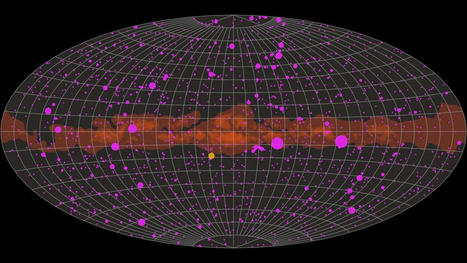
Most of the gamma ray sources in this animation are blazars, supermassive black holes with relativistic jets pointed at Earth. We’ve come a long way since gamma rays were discovered. The late 1800s and early 1900s were a time of great scientific advancements. Scientists were just getting a handle on the different types of radiation. Radium featured prominently in the experiments, including one by French scientist Paul Ulrich Villard in 1900. Radium decays readily, and scientists had already identified alpha and beta radiation coming from radium samples. But Villard was able to identify a third type of penetrating radiation so powerful even a layer of lead couldn’t stop it: gamma rays. Now we have a gamma ray detector in space, and it’s showing us how the Universe sparkles with this powerful energy. Gamma rays are the most energetic form of light in the Universe, and as a new animation shows, the sky practically sparkles with flickering gamma-ray sources. The animation contains a year’s worth of observations from the Large Area Telescope (LAT) on NASA’s Fermi Gamma-ray Space Telescope. Each yellow circle is a gamma-ray source, and the expansion and contraction show how the source brightens and dims. The yellow circle is the Sun’s following its seemingly sinusoidal path relative to Earth. The animation represents an entire year of observations. Each frame in the animation represents three days. The reddish-orange band that runs through the middle of the animation is the Milky Way’s central plane, which is a consistent gamma-ray producer. Read the full article at: www.universetoday.com
Via Dr. Stefan Gruenwald
|
|
Scooped by
Antonios Bouris
April 15, 2023 1:45 AM
|
Amazon’s new AI service is focused on offering AI tools to businesses, including two large language models designed by the technology giant. Read the full article at: www.forbes.com Read the full article at: www.forbes.com
|
|
Rescooped by
Antonios Bouris
from Best
April 15, 2023 1:28 AM
|
As the name suggests, Martin Mirakyan is exploring the Python programming language for over 100 days. He starts from a complete beginner level to make sure people without any programming background can get started and follow along. Then he gradually covers more advanced concepts such as task automation, data visualization, and web scraping and performs some basic data-science experiments. In general, Python is a popular, general-purpose programming language known for its simplicity, readability, and flexibility. It is used in a wide range of applications, including web development, data analysis, scientific computing, and artificial intelligence. Here are a few reasons why one might start learning Python: - Python is easy to learn: Its simple syntax and readable code make it a great first programming language for beginners.
- Python is versatile: It can be used for a wide range of tasks, from web development to data analysis to artificial intelligence.
- Python has a large, active community: There are countless resources available online for learning Python, and the community is always working on new libraries and tools to make it even better.
Along with the concepts, the blog posts will also include some practical exercises with links to resources where one might write code and learn by doing. The list of topics covered will be updated on a rolling basis every day: - Printing values in Python
- Getting input from users in Python
- Arithmetic expressions and numeric variables in Python
- Boolean variables and boolean arithmetic in Python
- Conditions in Python — if/else
- Nested conditions in Python
- Floating point numbers
- Augmented assignments (+=, -=, etc.)
- Strings
- How to format text and what are f-strings in Python?
- Lists
- What is the range() function in Python?
- For loops
- While loops
- break and continue
- How Python almost had another keyword
- 5 most useful string casing methods in Python
- 5 most useful string modifying methods in Python
- Splitting and Joining strings in Python
- 10 most useful list methods in Python
- Nested loops in Python
- Python List Comprehension — Deep Dive
- Tuples in Python
- Sets in Python
- Dictionaries in Python
- Why Python Does Not Have Tuple Comprehension?
- Functions in Python
- What are Multiple Return Values Actually in Python?
- 4 Types of Function Arguments in Python that You Might Not Know About
- Python Variable Scope
- Enumerate and Zip Functions in Python
- Lambda Functions in Python: A Comprehensive Guide to Understanding and Using Anonymous Functions
- Higher Order Functions in Python
- Working With Files in Python
- With Statement in Python
- Automating Data Cleaning With Python
- Positional-only and Keyword-only Arguments in Python
- Does Python Have Pass-by-Value VS Pass-by-Reference Variables?
- Recursion in Python
- What is Stack Overflow Really?
- Regular Expressions in Python
- Regular Expressions — Grouping and Backreferences
- Python Classes and Objects
- Mastering Private and Protected Fields in Python Classes: A Complete Tutorial
- What are Magic Methods in Python Classes?
- Inheritance in Python
- Method Overriding in Python
- Multiple Inheritance in Python
- Type Hints and Type Checking in Python
- How to Create Custom Generic Types in Python
- Abstract Classes in Python
- Data Classes in Python
- Properties in Python
- Static Methods in Python
- Implementing Custom Decorator Functions in Python
- Class Decorators in Python
- Python — Exception Handling
- Exception Hierarchy in Python
- Custom Exceptions in Python — Creating Custom Exceptions
- Iterators in Python
- Generators in Python
- Iterables in Python
- 10 Most Useful Itertools Methods
- Glob — Working with Files in Python
- Pathlib — The OOP Approach of Working with File System in Python
- Creating Custom Context Managers in Python
- All the Ways You Can Use Context Managers in Python
- Multithreading in Python
- Synchronizing Threads in Python With Locks
- Synchronizing Threads in Python With Semaphores
- Synchronizing Threads in Python With Barriers
- Multiprocessing in Python
- What Is the Python Global Interpreter Lock (GIL)?
- Multithreading VS Multiprocessing in Python
- Thread Pools and Process Pools in Python
- Async Await in Python — Asyncio Deep Dive
- Async with Expression in Python
- Making Requests With asyncio in Python
- Working With Databases Using asyncio in Python — SQLAlchemy Example
- Multithreading VS Multiprocessing VS Asyncio in Python
- How Modules Actually Work in Python and How to Create Your Own Custom Module
- What are Packages in Python and What is the Role of __init__.py files?
- Working With Third-Party Libraries in Python
- Virtual Environments in Python
- Unit Testing in Python with Pytest
- Test Coverage in Python with Pytest
- Mocking and Fixtures in Python
- Web Scraping with Scrapy in Python
- Working with Excel Sheets and CSV Files Using Pandas for Data Processing
- Working With XML and JSON Data in Python
- Mastering Image Processing in Python with Scikit-Image — A Comprehensive Guide to Image Processing Techniques
- Mastering NumPy in Python for Numerical Computations: A Comprehensive Tutorial
- Mastering Data Analysis with Pandas
- Machine Learning in Python with Scikit-Learn
- Creating an Interactive Website with Streamlit in Python
- Creating Beautiful Data Visualizations with Plotly and Dash
- Creating Custom ChatGPT Using the OpenAI API
- More coming soon...
Read the full article at: martinxpn.medium.com
Via Dr. Stefan Gruenwald
|
|
Rescooped by
Antonios Bouris
from Amazing Science
April 8, 2023 3:06 AM
|
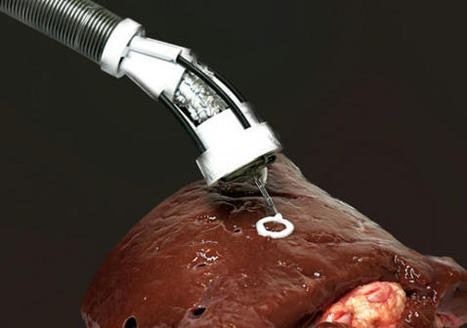
A new robotic arm could be a game changer in surgeries, with the capability to 3D-print biomaterial directly onto organs inside a patient’s body. The arm, designed by a team of engineers from the University of New South Wales in Australia, can place a tiny, flexible 3D bioprinter inside the body, using bio-ink to “print” tissue-like structures onto internal organs. The device, dubbed F3DB, is designed with a swivel head to offer full flexibility of movement and features an array of soft artificial muscles to allow movement in three separate directions. The entire structure can be controlled externally. “Existing 3D-bioprinting techniques require biomaterials to be made outside the body and implanting that into a person would usually require large open-field open surgery which increases infection risks,” said Thanh Do, study lead. “Our flexible 3D bioprinter means biomaterials can be directly delivered into the target tissue or organs with a minimally invasive approach. This system offers the potential for the precise reconstruction of three-dimensional wounds inside the body. Our approach also addresses significant limitations in existing 3D bioprinters such as surface mismatches between 3D-printed biomaterials and target tissues/organs as well as structural damage during manual handling, transferring, and transportation process.” Bioprinting in the medical industry is primarily used for research purposes, such as tissue engineering and drug development, and typically requires large-scale, external 3D printers to create the cellular structures. According to the team, in the next few years, the technology could be used to reach and operate on hard-to-reach areas in the body. In the project’s next stage, the F3DB will be used in animal test subjects, as well as further development of the arm to include an integrated camera and scanning system. Read the full article at: www.iotworldtoday.com
Via Dr. Stefan Gruenwald
|
|
Rescooped by
Antonios Bouris
from Amazing Science
April 1, 2023 5:43 AM
|
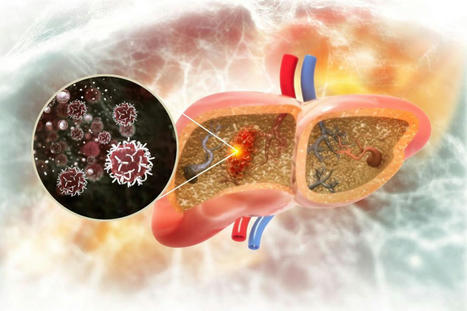
Artificial intelligence has developed a treatment for cancer in just 30 days and can predict a patient’s survival rate. In a new study published in the journal Chemical Science, researchers at the University of Toronto along with Insilico Medicine developed a potential treatment for hepatocellular carcinoma (HCC) with an AI drug discovery platform called Pharma.AI. HCC is the most common type of liver cancer and occurs when a tumor grows on the liver, according to Cleveland Clinic. Researchers applied AlphaFold, an AI-powered protein structure database, to Pharma.AI to uncover a novel target — a previously unknown treatment pathway — for cancer and developed a “novel hit molecule” that could bind to that target without aid. The creation of the potential drug was accomplished in just 30 days from the selection of the target and after synthesizing just seven compounds. After a second round of generating compounds, they discovered a more potent hit molecule — but any potential drug would need to go through clinical trials before widespread use. Read the full article at: nypost.com
Via Dr. Stefan Gruenwald
|
|
Rescooped by
Antonios Bouris
from Amazing Science
March 31, 2023 8:10 PM
|
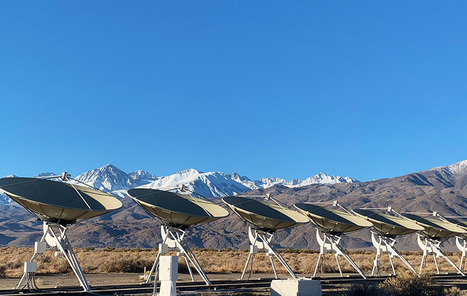
When the immense Arecibo radio telescope in Puerto Rico collapsed in 2020, it left gaping holes in astronomy. Now, a team from the California Institute of Technology (Caltech) hopes to address some of the gaps with a very different instrument: a tightly packed array of relatively inexpensive radio dishes that aims to quickly image radio sources across wide swaths of the sky. A nearly completed prototype array in California that the team calls a “radio camera” is already locating dozens of the distant, enigmatic eruptions called fast radio bursts (FRBs). Next year, the team hopes to begin construction on a much larger array with 2000 dishes that, together, will match the size of Arecibo. Maura McLaughlin of West Virginia University is a leader of NANOGrav (the North American Nanohertz Observatory for Gravitational Waves), an effort to search for gravitational waves from supermassive black holes that relied on Arecibo for half its data. She says they took “a big sensitivity hit” when it was lost. “We really need a new telescope with a similar collecting area,” she says, and Caltech’s planned Deep Synoptic Array (DSA) fits that bill. “It will be a game changer.” To gain sensitivity, radio astronomers can build big dishes like Arecibo or arrays of smaller dishes. But in most such arrays, the dishes are widely spaced, which sharpens their resolution but creates “a data deluge problem,” says Caltech’s Gregg Hallinan, DSA principal investigator (PI). Producing an image from a scattered array is like looking through a fragmented mirror, he says, and recreating the information from the missing parts is a complex nonlinear process known as deconvolution that can take weeks—or even years. Many astronomers just want to regularly survey the sky for new objects or monitor sources for subtle changes without a heavy processing burden. Caltech’s solution, Hallinan says, is to “fill the mirror up” by packing low-cost dishes together. That makes deconvolution easier and should enable DSA to construct images in real time. The team has nearly finished assembling its prototype, the DSA-110, a T-shaped array of 95 dishes spaced 1 meter apart at Caltech’s Owens Valley Radio Observatory in California plus another 15 “outriggers” spread out more than a kilometer distant. To keep construction costs to $4 million, the instrument uses commercially available 4.6-meter dishes, homemade amplifiers, and wave-channeling feeds fashioned out of cake tins. Most radio telescopes require expensive cryogenic cooling to reduce amplifier noise, but Caltech’s engineers have squeezed similar performance out of room-temperature circuits. Co-PI Vikram Ravi admits they perform less well in the summer heat. With a wide field of view, DSA-110 is good at detecting FRBs, intense blasts of radio waves lasting only milliseconds, coming from all over the sky. Several thousand have been detected, but little more than a dozen have been traced to their home galaxies, which might hold clues to what is powering the bursts. DSA-110 aims to localize many more. If a burst is detected, data from the outrigger dishes allow the telescope to zoom in and pin the FRB to its galaxy. Read the full article at: www.science.org
Via Dr. Stefan Gruenwald
|
|
|
Rescooped by
Antonios Bouris
from Amazing Science
May 25, 2023 7:16 PM
|
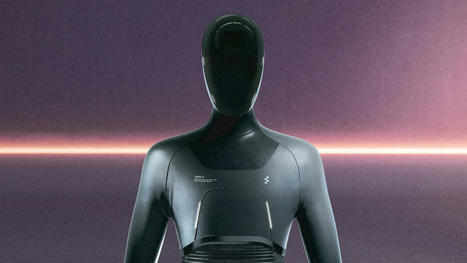
Figure 01 is a bipedal, AI-powered humanoid. And it wants to work in a warehouse. Key to Figure’s robotics approach is its reliance on artificial intelligence to enable its robots to learn and improve their abilities. As movements and performance evolves, the robots can progress from basic lifting and carrying tasks to more advanced functions. That work will start out in the warehouse setting, doing the kind of heavy lifting that people don’t particularly enjoy. “Our business plan is to get to revenue as fast as we can. And honestly that means doing things that are technically easier,” says Figure founder Brett Adcock. Single-purpose robots are already common in warehouses, like the roving robots that carry boxes to shelves in Amazon fulfillment centers, and a robot created for DHL Supply Chain that unloads boxes from trucks at warehouse loading bays. Human-like robots could be a more versatile solution for the warehouse, Adcock says. Instead of relying on one robot to unload a truck and another to haul boxes around, Figure’s plan is to create a robot that can do almost anything a human worker otherwise would. In some ways, it’s a narrower approach to the humanoid robot, which many other companies have sought to build. Honda’s Asimo was intended to help a range of users, from people with limited mobility to older folks needing full-time care. NASA has invested in humanoid “robonauts” that are capable of assisting with missions in space. Boston Dynamics has pushed the limits of robotics by creating humanoids that can jump and flip. “Existing humanoids today have just been stunts and demos,” Adcock says. “We want to get away from that and show that they can be really useful.” Figure has produced five prototypes of its humanoid. They’re designed to have 25 degrees of motion, including the ability to bend over fully at the waist and lift a box from the ground up to a high shelf. Hands will add even more flexibility and utility. That is the plan, at least. Right now, the prototype robots are mainly just walking. Adcock expects to conduct extensive testing and refinement in the coming months, getting the robots to the point where they can handle most general warehouse applications by the end of the year. A pilot of 50 robots working in a real warehouse setting is being eyed for 2024. “Hardware companies take time,” he says. “This will take 20 or 30 years for us to really build out.” With a reflective featureless face mask that may remind some viewers of a character from G.I. Joe, Figure 01 is a sleeker vision of the humanoid robots people may now be familiar with. Atlas, the walking, jumping, and parkour-enabled robot from the research wing of Boston Dynamics, for example, has prioritized mechanical skills over aesthetics. Figure’s robot bears some similarity to Tesla’s Optimus robot. Announced in 2021 during a presentation featuring a human in a spandex robot suit, Optimus also aspires to a smoother form but its latest prototype looks more science science than science fiction. Adcock says Figure’s robots use advanced electric motors, enabling smoother movement than the hydraulically run Atlas, which is allowing the prototypes to have a more natural gait while also fitting the mechanical systems into a smaller package. “We want to fool like 90% of people in a walking Turing test,” he says. The concept is being built around the notion that the robot can be continually improved over time, learning new skills and eventually expanding into more complex tasks. Being able to do more, Adcock says, makes what could be a very expensive device much more affordable to build and buy. That could someday lead to Figure’s robots working in manufacturing, retail, home care, or even outer space. “I really believe that humanoids will colonize planets,” Adcock says. For now, Figure is targeting the humble warehouse. “If we unveil the humanoid at some big event, it’ll just be doing warehouse work on stage the whole time,” Adcock says. “No back flips, none of that crazy parkour stuff. We just want to do real, practical work.” Read the full article at: www.fastcompany.com
Via Dr. Stefan Gruenwald
|
|
Rescooped by
Antonios Bouris
from Best
May 25, 2023 7:01 PM
|
|
|
Rescooped by
Antonios Bouris
from Amazing Science
May 20, 2023 8:45 AM
|
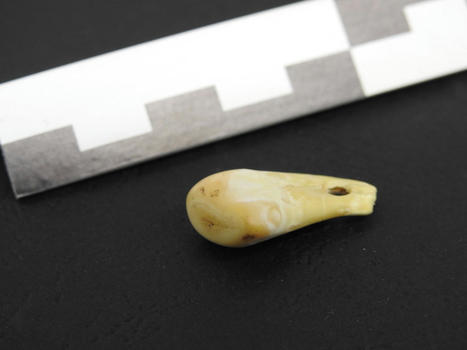
An international research team led by the Max Planck Institute for Evolutionary Anthropology in Leipzig, Germany, has for the first time successfully isolated ancient human DNA from a Paleolithic artefact: a pierced deer tooth discovered in Denisova Cave in southern Siberia. To preserve the integrity of the artefact, they developed a new, nondestructive method for isolating DNA from ancient bones and teeth. From the DNA retrieved they were able to reconstruct a precise genetic profile of the woman who used or wore the pendant, as well as of the deer from which the tooth was taken. Genetic dates obtained for the DNA from both the woman and the deer show that the pendant was made between 19,000 and 25,000 years ago. The tooth remains fully intact after analysis, providing testimony to a new era in ancient DNA research, in which it may become possible to directly identify the users of ornaments and tools produced in the deep past. Pierced deer tooth discovered from Denisova Cave in southern Siberia that yielded ancient human DNA. Artefacts made of stone, bones or teeth provide important insights into the subsistence strategies of early humans, their behavior and culture. However, until now it has been difficult to attribute these artefacts to specific individuals, since burials and grave goods were very rare in the Palaeolithic. This has limited the possibilities of drawing conclusions about, for example, division of labor or the social roles of individuals during this period. In order to directly link cultural objects to specific individuals and thus gain deeper insights into Paleolithic societies, an international, interdisciplinary research team, led by the Max Planck Institute for Evolutionary Anthropology in Leipzig, has developed a novel, non-destructive method for DNA isolation from bones and teeth. Although they are generally rarer than stone tools, the scientists focused specifically on artefacts made from skeletal elements, because these are more porous and are therefore more likely to retain DNA present in skin cells, sweat and other body fluids. A new DNA extraction method Lead author Elena Essel working in the clean laboratory on the pierced deer tooth discovered from Denisova Cave. Before the team could work with real artefacts, they first had to ensure that the precious objects would not be damaged. “The surface structure of Paleolithic bone and tooth artefacts provides important information about their production and use. Therefore, preserving the integrity of the artefacts, including microstructures on their surface, was a top priority” says Marie Soressi, an archaeologist from the University of Leiden who supervised the work together with Matthias Meyer, a Max Planck geneticist. The team tested the influence of various chemicals on the surface structure of archaeological bone and tooth pieces and developed a non-destructive phosphate-based method for DNA extraction. “One could say we have created a washing machine for ancient artifacts within our clean laboratory," explains Elena Essel, the lead author of the study who developed the method. "By washing the artifacts at temperatures of up to 90°C, we are able to extract DNA from the wash waters, while keeping the artifacts intact.” Read the full article at: www.mpg.de
Via Dr. Stefan Gruenwald
|
|
Rescooped by
Antonios Bouris
from Amazing Science
May 11, 2023 10:25 PM
|
Imagine this: In front of you there’s a big magical button. You happen to know that, if you press it, there’s an indeterminate but non-zero chance that you’ll solve all the world’s problems right away. Sounds great! There’s a caveat, though. At the other end of the probability distribution lies a similarly tiny but very real possibility that you will, just as instantly, kill everyone. Do you press it? Superintelligence: Utopia or apocalypse? That button is, as you may have imagined, a metaphor for the hypothetical AGI or superintelligence (will use them interchangeably) we hear about everywhere nowadays. The dichotomic scenario described above is the setting that so-called “AI optimists” and “AI doomers” have submerged us in. Superintelligence will be humanity’s blessing or humanity’s curse. It’ll be a paradisiac dream or a hellish nightmare. It’ll be the panacea to solve all our problems or the doom that will end human civilization. Public discussions on social media and traditional media about superintelligence and the broad range of futures that will open up if—or when, for some people—we manage to create an AGI have captured the conversation; everything else pales in comparison. Debates about current, actual problems that are existentially urgent to many people are relegated to obscurity because they’re not as “existentially serious as … [AIs] taking over,” as AI pioneer Geoffrey Hinton stated recently. Read the full article at: thealgorithmicbridge.substack.com
Via Dr. Stefan Gruenwald
|
|
Rescooped by
Antonios Bouris
from Amazing Science
May 6, 2023 3:58 AM
|
A futuristic demonstration of emerging renewable energy material – printed solar cells, is being trialled in a public setting for the first time as it nears commercial readiness. Creator of the organic printed solar material, Physicist Professor Paul Dastoor from the Faculty of Science said his team were excited to take their ‘science to the streets’ in what represented significant progress toward commercial availability of the material. “Globally, there’s been so few of these installations, we know very little about how they perform in a public setting. This installation is the next critical step in accelerating the development and commercialization of this technology. It presents a new scenario for us to test performance and durability against a range of new challenges,” said Professor Dastoor.
Read the full article at: www.newcastle.edu.au
Via Dr. Stefan Gruenwald
|
|
Rescooped by
Antonios Bouris
from Amazing Science
April 28, 2023 7:02 PM
|
Stanford University researchers have developed a generative AI model that can choreograph human dance animation to match any piece of music. It’s called Editable Dance GEneration (EDGE). “EDGE shows that AI-enabled characters can bring a level of musicality and artistry to dance animation that was not possible before,” says Karen Liu, a professor of computer science who led a team that included two student collaborators, Jonathan Tseng and Rodrigo Castellon, in her lab. The researchers believe that the tool will help choreographers design sequences and communicate their ideas to live dancers by visualizing 3D dance sequences. Key to the program’s advanced capabilities is editability. Liu imagines that EDGE could be used to create computer-animated dance sequences by allowing animators to intuitively edit any parts of dance motion. For example, the animator can design specific leg movements of the character, and EDGE will “auto-complete” the entire body from that positioning in a way that is realistic, seamless, and physically plausible as well — a human could complete the moves. Above all, the moves are consistent with the animator’s choice of music. Like other generative models for images and text — ChatGPT and DALL-E, for instance — EDGE represents a new tool for choreographic idea generation and movement planning. The editability means that dance artists and choreographers can iteratively refine their sequences move by move, position by position, adding specific poses at precise moments. EDGE then incorporates the additional details into the sequence automatically. In the near future, EDGE will allow users to input their own music and even demonstrate the moves themselves in front of a camera. “We think it’s a really a fun and engaging way for everyone, not just dancers, to express themselves through movement and tap into their own creativity,” Liu says.
Read the full article at: hai.stanford.edu
Read the full article at: hai.stanford.edu
Via Dr. Stefan Gruenwald
Technology News
In January 2023, ElevenLabs released a trial version of its AI speech software intended for dubbing movies.
Credit BBC News Read the full article at: www.technology-in-business.net
Via TechinBiz
|
|
Rescooped by
Antonios Bouris
from Amazing Science
April 21, 2023 10:42 PM
|
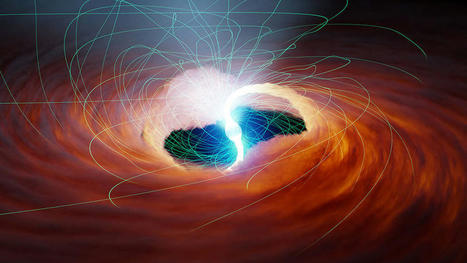
These objects are more than 100 times brighter than they should be. Observations by the agency’s NuSTAR X-ray telescope support a possible solution to this puzzle.
Exotic cosmic objects known as ultra-luminous X-ray sources produce about 10 million times more energy than the Sun. They’re so radiant, in fact, that they appear to surpass a physical boundary called the Eddington limit, which puts a cap on how bright an object can be based on its mass. Ultra-luminous X-ray sources (ULXs, for short) regularly exceed this limit by 100 to 500 times, leaving scientists puzzled.
In a recent study published in The Astrophysical Journal, researchers report a first-of-its-kind measurement of a ULX taken with NASA’s Nuclear Spectroscopic Telescope Array (NuSTAR). The finding confirms that these light emitters are indeed as bright as they seem and that they break the Eddington limit. A hypothesis suggests this limit-breaking brightness is due to the ULX’s strong magnetic fields. But scientists can test this idea only through observations: Up to billions of times more powerful than the strongest magnets ever made on Earth, ULX magnetic fields can’t be reproduced in a lab.
Read the full article at: www.nasa.gov
Via Dr. Stefan Gruenwald
|
|
Rescooped by
Antonios Bouris
from Amazing Science
April 15, 2023 1:30 AM
|
With chatbots like ChatGPT making a splash, machine learning is playing an increasingly prominent role in our lives. For many of us, it’s been a mixed bag. We rejoice when our Spotify For You playlist finds us a new jam, but groan as we scroll through a slew of targeted ads on our Instagram feeds. Machine learning is also changing many fields that may seem surprising. One example is my discipline, ornithology, the study of birds. It isn’t just solving some of the biggest challenges associated with studying bird migration; more broadly, machine learning is expanding the ways in which people engage with birds. As spring migration picks up, here’s a look at how machine learning is influencing ways to research birds and, ultimately, to protect them.
Read the full article at: earthsky.org
Read the full article at: earthsky.org
Via LIGHTING , Dr. Stefan Gruenwald
|
|
Rescooped by
Antonios Bouris
from Amazing Science
April 8, 2023 3:14 AM
|
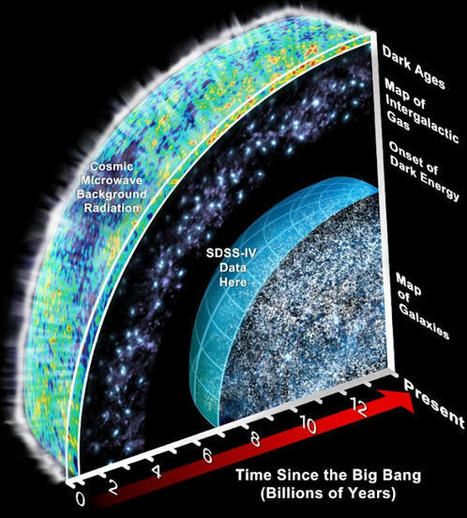
The universe is expanding, with every galaxy beyond the Local Group speeding away from us. Today, most of the universe's galaxies are already receding faster than the speed of light. All galaxies currently beyond 18 billion light-years are forever unreachable by us, no matter how much time passes. Our universe is full of stars and galaxies everywhere and in all directions. From our vantage point, we observe up to 46.1 billion light years away. Our visible universe contains an estimated ~ 2 trillion galaxies. However, most of them are already permanently unavailable for us. Read the full article at: blog.thespaceacademy.org
Via Dr. Stefan Gruenwald
|
|
Rescooped by
Antonios Bouris
from Amazing Science
April 8, 2023 3:04 AM
|
Multicellular organisms typically develop from a single cell into a collection of cells that all have the same genetic material. A research team now discovered a deviation from this developmental hallmark in the yellow crazy ant, Anoplolepis gracilipes. Males are chimeras of haploid cells from two divergent lineages: R and W. R cells are overrepresented in the males’ somatic tissues, whereas W cells are overrepresented in their sperm. Chimerism occurs when parental nuclei bypass syngamy and divide separately within the same egg. When syngamy takes place, the diploid offspring either develops into a queen when the oocyte is fertilized by an R sperm or into a worker when fertilized by a W sperm. This study reveals a mode of reproduction that may be associated with a conflict between lineages to preferentially enter the germ line. Read the full article at: phys.org
Via Dr. Stefan Gruenwald
|
|
Rescooped by
Antonios Bouris
from Amazing Science
March 31, 2023 8:11 PM
|
The winners of the first annual AI film festival Celebrate the artists making the impossible AI filmmaking. Runway is one of the leading companies in the development of artificial intelligence tools and introduced the winners of their first annual AI film festival that took place this winter. Of the hundreds of submissions, judges picked ten finalists and released their work to the public. The main goal of this competition was to celebrate “the art and artists making the impossible at the forefront of AI filmmaking.” We were curious and analyzed how different techniques were integrated into the winning films: from AI-generated art to whole 3D scene scans. Let’s take a look at the amazing new technology now available to any creator. Requirements were that videos were from 1 to 10 minutes long, and one of the main festival criteria was naturally to use neural networks in the work. There was no strict definition of which AI to use, or how to feature it in the film, so the variety of tools used in the winning videos is really impressive. The use of state-of-the-art technology counted as only 25% of a film’s success – judges also took into account the quality of the overall film composition, originality, and of course, the artistic message. Using art generators as part of AI filmmaking One of the shorts that impressed me most is “PLSTC” by Laen Sanches (we will embed it below). Basically, it’s just a rapidly edited sequence of hundreds of pictures, which illustrate different ocean inhabitants wrapped in plastic and unable to escape. The director took strong images, created by AI art generator Midjourney, upscaled them with help of the AI tool Topaz Labs, and put them together slightly animated. By precisely choosing the matching visuals, he achieved a very definite and coherent film atmosphere. Not a word is said, but the message is crystal clear, and it hurts. Dramatic classical music also helps evoke deep emotions, and the result is a small narrative wonder. It didn’t place for any of the prizes, but it is definitely worth watching. Read the full article at: www.cined.com
Via Dr. Stefan Gruenwald
|




















Showing 1–12 of 30 results
Filter by price
Brand
Element
Skin condition
Rating
Acxion Fentermina
Ambien for sale online
Ativan without a prescription
Buy adipex P online
buy Bonart SP 6 Piezo Scaler with Micromotor
buy chewable Viagra
buy concerta online
Buy dexedrine online
Buy Dihydrocodeine without prescription
buy Dilaudid hydromorphone
buy Endocet without prescription
Buy generic viagra