 Your new post is loading...

|
Rescooped by
Antonios Bouris
from Chat GPT 4
March 16, 2023 8:08 PM
|
Gone are the days of 'basic' AI abilities, like writing love letters, poems, and emails, or cracking a joke.ChatGPT's newly introduced advanced ability can... Read the full article at: nightmags.com
Via adamjack590@gmail.com
|
|
Rescooped by
Antonios Bouris
from Amazing Science
March 16, 2023 7:12 PM
|
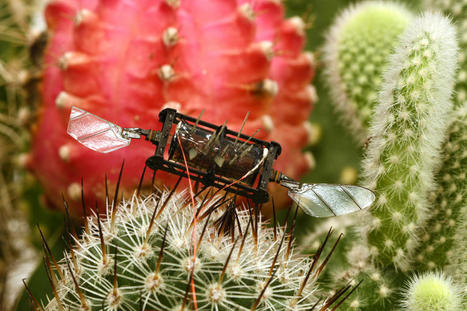
Bumblebees are clumsy fliers. It is estimated that a foraging bee bumps into a flower about once per second, which damages its wings over time. Yet despite having many tiny rips or holes in their wings, bumblebees can still fly. Aerial robots, on the other hand, are not so resilient. Poke holes in the robot’s wing motors or chop off part of its propellor, and odds are pretty good it will be grounded. Inspired by the hardiness of bumblebees, MIT researchers have developed repair techniques that enable a bug-sized aerial robot to sustain severe damage to the actuators, or artificial muscles, that power its wings — but to still fly effectively.
Read the full article at: news.mit.edu
Via Dr. Stefan Gruenwald
After months of anticipation, OpenAI has released a powerful new image- and text-understanding AI model, GPT-4, that the company calls “the latest milestone in its effort in scaling up deep learning.”
GPT-4 is available today via OpenAI’s API with a waitlist and in ChatGPT Plus, OpenAI’s premium plan for ChatGPT, its viral AI-powered chatbot.
Read the full article at: techcrunch.com
Via Gust MEES
|
|
Rescooped by
Antonios Bouris
from Best
March 10, 2023 7:31 PM
|
Fast Company's 2023 ranking of the World's Most Innovative Companies features OpenAI at No.1, and covers 54 industries, from advertising, beauty, and retail to enterprise technology, design, and social impact. Most Innovative Companies 2023, Fast Company’s definitive chronicle of the novel ideas transforming business and society, was 100% produced by people. We may have asked ChatGPT—the AI chatbot created by our No. 1 company, OpenAI—about certain companies, but only because we wanted to see how it would reply. A very human impulse! OpenAI is just one example of how advances in artificial intelligence are reimagining corporate America, from drug discovery (DeepMind) to office work (Canva) to security (Robust Intelligence). But our ranking of the World’s 50 Most Innovative Companies—and the 54 lists that chronicle the 10 most innovative organizations in sectors from advertising to the workplace—showcase inspiring, insightful stories well beyond the current hot thing. Healthcare is being made more equitable—for transgender individuals (Folx Health), women (Maven Clinic), children (Hazel Health), and lower-income patients (Cityblock Health)—by companies that are tailoring their offerings to communities that have traditionally been poorly served. Iconic brands are changing how they communicate with fans, giving more power to creators and connecting with the culture (McDonald’s, Tiffany & Co.), while the entire world of restaurants and consumer packaged goods is being remade with content at its core (MrBeast). On Earth, the soil is being fortified (Regrow Ag), the victims of climate disasters can now get a mobile grid to weather the disruption (Sesame Solar), and one of the world’s most influential brands, Patagonia, has made the planet its sole shareholder (Holdfast Collective). Meanwhile, in space, public and private entities alike (NASA, Axiom Space) are advancing what’s possible in orbit. Finally, there’s the art collective (Mschf) commenting on consumer and business culture with a knowing wink. We hope you find these winners as inspiring as we did while selecting them. Read the full article at: www.fastcompany.com
Via Dr. Stefan Gruenwald
|
|
Rescooped by
Antonios Bouris
from Amazing Science
March 10, 2023 7:27 PM
|
A new technique greatly reduces the error in an optical neural network, which uses light to process data instead of electrical signals. With their technique, the larger an optical neural network becomes, the lower the error in its computations. This could enable them to scale these devices up so they would be large enough for commercial uses. As machine-learning models become larger and more complex, they require faster and more energy-efficient hardware to perform computations. Conventional digital computers are struggling to keep up. An analog optical neural network could perform the same tasks as a digital one, such as image classification or speech recognition, but because computations are performed using light instead of electrical signals, optical neural networks can run many times faster while consuming less energy. However, these analog devices are prone to hardware errors that can make computations less precise. Microscopic imperfections in hardware components are one cause of these errors. In an optical neural network that has many connected components, errors can quickly accumulate. Even with error-correction techniques, due to fundamental properties of the devices that make up an optical neural network, some amount of error is unavoidable. A network that is large enough to be implemented in the real world would be far too imprecise to be effective. MIT researchers have overcome this hurdle and found a way to effectively scale an optical neural network. By adding a tiny hardware component to the optical switches that form the network’s architecture, they can reduce even the uncorrectable errors that would otherwise accumulate in the device. Their work could enable a super-fast, energy-efficient, analog neural network that can function with the same accuracy as a digital one. With this technique, as an optical circuit becomes larger, the amount of error in its computations actually decreases. “This is remarkable, as it runs counter to the intuition of analog systems, where larger circuits are supposed to have higher errors, so that errors set a limit on scalability. This present paper allows us to address the scalability question of these systems with an unambiguous ‘yes,’” says lead author Ryan Hamerly, a visiting scientist in the MIT Research Laboratory for Electronics (RLE) and Quantum Photonics Laboratory and senior scientist at NTT Research. Hamerly’s co-authors are graduate student Saumil Bandyopadhyay and senior author Dirk Englund, an associate professor in the MIT Department of Electrical Engineering and Computer Science (EECS), leader of the Quantum Photonics Laboratory, and member of the RLE. The research is published today in Nature Communications. Read the full article at: news.mit.edu
Via Dr. Stefan Gruenwald
|
|
Rescooped by
Antonios Bouris
from Amazing Science
March 3, 2023 5:39 AM
|
The largest diamond ever found is not on Earth, but faraway across the galaxy. It's an old burned out corpse of a star named BPM 37093 located only about 50 lightyears away from Earth in a region of the sky referred to as the constellation Centaurus. The white dwarf is a chunk of crystallized carbon that weighs 5 million trillion trillion pounds. That would equal a diamond of 10 billion trillion trillion carats.
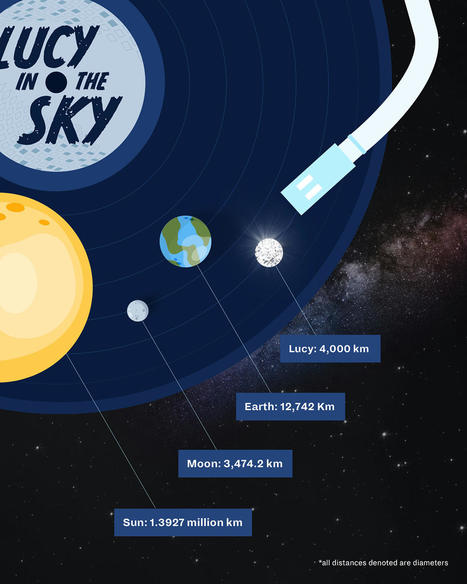
Lucy. After it was discovered in 2004, astronomers nicknamed the space diamond Lucy after the Beatles song Lucy In The Sky With Diamonds. Lucy, also known as BPM 37093 and V*886 Cen, is the 886th variable star in the constellation Centaurus.
Star of Africa. By comparison, the largest such precious stones on Earth are the 545-caret Golden Jubilee Diamond and the 530-carat Great Star of Africa. The Golden Jubilee Diamond was found in 1985 and is in Thailand's Royal Palace as part of the crown jewels. The Great Star of Africa was found in 1905 and is in the Tower of London as part of the Crown Jewels of England.
White dwarf. A white dwarf is the hot cinder left behind when a star uses up its nuclear fuel and dies. It is made mostly of carbon and oxygen. and surrounded by a thin layer of hydrogen and helium gases. The Sun's diameter is 870,000 miles (1.4 million km). Lucy is tiny at a mere 2,500 miles (4,000 km) diameter. The Sun is 109 times the diameter of Earth. Lucy is only about 2/3rds the size of Earth. That's tiny for a star. However, Lucy's mass is about the same as our Sun. That's a lot of weight in a tiny ball. What is Lucy? Lucy is the most massive pulsating white dwarf currently known. Like other white dwarfs, Lucy probably is composed mostly of carbon and oxygen created by the past thermonuclear fusion of helium nuclei. While Lucy is a dead star now, it used to shine like our Sun. Lucy is very dim now, shining with only 1/2000th of the Sun's visual brightness. Lucy has a very thin atmosphere of hydrogen and helium. The atmosphere of our Sun is mostly hydrogen and helium.
How do they know? Astronomers had suspected since the 1960s that the interiors of white dwarfs would be crystallized and Lucy seems to confirm that. In its death struggles, the core of a star like Lucy or our own Sun becomes exposed and slowly cools down over time. Such a star begins to pulsate when the core surface temperature drops to about 12,000 degrees. By comparison, the Sun's core temperature now is about 27,000,000°F (15,000,000°C). Its surface temperature is about 11,000°F (6,000°C).
Lucy pulsates like a giant gong. Its internal pulsations are something like seismic waves inside Earth. Astronomers measured the pulsations to figure out Lucy's carbon interior was solidified (crystallized). Astronomers measured the pulsations hidden in Lucy's interior in the same way geologists use seismographs to measure earthquakes inside Earth.
Where to look. Lucy is not visible from Earth with the unaided eye. It must be viewed with a telescope and is best seen from Earth's Southern Hemisphere during March-June. Read the full article at: www.naturaldiamonds.com
Via Dr. Stefan Gruenwald
|
|
Rescooped by
Antonios Bouris
from Best
February 23, 2023 9:14 PM
|
AI chatbots and writers can help lighten your workload by writing emails and essays and even doing computer programming and math. They use artificial intelligence to generate text or answer queries based on user input. ChatGPT is one popular example, but there are other noteworthy chatbots. Read the full article at: www.zdnet.com
Via Dr. Stefan Gruenwald
|
|
Rescooped by
Antonios Bouris
from Amazing Science
February 23, 2023 8:51 PM
|
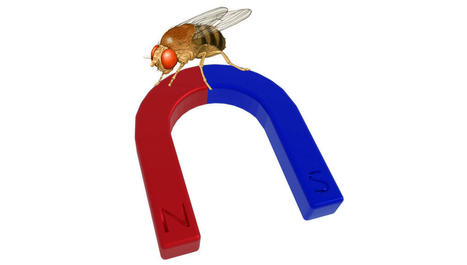
Many migratory species use the Earth’s magnetic field to keep their journeys on track. Now a study of a very non-migratory animal, the Drosophila fruit fly, shows the same capacity exists in some unexpected places. Perhaps humans are the rare ones because we don’t have this capability; if so, why?
Read the full article at: www.iflscience.com
Via Dr. Stefan Gruenwald
|
|
Rescooped by
Antonios Bouris
from Amazing Science
February 16, 2023 1:54 AM
|
Astronomers have revealed the latest deep field image from NASA’s James Webb Space Telescope, featuring never-before-seen details in a region of space known as Pandora’s Cluster (Abell 2744). Webb’s view displays three clusters of galaxies – already massive – coming together to form a megacluster. The combined mass of the galaxy clusters creates a powerful gravitational lens, a natural magnification effect of gravity, allowing much more distant galaxies in the early universe to be observed by using the cluster like a magnifying glass. Only Pandora’s central core has previously been studied in detail by NASA’s Hubble Space Telescope. By combining Webb’s powerful infrared instruments with a broad mosaic view of the region’s multiple areas of lensing, astronomers aimed to achieve a balance of breadth and depth that will open up a new frontier in the study of cosmology and galaxy evolution. “The ancient myth of Pandora is about human curiosity and discoveries that delineate the past from the future, which I think is a fitting connection to the new realms of the universe Webb is opening up, including this deep-field image of Pandora’s Cluster,” said astronomer Rachel Bezanson of the University of Pittsburgh in Pennsylvania, co-principal investigator on the “Ultradeep NIRSpec and NIRCam ObserVations before the Epoch of Reionization” (UNCOVER) program to study the region. “When the images of Pandora’s Cluster first came in from Webb, we were honestly a little star struck,” said Bezanson. “There was so much detail in the foreground cluster and so many distant lensed galaxies, I found myself getting lost in the image. Webb exceeded our expectations.” The new view of Pandora’s Cluster stitches four Webb snapshots together into one panoramic image, displaying roughly 50,000 sources of near-infrared light. Read the full article at: www.nasa.gov
Via Dr. Stefan Gruenwald
|
|
Scooped by
Antonios Bouris
February 10, 2023 4:46 PM
|
AI will completely change SEO as we know it. From optimization to link building, it will significantly impact every aspect of SEO. Read the full article at: searchengineland.com
|
|
Rescooped by
Antonios Bouris
from Amazing Science
February 8, 2023 10:46 PM
|
So bright that it pushes the energy limits of physics. Billions of light years away, there is a giant ball of hot gas that is brighter than hundreds of billions of suns. It is hard to imagine something so bright. So what is it? Astronomers are not really sure, but they have a couple theories. They think it may be a very rare type of supernova — called a magnetar — but one so powerful that it pushes the energy limits of physics, or in other words, the most powerful supernova ever seen as of today. This object is so luminous that astronomers are having a really difficult time finding a way to describe it. “If it really is a magnetar, it's as if nature took everything we know about magnetars and turned it up to 11,” said Krzysztof Stanek, professor of astronomy at Ohio State University and the team's co-principal investigator, comedically implying it is off the charts on a scale of 1 to 10.The object was first spotted by the All Sky Automated Survey of Supernovae (ASAS-SN or “assassin”), which is a small network of telescopes used to detect bright objects in the universe. Although this object is ridiculously bright, it still can’t be seen by the naked eye because it is 3.8 billion light years away. ASAS-SN, since it began in 2014, has discovered nearly 250 supernovae, however this discovery, ASASSN-15lh, stands out because of its sheer magnitude. It is 200 times more powerful than the average supernova, 570 billion times brighter than the sun, and 20 times brighter than all the stars in the Milky Way Galaxy combined. “We have to ask, how is that even possible?” said Stanek. “It takes a lot of energy to shine that bright, and that energy has to come from somewhere.”
Read the full article at: blog.physics-astronomy.com
Via Dr. Stefan Gruenwald
The metaverse continues to not only capture the attention of various international organizations but also attract a high amount of investment dollars and act as a catalyst for the entrepreneurship ecosystem. While some experts consider it a concept and others see it as a movement or escape, the CAGR and market size it is estimated to reach clearly signal it to be a product and a service poised to disrupt the human-computer experience as we know it. The metaverse global market, which was valued at $22.79 billion in 2021, is expected to grow at a compound annual growth rate (CAGR) of 39.8% from 2022 to 2030. Learn more / En savoir plus / Mehr erfahren: https://www.scoop.it/topic/21st-century-innovative-technologies-and-developments/?&tag=Metaverse Read the full article at: www.forbes.com
Via Edumorfosis, Gust MEES
OpenAI, the company behind DALL-E and ChatGPT, has released a free tool that it says is meant to “distinguish between text written by a human and text written by AIs.” It warns the classifier is “not fully reliable” in a press release and “should not be used as a primary decision-making tool.” According to OpenAI, it can be useful in trying to determine whether someone is trying to pass off generated text as something that was written by a person.
The tool, known as a classifier, is relatively simple, though you will have to have a free OpenAI account to use it. You just paste text into a box, click a button, and it’ll tell you whether it thinks the text is very unlikely, unlikely, unclear if it is, possibly, or likely AI-generated. Read the full article at: www.theverge.com
Via Gust MEES
|
|
|
Rescooped by
Antonios Bouris
from Amazing Science
March 16, 2023 7:14 PM
|
Breaking a longstanding impasse in our understanding of olfaction, scientists at UC San Francisco (UCSF) have created the first molecular-level, 3D picture of how an odor molecule activates a human odorant receptor, a crucial step in deciphering the sense of smell. The findings, appearing online March 15, 2023, in the journal Nature, are poised to reignite interest in the science of smell with implications for fragrances, food science, and beyond. Odorant receptors -- proteins that bind odor molecules on the surface of olfactory cells -- make up half of the largest, most diverse family of receptors in our bodies; A deeper understanding of them paves the way for new insights about a range of biological processes. "This has been a huge goal in the field for some time," said Aashish Manglik, MD, PhD, an associate professor of pharmaceutical chemistry and a senior author of the study. The dream, he said, is to map the interactions of thousands of scent molecules with hundreds of odorant receptors, so that a chemist could design a molecule and predict what it would smell like. "But we haven't been able to make this map because, without a picture, we don't know how odor molecules react with their corresponding odor receptors," Manglik said.
Read the full article at: www.ucsf.edu
Via Dr. Stefan Gruenwald
|
|
Rescooped by
Antonios Bouris
from Best
March 16, 2023 7:11 PM
|
Can you use π (pi) to solve these stellar math problems faced by NASA scientists and engineers? You may already know all about the mathematical constant pi (π) and how it can be used to calculate things like the circumference of a circle or the volume of a sphere. But did you know pi is also used all the time by NASA scientists and engineers to explore other planets? In this challenge, you can solve some of the same problems NASA scientists and engineers do using pi! GO TO EDUCATOR GUIDES If you need some pi formulas here are the ones you might want to look at. Read the full article at: www.jpl.nasa.gov
Via Dr. Stefan Gruenwald
|
|
Scooped by
Antonios Bouris
March 10, 2023 7:35 PM
|
ChatGPT 4 is coming, and rumors suggest massive improvements in the GPT-4 model, surpassing Bing Chat, but OpenAI warns we might be disappointed. Read the full article at: www.digitaltrends.com
|
|
Rescooped by
Antonios Bouris
from Best
March 10, 2023 7:29 PM
|
Intuitive explanations of the most popular machine learning models and algorithms of 2023. Read the full article at: medium.com
Via Dr. Stefan Gruenwald
|
|
Rescooped by
Antonios Bouris
from Amazing Science
March 3, 2023 5:41 AM
|
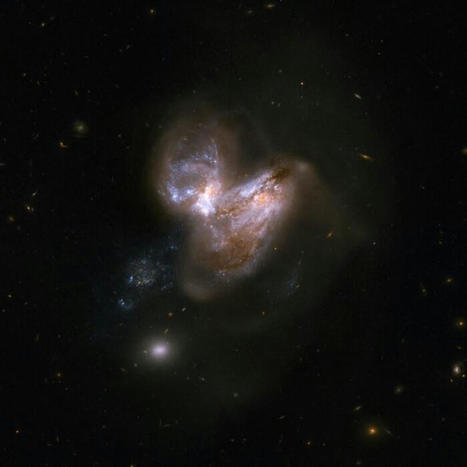
Astronomers from the University of Texas and the University of Arizona have discovered a rapidly growing black hole in one of the most extreme galaxies known in the very early Universe. The discovery of the galaxy and the black hole at its centre provides new clues on the formation of the very first supermassive black holes. The new work is published in Monthly Notices of the Royal Astronomical Society. Using observations taken with the Atacama Large Millimeter Array (ALMA), a radio observatory sited in Chile, the team have determined that the galaxy, named COS-87259, containing this new supermassive black hole is very extreme, forming stars at a rate 1000 times that of our own Milky Way and containing over a billion solar masses worth of interstellar dust. The galaxy shines bright from both this intense burst of star formation and the growing supermassive black hole at its center. The black hole is considered to be a new type of primordial black hole -- one heavily enshrouded by cosmic "dust," causing nearly all of its light to be emitted in the mid-infrared range of the electromagnetic spectrum. The researchers have also found that this growing supermassive black hole (frequently referred to as an active galactic nucleus) is generating a strong jet of material moving at near light speed through the host galaxy. Today, black holes with masses millions to billions of times greater than that of our own Sun sit at the centre of nearly every galaxy. How these supermassive black holes first formed remains a mystery for scientists, particularly because several of these objects have been found when the Universe was very young. Because the light from these sources takes so long to reach us, we see them as they existed in the past; in this case, just 750 million years after the Big Bang, which is approximately 5% of the current age of the Universe. What is particularly astonishing about this new object is that it was identified over a relatively small patch of the sky typically used to detect similar objects -- less than 10 times the size of the full moon -- suggesting there could be thousands of similar sources in the very early Universe. This was completely unexpected from previous data. The only other class of supermassive black holes we knew about in the very early Universe are quasars, which are active black holes that are relatively unobscured by cosmic dust. These quasars are extremely rare at distances similar to COS-87259, with only a few tens located over the full sky. The surprising discovery of COS-87259 and its black hole raises several questions about the abundance of very early supermassive black holes, as well as the types of galaxies in which they typically form. Ryan Endsley, the lead author of the paper and now a Postdoctoral Fellow at The University of Texas at Austin, says "These results suggest that very early supermassive black holes were often heavily obscured by dust, perhaps as a consequence of the intense star formation activity in their host galaxies. This is something others have been predicting for a few years now, and it's really nice to see the first direct observational evidence supporting this scenario." Read the full article at: ras.ac.uk
Via Dr. Stefan Gruenwald
|
|
Rescooped by
Antonios Bouris
from Amazing Science
March 3, 2023 5:24 AM
|
Today’s mathematical research, both pure and applied, is paving the way for major scientific, engineering, and technological breakthroughs. Cutting-edge work in the mathematical sciences is responsible for advances in artificial intelligence, manufacturing, precision medicine, cybersecurity, and more. Find out how the mathematical sciences are helping to improve our everyday lives by checking out the stories and infographics below. This series of illustrations shows how advances in the mathematical sciences anticipate and enable later technologies that profoundly impact our daily lives, including life-saving advances in medical imaging and treatment, predictive traffic-avoiding routing, communications advances enabling GPS and high-speed cellular communications, safer online commerce with cryptographic security protocols, development of novel materials based on advanced simulations, improved forecasting of extreme weather events, and much more.
The leaps forward in technology have often built upon theoretical work whose impact would not have been predicted at the time of their creation. The same is true today: researchers and practitioners in the mathematical sciences continue to innovate, and we can only begin to imagine the future inventions their work will enable. Mathematical and statistical advances are playing a key role in emerging areas such as cyber warfare, quantum computing, artificial intelligence and machine learning for automation, genetic sequencing and related advances in vaccine creation to fight novel and existing viruses, and supply chain management.
The increasing pace of technological and social development will require many more advances in the mathematical sciences because they are a foundation for advances across science, medicine, business, finance, and even entertainment. New discoveries in mathematics happening today will reverberate for decades and centuries to come.
Read the full article at: nap.nationalacademies.org Read the full article at: nap.nationalacademies.org
Via Dr. Stefan Gruenwald
|
|
Rescooped by
Antonios Bouris
from Amazing Science
February 23, 2023 9:13 PM
|
In a new paper published in the journal Nature Astronomy, astronomers with Breakthrough Listen Initiative — the largest ever scientific research program aimed at finding evidence of alien civilizations — present a new machine learning-based method that they apply to more than 480 hours of data from the Robert C. Byrd Green Bank Telescope, observing 820 nearby stars. The method analyzed 115 million snippets of data, from which it identified around 3 million signals of interest. The authors then inspected the 20,515 signals and they identified 8 previously undetected signals of interest, although follow-up observations of these targets have not re-detected them. “The key issue with any techno-signature search is looking through this huge haystack of signals to find the needle that might be a transmission from an alien world,” said Dr. Steve Croft, an astrophysicist at the University of California, Berkeley and a member of the Breakthrough Listen team. “The vast majority of the signals detected by our telescopes originate from our own technology — GPS satellites, mobile phones, and the like. Our algorithm gives us a more effective way to filter the haystack and find signals that have the characteristics we expect from techno-signatures.” Classical techno-signature algorithms compare scans where the telescope is pointed at a target point on the sky with scans where the telescope moves to a nearby position, in order to identify signals that may be coming from only that specific point. These techniques are highly effective. For example, they can successfully identify the Voyager 1 space probe, at a distance of 20 billion km, in observations with the Green Bank Telescope. But all of these algorithms struggle in crowded regions of the radio spectrum, where the challenge is akin to listening for a whisper in a crowded room. The process developed by the team inserts simulated signals into real data, and trains an artificial intelligence algorithm known as an auto-encoder to learn their fundamental properties. The output from this process is fed into a second algorithm known as a random forest classifier, which learns to distinguish the candidate signals from the noisy background. “In 2021, our classical algorithms uncovered a signal of interest, denoted BLC1, in data from the Parkes telescope,” said Breakthrough Listen’s principal investigator Dr. Andrew Siemion, an astronomer at the University of California, Berkeley. Read the full article at: www.sci.news
Via Dr. Stefan Gruenwald
|
|
Rescooped by
Antonios Bouris
from Best
February 16, 2023 1:55 AM
|
youChat has similar capabilities as #chatGPT but advances the AI field of large language models by incorporating the you search and app platform. youChat knows about recent events and can provide citations for its answers. - With youChat, we hope to solve two issues in search
- Making search more intuitive, helpful, and faster
- Making LLMs more reliable
youChat is the 4th and biggest wave of generative AI within the @YouSearchEngine - this year alone, we've introduced generative AI models to create texts, code and images.
Eg: https://t.co/CNI8tos79O
youChat responds to your prompts like an AI sidekick that reads, writes, and summarizes information for you. - Get info in easy-to-understand sentences, not a list of links
- Understand complex concepts
- Get ideas for Christmas gifts, essay outlines, or coding problems
While youChat will be more often up-to-date and truthful than other large language models, it still makes mistakes. Hence we're releasing this in beta. We hope that having citations, apps and web links alongside chat will enable users to verify facts easily.
This is just the beginning. A much improved version will be released soon with even more unique features. AI breakthroughs in in 2023 will completely change how people think about search engines. Read the full article at: mem.ai
Via Dr. Stefan Gruenwald
|
|
Rescooped by
Antonios Bouris
from Best
February 16, 2023 1:53 AM
|
New uses of ChatGPT are exploding on the marketplace. Here are inspirational ideas to get you going. New uses of ChatGPT are exploding on the marketplace. Read the full article at: businessesgrow.com
Via Dr. Stefan Gruenwald
Microsoft will add contextual searches to Bing, powered by its own version of the ChatGPT algorithm. Microsoft will also integrate a separate, dedicated chat interface for Bing, complete with footnoted links. Finally, AI will be integrated into Edge, allowing to summarize a financial earnings report, for example. Bing’s new search engine interface is live, but to a limited number of people. It will expand in the coming weeks. Read the full article at: www.pcworld.com
Via Gust MEES
|
|
Scooped by
Antonios Bouris
January 31, 2023 8:31 PM
|
Abstract We introduce MusicLM, a model generating high-fidelity music from text descriptions such as "a calming violin melody backed by a distorted guitar riff". MusicLM casts the process of conditional music generation as a hierarchical sequence-to-sequence modeling task, and it generates music...
Read the full article at: google-research.github.io
|
|
Rescooped by
Antonios Bouris
from Amazing Science
January 31, 2023 8:17 PM
|
NASA is asking for the public's help in learning more about exoplanets in a citizen science program called Exoplanet Watch. With new tools like the James Webb Space Telescope (JWST), we are discovering more exoplanets than ever before and even peering into their atmospheres. Now, NASA is asking for the public’s help in learning more about some of the exoplanets that have already been detected in a citizen science program called Exoplanet Watch. “With Exoplanet Watch you can learn how to observe exoplanets and do data analysis using software that actual NASA scientists use,” said Rob Zellem, the creator of Exoplanet Watch and an astrophysicist at NASA’s Jet Propulsion Laboratory, in a statement. “We are very excited to show more people how exoplanet science is really done.”
Read the full article at: www.digitaltrends.com
Via Dr. Stefan Gruenwald
|


 Scoop.it!
























https://prochatgpt.com/gpt-4-login-gpt4-plus-pro-is-here/