 Your new post is loading...

|
Rescooped by
Antonios Bouris
from Amazing Science
August 3, 2023 11:11 PM
|
New research from UM and its partners suggests artificial intelligence can match the top 1% of human thinkers on a standard test for creativity. The study was directed by Dr. Erik Guzik, an assistant clinical professor in UM's College of Business. He and his partners used the Torrance Tests of Creative Thinking, a well-known tool used for decades to assess human creativity. The researchers submitted eight responses generated by ChatGPT, the application powered by the GPT-4 artificial intelligence engine. They also submitted answers from a control group of 24 UM students taking Guzik's entrepreneurship and personal finance classes. These scores were compared with 2,700 college students nationally who took the TTCT in 2016. All submissions were scored by Scholastic Testing Service, which didn't know AI was involved. The results placed ChatGPT in elite company for creativity. The AI application was in the top percentile for fluency -- the ability to generate a large volume of ideas -- and for originality -- the ability to come up with new ideas. The AI slipped a bit -- to the 97th percentile -- for flexibility, the ability to generate different types and categories of ideas. "For ChatGPT and GPT-4, we showed for the first time that it performs in the top 1% for originality," Guzik said. "That was new." He was gratified to note that some of his UM students also performed in the top 1%. However, ChatGTP outperformed the vast majority of college students nationally. Guzik tested the AI and his students during spring semester. He was assisted in the work by Christian Gilde of UM Western and Christian Byrge of Vilnius University. The researchers presented their work in May at the Southern Oregon University Creativity Conference. "We were very careful at the conference to not interpret the data very much," Guzik said. "We just presented the results. But we shared strong evidence that AI seems to be developing creative ability on par with or even exceeding human ability." Guzik said he asked ChatGPT what it would indicate if it performed well on the TTCT. The AI gave a strong answer, which they shared at the conference: "ChatGPT told us we may not fully understand human creativity, which I believe is correct," he said. "It also suggested we may need more sophisticated assessment tools that can differentiate between human and AI-generated ideas." He said the TTCT is protected proprietary material, so ChatGPT couldn't "cheat" by accessing information about the test on the internet or in a public database. Guzik has long been interested in creativity. As a seventh grader growing up in the small town of Palmer, Massachusetts, he was in a program for talented-and-gifted students. That experience introduced him to the Future Problem Solving process developed by Ellis Paul Torrance, the pioneering psychologist who also created the TTCT. Guzik said he fell in love with brainstorming at that time and how it taps into human imagination, and he remains active with the Future Problem Solving organization -- even meeting his wife at one of its conferences. Read the full article at: www.umt.edu
Via Dr. Stefan Gruenwald
|
|
Rescooped by
Antonios Bouris
from Amazing Science
August 3, 2023 11:08 PM
|
Maya Bodnick, a student at Harvard University, conducted an experiment to determine if GPT-4, an AI language model, was capable of passing college exams in the humanities and social sciences. Bodnick had GPT-4 write seven essays on topics such as economic concepts, presidentialism in Latin America, and a literary analysis. She then submitted the essays to professors for grading, without revealing whether they were written by herself or GPT-4. The results were impressive, with GPT-4 receiving grades ranging from A to B-. It achieved an average GPA of 3.57, which Bodnick called “respectable.” She noted that GPT-4 wrote all the essays based on the given prompts. Bodnick disclosed that she submitted GPT-4’s answers without any edits, but with two exceptions. First, she combined multiple responses to meet the word count requirement, as GPT-4 could only generate up to 750 words at a time. Second, she asked the evaluators to disregard any missing citations that GPT-4 couldn’t provide, which would normally be essential for academic work. The evaluators praised GPT-4’s essays, commenting on their clarity, well-structured arguments, and detailed analysis. Only one essay received a lower grade, with the evaluator noting a flowery writing style and a lack of consideration for positive aspects of presidentialism and economic factors. Bodnick believes that GPT-4’s performance suggests AI-generated essays could receive favorable grades at most universities, though possibly lower at institutions such as Princeton or UC Berkeley. She suggests that AI technology could revolutionize the teaching and learning methods in the humanities and social sciences. Cheating on essays has become easier, and with advancements in technology, including citation capabilities, it may become even more challenging to detect plagiarism. As for the future, Bodnick questions the effectiveness of text detection systems, as OpenAI’s detector was withdrawn due to accuracy issues. She suggests that exams should involve personal conversations to mitigate concerns about AI writing essays. The fact that GPT-4 passed her exams hints at potential developments in Bodnick’s future field.professional field. Read the full article at: ts2.space
Via Dr. Stefan Gruenwald
|
|
Rescooped by
Antonios Bouris
from Amazing Science
July 28, 2023 3:05 AM
|
Recently, researchers have published an important white paper identifying activities in particle physics where burgeoning quantum-computing technologies could be applied. The paper, authored by experts from CERN, DESY, IBM Quantum and over 30 other organisations, is now available on ArXiv. With quantum-computing technologies rapidly improving, the paper sets out where these could be applied within particle physics, in order to help tackle computing challenges related not only to the Large Hadron Collider’s ambitious upgrade program, but also to other colliders and low energy experiments world-wide. The paper was produced by a working group set up at the first-of-its-kind “QT4HEP” conference, held at CERN last November. Over the last eight months, the 46 people in this working group have worked hard to identify areas where quantum-computing technologies could provide a significant boon. The areas identified relate to both theoretical and experimental particle physics. The paper then maps these areas to “problem formulations” in quantum computing. This is an important step in ensuring that the particle physics community is well positioned to benefit from the massive potential of breakthrough new quantum computers when they come online. “Quantum computing is very promising, but not every problem in particle physics is suited to this mode of computing,” says Alberto Di Meglio, head of the CERN Quantum Technology Initiative (CERN QTI). “It’s important to ensure that we are ready and that we can accurately identify the areas where these technologies have the potential to be most useful for our community.”
Read the full article at: quantum.cern
Via Dr. Stefan Gruenwald
|
|
Rescooped by
Antonios Bouris
from Amazing Science
July 14, 2023 2:25 AM
|
Claude.ai is pleased to announce Claude 2, their newest model, which can be accessed via API as well as a new public-facing beta website at claude.ai. They have been iterating to improve the underlying safety of Claude 2, so that it is more harmless and harder to prompt to produce offensive or dangerous output. The programmers have an internal red-teaming evaluation that scores our models on a large representative set of harmful prompts, using an automated test while we also regularly check the results manually. In this evaluation, Claude 2 was 2x better at giving harmless responses compared to Claude 1.3. Although no model is immune from jailbreaks, a variety of safety techniques (which you can read about here and here) have been employed, as well as extensive red-teaming, to improve its outputs. Claude 2 is generally available in the US and UK. Claude.ai is working to make Claude more globally available in the coming months. Interested users can now create an account and start talking to Claude in natural language, asking it for help with any tasks. Talking to an AI assistant can take some trial and error, so read up on our tips to get the most out of Claude. Claude.ai is also currently working with thousands of businesses who are using the Claude API. One of the partners is Jasper, a generative AI platform that enables individuals and teams to scale their content strategies. They found that Claude 2 was able to go head to head with other state of the art models for a wide variety of use cases, but has particular strength for long form low latency uses. "We are really happy to be among the first to offer Claude 2 to our customers, bringing enhanced semantics, up-to-date knowledge training, improved reasoning for complex prompts, and the ability to effortlessly remix existing content with a 3X larger context window," said Greg Larson, VP of Engineering at Jasper. "We are proud to help our customers stay ahead of the curve through partnerships like this one with Anthropic." Sourcegraph is a code AI platform that helps customers write, fix, and maintain code. Their coding assistant Cody uses Claude 2’s improved reasoning ability to give even more accurate answers to user queries while also passing along more codebase context with up to 100K context windows. In addition, Claude 2 was trained on more recent data, meaning it has knowledge of newer frameworks and libraries for Cody to pull from. “When it comes to AI coding, devs need fast and reliable access to context about their unique codebase and a powerful LLM with a large context window and strong general reasoning capabilities,” says Quinn Slack, CEO & Co-founder of Sourcegraph. “The slowest and most frustrating parts of the dev workflow are becoming faster and more enjoyable. Thanks to Claude 2, Cody’s helping more devs build more software that pushes the world forward.” The programmers at Claude.ai welcome user feedback as they work to responsibly deploy Claude more broadly. The chat experience is an open beta launch, and users should be aware that Claude – like all current models – can generate inappropriate responses. AI assistants are most useful in everyday situations, like serving to summarize or organize information, and should not be used where physical or mental health and well-being are involved. Please let the people at Claude.ai know if you would like to talk to Claude in a currently unsupported area, or if you are a business who would like to start working with Claude. After working for the past few months with key partners like Notion, Quora, and DuckDuckGo in a closed alpha, Claude.ai has been able to carefully test out our systems in the wild, and are ready to offer Claude more broadly so it can power crucial, cutting-edge use cases at scale. Claude is a next-generation AI assistant based on Anthropic’s research into training helpful, honest, and harmless AI systems. Accessible through chat interface and API in a developer console, Claude is capable of a wide variety of conversational and text processing tasks while maintaining a high degree of reliability and predictability. Read the full article at: www.anthropic.com
Via Dr. Stefan Gruenwald
|
|
Scooped by
Antonios Bouris
July 8, 2023 2:48 AM
|
Twitter is in trouble, but is Meta’s Threads a viable alternative for disaffected users? Experts explain. Read the full article at: theconversation.com
|
|
Rescooped by
Antonios Bouris
from Amazing Science
July 8, 2023 2:09 AM
|
While paper isn’t exactly a smart material, it someday could be if it is covered in a new type of liquid metal. This liquid alloy has the potential to turn paper and other materials into gadgets that can do some things on their own. Liquid metal is already used in smart objects like circuits and wearable sensors—but not as a coating. Inspired by origami, a team of scientists led by Bo Yuan of Tsinghua University in China has figured out a way to formulate liquid metal and apply it with a stamp so it sticks to paper without an adhesive, which has never been possible before. In a study recently published in Cell Reports Physical Science, the scientists showed that paper coated in the metal can be crafted into origami shapes and re-fold itself. The metal coating also conducts heat and electricity. It’s like magic. Almost. A sticky alloy Because the particles in liquid metal tend to stay so close together, it is difficult to get it to adhere to any surface without something that acts as glue. But these adhesives usually have a negative effect on the metal’s properties, such as its conductivity. Yuan and his team wanted a liquid metal that could stick to paper without an adhesive. They used an alloy of bismuth, indium, and tin oxide (BiInSn) and tested how well it performed next to an indium/gallium alloy (eGaIn). BiInSn turned out to be more effective. Unlike eGaIn, it doesn’t oxidize when exposed to air, so how well it sticks to a surface does not depend on the oxide film that forms on the metal. BiInSn is a solid at room temperature and has a higher melting point, so there is no risk of it liquefying at temperatures under 62° Celsius (about 144° Fahrenheit). It is also capable of stronger adhesion. However, getting optimal adhesion out of BiInSn required trial and error. “We needed to ensure the adhesion of liquid metal to be uniform in large scale on different paper, and to maintain the stability of the coating,” Yuan told Ars Technica in an email interview. “To solve these problems, we changed pressure applied on the stamp as well as the rubbing speed used in the experiments and finally found the most suitable parameters, which finally achieved fast, large-scale, and stable adhesion.” The researchers tried stamping it onto paper with different amounts of pressure and found out that not much is needed for it to stay in place. They then created an origami cube out of the metal-coated paper, which required the edges to adhere to each other without any other binding agent. They even saw that when that square was unfolded, the coated paper could fold itself back into its original shape. Because the metal coating was self-adhesive, the edges that had been unfolded attracted each other until the paper became a cube again. Another shape they tried was a spring that could be stretched or compressed and would remain however it was adjusted. It was also possible for the team to build 3D structures out of individual pieces of flat, metal-coated paper. These structures could keep their shape without falling apart, and the coating could just be peeled off afterward without affecting the properties of its paper substrate in any way. The coating, which also lost none of its properties, could be recycled and used repeatedly. The paper just went back to being paper. Next steps Yuan thinks self-adhesion through liquid metal is an advantage, because, if it can be done with paper, it could be done with other thin, lightweight materials to create smart objects and soft robots that can fit into tight spaces. The next thing he wants to accomplish is finding a coating where the metal does not peel off once solidified. He is considering testing bio-friendly paint spray to protect the coating in materials that may eventually be used as packaging (boxes could open and close themselves just like the paper cube in the experiment), on human skin (bandages would come off painlessly without glue), underwater, and even in conditions seen on other planets and moons. This substance could possibly be an asset to soft robots in alien environments. Some soft robots can already explore the deepest reaches of the ocean where the pressure is too high for humans and the cracks and crevices too small for larger machines. Soft robots are being designed with an eye for subsurface tunnels on Mars and other bodies in space. Autonomous soft robots that are thin and flexible would be able to venture into places where larger rovers are unable to fit or navigate safely, and the self-adhesion of the liquid metal coating would allow them to fold and unfold on their own. “Utilizing our method, one can quickly create smart materials with good thermal and electrical conductivity as well as stiffness-tunable ability, which greatly expands material options for soft robots,” Yuan said in the interview. “I think that this method may provide a new route for designing space explorers." Cell Reports Physical Science, 2023. DOI: 10.1016/j.xcrp.2023.101419 (About DOIs). Read the full article at: arstechnica.com
Via Dr. Stefan Gruenwald
|
|
Rescooped by
Antonios Bouris
from Amazing Science
June 30, 2023 1:13 AM
|
Engineers at Radiant announced last year that they had received two provisional patents for its portable nuclear reactor technology. One of these was for a technology that reduces the cost and the time needed to refuel their reactor, while the other improves efficiency in heat transference from the reactor core. The microreactor will use an advanced particle fuel that does not melt down and is capable of withstanding higher temperatures than traditional nuclear fuels. Helium coolant, meanwhile, reduces the corrosion and contamination risks associated with traditional water coolant. Radiant has signed a contract with Battelle Energy Alliance to test its portable microreactor technology at its Idaho National Laboratory (INL). "In some areas of the world, reliance on diesel fuel is untenable, and solar and wind power are either unavailable or impractical," said Jess Gehin, Ph.D., Chief Scientist, Nuclear Science & Technology Directorate at INL. "Clean, safe nuclear microreactors are emerging as the best alternative for these environments." Radiant's microreactor can be used in remote locations, such as arctic villages and isolated military encampments that would otherwise typically rely on fossil fuel-powered generators. Not only is the portable microreactor better for the environment, but it is also more practical as it doesn't rely on constant shipments of fuel. Instead, the clean fuel used for Radiant's microreactors can last more than 4 years. If all goes well with Radiant's test campaign, nuclear power might soon hit the road. In doing so it will help to power countless remote communities, and will further bolster the resurgence of nuclear power in a world that needs clean energy solutions more than ever. Read the full article at: interestingengineering.com
Via Dr. Stefan Gruenwald
|
|
Scooped by
Antonios Bouris
June 24, 2023 8:14 PM
|
Let's explore how AI can make your life easier and even make you chuckle.Harnessing AI Expert-based ResultsStruggling to find the perfect gift for your partner? Use curioustone's AI to generate a list of creative gift ideas. The AI combines expert opinions from various sources, so you can be sure your gift won't end up in the "return" pile.Gaining
Read the full article at: curioustone.io
Read the full article at: curioustone.io
|
|
Rescooped by
Antonios Bouris
from Amazing Science
June 24, 2023 8:08 PM
|
A new analysis published in The Lancet Microbe shows how the SARS-CoV-2 virus spreads from the nose to the air and surfaces in the immediate surroundings. The findings are the second batch of results to come from the COVID-19 Human Challenge Program, led by Imperial College London and partners, and provide granular insights into how people infected with SARS-CoV-2 spread the virus to their immediate surroundings. In February 2021, 36 healthy, young participants with no previous immunity to the virus were infected with SARS-CoV-2 under controlled clinical conditions in a residential facility at the Royal Free Hospital in London, where they could be carefully monitored. They remained at the facility until they were no longer infectious. The facility enabled researchers to track the course of infection in great detail, with the clinical team taking daily swabs from participants' noses and mouths, as well as environmental samples of the air and swabs of surfaces in their rooms. Viral emissions Out of 36 initial participants, a total of 18 became infected. Analysis showed that two individuals emitted substantially more virus into the air than the other infected participants, but displayed no significantly worse symptoms. The researchers suggest this may represent the small proportion of individuals who have potential to be highly infectious, sometimes described as "superspreading." Analysis found large amounts of viral RNA in air samples, in exhaled breath, as well as swabs of participants hands and on surrounding surfaces, including frequently touched surfaces such as door handles and TV remote controls, showing how an infected person contaminates their surrounding environment and can spread the virus. Viral emissions correlated strongly with the level of virus detected in people's noses, more than in their throat, highlighting the nose as a significant route for infected people shedding virus into the air and environment. According to the researchers, the latest analysis further highlights the routes by which the virus is transmitted from person to person—directly into the air, depositing onto nearby surfaces, and transferred from contaminated hands to frequently touched surfaces, such as door handles and remote controls. Reliable indicators They also show that positive lateral flow tests and visible symptoms were reliable indicators of when people were infectious and emitting virus into the air and environment. The vast majority of virus was emitted after people noticed their first symptoms, with very little virus released into the environment before that (pre-symptomatically). They found no significant link between the severity of participants' symptoms and the amount of virus they shed into the environment. According to the researchers, the findings highlight the need to reinforce public health messaging around proper face mask use, hand washing and surface cleaning, as well as how human challenge studies continue to add to our knowledge of COVID-19 infection and transmission. Dr. Anika Singanayagam, NIHR Academic Clinical Lecturer in the Department of Infectious Disease at Imperial College London, and joint first author of the study, said, "Our latest findings add to the existing body of knowledge on COVID-19 transmission. By studying infection in a controlled environment, we can collect unique, detailed measurements of virus emitted that allow us to understand how and when people with COVID-19 are contagious to others. These types of measurements are challenging to collect in real-world studies. "Our data indicate that much of the virus people shed comes from the nose, further highlighting the importance of face masks covering the nose as well as the mouth when they're used. But it also shows how virus can be transferred from hands to contaminate surfaces, like door handles or remote controls, which become a source of infection." Dr. Jay, Jie Zhou, research associate in the Department of Infectious Disease at Imperial College London, and joint first author of the study, said, "Understanding when infected people are contagious and how to detect when they are contagious is important—it can help us to use interventions like face masks or social distancing more effectively. The data in our study highlights that being aware of, and acting on, the first minor symptoms that signal an infection, coupled with frequent self-testing with lateral flow tests, can effectively reduce onward spread." Professor Wendy Barclay, head of the Department of Infectious Disease at Imperial College London, said, "One of the most important things we need to know for controlling the spread of respiratory viruses, such as SARS-CoV-2, is when are people who are actively infected with the virus most likely to infect others? That information can help to tell us how the virus will spread, and how best to use interventions to stop the outbreak. "Human challenge studies enable us to gain granular insights into the infection which we might not otherwise be able to. They play an important role in our understanding of infectious diseases, and should be considered a part of future pandemic preparedness." Previous findings The latest findings add to several key clinical insights already gained from the COVID-19 Human Challenge Program, published in February 2022. These include that symptoms start to develop on average two days after contact with the virus, that infection first appears in the throat, infectious virus peaks about five days into infection and, at that stage, is significantly more abundant in the nose than the throat. The first analysis also found that lateral flow tests (LFTs) are a reassuringly reliable indicator of whether infectious virus is present in the nose and throat (i.e., whether they are a likely to be infectious to other people). Original research published (June 9, 2023) at The Lancet Microbe: https://doi.org/10.1016/S2666-5247(23)00101-5 Read the full article at: medicalxpress.com
Via Juan Lama, Dr. Stefan Gruenwald
|
|
Scooped by
Antonios Bouris
June 17, 2023 8:32 PM
|
In this article, we will explore the benefits of using generative AI web tools for content creation, discuss AI platforms, and provide tips on how to get started with these innovative tools.What is Generative AI?Generative AI is a branch of artificial intelligence that focuses on creating new content or data based on existing information. It uses machine learning algorithms to analyze patterns in data and generate outputs that closely resemble the original input. Read the full article at: curioustone.io
|
|
Scooped by
Antonios Bouris
June 8, 2023 8:15 PM
|
This week, Apple unveiled its Vision Pro spatial computer, but Mark Zuckerberg doesn't seem phased by the introduction of the Vision Pro. Read the full article at: bgr.com
|
|
Scooped by
Antonios Bouris
June 8, 2023 8:07 PM
|
After taking a yearslong wait-and-see approach, Apple is now all in on a new “platform.” Read the full article at: www.wired.com
Caltech isn’t the only organization that has become interested in solar power stations. The Chinese government is planning a 2028 mission to demonstrate the technology in low Earth orbit. And last November, science ministers in the E.U. greenlit Solaris, a joint project between the European Space Agency (ESA) and aerospace company Airbus to look into the possibility of building gigantic solar power stations in geostationary orbit over Europe. (Whether intentional or not, the linkage to the world of mid-century sci-fi remains, with the project sharing the title of Stanislaw Lem’s classic 1961 novel.) Learn more / En savoir plus / Mehr erfahren: https://www.scoop.it/topic/21st-century-innovative-technologies-and-developments/?&tag=Solar+Energy Read the full article at: time.com
Via Gust MEES
|
|
|
Rescooped by
Antonios Bouris
from Amazing Science
August 3, 2023 11:09 PM
|
The animal is a previously unknown species that may help researchers unlock secrets of surviving harsh environments. A female microscopic roundworm that spent the last 46,000 years in suspended animation deep in the Siberian permafrost was revived and started having babies in a laboratory dish. By sequencing the genome of this Rip Van Winkle roundworm, scientists revealed it to be a new species of nematode, which is described in a study published Thursday in the journal PLOS Genetics. Nematodes today are among the most ubiquitous organisms on Earth, inhabiting the soil, the water and the ocean floor. “The vast majority of nematode species have not been described,” William Crow, a nematologist at the University of Florida who was not involved in the study, wrote in an email. The ancient Siberian worm could be a species that has since gone extinct, he said. “However, it very well could be a commonly occurring nematode that no one got around to describing yet." Published in Plos Genetics (July 27, 2023): https://doi.org/10.1371/journal.pgen.1010798 Read the full article at: www.washingtonpost.com
Via Juan Lama, Dr. Stefan Gruenwald
|
|
Rescooped by
Antonios Bouris
from Amazing Science
July 28, 2023 3:07 AM
|
Are we on the brink of an AI apocalypse? According to a recent survey, most U.S. citizens share Elon Musk’s concerns about the potential threat artificial intelligence poses to humanity’s future. What a poll shows: A majority of Americans, 61% to be exact, believe that the fast-paced growth of AI could endanger the future of humanity and over two-thirds expressed concerns about its potential negative impacts, reported Reuters, citing a survey conducted by Ipsos. As per the findings, the proportion of U.S. citizens who anticipate negative consequences from AI is three times higher than those who don’t, with 61% of the 4,415 adults surveyed expressing concerns over the potential hazard of AI and only 22% disagreeing. Rest 17% of the people were uncertain. The aforementioned online survey included 4,415 U.S. adults and has a credible interval with a margin of error of plus or minus two percentage points, the report stated. Why It’s Important: Landon Klein, director of U.S. policy of the Future of Life Institute, which is behind the “open letter” demanding a six-month pause in AI research “more powerful” than OpenAI’s GPT-4, said that the poll’s findings show that “a broad swath of Americans worry about the negative effects of AI,” the report noted. “We view the current moment similar to the beginning of the nuclear era, and we have the benefit of public perception that is consistent with the need to take action.” Musk, who co-founded OpenAI in 2015, along with Apple co-founder Steve Wozniak and over 1000 others, signed an open letter. Although Musk’s intention behind signing the letter has been questioned, considering the tech billionaire’s plans to launch his own chatGPT-rival called “TruthGPT.” Benzinga research has found that the exponential growth of OpenAI’s chatGPT has made AI a ubiquitous part of everyday life, leading to a surge of interest in the field and sparking an AI arms race between tech giants like Microsoft Corporation and Alphabet Inc., eager to showcase their own AI breakthroughs. In May 2023, Geoffrey Hinton, who recently left his job at Google citing the need to talk more freely about the risks posed by AI, stated that risks posed by AI to humanity could be more pressing than those of climate change. However, others like the godfather of virtual reality, Jaron Lanier, Bill Gates and Jürgen Schmidhuber have a different view and disagree with the sentiment. Read the full article at: ktvz.com
Via Dr. Stefan Gruenwald
|
|
Rescooped by
Antonios Bouris
from Amazing Science
July 26, 2023 5:15 AM
|
The process of reconstructing experiences from human brain activity offers a unique lens into how the brain interprets and represents the world. Recently, the Google team and international collaborators introduced a method for reconstructing music from brain activity alone, captured using functional magnetic resonance imaging (fMRI). This approach uses either music retrieval or the MusicLM music generation model conditioned on embeddings derived from fMRI data. The generated music resembles the musical stimuli that human subjects experienced, with respect to semantic properties like genre, instrumentation, and mood. The scientists investigate the relationship between different components of MusicLM and brain activity through a voxel-wise encoding modeling analysis. Furthermore, they analyze which brain regions represent information derived from purely textual descriptions of music stimuli. Read the full article at: google-research.github.io
Via Dr. Stefan Gruenwald
|
|
Rescooped by
Antonios Bouris
from Amazing Science
July 14, 2023 2:25 AM
|
A scorching hot world where metal clouds rain drops of titanium and other metals has been designated as the most reflective planet ever observed outside of our Solar System by astronomers. Key points: - The side of exoplanet LTT9779b facing its star reaches 2,000 degrees Celsius
- This helps it form metallic clouds that act like a shield and reflects 80 per cent of light
- Scientists say this also prevents its atmosphere from being blown away, defying the odds
This strange world, which is more than 260 light years from Earth, reflects 80 per cent of the light from its host star, according to new observations from Europe's exoplanet-probing Cheops space telescope. That makes it the first exoplanet comparably as shiny as Venus, which is the brightest object in our night sky other than the Moon. First discovered in 2020, the Neptune-sized planet called LTT9779b orbits its host star in just 19 hours. Because it is so close, the side of the planet facing its star is a sizzling 2,000˚C, which is considered far too hot for clouds to form. Yet LTT9779b seems to have plenty of them. "It was really a puzzle," said Vivien Parmentier, a researcher at France's Cote d'Azur Observatory and co-author of a new study in the journal Astronomy and Astrophysics. The researchers then "realized we should think about this cloud formation in the same way as condensation forming in a bathroom after a hot shower," he said in a statement. Like running hot water steams up a bathroom, a scorching stream of metal and silicate — the mineral of which glass is made — oversaturated LTT9779b's atmosphere until metallic clouds formed, he said. These clouds "act like a mirror," reflecting away light, according to the European Space Agency's Cheops project scientist Maximilian Guenther. Read the full article at: www.abc.net.au
Via Dr. Stefan Gruenwald
|
|
Rescooped by
Antonios Bouris
from Amazing Science
July 8, 2023 2:45 AM
|
Cal Fire, the firefighting agency in California, has embraced the power of AI in its ongoing battle against wildfires. Captain Chris Africa, stationed at the Cal Fire Emergency Command Center in Grass Valley, is at the forefront of this technological revolution. The newly installed wildfire cameras, driven by AI algorithms, generate real-time alerts whenever smoke is detected. Africa explained, "These cameras are all auto-generated and have all moved based off AI indicators." The dispatch monitors now prominently display a red box whenever the cameras identify smoke, which Africa referred to as "signatures." By clicking on the Raw AI option, he can access a comprehensive view of cameras currently detecting these signatures, indicating the potential presence of smoke or other anomalies the camera system perceives. In addition to visual detection, computers equipped with cutting-edge technology are helping predict the trajectory of wildfires by considering various factors such as topography and wind speeds. Cal Fire Battalion Chief David Krussow, based at the Grass Valley Air Attack Base, relies on computer models accessible via his smartphone. This information provides real-time updates on the fire's location and projected path, revolutionizing how firefighting operations are coordinated. Read the full article at: www.techtimes.com
Via Dr. Stefan Gruenwald
|
|
Scooped by
Antonios Bouris
June 30, 2023 1:15 AM
|
Writing a well-structured and impactful email, whether a refusal letter, a follow-up, or a simple introduction, can be challenging. Thankfully, our copytone Write an Email Tool is here to help! #aitools #writing #email #communication #curioustone #copytone
Read the full article at: news.curioustone.io
|
|
Rescooped by
Antonios Bouris
from Amazing Science
June 30, 2023 1:11 AM
|
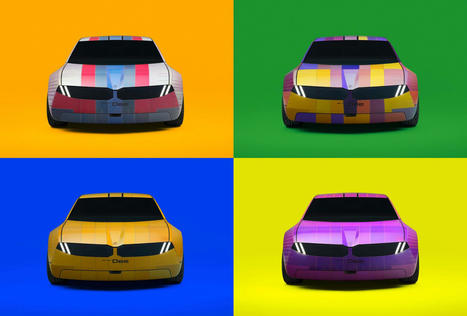
The BMW i Vision Dee concept arrived at CES with an E Ink-powered color-changing technology that was much improved over 2022’s monochromatic display. At CES 2022, BMW’s iX Flow concept was billed as “the world’s first color-changing car.” At the time, the special version of the iX electric crossover could shift its various panels between white, black, and gray. Now, for 2023, meet the upgrade: actual colors. For this year’s CES, BMW showed off the i Vision Dee, an electric sports sedan concept that previewed a whole raft of technologies we could see in the immediate future, like AI-powered virtual assistants and full-windshield heads-up displays. But it also included a full-color version of the E Ink technology seen on last year’s concept for the first time ever. This means that the i Vision Dee — which looks like a kind of cross between a vintage BMW and a Tesla — can change colors on command. Instead of just black, white, and gray, 32 colors are now available. Not only that but the i Vision Dee is made up of 240 E Ink e-paper segments, all of which can be controlled individually. This means the i Vision Dee can shift to one solid color or put on one hell of a light show. SlashGear notes that the brains behind the project, Australian engineer Stella Clarke and her team, have been working to develop and refine the e-paper since last year’s CES.
Read the full article at: www.theverge.com
Via Dr. Stefan Gruenwald
|
|
Rescooped by
Antonios Bouris
from Amazing Science
June 24, 2023 8:10 PM
|
The finding contradicts previous assumptions about the role of mobile plate tectonics in the development of life on Earth. Scientists have taken a journey back in time to unlock the mysteries of Earth's early history, using tiny mineral crystals called zircons to study plate tectonics billions of years ago. The research sheds light on the conditions that existed in early Earth, revealing a complex interplay between Earth's crust, core, and the emergence of life. Plate tectonics allows heat from Earth's interior to escape to the surface, forming continents and other geological features necessary for life to emerge. Accordingly, "there has been the assumption that plate tectonics is necessary for life," says John Tarduno, who teaches in the Department of Earth and Environmental Sciences at the University of Rochester. But new research casts doubt on that assumption. Tarduno, the William R. Kenan, Jr. Professor, is lead author of a paper published in Nature examining plate tectonics from a time 3.9 billion years ago, when scientists believe the first traces of life appeared on Earth. The researchers found that mobile plate tectonics was not occurring during this time. Instead, they discovered, Earth was releasing heat through what is known as a stagnant lid regime. The results indicate that although plate tectonics is a key factor for sustaining life on Earth, it is not a requirement for life to originate on a terrestrial-like planet. "We found there wasn't plate tectonics when life is first thought to originate, and that there wasn't plate tectonics for hundreds of millions of years after," says Tarduno. "Our data suggests that when we're looking for exoplanets that harbor life, the planets do not necessarily need to have plate tectonics." Read the full article at: www.rochester.edu
Via Dr. Stefan Gruenwald
|
|
Scooped by
Antonios Bouris
June 17, 2023 8:38 PM
|
The Apple Vision Pro headset bring a ton of advanced technology together. Here are some of our favorite features that Apple showed off at WWDC. Read the full article at: www.slashgear.com
|
|
Scooped by
Antonios Bouris
June 8, 2023 8:43 PM
|
curioustone: Making AI Accessible to Everyone
Introducing curioustone:
The Ultimate AI Tools and Solutions for All - test it today curioustone is a revolutionary suite of AI applications tailored to empower individuals and professionals across industries, including marketing experts, business owners, chefs, and politicians. Our state-of-the-art AI tools are designed to address the unique needs of each user, streamlining tasks and optimizing results. Six key features set curioustone apart and make it an indispensable addition to your professional toolkit. curioustone is a suite of AI applications designed to work across industries, including marketing, sales, finance, food, journalism and the social sector. Our state-of-the-art AI tools are made to provide answers and solutions to simple tasks.
Full working demos are available for all applications. Try them today!
|
|
Scooped by
Antonios Bouris
June 8, 2023 8:12 PM
|
Thank you for reading my latest article Digital Twins, Generative AI, And The Metaverse. Here at LinkedIn and at Forbes I regularly write about management and technology trends. Read the full article at: www.linkedin.com
|
|
Rescooped by
Antonios Bouris
from Amazing Science
June 3, 2023 6:09 AM
|
Original article is here Large language models are all the rage these days and new ones are popping up every other day. Most of these linguistic behemoths, including OpenAI’s ChatGPT and Google’s Bard, are trained on text data from all over the internet – websites, articles, books, you name it. This means that their output is a mixed bag of genius. But what if instead of the web, LLMs were trained on the dark web? Researchers have done just that with DarkBERT to some surprising results. Let’s take a look. What is DarkBERT? A team of South Korean researchers have released a paper detailing how they built an LLM on a large-scale dark web corpus collected by crawling the Tor network. The data included a host of shady sites from various categories including cryptocurrency, pornography, hacking, weaponry, and others. However, due to ethical concerns, the team did not use the data as is. To ensure that the model wasn’t trained on sensitive data so that bad actors aren’t able to extract that information, the researchers polished the pre-training corpus through filtering, before feeding it to DarkBERT. If you are wondering about the rationale behind the name DarkBERT, the LLM is based on the RoBERTa architecture, which is a transformer-based model developed back in 2019 by researchers at Facebook. Meta had described RoBERTa as a “robustly optimized method for pre-training natural language processing (NLP) systems” that improves upon BERT, which was released by Google back in 2018. After Google made the LLM open-source, Meta was able to improve its performance. Cut to the present, the Korean researchers have improved upon the original model even further by feeding it data from the dark web over the course of 15 days, eventually arriving upon DarkBERT. The research paper highlights that a machine with an Intel Xeon Gold 6348 CPU and 4 NVIDIA A100 80GB GPUs was used for the purpose.
Read the full article at: indianexpress.com
Via Dr. Stefan Gruenwald
|

































Oxycodone without a prescription
Phentermine 37.5 mg for sale
Phentremin weight loss
purchase Adderall online
Where Fentanyl Patches online
Where to buy Acxion Fentermina