Fast live-cell 3D phase imaging of cellular dynamics. (Left) Human fibroblast migrating on a glass substrate, showing first frame of a 25-second movie imaged.
Scientists at the Laboratory of Biomedical Optics (LOB) at EPFL (École Polytechnique Fédérale de Lausanne) in Switzerland have developed the first microscope platform that can perform “super-resolution” imaging in both space and time — capturing unprecedented “4D” views inside living cells. The landmark paper is published in Nature Photonics and on open-access ArXiv.
In the midst of disaster, small items like batteries or medical supplies can be a matter of life or death. But what is the safest and most cost-effective way to deliver those items? The U.S. military is investing resources into answering that question. Along they way, they’ve come up with an unexpected way to pull off dangerous, one-way resupply missions; it’s a solution that involves, of all things, paper airplanes.
The European Space Agency’s Gaia satellite has been helping map the billions of stars in the Milky Way, and a group of astronomers is using the spacecraft’s stunning new star catalog to search for signs of highly advanced alien civilizations.
Over 150 experts in AI, robotics, commerce, law, and ethics from 14 countries have signed an open letter denouncing the European Parliament’s proposal to grant personhood status to intelligent machines. The EU says the measure will make it easier to figure out who’s liable when robots screw up or go rogue, but critics say it’s too early to consider robots as persons—and that the law will let manufacturers off the liability hook.
This all started last year when the European Parliament proposed the creation of a specific legal status for robots: The parliament said the law would apply to “smart robots,” which it defined as robots having the capacity to learn through experience and interaction, the ability to acquire autonomy through its sensors, the capacity to adapt its behavior and actions to the environment, among other criteria. By virtue of this proposal, the EU is responding to rapid advances in robotics and AI, and the potential risks imposed on humans and human property. The fear isn’t a robot uprising (at least not yet), but more mundane risks, such as autonomous vehicles and drones accidentally smashing into people, a factory robot crushing an absent-minded worker, or a Roomba giving your cat an unexpected shave.
Contrary to what its name might suggest, digital transformation is primarily a problem of culture and leadership, a “human” phenomenon. It implies working in a transdisciplinary way, collaborating beyond the usual borders and above all – like in any organizational transformation process – creating trust: trust between engineers and humanists, between government departments, between citizens and government, etc. And since there are no miracles, trust is built over time and experience and it can only come from listening, honesty, competence, and transparency.
Contrary to what its name might suggest, digital transformation is primarily a problem of culture and leadership, a “human” phenomenon. It implies working in a transdisciplinary way, collaborating beyond the usual borders and above all – like in any organizational transformation process – creating trust: trust between engineers and humanists, between government departments, between citizens and government, etc. And since there are no miracles, trust is built over time and experience and it can only come from listening, honesty, competence, and transparency.
Technically, the data produced and collected must be designed from the outset to lend themselves optimally to automatic analysis and the systems must be built so that they can evolve easily. As for the famous ethical dimension of algorithms, we will not forget that the data feeding automatic learning must be examined from a critical point of view by competent humans and not blindly believed. In my understanding, a good part of the “ethical” problems related to AI comes from two essential points being forgotten:
– The tools must be designed from the user’s point of view (design thinking). – The quality of training data determines the quality of program performance (garbage in garbage out).
Many topics were treated in this event, with numerous concrete examples of the use of new technologies: security, the blockchain, cloud, micro-services, Internet of things, etc. The theme that caught my attention the most was chatbots animated by natural language processing and deep learning. In the coming years, more and more services (governmental or commercial) will use chatbots.
The public already knows Siri by Apple or Alexa by Amazon. Rather than thinking of these programs as autonomous “artificial intelligence”, it would be more useful to conceive them as media for distributing expertise, user-friendly interfaces for exploring huge databases, knowledge management toolsand cognitive augmentation. Chatbots are able to understand questions in natural languages (not just recognize keywords), they can learn from their interactions, they are able to suggest relevant ideas according to context and provide a “pleasant” experience to their users.
It is commonly understood that the dinosaurs disappeared with a bang – wiped out by a great meteorite impact on the Earth 66 million years ago.
But their origins have been less understood. In a new study, scientists from MUSE - Museum of Science, Trento, Italy, Universities of Ferrara and Padova, Italy and the University of Bristol show that the key expansion of dinosaurs was also triggered by a crisis – a mass extinction that happened 232 million years ago.
If you haven’t heard, universities around the world are offering their courses online for free (or at least partially free). These courses are collectively called MOOCs or Massive Open Online Courses. In the past six years or so, close to 800 universities have created more than 8,000 of these MOOCs. And I’ve been keepin
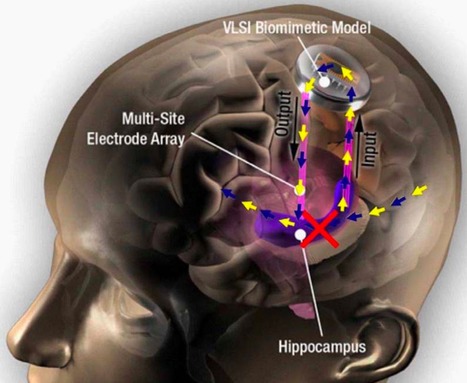
Scientists at Wake Forest Baptist Medical Center and the University of Southern California (USC) Viterbi School of Engineering have demonstrated a neural prosthetic system that can improve a memory by “writing” information “codes” (based on a patient’s specific memory patterns) into the hippocampus of human subjects via an electrode implanted in the hippocampus (a part of the brain involved in making new memories).
A commonly used anti-parasite drug could be the next weapon in the fight against malaria. Researchers from Kenya and the United Kingdom report that dosing people with ivermectin, commonly used in heartworm pills, makes them deadly targets for the mosquitoes that transmit malaria. Nearly all of the mosquitoes in the experiment died after drinking ivermectin-laced blood, they say.
While malaria rates have been dropping historically, the disease still afflicts over 200 million people a year, mostly in the developing world, and was responsible for nearly half a million deaths in 2015, according to the WHO. And there are worries that resistance to artemisinin, the drug of choice for combating malaria, could continue to spread beyond southeast Asia, where most resistant strains are currently found.
Ivermectin could be another solution, and one that’s easily applicable given the prevalence of the drug. In the study, published last month in The Lancet, the researchers gave 47 malaria patients 600-milligram doses of ivermectin for three consecutive days. That’s around three times the normal dose, but the drug possesses few side effects, and had already been shown to be deadly to mosquitoes when in the bloodstream.
10 AMAZING SCIENCE EXPERIMENTS! and TRICKS compilation they are awesome easy to do at home, using copper wire battery and magnets gyroscopes chain and ring, electric train etc.
10 AMAZING SCIENCE EXPERIMENTS! and TRICKS compilation they are awesome easy to do at home, using copper wire battery and magnets gyroscopes chain and ring, electric train etc.
10 AMAZING SCIENCE EXPERIMENTS! and TRICKS compilation they are awesome easy to do at home, using copper wire battery and magnets gyroscopes chain and ring, electric train etc.
For some people, artificial intelligence still makes them feel a little…uneasy. It’s often depicted as sinister-looking robots who will take over our lives and our jobs, or even replace humanity.
The reality is, we are already in an age in which AI is infused into our everyday lives in ways that augment rather than replace people. Digital assistants such as Cortana can find you the closest restaurant, dictate a text to your friend, manage your email inbox and even help you create more beautiful PowerPoint presentations. Whether you realise it or not, AI is an integral part of all these interactions. And while it’s not something you can often see or touch, I bet you’re already experiencing the benefits of AI every day.
So, how does AI technology actually work? AI is a machine’s ability to recognise images and words, learn and reason in ways that are similar to people. Data is the fuel for AI, and our world is awash with data as our daily interactions are increasingly digital. AI uses sophisticated algorithms to sort through piles of data, spot patterns and make predictions – tasks that would be repetitive and time-consuming, if not practically impossible, for people to do manually. AI can do this work on our behalf and give us back more of life’s most precious commodity - time.
Félünk (félünk?) a mesterséges intellingenciától, pedig különböző szintű megjelenési formáit full használjuk... az átalakulás, a változás folyamatos, az is lesz, hol lineáris, hol helyenként ugrásszerű, de hozzászokni már elkezdtünk... nem a távoli jövő az, amikor majd egyszerre csak ránk ugrik, mint egy tigris...:-)))
“...AI is a machine’s ability to recognise images and words, learn and reason in ways that are similar to people. Data is the fuel for AI, and our world is awash with data as our daily interactions are increasingly digital...” - The AI is already makes a part of our daily life... it gives time for us to become acclimatized to it...
The online dating space has been the domain of Tinder for the longest time. However, Facebook will try to breach that as they add new dating features in their mobile app. Unlike Tinder, the Facebook dating
Harvard team creates a biohybrid being using 3-D printing, tissue engineering, and muscular circuitry.
If you met this lab-created critter over your beach vacation, you'd swear you saw a baby ray. In fact, the tiny, flexible swimmer is the product of a team of diverse scientists. They have built the most successful artificial animal yet. This disruptive technology opens the door much wider for lifelike robots and artificial intelligence.
It was already 28 years ago that the Hubble Space Telescope was launched and deployed in low-Earth orbit, where it remains today. Outfitted with a 2.4 meter mirror, a slew of instruments designed for viewing stars, planets, nebulae and galaxies, Hubble became humanity's first civilization-class space telescope. Although it had a number of science goals, its most ambitious was what gave rise to its name: it was the Hubble telescope because it was built to measure the Hubble expansion rate of the Universe. But what Hubble wound up teaching us went far beyond anything it was designed for, and that was due to a combination of three factors. First, Hubble was overbuilt for its mission. Second, Hubble was repaired, upgraded, and serviced. And third, the people administering Hubble had the foresight to green-light some very bold, ambitious proposals. This review article summarizes what we have learned.
Elon Musk's rocket company, SpaceX, is likely raising about $500 million in new funding. The cash investment would be a boon to SpaceX, which is chasing three incredibly ambitious projects in the coming decade. Those plans include (i) a global satellite-internet network, (ii) a spaceship to explore and colonize Mars, and (iii) the world's fastest transportation system.
NASA’s Transiting Exoplanet Survey Satellite or TESS is an all-sky survey mission that will discover thousands of exoplanets around nearby bright stars.
NASA’s Transiting Exoplanet Survey Satellite (TESS) is scheduled to launch no earlier than 6:32 p.m. EDT Monday, April 16, 2018. TESS is on a mission to find planets outside of our solar system and the prelaunch mission coverage will start on NASA Television and the agency’s website Sunday, April 15, with three live briefings.
NASA’s Transiting Exoplanet Survey Satellite (TESS) is prepared to launch on a SpaceX Falcon 9 rocket from Space Launch Complex 40 at Cape Canaveral Air Force Station in Florida. Once in space, TESS will spend approximately two years monitoring 200,000 of the brightest stars near the sun to detect planets outside our solar system.
TESS is NASA’s next step in the search for planets outside of our solar system, called exoplanets, including those that could support life. The mission is expected to catalog thousands of planet candidates and largely increase the current number of known exoplanets.
TESS will find the most promising exoplanets orbiting relatively close stars, giving future researchers a vast set of new targets for more comprehensive follow-up studies, such as the potential to assess their capacity to harbor life.
The long read: If we could understand how the infant mind develops, it might help every child reach their full potential. But seeing them as learning machines is not the answer
True artificial intelligence is on its way, and we aren’t ready for it. Just as our forefathers had trouble visualizing everything from the modern car to the birth of the computer, it’s difficult for most people to imagine how much truly intelligent technology could change our lives as soon as the next decade — and how much we stand to lose if AI goes out of our control.
Fortunately, there’s a league of individuals working to ensure that the birth of artificial intelligence isn’t the death of humanity. From Max Tegmark’s Future of Life Institute to the Harvard Kennedy School of Government’s Future Society, the world’s most renowned experts are joining forces to tackle one of the most disruptive technological advancements (and greatest threats) humanity will ever face.
The thick pelt that helps polar bears to survive frigid Arctic winters has inspired a warm, sturdy fiber. Inspired by the microstructure and thermal insulation function of the polar bear hair, a research team led by Professor BAI Hao with ZJU’s College of Chemical and Biological Engineering has used a freeze-spinning technique to continuously fabricate silk fibroin solution into a fiber with aligned porous microstructure.
Fast Radio Bursts (FRBs) have been one of the more puzzling and fascinating areas of astronomical study ever since the first was detected in 2007 (known as the Lorimer Burst). Much like gravitational waves, the study of these short-lived radio pulses (which last only a few milliseconds) is still in its infancy, and only a 33 events have been detected. What’s more, scientists are still not sure what accounts for them. In early March 2018, scientists using the Parkes Radio Telescope detected three FRBs, one of which was the brightest ever observed.
To get content containing either thought or leadership enter:
To get content containing both thought and leadership enter:
To get content containing the expression thought leadership enter:
You can enter several keywords and you can refine them whenever you want. Our suggestion engine uses more signals but entering a few keywords here will rapidly give you great content to curate.


 Your new post is loading...