Your new post is loading...

|
Rescooped by
Antonios Bouris
from Amazing Science
March 23, 2018 2:45 AM
|
Addiction to substances such as heroin and alcohol affect women differently than men. A 2010 American Journal of Public Health study found that women were more likely to be prescribed opioids than men and to continue them long-term. Another study of chronic pain patients prescribed opioids in the Journal of Pain revealed that women’s increased risk of opioid misuse was related to emotional issues while men misused opioids because of legal and behavioral problems. According to the Centers for Disease Control and Prevention (CDC), women are more likely to have chronic pain, be prescribed prescription painkillers and at higher doses than men; and become dependent more quickly than men. From 1999 to 2010, CDC data revealed that 48,000 women died of prescription-related overdoses. During this timeframe, prescription overdose deaths increased over 400% among women, versus 237% among men. The sobering statistics don’t end with prescriptions. The National Center for Health Statistics reported heroin overdose deaths among women tripled from 2010 through 2013.
Via Dr. Stefan Gruenwald
Italian company X Electrical Vehicle (XEV) says its 3D printed electric car, the LSEV, will be ready for mass production by the end of the year. The first 3D printed LSEV car is currently being demonstrated at Shanghai's China 3D Printing Cultural Museum.
Via TechinBiz
|
|
Rescooped by
Antonios Bouris
from Amazing Science
March 16, 2018 5:40 AM
|
A solar panel that can generate electricity from falling raindrops has been invented, enabling power to flow even when skies cloud over or the sun has set. Solar power installation is soaring globally thanks to costs plunging 90% in the past decade, making it the cheapest electricity in many parts of the world. But the power output can plummet under grey skies and researchers are working to squeeze even more electricity from panels.
Via Dr. Stefan Gruenwald
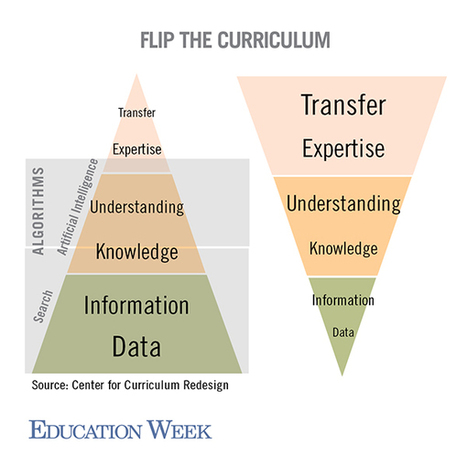
Flipping the curriculum could help us meet the demands of the artificial-intelligence era
Technologies such as artificial intelligence, robotics, and biotech are redefining what it means to be human—and employable.
Jobs are disappearing as automation replaces the need for people. New occupations are emerging that demand competencies that can transfer across the multiple assignments workers will experience in their lives. The disappearance of global boundaries presents opportunities—and risks—for all workers.
These changes demand a significant, ambitious evolution in how we prepare students for their future in a world that's increasingly volatile, uncertain, complex, and ambiguous. We need a relevant and modernized education. Learn more / En savoir plus / Mehr erfahren: https://www.scoop.it/t/21st-century-learning-and-teaching/?&tag=modern-education
Via Gust MEES
|
|
Rescooped by
Antonios Bouris
from Amazing Science
March 9, 2018 4:05 AM
|
The biggest planet in the solar system has no tilt as it moves, so its poles have never been visible from Earth. But in the past two years, with NASA’s Juno spacecraft, scientists have gotten a good look at the top and bottom of the planet for the first time. What they found astounded them: bizarre geometric arrangements of storms, each arrayed around one cyclone over the north and south poles—unlike any storm formation seen in the universe.
Via Dr. Stefan Gruenwald
Google's AI researchers are trying to figure out the best ways to fool both humans and computers in order to develop defenses against adversarial attacks on image recognition systems.
Via Jay
Recent developments in GIS and analytical applications have demonstrated that predicting road conditions, and thus preventing traffic accidents and possibly even traffic in the first place, could be possible. Among other goals, Vision Zero is an initiative by cities and municipalities to reduce traffic fatalities to zero. GIS and spatial analysis could help achieve this goal.
Via Fernando Gil
Don Norman is a legend in UX design. Since the 1960s, he's been on the forefront of human-computer interaction and was a pioneer in user-centered design (o
Via Michael Allenberg, yannick grenzinger
Es Devlin has been named the winner of this year's Panerai London Design Medal, so we've rounded up 12 of the set designer's key projects.
Via Levin Chin
|
|
Rescooped by
Antonios Bouris
from Biomimicry
February 23, 2018 6:50 AM
|
Computer engineers study the mathematics of how to optimize complex systems. In one example, they face a logistics challenge known as the "travelling salesman problem:" how can a hypothetical salesperson visit every city on their route in the shortest distance? The algorithms developed to answer these sorts of questions are useful in many situations, such as reducing the costs of and pollution from a fleet of delivery trucks. But when engineers tried to optimize traffic on the internet, they found their methods wanting. [...] Honeybees don't study mathematics, but the demands of evolution reward those colonies that succeed in optimizing their resources. Fortunately, in the strange tale of how honeybees make the internet work, the scientists were smart enough to see that the honeybees knew better than they did.
Via Miguel Prazeres
|
|
Rescooped by
Antonios Bouris
from Amazing Science
February 23, 2018 6:16 AM
|
Technique could be used to create quantum-information systems Molecules” made from three photons have been created by physicists in the US. The photon triplets were made by firing laser light into an atomic gas and the researchers believe that their technique could be useful for creating entangled photons for quantum-information systems. In this latest experiment a team led by Vuletić and Lukin observed both pairs and triplets of photons emerging from the atomic gas, rather than the random emission of single photons that would occur if molecules were not forming. They also measured the phase of the photon pairs and triplets and found this to be consistent with an attractive interaction. Indeed, the phase measurements revealed that the photon triplets were more strongly bound than the photon pairs.
Via Dr. Stefan Gruenwald
|
|
Rescooped by
Antonios Bouris
from Technology in Business Today
February 23, 2018 6:14 AM
|
Nora Outfit February 2018 Group Gift by Resun Fashion Design - Second Life Freebies
Via Romyka Mars
|
A new mapping application allows anyone with a computer to get a snapshot of the number and types of crime in their neighborhood or anywhere else in the city.
Developed with the help of the Long Beach Technology and Innovation Department and the supplier ArcGIS, the interactive map uses the last six months of data obtained from the police department’s Records Management System to show all of the reported crime incidents. A test showed there is information as recent as the week before in the system.
Via Fernando Gil
|
|
Rescooped by
Antonios Bouris
from Amazing Science
March 16, 2018 5:45 AM
|
In a study published March 9 in The Monthly Notices of the Royal Astronomical Society, astronomers announced the discovery that all disk galaxies rotate about once every billion years, no matter their size or mass. “It’s not Swiss watch precision,” said Gerhardt Meurer, an astronomer from the International Centre for Radio Astronomy Research (ICRAR), in a press release. “But regardless of whether a galaxy is very big or very small, if you could sit on the extreme edge of its disk as it spins, it would take you about a billion years to go all the way round.” “Discovering such regularity in galaxies really helps us to better understand the mechanics that make them tick,” he said. “You won’t find a dense galaxy rotating quickly, while another with the same size but lower density is rotating more slowly.”
Via Dr. Stefan Gruenwald
|
|
Rescooped by
Antonios Bouris
from Amazing Science
March 16, 2018 4:47 AM
|
Though still a far-off fantasy in the minds of many, 19 states have passed legislation relating to autonomous vehicles — many starting small by defining terms like "automated driving system," "dynamic driving task" or "autonomous vehicle." Additionally, governors from four states have issued executive orders creating councils and working groups of stakeholders and public officials dedicated to looking at how their states should proceed. Where states like Florida have embraced fewer regulations, others, like California, have taken more tightly regulated approaches. Though these states have differed in their approaches, the future of transportation is in the midst of a revolution. The revolution, in short, means that the traditional rules no longer hold up when applied to the rapidly advancing technology. From the electrification of vehicles to the growth of transportation network companies and automated driving, traditional driving regulations must be updated to keep pace. Self-driving vehicles can already be spotted on test tracks across the country and on public streets in select cities, and several major companies including Ford, Toyota and BMW have all committed to driverless vehicles on American road within five years.
Via Dr. Stefan Gruenwald
While automation is destined to disrupt our professional lives to an epic degree over the next decade, writers shouldn't feel threatened.
Via Jessica Kelly
From Blade Runner to I, Robot, the big screens of Hollywood have predicted the rise of the machine. Automated intelligences will wait our tables and drive our cabs. They will serve us by performing menial tasks. But fact is now surpassing fiction. Automation has moved beyond the factory assembly line as computers are diagnosing illnesses, providing legal counsel, and make financial and political decisions. And if artificial intelligence really is faster, smarter and more reliable, what are we left with?
The answer is precisely that element which makes us less efficient and slower. Our humanity. But rather than being seen as a weakness, this is actually our strongest suit. It’s one we need to empower, because studies show that as the world becomes increasingly automated, computerised and digitalised, we are losing the very skills that define us as human. Just when we need them the most.
Our empathy is something that computers will always struggle to emulate. We need to celebrate what makes us different from even the smartest of the machines. While the future belongs to those who are able to navigate this increasingly digitalised world of ours, the choicest spoils will fall to those who can combine technological fluency with emotional intelligence. Learn more / En savoir plus / Mehr erfahren: https://www.scoop.it/t/21st-century-learning-and-teaching/?&tag=Empathy https://www.scoop.it/t/21st-century-learning-and-teaching/?&tag=Emotional+intelligence
Via Gust MEES
|
|
Scooped by
Antonios Bouris
March 2, 2018 2:35 AM
|
Want to know how to Beta Test An Online Course? Check some best practices of beta testing your online course before launching it.
|
|
Rescooped by
Antonios Bouris
from Amazing Science
March 2, 2018 2:31 AM
|
It’s hard to pinpoint the dawn of AI gaming supremacy. You could choose Kasparov’s loss in chess, or Lee Sedol’s defeat at the virtual hands of AlphaGo. Another popular option would be when legendaryJeopardy! champion Ken Jennings lost to IBM’s Watson in 2011. Watson could parse the game’s clues and handle wordplay. The two-day match wasn’t close. “I for one welcome our new computer overlords,” Jennings wrote under his final answer.
Via Complexity Digest, Dr. Stefan Gruenwald
The online world is dynamic and constantly evolving… The tactics that hold the high ground today, will lose effectiveness tomorrow. But in spite of this volatile nature, …
Via TechinBiz
|
|
Scooped by
Antonios Bouris
February 24, 2018 11:02 PM
|
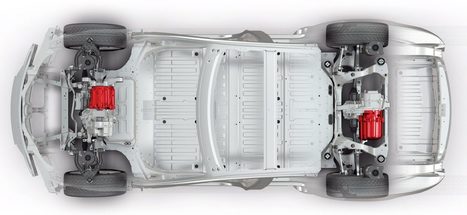
Tesla’s engineering and design teams are primarily based in the US and especially in California, but the company has been expanding internationally over the last few years with teams in the U…
Hand gestures are one means of illustrating geological concepts, like the orientation of these fractures in 2.5-billion-year-old rocks in Dales Gorge, Hamersley Basin, Australia. A recent study showed that students master spatial concepts more quickly when they make concrete illustrations of their mental images and then receive immediate feedback on how closely these concepts mirror physical reality.
Via Fernando Gil
On any given day, there could be a half dozen autonomous cars mapping the same street corner in Silicon Valley. These cars, each from a different company, are all doing the same thing: building high-definition street maps, which may eventually serve as an on-board navigation guide for driverless vehicles.
These companies converge where the law and weather are welcoming—or where they can get the most attention. For example, a flock of mapping vehicles congregates every year in the vicinity of the CES technology trade show, a hot spot for self-driving feats. “There probably have been 50 companies that mapped Las Vegas simply to do a CES drive,” said Chris McNally, an analyst with Evercore ISI. “It’s such a waste of resources.”
Via Fernando Gil
|
|
Rescooped by
Antonios Bouris
from Technology in Business Today
February 23, 2018 6:13 AM
|
|