Your new post is loading...

|
Scooped by
HAS-veille
April 13, 2022 8:14 AM
|
|
|
Scooped by
HAS-veille
April 7, 2022 11:22 AM
|
|
|
Scooped by
HAS-veille
April 6, 2022 7:33 AM
|
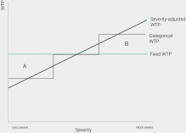
There is strong evidence that individuals and the public assign relatively greater value to health gains from relatively more severe health states. Th…
|
|
Scooped by
HAS-veille
April 5, 2022 2:47 AM
|
BackgroundClinical pathways with multiple diagnostic tests are complex to model, but problematic and simplistic approaches are often used in economic evaluations.MethodsWe analyzed statistica
|
|
Scooped by
HAS-veille
April 4, 2022 1:43 AM
|
Trial-based cost-effectiveness analyses (CEAs) are an important source of evidence in the assessment of health interventions. In these studies, cost and effectiveness outcomes are commonly measure
|
|
Scooped by
HAS-veille
March 31, 2022 10:45 AM
|
Key learnings from Institute for Clinical and Economic Review’s real-world evidence reassessment pilot - Volume 38 Issue 1
|
|
Scooped by
HAS-veille
March 24, 2022 10:18 AM
|
Health interventions for patients can also affect the health of their informal carers and family members. These changes in carer or family member heal…
|
|
Scooped by
HAS-veille
March 21, 2022 3:40 AM
|
This study aimed to explore the impact of including broader value elements in cost-effectiveness analyses by presenting 2 case studies, one on human p…
|
|
Scooped by
HAS-veille
March 16, 2022 11:49 AM
|
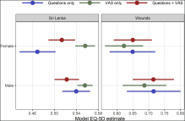
The EuroQoL 3-level version of EQ-5D and 5-level version of EQ-5D questionnaires are often used to quantify health states. They include ordinal respon…
|
|
Scooped by
HAS-veille
March 14, 2022 2:25 AM
|
Robust evidence from health policy research has the potential to inform policy-making, but studies have suggested that methodological shortcomings are…
|
|
Scooped by
HAS-veille
March 13, 2022 9:46 AM
|
Faciliating More Efficient Negotiations for Innovative Therapies: A Value-Based Negotiation Framework - Volume 38 Issue 1
|
|
Scooped by
HAS-veille
March 10, 2022 10:58 AM
|
|
|
Scooped by
HAS-veille
March 9, 2022 11:05 AM
|
Existing measures for estimating quality-adjusted life-years are mostly limited to health-related quality of life. This article presents an overview o…
|
|
|
Scooped by
HAS-veille
April 13, 2022 8:13 AM
|
There is strong evidence that individuals and the public assign relatively greater value to health gains from relatively more severe health states. Th…
|
|
Scooped by
HAS-veille
April 6, 2022 7:42 AM
|
Conventional cost-effectiveness analysis—i.e., assessing pharmaceuticals through a cost per quality-adjusted life year (QALY) framework—originated from a societal commitment to maximize population health given limited resources. This "extra-welfarist" approach has produced pricing and reimbursement systems that are not well- aligned with the unique considerations of orphan drugs. This framework has been slow to evolve along with our increased understanding of the impact of rare diseases, which in turn has complicated the assessment of orphan drugs meant to treat rare diseases. Herein, we (i) discuss the limitations of conventional cost-effectiveness analysis as applied to assessing access to, as well as the pricing and reimbursement of, orphan drugs, (ii) critically appraise alternative and supplemental approaches, and (iii) offer insights on plausible steps forward.
|
|
Scooped by
HAS-veille
April 5, 2022 10:37 AM
|
|
|
Scooped by
HAS-veille
April 5, 2022 2:30 AM
|
Background The number of healthcare interventions described as ‘personalised medicine’ (PM) is increasing rapidly. As healthcare systems struggle to decide whether to fund PM innovations, it is unclear what models for financing and reimbursement are appropriate to apply in this context. Objective To review financing and reimbursement models for PM, summarise their key characteristics, and describe whether they can influence the development and uptake of PM. Methods A literature review was conducted in Medline, Embase, Web of Science, and Econlit to identify studies published in English between 2009 and 2021, and reviews published before 2009. Grey literature was identified through Google Scholar, Google and subject-specific webpages. Articles that described financing and reimbursement of PM, and financing of non-PM were included. Data were extracted and synthesised narratively to report on the models, as well as facilitators, incentives, barriers and disincentives that could influence PM development and uptake. Results One hundred and fifty-three papers were included. Research and development of PM was financed through both public and private sources and reimbursed largely through traditional models such as single fees, Diagnosis-Related Groups, and bundled payments. Financial-based reimbursement, including rebates and price-volume agreements, was mainly applied to targeted therapies. Performance-based reimbursement was identified mainly for gene and targeted therapies, and some companion diagnostics. Gene therapy manufacturers offered outcome-based rebates for treatment failure for interventions including Luxturna®, Kymriah®, Yescarta®, Zynteglo®, Zolgensma® and Strimvelis®, and coverage with evidence development for Kymriah® and Yescarta®. Targeted testing with OncotypeDX® was granted value-based reimbursement through initial coverage with evidence development. The main barriers and disincentives to PM financing and reimbursement were the lack of strong links between stakeholders and the lack of demonstrable benefit and value of PM. Conclusions Public-private financing agreements and performance-based reimbursement models could help facilitate the development and uptake of PM interventions with proven clinical benefit.
|
|
Scooped by
HAS-veille
April 4, 2022 1:41 AM
|
There has been some debate about the choice of perspective and the age of the child considered when completing preference elicitation tasks in the 3-l…
|
|
Scooped by
HAS-veille
March 30, 2022 10:43 AM
|
Health economic (HE) models are routinely used to support health policy and resource allocation decisions but are often considered “black boxes” that …
|
|
Scooped by
HAS-veille
March 21, 2022 3:46 AM
|
Journal of Health Economics
|
|
Scooped by
HAS-veille
March 17, 2022 8:36 AM
|
Acceptability of Manufacturer-Proposed Utility Values for NICE Cancer Medicine Appraisals: Analysis of Manufacturers’ Information Sources - Volume 38 Issue 1
|
|
Scooped by
HAS-veille
March 15, 2022 9:09 AM
|
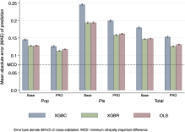
This study aimed to evaluate the performance of machine learning and regression methods in the prediction of 3-level version of EQ-5D (EQ-5D-3L) index…
|
|
Scooped by
HAS-veille
March 13, 2022 9:47 AM
|
The first version of the pharmacoeconomic (PE) guidelines was published in South Korea in 2006. Despite its first revision in 2011, there were still ambiguities in its interpretation. Moreover, methodologies for estimating effectiveness and costs have also evolved since then. Under these circumstances, the Health Insurance Review and Assessment Service published the third version in January 2021. This article reviews the revision process and major changes made in the new edition of the PE guidelines. The revision was processed through reviews of the previous 50 PE submissions, international guidelines, academic literature, and surveys and advisory meetings to obtain stakeholders’ opinions. The analysis perspective has changed from a limited societal perspective to a healthcare system perspective. In addition to the drug with the highest market share, drugs used in clinical trials can be selected as comparators under certain conditions. The discount rate decreased from 5% to 4.5%. Furthermore, the revised guidelines provide more detailed and specific instructions for items including non-inferiority margin, extrapolation, utility elicitation, and uncertainty. Treatment switch and co-dependent technology guidelines are newly included; the budget impact analysis guideline is deleted. Through this revision, transparency and consistency of decision-making is expected to improve.
|
|
Scooped by
HAS-veille
March 10, 2022 10:59 AM
|
Since its publication as part of the 2018 ISPOR Special Task Force (STF) on US Value Assessments, the “ISPOR value flower,” with its petals highlighti…
|
|
Scooped by
HAS-veille
March 10, 2022 10:58 AM
|
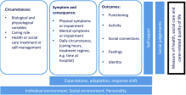
The EQ Health and Wellbeing Short (EQ-HWB-S) is a new broad generic measure of health and wellbeing for use in economic evaluations of interventions a…
|


 Scoop.it!