Your new post is loading...

|
Scooped by
HAS-veille
March 7, 2022 1:40 AM
|
|
|
Scooped by
HAS-veille
March 3, 2022 4:31 AM
|
Background The question of discounting in health economics is anything but settled, so much so that a section of the Health Technology Assessment (HTA) guidelines is devoted to it. Objective This study aimed to review the trend of the value of the official discount rates (DRs) of costs and health outcomes and their roots worldwide. Methods Four methods were combined to identify official DRs over time globally. These methods included a systematic review of the HTA/pharmacoeconomic/health economic evaluation guidelines, a review of methodological documents or guidelines accessible on the websites of HTA organizations, and two separated reviews of the websites of the International Society for Pharmacoeconomics and Outcomes Research (ISPOR) and the Guide to Health Economic Analysis and Research (GEAR). Results Our systematic search eventually yielded 339 documents from the literature, 35 links from the website of the HTA organizations, 51 documents from the website of the ISPOR, and 29 documents from the website of the GEAR. These documents referred to 48 countries over 30 years and 43 transnational guidelines over 43 years. DRs of 3% and 5% had the most frequent value. Among them, 38 countries always used an equal DR of costs and health outcomes. We categorized the rationales for selecting DRs into eight groups for the national documents and six groups for the transnational documents. Conclusion The comparability approach was the most frequent rationale for choosing the DR in national and transnational guidelines. The value of DR of costs and health outcomes ranged from zero to 10% over the years, but the most common values were 3% and 5%, mainly arising from the comparability approach chosen. Several transnational guidelines have suggested a specific DR without taking into account countries’ economic conditions. It is useful to establish a specific guideline for calculating and updating the DR of the health sector in each country.
|
|
Scooped by
HAS-veille
February 28, 2022 8:42 AM
|
Gene therapies (GTs) are considered to be a paradigm-shifting class of treatments with the potential to treat previously incurable diseases or those with significant unmet treatment needs. However, considerable challenges remain in their health technology assessment (HTA), mainly stemming from the inability to perform robust clinical trials to convince decision-makers to pay the high prices for the potential long-term treatment benefits provided. This article aims to review the recommendations that have been published for evidence generation and economic analysis for GTs against the feasibility of their implementation within current HTA decision analysis frameworks. After reviewing the systematically identified literature, we found that questions remain on the appropriateness of GT evidence generation, considering that additional, broader values brought by GTs seem insufficiently incorporated within proposed analytic methods. In cases where innovative methods are proposed, HTA organizations remain highly conservative and resistant to change their reference case and decision analysis framework. Such resistances are largely attributed to the substantial evidence uncertainty, resource-consuming administration process, and the absence of consensus on the optimized methodology to balance all the advantages and potential pitfalls of GTs.
|
|
Scooped by
HAS-veille
February 28, 2022 2:43 AM
|
Background Economic evaluation of health technologies requires healthcare resources, procedures and services to be valued at their opportunity cost. In practice, many economic evaluation studies use official databases of hospital Diagnosis-Related Groups (DRGs) as inputs where unit costs are required. This study describes the available data on costs of hospital DRG from official, publicly available sources in nine European countries (England, France, Germany, Italy, Poland, Portugal, Slovenia, Spain and Sweden), critically examines and compares the methodologies used to construct these databases and comments on the appropriateness of such unit cost data for economic evaluation. Methods A standardized semi-structured questionnaire was developed in order to obtain both official publicly available sources of inpatient DRG databases and documents explaining the costing methodology used in calculation of unit costs available in those databases. Results England stands out as a benchmark in terms of good practice. Other countries face more challenges in one or more items, whether in documenting and auditing processes, guaranteeing methodological rigour, including all relevant economic items such as depreciation of buildings and equipment and capital costs, conducting the process annually and completely, publishing the costs as well as tariffs and recognising sampling uncertainty or variation. Conclusion Analysts should evaluate carefully whether DRG costs or tariffs published in each country are appropriate for use in economic evaluation.
|
|
Scooped by
HAS-veille
February 28, 2022 2:40 AM
|
Indication-based pricing (IBP) has received growing attention because of the expected increase in the number of new medicines with multiple indication…
|
|
Scooped by
HAS-veille
February 23, 2022 7:41 AM
|
Research on quality adjusted life year (QALY) has been underway for just over 50 years, which seems like a suitable milestone to review its history. T…
|
|
Scooped by
HAS-veille
February 23, 2022 4:56 AM
|
New technologies, including pharmaceuticals and medical devices, can improve treatment options in healthcare but also bring concerns about rising heal…
|
|
Scooped by
HAS-veille
February 21, 2022 7:32 AM
|
Background:Although several statistical methods have been developed to inform decision making on reimbursement under uncertainty (e.g., expected net benefit, cost-effectiveness acceptabilit
|
|
Scooped by
HAS-veille
February 17, 2022 1:07 AM
|
Background In the context of ever-growing health expenditure and limited resources, economic evaluations aid in making evidence-informed policy decisions. Cost-utility analysis (CUA) is often used, and CUA data synthesis is also desirable, but methodological issues are challenged. Hence, we aim to provide a step-by-step process to prepare the CUA data for meta-analysis. Conclusion Out data harmonisation and meta-analytic methods should be useful for researchers for the synthesis of economic evidence to aid policymakers in decision making.
|
|
Scooped by
HAS-veille
February 14, 2022 9:20 AM
|
Early assessments of health technologies help to better align and integrate their development and assessment. Such assessments can take many forms and…
|
|
Scooped by
HAS-veille
February 14, 2022 9:13 AM
|
Health technology assessment (HTA) uses evidence appraisal and synthesis with economic evaluation to inform adoption decisions. Standard HTA processes…
|
|
Scooped by
HAS-veille
February 4, 2022 3:46 AM
|
Increasing the impact of budget impact analysis: incorporating uncertainty for decision-makers in small markets - Volume 38 Issue 1
|
|
Scooped by
HAS-veille
February 4, 2022 3:27 AM
|
Advances in medical technology have led to a better understanding of heterogeneity of diseases and patients, and to the development of targeted medicines. This development is beneficial to societ
|
|
|
Scooped by
HAS-veille
March 3, 2022 9:52 AM
|
A formal evaluation of the health equity impact of a new intervention is hardly ever performed as part of a health technology assessment to understand its value. This should change, in our view. An evidence-based quantitative assessment of the health equity impact can help decision makers develop coverage policies, programme designs, and quality initiatives focused on optimizing both total health and health equity given the treatment options available. We outline the conceptual basis of how a new intervention can impact health equity and adopt distributional cost-effectiveness analysis based on decision-analytic models to assess this quantitatively, using a newly US FDA-approved drug for Alzheimer’s disease (aducanumab) as an example. We argue that gaps in the evidence base for the new intervention, for example, due to limited clinical research participation among racial and ethnic minority groups, do not preclude such an evaluation. Understanding these uncertainties has implications for fair pricing, decision making, and future research. If we are serious about population-level decision making that not only is focused on improving total health but also aims to improve health equity, we should consider routinely assessing the health equity impact of new interventions.
|
|
Scooped by
HAS-veille
March 1, 2022 9:58 AM
|
EQ-5D is a 5-item questionnaire instrument designed to measure health-related quality of life. It is extremely important, since it is used to measure health benefits in many studies providin
|
|
Scooped by
HAS-veille
February 28, 2022 2:44 AM
|
Health economists have written extensively on the design and implementation of coverage with evidence development (CED) schemes and have proposed theoretical frameworks based on cost-effectivenes
|
|
Scooped by
HAS-veille
February 28, 2022 2:41 AM
|
This article aims to describe the generation and selection of items (stage 2) and face validation (stage 3) of a large international (multilingual) pr…
|
|
Scooped by
HAS-veille
February 24, 2022 7:57 AM
|
New health technologies are often expensive, but may nevertheless meet standard thresholds for cost effectiveness, a situation exemplified by recent h…
|
|
Scooped by
HAS-veille
February 23, 2022 6:55 AM
|
Precision oncology is generating vast amounts of multiomic data to improve human health and accelerate research. Existing clinical study designs and a…
|
|
Scooped by
HAS-veille
February 22, 2022 10:16 AM
|
A new publication by Kourouklis and Gandjour (2022) investigates the impact of pharmaceutical spending on domestic early-stage pharmaceutical innovation in Europe. They find that European spending does impact the number of patent applications and that European pharmaceutical spending has an impact on European countries attracting early-stage development.
|
|
Scooped by
HAS-veille
February 21, 2022 2:05 AM
|
Eliciting uncertainty for complex parameters in model-based economic evaluations: quantifying a temporal change in the treatment effect - Volume 38 Issue 1
|
|
Scooped by
HAS-veille
February 14, 2022 9:49 AM
|
|
|
Scooped by
HAS-veille
February 14, 2022 9:16 AM
|
Following protocol, adults value EQ-5D-Y-3L health states from the perspective of a 10-year-old child. It remains unclear why adults value health stat…
|
|
Scooped by
HAS-veille
February 14, 2022 8:59 AM
|
Health care interventions are increasingly being delivered through digital technologies, offering major opportunities for delivering more health gains from scarce health care resources. Digital health interventions (DHIs) raise distinct challenges for economic evaluations compared with drugs and medical devices, not least due to their interacting, evolving features. The implications of the distinctive nature of DHIs for the methodological choices underpinning their economic evaluation is not well understood. This paper provides an in-depth discussion of distinct features of DHIs and how they might impact the design, measurement, analysis and reporting of cost-effectiveness analysis conducted alongside both randomised and non-randomised studies. These include aspects related to choice of comparator, costs and benefits assessment, study perspective and type of economic analysis. We argue that typical methodological standpoints, such as taking a health service perspective, focusing on health-related benefits and adopting cost-utility analyses, as typically adopted in the economic evaluation of non-digital technologies (pharmaceutical drugs and medical devices), are unlikely to be appropriate for DHIs. We illustrate how these methodological aspects can be appropriately addressed in an evaluation of a digitally supported, remote rehabilitation programme for patients with Long Covid in England. We highlight several methodological considerations for improving practice and areas where further methodological work is required.
|
|
Scooped by
HAS-veille
February 4, 2022 3:28 AM
|
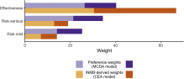
To investigate the extent to which stated preferences for treatment criteria elicited using multicriteria decision analysis (MCDA) methods are consist…
|


 Scoop.it!