Your new post is loading...

|
Scooped by
HAS-veille
June 21, 2023 10:26 AM
|
Few preference-weighted health-related quality-of-life measures exist for children under 5 years of age. Young children are substantial consumers of h…
|
|
Scooped by
HAS-veille
June 19, 2023 2:39 AM
|
Background Health-related quality of life (HRQoL) measures are essential in economic evaluation, but sometimes primary sources are unavailable, and information from secondary sources is required. Existing HRQoL UK/US catalogues are based on earlier diagnosis classification systems, amongst other issues. A recently published Danish catalogue merged EQ-5D-3L data from national health surveys with national registers containing patient information on ICD-10 diagnoses, healthcare activities and socio-demographics. Aims To provide (1) UK/US EQ-5D-3L-based HRQoL utility population catalogues for 199 chronic conditions on the basis of ICD-10 codes and health risks and (2) regression models controlling for age, sex, comorbidities and health risks to enable predictions in other populations. Methods UK and US EQ-5D-3L value sets were applied to the EQ-5D-3L responses of the Danish dataset and modelled using adjusted limited dependent variable mixture models (ALDVMMs). Results Unadjusted mean utilities, percentiles and adjusted disutilities based on two ALDVMMs with different control variables were provided for both countries. Diseases from groups M, G, and F consistently had the smallest utilities and the largest negative disutilities: fibromyalgia (M797), sclerosis (G35), rheumatism (M790), dorsalgia (M54), cerebral palsy (G80-G83), post-traumatic stress disorder (F431), dementia (F00-2), and depression (F32, etc.). Risk factors, including stress, loneliness, and BMI30+, were also associated with lower HRQoL. Conclusions This study provides comprehensive catalogues of UK/US EQ-5D-3L HRQoL utilities. Results are relevant in cost-effectiveness analysis, for NICE submissions, and for comparing and identifying facets of disease burden.
|
|
Scooped by
HAS-veille
June 13, 2023 8:22 AM
|
The objective of our study is to examine the ability of classical test theory (CTT) and item response theory (IRT) scores assessed by Patient-Reported…
|
|
Scooped by
HAS-veille
June 6, 2023 9:30 AM
|
Health technology assessment (HTA) is an established mechanism for explicit priority setting to support universal health coverage. However, full HTA r…
|
|
Scooped by
HAS-veille
June 2, 2023 3:42 AM
|
Health economic evaluations in health technology assessment (HTA) focus on balancing the costs and expected benefits of interventions compared to the use of standard-of-care to leverage value to patients and healthcare payers. Pharmaco-economic (PE) studies, in particular, assess the therapeutic value of medical technologies, such as drugs or devices, and encompass multidimensional aspects, e.g. assessments of mutually exclusive drugs options, combination with pre-emptive pharmaco-genetic (PGx) testing to limit adverse reactions, or therapeutic drug monitoring as a precision medicine procedure. The extent to which findings of PE evaluations are translated into informed policy decisions depend on national health care systems and population expectations. PE evaluations have the potential to streamline decision making and innovation in a wide range of therapeutic areas by determining whether the expense incurred by novel treatments is worthwhile, given the willingness-to-pay for health gains achieved, for example measured as quality-adjusted life-years (QALY). The QALY conceptual framework was first introduced in the 1960s in studies on chronic renal failure (Klarmann et al., 1968): authors reported that the quality-of-life (QoL) with kidney transplant was 25% higher than that with dialysis. The cost per life-year gained by different therapeutic options was estimated with and without the quality adjustment. More than 50 years later, despite the inherent limitations an
|
|
Scooped by
HAS-veille
June 1, 2023 9:08 AM
|
This study aimed to develop: (i) methods for assessing claims in any specific application that a generic outcome measure like EQ-5D is deficient in it…
|
|
Scooped by
HAS-veille
May 26, 2023 6:50 AM
|
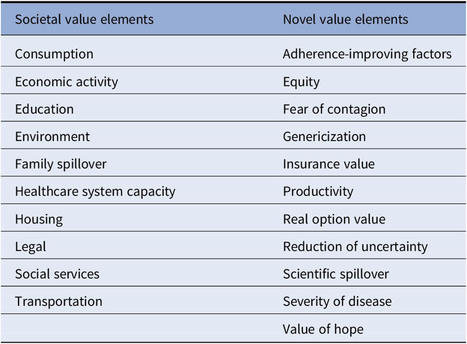
A review of HTA guidelines on societal and novel value elements - Volume 39 Issue 1
|
|
Scooped by
HAS-veille
May 26, 2023 6:43 AM
|
|
|
Scooped by
HAS-veille
May 15, 2023 1:41 AM
|
Background Health science is evolving extremely rapidly at worldwide level. There is a large volume of articles about health economics that are published each year. The main purpose of this research is to explore health economics in the world's scholarly literature based on a scient metric analysis to outline the evolution of research in the field. Method The Web of Science repository was used to get the data (1975–2022). The study explores 1620 documents from health economics. CiteSpace software was used to provide network visualisations. Four thousand ninety-six authors, 1723 institutions, 847 journals and 82 countries were involved in the sample. The current research contains a descriptive analysis, a co-authorship analysis, a co-citation analysis, and a co-occurrence analysis in health economics. Results Drummond M.F (author), the USA (country), University of London (institution) and Value Health (journal) are among the most important contributors to the health economics literature. Co-authorship analysis highlights that cooperation between authors, institutions and countries is weak. However, Drummond M.F. is the most collaborative author, the USA is the most collaborative country, and University of York is the most collaborative institution. The study offers an image about the most co-cited references (Arrow K.J., 1963), authors (Margolis H.) and journals (British Medical Journal). The current research hotspots in health economics are “behavioural economics” and “economic evaluation”. The main findings should be interpreted in accordance with the selection strategy used in this paper. Conclusion All in all, the paper maps the literature on health economics and may be used for future research.
|
|
Scooped by
HAS-veille
May 8, 2023 6:59 AM
|
Background The EQ-5D-5L questionnaire is used to measure treatment effects on the quality of life. For cost-utility analyses, EQ-5D-5L profiles are assigned numbers representing societal preferences (index weights). On the cost side, the indirect costs are frequently included: the value of product lost due to illness-related absences (absenteeism) or diminished productivity (presenteeism). The possibility to use EQ-5D data to estimate absenteeism and presenteeism (A&P) would be useful, if real-world data on A&P are lacking. However, beyond-health factors may also matter for A&P. Objective We aimed to assess how A&P depend on the EQ-5D-5L profile, while accounting for job characteristics (e.g. remote or in-office). Methods We surveyed 756 employed Poles. Respondents reported their job characteristics and evaluated the impact of eight hypothetical EQ-5D-5L profiles on A&P (two blocks of states used). Econometric modelling was used to establish the determinants of A&P. Results Both A&P increase with health problems as indicated across EQ-5D-5L dimensions (especially mobility and self-care), and this impact differs from the impact on index weight (e.g. pain/discomfort barely impact the A&P). The job characteristics mattered: absenteeism decreases in sedentary occupations and increases in those occupations performed remotely or requiring cooperation, while presenteeism increases in jobs performed remotely and decreases for those requiring creative thinking. Conclusions The entire EQ-5D-5L profile, not just index weights, should be used to estimate A&P. That job characteristics matter may be relevant in applications, as some diseases concentrate in specific subgroups.
|
|
Scooped by
HAS-veille
May 4, 2023 4:06 AM
|
The monetary value of a reduction in mortality risk can be accurately characterized using the alternative concepts of value per statistical life (VSL), value per statistical life year (VSLY), an
|
|
Scooped by
HAS-veille
May 3, 2023 5:39 AM
|
Background Quality-adjusted life expectancy (QALE) combines mortality risk and multidimensional health-related quality of life (HRQoL) information to measure healthy life expectancy in terms of quality-adjusted life years (QALYs). This paper estimates the relative importance of individual quality of life dimensions in explaining inequalities in QALE. Methods We combined EQ-5D-5L data from the Health Survey for England for 2017 and 2018 (N = 14,412) with full population mortality data from the Office for National Statistics to calculate QALE by age, sex and deprivation quintile. The effect of HRQoL dimensions on the socioeconomic gradient in QALE was decomposed using an iterative imputation approach, in which inequalities associated with socioeconomic status in each domain were removed by imputing the response distribution of the richest quintile for all participants. Sampling uncertainty in the HRQoL data was evaluated using bootstrapping. Results People in the least deprived fifth of neighbourhoods in England can expect to live 7.0 years longer and experience 11.1 more QALYs than those in the most deprived fifth. Inequalities in HRQoL accounted for 28.0% and 45.7% of QALE inequalities for males and females, respectively. Pain/discomfort, anxiety/depression and mobility were the most influential HRQoL domains. Discussion Our results identify the extent of inequalities associated with socioeconomic status in lifetime health and the relative importance of inequalities by mortality and HRQoL. The contributions of the individual dimensions of HRQoL towards lifetime inequalities vary substantially by sex. Our findings can help to identify the types of interventions most likely to alleviate health inequalities, which may be different for males and females.
|
|
Scooped by
HAS-veille
May 2, 2023 11:09 AM
|
The ISPOR Task Force on measurement comparability between modes of data collection for patient-reported outcome measures (PROMs) has updated the good …
|
|
|
Scooped by
HAS-veille
June 19, 2023 2:43 AM
|
UNCERTAINTY MANAGEMENT IN REGULATORY AND HEALTH TECHNOLOGY ASSESSMENT DECISION-MAKING ON DRUGS: GUIDANCE OF THE HTAi-DIA WORKING GROUP
|
|
Scooped by
HAS-veille
June 19, 2023 2:38 AM
|
A consensus-based checklist for the critical appraisal of cost-of-illness (COI) studies - Volume 39 Issue 1
|
|
Scooped by
HAS-veille
June 7, 2023 4:03 AM
|
Health systems around world are increasingly adopting cost-effectiveness (CE) analysis to inform decisions about access and reimbursement. We study ho…
|
|
Scooped by
HAS-veille
June 6, 2023 2:50 AM
|
Proposed updates reflect experience with current framework, benchmarking with other HTA groups, and external stakeholder input.
|
|
Scooped by
HAS-veille
June 1, 2023 9:10 AM
|
The National Institute for Health and Care Excellence (NICE) recently completed a review of its methods for health technology assessment (HTA), involv…
|
|
Scooped by
HAS-veille
May 30, 2023 2:23 AM
|
BackgroundHealth utilities from value sets for the EQ-5D-5L are commonly used in economic evaluations. We examined whether modeling spatial correlation among health states could improve th
|
|
Scooped by
HAS-veille
May 26, 2023 6:49 AM
|
Demonstrating proof of concept for value-based agreements in Europe: two real-world cases - Volume 39 Issue 1
|
|
Scooped by
HAS-veille
May 15, 2023 1:42 AM
|
Background The aims of this research were to provide a better understanding of the specific evidence needs for assessment of clinical and cost-effectiveness of cell and gene therapies, and to explore the extent that the relevant categories of evidence are considered in health technology assessment (HTA) processes. Methods A targeted literature review was conducted to identify the specific categories of evidence relevant to the assessment of these therapies. Forty-six HTA reports for 9 products in 10 cell and gene therapy indications across 8 jurisdictions were analysed to determine the extent to which various items of evidence were considered. Results The items to which the HTA bodies reacted positively were: treatment was for a rare disease or serious condition, lack of alternative therapies, evidence indicating substantial health gains, and when alternative payment models could be agreed. The items to which they reacted negatively were: use of unvalidated surrogate endpoints, single arm trials without an adequately matched alternative therapy, inadequate reporting of adverse consequences and risks, short length of follow-up in clinical trials, extrapolating to long-term outcomes, and uncertainty around the economic estimates. Conclusions The consideration by HTA bodies of evidence relating to the particular features of cell and gene therapies is variable. Several suggestions are made for addressing the assessment challenges posed by these therapies. Jurisdictions conducting HTAs of these therapies can consider whether these suggestions could be incorporated within their existing approach through strengthening deliberative decision-making or performing additional analyses.
|
|
Scooped by
HAS-veille
May 15, 2023 1:37 AM
|
This study aimed to perform a comprehensive review of modelling approaches, methodological and policy challenges in the economic evaluation (EE) of pr…
|
|
Scooped by
HAS-veille
May 4, 2023 4:08 AM
|
Background Childhood multi-attribute utility instruments (MAUIs) can be used to measure health utilities in children (aged ≤ 18 years) for economic evaluation. Systematic review methods can generate a psychometric evidence base that informs their selection for application. Previous reviews focused on limited sets of MAUIs and psychometric properties, and only on evidence from studies that directly aimed to conduct psychometric assessments. Objective This study aimed to conduct a systematic review of psychometric evidence for generic childhood MAUIs and to meet three objectives: (1) create a comprehensive catalogue of evaluated psychometric evidence; (2) identify psychometric evidence gaps; and (3) summarise the psychometric assessment methods and performance by property. Methods A review protocol was registered with the Prospective Register of Systematic Reviews (PROSPERO; CRD42021295959); reporting followed the Preferred Reporting Items for Systematic Reviews and Meta-Analyses (PRISMA) 2020 guideline. The searches covered seven academic databases, and included studies that provided psychometric evidence for one or more of the following generic childhood MAUIs designed to be accompanied by a preference-based value set (any language version): 16D, 17D, AHUM, AQoL-6D, CH-6D, CHSCS-PS, CHU9D, EQ-5D-Y-3L, EQ-5D-Y-5L, HUI2, HUI3, IQI, QWB, and TANDI; used data derived from general and/or clinical childhood populations and from children and/or proxy respondents; and were published in English. The review included ‘direct studies’ that aimed to assess psychometric properties and ‘indirect studies’ that generated psychometric evidence without this explicit aim. Eighteen properties were evaluated using a four-part criteria rating developed from established standards in the literature. Data syntheses identified psychometric evidence gaps and summarised the psychometric assessment methods/results by property. Results Overall, 372 studies were included, generating a catalogue of 2153 criteria rating outputs across 14 instruments covering all properties except predictive validity. The number of outputs varied markedly by instrument and property, ranging from 1 for IQI to 623 for HUI3, and from zero for predictive validity to 500 for known-group validity. The more recently developed instruments targeting preschool children (CHSCS-PS, IQI, TANDI) have greater evidence gaps (lack of any evidence) than longer established instruments such as EQ-5D-Y, HUI2/3, and CHU9D. The gaps were prominent for reliability (test–retest, inter-proxy-rater, inter-modal, internal consistency) and proxy-child agreement. The inclusion of indirect studies (n = 209 studies; n = 900 outputs) increased the number of properties with at least one output of acceptable performance. Common methodological issues in psychometric assessment were identified, e.g., lack of reference measures to help interpret associations and changes. No instrument consistently outperformed others across all properties. Conclusion This review provides comprehensive evidence on the psychometric performance of generic childhood MAUIs. It assists analysts involved in cost-effectiveness-based evaluation to select instruments based on the application-specific minimum standards of scientific rigour. The identified evidence gaps and methodological issues also motivate and inform future psychometric studies and their methods, particularly those assessing reliability, proxy-child agreement, and MAUIs targeting preschool children.
|
|
Scooped by
HAS-veille
May 3, 2023 5:40 AM
|
To help health economic modelers respond to demands for greater use of complex systems models in public health. To propose identifiable features of such models and support researchers to plan publi
|
|
Scooped by
HAS-veille
May 3, 2023 5:38 AM
|
Patient and public involvement in health economics research and health technology assessment has been increasing for some time; however, patient and public involvement in health economics modelling is a more recent development. One reason to advance this type of involvement is to help appropriately manage the social and ethical value judgements that are required throughout model development and interpretation. At the same time, patient and public involvement in health economics modelling raises numerous practical and philosophical issues that invite discussion and debate. Recently, we attended an engagement event which invited patients, members of the public, researchers and decision-makers to discuss some of these issues. One priority that emerged in the discussion was to develop normative guidance for patient and public involvement in health economics modelling. In this article, we reflect on this goal from our own perspective, focusing on why normative guidance is needed and what questions that guidance should answer.
|


 Scoop.it!